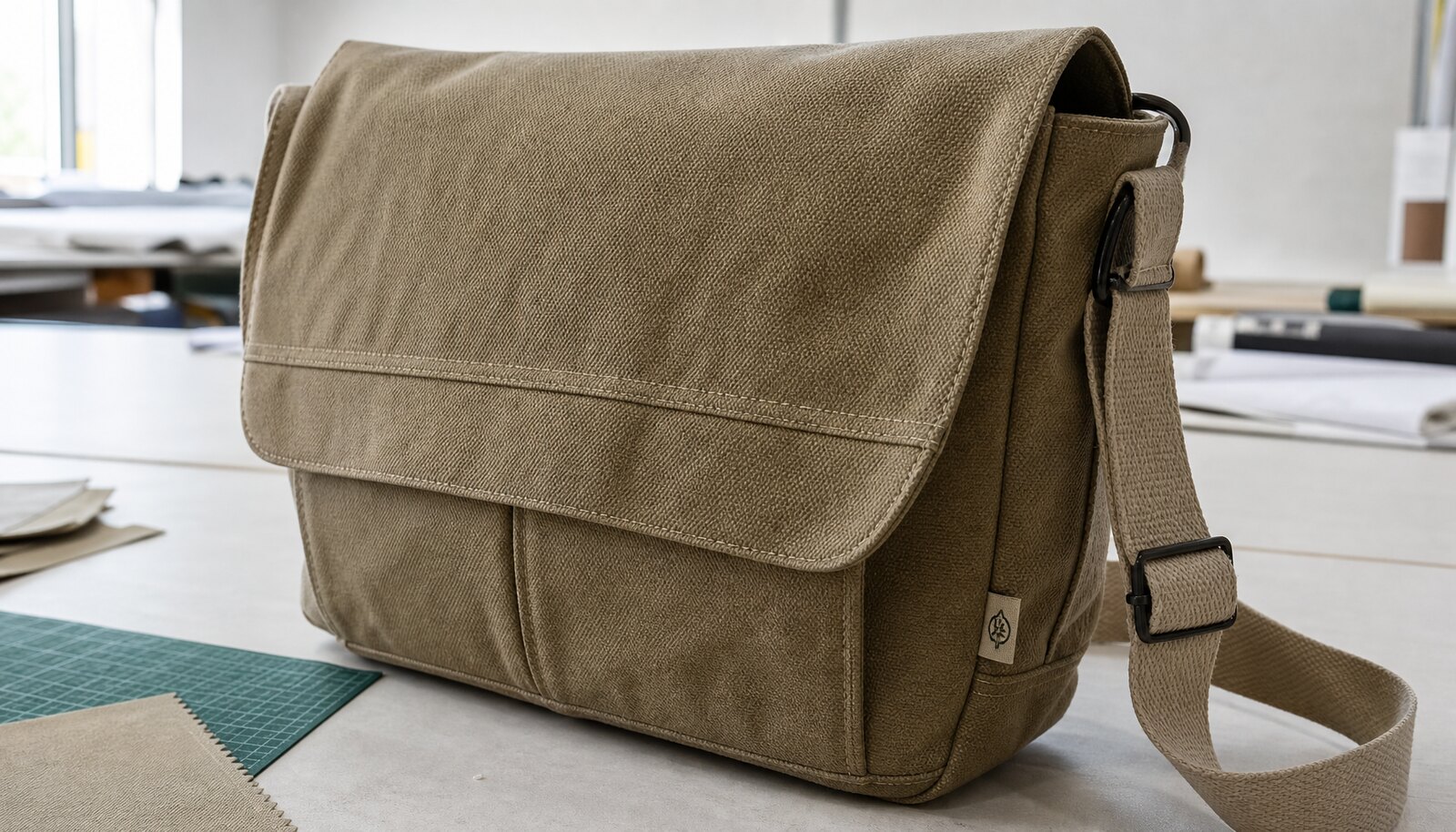
Start With the Winery Use Case
Boutique wineries do not usually buy canvas messenger bags as anonymous giveaways. The bag may sit beside bottles in a tasting room, ship with a wine-club allocation, hold menus and tablets for staff, or become event merchandise at a release weekend. Each channel changes the acceptable cost, finish, packing, and risk level.
Start the RFQ with the job the bag must do. A bag sold at retail needs cleaner stitching and better packing than a one-day festival handout. A wine-club gift must survive fulfillment and still look intentional when opened. A bottle-capable style needs a base, strap path, and closure that behave under load, not just an attractive photo sample.
Also decide whether this is a one-time program or a repeat item. If the bag becomes part of the winery’s merchandise line, reorder control matters: canvas shade, webbing width, buckle finish, logo placement, and carton format should not change without approval.
- Name the channel before price comparison: tasting-room retail, wine-club gift, event merchandise, staff use, online fulfillment, bottle carrier, or wholesale resale.
- State the expected load, including bottle count and any brochures, apparel, tablet, tasting notes, or accessories.
- Tell suppliers whether the bag must arrive retail-ready or can be steamed, tagged, or repacked at destination.
- Keep a retained sample and trim card if the style may be reordered.
Write a Spec Sheet Suppliers Can Actually Price
A useful canvas messenger bag quote depends on a tight specification. Words such as premium canvas, strong strap, good hardware, and nice logo create room for different interpretations. Two suppliers can return similar prices while quoting different fabric weights, thinner webbing, fewer bartacks, or simpler packing.
List finished dimensions rather than pattern measurements: width, height, gusset, flap length, strap width, strap length range, shoulder drop, pocket layout, closure, lining, interlining, bottom support, and bottle divider if needed. For canvas, include composition and weight in ounces per square yard and/or GSM. A 10-12 oz canvas may suit simple event merchandise; 14-16 oz is often a better starting point for structured retail or bottle-related use, but construction still matters more than weight alone.
Artwork should be specified with size, color reference, placement, and decoration method. Measure logo position from stable points such as flap edge, top seam, side seam, or center line. If the bag is washed or pigment-dyed, allow more movement than on an unwashed style.
- Use measurable terms: 12 oz cotton canvas, 38 mm cotton webbing, antique brass slider, magnetic snap, or 2 mm bottom board.
- Set tolerances for body, gusset, flap, strap, pocket position, and logo placement before production.
- Define structure: lining, interlining, bound seams, padded panel, inner zipper pocket, base support, or divider.
- Attach artwork and require physical strike-off approval on production canvas.
Apply Compliance Rules Only Where They Fit
Compliance should be specific to the destination market and bill of materials. A canvas messenger bag may include cotton canvas, dyed webbing, polyester lining, zipper tape, metal hardware, magnets, synthetic patches, inks, coatings, adhesives, labels, hangtags, cartons, and individual packaging. Not every rule applies to every component, but each component should be considered.
For EU or UK sales, buyers commonly request REACH SVHC declarations or relevant test evidence. For goods sold in California or through retailers that require it, Proposition 65 review may be needed. Azo dye screening is most relevant to dyed textiles and some printed materials. Heavy-metal review may apply to pigments, inks, coatings, and metal trims. Nickel release is a concern for certain metal parts where market rules and exposure conditions make it relevant. Phthalates are more likely to matter for PVC-like patches, coated trims, transfer films, or flexible plastic packaging than for plain cotton canvas.
Avoid collecting generic documents that do not match the order. A report for black zipper tape does not prove natural canvas is compliant. A declaration for last year’s ink may not cover a new metallic print. The compliance file should connect the actual factory, material colors, trims, logo method, and production period.
- Request documents for canvas, webbing, lining, ink, coating, patches, labels, metal hardware, zipper parts, magnets, and packaging where relevant.
- Clarify destination markets before asking for REACH, Prop 65, azo, heavy-metal, nickel, or phthalate reviews.
- Check report applicant, sample description, color, date, standard, and tested component.
- Keep compliance files with the PO, approved sample photos, trim card, artwork approval, inspection report, and packing list.
Choose the Supplier Around the Main Risk
The best supplier is the one that controls the risk in your order. A direct sewing factory can offer stronger control over patterns, seam allowance, reinforcement, and repeat production. A specialized bag workshop may be stronger on flap shape, pocket layout, strap anchors, dividers, and retail finish. A trading company can be useful for small mixed orders or complex packing, but the buyer still needs to know which factory will make the bags.
Ask each supplier to map the production route: fabric sourcing or dyeing, printing or embroidery, cutting, sewing, washing, inspection, packing, and export handoff. Decoration subcontracting is common, but it should be visible. Print quality on canvas depends on texture, ink, pressure, curing, drying time, and handling after printing.
Capability should be proven with samples and production evidence, not catalog language. For winery retail, ask for close photos of strap anchors, flap stitching, inside pockets, bottom support, labels, and packed cartons. If the bag may carry wine, ask how the supplier has reinforced the load path.
- Identify whether the quote comes from a factory, trading company, sourcing agent, or workshop coordinator.
- Require the actual production site name before relying on compliance files or audit claims.
- Ask what is in-house and what is subcontracted, including printing, washing, dyeing, embroidery, trim finishing, and packing.
- Review the supplier’s plan for shade continuity, trim substitutions, retained samples, and first-piece approvals.
Engineer for Bottles, Not Just Appearance
Messenger bags fail where load travels: strap anchors, side seams, flap connection, bottom corners, pocket corners, and closure points. A filled 750 ml wine bottle commonly weighs about 1.2-1.5 kg depending on bottle weight. Two bottles plus tasting notes, apparel, or small merchandise can create a load that a promotional-style messenger bag was never designed to carry.
Reinforcement should match the use case. Strap anchors may need bartacks, box stitching, or cross stitching. Side seams need adequate seam allowance and stitch density. A reinforced base or bottom board reduces point pressure from bottles. A divider should be secured so it does not collapse or tear away from the side seams.
Comfort is part of quality. A narrow strap may reduce cost but feel poor under load. Cotton webbing may suit a natural winery aesthetic, while polyester webbing may offer different abrasion and colorfastness characteristics depending on construction. Adjustable hardware must fit the webbing and not slip. Closures should align when the bag is loaded, not only when empty.
- State target load and require a loaded sample using equivalent bottle or merchandise weight.
- Specify strap width, material, adjustable range, anchor construction, and reinforcement method.
- Use bottom support or divider reinforcement when bottles must remain upright or the base must resist distortion.
- Check flap and closure alignment with the bag empty and loaded.
Approve Branding on Real Canvas
Winery branding often depends on subtle details: a crest, vintage mark, small wordmark, or side label. Canvas texture can change how those details reproduce. Fine serif artwork may fill in during screen printing. Warm gray ink can shift on natural canvas. A heat transfer may look sharp but still needs adhesion review on the chosen finish.
Screen printing is often practical for one-color or two-color logos. Embroidery and embroidered patches can look premium but may pucker lighter canvas or add bulk to the flap. Woven labels work well for small marks and repeat programs. Debossed synthetic patches and coated labels should be reviewed for restricted substances, adhesion, stitch strength, and color consistency.
Do not approve bulk decoration from a digital mockup alone. Require a strike-off on the same canvas color and finish used in production. Review color, opacity, edge sharpness, placement, rub resistance, and how the decorated area looks after folding and carton contact.
- Choose the logo method before comparing unit prices.
- Require a strike-off on approved production canvas for printed or transferred logos.
- Set a placement tolerance, often +/-3 mm to +/-5 mm for visible front branding when construction allows.
- Test decoration for rubbing, cracking, peeling, bleeding, color transfer, and folding distortion.
Use Sampling as a Gate, Not a Courtesy
Sampling should prove more than appearance. A photo can screen a supplier, but it cannot confirm handfeel, strap comfort, odor, hardware function, loaded shape, or packing effect. For first orders, retail-facing programs, or bottle-capable styles, a physical sample is a practical control point.
A construction sample checks the pattern, flap, pockets, strap, closure, and reinforcement. A logo strike-off checks artwork on the real canvas. A pre-production sample should combine final fabric, trims, logo method, reinforcement, and proposed packing. If any sampling material is substituted, record it so the buyer does not approve something the factory cannot repeat.
Once approved, the sample becomes an inspection reference. Sign and date the sample tag. Photograph the front, back, side, interior, logo, strap anchors, hardware, label, and packing. Keep one approval sample for inspection and one archive sample for reorders if possible.
- Request a construction sample for new patterns, pockets, straps, dividers, or closures.
- Approve a logo strike-off before bulk decoration begins.
- Approve a pre-production sample using final materials, trims, logo, reinforcement, and packing.
- Load the sample and check strap anchors, base shape, closure alignment, comfort, and appearance after handling.
- Record any approved deviation, such as alternate webbing shade or buckle finish.
Set Inspection Rules With AQL and Pass/Fail Examples
Quality control should be agreed before cutting. The inspection plan should define critical, major, and minor defects; measurement tolerances; decoration tolerances; workmanship expectations; packing requirements; and reference samples. Otherwise final inspection becomes a negotiation after the cartons are packed.
For larger orders, many buyers use AQL sampling, with the inspection level and acceptance limits agreed in the PO. Common consumer-goods practice is to use a general inspection level such as Level II, then set separate limits for critical, major, and minor defects. The exact AQL values should match the buyer’s risk tolerance and order size. For small boutique winery runs, a higher-touch visual review or 100% check of key points may be more useful than a purely statistical approach.
Define pass/fail examples. Critical defects include sharp exposed hardware, mold, severe odor, missing legally required label, or strap failure under the agreed load. Major defects include open seams, broken zipper, missing snap, wrong logo color, print smear, obvious stain, incorrect size outside tolerance, missing reinforcement, or barcode failure for retail-ready units. Minor defects include small loose threads, slight stitch waviness, or minor removable marks within the agreed limit.
Inspection timing matters. Require first-piece approval before full production, inline checks while sewing or decoration can still be corrected, and pre-shipment inspection when goods are finished but before balance payment or shipment release. The party responsible for sample selection should be clear; random carton selection is stronger than supplier-selected samples.
- State the inspection standard, sample size method, AQL or review scope, and who selects cartons.
- Use approved sample, strike-off, trim card, PO spec, and packing instruction as inspection references.
- Check dimensions, logo placement, shade, stitching, reinforcement, hardware, odor, cleanliness, and packing.
- Require first-piece photos or inline approval before full-speed production continues.
- Do not release shipment until inspection findings, corrective actions, and carton counts are documented.
Control Packing, Carton Cube, and Receiving
Packing affects whether a canvas messenger bag arrives saleable. Poor folding can crease the logo, flatten the flap, twist the strap, scratch hardware, or create wrinkles that the tasting-room team must fix by hand. Natural canvas can pick up dust or carton rub marks. Metal trim can mark fabric if pressed directly against it.
Decide early whether the order needs individual polybags, paper bands, tissue, hangtags, barcode labels, carton liners, or bulk packing. Individual polybags protect goods and simplify fulfillment, but they add cost and plastic. Bulk packing may work for staff use or event distribution if folding, dust control, and carton handling are specified. If reducing plastic is important, test paper wrap, tissue, or carton liners before assuming they protect as well.
Carton data affects landed cost and warehouse receiving. Require carton dimensions, quantity per carton, net weight, gross weight, and CBM before booking freight. Carton marks should include PO, SKU, color, quantity, destination, carton number, and any fulfillment requirement. Barcode labels should be checked for content, placement, and scan quality on the hangtag, polybag, inner carton, master carton, or whatever the receiving site requires.
- Approve folding method, strap position, logo-face protection, and hardware protection.
- Specify individual polybag, tissue, paper band, hangtag, barcode, SKU label, or bulk pack rules in the PO.
- Request carton dimensions, pack count, net weight, gross weight, CBM, carton strength, and carton marks before shipment.
- Check barcode scan quality before full packing.
- If avoiding plastic, define dust and rub protection so goods still arrive retail-ready.
Compare Quotes by Landed Cost, Not Unit Price
A low ex-factory price is only one part of the buying decision. Canvas weight, trim quality, reinforcement, logo method, packing, carton volume, inspection, freight, duty, brokerage, and destination handling all affect the real cost. A supplier quoting lighter canvas, fewer bartacks, bulk packing, and vague documentation may look cheaper until repacking labor, defects, or freight inefficiency appear.
Normalize each quote using the same finished dimensions, canvas weight, logo method, strap construction, hardware finish, packing format, compliance scope, inspection plan, and Incoterms. If one quote is much lower, ask what changed. The answer may be legitimate, such as stock fabric or simpler labeling. It may also reveal a downgrade: shorter strap, thinner hardware, no lining, weaker carton, or no individual packing.
Write Incoterms clearly. EXW, FOB, CIF, DAP, and DDP shift cost, risk, and responsibility differently. FOB Shenzhen should not be compared directly with DDP California unless the added freight, duty, brokerage, and delivery assumptions are visible. Duty classification can depend on material composition and construction, so treat tariff estimates as assumptions to be confirmed by the importer or customs broker.
MOQ and lead time should be broken into drivers. MOQ may change by canvas color, custom dye lot, logo method, hardware finish, woven label, lining, packing format, and SKU count. Lead time should show approval gates: artwork proof, strike-off, construction sample, pre-production sample, material purchase, cutting, sewing, decoration, inspection, packing, and shipment. For release weekends, holiday gifting, harvest events, or club shipments, work backward from the required in-hand date.
- Separate product price, sample fee, tooling, logo setup, trim surcharge, packing, inspection, freight, duty, brokerage, and inland delivery.
- Compare quotes using the same specification, Incoterms, and packing assumptions.
- Ask for MOQ by canvas color, logo method, trim, lining, packaging, and SKU count.
- Request carton cube early because bulky packing can change freight cost.
- Build the schedule around approval gates and the in-hand date, not only the factory ship date.
Specification comparison for buyers
| Supplier option | What to verify | Commercial advantage | Buyer risk to control |
|---|---|---|---|
| Direct sewing factory | hardware trim card, strap-load photo, lining close-up, approved flap sample, and first-piece production photos | Better sample-to-bulk control and faster production feedback | May be weaker on export paperwork or branded packing unless checked early |
| Trading company | Factory name, production photos, trim-source proof, and who owns QC decisions | Can coordinate small mixed orders and extra services | Markup can hide real factory capability and slow defect decisions |
| Specialized bag workshop | flap shape, strap webbing, buckle, D-ring, inner pocket, zipper pocket, seam allowance, and load path | More practical for detailed construction, trims, and repeat programs | Capacity may be limited during peak seasons |
| Low-price general supplier | 10-16 oz canvas, washed canvas, rPET canvas, lining fabric, interfacing, and hardware finish | Useful for simple promotional runs with loose specs | Material downgrades, weak packing, and vague inspection scope can erase savings |
| Retail-ready supplier | shape support, strap folding, hardware protection, individual bag, carton drop expectation, and retailer hangtag placement | Can handle labels, SKU separation, carton marks, and receiving rules | Higher unit cost must be compared against reduced warehouse work |
| Compliance-focused supplier | Fabric records, labeling review, test plan, and production traceability | Safer for retail programs and repeat brand orders | Documentation claims need evidence, not only sales language |
| Local sample room plus bulk factory | Signed sample, bulk factory handoff, first-piece photos, and deviation owner | Good for complex branding before large production | Sample room quality may not match bulk line unless handoff is controlled |
Buyer checklist before sampling
- Define the winery channel: tasting-room retail, club gift, event merchandise, staff use, bottle carrier, online fulfillment, wholesale resale, or distributor program.
- State destination markets before quoting, including whether goods may be sold in California, the EU, the UK, Canada, or through retailers with their own restricted-substance rules.
- Specify finished dimensions, gusset depth, flap length, strap width, strap length range, shoulder drop, pocket layout, closure type, lining, and any bottle divider or bottom support.
- Fix canvas composition and weight, such as 12 oz cotton canvas, 16 oz cotton canvas, cotton-poly blend, recycled-content canvas, washed canvas, or natural canvas with GSM where possible.
- Define the intended load in kilograms or pounds, including whether the bag must carry one 750 ml bottle, two bottles, tasting notes, apparel, tablet, picnic items, or mixed merchandise.
- Choose the logo method before price comparison: screen print, woven label, embroidery, sewn patch, debossed synthetic patch, heat transfer, or blank-label area.
- Require a physical logo strike-off on the approved production canvas, not only a digital proof, especially for textured, washed, dyed, or natural canvas.
- Ask whether cutting, sewing, printing, dyeing, washing, trim assembly, inspection, barcode labeling, or packing is subcontracted, and require the production site to be named.
- Collect compliance evidence for the actual factory and material set: canvas, webbing, lining, ink, coating, patch, metal hardware, labels, and packaging where relevant.
- Approve a loaded pre-production sample using the expected merchandise weight and inspect strap anchors, bartacks, bottom support, closure alignment, and shape retention.
Factory quote questions to send
- Are you the direct production factory, a trading company, or an agent? Please identify the factory name, city, and which production steps are done there.
- What exact canvas are you quoting: fiber composition, weight in oz and/or GSM, color standard, finish, and whether it is natural, dyed, pigment-dyed, washed, or coated?
- What finished dimensions and tolerances are included for bag width, height, gusset, flap length, strap length, strap drop, pocket placement, and logo placement?
- Which reinforcements are included in the price: bartacks, box stitching, double stitching, seam binding, bottom board, interlining, pocket reinforcement, or bottle-divider support?
- What load has the proposed strap and body construction been designed to carry, and can you make a sample loaded to our stated bottle or merchandise weight?
- What is included in the unit price: artwork setup, screen or plate charge, printed or woven labels, hardware, zipper, snaps, magnets, hangtag, barcode labels, inner packing, master cartons, and inspection support?
- Which processes are subcontracted: fabric dyeing, washing, printing, embroidery, patch making, metal trim finishing, barcode labeling, final inspection, or export packing?
- What compliance documents can you provide for the actual production site and current material set, including restricted-substance declarations, test reports, factory profile, and audit records if available?
- Based on our destination market and bill of materials, which reviews are relevant: REACH SVHC, California Prop 65, azo dyes for dyed textiles, heavy metals in inks or trims, nickel release for metal parts, or phthalates for coated patches and films?
- What are the MOQs by canvas color, custom dye, logo method, print color count, woven label, hardware finish, lining, packing format, and SKU count?
Quality-control points to confirm
- Canvas composition, weight, weave appearance, handfeel, shade, finish, and shrinkage behavior should match the approved sample, trim card, and quoted specification.
- Finished bag dimensions should stay within agreed tolerances for width, height, gusset depth, flap length, strap length, strap drop, pocket position, and closure position.
- For typical sewn canvas bags, write dimensional tolerances before production; many buyers use +/-3 mm to +/-5 mm for visible logo placement and +/-5 mm to +/-10 mm for main body measurements, with wider tolerance if washing is involved.
- Stitching should be straight and secure, with agreed stitch density, no skipped stitches, broken threads, open seams, needle cuts, seam slippage, loose bartacks, or uneven stress-point reinforcement.
- Load-bearing areas should include the specified reinforcement, such as bartacks or box stitching at strap anchors, flap stress points, pocket corners, D-ring tabs, and bottle-divider attachment points.
- Print, transfer, patch, embroidery, or woven label placement should match the signed approval for size, color, edge sharpness, alignment, and distance from seams or flap edges.
- Ink, coating, patch adhesive, transfer film, or label stitching should resist normal rubbing, handling, folding, and carton contact without cracking, peeling, smearing, bleeding, or color transfer.
- Straps should be consistent in width and length, comfortable at the intended load, securely attached, and free from twisting, fraying, melted rough edges, weak webbing, or shade mismatch against the body fabric.
- Zippers, magnetic snaps, press snaps, buckles, sliders, D-rings, hooks, and closures should open, close, align, and hold consistently across the inspected lot.
- Interior pockets, bottle dividers, bottom boards, padding, linings, and inserts should be correctly positioned and should not collapse, distort, rub through, or make the bag unstable when loaded.