Start With the Box Load
The best fabric weight decision starts with the subscription box, not with a style photo. Canvas messenger bags for subscription boxes often do two jobs: they organize products inside the shipment and become a reusable brand item after unboxing. The correct specification depends on real load, carton fit, folding method, and the customer experience the brand wants to create.
Before asking factories for prices, define the target fill weight, largest product dimensions, carton interior size, and whether the bag ships empty, partially filled, or fully packed. A bag that looks clean in a flat sample may bulge once loaded with bottles, books, or boxed products. The same fabric can also behave differently depending on gusset depth, flap length, pocket placement, and strap anchor position.
Procurement teams often over-specify fabric weight when the real issue is pattern design. A wider gusset, shorter flap, better pocket layout, or reinforced strap zone may solve the performance problem without moving to heavier canvas. This matters because heavier canvas can create thicker corners, harder folds, and higher freight weight.
Treat the bag as part of the subscription packaging system. Share the carton drawing, product bundle, planned inserts, and packing method with the supplier early. That gives the factory enough information to recommend fabric weight, construction, and folding options that support both unit cost and launch timing.
- Use 8 oz to 10 oz canvas for light bundles under about 1 kg when stress points are reinforced.
- Use 10 oz canvas for many mixed subscription kits where the bag should feel reusable and still fold efficiently.
- Consider 12 oz canvas for heavier books, bottles, tools, or premium gifts, but test carton closure before approval.
- Do not choose fabric weight only from a swatch; evaluate it after the bag is sewn, filled, folded, and packed.
- Share carton dimensions and product load with the factory before finalizing bag dimensions.
Use GSM and Ounce Together
Canvas weight should be written clearly in the RFQ. Buyers should use both ounces and approximate GSM because suppliers may describe fabric differently by market, mill standard, or finishing stage. A quoted 10 oz canvas from one source may not match another supplier’s finished fabric if one number refers to greige goods and the other refers to dyed or washed fabric.
As practical buying references, 8 oz canvas is often around 270 GSM, 10 oz around 340 GSM, and 12 oz around 400 GSM. These numbers are approximate, not universal. Yarn count, weave density, finishing, pre-shrinking, enzyme washing, coating, and dyeing can all change hand feel and measured weight.
A stronger RFQ asks when the fabric weight is measured and how it is checked. It should also identify fabric width because cutting efficiency affects price. Messenger bags have more pattern pieces than simple totes: flap, gusset, pockets, strap tabs, facings, and internal parts can create cutting waste if the pattern does not nest well on the selected width.
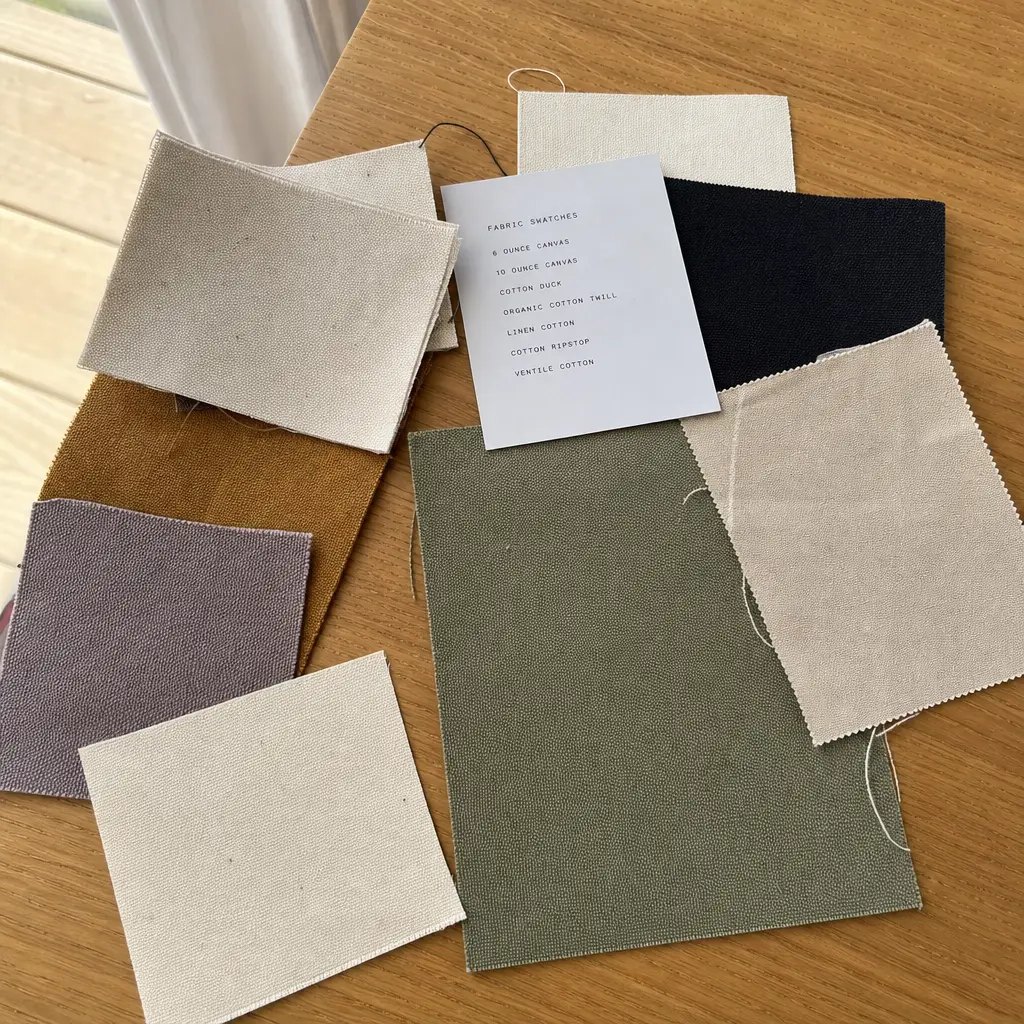
For repeat programs, keep an approved swatch with the signed sample. Physical controls are more reliable than written descriptions alone when checking shade, body, thickness, and hand feel across reorder cycles.
- Write the spec as, for example, natural cotton canvas, 10 oz, approximately 340 GSM, unwashed unless otherwise approved.
- Ask whether weight is measured before or after dyeing, washing, coating, or finishing.
- Confirm fabric width and whether the quoted price uses actual marker yield or a rough estimate.
- Keep approved fabric, print, and webbing swatches with the signed pre-production sample.
- State whether natural slub, nep, or yarn variation is acceptable for the brand’s visual standard.
Choose the Right Weight Range
The right fabric weight is both technical and commercial. A lightweight promotional insert does not need the same structure as a premium member gift. A reusable canvas messenger bag for subscription boxes must feel substantial enough for the brand promise, but it also has to pack cleanly, ship efficiently, and pass inspection without avoidable defects.
An 8 oz canvas bag can work when the bag is a secondary gift, the product load is light, and freight efficiency is important. The tradeoff is lower perceived structure. Thin canvas may wrinkle more, show product shapes inside the bag, or feel underbuilt for premium wellness, beauty, book, or corporate gifting programs.
A 10 oz canvas is often the best first benchmark. It usually provides enough body for a messenger silhouette while remaining practical for folding, printing, and carton packing. It also tends to support common branding choices such as screen print, woven labels, and small embroidery more reliably than very light fabric.
A 12 oz canvas can improve perceived durability and support heavier loads, but it is not automatically better. On small messenger patterns, thicker fabric can make flap edges bulky, corners stiff, and closure areas harder to sew cleanly. If the goal is premium appearance, better stitching, clean flap alignment, and stronger strap webbing may improve the result more than adding weight.
- Choose 8 oz when cost, compression, and promotional volume matter more than long-term structure.
- Choose 10 oz when the bag should feel reusable, brandable, and practical for subscription carton packing.
- Choose 12 oz when the bag must carry heavier goods or support a premium retail-style impression.
- Increase reinforcement before increasing fabric weight if failures are limited to strap anchors or closure points.
- Reject weight-only comparisons unless fabric finish, construction, packing, and QC standards are also equal.
Understand Cost and Freight Drivers
Fabric weight affects more than the material line. Heavier canvas can increase cutting resistance, sewing time, needle wear, seam bulk, carton gross weight, and rejection risk at thick intersections. It can also reduce how tightly bags can be folded without visible creasing. A low unit price on a heavy canvas quote may be offset by weaker webbing, simplified pockets, lower-grade hardware, or aggressive compression packing.
Messenger bags also cost differently from flat totes. The flap, gusset, strap system, pockets, closure reinforcement, labels, and hardware add components and labor. A rounded flap may reduce fabric yield compared with a straighter flap. A wider strap improves comfort and appearance but increases webbing cost and may require stronger stitching.
Buyers should compare quotes by cost bucket instead of unit price alone. Ask suppliers to separate or explain the main canvas, webbing, hardware, print or label application, sewing complexity, sample charges, and packing method. This makes value engineering easier and reduces disputes when design changes occur.
The most effective cost reductions often come from adjusting dimensions, flap depth, pocket count, hardware finish, or packing cube rather than downgrading fabric. A clean 10 oz bag with good proportions can look better than a heavier bag with poor construction.
- Review fabric weight, fabric width, cutting yield, dyeing method, strap type, hardware, print area, lining, pockets, and packing format.
- Ask if the quoted pattern has been costed using actual fabric width and marker yield.
- Confirm carton dimensions, gross weight, and units per carton before comparing landed cost.
- Keep hardware finishes standard where possible to avoid higher MOQ and accessory delays.
- Value-engineer flap depth, pocket count, and packing method before reducing the main canvas weight.
Specify Construction Details
Two bags made from the same canvas weight can perform very differently. Procurement buyers should specify the full construction, not only the fabric. Key items include body size, gusset depth, flap drop, strap width, adjustable length range, closure style, seam allowance, reinforcement method, pocket layout, lining, and label placement.
The strap system deserves special attention because it carries real load after unboxing. Strap anchors should use box-X stitching or bar tacks and connect to a pattern area that distributes weight. Low-quality webbing can twist, curl, shed lint, or bleed dye; stronger canvas will not fix a weak strap.
Closure choice should match the product, user, and market. Magnetic snaps look cleaner for lifestyle brands but may require compliance review depending on shipment and end use. Metal snaps are simple and durable when properly attached. Hook-and-loop can reduce cost, but lint pickup and sound may be a poor fit for premium campaigns.
A written construction standard makes inspection more objective. It tells the factory where reinforcement belongs, how seams should be finished, and what measurements matter. It also helps buyers avoid late change charges caused by assumptions hidden in sample photos.
- Define flap drop, gusset depth, strap width, adjustable range, and pocket dimensions in the RFQ.
- Require reinforcement at strap anchors, closure points, flap corners, gusset joins, and pocket seams.
- Confirm webbing composition, width, thickness, colorfastness expectation, and approved shade.
- State hardware finish, placement, and pull-force expectation before sample approval.
- Request interior photos or a construction sketch so hidden seams and pockets are understood.
Match Branding to Fabric Surface
Branding should be selected around fabric surface, fold behavior, and expected handling during fulfillment. Screen printing is often practical for subscription volume because it works well on flat panels and can be cost-efficient at scale. Natural canvas usually gives straightforward print results, while dark canvas may need an underbase or different ink system.
Artwork placement is a production decision, not only a design choice. A large logo across the flap can look strong in a mockup but may crack, crease, or rub if the fold line runs through the artwork. Hardware can also mark printed panels during compression if the packing method is not controlled.
Woven labels are useful when buyers want consistent branding across natural, dyed, or washed canvas. They reduce reliance on large ink areas and can create a subtle retail appearance. Embroidery can work for small premium marks, but dense stitching may pucker lighter canvas or distort the flap.
For accurate quotes, provide artwork size, color count, Pantone references, exact placement from seams, and no-print zones. If the order has monthly, regional, or tiered versions, ask the factory to separate base bag cost from print setup and version handling.
- Place main logos on panels that remain flat during folding and packing.
- Request a strike-off on the actual production fabric weight and color.
- Avoid dense embroidery on 8 oz canvas unless backing and tension have been tested.
- Use woven labels when shade variation or repeat orders make large prints harder to control.
- Set logo position tolerance and print color tolerance before production starts.
Plan MOQ, Sampling, and Reorders
MOQ is usually driven by materials and accessories, not only factory preference. Natural canvas and standard black canvas may support lower minimums because they are common. Custom dyed canvas, washed finishes, plated hardware, special webbing colors, and multiple print versions can each introduce separate minimums.
This is important for subscription programs because buyers often want versioning by month, region, or membership tier. One base bag with different artwork may be efficient if fabric, webbing, and hardware stay the same. If every version changes fabric shade or trim color, MOQ and lead time can rise quickly.
Sampling should follow the risk. A blank construction sample is useful when the pattern, gusset, strap, or pocket layout is new. A printed pre-production sample is important when artwork placement, fabric color, print adhesion, or fold presentation affects approval. Skipping either step can make corrections slower once bulk fabric is booked.
Repeatability should be discussed before the first PO. Ask whether the supplier can reserve fabric, how long a shade standard remains valid, and what lot-to-lot variation is realistic. For subscription brands, consistent reorders often matter as much as the first delivery.
- Ask for MOQ by fabric color, bag style, hardware finish, webbing color, print design, and packing method.
- Confirm whether split artwork can share one base fabric and construction order.
- Approve lab dips before bulk dyeing custom canvas or webbing.
- Clarify sample charges, refundable amounts, sample lead time, and revision cost.
- Keep signed samples and swatches for reorder matching and dispute resolution.
Approve Samples With Real Tests
Photo approval is not enough for a canvas messenger bag used in subscription fulfillment. The bag should be reviewed in the way it will actually ship: filled, folded, packed, compressed, reopened, and handled. This is where many issues appear, including flap creases, snap stress, print rub, and carton fit problems.
For the construction sample, measure width, height, gusset, flap drop, strap range, pocket opening, and closure alignment. Load it with actual products or dummy items matching final weight and shape. Check whether the largest item creates pressure points, whether the flap closes squarely, and whether the strap anchors distort under load.
For the printed pre-production sample, review artwork and then pack-test it. Fold the bag according to the intended method, place it in the actual subscription carton with inserts and surrounding products, and leave it under realistic compression. After unpacking, inspect the logo, flap, hardware contact points, and crease recovery.
The approval record should be practical and complete. Keep a signed sample, approved swatch, print strike-off, packing photos, carton layout, and written list of accepted deviations. This file becomes the reference for final inspection.
- Measure all critical dimensions after sewing and again after packing simulation.
- Test with actual contents or matched dummy load before approving size and construction.
- Open and close snaps, magnets, or hook-and-loop repeatedly to check fabric stress.
- Photograph the approved fold method, protection method, and carton arrangement.
- Do not approve color, texture, or print quality from edited phone images alone when order value is material.
Set QC and Packing Standards
Quality control is strongest when measurable criteria are agreed before production. Terms such as premium quality or good workmanship are too vague for factory execution. Buyers should define acceptable standards for fabric, dimensions, stitching, branding, hardware, and packing.
Fabric inspection should cover GSM tolerance, shade, hand feel, visible slubs, stains, odor, and finishing consistency. A tolerance around plus or minus 5 percent is a common commercial reference for GSM unless a tighter range is written into the purchase order. Natural cotton canvas may show some irregularity, so the acceptable level should be agreed with the approved swatch.
Construction inspection should focus on load points. Strap anchors, flap corners, pocket seams, gusset joins, and closure areas should match the approved reinforcement. Branding checks should cover logo position, print clarity, adhesion, color consistency, and rub resistance. Hardware should be secure, aligned, and usable without tearing fabric.
Packing is part of quality. Over-compression can damage the front flap, transfer hardware marks, or crease the logo. Cartons should be clean, dry, correctly marked, and strong enough for export handling. If the brand avoids individual polybags, specify how the bags are protected from dust, moisture, and abrasion.
- Use AQL inspection with added function checks for filled load, strap anchors, closure pull, and print rub.
- Classify broken load-point stitches, loose hardware, severe shade mismatch, and badly misaligned logos as major defects.
- Define minor defect limits for thread ends, small slubs, light wrinkles, and acceptable natural canvas variation.
- Inspect carton marks, quantity, moisture condition, compression, and mixed artwork risk before shipment.
- Build the launch schedule backward from final packing arrival, not from the factory ex-works date.
Specification comparison for buyers
| Spec decision | Recommended option | When it fits | Cost or freight impact | Sample approval risk |
|---|---|---|---|---|
| Main body fabric weight | 10 oz / about 340 GSM canvas for most subscription box messenger bags | Welcome kits, light apparel, stationery, cosmetics, loyalty gifts, and reusable member bags that must still fold into cartons | Middle cost position; usually more stable than 8 oz without the carton weight and seam bulk of 12 oz | Approve with actual box contents because flap alignment, gusset shape, and logo crease lines can shift after folding |
| Lightweight economy version | 8 oz / about 270 GSM canvas with simplified pocketing | High-volume promotional campaigns where the bag is a secondary gift and freight efficiency matters | Lower fabric weight and better compression can reduce landed cost, but perceived value is lower | Check show-through, wrinkling, strap anchor strength, and embroidery puckering before bulk approval |
| Premium or heavy-duty version | 12 oz / about 400 GSM canvas with reinforced stress points | Books, bottles, hardware samples, heavier wellness kits, or premium membership gifts | Higher material weight, slower sewing at thick seams, and higher carton gross weight or cube | Test flap folds, snap pull, corner bulk, and whether the subscription carton still closes cleanly |
| Closure construction | Flap with magnetic snap, metal snap, or hook-and-loop based on user and market | Magnetic snap for cleaner lifestyle presentation; metal snap for simple durability; hook-and-loop for lower-cost casual use | Custom hardware finish or stronger snaps can raise MOQ and accessory lead time | Check pull force on the approved canvas weight so the closure works without tearing the flap |
| Logo application | Screen print for flat artwork, woven label for subtle branding, embroidery for small premium marks | Screen print suits volume; labels manage shade variation; embroidery works best on small, stable areas | Large ink areas, underbase printing, and multi-color artwork add setup cost and production time | Approve strike-off on actual fabric color and weight, then pack-test for cracking, rub, or fold marks |
| Strap and reinforcement | Adjustable cotton webbing strap with box-X or bar-tack anchor reinforcement | Reusable bags across mixed user heights and subscription programs where the item should keep value after unboxing | Wider or custom-dyed webbing improves feel but adds cost, MOQ, and possible shade variation | Test webbing twist, lint shedding, colorfastness, stitch density, and anchor strength |
| Packing format | Flat folded with protection, or lightly shaped for premium presentation | Flat packing for freight efficiency; shaped packing when unboxing appearance is part of the campaign | Packing cube can affect landed cost more than a small fabric upgrade | Approve fold direction, tissue or separator use, carton quantity, and compression marks with real contents |
| MOQ structure | Separate MOQ by fabric color, print version, webbing, and hardware finish | Natural or standard black canvas usually supports lower MOQ; custom dye and special trims increase minimums | Split versions can be economical only when the base bag remains common | Confirm whether repeat orders use reserved fabric, new lot matching, or available stock with shade variation |
Buyer checklist before sampling
- Confirm filled subscription box size, target load weight, largest product dimensions, and carton interior dimensions before finalizing bag size.
- Select 8 oz for economy inserts, 10 oz for most reusable subscription messenger bags, and 12 oz only when heavier contents or premium structure justify the extra cost and freight.
- Specify fabric in both ounce and approximate GSM, and state whether weight is measured before or after dyeing, washing, coating, or other finishing.
- Define flap drop, gusset depth, strap width, adjustable length range, closure type, pocket layout, seam allowance, and reinforcement method in the RFQ.
- Keep logo artwork on areas that remain flat during folding; avoid large ink blocks on flap bends, bottom corners, snap stress points, or high-abrasion strap zones.
- Request a blank construction sample for new patterns and a printed pre-production sample for new artwork, fabric colors, print methods, or packing formats.
- Approve packing with real contents or matched dummy weight, not an empty bag; check carton closure, flap creasing, hardware marks, and print rub.
- Compare quotes by fabric weight, fabric width, cutting yield, webbing, hardware, print method, sample policy, carton cube, gross weight, and inspection support.
- Set measurable QC criteria for size tolerance, GSM variance, shade, logo position, stitch quality, strap anchors, closure pull, print adhesion, and carton condition.
- Confirm quote validity, fabric reservation terms, sample lead time, production lead time after approval, and freight booking window before deposit.
Factory quote questions to send
- What is the exact canvas weight in oz and approximate GSM, and is it measured before or after dyeing, washing, coating, or finishing?
- What fabric width will be used, and what cutting efficiency or marker yield is assumed for the quoted bag pattern?
- Is the quoted canvas stock fabric, made-to-order dyed fabric, organic cotton canvas, recycled cotton blend, or conventional cotton canvas?
- What is the MOQ separately for natural canvas, black canvas, custom dyed canvas, custom webbing, special hardware finish, and each print version?
- Which branding method do you recommend for our artwork and fabric weight: screen print, heat transfer, embroidery, woven label, or combined branding?
- What tolerances are included for finished size, fabric GSM, shade, logo position, print color, stitch density, and carton quantity?
- How many samples are included, what is the sample lead time, and which sample charges are refundable after bulk order confirmation?
- What reinforcement is included at strap anchors, flap corners, closure points, gusset joins, and inner pocket seams?
- How will each bag be folded, protected, and packed, and what are the estimated carton dimensions, gross weight, and units per carton?
- What is excluded from the quote, including inland freight, export carton marking, inspection support, testing, certificates, duty review, or special packaging?
Quality-control points to confirm
- Fabric GSM should stay within the written tolerance; about plus or minus 5 percent is a common commercial reference unless the purchase order states a tighter range.
- Finished bag dimensions should be checked after pressing and packing simulation, because flap position, gusset shape, and strap drop can move after folding.
- Strap anchors should match the approved box-X or bar-tack reinforcement with no skipped stitches, loose threads, broken stitches, or needle damage at load points.
- Print adhesion should be checked with tape pull and light abrasion on the approved fabric weight and color, especially for dark dyed canvas or washed canvas.
- Closure pull force should be usable but not so strong that the fabric tears around snaps, magnets, or reinforced flap areas during repeated opening.
- Colorfastness should be reviewed for dyed canvas, dark webbing, printed panels, and contact with light-colored subscription products, tissue, or inserts.
- Cartons should be dry, clean, export-grade, correctly marked, and packed to avoid over-compression that creates permanent creases on the front flap.
- AQL inspection should include measurement, workmanship, shade lot, hardware finish, logo placement, packing method, carton marks, and a filled-bag function test.