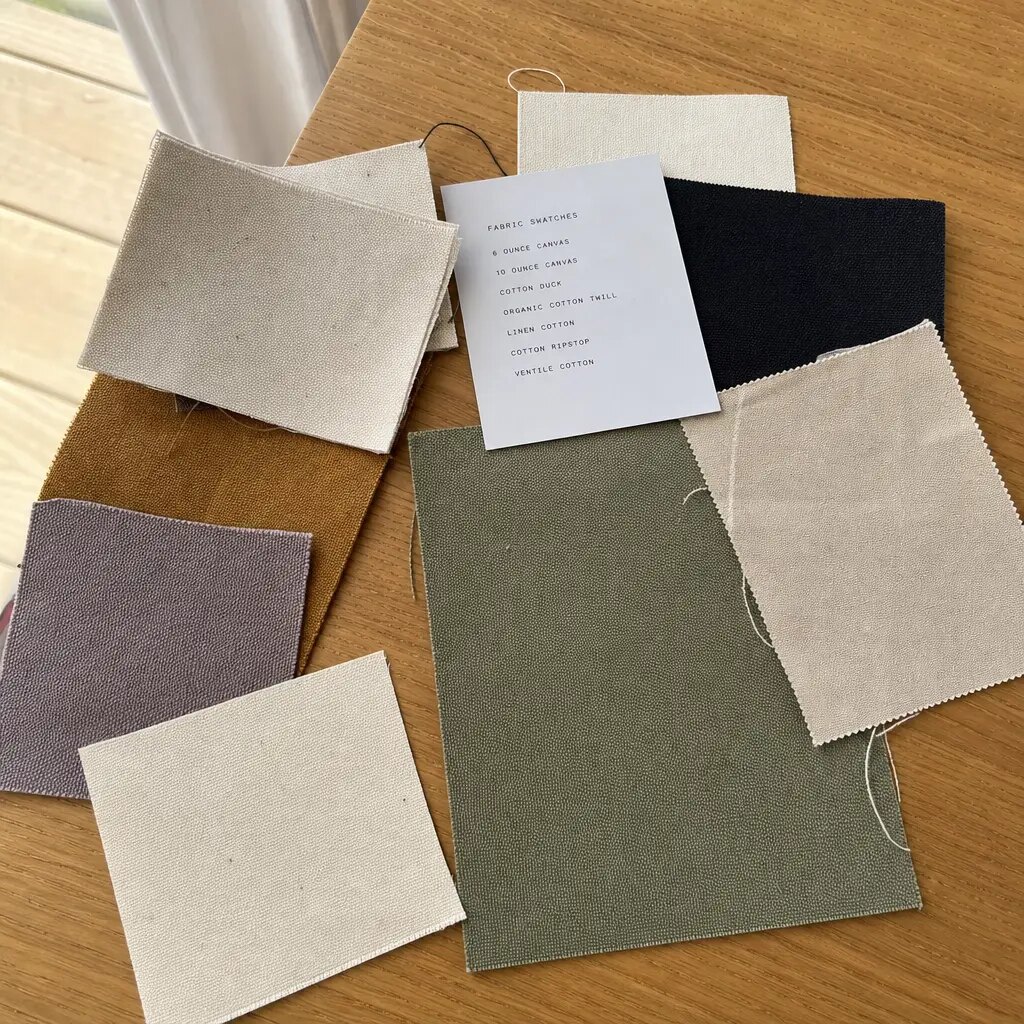
Why carton planning matters more than most buyers expect
For canvas messenger bags, the carton plan is not an afterthought. It affects the unit cost, freight cube, damage rate, and even how the bag presents when it lands in a winery shop or tasting room. A bag that looks fine on a sample table can still become expensive if it packs poorly, forces oversized cartons, or needs extra protection to survive sea freight.
Boutique wineries usually buy these bags for a specific use: premium gift packaging, staff merchandising, member shipments, or resale in a retail corner. That means the carton has to match the sales channel. A retail-ready bag may need cleaner folding, tighter presentation, and consistent carton markings, while a back-of-house shipping bag can prioritize pack density and freight efficiency.
- Set the carton plan at the RFQ stage, not after quote comparison.
- A 1-2 cm change in folded thickness can change carton count and CBM.
- If the supplier has not packed the sample, the bulk quote is not fully useful.
Choose the bag spec around the carton, not only around the logo
The most common mistake is approving a bag design before thinking through how it folds. A messenger bag with a flap, zipper, gusset, lining, and stiff insert can look premium but occupy too much space. For boutique winery programs, the practical sweet spot is often 12 oz to 16 oz canvas, depending on whether the bag is decorative, functional, or expected to carry inserts and bottles accessories.
For print, a simple one- or two-color screen print remains the most cost-controlled option for larger runs. If the artwork is fine-line or small, consider a woven side label or a heat transfer, but only if the buyer accepts the durability tradeoff. The more layers and hardware you add, the harder it becomes to keep the pack-out stable.
- 12 oz canvas: lighter feel, lower cost, good for promotional or gift-use bags.
- 14 oz canvas: common balance for structure and cost.
- 16 oz canvas: better body and premium hand feel, but heavier freight and sewing load.
- Zipper, flap, lining, and inserts all increase folded thickness.
How supplier route changes the quote you receive
Two suppliers can quote the same messenger bag and still give you very different landed costs because one includes carton packing details and one does not. A direct factory quote should show fabric spec, print method, accessory spec, unit packing, carton size, and estimated shipping volume. If the quote is only a per-bag number, you are not comparing supplier options on equal terms.
Trading companies can be useful when you need project coordination or mixed product sourcing, but they often bundle costs in ways that hide packing inefficiency. If you buy direct, you should get better visibility into sewing, packing, and carton engineering. If you buy through a middle layer, demand the same data or the quote will be difficult to audit later.
- Direct factory: better control of carton packing and sample accuracy.
- Trading route: easier multi-item sourcing, but verify who owns QC and pack-out.
- Distributor route: useful for fast replenishment, usually weaker on custom carton control.
Comparison table: sourcing routes and spec choices for winery programs
Use the table below to align your internal team before sending the RFQ. It helps separate the product decision from the sourcing route decision, which is where many programs lose time. The right answer depends on whether the bag is a gift item, a retail SKU, or a shipping component inside a larger wine program.
If your team already knows the artwork and function, focus on the rows that change freight and packaging. Those choices often matter more to landed cost than a small change in print price.
- Write decisions in measurable language, not only descriptive wording.
- Ask for sample photos plus one physical approval sample for important orders.
- Keep quotation, sample approval, and inspection notes tied to the same spec version.
MOQ logic and cost drivers that actually move the unit price
For canvas messenger bags, MOQ is rarely just the minimum number of units. The real MOQ is usually the combination of fabric color, print setup, trim sourcing, and carton packing. A natural canvas bag with a simple one-color print may allow a lower MOQ than a dyed body with custom zipper tape, branded labels, and special inner wrapping.
When comparing quotes, separate fixed charges from variable charges. Screen setup, print plate, woven label setup, and custom carton printing behave like fixed costs. Fabric, stitching time, hardware, and packing material are more variable. A supplier quoting a low bag price but high setup and packaging fees may be perfectly legitimate, but the quote must be normalized before decision-making.
- Ask for price breaks at 500, 1,000, 3,000, and 5,000 units if the project may scale.
- If color changes are involved, confirm whether each color is a separate MOQ bucket.
- Carton printing and barcode labeling may add setup cost even when the bag spec is unchanged.
Packing method and carton dimensions: the main freight lever
Packing is where many buyers lose margin without seeing it. The supplier should tell you how the messenger bag is folded, whether the strap sits inside the body or alongside it, and whether the flap is flattened or protected. If the folding method is inconsistent, carton counts become unreliable and the freight quote will drift after production.
A good carton plan is one that the factory can repeat without forcing workers to over-compress the product. Overpacked cartons can crease print areas, deform the flap, and stress the seam at the strap attachment point. Underpacked cartons waste cubic volume and can increase the landed cost even if the per-bag price looks competitive.
- Request carton dimensions, not only units per carton.
- Match carton count to stack height and bag thickness after folding.
- Keep a buffer for seasonal humidity, which can change fabric thickness and carton fit.
- If the bag contains an insert, include the insert in the pack-out sample.
Sample approval should include the carton-packed unit, not only the bag
A pre-production sample is necessary, but not sufficient. For this product, the sample should show the actual fabric, print, strap, label, and closure. More importantly, the factory should pack that sample the way bulk goods will be packed. Otherwise you may approve a nice-looking bag that becomes too thick, too wrinkled, or too unstable once it is folded for cartons.
The most useful approval step is a carton-packed sample or at least a pack-out photo with dimensions. That lets procurement compare the real thickness against the planned carton size and avoids surprises when the bulk order is ready to ship. If the carton uses dividers or tissue, those should be visible at sample stage too.
- Approve the strike-off before final print production if artwork placement matters.
- Measure the packed sample thickness with the actual folding method.
- Check for odor, loose threads, and hardware scratches before signing off.
- Verify that barcode and carton marks survive handling and remain readable.
QC thresholds that protect you from avoidable claims
For a canvas messenger bag program, QC should focus on the failure points that create customer complaints: seam weakness, print misalignment, poor folding consistency, and carton damage. If the bag will be used in a retail environment, the look of the print and edge finishing matters. If it is going into a wine club shipment, carton integrity and pack density become more important.
Good acceptance criteria are specific. Instead of saying the bag should be well made, define seam allowance, stitch density where relevant, allowable print shift, and acceptable defect rate. The factory can work to clear thresholds, and your inspector can use the same thresholds in the final inspection.
- Seam reinforcement at stress points must be visible and consistent.
- Print alignment should stay within an agreed tolerance from centerline.
- No open stitches, skipped stitches, or broken thread clusters in the load-bearing areas.
- Cartons should remain square and dry with no crushing at corners or tape failure.
Lead time planning and schedule risk for winery launches
Lead time for canvas messenger bags is usually not the full story. The schedule should be broken into sample approval, raw material booking, bulk production, packing, and export preparation. If the buyer changes carton count, label copy, or print color late in the process, the final packing stage can absorb delays that were not visible in the original quote.
For launch programs, a realistic planning buffer matters more than squeezing a few days from the factory promise. Fabric availability, print plate confirmation, and approval timing are common bottlenecks. If the bags are tied to a vintage release or retail event date, the safest plan is to approve the sample early enough that a packaging correction can still be made without changing the freight booking.
- Sample approval delay usually has a larger impact than stitching time.
- Custom cartons can add lead time if the carton vendor is separate.
- Add buffer when the order includes multiple colors or mixed SKUs.
- Ask whether production starts from material receipt or from PO confirmation.
How to compare landed cost without getting tricked by a low bag price
A useful landed-cost comparison should include bag price, print setup, inner packing, carton cost, carton dimensions, and freight volume. If one supplier packs 50 bags per carton and another packs 80 bags per carton, the lower unit price may not win once ocean freight and warehouse handling are included. This is especially true for boutique winery buyers who ship smaller, higher-value programs where presentation standards remain important.
You should also compare consistency risk. A slightly higher quote from a supplier that provides better carton control, faster sample response, and clearer QC evidence can be the lower-risk choice. In procurement terms, the cheapest quote is not the cheapest landed outcome if it generates rework, relabeling, or repacking at destination.
- Normalize quotes to the same bag spec, packing count, and carton size.
- Include destination handling if cartons will move through a distributor warehouse.
- If freight is a major cost, test one alternate fold method and compare CBM.
Specification comparison for buyers
| Spec decision | Recommended option | When it fits | Buyer risk to check |
|---|---|---|---|
| Supplier route | Direct factory with carton packing plan included in quote | You need control over unit packing, carton count, and freight cube | Factory may quote product only and leave carton cost, inner packing, or palletization vague |
| Canvas fabric weight | 12 oz to 16 oz cotton canvas for winery gift and retail use | You want a bag that looks substantial and survives repeated handling | Too light below 10 oz can look limp; too heavy can raise cost and reduce sewing efficiency |
| Print method | Screen print for simple one- to two-color logos; woven label or heat transfer for smaller branding runs | You need a clean logo on a manageable MOQ | Fine lines can fill in on screen print; heat transfer can crack if wash or abrasion expectations are high |
| Closure style | Open top or top zipper depending on gift set contents | You ship brochures, bottle accessories, or point-of-sale inserts inside the bag | Zipper adds cost and height to the packed unit, which affects carton fit and freight cube |
| Handle/strap spec | Cotton webbing strap with reinforced bar-tacks at stress points | The bag carries heavier catalogs, boxed gifts, or multiple items | Weak strap stitching leads to returns and carton-in-transit damage from collapsed stacks |
| Carton packing density | Flat-packed bags stacked by consistent fold method, then packed to carton fill without over-compression | You want the lowest freight cost without damage or wrinkling | Overstuffed cartons distort corners and crease prints; underfilled cartons waste cube and raise landed cost |
| MOQ logic | Price by fabric color plus print setup plus carton spec, not by bag alone | You need a quote that compares vendors fairly across styles | A low bag price can hide high setup charges, carton charges, or a high minimum for custom print |
| Sample approval route | Pre-production sample plus carton-pack sample | You are launching a new retail SKU or gift program | Approve only the bag sample and you can still fail on final pack count, carton strength, or label placement |
| Freight mode | Sea freight for volume orders; air only for small launch quantities or urgent replenishment | You are balancing launch timing against landed cost | Air freight hides packing inefficiency faster because volumetric weight becomes expensive |
Buyer checklist before sampling
- Define the exact use case: retail gift bag, event merchandise carrier, wine club insert, or premium packaging component.
- Lock the fabric weight target in GSM or oz, plus the acceptable tolerance range.
- Choose print method, artwork size, color count, and whether the logo goes on body, flap, or side label.
- Set bag dimensions, strap length, handle reinforcement, and closure style before requesting quotes.
- Specify unit folding method, inner polybag use or no polybag, and carton pack count.
- Ask for carton dimensions, gross weight, net weight, and estimated loading quantity per 20' and 40' container.
- Request a pre-production sample and a carton-packed sample or pack-out photo before bulk approval.
- Confirm label text, barcode position, country-of-origin marking, and carton mark format.
- Set acceptable stitch quality, print alignment, and fabric defect limits in writing.
- Get lead time split into sample, material booking, production, and final packing so schedule risk is visible.
Factory quote questions to send
- What fabric weight are you quoting in oz or GSM, and what tolerance do you allow on incoming roll weight?
- Is the quoted price based on the bag only, or does it include folding, inner packaging, carton packing, and outer carton marks?
- What carton size do you recommend for this bag after folding, and how many units fit per carton without compression damage?
- What is the MOQ by color, print method, and packaging spec, and which part of the MOQ drives the unit price most?
- Can you provide a pre-production sample with the same fabric, print, strap, and closure hardware used in bulk?
- What are the critical QC checkpoints for seam strength, print registration, odor, and carton integrity?
- How long is the production lead time after sample approval, and what is the realistic buffer for fabric or trim delays?
- What freight data can you provide: carton dimensions, gross weight, pallet plan if needed, and estimated CBM?
- If we change carton pack count, what price and lead-time impact should we expect?
Quality-control points to confirm
- Fabric weight matches the agreed spec band and feels consistent across the roll and between production lots.
- Print is centered within tolerance, color matches the approved strike-off or sample, and no ink bleed appears at stress folds.
- Stitching is straight, back-tacked, and reinforced at strap joints, corners, and any zipper endpoints.
- Bag dimensions after sewing stay within the agreed tolerance, especially width and gusset if the bag must fit a set insert or bottle accessory.
- Folding method is repeatable so the packed unit does not vary in thickness by carton.
- Cartons hold the declared unit count without bulging, crushing, or excessive empty space.
- Inner polybags, tissue, or divider sheets do not trap moisture or add unnecessary freight cube.
- Carton marks, SKU labels, barcode, and destination text are readable and in the correct position.
- A drop or compression test on the packed carton does not crack print, deform corners, or loosen strap hardware.