Start With The Actual Buyer Job
For farmers market vendors, a canvas messenger bag is a working tool, not a lifestyle accessory. It has to move with the vendor through the whole stall routine: loading product, handling cash or card readers, checking a phone, storing receipts, and carrying small tools or supplies without getting in the way. If the RFQ starts with style language instead of use, suppliers will quote different bag types and you will end up comparing products that solve different problems. That is a procurement failure, not just a design issue.
Write the use case in operational terms. State who will use the bag, what they will carry, how often they open it, and whether it needs to be worn crossbody, on one shoulder, or carried by hand between stalls and storage. If the bag is for a vendor, a market manager, or a resale customer, each use case creates different requirements for size, closure, structure, and decoration. The more concrete the use case, the less room there is for a supplier to hide assumptions in their quote.
A usable brief should also define the selling environment. Outdoor markets introduce dust, weather exposure, crowd movement, and repeated open-close cycles. Indoor vendor kits may need easier access and more polished presentation. Retail resale has a different bar again because the bag needs shelf appeal and consistent appearance unit to unit. Put that context in the RFQ so the factory understands what the bag must survive, not just what it should look like on a table.
Translate The Brief Into A Technical Spec
Procurement teams should not stop at the phrase canvas messenger bag. The factory needs a technical description that removes as much interpretation as possible. That means finished dimensions, gusset depth, pocket count, lining requirement, closure type, strap construction, reinforcement points, and any structural insert or board. If those decisions are left open, every supplier will make a different bag architecture and the low quote will usually reflect a thinner build rather than a smarter one.
A strong RFQ reads like a production brief. Specify finished width, height, and depth in millimeters or inches. Identify whether the bag is soft, semi-structured, or reinforced enough to stand up on its own. If a tablet or clipboard needs to fit, say so and include the target device size. If the flap must cover a front pocket or a logo panel, give the exact placement. This is the difference between an RFQ that gets filed and one that can actually be quoted.
Do not bury construction choices in a sketch alone. If the supplier only receives an image, they will fill in the gaps with their default pattern. The result may be functional but not comparable. Put the critical build assumptions in text and repeat them in the spec sheet, quote form, and sample approval notes. That way, the same measurements follow the job from first quote to bulk production.
Choose The Right Canvas And Build
Canvas weight is one of the biggest cost and performance levers. For light promotional use, 8 oz canvas can be enough. For daily vendor carry, 10 oz to 12 oz usually gives a better balance of structure, abrasion resistance, and print stability. If the bag will be loaded with a phone, wallet, pens, samples, and a tablet, a lighter cloth can sag quickly and make the bag feel cheap even if the logo looks good.
The headline weight is not enough by itself. Ask for weave type, finish, and whether the fabric is raw, washed, pre-shrunk, dyed after weaving, or resin-finished. Those details affect shrinkage, handfeel, print clarity, and how the bag behaves across production lots. A low quote may be using thinner cloth, less finishing, or no lining. Without a separate fabric spec and construction spec, you cannot tell whether you are comparing the same product.
A practical way to frame the decision is to treat the canvas choice as a balance between handfeel and durability. Softer cloth may look more casual and reduce cost, but it can lose shape. Heavier cloth improves structure and abrasion resistance, but it may add weight and increase sewing difficulty. If the bag needs to hold its form, line it or add interfacing instead of expecting raw canvas alone to do the work.
Lock The Carry System And Stress Points
Messenger bags fail first at the points buyers under-specify. Strap anchors, flap corners, pocket seams, and base seams are the places where daily wear shows up. The RFQ should name these points directly. If the strap is webbing, define width, thickness, edge finish, adjustment range, and hardware type. If the bag has a shoulder pad, say whether it is fixed, removable, or not required. If the load is heavier than a typical promotional bag, ask for bar-tacks or extra reinforcement rows at every stress point.
Closure choice matters just as much as fabric choice. A flap with a snap is easy to use during a market rush. A zipper offers more security but can slow access. Hook-and-loop is quick but may wear out or feel too casual. Magnetic closures can be convenient, but they add cost and can affect the way the bag closes when overloaded. If one-hand use matters, say so. Otherwise, the factory may quote the cheapest closure that technically works but is awkward in practice.
This section should also separate function from appearance. Buyers often accept a slight variation in natural canvas shade, but they should not accept twisted straps, crooked snap placement, or a reinforcement patch that shifts the bag off center. Put the reinforcement map into the RFQ so the factory quotes the same build you intend to approve. That is how you prevent a later argument about whether a weak anchor was included or added as a favor.
Control Branding, Artwork, And Decoration Method
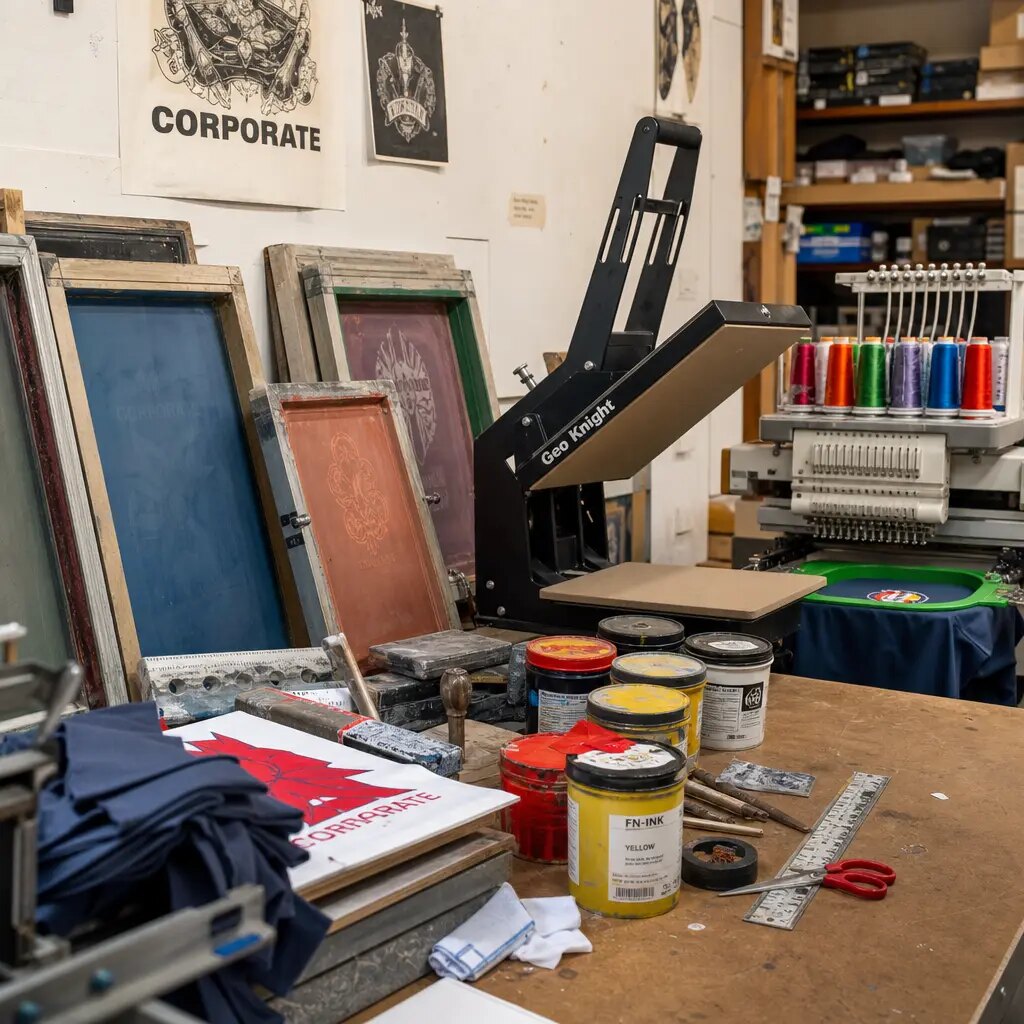
The print method should be chosen before pricing begins, not after the sample is already in review. Screen printing is often the baseline for simple logos and strong color blocks. Heat transfer or digital transfer can handle more detailed art or lower quantities, but the feel and durability may differ. Embroidery, woven labels, and sewn patches can look more premium, yet they also change cost, placement options, and production time. If the logo sits on a flap, pocket, or strap end, the supplier needs a measured placement drawing, not just a reference file.
For farmers market programs, branding usually needs to be readable, simple, and repeatable. A single-color logo placed cleanly on the front flap or front panel is often more stable than a multi-location design with several decoration methods. If Pantone matching matters, say so. If a tonal or close-match result is acceptable, say that too. The factory needs to know whether the decoration must be exact or whether it can vary within a defined visual range.
Do not let artwork become an afterthought in the quote. Ask whether the supplier needs vector files, how many colors are included in the quoted price, and whether setup charges are separate. If the logo is small, confirm minimum line thickness and readability. If the design wraps around a seam or fold, check how the artwork will be split. Those details affect both price and reject risk, and they should be locked before bulk approval.
Compare Sourcing Routes Without False Price Signals
The lowest quote is not always the best source. Factory-direct sourcing gives the clearest cost structure when the specification is stable and the order size is large enough to justify setup. A trading company or agent can be useful when you need coordination across trim, fabric, and packing suppliers, but you should expect one more layer between you and the sewing line. A local decorator on imported blanks may move fastest for a pilot run, but blank quality and print durability become the main risk. The route matters because it changes who controls the fabric, who owns the decoration, and who handles defects.
For farmer-market vendor bags, the right route depends on whether you are building a repeat SKU or testing demand. If you plan to reorder through the season, direct factory supply usually gives better control over consistency and renewal pricing. If the goal is a short campaign, market event, or proof-of-concept batch, a hybrid or local route may be worth the added unit cost because it reduces launch friction. Compare routes on control, speed, repeatability, and claims handling, not on headline unit price alone.
A useful procurement habit is to ask every supplier to identify their role in the supply chain. Who buys the fabric? Who owns the print process? Who packs the cartons? Who is responsible if the finished bag fails inspection? Those questions sound basic, but they expose hidden gaps quickly. If the answer is unclear, the quote is not really comparable. It is just a number attached to an incomplete assumption set.
Build An RFQ That Forces Like-For-Like Quotes
A strong RFQ makes suppliers quote the same object. Include the product name, target use case, finished dimensions, strap spec, canvas weight, lining requirement, reinforcement details, decoration method, logo placement, packaging, target quantity, destination, and required delivery window. If one supplier assumes a 10 oz unlined bag and another quotes a 12 oz lined bag with woven labels and carton inserts, the lower number does not mean lower cost. It means a different product.
Ask the supplier to return the quote in the same order as your RFQ. That makes review faster and exposes missing assumptions. If one supplier skips setup charges, changes the pack-out, or omits a reinforcement step, the gap is easier to see. The best RFQ is not just a list of questions. It is a comparison tool that lets procurement, merchandising, logistics, and finance review the same answer set without guessing what changed.
A practical RFQ pack for this product category should include a measurement sheet, artwork file, packaging instruction, target annual volume if known, and a clear note on what can and cannot change from sample to bulk. That gives the factory enough information to quote accurately and gives your team a clean basis for negotiation.
Sample For Function, Fit, And Carry Comfort
A messenger bag sample is not approved just because the logo is centered. The sample must work under real use conditions. Put the actual contents inside it, then test how it opens, closes, carries, and hangs. Farmers market vendors move quickly, so one-handed access matters. If the flap is hard to open, the strap digs into the shoulder, or the bag twists when loaded, that is a design problem. The sample stage is where you catch it cheaply.
Ask for a production-intent sample, not only a decorative mockup. The approval sample should use the same canvas weight, lining, hardware color, label type, and reinforcement method intended for bulk production. Inspect the sample with a loaded carry test. A bag that looks acceptable on a table may fail when it holds a tablet, cash pouch, produce notes, or personal items for an entire shift. The bag should feel balanced when worn crossbody, not just look neat when empty.
Record sample comments in a way the factory can action directly. Do not say the bag feels a bit better if you can instead say strap length needs to shorten by 2 cm, snap placement should move 1 cm toward center, or pocket opening should widen by 1.5 cm. Specific comments keep re-sampling under control and make the approval record defensible if the bulk shipment is questioned later.
Set QC Tolerances And Acceptance Rules Before Production
Bulk quality needs written acceptance criteria. If a seam opens, a print shifts, or the strap length varies too much, the shipment becomes hard to resolve after the fact. Define what counts as a major defect and what variation is acceptable. A small tonal difference in natural canvas may be normal. A crooked flap, broken stitch row, or unreadable logo should not pass. The factory should know the boundary before production starts, not after cartons are packed.
Measurement tolerances should be specific. State the acceptable range for finished size, strap length, logo placement, and carton count. For smaller bags, a tolerance band of plus or minus 0.5 cm may be reasonable on key dimensions if the spec allows it; for larger bodies, plus or minus 1 cm may be more practical. If the bag is going to retail, cosmetic consistency matters more because end customers compare units side by side. If the bags are for vendor use, durability may matter more than perfect surface uniformity, but the criteria still need to be written.
Use a simple defect framework so everyone can speak the same language. Major defects include open seams, broken hardware, missing reinforcement, unusable closure action, and unreadable branding. Minor defects include loose threads, small mark variation, and slight shade differences that do not affect function. If both sides agree, you can also ask the supplier to inspect to an AQL standard, such as 2.5 for major defects and 4.0 for minor defects. The important part is not the exact number. It is that the standard is agreed before production.
Packing, Logistics, MOQ, And Reorders
Packing is not a small detail. Canvas messenger bags can crease, absorb moisture, or lose shape if they are packed loosely. Decide whether each bag goes into an individual polybag, tissue wrap, recycled sleeve, or protective insert. If the bag has a structured front flap or a decorated surface, ask whether a flat insert is needed to keep the shape stable in transit. If the bags will be retailed or distributed to multiple vendors, barcode labels, carton markings, and clear inner-pack labeling will save time at receiving.
Carton packing also affects freight cost and damage rate. A loosely packed carton may be lighter, but it can deform the bag and create claims on arrival. A tightly packed carton may save space but add compression marks if the bag has structure, print, or a raised label. The RFQ should state carton count, target gross weight, and whether moisture protection is required. If the shipping lane is humid or long, ask what protection the factory includes by default and what costs extra.
MOQ and lead time need to be broken out by variant, not just a single total number. Ask whether MOQ applies per color, per print version, per packaging version, or per trim change. Break lead time into sample, approval, bulk production, and transit windows, and ask for the latest material booking date. If the bag performs well, reorder simplicity matters. You want a supplier who can reproduce the same spec in the next season without rebuilding the job from scratch.
Specification comparison for buyers
| Spec decision | Recommended option | When it fits | Buyer risk to check |
|---|---|---|---|
| Factory direct cut-and-sew | Best control over fabric, stitching, and trim spec | Repeat orders, 1,000+ units, and buyers who need stable construction | Confirm the bulk line uses the same fabric weight, seam allowance, thread type, reinforcement map, and packing spec as the approved sample |
| Trading company or sourcing agent | Useful when you need coordination across multiple factories or trim suppliers | Multi-item programs or buyers without in-house sourcing staff | Ask who actually sews the bag, who buys the fabric, and who owns quality claims if the product fails |
| Local decorator on imported blanks | Fast for small runs and short launch cycles | Low-volume test programs, event merch, or pilot market launches | Check blank quality, print durability, and whether the blank can scale later without changing fit or appearance |
| Regional bag workshop | Good for custom sampling and quick pattern changes | Early-stage designs or projects with several revision rounds | Watch for inconsistent stitching, limited canvas availability, and weaker carton packing discipline |
| Large-volume OEM factory | Best when you need cost efficiency and repeatable output | Established SKUs, seasonal replenishment, and longer planning windows | Verify minimums, color tolerance, and whether the order is large enough for a clean line setup |
| Hybrid sourcing model | Factory makes the bag, local vendor handles decoration or kitting | Programs that need domestic finishing, inserts, or retail labeling | Confirm responsibilities for damage, decoration mismatch, and final pack-out |
| Blank stock from wholesaler | Fastest path when branding is minimal | Urgent programs or proof-of-concept orders | Inspect handle strength, pocket layout, and whether stock dimensions match the merchandising plan |
| Private-label ODM package | Best when you want a proven base bag with limited branding changes | Buyers who want speed and lower development cost | Make sure the base pattern, trim list, print position, and packing spec are locked before quote signoff |
Buyer checklist before sampling
- Finished width, height, and gusset depth are written in millimeters or inches, with the target size and the acceptable tolerance both stated.
- Canvas weight is specified in oz or GSM, including whether the fabric is raw, washed, pre-shrunk, dyed, or resin-finished.
- Print method, number of colors, print area, placement, and any Pantone matching requirement are stated on the RFQ.
- Reinforcement points are defined for strap anchors, flap corners, pocket seams, base corners, and any load-bearing panel.
- MOQ is listed by color, print version, and packaging variant, not just a single headline number.
- Sample approval covers stitch quality, color match, print registration, closure action, strap comfort, and loaded carry feel.
- Packing format is clear: individual polybag, tissue wrap, insert, carton count, barcode label, and moisture protection if needed.
- Lead time is broken into sample, pre-production, bulk production, and shipping windows, with the latest material booking date stated.
- Quote includes incoterms, freight assumptions, and any setup, screen, plate, digitizing, or artwork charges.
- Supplier states acceptable overage, under-run, defect handling, and rework or replacement process before production starts.
Factory quote questions to send
- What exact canvas weight, weave type, and finishing will you use for bulk production?
- Is the sample made on the same machine line and with the same fabric lot as the bulk order?
- What is the MOQ per color, per print design, and per custom trim option?
- Which print method are you quoting, and what setup, screen, plate, or digitizing charges are included?
- What finished dimensions are you measuring, and what tolerance do you allow on width, height, gusset depth, and strap length?
- What seam allowance, stitch density, and reinforcement method do you plan to use at load points?
- How many samples can you provide, and what is the approval process after comments?
- What carton pack is standard, and can you match my retail pack or distribution pack requirement?
- What are the production lead time, shipping lead time, and the latest material booking date?
- Which defect types are treated as major, minor, or acceptable cosmetic variation?
Quality-control points to confirm
- Finished width, height, and gusset depth should stay within the approved tolerance, commonly plus or minus 0.5 cm for smaller bags and plus or minus 1 cm for larger dimensions, if your spec sheet allows it.
- Stitch density is even at stress points, especially strap anchors, flap edges, pocket corners, and base seams.
- Bar-tacks or reinforcement rows are present at the specified load points and are not skipped, short, or misaligned.
- Print registration is aligned, with no smearing, cracking, pinholes, or visible color bleed after rub testing.
- Logo size and placement match the approved artwork, with the same distance from seam, edge, or centerline as the golden sample.
- Strap length, buckle function, and adjustment range match the approved pattern and wear position.
- Bag opening, flap closure, zipper pull, snap action, or magnetic closure work smoothly with one hand.
- Seams remain flat after loading, with no skipped stitches, broken thread, or puckering at corners.
- Color variation is within the approved batch range across body fabric, lining, trims, and labels.
- Cartons are packed to prevent crushing, moisture damage, and corner deformation in transit.