Why coffee roasters need a procurement-grade RFQ
Canvas messenger bags for coffee roasters sit between merchandise, packaging, sales support, and daily utility gear. One program may use the same bag for cafe retail, wholesale account onboarding, trade show giveaways, staff issue, subscription gifts, or coffee education kits. That range is useful commercially, but it creates sourcing ambiguity. A vague RFQ lets one factory price a soft unlined promotional bag, another price a structured retail bag with lining and heavier hardware, and a third assume a different print process entirely. The buyer then receives three prices that appear comparable but are built on different products.
The core procurement problem is not finding a factory that can sew a canvas messenger bag. It is defining the cost-driving choices early enough that suppliers quote the same scope. Fabric weight, lining, pocket count, strap reinforcement, print size, hardware finish, carton density, and sample approval method all change price and risk. For coffee roasters, these details matter because the bag often carries brand value beyond its material cost. If the bag is sold beside roasted coffee or handed to a wholesale buyer, uneven print, weak strap stitching, or cheap-looking hardware reflects directly on the roaster.
A strong RFQ should work like a translation tool between brand, operations, and factory production. Brand teams need the logo, color, and feel protected. Procurement needs comparable pricing and realistic lead times. Operations needs carton data, labeling, and warehouse-friendly packing. The factory needs enough technical direction to avoid guessing. When the RFQ answers these needs in one document, the sample process becomes shorter and the supplier comparison becomes cleaner.
- Use cases to define: cafe merchandise, wholesale rep bag, account-opening kit, event gift, subscription premium, employee issue, coffee training pack
- Quote drift usually comes from missing fabric weight, lining, strap construction, pocket count, print method, hardware finish, and packing details
- A useful RFQ lets two or three suppliers price nearly the same bag instead of reinterpreting the concept from scratch
- Procurement should compare unit cost together with setup charges, carton data, defect risk, and reorder repeatability
Start with the job the bag has to do
Coffee brands often start with styling language: natural canvas, dark olive canvas, antique brass hardware, simple front-flap logo, maybe a side label. That is a reasonable creative direction, but sourcing should start with what the bag must do. A lightweight retail gift bag that holds two coffee packs can use simpler construction than a wholesale representative bag carrying sample bags, a tablet, cupping forms, brew tools, and catalogs. A subscription premium may need a softer handfeel and lower landed cost, while a cafe retail product may need stronger structure and cleaner internal finish.
The RFQ should state the expected load in practical terms rather than only saying durable. For a coffee roaster, useful load examples include two 1 kg coffee bags, four 250 g retail packs, a 13-inch tablet, a notebook and cupping spoon set, or a mix of sample bags and sales material. This helps the factory judge gusset depth, strap width, attachment reinforcement, flap length, and whether a top zipper is necessary. It also helps procurement reject overbuilt quotes that include features the buyer does not need.
Dimensions should be written as finished measurements in centimeters, with an acceptable tolerance. Include width, height, gusset, flap drop, opening width, and strap adjustment range. If the bag needs to fit a laptop or tablet, specify the actual device size and whether the sleeve must be padded. If the bag must hold coffee packs standing upright, give the pack dimensions. Messenger bag patterns become expensive to correct when the first sample is judged against an unstated expectation.
- Write finished size as width x height x gusset in cm, plus flap drop and opening width
- State target contents using real coffee-related loads, such as retail packs, sample bags, notebooks, tablets, or brew tools
- Define load category: light promotional use, medium daily carry, or heavier field-sales use
- If electronics compatibility matters, specify device size, padded or unpadded sleeve, and closure clearance
- Ask the supplier to confirm whether the requested dimensions create any sewing or packing limitations
Specify canvas fabric without vague language
The phrase heavy canvas is not enough for an RFQ. For most coffee roaster messenger bags, 12 oz to 16 oz canvas, roughly 340 to 450 GSM, is a practical working range. It gives enough body for daily carry and brand presentation without pushing the bag into excessive weight and freight cost. Lighter canvas can work for budget event giveaways or softer fashion merchandise, but it may wrinkle more easily, show print-through, and collapse when loaded. Heavier canvas can feel premium, but it raises fabric cost, makes seam intersections harder to sew, and can create bulk around flap corners and strap attachments.
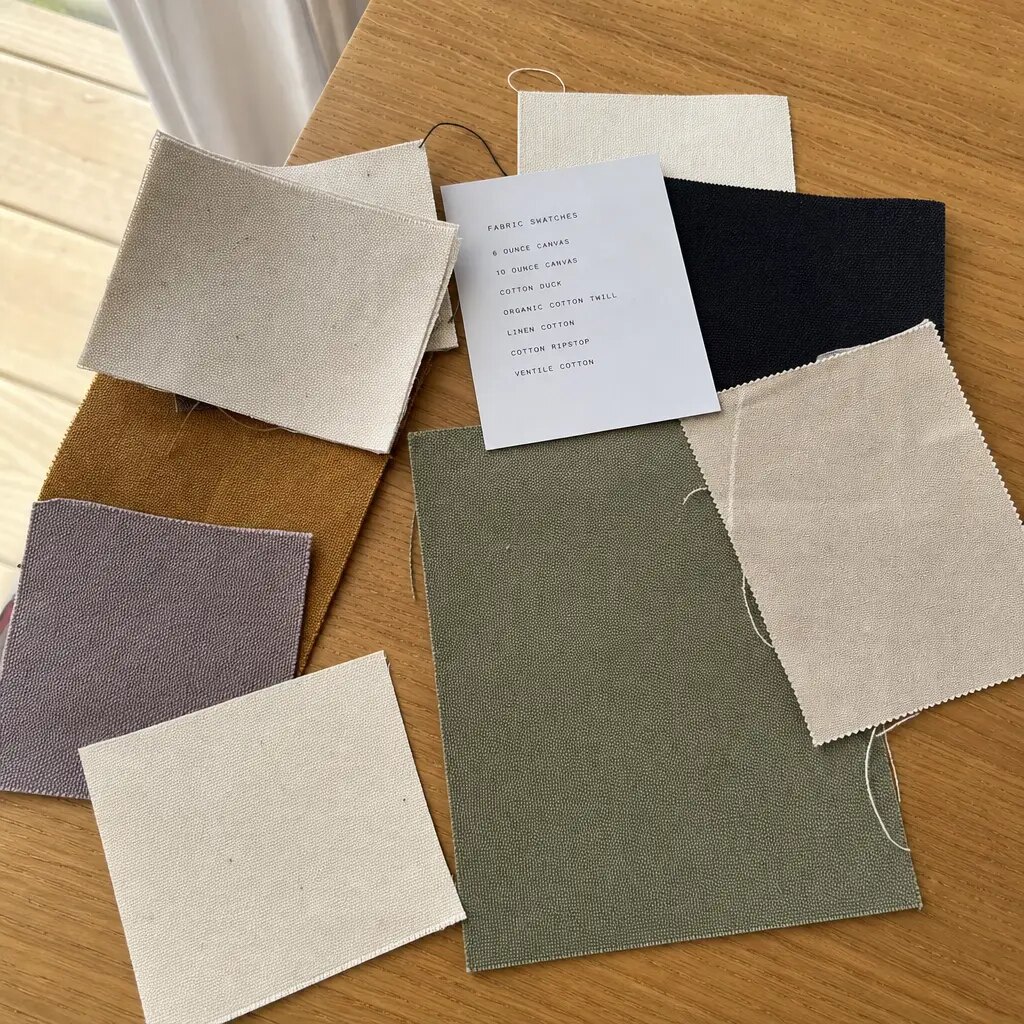
The RFQ should state fabric composition, weight, weave if known, and tolerance. Cotton canvas is common, but cotton-rich blends may be proposed for cost, color consistency, or shrinkage control. Natural cotton canvas also has shade variation. That variation may fit a craft coffee aesthetic, but procurement should decide whether it is acceptable before production. Dyed canvas needs a color reference, such as Pantone, lab dip, or approved swatch, plus a realistic tolerance because fabric dye lots rarely match digital artwork exactly.
Pre-washed or enzyme-washed canvas can improve handfeel and reduce stiffness, which may matter for retail merchandise. It also introduces extra variables: shrinkage, shade variation, softening differences, and potential measurement drift. If washed canvas is requested, ask how shrinkage is controlled before cutting and whether the approved sample will be the reference for future reorders. If a clean, repeatable reorder is more important than a soft worn-in feel, untreated stock canvas may be the safer choice.
- Recommended first range: 12 oz to 16 oz canvas, approximately 340 to 450 GSM
- State acceptable GSM tolerance and whether fabric is stock, custom dyed, washed, or untreated
- For natural canvas, decide whether shade specks, slubs, and lot variation are acceptable
- For dyed canvas, request lab dip or swatch approval before bulk cutting
- Ask how washing affects shrinkage, measurement tolerance, color consistency, and lead time
Choose construction by channel, not by instinct
A messenger bag can look similar in photos while being very different in construction. An unlined canvas body with clean bound seams is usually the most efficient option for event programs, wholesale kits, staff issue, and practical brand merchandise. It can feel authentic and sturdy without unnecessary parts. A lined bag with internal pockets looks more finished and can justify a higher retail price, but it adds material, labor, inspection points, and potential defects. Procurement should choose the construction level based on the channel, not only on what sounds premium.
Important construction decisions include flap shape, gusset depth, base structure, top zipper, inner pocket, lining, binding, and strap attachment. For a coffee roaster, a top zipper is useful when the bag will be used for travel, wholesale visits, or carrying electronics. For a simple cafe merchandise bag, a flap with magnetic snap may be enough. A reinforced base helps when the bag carries heavier coffee packs, but it can also add stiffness and packing volume. Every added feature should have a reason tied to the use case.
Pocket planning is where many first orders become overcomplicated. A laptop sleeve, zipper pocket, card slot, pen holder, bottle loop, and key hook may all sound useful, but each one adds cost and quality-control checkpoints. For a first bulk order, consider one internal slip pocket and one zipper pocket only if there is a clear need. If the bag is meant for coffee education kits, specify the dimensions of the booklet, cupping forms, or tools that pockets must hold. If it is primarily retail merchandise, a cleaner interior may be more cost-effective.
- Unlined with bound seams: efficient for practical merchandise, events, and wholesale kits
- Lined construction: better for premium retail programs but adds labor and defect risk
- Top zipper: useful for travel, electronics, trade shows, and sales team use
- Reinforced base: helpful for heavier coffee packs but increases stiffness and carton volume
- Limit pocket count unless each pocket has a defined function and size
Control branding, labels, and hardware
Coffee roaster branding often looks simple on a screen, but production details decide whether the final bag feels sharp or cheap. A small one-color logo on the flap is usually straightforward. A large dense print on natural canvas is more sensitive because canvas texture can create pinholes, uneven ink deposit, and visible fabric show-through. Screen printing is generally the most practical option for simple logos, cafe names, origin graphics, and limited-color artwork. Embroidery is durable but can distort a flap when stitch density is high. Woven labels work well for small brand marks and repeatable logo application across several bag styles.
The RFQ should include artwork files, print size, placement, color count, and acceptable placement tolerance. Do not rely on a visual mockup only. Write the distance from the flap edge or bag centerline, and ask the supplier to confirm whether seams, folds, snaps, or flap curvature affect print placement. If the logo color must match brand standards, state the reference and accept that ink on natural canvas will not look identical to ink on paper or digital screens. For dark prints, ask about cure and rub resistance so the print does not transfer during packing or use.
Hardware and trims are another common source of quote mismatch. Antique brass, matte black, gunmetal, nickel-look, cotton webbing, polyester webbing, zipper pullers, magnetic snaps, buckles, rivets, hangtags, side labels, and care labels all need specification. If the RFQ says only premium hardware, one supplier may quote stock zinc-alloy parts while another quotes a higher-cost finish. Include reference photos and state whether substitutions require written approval. For brand consistency, mixed hardware shades across zipper, slider, buckle, and snap should be treated as a quality issue, not a minor surprise at final inspection.
- Best value route for many roasters: 1-color or 2-color screen print plus woven side label
- For small logos, woven labels may reproduce better than direct print on textured canvas
- Define print size, placement, color reference, and placement tolerance in the RFQ
- State hardware finish and whether stock alternatives are allowed
- Require approval for any change to zipper, puller, slider, buckle, snap, rivet, label, or webbing
Use MOQ strategy to protect the first order
MOQ for canvas messenger bags is driven by more than sewing capacity. Fabric color, custom dyeing, print screens, woven labels, hardware sourcing, cutting efficiency, and packing all influence the minimum. Marketing teams often want several colorways or artwork versions for launch. That variety can be attractive on the shelf, but it can weaken price and create production complexity before the buyer has sales data. A factory may accept the order, but the quote may include surcharges, material leftovers, lower cutting efficiency, or uneven carton counts.
For a first bulk order, a conservative procurement route is one body color, one artwork version, one print position, and one packing method. This creates cleaner supplier comparisons and makes the pre-production sample more meaningful. If the roaster needs to test demand, reduce variables instead of splitting a small order into many versions. A pilot order can still feel branded and useful without creating four separate fabric and artwork streams.
If multiple locations, cafes, or wholesale teams need different branding, ask whether one production run can share the same bag body with different labels or print screens. Sometimes mixed prints are workable; sometimes they trigger setup charges or MOQ by artwork. Put this in the quote table explicitly. Also ask whether future reorders can use the same labels, trims, and fabric references. Reorder flexibility matters because coffee brands often need merchandise again after seasonal launches, trade shows, or new cafe openings.
- Start with one colorway and one artwork version when cost, timing, or quality risk matters
- Ask MOQ by body color, print version, label version, and custom hardware finish
- Custom-dyed fabric and custom woven labels usually raise MOQ or extend lead time
- Shared pattern across SKUs is easier than different bag sizes or pocket layouts
- For pilot orders, reduce variables first; do not simply force a complex product into a smaller quantity
Ask quote questions that expose real cost drivers
A final unit price is not enough for a procurement decision. The quote sheet should separate the main cost drivers so buyers can compare suppliers on equal terms. At minimum, request unit price by quantity break, sample charge, print screen charge, artwork setup, label charge, tooling or mold charge, packing cost, lead time, carton quantity, carton dimensions, and estimated gross weight. Some factories will not disclose a full cost breakdown, but they can still separate charges that affect comparison and reorder planning.
This matters because two quotes that appear far apart may not cover the same product. One supplier may be quoting 12 oz canvas, unlined construction, polyester webbing, stock hardware, and 40 pieces per carton. Another may be quoting 16 oz canvas, cotton webbing, lining, top zipper, custom woven label, and 20 pieces per carton. The lower price may be appropriate if the program is a giveaway; it may be wrong if the bag is meant for retail sale or daily staff use. Procurement should normalize the specification before negotiating price.
Landed cost should also be considered early. Messenger bags are bulkier than flat pouches and can be sensitive to folding. Carton density, gross weight, and deformation risk affect freight, warehousing, and customer presentation. A slightly higher ex-factory price may be acceptable if the product packs cleanly, avoids rework, and reduces damage risk. Ask for estimated carton dimensions at quote stage, then update them after the approved pre-production sample because final structure and packing can change volume.
- Quote fields to request: unit price, quantity breaks, sample fee, screen fee, label fee, tooling fee, lead time, carton data
- Ask suppliers to confirm whether the quote assumes stock fabric, custom fabric, stock trims, or custom sourced trims
- Compare the cost impact of lining, top zipper, extra pockets, reinforced base, and custom hardware separately
- Request net bag weight and packed gross weight for landed-cost planning
- Use the same RFQ table for every supplier so differences are visible instead of buried in email replies
Approve samples through function, not appearance alone
A messenger bag sample is not only a color and logo review. It is the buyer's best opportunity to lock the product before fabric is cut in bulk. The sample should be loaded with realistic contents: coffee packs, notebooks, tablets, catalogs, brew tools, or whatever the use case requires. Check whether the flap closes cleanly when loaded, whether the gusset holds shape, whether the strap twists, whether the zipper opening is practical, and whether pockets can be used without fighting the bag structure.
Sample comments should be written against a measurement sheet and photo record. Measure width, height, gusset, flap drop, strap length, pocket size, print position, and hardware placement. Photograph the front, back, inside, bottom, strap attachment, zipper, snap, labels, and packed fold. This creates a reference for the supplier and an internal record for procurement, brand, and operations. Verbal comments such as make it nicer or more premium are hard to produce against; measured comments reduce extra sample rounds.
For bulk production, a physical pre-production sample should be approved and kept as the sealed reference whenever possible. This is especially useful for coffee roasters planning future reorders, because team members, artwork files, and suppliers may change over time. If the bag uses natural canvas or washed fabric, the approved sample should define acceptable handfeel and shade direction. If the bag uses custom hardware or labels, the sample should confirm finish, placement, and attachment method.
- Load test the sample with realistic coffee-related contents before approval
- Measure key dimensions and compare them to the RFQ tolerance
- Check strap comfort at minimum and maximum length
- Review zipper movement, flap alignment, pocket access, and closure performance while loaded
- Keep a physical approved sample for production and future reorder comparison
Set QC thresholds before production starts
Quality control on canvas messenger bags should focus on function, visible brand presentation, and load-bearing construction. Natural fabric variation may be acceptable, but crooked flaps, weak strap stitching, failed zippers, sharp hardware, and poor print placement are not. If the QC instruction says only good workmanship, the factory and inspector have too much room to interpret. Procurement should define what counts as critical, major, and minor before production begins.
Measurement tolerance should cover finished width, height, gusset, flap drop, opening width, strap length, print placement, pocket size, and hardware location. Functional checks should include zipper operation, snap or buckle alignment, strap slider movement, seam strength, and reinforcement stitching. Visual checks should include logo clarity, print cure, fabric contamination, topstitch consistency, binding quality, hardware finish, odor, and loose threads. If the bag is unlined, internal seam finish matters because customers will see and use the inside.
For print quality, define the defect language clearly. Smudging, ghosting, obvious misregistration, uncured ink, heavy pinholes, and color drift should be flagged. Minor texture from canvas weave may be acceptable if it matches the approved sample. For construction, missed X-box stitching at strap attachments, broken stitches, skipped stitches at load points, and seam slippage should be major defects. For hardware, rust, sharp edges, weak magnetic snaps, broken zipper teeth, and inconsistent plating should be unacceptable.
- Define critical, major, and minor defects before inspection
- Set measurement tolerance for body size, gusset, flap, strap, pocket, print, and hardware placement
- Treat failed closure, sharp hardware, missed reinforcement, seam slippage, and broken zipper as serious defects
- Use the approved sample to judge natural canvas texture, shade range, print appearance, and handfeel
- Inspect the inside of the bag as carefully as the branded front flap
- If your QA team uses AQL, state the sampling level and defect classification in the RFQ or purchase order
Plan packing, cartons, compliance, and reorder control
Packing is often treated as a final detail, but messenger bags can be bulky and easy to deform. A bag with a structured flap, magnetic snap, zipper puller, or large front print can arrive with deep creases or pressure marks if cartons are overpacked. On the other hand, packing too loosely increases freight cost. The RFQ should ask the supplier for the proposed folding method, pieces per carton, carton dimensions, gross weight, and any protective materials included.
Individual polybags are not always necessary, but they may be required for ecommerce, distributor handling, barcode control, moisture protection, or retail presentation. If sustainability goals discourage polybags, state the alternative packing expectation clearly, such as paper bands, master polybag by bundle, or no individual bag. If the bag has a printed flap, ask whether tissue, interleaving, or a fold change is needed to prevent ink abrasion or hard creases. Packing photos from the supplier are useful before final shipment.
Warehouse teams need carton data before goods arrive. Oversized cartons increase handling effort and storage inefficiency, while cartons that are too heavy can violate internal handling rules. A typical export carton may hold around 20 to 40 canvas messenger bags depending on fabric weight, lining, hardware, and folding method, but the exact number should be confirmed after sample approval. Procurement should also define carton marks, barcode sticker placement, SKU separation, and whether mixed colorways or artworks can share a carton.
Reorder control matters as much as the first shipment. Ask the factory to assign a revision number to the pattern, print file, label art, and packing spec. Store the approved sample, a measurement sheet, and a photo set so future reorders can be compared against the same reference. If the supplier proposes a material substitute later, require written approval before cutting. Coffee roasters often reorder seasonal merchandise months later, and this is where small undocumented changes become expensive.
- Request proposed folding method, pieces per carton, carton dimensions, and gross weight at quote stage
- Clarify whether individual polybags, tissue, silica gel, hangtags, barcode labels, or master bags are included
- Avoid over-compression that creases printed flaps or leaves hardware pressure marks
- Set a carton gross weight target that fits warehouse handling standards
- Define carton marks, SKU separation, barcode placement, and retail-ready packing requirements
- Require written approval for any material, trim, or packing change after sample signoff
Specification comparison for buyers
| Spec decision | Recommended option | When it fits | Buyer risk to check |
|---|---|---|---|
| Canvas weight | 12 oz to 16 oz canvas, about 340 to 450 GSM, with an agreed tolerance such as +/- 5% | Good working range for daily-use promotional and retail messenger bags that may carry coffee packs, tablets, catalogs, cupping notes, or cafe tools | Below this range the bag can collapse, wrinkle, or show print-through; above this range sewing cost, bag weight, needle wear, and freight cost can rise quickly |
| Fabric construction | Cotton canvas or cotton-rich canvas; request pre-wash or enzyme wash only if a softer handfeel is part of the approved brief | Useful when roaster branding needs a natural, less stiff retail feel for gift packs, subscription merchandise, or cafe shelf sales | Washed fabric can shift shade lot to lot, shrink after cutting if not controlled, and create measurement drift if the pattern allowance is not adjusted |
| Body dimensions | Write finished width, height, gusset, flap drop, and opening width in centimeters, plus a tolerance such as +/- 5 mm | Best for buyers comparing suppliers against the same pattern, especially when the bag must fit packaged coffee or a tablet sleeve | Without explicit tolerances, suppliers may quote materially different sizes that look similar in photos but perform differently in use |
| Interior finish | Unlined body with bound seams and one internal pocket, or 210D polyester or cotton lining for premium retail programs | Unlined keeps cost lower for events, wholesale account kits, and distributor programs; lining fits ecommerce, gift-channel, or higher-ticket merchandise | Lining can hide raw edges but also introduces risks: color bleeding, seam puckering, uneven pocket placement, trapped threads, and harder final inspection |
| Print method | 1-color or 2-color screen print on flap or body; woven label for small logos or repeatable brand marks across SKUs | Screen print works well for coffee roaster logos, simple illustrations, origin graphics, and cafe branding; woven labels improve consistency on small marks | Large dark prints on natural canvas may show pinholes, crocking, registration drift, or weak cure if ink, mesh, and drying process are not specified |
| Closure style | Top zipper plus flap with magnetic snap, buckle detail, or hidden snap depending on price tier | Works when buyers need secure carrying for trade shows, wholesale visits, staff use, or retail customers carrying electronics | Snap placement tolerance, magnet strength, zipper wave, puller finish, and hardware substitution rules should be approved before bulk production |
| Shoulder strap build | 38 mm cotton or polyester webbing with adjustable slider and reinforced X-box stitching at load points | Suitable for medium-load messenger bags carrying coffee samples, documents, small devices, or cafe training materials | Weak webbing, thin slider hardware, dye-lot mismatch, low stitch density, or narrow attachment points can cause functional failures and returns |
| Pocket layout | One internal slip pocket plus one zipper pocket only if the use case needs organization | Keeps the first order practical while still useful for notebooks, invoices, brew cards, sample bags, or small accessories | Too many pockets add labor, measurement checkpoints, lining complexity, and sampling revisions without always improving buyer value |
| MOQ route | Single body color, one artwork version, one print position, and one shared packing method for the first order | Best for first bulk run, buyer pilot, cafe chain rollout, or distributor gift program where cost control and reorder clarity matter | Too many color splits create fabric minimums, setup charges, carton imbalance, leftover material, and quote comparisons that are hard to normalize |
Buyer checklist before sampling
- Define end use before the RFQ: retail merchandise, staff issue, trade show gifting, wholesale account onboarding, cafe launch kit, coffee education pack, or subscription add-on
- State target bag size in centimeters, including finished width, height, gusset, flap drop, opening width, and adjustable strap length range
- Specify what the bag must carry: 250 g bags, 340 g bags, 1 kg bags, notebooks, brew tools, sample trays, a tablet, a laptop sleeve, or sales catalogs
- Specify canvas weight in GSM or oz and include an acceptable fabric-weight tolerance instead of writing only heavy canvas or thick cotton
- Note whether natural cotton shade variation is acceptable or whether dyed fabric must match a Pantone, lab dip, or approved fabric swatch
- Describe print artwork size, print colors, print placement, print tolerance, and whether inside label, side label, hangtag, or care label branding is required
- State required compartments: laptop sleeve, bottle loop, zipper pocket, card slot, pen holder, key loop, divider, or plain open interior
- Decide whether lining is necessary; many buyers over-specify lining when bound internal seams and one pocket would meet the use case
- Confirm hardware finish preference such as antique brass, matte black, gunmetal, nickel-free silver look, or stock factory finish with approval required
- Specify shoulder strap width, material, adjustment range, slider material, attachment method, and reinforcement stitch pattern
Factory quote questions to send
- What exact fabric composition, weave, weight, and acceptable GSM tolerance are you quoting for the body fabric?
- Is the quoted canvas stock fabric, greige fabric to be dyed, or custom-dyed fabric, and how does that change MOQ, color tolerance, and lead time?
- Will the canvas be pre-shrunk, pre-washed, enzyme washed, or untreated, and what shrinkage allowance is used in the pattern?
- What finished dimensions are included in the quote, and what tolerance are you working to for width, height, gusset, flap drop, and strap length?
- Does the unit price include the pre-production sample, print screens, artwork setup, woven label, care label, hangtag, and any metal logo mold if applicable?
- What print method are you quoting for this artwork, what maximum print size is included, and when does cost change because of size or color count?
- What ink system will be used on canvas, and how will cure, rub resistance, and color appearance be checked before shipment?
- Are straps made from cotton webbing, polyester webbing, or self-fabric, and what width, thickness, color tolerance, and slider type are included?
- How many stitches per inch or per 3 centimeters are used on strap box stitches, pocket attachments, flap seams, and other load-bearing seams?
- What lining material is included, if any, and how are raw internal seams finished if the bag is unlined?
Quality-control points to confirm
- Fabric weight within agreed tolerance and consistent handfeel across the inspected lot
- Fabric color within approved visual range against swatch, lab dip, or sealed reference sample
- Bag body size, gusset width, flap drop, opening width, and strap length within approved measurement tolerance
- Print position centered and level to approved sample, with no smudging, ghosting, heavy pinholes, offset marks, or visible misregistration
- Logo color visually acceptable against approved reference under normal daylight or agreed light source
- Print cure and rub resistance acceptable for intended use, with no obvious tackiness or transfer from normal handling
- Zipper runs smoothly with no wave distortion, skipped teeth, stuck puller, broken stopper, or uneven tape insertion
- Magnetic snap, buckle, or hook-and-loop placement symmetrical, secure, and aligned with the flap when the bag is loaded
- Shoulder strap webbing width, color, thickness, slider movement, and reinforcement stitching match approved sample
- Load-bearing seams use clean backtack or X-box reinforcement with no missed stitches, broken threads, seam slippage, or weak attachment points