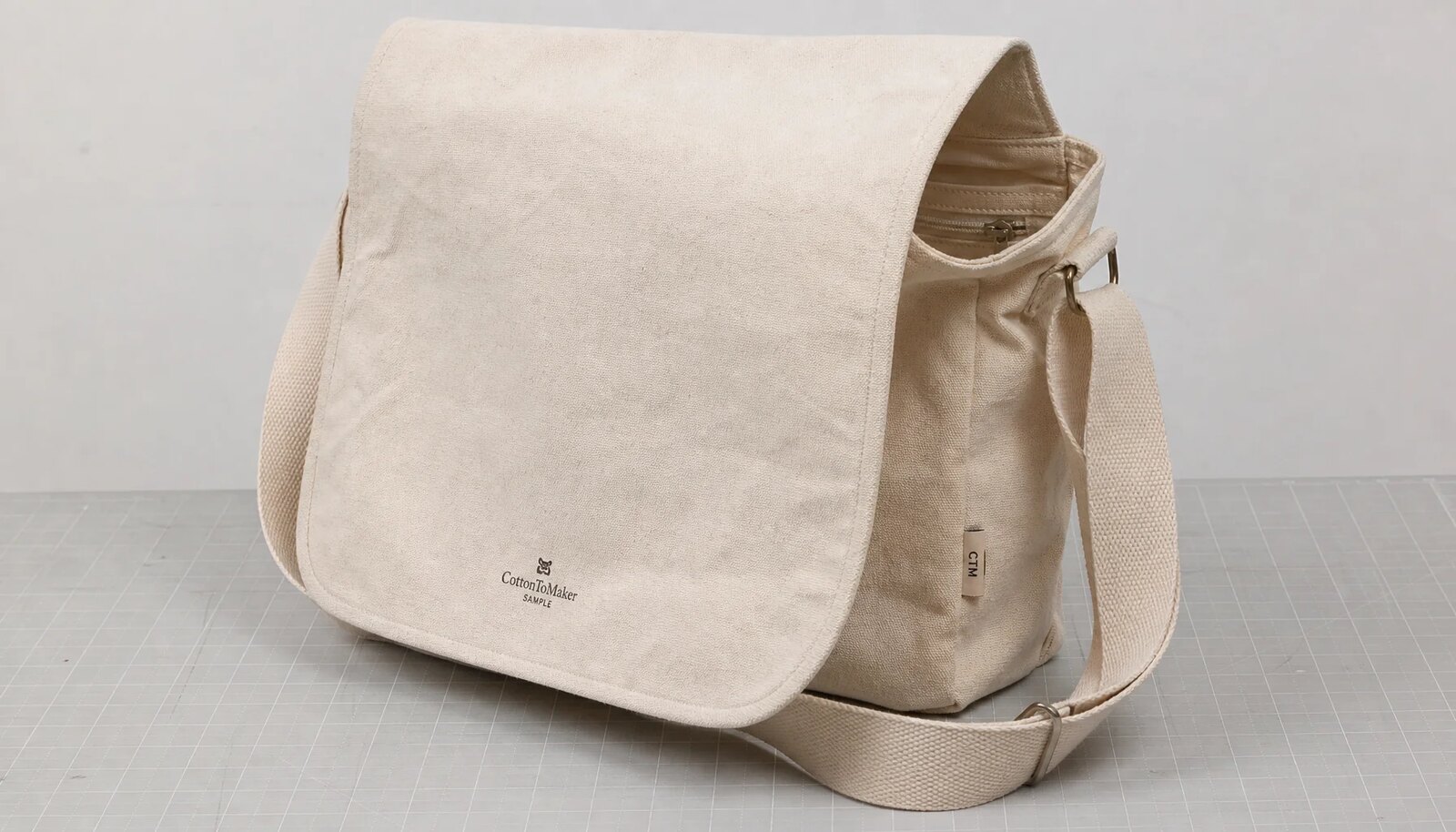
The Buying Problem: A Nice Sample Can Still Fail Retail Inspection
Canvas messenger bags for hotel retail sit between souvenir merchandise and functional travel carry. They must look good on a shelf, survive guest use, and carry the hotel or resort brand without looking like a disposable giveaway. The common mistake is approving a clean-looking sample without defining the inspection points that matter after 1,000 or 10,000 pieces are sewn.
A proper canvas messenger bags quality inspection checklist for hotel retail should connect the commercial spec to the factory process. Fabric weight, flap shape, strap reinforcement, logo method, packing compression, and carton handling all affect the final bag. If these details are not written into the RFQ, different suppliers will quote different products while using the same words.
- Treat the sample as a production control tool, not only a sales presentation piece.
- Inspect both appearance and function because retail guests will carry real weight.
- Record tolerances before bulk production so the factory knows what can pass and what must be reworked.
- Compare supplier quotes only after fabric, hardware, decoration, packing, and test requirements are aligned.
Start with Finished Use, Not Only Bag Size
A messenger bag for a hotel gift shop may carry a tablet, guidebook, water bottle, room amenity set, or local market purchase. A resort may want a soft natural canvas bag for beachside retail, while a city hotel may need a darker, more structured bag that can hold documents. These use cases lead to different fabric weight, gusset depth, strap design, and closure requirements.
Finished size should be stated as width, height, gusset, flap coverage, strap length, and pocket layout. Do not rely on a photo reference alone. A small change in gusset depth can change fabric consumption, carton volume, sewing difficulty, and the way the flap sits after packing. For hotel retail, the bag should look tidy when empty, because many units are displayed on shelves or hooks before purchase.
- For light souvenir use, specify a slim body and lighter canvas, but still reinforce the strap.
- For tablet or document carry, define the internal size and whether padding or lining is needed.
- For resort retail, consider natural or washed canvas, but test shrinkage and color consistency.
- For distributor replenishment, keep the spec stable so repeat orders match the first retail launch.
Fabric Weight, GSM, and Construction Choices
Canvas weight is one of the first quote drivers, but buyers often compare it loosely. A 10 oz canvas may be suitable for a lightweight promotional shoulder bag, while 12 oz to 16 oz is more realistic for hotel retail messenger bags that need a better hand feel. In GSM terms, this often falls around 340 to 540 GSM, depending on yarn count, weave density, finishing, and whether the fabric is natural, dyed, or washed.
Heavier canvas improves perceived value but creates tradeoffs. Thick seams at flap corners may become bulky, needle marks may become more visible, and carton weight increases. Lighter canvas reduces cost and freight, but it may wrinkle heavily, collapse on shelf, or fail around strap attachment points. The best spec is not the heaviest fabric; it is the fabric that matches the retail price point and load requirement.
- Request actual fabric weight tolerance, such as plus or minus 5 percent, instead of accepting a vague fabric description.
- Use 12 oz canvas for balanced cost and structure, and 14 oz to 16 oz for a more premium retail hand feel.
- Specify whether fabric is cotton, cotton-poly blend, organic cotton, recycled cotton blend, or another composition.
- If dyed canvas is required, confirm lab dip approval, shade tolerance, and minimum dye lot quantity before quoting.
Logo Method and Print Placement Must Match the Bag Pattern
For hotel retail, decoration usually carries the brand value. Common options include screen print, heat transfer, embroidery, woven side label, leather or PU patch, and jacquard webbing label. Screen print works well for flat artwork and destination graphics. Woven labels and patches work better when the buyer wants a quieter retail identity instead of a large front logo.
The important inspection issue is placement after sewing, not only artwork approval on a flat digital mockup. A messenger flap bends over the bag body, and seam allowance changes the visible area. If the print is too close to the flap edge, it may look crooked even when the print itself is centered. If the artwork crosses a seam or thick layer, opacity and curing may become inconsistent.
- For screen print, define color count, Pantone target, print size, position tolerance, and curing requirement.
- For embroidery, confirm stitch density, backing material, and whether the canvas can support the design without puckering.
- For patches, define patch material, edge finish, stitch color, and placement tolerance after flap folding.
- For woven labels, specify label size, fold type, insertion seam, and whether the CTM or private label is visible externally.
MOQ Logic: Why the Same Bag Can Have Different Minimums
MOQ is not only a factory preference. It depends on fabric sourcing, dyeing, printing setup, hardware purchase, label production, and packing materials. Natural cotton canvas often has a lower MOQ because fabric is easier to source. Dyed canvas, custom lining, custom metal hardware, and private label retail packaging can raise the minimum because each component has its own supplier threshold.
For hotel retail buyers, the practical approach is to separate the base bag MOQ from customization MOQ. A supplier may produce a natural canvas messenger bag at a moderate quantity, but a custom dyed shade or embossed metal buckle may require a larger batch. If the buyer does not separate these points, quotes may look inconsistent and procurement may choose a low number that cannot actually be produced in the approved spec.
- Ask for MOQ by version: stock fabric with print, dyed fabric, custom lining, custom patch, and retail packing.
- Use natural or black canvas when testing a new retail program with uncertain sell-through.
- Move to dyed or washed canvas after the hotel retail buyer has stable replenishment demand.
- For multi-property hotel groups, combine color or fabric purchasing across properties while varying labels or hangtags.
Sample Approval Should Freeze Materials, Not Just Appearance
A sales sample can be made from available fabric and close-match hardware. A pre-production sample should be made from the materials intended for bulk production. This distinction matters because canvas shrinkage, strap hand feel, zipper quality, and print curing can change when the factory switches from sample-room materials to bulk materials.
The sample approval file should include photos, measurements, fabric weight record, hardware details, print position, label placement, and packing method. For hotel retail, approve the bag after it has been packed and unpacked, not only fresh from the sample table. Flap creasing, strap twisting, and print transfer marks often appear after compression.
- Measure the approved sample in relaxed condition and record finished size tolerance.
- Weigh the sample and keep it as a reference for fabric and hardware comparison.
- Perform a simple load test using the intended guest carry weight before approving bulk.
- Pack the sample in the proposed polybag or paper band and inspect flap shape after 24 hours.
- Keep one sealed approval sample at the buyer side and one at the factory QC desk.
Factory Inspection Thresholds for Retail Acceptance
A general visual inspection is not enough for messenger bags because many failures are functional. The inspection plan should include appearance defects, measurement defects, functional defects, and packing defects. AQL 2.5 for major defects and 4.0 for minor defects is a common commercial starting point, but the buyer should add product-specific tests for strap strength, closure operation, and print durability.
Major defects should include broken stitches at stress points, failed zipper, missing closure, wrong logo, severe shade mismatch, open seams, unsafe sharp hardware, and wrong size outside tolerance. Minor defects may include light thread ends, small washable marks, slight print speckling within limit, or minor creasing that does not affect retail presentation. The factory and third-party inspector should use the same defect list.
- Set strap load test weight based on expected use, for example books, tablet, and bottle together rather than an empty bag.
- Cycle zippers, snaps, buckles, and sliders during inspection instead of only viewing them closed.
- Check seam allowance and trimming inside the bag because loose threads can create a cheap retail impression.
- Review first packed cartons before final inspection to catch carton compression and mixed-SKU errors early.
Packing Decisions Affect Shelf Appearance and Landed Cost
Packing is often treated as the last detail, but it changes retail presentation and freight cost. Individual polybags protect against dust and moisture during export. Paper belly bands reduce plastic use and can improve shelf presentation, but they offer less protection if cartons face humidity. Hangtags, barcode stickers, carton marks, and color separation should be defined before the factory calculates packing labor and material cost.
Messenger bags can crease at the flap if packed too tightly. Wide straps can twist, metal hardware can mark canvas, and heavy cartons can crush lower layers. For hotel retail distribution, carton quantity should balance freight efficiency with warehouse handling. A carton that is too heavy may save small freight cost but increase crushing, receiving difficulty, and damage claims.
- Specify folding method with photos, especially flap direction and strap placement.
- Separate light and dark colors if there is any risk of color transfer during humidity exposure.
- Use tissue or simple protective sheet around metal buckles if hardware touches printed canvas.
- Confirm carton dimensions, gross weight, and barcode label placement for the receiving warehouse.
- Request a packed-carton photo and carton drop handling review before mass shipment.
Lead Time Risks: Fabric, Decoration, and Inspection Windows
A realistic messenger bag schedule includes fabric sourcing, lab dip or strike-off, sample making, sample approval, bulk cutting, printing or embroidery, sewing, trimming, packing, final inspection, and shipment booking. The risky steps are usually dyed fabric approval, print correction, hardware arrival, and rework after inspection. If a supplier quotes only sewing time, the schedule may look shorter than the real production path.
Hotel retail buyers should build a calendar backward from the in-store date, not the ex-factory date. Importers and distributors need time for vessel transit, customs clearance, warehouse receiving, relabeling if required, and delivery to hotel properties. Seasonal resort launches, conference events, and holiday retail programs leave little room for sample rejection after bulk materials are purchased.
- Allow extra time for lab dips when matching hotel brand colors on dyed canvas or printed artwork.
- Confirm whether printing happens before sewing, after sewing, or on semi-finished panels.
- Reserve inspection time before shipment booking so failed goods can be reworked without missing the vessel.
- For repeat orders, keep fabric, thread, strap, hardware, and print standards unchanged unless a new sample is approved.
Quote Data That Makes Supplier Comparison Fair
A low unit price may hide lighter fabric, weaker strap reinforcement, cheaper zipper, simpler packing, or no inspection support. To compare suppliers fairly, ask each factory to quote from the same data sheet. The RFQ should include finished dimensions, canvas weight, fabric composition, lining, pockets, closure, strap details, logo method, label requirements, packing method, MOQ, sample terms, lead time, and inspection standard.
Useful quote data also separates cost drivers. Fabric and sewing usually dominate the base cost. Decoration affects setup and unit price. Hardware changes both cost and inspection risk. Packing affects material, labor, carton volume, and sometimes retail compliance. When a buyer understands these blocks, it becomes easier to reduce cost without damaging the bag.
- If cost must be reduced, first review lining, pocket count, hardware style, and packing method before weakening strap construction.
- If retail value must increase, consider better canvas, cleaner label detail, stronger structure, or improved display packing.
- If MOQ is too high, change custom dyed fabric to natural canvas with branded print or woven label.
- If freight is high, review carton quantity and folding method, but do not over-compress the flap.
Specification comparison for buyers
| Spec decision | Recommended option | When it fits | Buyer risk to check |
|---|---|---|---|
| Main canvas weight | 12 oz to 16 oz cotton canvas, roughly 400-540 GSM depending on construction | Hotel retail bags positioned as durable souvenir, boutique amenity, or gift shop merchandise | Too light feels promotional; too heavy increases freight and may make flap corners bulky |
| Lining choice | Unlined for cost control, cotton lining for premium finish, polyester lining for easier cleaning | Unlined fits rustic retail; lined bags fit higher room-rate hotels and lifestyle brands | Unlined seams must be neat; lining can hide weak stitching unless inspection includes inside pull checks |
| Strap construction | 38 mm cotton webbing with reinforced box stitch and bar tack at stress points | Guest carry items such as tablets, water bottles, amenity kits, or local market purchases | Thin strap cuts into shoulder; poor reinforcement causes returns after real use |
| Closure method | Magnetic snap, zipper under flap, or buckle strap depending on retail price point | Magnet suits clean boutique look; zipper suits travel security; buckle suits rugged heritage styling | Magnets can print-mark thin canvas; buckles slow production and create metal scratch risk |
| Logo decoration | Water-based screen print for flat artwork; woven label or leather patch for premium small branding | Hotel logo, resort shop brand, or destination artwork with stable repeat orders | Artwork too close to flap edge may distort after sewing or hide under closure fold |
| Color route | Natural canvas for lower MOQ; dyed canvas for brand matching; garment-washed only after testing shrinkage | Natural fits eco retail; dyed fits brand programs; washed fits relaxed resort styling | Dyed lots can shift shade; washing may shrink flap and change strap length |
| Inspection level | AQL 2.5 major and 4.0 minor with functional pull tests added to visual inspection | Retail orders where shelf appearance and carry strength both matter | Standard visual inspection alone may miss weak strap joins and zipper failures |
| Packing format | Individual polybag or paper belly band, then export carton with size and color separation | Retail distribution to hotel shops, resort warehouses, or distributor DCs | Over-tight cartons crease flaps; mixed colors without labels slow receiving and allocation |
Buyer checklist before sampling
- Define the exact bag size as finished dimensions after sewing, not fabric cutting size.
- State canvas weight in oz or GSM and request the supplier to show the fabric test method used.
- Decide whether the bag must hold a tablet, bottle, book, or retail merchandise bundle, then set a load test weight.
- Fix strap width, strap length range, reinforcement stitch pattern, and hardware finish in the RFQ.
- Place logo artwork on the final bag pattern and confirm print position after flap folding.
- Approve one pre-production sample using bulk fabric, bulk hardware, bulk thread, and final packing method.
- Set AQL levels plus separate functional tests for strap pull, zipper cycling, snap alignment, and seam slippage.
- Confirm carton quantity, carton dimensions, gross weight, inner packing, retail label, and barcode position before production.
- Request quote data by line item: fabric, decoration, hardware, sewing, packing, tooling, sample fee, and inland freight.
- Lock inspection timing: incoming material check, in-line check after first sewing batch, final random inspection before shipment.
Factory quote questions to send
- What canvas weight and composition are included in the quote, and is it raw, bleached, dyed, washed, or pre-shrunk?
- What finished bag dimensions, flap length, gusset depth, and strap length are quoted?
- Which reinforcement method is included at strap joins: box stitch, cross stitch, bar tack, rivet, or combined reinforcement?
- Which logo method is quoted, and how many colors, print positions, labels, or patches are included?
- What is the MOQ for natural canvas, dyed canvas, custom lining, custom hardware, and private label packing?
- Are sample charges refundable after bulk order, and will the pre-production sample use bulk fabric and hardware?
- What AQL level does the factory normally support, and which functional tests can be performed during final inspection?
- What packing method is included: individual polybag, paper belly band, hangtag, barcode sticker, master carton, or retail carton?
- What is the realistic lead time for fabric sourcing, sample approval, bulk sewing, packing, inspection, and vessel booking?
- What quote validity period applies if cotton price, exchange rate, or dyed fabric MOQ changes?
Quality-control points to confirm
- Fabric weight must match the approved tolerance, commonly within plus or minus 5 percent unless a stricter brand standard is agreed.
- Finished dimensions should be checked on a relaxed bag, with tolerance usually controlled within plus or minus 1 cm for main body measurements.
- Flap alignment should be centered and should cover the opening consistently without twisting or exposing uneven side edges.
- Strap joins should pass the agreed load test without broken stitches, seam slippage, or visible fabric tearing.
- Zippers should open and close smoothly for repeated cycles and should not catch lining, loose thread, or thick seam allowance.
- Magnetic snaps, buckles, rivets, and sliders should be aligned, clean, and free from sharp edges or plating defects.
- Print color, position, opacity, and curing should match the approved sample and pass a basic rub test after drying.
- Inside seams should have clean trimming, secured thread ends, and no open seam allowance that can fray during guest use.
- Retail labels, hangtags, barcodes, and carton marks should match the buyer packing file exactly.
- Cartons should protect the flap shape and should not exceed a gross weight that creates crushing or warehouse handling risk.