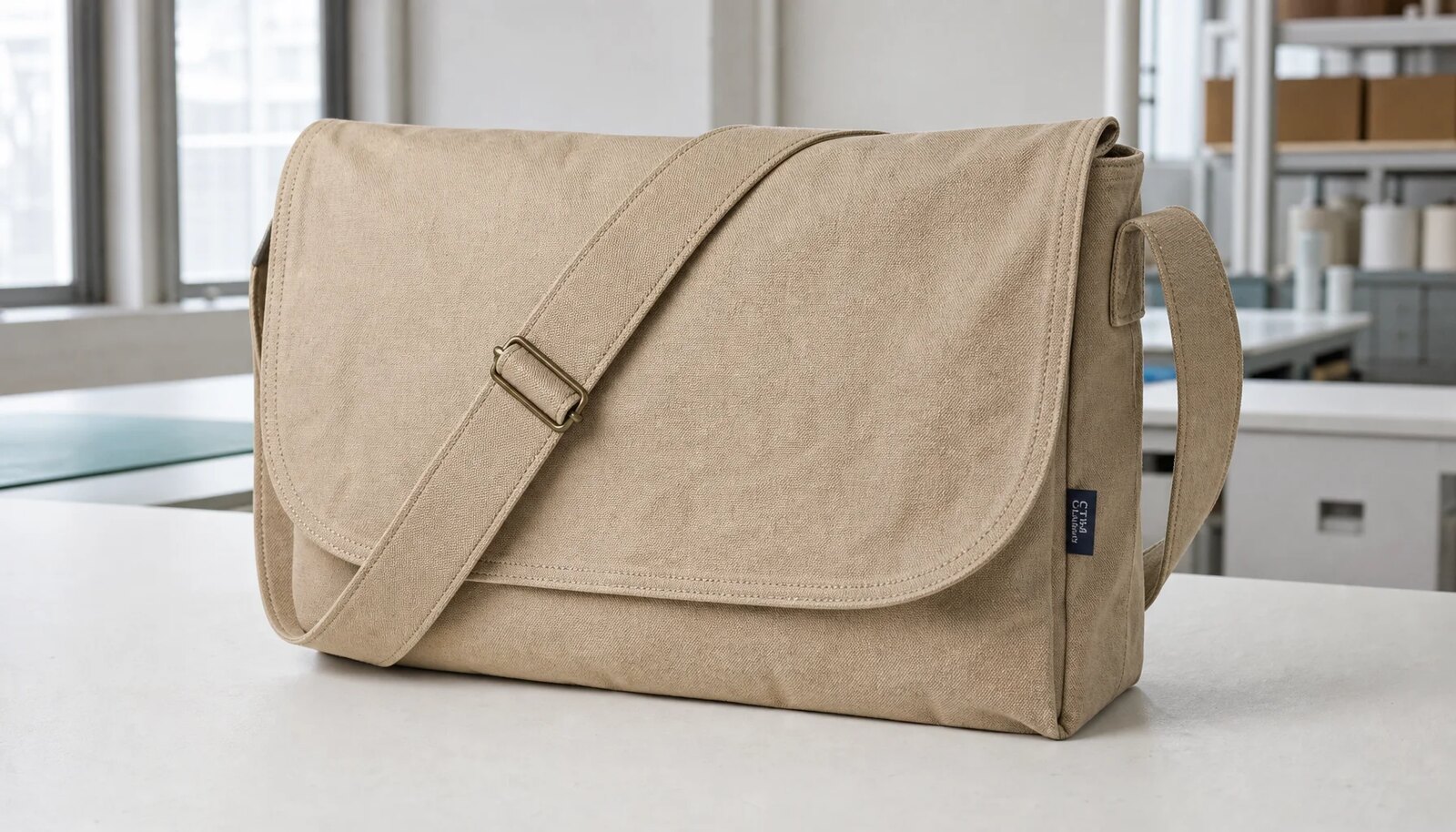
Define The Bag’s Working Job First
Farmers market vendors use messenger bags in practical, repetitive ways. A bag may carry price cards, receipt rolls, seed packets, flyers, order forms, pens, cash envelopes, card readers, a small tablet, personal items, and booth paperwork. It may sit on a folding table, hang from a chair, move through damp grass, and be opened dozens of times during a selling day. Procurement should treat it as a working carry item, not only a branded giveaway.
The first buying decision is the failure you want to avoid. A promotional handout can tolerate a simpler build than a resale bag or vendor-uniform item. A bag meant to hold a tablet needs different measurement control than a bag meant for brochures. A bag used by staff every weekend needs stronger strap anchors, cleaner internal finishing, and better packing than a one-day event item.
Write the use case into the RFQ. Suppliers quote more accurately when they know the intended load, selling channel, expected presentation, and inspection standard. This also prevents price comparisons that look similar on paper but include different fabric weights, pocket layouts, closures, and reinforcement.
- Classify the order as promotional, retail resale, vendor workwear, kit packaging, or staff uniform accessory.
- List common carried items and any required device size, document size, or tablet clearance.
- Decide whether cosmetic defects alone can cause rejection or whether only functional defects matter.
- Set the sealed approval sample as the quality reference for bulk production and inspection.
Turn The RFQ Into A Measurable Spec
A weak RFQ says, “canvas messenger bag with logo.” A useful RFQ states finished body width and height, gusset depth, flap length, strap width, strap adjustment range, pocket count, pocket dimensions, closure type, label position, logo position, and packing method. Soft goods can vary, but buyers still need tolerances for the measurements that affect use and appearance.
Keep tolerance logic practical. Body dimensions may allow slightly wider movement than logo placement or pocket position. For example, a buyer may allow plus or minus 10 mm on the soft body, plus or minus 5 mm on logo placement, and tighter control on a centered woven label if the product is for resale. The exact tolerance should fit the grade of bag, but it should be agreed before production.
Ask suppliers to return the quote with a completed specification sheet. This exposes assumptions immediately. One supplier may quote 12 oz natural canvas, no lining, stock webbing, and bulk carton packing. Another may include a lining, zipper pocket, woven label, reinforced bartacks, and individual bags. Those are different products, even if both are described as canvas messenger bags.
- Specify body, gusset, flap, strap, pocket, closure, and logo measurements in finished dimensions.
- Set separate tolerances for body measurements, visible branding, pocket position, and closure alignment.
- Ask what is stock, what is custom, what is substituted during sampling, and what is excluded from the quote.
- Require the supplier to confirm the specification sheet before sample approval and again before bulk cutting.
Choose Canvas By Evidence, Not Adjectives
Terms such as heavy, premium, thick, and durable are not inspection standards. Canvas should be specified by oz or GSM, finish, color method, shrinkage expectation, and whether it is raw, washed, pre-shrunk, coated, water-resistant, organic, recycled, or conventional cotton. These choices affect hand feel, structure, printing behavior, odor risk, and cost.
For light promotional carry, 10-12 oz canvas, roughly 280-340 GSM, is often a reasonable starting point. For resale or regular vendor use, 12-16 oz canvas, roughly 340-450 GSM, gives more structure and perceived value. Heavier fabric is not a substitute for good sewing. A 16 oz body with weak strap anchors can still fail quickly.
Also decide whether the bag is lined. An unlined bag can be cost controlled and easy to inspect, but the internal seams need neat overlock, binding, or clean finishing to reduce fraying. A lined bag looks more finished and protects contents better, but it adds inspection points: lining shade, lining weight, pocket attachment, turning quality, and whether the lining pulls out of shape.
- Request a physical fabric swatch before approving a sample.
- Record canvas oz or GSM, color, finish, washed or pre-shrunk status, and accepted surface character.
- For unlined bags, define internal seam finishing and thread trimming.
- For lined bags, specify lining material, color, pocket construction, and attachment method.
- If shape matters, specify interlining, bottom reinforcement, binding, or base construction instead of relying only on fabric weight.
Control Logo Method And Placement
Decoration often drives both price and rejection risk. Screen printing is efficient for simple one- or two-color logos and repeat programs. Embroidery can look more premium, but dense stitches may pucker lighter canvas or make the flap ripple. Woven labels and sewn patches are practical when abrasion resistance and a retail look matter. Heat transfer should be tested on the actual canvas finish before approval.
The decoration method must match the artwork. Tiny text, fine outlines, gradients, large solid ink areas, and high stitch counts all create different production risks. Buyers should approve a decorated sample made with the final canvas, not a print strike-off on unrelated fabric. Check the logo after folding the bag, flexing the flap, and lightly rubbing the decoration with a dry cloth and a slightly damp cloth.
Placement should be measured from real edges. “Centered” is not enough when the flap can shift during sewing or the decoration is applied before assembly. The spec should show distance from side edge, top edge, seam, flap centerline, pocket opening, or label edge, with a stated tolerance.
- Use screen print for simple logos, larger placements, repeat runs, and cost control.
- Use embroidery only after confirming the canvas can support the stitch density without puckering.
- Use woven labels or patches when the buyer wants a durable, retail-style brand detail.
- Measure logo and label placement from physical edges, not only from artwork mockups.
- Approve decoration after fold, rub, color, opacity, registration, and edge-quality checks.
Inspect Load Points Before They Fail
Messenger bags usually fail where force concentrates. Strap anchors, side seams, flap corners, pocket mouths, zipper ends, snaps, buckles, rivets, and magnetic closures need specific inspection attention. Buyers should require reinforcement instead of accepting a general promise of strong stitching. Bartacks, box stitches, reinforced seam allowances, rivets, or backing patches may all work if they suit the fabric and construction.
Thread and stitch quality are both functional and visual. Stitches should be even, secure, and straight enough for the product grade. Skipped stitches, loose tension, open seams, thread breaks, and long thread tails can signal poor machine setup or rushed line control. Strap stitching deserves special attention because it carries the highest practical load.
Hardware should be specified by material, finish, size, and function. Strap adjusters should move smoothly but not slip under load. Zippers should not catch or wave along the seam. Snaps and magnetic closures need clean alignment. Buckles and pullers should not have sharp edges that cut webbing or mark the canvas.
- Define reinforcement at strap anchors, pocket corners, flap edges, zipper ends, and closure points.
- Check seam allowance, stitch density, tension, skipped stitches, thread breaks, and trimming.
- Run a realistic load check on the sample, then inspect strap creep, seam movement, hardware bending, and flap alignment.
- Cycle zippers, snaps, buckles, magnetic closures, and adjusters before approving the pre-production sample.
Compare Supplier Routes Without Guesswork
The same bag can carry different risk depending on who controls fabric, sewing, decoration, and packing. A direct canvas bag factory or integrated manufacturer often suits repeat programs because there is one clearer owner for material control and final QC. A trading company can be helpful for multi-category orders, but the buyer must know where the bag is produced and who signs the inspection result.
A print shop with sewing partners can be useful when artwork changes often, but split responsibility needs to be handled in writing. If the print is crooked after sewing or the seam distorts the logo area, the buyer should not be left between two vendors. Low-MOQ suppliers are useful for pilot programs, but buyers should confirm whether the sample relies on stock canvas, stock webbing, or simplified construction that may change later.
Compare quotes only after the technical standard is aligned. GSM, lining, pocket count, strap type, hardware finish, decoration method, label type, packing, carton count, and Incoterms all affect price. A cheaper quote may simply omit reinforcement, use lighter canvas, remove packing protection, or rely on a different production route.
- Ask who buys fabric, cuts, sews, decorates, trims, packs, and performs final QC.
- Confirm whether the quoted supplier is the production factory or an intermediary.
- Request option pricing for lining, zipper pocket, woven label, embroidery, patch, reinforced strap anchors, and premium packing.
- For low-MOQ orders, identify every stock component and ask whether it can be repeated on reorder.
Use Samples To Lock The Standard
Sampling should move from concept to production proof. A development sample is useful for checking shape, pocket layout, flap proportion, and basic construction. It may use substitute fabric or available hardware, so it should not become the bulk standard by accident. A pre-production sample should use final canvas, final trims, final strap, final labels, final decoration, final closures, lining if any, and final packing method.
The sealed sample needs a record. Keep one with the buyer, one with the supplier, and one for the inspector if third-party QC is used. Record the approval date, sample version, fabric weight, artwork version, trim color, label detail, packing method, and any accepted deviations. Mark earlier samples as development only if they include temporary materials or incomplete construction.
Before bulk cutting, require material confirmation against the sealed sample. This includes fabric shade, canvas weight, thread color, webbing, zipper tape, puller, snap finish, magnetic closure, woven label, patch, lining, polybag, carton, and carton marks. Any substitution should be approved in writing before the factory cuts, prints, embroiders, or sews bulk goods.
- Use development samples for shape review and pre-production samples for final approval.
- Seal the approved sample with final fabric, trims, decoration, construction, and packing.
- Record version details so bulk inspection does not rely on memory or photos.
- Require written approval for fabric, trim, hardware, label, artwork, or packing changes.
Run Bulk QC With Clear Pass And Hold Rules
Final inspection should confirm that production repeats the sealed sample. Start with carton selection across the shipment, then measure finished units from different cartons. Use the agreed tolerances for body width, height, gusset, flap, strap range, pocket position, closure position, and logo placement. Repeated drift in the same direction, such as consistently short straps or off-center logos, should be treated as a process issue.
AQL can help structure inspection. Many buyers use general inspection level II with an AQL such as 2.5 for major defects and 4.0 for minor defects, then set critical defects at zero acceptance. The exact plan depends on buyer policy and order risk, but the PO should define what counts as critical, major, and minor. Open strap seams, broken closures, severe odor, unauthorized fabric substitution, and unsafe sharp hardware are not the same as a small thread tail.
Classify defects before the shipment is ready. Critical defects affect safety, legality, or unusable function. Major defects affect function, sellability, or brand presentation, such as weak strap anchors, crooked logos, stains on visible panels, or broken zippers. Minor defects are small workmanship issues that do not reduce function or normal sellability, such as a few trim threads within the agreed limit.
- Pull inspection samples from multiple cartons, not only the easiest carton to access.
- Use agreed AQL levels or buyer sampling policy, and define critical, major, and minor defects in advance.
- Hold the lot for repeated measurement drift, unauthorized material changes, off-center branding, weak seams, strong odor, or broken hardware.
- Compare bulk goods to the sealed sample for fabric shade, trim color, strap feel, logo finish, lining, seam quality, and overall structure.
Protect The Bag During Packing And Transit
Good production can be damaged by poor packing. Heavy canvas can hold hard creases, especially across a printed flap. Buckles, snaps, rivets, and zipper pullers can mark the logo panel if bags are folded tightly or stacked without protection. Approve the folded size, fold direction, individual packing, carton count, carton dimensions, and carton weight before bulk packing starts.
Packing should match the sales channel. A vendor kit may use bulk flat packing to control cost. A resale program may need individual bags, hangtags, paper bands, insert cards, barcode labels, or cartons sorted by color. If the buyer wants reduced plastic, paper wrap or carton dividers can work, but the supplier should show that bags stay clean during handling and transit.
Cotton canvas is sensitive to moisture and odor. For humid routes, long ocean freight, rainy loading conditions, or storage before market season, discuss inner carton liners, desiccant, dry loading, and carton inspection. Carton marks should match PO, SKU, color, quantity, carton number, and destination requirements so receiving teams can count and sort quickly.
- Approve fold direction so the logo face and flap do not receive permanent creases.
- Prevent hardware from rubbing directly against printed panels or woven labels.
- Specify individual packing, carton count, carton size, net weight, gross weight, and carton marks.
- Check carton strength, moisture protection, stacking quality, and damage before shipment release.
Make Cost And Schedule Tradeoffs Visible
MOQ is shaped by more than sewing efficiency. Fabric color, canvas weight, dyeing, print setup, embroidery stitch count, hardware finish, woven labels, patches, and packing can each create minimums. Ask for MOQ by component instead of accepting one total number. This helps procurement decide whether to use stock natural canvas, reduce print colors, change a woven label, or postpone a custom trim.
Lead time should be broken into artwork approval, material booking, development sample, pre-production sample, buyer approval, bulk cutting, decoration, sewing, trimming, packing, inspection, and export booking. A single promise such as 35 days after deposit hides the real schedule. If the launch date is fixed, the buyer needs to know which step is driving risk.
A useful quote does not have to reveal every internal cost, but it should show option pricing clearly enough for decisions. Buyers should be able to compare a lined versus unlined bag, embroidery versus woven label, standard versus reinforced strap anchors, bulk versus individual packing, and stock canvas versus custom color. That is how procurement protects quality without overbuilding the product.
- Request MOQ by fabric, color, decoration method, label, hardware, and packing format.
- Separate sample time, approval time, production time, inspection time, and export booking time.
- Ask for option pricing on the features most likely to change before PO approval.
- Build reorder timing around material booking and market-season delivery, not only factory sewing days.
Specification comparison for buyers
| Supplier route | Best fit | What to verify before PO | Main inspection risk |
|---|---|---|---|
| Direct canvas bag factory | Repeat programs needing controlled fabric, sewing, decoration, and packing | Confirm whether fabric cutting, sewing, decoration, trimming, and final QC are in-house; request the factory name on the inspection report | Subcontracted steps can create unclear responsibility for crooked logos, weak sewing, or packing defects |
| Integrated manufacturer with in-house decoration | Custom retail or vendor-uniform programs with repeated logo placement and consistent trims | Ask for decoration trials on the final canvas, load-point reinforcement photos, carton photos, and final inspection records | Good coordination does not replace approval-sample matching and shipment-level inspection |
| Trading company with audited sewing partners | Assortment buys covering bags, pouches, aprons, or market accessories in one order | Verify who buys fabric, who approves trims, where QC happens, and whether the quoted factory is the production factory | The buyer may lose visibility on material substitution, rework, and line-level defect control |
| Print shop plus contract sewing line | Logo-heavy programs with frequent artwork changes or regional versions | Define responsibility if print placement shifts after sewing, canvas wrinkles under ink, or seams distort the decorated panel | Decoration and sewing teams may treat defects as someone else’s problem |
| Low-MOQ sample-first supplier | First-season tests, co-op buys, and limited vendor launches | Confirm whether the MOQ depends on stock canvas, stock colors, stock webbing, or simplified construction | The pilot sample may not represent what can be repeated at larger volume |
| Catalog reseller | Fast promotional orders with simple branding and loose construction requirements | Inspect blank bags before decoration and confirm carton count, dimensions, and logo placement limits | Hidden variation in canvas weight, seam finish, strap quality, and blank-bag sourcing |
| Nearshore supplier | Urgent replenishment, shorter transit windows, or late market-season launches | Confirm fabric continuity, trim availability, packing format, carton dimensions, and reorder feasibility | Small batches may vary from one shipment to the next if stock materials change |
| Local decorator using imported blanks | Domestic branding speed when the buyer can manage blank-bag quality separately | Approve the blank bag before decoration and record the blank supplier, style code, canvas weight, and color | Logo work can hide poor fabric, weak seams, bad folding, or inconsistent blank construction |
Buyer checklist before sampling
- Finished body width, height, gusset depth, flap length, strap width, strap adjustment range, pocket dimensions, closure position, and logo placement are written as measurable specs.
- Canvas is specified by oz or GSM, weave or hand-feel target, finish, dye method, shrinkage expectation, and whether it is raw, washed, pre-shrunk, coated, organic, recycled, or conventional cotton.
- The use case is defined as promotional handout, resale item, vendor work bag, document carrier, tablet carrier, payment-device storage, or kit component.
- Decoration method is locked before sampling: screen print, embroidery, woven label, sewn patch, heat transfer, or mixed application, with artwork version and placement tolerance.
- Load points are defined for strap anchors, side seams, pocket mouths, flap corners, zipper ends, snaps, magnetic closures, buckles, and rivets.
- Thread type, stitch density target, seam allowance, bartack or box-stitch locations, and thread trimming expectations are stated in the technical spec.
- A sealed pre-production sample uses final fabric, trims, strap, decoration, lining if any, labels, closure hardware, folding method, and packing format.
- The quote separates or clearly identifies fabric, cutting, sewing, decoration, lining, trims, labels, packing, export carton, testing, and freight assumptions.
- Lead time is broken into artwork approval, material booking, sample production, pre-production approval, bulk cutting, decoration, sewing, trimming, packing, inspection, and export booking.
- The inspection plan names defect classes for measurements, logo placement, fabric shade, stains, odor, weak seams, broken hardware, packing damage, and carton condition.
Factory quote questions to send
- What exact canvas weight in oz or GSM, weave type if available, finish, dye method, and shrinkage expectation are included in this quote?
- Is the canvas raw, washed, pre-shrunk, coated, water-resistant, organic, recycled, or conventional cotton, and can you provide a physical swatch before sampling?
- Which decoration method is priced, and what setup charges apply by print color, screen, embroidery stitch count, label mold, patch style, or placement?
- What MOQ applies separately to fabric color, canvas weight, hardware finish, label, decoration method, and carton packing format?
- Can you identify the unit-price impact of fabric, cutting, sewing, decoration, lining, trims, labels, individual packing, export carton, and inland freight?
- Which sample stages are included, what material substitutions are allowed during development, and which exact sample becomes the sealed production standard?
- What tolerances do you allow for body width, height, gusset, flap length, pocket position, strap length, and logo placement?
- Where are reinforcement stitches, bartacks, box stitches, rivets, or extra fabric patches placed at strap anchors, pocket corners, flap edges, and closure points?
- How do you check seam strength, strap slippage, color rubbing, print adhesion, zipper function, buckle function, stains, odor, and carton condition before packing?
- What packing is included: folded size, individual polybag or paper wrap, insert card, carton count, carton size, gross weight, desiccant, carton marks, and moisture protection?
Quality-control points to confirm
- Measure body width, height, gusset, flap length, pocket position, strap range, and logo placement against the approved spec using the agreed tolerance.
- Compare canvas weight, color tone, hand feel, weave appearance, shrinkage behavior, and surface finish against the sealed sample and approved swatch.
- Inspect logo size, position, color, opacity, edge sharpness, registration, embroidery density, label placement, patch stitching, and artwork version.
- Check strap anchors, side seams, flap edges, zipper ends, pocket corners, lining attachment, and closure points for skipped stitches, open seams, loose tension, thread breaks, and weak reinforcement.
- Pull the strap, adjuster, buckle, snap, zipper, rivet, and magnetic closure under realistic force to check for slipping, bending, tearing, or seam movement.
- Look for oil stains, water marks, chalk marks, lint, needle holes, dirty handling marks, heavy slubs beyond the agreed range, odor, and contamination before packing.
- Cycle zippers, snaps, buckles, hook-and-loop, magnetic closures, and strap adjusters to confirm smooth operation and alignment.
- Review folding direction, individual packing, carton count, carton marks, moisture control, carton strength, and inner protection before shipment release.
- Compare bulk goods to the sealed sample for fabric shade, trim color, strap feel, logo finish, lining color, seam finish, and overall structure.
- Hold or reject lots with unauthorized fabric substitution, off-center branding, open seams, weak strap anchors, broken hardware, strong odor, staining, crushed cartons, or packing that permanently creases the logo area.