Start With the Bakery Use Case and Load Profile
A canvas messenger bag for an artisan bakery is not one universal product. The correct specification depends on whether the bag will be sold as merchandise, used by staff, packed with a subscription gift, displayed at a farmers market, or shipped through a wholesale distributor. Each use case changes the acceptable fabric weight, reinforcement level, logo method, packing format, inspection strictness, and landed cost target.
Procurement teams should define the intended load before discussing price. A retail customer may put more than bread in the bag: a water bottle, tablet, cookbook, produce, coffee pouches, or pantry items can all end up in a bakery-branded messenger bag. If the bag is marketed as reusable, the construction should be built for repeated handling rather than a single event. Even when the official contents are light, the public brand risk is higher if straps tear in normal consumer use.
A practical RFQ should list the intended contents and a realistic loaded weight. For example, a gift bundle with two coffee pouches, jam, flour, and a card may need a wider gusset and reinforced base, while a staff order-taking bag may need a secure phone pocket and a comfortable strap. This early definition prevents factories from quoting visually similar but functionally different bags.
- Retail merchandise: prioritize clean presentation, shade consistency, barcode-ready labeling, flat packing, and a logo that photographs well on shelf or peg.
- Staff use: prioritize strap comfort, bartacks, hardware strength, washable practicality, pocket access, and darker trims if visible soiling is expected.
- Gift bundles: prioritize gusset depth, base reinforcement, closure security, carton protection, and fit testing with the actual bakery products.
- Wholesale distribution: prioritize repeatable specs, SKU discipline, carton marks, barcode labels, receiving checks, and written defect limits.
- Seasonal launches: prioritize stock materials, fast artwork approval, physical sample sign-off, and schedule buffer before the promotion date.
Turn the Concept Into a Measurable Specification
The weakest RFQs begin with a product photo and the instruction to make the same bag. For B2B sourcing, the buyer should convert the concept into measurable specifications that can be costed, sampled, produced, and inspected. The minimum specification should include finished width, height, gusset, flap depth, strap width, adjustable strap range, pocket layout, closure type, fabric weight, lining, logo method, hardware finish, labels, packing, and tolerances.
Measurements should be finished product measurements, not paper pattern measurements. The same nominal width can create different usable capacity depending on gusset construction, seam allowance, base shape, and flap coverage. If the bakery wants the messenger bag to hold a pastry box, bread subscription card, coffee pouch, tablet, or branded insert, include those item dimensions and the required fit. A photograph is useful for style direction, but it cannot replace a controlled spec sheet.
A written specification also makes quote comparison fair. One supplier may quote 12 oz unlined canvas with overlocked seams and a one-color print, while another quotes 16 oz canvas with lining, bound seams, reinforcement patches, and a woven label. Both may call the product a canvas messenger bag, but they are not equivalent. A measurable spec sheet reveals these differences before the buyer chooses the lowest price.
- Dimension block: finished width, height, gusset, flap depth, strap width, strap minimum, strap maximum, pocket opening, and closure position.
- Construction block: seam type, seam allowance, stitch density, thread color, reinforcement patches, bartack locations, base panel, edge binding, and lining capture.
- Branding block: artwork file, actual print size, placement from stable edges, ink colors, label position, hangtag details, and required strike-off.
- Tolerance block: size variation, print placement variation, shade range, fabric weight tolerance, acceptable slub level, and carton quantity tolerance.
- Commercial block: MOQ, sample fee, sample lead time, setup charges, delivery term, packing method, inspection level, payment term, and repeat-order expectation.
Choose Canvas Weight, GSM, and Finish Accurately
Most bakery messenger bag programs use cotton canvas between 12 oz and 16 oz, roughly 340 to 540 GSM depending on yarn, weave, and finishing. The oz rating used in fabric trading is not always converted consistently across suppliers, so the buyer should ask for both oz and GSM. A lighter 10 oz canvas may reduce cost and freight weight, but it can collapse on display and wrinkle heavily. An 18 oz canvas can look premium, but it increases sewing difficulty, bulk at seams, needle marking, carton volume, and freight cost.
For many artisan bakeries, 14 oz canvas is the balanced starting point because it gives enough structure for retail presentation without making the bag too stiff or expensive. Use 12 oz for lower-cost merchandise or lighter promotional programs. Use 16 oz where the bag must carry heavier contents, support staff use, or stand more upright on a retail display. The right weight should be confirmed by hand feel, finished bag weight, and load testing, not by the fabric number alone.
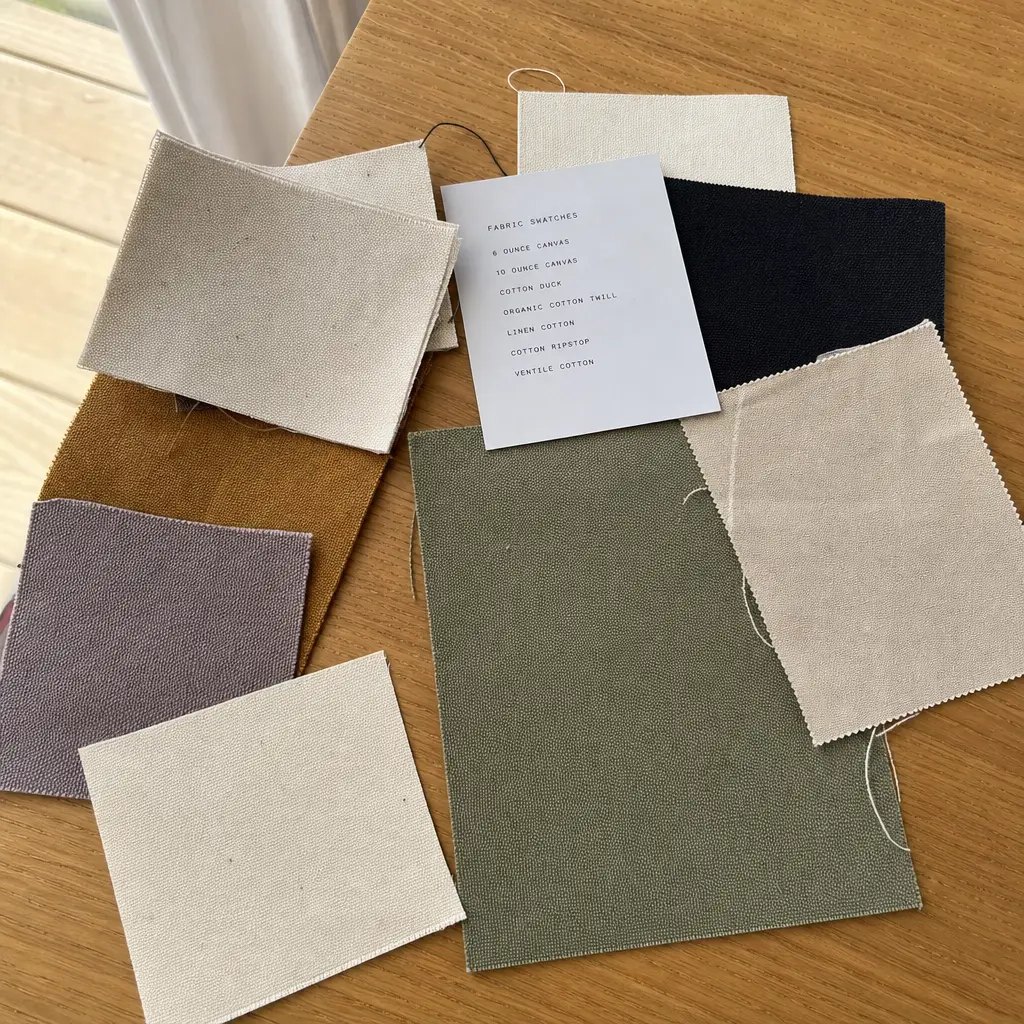
Fabric finishing also matters. Natural unbleached canvas can vary from cream to grey beige or speckled tan depending on cotton source and finishing. Dyed canvas offers stronger brand color control, but it usually introduces lab dips, shade lots, higher MOQ, and colorfastness checks. Washed canvas creates a softer vintage feel but can shrink, distort panels, and change measurement tolerances. Coated or waxed finishes change print adhesion and may require different packaging to avoid marks.
- 12 oz canvas: useful for lighter retail bags, simple promotions, and cost-sensitive orders where the expected load is modest.
- 14 oz canvas: practical default for many branded bakery messenger bags because it balances structure, sewing efficiency, and freight weight.
- 16 oz canvas: stronger choice for premium resale, heavier gift contents, staff use, and designs needing a more structured flap and base.
- Natural canvas: approve a shade range rather than one perfect color because cotton tone and slub variation are normal within controlled limits.
- Custom dyed canvas: request lab dips, bulk shade approval, colorfastness expectations, and shade-lot control before confirming production.
Specify Construction Before Negotiating Price
Messenger bags usually fail first at the strap joins, bottom seam, flap corners, closure points, and pocket openings. These are not cosmetic details; they determine whether the product can survive actual consumer use. The RFQ should require visible reinforcement at stress points, including bartacks or box stitching at strap joins and backing behind magnetic snaps, rivets, buttons, or buckles. If the bag is expected to carry bakery gift contents, a reinforced base panel spreads load and improves shape retention.
Seam construction should be stated in plain production terms. Bound seams look cleaner and protect raw edges, but they add labor. Overlocked seams may be acceptable for lower-cost unlined bags if stitch security and thread trimming are controlled. Folded and topstitched seams can give a cleaner finish but must have adequate seam allowance on thick canvas. Very narrow seam allowance on heavy canvas is a common failure risk because the fabric can fray or pull out under load.
Strap design deserves special attention. A 25 mm strap may be acceptable for light promotional use, but 30 mm to 38 mm cotton webbing is often more comfortable and proportionate for messenger bags. Hardware must match strap width and hold adjustment without slipping. If the strap is sewn into the side seam, the reinforcement must be visible on the approved sample and checked during inline production. If rivets are used, they should supplement stitching rather than replace it unless the design has been validated.
- Stress points: require bartacks or box stitches at strap joins, flap corners where needed, pocket openings, and handle attachments if included.
- Closures: add reinforcement patches behind snaps, buttons, buckles, rivets, and magnetic hardware to prevent tearing through the flap.
- Stitch density: use a written target, commonly 7 to 9 stitches per inch for heavy canvas, with factory confirmation for the chosen fabric.
- Seam allowance: define enough allowance for thick canvas so seams do not roll, fray, or fail during loading, washing, or repeated flap movement.
- Symmetry: inspect flap corners, gussets, strap entry points, and pockets for balanced alignment within the agreed dimensional tolerance.
Control Logo Execution on Textured Canvas
Screen printing is usually the most practical logo method for canvas messenger bags when the bakery artwork uses solid shapes, icons, and one to three colors. It keeps unit cost predictable and works well on a flat flap panel. Water-based inks can support a softer natural look, while other ink systems may offer stronger opacity depending on the fabric shade and local production capability. The buyer should not approve the ink system in theory only; the actual strike-off on production canvas is the decision document.
Textured canvas changes artwork. Thin script fonts, small taglines, flour-dust effects, distressed textures, and delicate line drawings can disappear into coarse yarns or fill in during printing. If the logo is critical to retail presentation, request an actual-size print strike-off on the approved canvas before bulk printing. Define print placement from stable reference points such as the flap bottom edge, side seam, or centerline. The phrase centered is not enough for inspection.
Embroidery, woven labels, cotton labels, and patches can also work well. Embroidery is durable and tactile but can pucker heavy canvas if stitch density is too high. Woven labels are clean for small branding and side tags, but they introduce label MOQ and placement checks. Heat transfers can reproduce detailed artwork, but the buyer should test adhesion, flex, rub, and edge lifting on textured canvas. Leather-like patches may add premium value but require clarity on material composition, stitch quality, and compliance expectations.
- Screen print: best for simple front-flap logos, larger artwork, repeat programs, and controlled color counts.
- Woven label: useful for premium subtle branding, side-seam identity, and avoiding large print defects on textured fabric.
- Embroidery: suitable for larger lettering and simple icons, but avoid dense filled areas that cause puckering or stiffness.
- Heat transfer: only approve after adhesion, flex, rub, edge-lift, and wash-related checks on the actual production canvas.
- Placement tolerance: set vertical and horizontal limits, commonly plus or minus 3 mm to 5 mm for visible front-flap branding.
Approve Samples With Measurements and Tests
A physical sample is not only a visual approval. It is the production reference for fabric, dimensions, construction, logo execution, hardware, packing, and final inspection. For a new bakery messenger bag, record the sample’s finished width, height, gusset, flap depth, strap width, strap range, finished weight, print position, pocket layout, seam finish, and carton packing method. Keep one sealed approval sample for inspection comparison and one working sample for internal testing.
If the first sample is close but not correct, revise with measurable instructions. Avoid terms such as stronger, more premium, or cleaner without changing the specification. Instead, ask for 38 mm strap instead of 30 mm, 16 oz canvas instead of 14 oz, bound inside seams instead of overlock, extra bartack at each strap join, plus 2 cm gusset depth, or print lowered by 8 mm. Factories can control numbers and construction details; vague quality language creates delays and disputes.
Sample review should include a practical loading check. Pack the intended bakery bundle or a substitute weight, close the flap, wear the bag crossbody, and observe strap comfort, flap distortion, slider slippage, base shape, and pocket function. For staff bags, test access to a phone, order pad, pen, and receipt book. For resale bags, pack the sample as intended for several days and then check whether flap creases, hardware marks, or print rub appear.
- Measurement record: width, height, gusset, flap depth, strap width, shortest strap length, longest strap length, pocket size, and logo position.
- Load check: test the sample with intended contents or substitute weight to observe strap stitching, flap pull, base shape, and closure alignment.
- Print check: photograph logo placement with a ruler reference, including distance from flap edge and distance from the centerline.
- Interior check: inspect pocket alignment, zipper movement, thread trimming, seam binding, lining tension, raw-edge control, and loose threads.
- Packing check: open a packed sample after compression time to check for creases, odor, hardware marks, and print transfer.
Build the Inspection Checklist Around Defect Classes
A canvas messenger bags quality inspection checklist for artisan bakeries should separate critical, major, and minor defects before bulk production starts. Critical defects are issues that make the bag unsafe, unusable, or clearly wrong for the order: broken strap joins, sharp hardware, mold, strong mildew odor, wrong logo, unsafe components, or contamination. Major defects are problems that affect resale value, function, or brand presentation: visible stains, wrong fabric weight, severe shade mismatch, crooked flap, missing reinforcement, broken zipper, poor print adhesion, or wrong packing. Minor defects are limited appearance issues that do not affect use, such as small thread ends or slight wrinkles within the approved standard.
Inspection should not rely only on final packed goods. An inline first-output check catches wrong thread color, weak seam construction, incorrect logo placement, missing backing patches, hardware substitution, and packing mistakes while correction is still possible. Final inspection should compare the goods against the PO, approved sample, artwork strike-off, packing instruction, and carton marks. The inspection report should include photos of measurements, logo placement, strap reinforcement, hardware, inside seams, defects, and packed cartons.
Many B2B importers use AQL-based inspection, but the exact sampling plan and acceptance numbers must be agreed in advance. For consumer-facing resale or gift programs, appearance defects may need tighter limits than staff-only use. For small orders, the buyer may inspect a higher percentage or require 100% sorting of high-risk items such as logo placement and visible stains. The supplier should know before production which defects trigger rework, sorting, replacement, discount, or shipment hold.
- Critical defects: mold, mildew odor, sharp hardware, broken strap attachment, wrong logo, unsafe contamination, or product that cannot be used.
- Major defects: visible stains, incorrect fabric weight, crooked flap, failed zipper, missing reinforcement, poor print adhesion, severe shade mismatch, or wrong label.
- Minor defects: short thread ends, slight wrinkles, tiny slub variation, or small appearance issues within the approved sample standard.
- Functional checks: test strap attachment, slider hold, closure function, zipper movement, pocket security, and hardware burrs on sampled units.
- Documentation: require measured-unit photos, defect photos, carton photos, sample comparison, and clear pass, fail, or hold recommendation.
Set Practical Tolerances for Bulk Production
Tolerances turn a subjective quality conversation into an inspectable agreement. Canvas is a textile product, so zero variation is not realistic, especially with natural cotton. However, uncontrolled variation creates retail complaints and operational problems. A common starting point is plus or minus 1 cm for finished width and height, plus or minus 0.5 cm for visible pocket or closure placement, plus or minus 3 mm to 5 mm for front logo placement, and plus or minus 5% for fabric weight if no tighter standard is agreed. These numbers should be adjusted for design size, fabric type, and buyer requirements.
Tolerances should also cover color and appearance. Natural canvas can show slubs, seed specks, and slight shade variation, but stains, oil marks, mildew, water marks, and dirty hand marks should not be accepted as natural character. If the bakery brand depends on a clean cream canvas, approve a shade band with reference swatches. If the brand accepts rustic texture, define what is still unacceptable, such as dark contamination spots on the front flap.
Functional tolerance is just as important as measurement tolerance. A strap slider should hold position during normal use. A magnetic snap should close cleanly without tearing the flap. The flap should cover the opening and sit level when empty. A zipper should open and close without catching the lining. A pocket should hold the intended item without seam strain. These requirements should be written as inspection checks, not assumed from the sample.
- Finished size: use plus or minus 1 cm for width and height unless the bag is oversized, structured, or requires a tighter retail fit.
- Logo placement: set measurement from stable edges, commonly plus or minus 3 mm to 5 mm for prominent front branding.
- Fabric weight: agree an acceptable variance such as plus or minus 5% and verify by GSM check or supplier test report plus sample comparison.
- Shade control: approve a shade range, reject contamination, and separate acceptable cotton slubs from stains or dirty marks.
- Function control: verify closure alignment, slider hold, strap comfort, zipper operation, pocket usability, and flap balance on sampled units.
Compare MOQ, Cost Drivers, and Quote Assumptions
MOQ is driven by more than the factory’s preference. It reflects fabric purchasing, dyeing, cutting efficiency, print setup, label production, hardware sourcing, packing materials, and sewing line changeover. A lower MOQ is more realistic when the buyer uses stock natural canvas, standard webbing, common hardware, a simple one-color screen print, and bulk flat packing. The same bag with custom dyed canvas, special lining, multiple SKUs, custom zipper pulls, woven labels, and retail packaging requires higher minimums because each component has its own setup and waste.
Quote comparison should separate base product cost from setup and customization cost. A low unit price may exclude screen fees, label charges, sample fees, packing upgrades, barcode labels, inland freight, or inspection support. Another supplier may include these items in the unit price. Procurement teams should compare total program cost and total landed cost, not only FOB unit price. Finished bag weight and carton volume can also change freight cost significantly, especially when moving from 12 oz unlined to 16 oz lined construction.
The most useful negotiation is not simply asking for a lower price. Ask which specification changes reduce cost without weakening the bag’s public-facing performance. For example, using stock natural canvas, reducing logo colors from three to one, standardizing hardware finish, removing an unnecessary inner pocket, or using a woven side label instead of a large multi-color print may reduce MOQ or cost. Do not remove bartacks, reinforcement, or packing protection if those details protect brand reputation.
- Main cost drivers: canvas weight, lining, pocket count, strap width, hardware grade, zipper quality, print colors, labels, hangtags, and packing method.
- MOQ reducers: stock fabric, one body color, standard strap, standard hardware, simple logo, existing label supplier, and straightforward flat packing.
- MOQ increasers: custom dyeing, multiple SKUs, special lining, custom metal parts, assorted colors, individual retail packaging, and complex carton marks.
- Quote evidence: request finished bag weight, carton quantity, carton dimensions, material list, setup fees, sample fee, repeat-order cost, and lead-time assumptions.
- Negotiation guardrails: reduce nonessential features before reducing strap reinforcement, logo quality, inspection, or moisture-safe packing.
Control Packing, Cartons, and Warehouse Receiving
Canvas messenger bags can pass sewing inspection but fail commercially if packing is poor. Heavy compression creates permanent flap creases. Damp cartons create odor. Loose hardware can rub against printed panels. Overfilled cartons burst or deform during transit. For bakery retail programs, the bag must look clean when opened at the warehouse or shop, not merely survive export handling.
Flat packing is usually safest for messenger bags, but the folding method must avoid sharp creases across the printed flap. Individual recycled polybags protect against moisture and handling marks, while paper bands or glassine sleeves reduce plastic but provide less barrier protection. If the buyer requires plastic-free packaging, specify carton liner, moisture protection, desiccants where appropriate, and a receiving procedure for dampness or odor. The packaging policy should be decided before the quote because it affects cost, carton size, and inspection time.
Warehouse labels must be accurate. Carton marks should show PO number, SKU, color, quantity, carton number, gross weight, carton dimensions, and country-of-origin wording where required. If the bakery ships to multiple stores, franchisees, or distributors, avoid mixed-SKU cartons unless the receiving process is designed for them. Mislabeling can create chargebacks, stock errors, and launch delays that exceed any savings from a cheaper packing option.
- Carton protection: prevent metal sliders, buckles, snaps, and zippers from contacting printed panels during transit.
- Moisture control: use dry cartons, carton liners where needed, desiccants for humid routes, and receiving checks for dampness or musty odor.
- Carton limits: set maximum carton weight, units per carton, carton dimensions, and acceptable fold direction before packing starts.
- Label accuracy: verify PO number, SKU, color, quantity, barcode, country-of-origin wording, and carton sequence against the packing list.
- Receiving checks: inspect for odor, crushed cartons, burst seams, wrong labels, visible stains, severe creases, and print rub before stock release.
Specification comparison for buyers
| Procurement decision | Recommended specification | Inspection tolerance or evidence | Buyer risk to control |
|---|---|---|---|
| Main canvas fabric | 12 oz to 16 oz cotton canvas, roughly 340 to 540 GSM depending on yarn count, weave, and finishing | Approved swatch, fabric test report where available, finished bag weight, and fabric weight check within agreed tolerance such as plus or minus 5% | Suppliers may quote by oz, GSM, or informal terms like heavy canvas; require the conversion basis and do not compare price without finished weight |
| Finished dimensions | Specify width, height, gusset, flap depth, strap width, and adjustable strap length as finished measurements | Common tolerance: plus or minus 1 cm for width and height, plus or minus 0.5 cm for pocket position, and plus or minus 1.5 cm for strap length unless otherwise approved | Pattern dimensions, flat measurements, and usable capacity can differ; samples must be measured loaded and unloaded |
| Construction | Flap messenger body with reinforced base, clean inside seams, bartacks or box stitches at strap joins, and reinforcement behind snaps or rivets | Stitch density commonly 7 to 9 stitches per inch on heavy canvas; no skipped stitches over 2 consecutive stitches at stress points | A bag can look acceptable in photos but fail if strap joins are single stitched, seam allowance is narrow, or hardware is installed without backing |
| Lining | Unlined for simple natural bakery positioning; cotton lining or 210D polyester lining for cleaner interior and retail value | Check lining shade, seam capture, pocket alignment, zipper tape straightness, and colorfastness if dyed lining touches natural canvas | Lining adds labor, hidden defects, shrinkage mismatch, and color transfer risk; inspect inside workmanship, not only exterior appearance |
| Logo method | Screen print for solid 1 to 3 color bakery logos; woven label, embroidery, or patch for premium subtle branding | Print placement tolerance often plus or minus 3 mm to 5 mm from approved position; approve strike-off on production canvas | Thin scripts, flour-dust textures, distress effects, and small taglines can fill in on coarse canvas; test actual size before bulk |
| Closures and pockets | Magnetic snap, button, buckle, or hook-and-loop closure with front, back, or internal pocket only where needed | Functional open-close test on sampled units; reinforcement patch must be visible or confirmed by construction sample | Hardware can tear through the flap, hook-and-loop can collect lint, and pocket openings can distort if not reinforced |
| Hardware | Cotton webbing strap with metal slider and keeper; nickel, antique brass, matte black, or natural finish matched to brand style | Check burrs, plating consistency, slider hold, spring function, oil residue, corrosion marks, and staining on natural canvas | Low-grade alloy can discolor, snag fabric, leave black marks, or slip under load; require hardware approval sample |
| MOQ structure | Use stock natural canvas and standard trims for lower MOQ; reserve custom dyed canvas or custom hardware for larger committed volumes | Quote MOQ separately for body fabric, strap color, lining, label, hardware finish, logo method, and packing | A low MOQ with many variants often causes shade variation, high setup cost, material waste, and delayed production scheduling |
| Packing | Flat packed with individual recycled polybag, glassine or paper band where approved, carton liner, and controlled carton weight | Confirm units per carton, carton dimensions, gross weight, moisture control, label format, and max crease position | Canvas absorbs moisture and odor; poor packing causes mildew smell, permanent flap creases, print rub, and warehouse receiving problems |
Buyer checklist before sampling
- Define the buying purpose first: retail resale, loyalty gift, bread subscription bundle, market-stall merchandise, staff uniform bag, wholesale distributor SKU, or corporate bakery gift.
- Write finished dimensions with tolerances: width, height, gusset, flap depth, strap width, adjustable strap minimum and maximum, pocket size, pocket position, closure location, and handle drop if any.
- Specify fabric precisely: composition, canvas weight in oz and GSM, weave, natural or dyed shade reference, finishing, shrinkage expectation, color tolerance, and whether the bulk fabric must match the approved swatch lot.
- Decide the lining structure: unlined, cotton lined, polyester lined, partial lining, or pocket-only lining, then define lining color, seam capture, pocket construction, zipper type, and colorfastness expectations.
- Require construction details in the RFQ: seam allowance, stitch density, thread count or thread type, binding method, reinforcement patches, bartack positions, box-stitch dimensions, bottom panel construction, and edge finishing.
- Approve logo execution at actual size on production canvas, including method, ink type if known, color reference, print area, registration tolerance, placement tolerance, opacity, rub result, and tape-lift result where applicable.
- Classify defects before production: critical, major, and minor for stains, mildew odor, loose threads, skipped stitches, crooked flaps, strap failure, sharp hardware, print defects, wrong labels, and packing errors.
- Set sampling and inspection rules: pre-production sample approval, inline first-output check, final AQL level or buyer-specific sampling, carton selection method, defect limits, rework rules, and shipment release authority.
- Confirm packing requirements: individual protection, paper or poly choice, carton liner, desiccant use if needed, folding method, units per carton, maximum carton weight, SKU labels, barcode labels, carton marks, and pallet requirements.
- Compare quotes on total delivered value: finished bag weight, material details, sewing construction, logo setup fees, sample fees, MOQ breaks, packing cost, carton volume, lead time assumptions, correction policy, and inspection support.
Factory quote questions to send
- What exact canvas are you quoting, including composition, oz rating, GSM, yarn or weave description if available, finishing, and fabric source?
- Is the quoted fabric greige, natural, bleached, reactive dyed, pigment dyed, enzyme washed, stone washed, waxed, coated, or otherwise finished?
- What tolerance do you allow for fabric weight, shade, finished dimensions, logo placement, and strap length in bulk production?
- What is the target finished bag weight for this exact size, canvas weight, lining, strap width, hardware set, and packing method?
- Which seams are bound, folded, overlocked, topstitched, or hidden raw edge, and what seam allowance will be used on the main body and flap?
- Where will you add bartacks, box stitches, reinforcement patches, or rivets, and can these details be shown on the pre-production sample?
- What stitch density, thread type, thread ticket size if known, needle size, and sewing machine setup do you recommend for this canvas weight?
- What logo method is included in the price, how many colors are included, what is the maximum printable area, and what print tests can you perform on the actual canvas?
- What MOQ applies separately to body fabric, custom dyeing, strap color, lining, zipper, hardware finish, woven label, hangtag, logo method, and packing material?
- Can you quote the same construction in 12 oz, 14 oz, and 16 oz canvas with finished bag weight, carton quantity, carton dimensions, and cost differences?
Quality-control points to confirm
- Finished size tolerance should normally stay within plus or minus 1 cm for width and height, plus or minus 0.5 cm for pocket and closure placement, and plus or minus 1.5 cm for strap length unless a different tolerance is approved.
- Main fabric should match the approved swatch for composition, weight, shade range, hand feel, weave density, slub level, shrinkage expectation, and surface cleanliness.
- Fabric weight should be checked by agreed method, preferably GSM on bulk fabric before cutting and finished bag weight comparison after sewing, with variance limits written into the PO.
- Cut panels should follow the fabric grain so the flap does not twist, side panels do not skew, and printed artwork sits square to the bag body.
- Strap joins should be bartacked or box-stitched with no skipped stitches, broken thread, loose ends, needle cutting, seam slippage, fabric tearing, or visible distortion under practical pull checks.
- Flap edge should sit level when empty, cover the closure properly, and remain visually balanced after loading with the intended bakery gift bundle or a realistic substitute weight.
- Logo print should match the approved strike-off for color, placement, opacity, edge sharpness, registration, curing, and adhesion, with pinholes, smears, or ink buildup limited by written standard.
- Dry rub, tape lift, light scratch, and flex checks should be matched to the ink system and performed on the actual canvas rather than on smooth substitute fabric.
- Metal hardware should open, slide, and close smoothly without sharp burrs, oil residue, plating discoloration, rust marks, weak springs, strap slippage, or staining on natural canvas.
- Inside seams should be retail clean, with thread ends trimmed, pockets aligned, lining caught securely, zipper tape sewn straight, binding secure, and no raw edges visible unless intentionally specified.