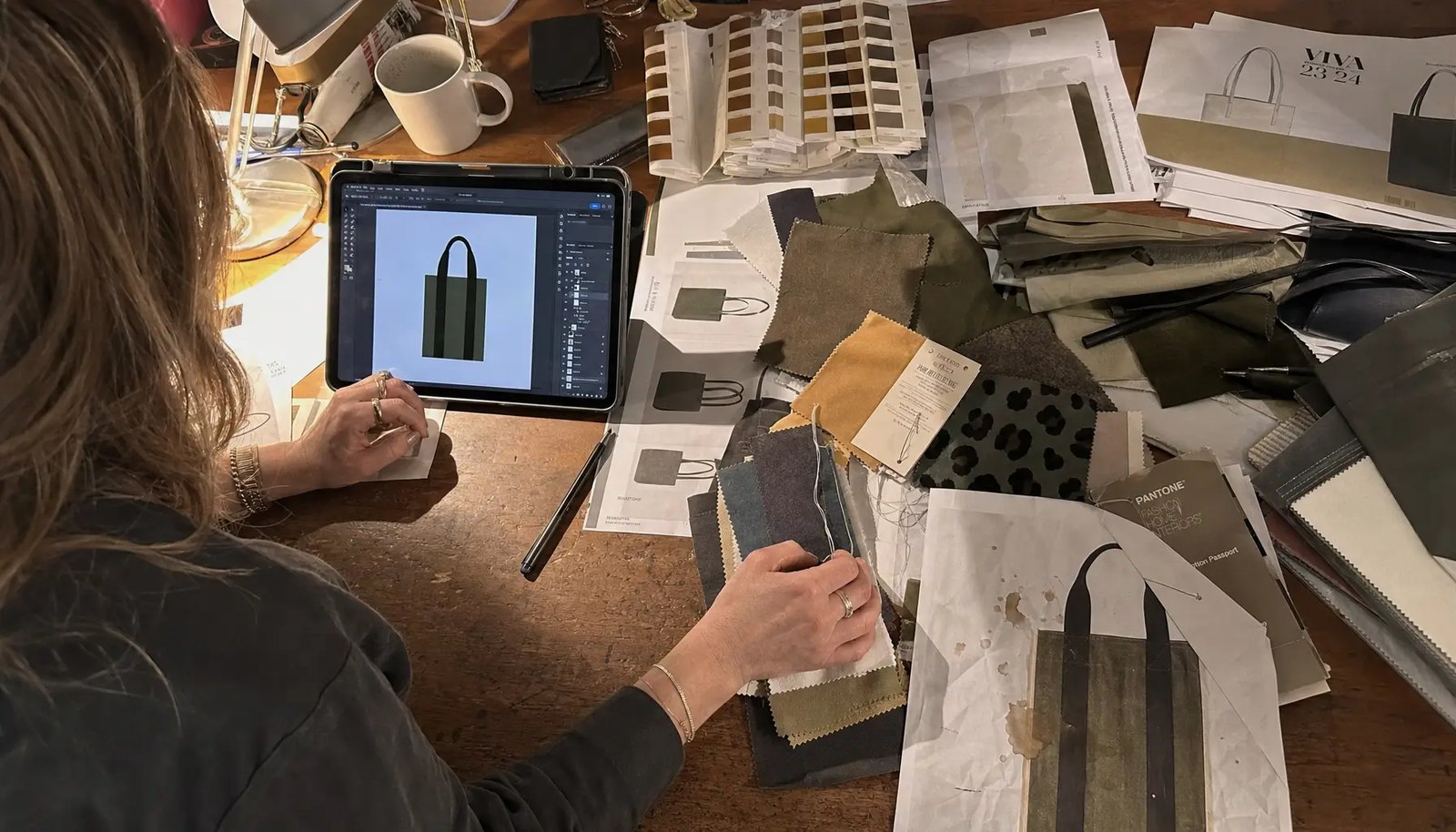
Why print proofing matters more than the quote
For canvas messenger bags, the print proof is where many orders go wrong. A quote can look sharp on paper, but if the logo shifts, the canvas is too soft, the weave is too open, or the ink reacts badly to curing, the delivered bag can be hard to sell and expensive to remake. Procurement should treat the proof as a production control document, not a formality.
The biggest risk is not only visual quality. Poor proofing affects handle balance, flap alignment, carton yield, and the resale value of the whole lot. A buyer who defines the proof properly can compare suppliers on the same basis, avoid hidden rework costs later, and reduce the chance that small design mistakes become a full shipment rejection.
For tech startups, there is also a brand issue. A messenger bag often serves as employee onboarding gear, conference merch, partner giveaways, or a retail add-on that appears in public. That means the print proof is not just about whether the logo looks nice. It is about whether the bag represents the company consistently in photos, at events, and in daily use.
The proofing checklist should therefore answer three questions before production starts: does the bag structure support the intended use, does the print method suit the artwork, and does the approved sample match the planned shipment exactly? If any of those answers are fuzzy, the order is still too early to release.
A useful mindset is to compare the cost of proofing against the cost of correction. Reprinting bags, replacing cartons, or discounting a flawed lot often costs far more than one extra sample round. Buyers win when they ask the hard questions early, even if the factory feels the process is slow.
- Set the proof around real use: employee carry bag, retail item, conference giveaway, or laptop messenger.
- Match the proof to the actual print method, not a generic artwork preview.
- Use one approval sheet for fabric, print, trim, packaging, and carton marks.
- Keep a sealed master sample so later reorders are judged against the same reference.
Start with the base bag spec, not the artwork
A good print cannot rescue a weak base bag. For tech startup programs, the most common canvas range is 12 oz to 14 oz because it gives enough body for a clean print surface without making the bag too heavy to carry daily. If the bag is intended for laptops or sample kits, a reinforced base, stronger webbing, and a more stable gusset matter more than a fancy logo placement.
Buyers should define the body size, gusset depth, flap style, shoulder drop, and any internal pocket before sending artwork. If these details are still moving, the supplier may position the print on the wrong panel or quote against the wrong fabric cut plan. A few centimeters on the spec sheet can change whether the logo sits square on the front panel or disappears into a seam line.
For canvas messenger bags used in tech programs, it helps to think in use cases. A conference tote replacement needs enough room for brochures, notebooks, and a charger, while an employee laptop bag needs a padded feel, secure closure, and a structure that keeps the print visible when the bag is filled. The same bag body rarely serves both jobs equally well.
If the bag will be carried on public transit or to client meetings, shape retention matters. A soft body can wrinkle the artwork and make the logo look unstable. A firmer weave, better base reinforcement, and a consistent panel cut make the print read cleanly and improve perceived quality even before the buyer touches the bag.
Ask the factory for the full construction spec, not only the outside dimensions. Check whether the bag is lined or unlined, whether the base has board reinforcement, whether the webbing is folded or cut-and-sewn, and whether the flap closes with Velcro, buckle, or zipper. Each of those choices affects print position, production cost, and service life.
- 12 oz canvas usually fits promotional and lower-cost retail programs.
- 14 oz and above usually improve structure and perceived value.
- Washed canvas can give a softer hand feel, but color and print absorption may shift after wash finishing.
- Confirm body size, gusset depth, and flap style before artwork placement is approved.
Choose the print method by artwork, not by habit
Silkscreen remains the most practical choice for flat logos, one to three colors, and repeat orders. It gives stable color, efficient setup at scale, and a clean look on tightly woven canvas. If the artwork includes fine text, small icons, or subtle gradients, the buyer should test whether the line weight survives the fabric texture before approving mass production. On rough or open-weave canvas, thin letters can disappear even when the digital proof looks perfect.
Heat transfer is useful for short runs or colorful launch programs, but it must be approved carefully for fold areas and abrasion points. A transfer that looks sharp on day one can crack sooner if it sits on a bend, a flap edge, or a high-contact pocket zone. Buyers should ask the factory where the design will flex during normal use and whether the chosen film or transfer layer has been tested on that spot.
Embroidery works well for a small premium mark on a flap or side label, though it is not the best choice for large front graphics. It adds texture and a premium feel, but dense stitching can pucker lighter canvas or distort a nearby seam. For a tech startup, embroidery can be a smart accent on a small secondary panel while the main brand mark stays printed on the front.
The right method also depends on expected reorder behavior. If the bag is a one-time event item, a faster method that supports lower quantity may be enough. If the bag will be replenished quarterly, the buyer should favor a process that can be repeated without color drift or layout changes. Procurement should therefore ask not only what looks best, but what will stay consistent across reorders.
When comparing options, test the artwork at actual size. A logo that is readable in a mockup may lose detail once shrunk to fit the flap. A large mark may also create print-registration issues if it crosses a seam, edge fold, or pocket border. The best method is the one that fits the logo, the canvas, and the production schedule together.
- Use silkscreen for stable repeat orders and simple branding.
- Use transfer only if the design complexity or order size justifies it.
- Use embroidery for a premium accent, not for large artwork coverage.
- Check line thickness and tiny text at real print size before approval.
Use a table of spec decisions before comparing suppliers
The cleanest way to compare quotes is to normalize the spec. Ask every supplier to quote the same canvas weight, same print size, same placement, same packing method, and same carton count. Otherwise, one factory may quote a light bag with a loose weave while another quotes a heavier body with better reinforcements, and the low price will be misleading. The buyer ends up comparing different products rather than different suppliers.
For importers and distributors, this is also the fastest way to uncover whether a supplier actually understands production. A factory that cannot quote print setup, packaging density, seam allowance, and MOQ logic separately usually cannot control the order well once the deposit lands. A solid vendor should be able to explain how each variable affects cost and lead time.
This spec table should include the details that often get forgotten in a rush order. For example, is the canvas natural, dyed, washed, or garment-dyed? Is the logo one side or two? Is the closure a flap, zipper, buckle, or hook-and-loop? Does the bag need a front pocket or internal divider? Those are not minor details; they define the cut plan and the print placement reference.
A procurement team can also use the same table for internal sign-off. Marketing may care most about logo appearance, operations may care about durability, and finance may care about landed cost. A shared spec sheet reduces the chance that one department approves a sample that another department later rejects.
If the product line will expand, the spec table should be designed for scalability. A supplier should know which parts can remain constant across colors and which parts change. That matters because a startup launch may begin with one colorway and later add limited editions or regional variants without rebuilding the whole production file from scratch.
- Compare suppliers on the same canvas weight and finishing.
- Force each quote to separate unit price from setup charges.
- Ask for carton dimensions so freight cost can be estimated early.
- Record every decision in one approval sheet that sales, procurement, and design can all sign.
Compare sourcing routes by control, not only by unit price
The best sourcing route depends on how much risk your team can manage internally. A direct factory is usually better when the order needs proof control, repeat reorders, and packaging discipline. A trading company may help if you need multiple product categories in one shipment, but it can also add another approval layer that hides where the print decision is actually made. The less visible the decision path, the harder it is to solve problems quickly if the proof comes back wrong.
For tech startup programs, direct factory sourcing often works best because the bag is usually tied to a launch date, an internal brand guide, and a clear retail or employee-use requirement. The more your order depends on exact print match and stable repeat production, the more you want fewer handoffs between artwork approval and sewing. Every extra handoff can add delay, translation error, or a different understanding of what the sample is supposed to represent.
That said, the lowest-friction route is not always the correct one. A sourcing partner may be helpful if your team is coordinating notebook, pouch, and messenger bag items together or if the order needs country-specific labeling support. In that case, the real question is whether the partner can show technical ownership of the print proof, not just sales responsiveness. Ask who physically checks the sample and who signs the line-item approval.
Local stocking or domestic decorators can be useful for rush replenishment, but they are rarely the best fit when the bag body itself needs custom control. Their strengths are speed and lower coordination burden, not deep construction flexibility. For a first branded bag program, though, a hybrid model can work: source the base body from a stable factory, then use a domestic print partner only if that route gives stronger control on a deadline.
Procurement should compare routes using control points: who owns fabric sourcing, who approves print color, who verifies packing, and who is accountable for rework. Unit price matters, but the cheapest route on paper often loses when the order has to be corrected under launch pressure.
- Direct factory: better control of proof, sewing, and packing.
- Trading route: can help consolidate mixed product baskets, but may slow technical feedback.
- Local stocking distributor: useful for urgent replenishment, but often limited in spec control.
- Ask who owns final approval for print, sewing, and carton release.
What a useful print proof should include
A useful proof is not just a logo image. It should show the exact bag panel, print placement from seam reference points, print dimensions, color reference, and any rotated or mirrored orientation. If the bag includes a flap or gusset, the proof should indicate whether the artwork will distort when the bag is filled. A good proof tells the factory where the image lives, not just what the image looks like.
The proof should also show the fabric color and texture the print is being tested on. A logo can look crisp on a white sample but muddy on natural canvas if the weave is open or the ink is too thin. Buyers should insist on a proof that reflects the real production fabric lot, because yarn density, dye absorption, and finishing can all change the final look.
For multi-panel bags, mark the face panel, flap, side panel, and back panel separately. Many mistakes happen when the factory assumes one panel is the front because the mockup looks that way. If the product has pockets, zippers, rivets, or binding tape, these details should appear on the proof so the print does not conflict with the construction line.
The best proof packages also include reference photos from a sample made in the intended material. A flat artwork file alone cannot show how the logo sits under a seam, how the print sits on a washed fabric, or how much visual space is left once the bag is filled. Buyers should ask for front, back, side, opened, and closed views if the order uses a flap or zipper.
Finally, the proof should be versioned. Version 1, Version 2, and final approved reference should be obvious. That way, if there is a later dispute, procurement can point to the exact version that was signed off. Small administrative discipline prevents large production arguments.
- Mark print size in millimeters, not only in a visual mockup.
- Show distance from seams, edge folds, zipper lines, or pocket tops.
- Confirm whether the approval is for fabric color only or for finished bag color after wash.
- Use version numbers so revised artwork cannot be confused with the approved file.
Sample approval rules that prevent expensive rework
The pre-production sample should be made with the same canvas, thread, webbing, zipper, and print method that will be used in mass production. A sample built from substitute materials is only useful for shape study, not for final approval. If the factory says a corrected sample is needed, the buyer should track exactly what changed and why before giving the next sign-off. Without that record, the team may approve a sample that no longer reflects the order.
A practical approval rule is simple: no production release until the sample passes on fabric weight, print location, color match, stitching, and carton packing format. If any one of those items changes after sample approval, the order should be re-approved on the affected point. This is especially important when the bag must hold a laptop or heavier daily carry contents, because structure issues often show up only after loading.
Sampling should also reflect the intended user journey. If the bag will be shipped individually to employees, check whether the final package protects the printed face. If the bag will be sold through retail, confirm that hangtags, barcodes, and label placement are all approved together. Many production delays come from approving the bag body but forgetting the retail information layer.
One good practice is to keep the approved sample sealed and tagged. A photo record should show front, back, close-up of print edges, stitching at stress points, the inside label, and the packed carton sample. If the supplier uses multiple production lines, that record helps inspectors compare what was approved with what is being produced.
If a revised sample is required, use it to answer one question at a time. Avoid changing print size, bag color, trim color, and packaging all at once, because then no one knows which change fixed the issue. Clear sample discipline is one of the simplest ways to protect margin.
- Approve one reference sample and keep it sealed as the master.
- Photograph front, back, side, interior, and label details before release.
- Record the exact thread color, print ink reference, and zipper style if used.
- Re-approve any material or packing change that affects the finished bag.
MOQ logic, setup costs, and how to read a real quote
MOQ is rarely just one number. For printed canvas messenger bags, MOQ may be set separately for the body fabric, print screen setup, color count, and packaging variant. A buyer should ask whether MOQ changes if the artwork uses two colors instead of one, or if the order needs custom hangtags, barcode stickers, or retail polybags. The useful question is not only “what is your MOQ?” but “what is the MOQ for this exact configuration?”
When reading the quote, separate what is one-time from what repeats. Screen setup, plate costs, sampling charges, and carton artwork are often fixed charges. Unit price should then be judged against fabric weight, print complexity, and packing density. A low unit price with high setup charges can still be the wrong deal for a smaller launch, while a slightly higher unit price may win on total landed cost if the setup is lighter.
Ask the factory to quote at least two scenarios if the order is flexible. For example, one quote can show a 1-color logo on a bulk-packed bag, and another can show the same bag with a 2-color print and retail packing. That comparison often reveals where the real cost drivers are. If the factory is unwilling to break down the options, the buyer is at higher risk of hidden charges later.
It also helps to ask how repeat orders work. Can the screens or plates be reused? Does the factory retain the print archive? Will a reorder trigger a fresh setup fee if the color stays the same? These questions matter because a startup merch program often starts small and then replenishes quickly once the first batch is accepted.
Finally, look at price in the context of expected yield. A cheaper quote that produces more rejects, more packing damage, or more print variation can erase the savings. Procurement should measure not only purchase price, but also the cost of quality, freight efficiency, and rework risk.
- Ask for MOQ by print color, not only by total order quantity.
- Separate setup charges from unit price before comparing suppliers.
- Check whether a second order can reuse screens or plates.
- Request at least two quote scenarios if the specification may change.
Packing, carton loading, and shipping cost traps
Packing decisions change landed cost more than many buyers expect. A printed bag that ships in a bulky retail insert can cost materially more than the same bag bulk packed with tissue and carton dividers. But over-compressed cartons can damage the print surface, flatten the structure, or create crease marks that retail buyers reject. The goal is to protect the product without paying for unnecessary air.
For export orders, carton size, carton count, and stack strength should be confirmed before production starts. If the factory uses too much empty space, freight cost rises. If the cartons are too tight, the printed face can rub during transit. The right answer is usually a compact but protective pack plan, not the cheapest packing method available.
Buyers should also clarify whether the bags are folded to protect the print or folded to reduce carton volume. Those are not always the same. A fold line that crosses a logo can leave a permanent mark, especially on heavy ink deposits or transferred graphics. Ask the factory to show how the bag will sit inside the carton, not just how it looks on a shelf.
If retail presentation matters, confirm whether the bag needs an individual polybag, hangtag, barcode label, insert card, or silica gel pack. Each item affects labor, carton density, and the final unboxing experience. If the bags are intended for employee onboarding or giveaway use, the packing can be simpler, but the print still needs protection from scuffing and moisture.
In short, packing should be treated as part of product engineering. It affects the customer experience, the freight quote, and the likelihood of damage claims after arrival.
- Ask for inner pack quantity and outer carton dimensions together.
- Protect printed panels with tissue or sheet separators if bags are stacked tightly.
- Confirm whether carton marks must include PO, SKU, color code, and country-of-origin text.
- Check fold lines so they do not cross the printed logo area.
Lead time and schedule risk for startup launches
A realistic lead time for canvas messenger bags often starts with sample production of about 5 to 10 days, followed by 25 to 35 days for mass production after approval, then transit time based on route and season. That is a practical baseline, not a promise. Complex print, new tooling, fabric dyeing, wash finishing, or packaging customization can push the schedule longer.
Buyers should build a buffer for proof corrections, not just sewing time. The common mistake is counting the factory's sample lead time as if the sample is already approved. Once you add artwork corrections, revised placement, and carton label sign-off, the real launch date can shift if no margin exists in the calendar. A launch tied to a conference date or internal event should always have contingency days.
Ask the factory what starts the clock. Some factories count from deposit receipt, others from artwork approval, and others from final sample sign-off. Those definitions matter because a schedule can look short on a quote but still hide several waiting periods. Procurement should make the production start trigger explicit in writing.
The buyer should also understand where lead time can expand. Screen making, color matching, wash finishing, zipper procurement, and carton printing can each add a separate step. If any of those items are custom, they should be placed on the same timeline as production, not treated as side tasks that happen automatically. A good supplier will identify the longest pole in advance.
For startup launches, the safest approach is to lock the order earlier than the public announcement date and hold a small buffer for freight delays. That buffer is especially important if the bags will be distributed at events, since a delayed shipment can cause both inventory and brand timing problems.
- Treat proof approval as a schedule gate, not a courtesy step.
- Do not book final freight too early if carton dimensions may change.
- Reserve extra days if the order depends on a new fabric lot or custom wash finish.
- Confirm the date from which the factory officially counts production days.
Specification comparison for buyers
| Spec decision | Recommended option | When it fits | Buyer risk to check |
|---|---|---|---|
| Fabric weight | 12 oz to 14 oz washed canvas or tight plain weave; target body fabric tolerance ±5% by weight | Brand merch, employee bags, retail-ready programs, and bags that need better shape retention | Too-light canvas can distort after print curing, show weave-through, and make the bag feel soft or cheap in hand |
| Print method | Silkscreen for flat logos; heat transfer only for short runs or multi-color test launches; embroidery for small premium marks | Silkscreen fits repeat orders and simple art; embroidery fits compact marks; transfer fits complex art or low-MOQ market tests | Fine lines under about 1.0 mm, gradients, halftones, or tiny text may blur, crack, or wash unevenly if the method does not match the artwork |
| Supplier route | Direct factory with in-house print, sewing, and packing control | When you need fewer handoffs, stable reorders, and better proof approval control | A trading layer can hide who approves print color, stitch placement, and carton pack-out |
| MOQ structure | Separate MOQ for blank body, printed version, and packaging variant; confirm setup fees by color and side | Useful when you plan staggered launches or want to test one SKU before expanding colors | A low quoted MOQ can carry a high setup charge that makes the first order uneconomic |
| Artwork format | Vector file with Pantone references, actual print size in millimeters, and placement measured from seams | Best for logos, line art, and fixed placement on front flap or body | RGB files, low-res PNGs, and unscaled mockups often cause proof mismatches |
| Lining and trim | Unlined or light lining for cost control; reinforced base, handle anchors, and stress points for daily carry | When the bag is used for laptops, notebooks, samples, and event kits | Weak seams, thin webbing, or loose rivets fail before the print does |
| Packing route | Bulk packed with tissue and carton marks; individual polybag only if retail or DTC presentation requires it | Best for distributors and procurement teams balancing freight and shelf presentation | Excess inner packing raises volume and cost; no protection risks scuffing and print rub |
| Lead time model | Sample 5 to 10 days, production 25 to 35 days after final approval, then transit buffer | Works when the launch date is fixed and artwork is already stable | A factory that counts approval day as day one can make the real production window shorter than it looks |
| Quote comparison | Compare landed cost per unit, not only ex-factory price | Any order where freight, duty, carton density, and QC rework affect margin | Low unit price with poor carton efficiency can lose money once shipping is added |
Buyer checklist before sampling
- Confirm canvas weight in ounces or GSM, not only a general term like heavy canvas.
- Approve the exact print size, placement, and Pantone target before sampling.
- State whether the bag must hold a laptop, tablet, charger, or only documents and event material.
- Ask for seam reinforcement, handle tape width, stitch density, zipper spec, and stitch tolerance in the quote.
- Decide whether the order is retail-packed, bulk packed, or mixed, and record the target pack-out.
- Request a pre-production sample with the same fabric lot, print method, thread color, and closure hardware as mass production.
- Lock carton size, carton count, carton net weight, and outer mark format before booking freight.
- Build in an approval buffer for print proof, sample revision, carton label sign-off, and any final artwork corrections.
Factory quote questions to send
- What is the exact canvas weight in GSM or oz, and is it greige, dyed, enzyme-washed, or washed after sewing?
- Which print method will you use for this artwork, and what is the setup charge per color, side, and placement?
- Can you send a pre-production sample made from the same fabric, ink, zipper, webbing, and lining spec?
- What is your true MOQ for printed bags, and does MOQ change by color, print side, trim, or packaging style?
- What is the standard tolerance for print registration, logo size, seam alignment, and panel placement?
- What is the acceptable stitch tolerance at handle anchors, side seams, and gusset joins, and how many stitches per inch do you run?
- How many days do you need for sample production, revision, approval, and mass production after deposit?
- What inner packing and carton size do you recommend to protect the print without inflating freight volume?
- Can you quote unit price, sample charge, tooling charge, carton artwork, and pallet packing cost separately?
- Who signs off the print proof internally, and can we see the approval reference used on the production line?
Quality-control points to confirm
- Fabric weight should stay within ±5% of the approved target and match the approved swatch under daylight and office light.
- Canvas weave should be consistent across the print area so ink does not sink unevenly into an open texture or skip on raised slubs.
- Print registration should stay within ±2 mm for simple one- or two-color logos; anything tighter should be defined in writing before production.
- Logo placement should stay centered or positioned within the agreed offset, especially on flap-front or pocket-front designs.
- Stitching should be even at handle anchors, side seams, gusset joints, and zipper ends if the model includes them.
- Seams should hold under a practical pull test for daily-use bags, with no skipped stitches, loose thread ends, or uneven seam allowance.
- Handles and shoulder straps should be cut to the same length within 3 mm, and hardware should be secure without wobble or sharp edges.
- Cartons should protect printed faces from scuffing, crush, and moisture during export handling, with separators if the print face touches another bag.
- The approved sample, production sample, and shipment inspection standard should use the same reference sheet and photo record.
- Any change to fabric lot, ink brand, thread color, webbing width, closure hardware, or packing method should trigger a re-approval on the affected point.