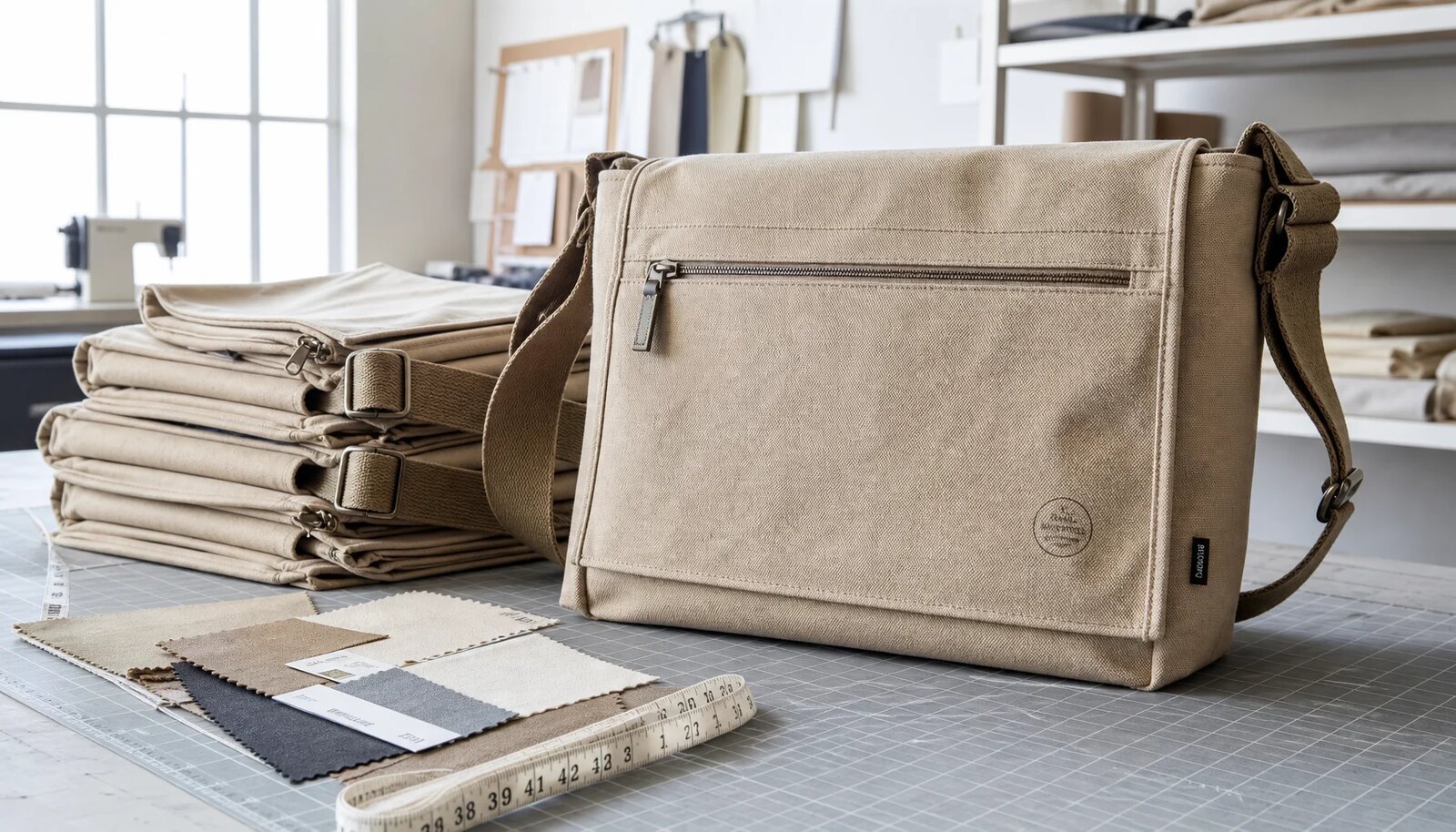
Define the Quantity You Can Defend
For event planners, MOQ is not just a factory minimum. It is a deadline, budget, receiving, and distribution decision. A retail buyer may tolerate slow sell-through or hold inventory for a later season. An event buyer usually cannot. Once the conference, launch, roadshow, or sponsor program ends, leftover bags may have outdated branding and limited value.
Start with a real demand floor before asking for price breaks. Add registered attendees, waitlist assumptions, staff, speakers, VIPs, sponsor samples, press kits, internal approvals, replacement units, and bags needed for kit-packing tests. Then separate the non-negotiable required quantity from the nice-to-have quantity. This keeps the team from chasing a lower unit cost that creates cartons of unusable surplus.
A controlled overage is still important. If registration is fluid, build a buffer that matches the event's risk. A small local workshop may need only a modest replacement quantity. A multi-city corporate program may need a larger buffer because shortages are harder to fix once shipments are split. The point is to make the overage intentional, not the accidental result of accepting a factory price break.
- Build the demand floor from event use, not from the supplier's first MOQ.
- Separate required quantity, preferred quantity, and price-break quantity in the RFQ.
- Keep surplus only if branding and bag style can be reused at future events.
- Use shortage risk, not only unit price, to decide the final order quantity.
Turn the Bag Into a Precise Spec
Canvas messenger bags can look similar in a catalog and still be very different products. An unlined 10 oz cotton canvas bag with a basic flap is not comparable to a 12 oz bag with zipper closure, internal divider, reinforced strap points, printed pocket, and custom woven label. If the spec is vague, each supplier will quote a different interpretation.
A useful RFQ states finished size, gusset depth, flap length, closure type, pocket layout, strap length range, webbing width, fabric weight, body color, hardware, label position, decoration method, and packing. If the bag must hold a notebook, badge envelope, brochure bundle, water bottle, tablet, or sponsor insert, test those items against the proposed size. A sample that looks neat while flat may not close well when filled.
Canvas weight needs careful wording. Ask whether the quote is based on greige fabric, dyed fabric, washed fabric, coated fabric, or finished fabric. Dyeing and washing can change weight, shrinkage, color, and hand feel. For many event programs, 12 oz canvas is a practical midpoint because it usually gives better structure than a light giveaway bag without the cost and freight weight of a heavier premium build.
- State width, height, gusset, flap length, pocket size, and strap range with tolerances.
- Define whether the bag needs lining, padding, dividers, zipper pockets, or only simple storage.
- Ask for fabric weight in finished GSM and/or oz, with the measurement basis named.
- Quote every supplier against the same construction, artwork, hardware, and packing format.
Find the Real MOQ Driver
Factories rarely set MOQ from one simple rule. The limit may come from fabric roll purchasing, custom dyeing, cutting efficiency, print setup, hardware sourcing, woven label production, sewing line changeover, carton labels, or packing labor. A supplier may quote 1,000 pieces, while the true blocker is a minimum dye lot or a non-standard buckle.
The most useful negotiation question is not only, "Can you lower the MOQ?" Ask what specifically creates the minimum. Standard natural cotton canvas may be flexible. Custom dyed canvas may not be. A one-color screen print may be easy to run at a lower quantity, while four sponsor versions may create separate setup and inspection work.
Color and artwork splits often surprise buyers. A request for 1,000 bags split into 500 natural and 500 black may not behave like one 1,000-piece order. The factory may need two fabric lots, two thread setups, two cutting batches, separate print calibration, separate carton marks, and separate inspection records. The same issue applies to city editions, sponsor logos, language versions, and department-specific artwork.
Once the driver is visible, the buyer can negotiate constructively. Consolidating body color, using standard webbing, keeping one artwork placement, or choosing bulk packing may reduce friction more effectively than asking for a blanket discount.
- Ask for MOQ by total order, fabric color, size, artwork, hardware, label, and packing.
- Identify whether fabric, print, sewing, hardware, labels, or packing sets the minimum.
- Treat each colorway or logo version as a possible separate production lot.
- Remove the specific complexity that drives MOQ before changing core quality.
Choose Stock or Custom Under Deadline Pressure
Supplier route should follow the calendar. If the event is close and the standard bag already works, a stock canvas messenger bag with logo decoration may be the safest option. Stock can reduce minimums, sampling time, and production uncertainty. It also limits control over size, pocket layout, closure, strap comfort, carton format, and future reorder matching.
A custom factory route makes sense when the bag must be built around the event kit or brand standard. Custom sizing, sewn labels, special pockets, specific canvas weight, print placement, and controlled packing are easier to manage when the factory is producing to a locked spec. The tradeoff is that the buyer must approve samples quickly and avoid late design changes.
Trading companies can be helpful when procurement needs sourcing coordination or language support. They may locate stock materials or manage several production steps. Ask what is made in-house, what is subcontracted, and who performs final inspection. If the answer is unclear, it will be difficult to resolve quality issues under an event deadline.
A practical threshold: when the event is inside 4-6 weeks, consider stock first unless the custom product is already sampled and production capacity is reserved. When the event is 8-12 weeks out, custom sourcing may be realistic if approvals are disciplined. Longer timelines allow more room for lab dips, revised samples, component sourcing, and inspection.
- Use stock when the deadline is tight and the physical sample fits the real event contents.
- Use custom when construction, color, pocket layout, labels, or packing must be controlled.
- Ask suppliers to state whether the quote is made-to-order, decorated stock, or partially customized stock.
- Reserve stock or production capacity after approval so the quoted option does not disappear.
Negotiate With Design Levers
The strongest MOQ negotiation often comes from simplifying the bag. Every pocket, divider, zipper, curved flap, binding edge, woven label, insert card, and packing instruction adds labor or setup. Simplification should protect function first. Do not remove strap reinforcement, weaken seams, or choose canvas that cannot carry the kit simply to meet a low minimum.
Decoration is a high-impact lever. One-color screen printing is usually efficient for event logos and sponsor marks. Two spot colors can still be manageable. Full-color heat transfer can reproduce complex artwork, but it requires closer checks for edge adhesion, shine, cracking, and color consistency on textured canvas. Embroidery can look premium, yet dense stitching can add cost and create puckering on some fabrics.
Hardware can also create hidden minimums. Custom zipper pulls, plated buckles, unusual D-rings, special snap finishes, and non-standard webbing colors may need separate sourcing. For a fixed event date, standard hardware that functions reliably is often a better purchase than custom parts that add risk.
Packing choices affect MOQ and labor. Bulk packing can reduce unit cost and unpacking time when bags go straight to staging. Individual polybags can help counting and multi-location distribution. Custom carton labels, barcodes, insert cards, and split allocations should be specified early because late packing changes can disturb both schedule and price.
- Keep one body color, one logo placement, one hardware set, and one packing method where possible.
- Simplify decorative features before reducing fabric strength or sewing reinforcement.
- Ask for alternate quotes showing MOQ impact from stock color, fewer print colors, or bulk packing.
- Use standard webbing, zipper tape, buckles, and D-rings when timing is tight.
Write an RFQ Suppliers Can Price Cleanly
A clean RFQ reduces quote drift. Include the event date, delivery destination, target quantity, quantity bands, approval deadline, finished dimensions, canvas weight, construction, print method, artwork count, label needs, packing method, inspection requirement, and delivery term. Suppliers can only quote accurately when the buying conditions are visible.
Avoid asking for only a "canvas messenger bag with logo." That phrase can produce quotes for different fabric weights, smaller dimensions, lighter stitching, different closures, and different packing. The lowest price may simply be the thinnest interpretation of the brief. By the time samples reveal the difference, the event schedule has lost valuable days.
Pull hidden costs into the quote. Ask whether the price includes sample fees, lab dips, print strike-offs, screen setup, labels, hangtags, insert cards, inner packing, export cartons, palletization, domestic trucking, freight, duties, and destination charges. Normalize Incoterms before comparing offers. An EXW quote, FOB quote, and delivered quote are not directly comparable.
Use structured alternates instead of asking for an open-ended discount. Ask the supplier to show the base spec, then an alternate for stock color, one-color print, standard hardware, simplified pocket construction, and bulk packing. This gives procurement and stakeholders a decision record tied to cost, MOQ, and timing.
- Send artwork, dimensions, quantity bands, delivery point, and packing instructions together.
- Require suppliers to list included costs, excluded costs, payment terms, and sample charges.
- Compare all quotes on the same Incoterm and receiving location.
- Ask for alternates that reduce MOQ through specific scope changes.
Use Sampling as a Gate, Not a Courtesy
Sampling turns the written quote into a physical decision. Check canvas hand feel, finished size, gusset depth, flap alignment, zipper movement, strap comfort, pocket usability, print density, stitching, hardware, and packed appearance. Load the sample with actual event materials before approval. Messenger bags change shape when filled.
Know what kind of sample you are approving. A reference sample shows general construction and may not use final materials. A prototype sample tests the intended build but may not include final print, labels, or components. A pre-production sample should represent the final fabric, color, logo, hardware, sewing, and packing as closely as possible. For a custom order, that pre-production sample should be the production gate.
Document approval in a short record. Include sample version, date, approved measurements, print placement, color reference, hardware comments, sewing notes, packing method, and required changes. If the buyer says "approved" while listing changes, the supplier may not know whether bulk can start.
If timing forces photo approval, strengthen it. Request measurement photos, stitch close-ups, print close-ups, hardware videos, carton packing photos, and a first-piece production check. Photos cannot confirm true hand feel, fabric weight, or strap comfort, but they are better than approving a single front image.
- Test the sample with the real kit contents before approving production.
- Approve color with a physical swatch or lab dip when color matters.
- Keep one approved sample as the inspection reference.
- Set a final approval cutoff date so sampling does not consume the production window.
Set Print and Brand QC Standards
Event stakeholders often judge the bag by the logo first. The RFQ should state artwork size, print location, number of colors, color reference, print method, and placement tolerance. On messenger bags, placement can be difficult because the logo may sit on a flap, pocket, curved panel, or seam-adjacent area.
Screen printing works well for bold artwork, but large solid areas on canvas may show texture or pinholes if ink coverage is too light. Extra passes can improve opacity but may change hand feel and cost. Heat transfers can handle fine detail and gradients, yet buyers should inspect edge adhesion, surface shine, cracking risk, and how the transfer sits on textured fabric.
Color expectations should be realistic. A brand color on natural cotton canvas will not look exactly like the same color on coated paper or a digital screen. If a sponsor requires close matching, ask for a strike-off on the actual canvas before bulk. State whether Pantone references are targets or strict requirements, and ask what tolerance the supplier can hold.
Secondary branding should earn its place. Woven labels, hangtags, insert cards, printed straps, zipper pulls, and sponsor panels can each add MOQ, cost, and approval steps. A clean, well-placed front print on a sturdy bag is often more valuable than multiple brand touches executed inconsistently.
- Measure print placement from fixed reference points, not from a mockup alone.
- Request a print strike-off on actual canvas for large solids or strict brand colors.
- Inspect opacity, curing, adhesion, registration, edge quality, ghosting, and contamination.
- Limit secondary branding when the event date cannot absorb extra sample steps.
Inspect Sewing, Hardware, and Function
Canvas messenger bags are handled repeatedly during events. Attendees open them, carry printed material, place them under chairs, and move through crowded spaces. Sewing and hardware quality therefore matter as much as decoration. The inspection standard should describe how the bag functions, not just how it looks.
Finished dimensions should be measured from agreed reference points on a flat, unstuffed bag. Typical checks include body width, body height, gusset depth, flap length, pocket size, zipper length, strap length range, and webbing width. Small variation is normal in sewn goods, but uncontrolled variation can affect kit packing and appearance.
Sewing checks should cover seam allowance, stitch density, open seams, skipped stitches, broken threads, loose ends, puckering, edge binding, raw edges, and reinforcement. Strap attachment points deserve special attention because they carry load. Confirm whether the approved construction uses bartacks, box stitches, cross stitches, or another reinforcement method.
Hardware should be tested from multiple cartons. Zippers should move smoothly without catching. Snaps and hook-and-loop should align. Sliders and buckles should hold adjustment. D-rings should not have sharp edges. Webbing should not twist, fray, or feel uncomfortable. These checks are simple, but they prevent visible complaints at registration.
- Define tolerance for body, gusset, flap, pocket, zipper, strap, and webbing measurements.
- Classify broken zippers, open seams, missing reinforcement, wrong logo, stains, odor, and mold as major defects.
- Test closures and strap adjustment from top, middle, and bottom carton layers.
- Inspect reinforcement at load points rather than counting stitches by appearance only.
Plan Packing, Reorders, and Receiving Buffers
Packing is part of the event supply chain. A well-made bag can still create problems if cartons arrive without clear labels, counts are inconsistent, print faces are scuffed, or packing does not match the receiving workflow. Event goods may ship to a warehouse, hotel, convention center, agency office, regional team, or kit assembly partner.
Confirm carton quantity, carton dimensions, gross weight, net weight, outer marks, destination labels, barcode labels, pallet requirements, and maximum carton weight before bulk packing begins. If the order is split by city, sponsor, attendee type, or department, that allocation belongs in the packing plan. Repacking after arrival can erase savings from a lower unit price.
Set a receiving buffer based on risk. Domestic stock decoration may need only a short buffer if inventory is confirmed. Custom overseas production needs more room for inspection, export documents, freight, customs, destination delivery, and local staging. For fixed-date events, the latest ship date should be calculated backward from the required on-site date, not guessed after production is complete.
Reorder planning should also affect MOQ. If the same event brand will repeat, ask whether the supplier can hold the pattern, artwork, approved sample, fabric reference, and component list. If the bag is tied to one dated sponsor program, avoid increasing quantity just to reach a lower unit price unless the surplus has a clear use.
- Confirm carton marks and allocation before packing starts.
- Protect print faces from rubbing, hardware contact, moisture, and compression.
- Build a receiving buffer for inspection, customs, local delivery, and kit assembly.
- Ask what the supplier can preserve for repeat orders, including pattern, swatch, artwork, and component specs.
Specification comparison for buyers
| Buying decision | Best-fit choice | Use this threshold | Risk to verify before PO |
|---|---|---|---|
| Stock bag with logo vs. fully custom bag | Choose stock with decoration when speed and lower minimums matter more than unique construction. | Use stock if the event is inside 4-6 weeks, the sample fits the kit, and standard colors are acceptable. | Confirm live inventory, print area, reorder consistency, carton format, and whether inventory is reserved after deposit. |
| Direct factory vs. trading company | Use a direct factory when the order requires custom size, canvas weight, pocket layout, labels, or packing control. | Use direct factory if you have a locked spec, time for sampling, and someone responsible for approvals. | Verify who buys fabric, prints, sews, inspects, packs, and owns corrective action if defects appear. |
| One body color vs. multiple colorways | Start with one body color and one artwork layout for stronger MOQ leverage. | Use one color when the order is under the factory's normal efficient production quantity. | Ask whether each color creates separate fabric, thread, cutting, print, inspection, or carton minimums. |
| 10 oz vs. 12 oz vs. 16 oz canvas | Use 12 oz canvas for many conference and sponsor bags that need structure without excessive freight weight. | Use 10 oz for light handouts, 12 oz for welcome kits, and 16 oz when the bag must feel more substantial. | Confirm whether quoted weight is greige, dyed, washed, or finished fabric, and request finished GSM tolerance. |
| Screen print vs. heat transfer | Use screen print for simple event logos and sponsor marks with one or two colors. | Choose heat transfer only when full-color artwork or fine detail is essential. | Check curing, adhesion, edge quality, opacity, registration, surface shine, and wash or rub expectations. |
| Standard hardware vs. custom hardware | Use standard webbing, buckles, sliders, snaps, zippers, and D-rings unless custom parts are central to the brief. | Choose standard hardware when the event date is fixed or the order is near minimum quantity. | Confirm component MOQ, replacement availability, plating consistency, pull strength, and sourcing lead time. |
| Bulk packing vs. individual polybag | Use bulk packing when bags will be staged or inserted locally by the event team. | Use individual polybags when bags ship to many sites or must be counted quickly at receiving. | Check scuffing, print transfer, moisture protection, carton count accuracy, plastic policy, and venue requirements. |
| Air freight vs. ocean or ground freight | Use faster freight only for a defined timing gap, not to rescue late approvals that could still slip. | Use air freight when the added cost is lower than the cost of missed event distribution. | Confirm carton volume, chargeable weight, customs documents, destination charges, and latest ship date. |
Buyer checklist before sampling
- Final quantity includes attendees, staff, speakers, VIPs, press kits, sponsor samples, replacements, packing tests, and a realistic buffer.
- Order plan separates required quantity, preferred quantity, and price-break quantity so procurement can avoid unusable post-event inventory.
- Finished dimensions are stated as width x height x gusset depth, with flap length, pocket layout, strap length range, and tolerance.
- Canvas weight is defined in oz and/or finished GSM, with the quote basis clearly stated as greige, dyed, washed, coated, or finished fabric.
- Body color is tied to a stock swatch, lab dip, Pantone target, or approved physical sample, with shade tolerance agreed before bulk.
- Artwork file includes print method, size, number of colors, placement measurements, color reference, and acceptable placement and registration tolerance.
- Hardware spec names zipper size, webbing width, strap adjuster, buckle, D-ring, snap or hook-and-loop, puller, and reinforcement method.
- Sewing requirements cover seam allowance, stitch density, bartacks or box stitches, edge binding, loose thread tolerance, and raw-edge acceptability.
- Packing instructions include carton count, carton dimensions, gross weight, labels, inner packing, pallet needs, and split-ship allocation.
- Schedule includes sample deadline, approval cutoff, production start date, inspection window, latest ship date, arrival date, and receiving buffer.
Factory quote questions to send
- What is the MOQ by total order, body color, artwork version, size, hardware set, label type, and packing format?
- Which item is driving the MOQ: fabric roll, dye lot, cutting setup, screen setup, sewing line changeover, hardware, label, carton, or packing labor?
- Is the canvas weight quoted as finished GSM, greige fabric weight, dyed fabric weight, or ounce weight before washing or finishing?
- Can you provide a material swatch, lab dip, prototype sample, pre-production sample, print strike-off, and photo proof, and which are included in the quote?
- What finished dimension tolerance can you hold for body width, height, gusset, flap, pocket, zipper length, and strap length range?
- Which print method, ink or transfer type, curing process, setup fee, and artwork revision fee are included in the base price?
- What print placement tolerance and registration tolerance can you hold, and will you run a first-piece print check before full production?
- Which components are included: zipper grade, zipper tape color, webbing width, buckles, sliders, snaps, D-rings, woven label, hangtag, insert card, and carton labels?
- What is the sample lead time, bulk production lead time, inspection timing, packing time, supplier holiday impact, and latest safe ship date for our event?
- What are the standard carton quantity, carton dimensions, gross weight, net weight, packing orientation, maximum carton weight, and labeling format?
Quality-control points to confirm
- Canvas weight is checked against the approved basis, such as finished GSM or agreed ounce weight, rather than a vague fabric description.
- Body color is checked against the approved swatch or lab dip under consistent lighting, with a defined decision process for borderline shade variation.
- Finished dimensions are measured from agreed reference points on samples pulled from the beginning, middle, and end of production.
- Panels are square and consistent, with even seam allowance, clean binding, aligned flap corners, and no puckering at gussets, pockets, or zipper ends.
- Print is centered, cured, registered, and free of ghosting, cracked edges, pinholes, ink drag, transfer shine, adhesive halo, and contamination.
- Print placement is measured from fixed points such as pocket edge, flap edge, seam, centerline, or bottom edge instead of judged only by eye.
- Strap attachments are reinforced with the approved bartack, box-stitch, or cross-stitch construction and show no skipped stitches or weak back-tacking.
- Zippers, snaps, hook-and-loop, buckles, sliders, D-rings, and flap closures are tested from top, middle, and bottom carton layers.
- Webbing and shoulder straps are checked for twisting, fraying, rough edges, color mismatch, uncomfortable stiffness, and insecure adjustment.
- Interior seams, pockets, linings, labels, divider panels, and packing are checked for open seams, trapped threads, stains, odor, moisture, and foreign material.