Start With the Carrying Problem, Not the Bag Name
A canvas messenger bag for liquor retail can mean several different products: a premium wine club handout, a retail staff bag, a tasting-event kit, a bottle gift carrier, or a loyalty program item. The material decision changes depending on whether the bag carries glass bottles, boxed spirits, printed brochures, or only light merchandise. Before comparing supplier prices, define the load, the presentation standard, and the distribution route.
The common mistake is to request a “canvas messenger bag” and let each factory quote its own interpretation. One quote may be 10 oz unlined canvas with a narrow strap, while another may be 16 oz lined canvas with metal hardware and a reinforced bottom. Those are not comparable bags. A useful RFQ should fix the working purpose first, then let suppliers quote the same construction.
- For one 750 ml bottle in a carton, specify boxed bottom depth and reinforcement rather than only outside width.
- For staff use, prioritize strap comfort, dark color, and hardware durability over retail gift presentation.
- For premium gift-with-purchase programs, control flap shape, print placement, packing crease marks, and fabric hand feel.
- For distributor bulk orders, compare carton CBM, unit weight, and packing compression because freight can change the landed cost.
Choose Canvas Weight by Load and Appearance
For liquor retail messenger bags, 12 oz to 16 oz canvas is usually the practical range. In GSM terms, that is often around 400 to 540 GSM, depending on weave density and finishing. A 10 oz fabric may be acceptable for light promotional document bags, but it will usually feel soft and may collapse around a bottle. An 18 oz canvas looks sturdy but can be bulky, harder to sew cleanly, and more expensive to ship.
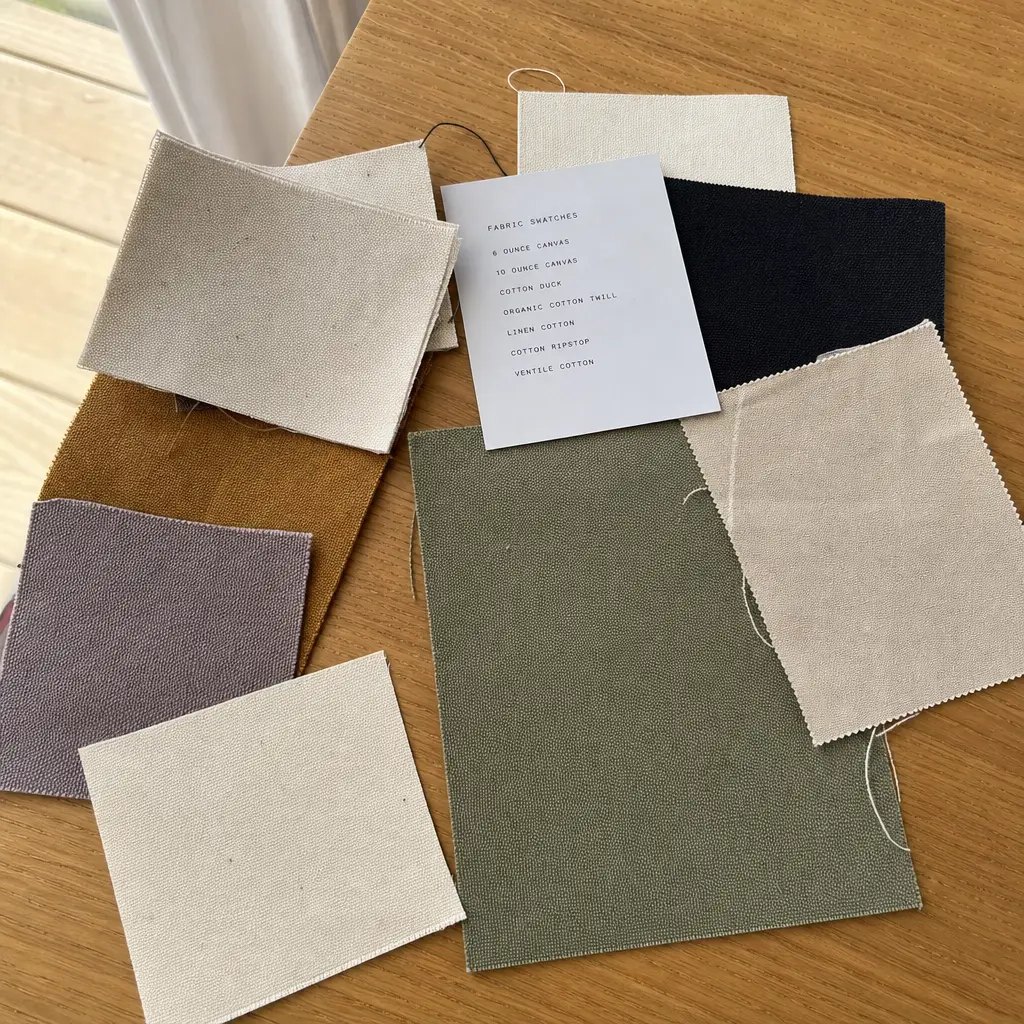
Fabric ounce alone is not enough. A tightly woven 14 oz canvas can feel stronger than a loose 16 oz canvas. Natural unbleached canvas also behaves differently from dyed or washed canvas. If the bag will sit on a retail counter, hold a bottle box, or carry a tasting kit, the buyer should evaluate loaded shape, not just fabric weight on paper.
- 10 oz to 12 oz: suitable for light promotions, documents, and low-cost programs where bottle carrying is not the main function.
- 12 oz to 14 oz: balanced option for retail giveaways, wine club materials, and single-bottle gift support when reinforced properly.
- 14 oz to 16 oz: better for premium liquor retail, staff use, stronger flap structure, and heavier bottle-related contents.
- Above 16 oz: only useful when the brand wants a rugged look and accepts higher sewing cost, carton volume, and freight weight.
Main Body Construction Controls the Real Strength
A heavy canvas does not save a weak pattern. For liquor retail use, the stress points are usually the strap joins, side seams, flap fold, bottom corners, and closure area. If the bag carries one or two bottles, a boxed bottom or side gusset gives better weight distribution than a flat envelope body. A flat messenger shape is cheaper, but it can make bottles press against seams and distort the print face.
The flap should overlap enough to cover the opening when the bag is loaded. If the flap is designed only on an empty sample, it may lift after a bottle box or tasting kit is inserted. For a clean retail look, the flap edge should sit straight, the closure should align without pulling, and topstitching should not pucker. These details are where factory capability becomes more visible than in the fabric swatch.
- Use boxed bottom construction when the bag must carry bottle cartons or heavier gift packs.
- Specify bartack or reinforced box stitching where the strap attaches to the body.
- Keep closure hardware away from high-stress folded fabric if the canvas is thick.
- For premium bags, request edge binding or clean internal finishing to prevent raw canvas fibers from shedding onto retail items.
Lining, Dividers, and Padding Need a Clear Reason
Lining can improve the perceived value of a canvas messenger bag, but it should not be added automatically. An unlined heavy canvas bag is simple, durable, and easier to inspect. A lined bag protects bottle cartons, hides inside seams, and gives a cleaner interior for premium liquor promotions. The usual lining choice is 150D to 210D polyester, though cotton lining may be selected for a fully natural material story at higher cost and with more shrinkage risk.
Bottle dividers and padding should be treated as functional components, not decorative upgrades. If the bag is expected to carry glass bottles without their own carton, a divider or padded sleeve may be needed, but the final design must be tested with the actual bottle diameter and height. Many messenger bags look fine empty but become unstable when glass weight shifts to one side.
- Use no lining when cost, washability, and simple bulk handling are more important than premium interior finish.
- Use polyester lining when bottle cartons, labels, or accessories need smoother contact surfaces.
- Use a removable divider only when the same bag must serve both bottle and non-bottle programs.
- Avoid thin foam padding unless the buyer accepts extra sewing bulk and confirms that the bag is not being sold as protective packaging.
Print Method Must Match Canvas Texture and Brand Artwork
Screen printing is usually the best starting point for canvas messenger bags in liquor retail because it handles solid brand marks, campaign slogans, and one to three color artwork cleanly. On natural canvas, darker inks usually give good visibility. On black or navy canvas, underbase printing may be needed, which adds cost and can make the print feel thicker. Large print areas on rough canvas need proper ink selection and curing to avoid cracking or poor rub resistance.
Heat transfer can reproduce gradients, small details, or multi-color artwork, but it may look less integrated with heavy canvas and can be sensitive to edge lifting if applied poorly. Embroidery works for small logos, woven patches, or badge-style branding, but it is usually not ideal for large liquor campaign graphics on the flap because dense stitching can distort the fabric.
- For one-color distillery or retailer logos, quote screen print first and specify print size in millimeters.
- For detailed artwork, compare heat transfer and woven patch samples before approving bulk.
- For premium private-label programs, consider a sewn woven label plus small screen print instead of oversized artwork.
- For dark canvas, request a printed strike-off because ink opacity and hand feel vary by supplier.
MOQ Logic: Fabric, Dyeing, Hardware, and Print Setup
MOQ is not only a sales rule. It comes from fabric availability, dye lot size, hardware sourcing, cutting efficiency, print setup, and sewing line planning. A stock natural canvas messenger bag may be possible at lower MOQ because fabric is easier to procure. A custom dyed canvas with antique brass hardware, special lining, and two-color flap print will normally need a higher MOQ because several components must be purchased or processed together.
Procurement teams should separate the MOQ by component. If the factory says the MOQ is 1,000 pieces, clarify whether that is due to fabric, dyeing, hardware, print, or sewing. This helps the buyer negotiate intelligently. For example, using stock black canvas and standard nickel hardware may reduce MOQ, while keeping the same bag pattern and print.
- Stock natural canvas usually gives the most flexible MOQ and fastest sampling route.
- Custom dyed canvas may require lab dips, bulk dye approval, and shade tolerance by lot.
- Custom metal hardware color can create hidden MOQ even when the bag order quantity is moderate.
- Multiple artwork versions increase setup time and inspection risk unless carton marking and packing are well separated.
Sample Approval Should Test Loaded Use, Not Empty Beauty
A messenger bag sample can look acceptable on a table and still fail in liquor retail use. The approval sample should be loaded with the intended bottle, carton, brochure, or accessory kit. Check whether the flap still closes, the strap sits correctly, the print remains centered, and the bottom does not sag excessively. If the bag will be used by store staff, wear the sample crossbody and check strap comfort with weight inside.
The buyer should approve a pre-production sample before bulk cutting, especially when the order uses custom dyed fabric, lining, special hardware, or large print. The pre-production sample becomes the reference for sewing, print position, shade, and packing. Do not rely only on digital artwork approval because canvas texture, flap curvature, and hardware placement affect the final look.
- Measure finished size, gusset depth, flap overlap, strap width, and strap adjustment range.
- Load the sample for at least a basic handling test using the actual bottle or carton dimensions.
- Rub the print with a dry white cloth and inspect ink transfer or surface cracking.
- Photograph approved sample details: front, back, inside seams, strap joins, closure, print close-up, and packing fold.
Quote Data Needed to Compare Suppliers Fairly
A useful quote for canvas messenger bags should show more than a unit price. It should define material weight, approximate GSM, dimensions, lining, strap specification, hardware, print method, packing, carton data, sample fee, sample lead time, bulk lead time, and payment terms. Without these fields, the lowest price often comes from a thinner fabric, narrower strap, simpler stitching, or denser carton packing that causes retail presentation issues.
For importers and distributors, carton data is especially important because messenger bags are bulkier than flat totes. A heavier canvas and structured flap can increase CBM quickly. If two factories quote the same unit price but one packs 50 pieces per carton and another packs 100 pieces under compression, the landed condition and freight cost may be very different.
- Request unit weight per bag and estimated gross weight per export carton.
- Request carton dimensions and packing quantity so freight forwarders can estimate CBM.
- Require the quote to state whether print setup, sample charge, and inner packing are included.
- Clarify whether price changes after pre-production sample approval if fabric consumption increases.
Packing Choices Affect Retail Presentation and Landed Cost
Packing should match how the bags will be distributed. Flat packing protects the flap, print surface, and overall shape, which matters for retail gift programs and premium liquor campaigns. However, flat packing increases carton volume. Compressed folding reduces shipping CBM but may leave crease lines across the flap, print, or closure area. Heavy canvas can recover slowly, especially after ocean transit.
If the bag is delivered to stores as a promotional display item, specify acceptable fold lines and whether each bag needs tissue, a polybag, paper band, or no individual packing. For sustainability programs, buyers may prefer bulk packing without individual polybags, but moisture protection must still be considered. A carton liner or desiccant may be needed when shipping heavy cotton canvas during humid seasons.
- Use flat packing for premium retail handout programs where the bag is visible to consumers.
- Use controlled folding for bulk distributor orders when landed freight cost is the main pressure.
- Set maximum carton weight so warehouse teams can handle cartons safely without crushing lower bags.
- Confirm carton marks by SKU, artwork version, color, and destination to avoid store allocation errors.
Lead Time Risks and Bulk Production Controls
Canvas messenger bags have more production steps than simple drawstring pouches or flat cotton totes. Fabric procurement, dyeing, cutting, printing, lining preparation, strap assembly, hardware attachment, sewing, trimming, inspection, and packing all affect schedule. The biggest delays usually come from artwork changes, lab dip rejection, hardware shortages, or a sample that looks good empty but fails when loaded.
A realistic schedule should separate sample development, pre-production approval, bulk material preparation, sewing, inspection, and shipping handover. During peak promotional seasons, liquor retail buyers should freeze artwork and specifications before placing the deposit. Changing canvas color, strap width, or closure type after sampling can reset cost and lead time because the factory may need to reorder components.
- Allow extra time for custom dyed canvas because lab dips and bulk shade approval cannot be rushed safely.
- Lock the print layout after checking it on the actual flap shape, not only on a flat artwork file.
- Reserve production capacity after sample approval if delivery timing is tied to a retail campaign.
- Schedule final inspection before final balance payment and before the goods leave the factory.
Specification comparison for buyers
| Spec decision | Recommended option | When it fits | Buyer risk to check |
|---|---|---|---|
| Main canvas weight | 12 oz to 16 oz cotton canvas, roughly 400 to 540 GSM depending on weave | Gift-with-purchase bags, premium wine club packs, staff carry bags, and reusable retail bags that must hold bottles plus brochures | Too light feels promotional and collapses; too heavy increases freight, needle marks, and folding bulk |
| Construction style | Flat messenger body with reinforced flap, boxed bottom, and bartacked strap joins | Retail buyers needing a bag that stands better on shelf and carries one or two bottles with inserts or secondary packaging | Flat unboxed bags may crease bottle labels and look cheap when loaded; weak strap joins fail in pull tests |
| Lining choice | Unlined for budget programs; 150D to 210D polyester lining for darker liquor bottles or gift sets | Use lining when the bag carries printed cartons, glass bottles, or premium accessories that can rub against raw canvas seams | Lining adds labor and MOQ complexity; loose lining can catch bottle corners if not anchored well |
| Strap material | 38 mm to 50 mm cotton webbing or poly-cotton webbing with adjustable slider | Best for crossbody use by retail staff, delivery handoff, tasting events, and travel retail promotions | Narrow straps cut into the shoulder; metal sliders can rust or stain canvas if plating is poor |
| Closure | Magnetic snap, metal snap, or hidden hook-and-loop depending on noise and security needs | Magnetic snap suits premium retail; metal snap suits stronger closure; hook-and-loop suits budget sampling bags | Magnets must not be placed where they crease printing; hook-and-loop can snag lining and feel low-end |
| Printing method | Screen print for solid brand marks; heat transfer for gradients; embroidery only for small badges or labels | Screen print is usually the cleanest for liquor retail logos, distillery marks, and single-color campaign graphics | Large ink coverage on heavy canvas can crack if ink system and curing are not matched to fabric texture |
| Color and dye route | Natural, black, navy, or custom dyed canvas with lab dip approval before bulk cutting | Natural canvas fits craft spirits and wine retail; dark colors hide shelf handling marks and staff use stains | Custom dye needs higher MOQ and shade tolerance; dark canvas may show lint and print registration problems |
| Packing method | Flat packed with tissue only for premium orders; compressed carton packing for cost-driven distributor orders | Flat packing protects flap shape and print face for retail presentation; compressed packing reduces CBM for bulk import | Over-compression causes flap creases and magnetic snap marks that may not recover before store allocation |
Buyer checklist before sampling
- Define the real load: one bottle, two bottles, bottle plus carton, or retail documents only.
- Select canvas weight by use case, not by the highest ounce number in a quote.
- State finished bag size, gusset depth, flap overlap, strap width, and strap drop tolerance.
- Decide whether the bag needs lining, bottle divider, padding, or only reinforced seams.
- Match print method to logo size, canvas color, ink coverage, and abrasion expectations.
- Request pre-production sample photos showing loaded bag shape, strap bartacks, flap alignment, and print position.
- Confirm carton packing method, maximum carton weight, CBM estimate, and whether bags are folded or flat.
- Include inspection thresholds for seam strength, print rub, color shade, metal hardware, and odor.
Factory quote questions to send
- What canvas ounce and approximate GSM are you quoting, and is it greige, bleached, dyed, or washed canvas?
- Is the price based on unlined construction, polyester lining, cotton lining, or a bottle divider insert?
- What strap width, webbing material, slider material, and reinforcement method are included in the unit price?
- Which print process is included, how many colors, what maximum print size, and is curing or colorfastness testing included?
- What is the MOQ for stock canvas color versus custom dyed canvas, and what MOQ applies to metal hardware color?
- How many sample rounds are included before bulk production, and what is the sample lead time after artwork and spec approval?
- What carton quantity, carton size, gross weight, and estimated CBM per 1,000 pieces are assumed in the quote?
- What are the normal production lead time and peak-season lead time after deposit and approved pre-production sample?
- Which QC standard will be used for final inspection, and what defects are considered critical for this bag?
Quality-control points to confirm
- Finished size tolerance should normally be controlled within plus or minus 5 mm for width and height, and plus or minus 3 mm for strap placement.
- Strap joints should be bartacked or reinforced with box stitching and tested with a loaded pull test suitable for the intended bottle weight.
- Print position should be checked against an approved layout, especially when the flap curve or snap position affects logo centering.
- Canvas shade should be compared under consistent light because natural cotton and dyed canvas can shift between fabric lots.
- Metal hardware should be checked for burrs, rust marks, weak plating, loose rivets, and staining on light canvas.
- Seams should be inspected for skipped stitches, broken threads, raw edge exposure, puckering, and uneven flap topstitching.
- Odor and moisture should be checked before packing because heavy canvas can hold humidity during long ocean transit.
- Cartons should pass basic handling checks, with no overpacked cartons that distort the flap, corners, or closure position.