Start with the job the bag must do
Canvas messenger bags look simple in a line sheet, which is exactly why sourcing them can go sideways. A flap, a strap, a logo, and a rectangular body can describe a low-cost event giveaway or a retail accessory meant to survive daily train rides. The difference sits in material weight, weave density, strap construction, reinforcement, lining, closure quality, packing, and the documents behind any environmental claim.
For procurement teams, material selection is a commercial decision before it is a design decision. The chosen canvas controls handfeel, print sharpness, structure, carton cube, sewing speed, damage risk, and customer perception. A loose 10 oz natural canvas bag with a narrow strap may carry the same product name as a washed 12 oz bag with bound internal seams, reinforced anchors, and a woven brand label. They are not the same product, and they should not be compared as if they were.
Eco apparel brands have an extra layer to manage. Natural, organic, recycled, undyed, plastic-free, low-impact dyed, and durable are not interchangeable words. Some describe appearance. Some describe fiber. Some require certification or transaction documents. A useful canvas messenger bags material selection guide for eco apparel brands turns those words into specifications the supplier can quote, sample, inspect, and repeat.
- Define the selling channel, target retail price, expected load, and durability level before choosing fabric.
- Make suppliers quote the same dimensions, construction, trims, branding, packing, and documentation requirements.
- Keep sustainability language tied to documents, fiber content, processing choices, and approved label claims.
- Use a spec sheet, trim card, and pre-production sample as the approval record, not scattered email notes.
Choose canvas by finished GSM, not vague weight language
Canvas weight is the first number most buyers ask for, but the useful number is finished weight. A factory may talk about greige fabric, finished fabric, local ounce conventions, or a rounded selling description. For buying comparisons, ask for both oz and GSM after the actual process used for the order. Dyeing, washing, coating, softening, and shrinkage can all change the fabric the customer receives.
As a working reference, 10 oz canvas is about 340 GSM, 12 oz is about 407 GSM, and 14 oz is about 475 GSM. Ten ounce canvas can work for light retail programs, gift-with-purchase bags, event merchandise, or price-sensitive apparel drops where the expected load is modest. Twelve ounce finished canvas is often the safer starting point for retail-ready messenger bags because it gives better body and perceived value without making sewing and freight unnecessarily heavy. Fourteen ounce canvas belongs in more structured, workwear-inspired, or heavier-use bags, but it brings bulk at seams, higher freight weight, and more stress on needles and machines.
Weight alone does not settle the decision. A tight 10 oz weave may print and sew more cleanly than a loose 12 oz weave. Ask about weave density, surface finish, fabric width, handfeel, and whether the canvas is brushed, washed, coated, or untreated. Bend the swatch. Fold it. Check the reverse side after printing. The aim is not to buy the heaviest fabric the budget allows; it is to match structure, comfort, branding, and landed cost to the bag's real use.
- Specify finished canvas weight in both oz and GSM, with a tolerance such as +/- 5% unless another range is approved.
- Use 10 oz / about 340 GSM for light-use bags, compact packing, and more price-sensitive programs.
- Use 12 oz / about 407 GSM for many apparel retail accessories and daily casual carry styles.
- Use 14 oz / about 475 GSM when extra structure justifies higher sewing bulk, carton cube, and material cost.
- Ask whether the quoted fabric is stock, custom woven, piece dyed, yarn dyed, washed, coated, or untreated.
Make fiber claims procurement-ready
Eco language has to survive more than a product page. It may need to pass retailer review, care-label checks, hangtag approval, customs documents, and customer service questions. Start with the exact composition: 100% cotton, recycled cotton blend, certified organic cotton, cotton-polyester blend, or another route. If recycled cotton is included, record the percentage and identify the balance fiber. Shorter recycled fibers often need support from virgin cotton, polyester, or another fiber, which can affect strength, pilling, lint, shade consistency, and claim wording.
Organic cotton is a different route from recycled cotton. It can be the right choice when a brand or retailer requires verified organic input claims, but the chain of custody matters. Ask which company holds certification, what scope is covered, and whether transaction documents can be supplied where applicable. A supplier saying organic cotton is available is not the same as a bag order being fully documentable for the claim the brand wants to print.
Natural canvas also needs standards. It can reduce dye approval work and gives the familiar undyed cotton look, yet it may show seed flecks, nep, slubs, shade variation, and small weave irregularities. Some brands like that honest material character. Others only like it until bulk arrives. Approve the shade, fleck level, and defect limits with a physical swatch or shade band so inspection teams are not forced to interpret taste under shipment pressure.
- Write fiber content as percentages rather than broad descriptions such as eco canvas or sustainable cotton.
- Separate verified claims from visual descriptions such as natural look, undyed color, or cotton handfeel.
- Confirm whether certification covers fiber, fabric, trader, bag factory, finished product handling, or only one upstream stage.
- Review product-page, hangtag, and label language against the documents the supplier can actually provide.
- Approve natural canvas shade variation and acceptable fleck levels before bulk cutting.
Treat dyeing, washing, and coating as risk decisions
Fabric finishing changes the bag as much as the pattern does. Stock natural canvas is usually the simplest path for MOQ and lead time, but it requires acceptance of natural shade variation. Piece-dyed canvas supports seasonal color stories and stronger brand alignment, but it adds lab dips, bulk shade approval, dye-lot controls, and possible shade variation between shell, binding, webbing, and lining. Yarn-dyed routes can create stripes or woven effects, though they normally need more planning and can raise MOQ.
Washed canvas can be attractive for apparel brands because it softens the handfeel and makes the bag feel less rigid. It also adds movement. Flaps can twist, gussets can become uneven, lining can pull, and finished dimensions can shift. If the bag will be garment washed or enzyme washed, the approval sample should be reviewed after the same wash process intended for bulk. A clean pre-wash sample tells only part of the story.
Coated, waxed, or water-resistant finishes require their own checks. They may suit commuter, travel, or outdoor positioning, but they can affect print adhesion, embroidery needle marks, odor, care instructions, and packing creases. Screen print on a treated surface should be tested on the actual bulk-intended fabric. Embroidery through coated canvas should be checked for puckering, visible backing, and needle damage, especially on unlined bags where the inside remains visible.
- Approve lab dips and a practical shade tolerance for custom-dyed canvas before bulk dyeing.
- Measure washed samples after finishing and check flap symmetry, gusset shape, lining pull, and packed appearance.
- Test coated canvas for print adhesion, fold marks, odor, abrasion, and care-label implications.
- Check compatibility between shell fabric, lining, binding, and webbing shrinkage ranges.
- Do not release bulk cutting until the fabric route, finishing process, shade standard, and approved handfeel are locked.
Design the inside before adding extra pockets
The interior is where many cost and quality assumptions hide. An unlined canvas messenger bag can be a smart choice for eco apparel brands. It uses fewer components, keeps the material story simple, and often lowers sewing complexity and MOQ. But unlined should not mean raw. Internal seams still need bound edges, French seams, or another approved finish so customers do not see fraying, loose threads, or rough seam allowance after a few uses.
A lined bag gives a cleaner retail impression and makes internal pockets, zipper compartments, and tablet sleeves easier to build. It also adds new inspection points. Lining weight, lining fiber, shrinkage, colorfastness, pocket reinforcement, and seam strength all need to be specified. Dark linings should be tested for rubbing onto light items. Pale linings should be checked for stains, production marks, and show-through. If a recycled polyester-cotton lining is used, its content and claim language need the same discipline as the shell fabric.
Reinforcement may add more value than complexity. Strap anchors, flap corners, zipper ends, pocket mouths, and bottom corners carry more stress than flat panels. A hidden reinforcement patch behind the strap attachment is not a flashy feature, but it can prevent failures that create returns and brand damage. For a first order, a clean unlined construction with bound seams, strong strap anchors, and restrained branding is often easier to control than a bag full of small compartments and weak trim choices.
- Choose unlined construction when the brief values simple materials, lower complexity, and a natural canvas interior.
- Require bound seams, French seams, or another approved edge finish wherever raw edges would be exposed.
- Choose lining when the bag needs internal organization, smoother handfeel, or a more premium retail presentation.
- Add reinforcement patches at strap anchors for bags expected to carry books, bottles, tablets, or daily essentials.
- Cost inner pockets, zipper compartments, and sleeves separately so each feature has a clear commercial reason.
Specify straps, thread, closures, and hardware like load-bearing parts
The strap system deserves more attention than it usually gets. Many messenger bag failures begin at the strap anchor, adjuster, or webbing edge rather than the main canvas panel. The RFQ should state strap width, material, thickness, maximum length, adjuster type, ring type, reinforcement patch size, attachment method, and stitch pattern. For medium-load bags, 32-38 mm webbing is a practical range. Narrow straps may look clean in photos, but they can feel uncomfortable and concentrate stress when the bag is loaded.
Stitching language should be visible and testable. Instead of asking for strong stitching, request box-X stitching, bar-tacks, multiple rows of lockstitch, or an approved equivalent. Ask the supplier for close-up photos of strap anchors on the pre-production sample and first production piece. Agree on a realistic load expectation: a 2 kg light-use merchandise bag and a 3-4 kg daily carry bag should not be validated by the same standard.
Closures shape customer satisfaction. A snap flap is simple and cost-efficient. Magnetic snaps feel convenient but need alignment and pull-strength checks. Zipper tops or zippers under the flap add retention, but the gauge, tape color, slider, puller, end stops, and smoothness standard must be defined. Hardware should be approved on a physical trim card because brass-tone, antique brass, nickel, gunmetal, and matte black finishes can vary widely in photos. Thread belongs on that trim card too; color, thickness, and stitch density influence both strength and appearance.
- Define strap width, webbing material, thickness, maximum length, adjuster type, and anchor construction.
- Use reinforcement patches, box-X stitching, bar-tacks, or buyer-approved equivalents at load-bearing points.
- Specify snap type, magnet size, zipper gauge, tape color, puller style, buckle type, ring type, and finish.
- Approve metal trim, thread, webbing, and closure components before bulk purchasing.
- Inspect adjusters for slipping, zippers for catching, snaps for tearing, and hardware for burrs, rust, scratches, or weak plating.
Match branding to the canvas surface
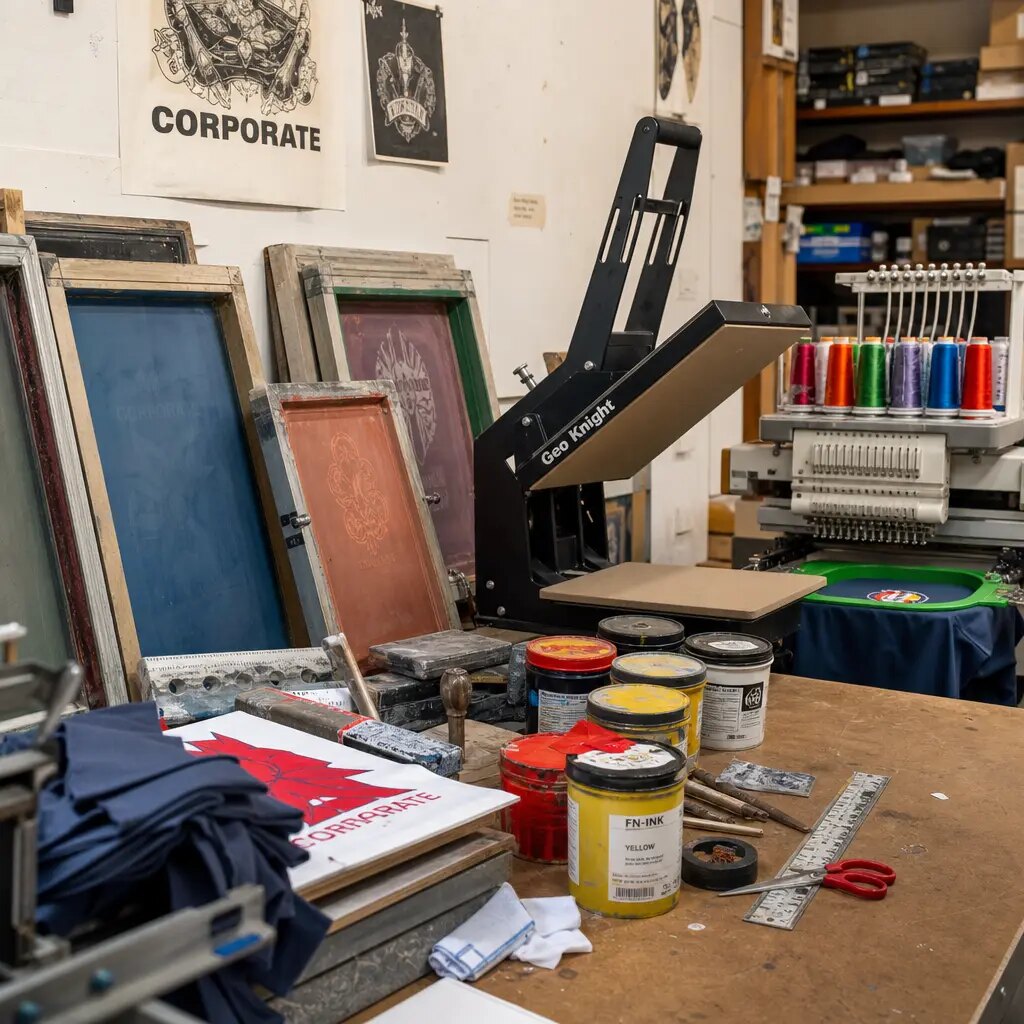
Canvas has texture, and texture affects branding. Screen printing is usually practical for bold marks, simple artwork, and limited-color logos. It can be consistent and cost-effective, but fine type, narrow reversed-out lines, gradients, and heavy ink coverage can struggle on slubs and weave variation. Ink may strike through lighter fabric, crack on folds, or look uneven over thicker yarns. Approve a strike-off on the actual bulk-intended canvas before production panels are cut.
Woven labels often work well for eco apparel brands because they feel retail-ready without covering a large area of fabric. A side tab, flap label, front label, or small patch can give brand presence while keeping the canvas surface honest. The label spec should include size, fold type, edge finish, thread colors, placement, stitch method, and tolerance for tilt. If the label mentions recycled content, organic cotton, country of origin, or care language, compliance review should happen before the label is woven in bulk.
Embroidery can elevate a small mark, but it is not automatically safer than print. Dense stitching can pucker lighter canvas or affect flap drape. Backing may be visible inside an unlined bag. Patches made from cotton, cork, recycled felt, or leather alternatives can add texture, but they bring abrasion, colorfastness, and attachment questions. The best branding method is the one that stays clean through sewing, folding, packing, freight, retail handling, and normal use.
- Use screen print for bold artwork, limited colors, and logos that can tolerate fabric texture.
- Avoid fine legal text, thin lines, gradients, and heavy ink blocks unless a strike-off proves they work.
- Use woven labels for subtle repeat branding and lower risk of print cracking on textured fabric.
- Use embroidery only after checking puckering, backing visibility, stitch density, and flap drape.
- Set logo, patch, embroidery, and label placement tolerances in millimeters before inspection.
Build the RFQ so quotes are truly comparable
The best RFQ removes room for quiet substitutions. Include finished dimensions, gusset depth, flap shape, body canvas weight, GSM tolerance, fiber content, fabric finish, lining route, strap construction, closure type, hardware finish, branding method, packing format, target quantity, delivery terms, inspection expectations, and documentation needs. When those details are missing, each factory fills the gaps differently. The lowest quote may simply be the thinnest fabric, narrowest strap, simplest closure, or least protective packing.
A strong quote format separates the base bag from upgrades. Ask suppliers to price the same construction in 10 oz, 12 oz, and 14 oz finished canvas. Then ask for add-on pricing for lining, zipper closure, interior pocket, reinforcement patch, woven label, embroidery, custom patch, hangtag, individual bagging, paper wrap, and upgraded carton. This helps procurement see the cost of each choice instead of comparing unclear all-in numbers.
Do not leave packing until the end. Canvas messenger bags can change landed cost quickly when fabric becomes heavier, flaps become structured, or hardware increases bulk. Request units per carton, carton dimensions, gross weight, net weight, estimated CBM, and fold method at the quote stage. A low FOB price can lose its advantage if cube or freight weight climbs. MOQ can also shift with custom dyeing, certified fabric, custom webbing, special hardware finish, or branded labels, so each MOQ driver should be visible in the quote.
- Require every quote to show fabric weight, fiber content, lining, closure, strap, branding, MOQ, lead time, packing, and delivery terms.
- Ask suppliers to list assumptions, exclusions, available substitutions, and MOQ drivers clearly.
- Compare FOB, EXW, or delivered terms consistently rather than mixing price bases.
- Request carton dimensions, gross weight, net weight, units per carton, CBM, and fold method for landed-cost review.
- State that fabric lot, trim supplier, hardware finish, print method, and packing format cannot change without written approval.
Use sampling to test repeatability
A sample should prove more than appearance. Early shape samples made with substitute material can help confirm size and silhouette, but they should not become the approval standard for a retail order. The pre-production sample should use the intended body canvas, finish, lining, strap webbing, closure, hardware, thread, branding, and packing fold. If any component is temporary, mark it as pending and assign a deadline for final approval.
Sample review should be measured, handled, loaded, and folded. Record body width, height, gusset, flap drop, strap length, strap adjustment range, pocket dimensions, closure placement, and branding position. Load the bag to the agreed weight and watch the strap anchors, bar-tacks, flap shape, adjuster hold, and side seams. Open and close snaps or zippers repeatedly. Pack the bag as it will ship and check for print cracking, hard creases, metal pressure marks, lining pull, and distortion.
Photos are useful when they follow a checklist. Ask for images of the trim card, full front, full back, side gusset, inside seams, pocket details, strap anchors, closure close-up, branding close-up, folded packing, and first production piece. When practical, keep one approved sample with the supplier and one with the buyer or inspection team. It is much easier to resolve a dispute when both sides are comparing bulk goods to the same physical standard.
- Approve a physical pre-production sample made with bulk-intended materials before retail bulk production.
- Measure the sample and record actual dimensions instead of only writing approved.
- Test strap anchors, closure function, print adhesion, label straightness, zipper smoothness, and packing fold.
- Create a written approval record for locked items, pending items, and accepted deviations.
- Require first-piece confirmation before full sewing continues.
Set QC tolerances before fabric is cut
Quality control works best when defect definitions are agreed before cutting starts. For canvas messenger bags, inspection should cover incoming fabric, shade, finished dimensions, stitching, strap strength, hardware, branding, cleanliness, odor, and packing. Fabric weight is commonly controlled around +/- 5% of approved finished GSM unless the purchase order states a different tolerance. Dimensional tolerance should reflect soft sewn construction; label placement and closure alignment usually need tighter control than overall body dimensions.
Inspection should follow the way the bag will be used. Strap anchors, pocket mouths, flap corners, zipper ends, and bottom corners deserve more attention than flat panels. Check for skipped stitches, broken threads, loose ends, needle damage, seam puckering, weak bar-tacks, and uneven binding. Hardware should be opened, closed, pulled, adjusted, and touched, not only viewed. Metal parts need checks for burrs, scratches, plating variation, rust spots, weak rivets, and sharp edges that could damage fabric or users' belongings.
Branding needs its own criteria because it is often the first defect customers notice. Screen prints should be checked for position, edge clarity, curing, crocking, cracking after folding, and ink transfer in packing. Embroidery should be checked for puckering, loose threads, backing visibility, and density. Woven labels should be straight, securely stitched, and free from frayed edges. AQL levels can be agreed between buyer and supplier, but the inspection sheet should use plain defect language so the inspection team knows what matters without guessing.
- Set incoming fabric, first-piece, inline, final inspection, and packed-carton checkpoints.
- Use approved swatches and trim cards as physical references for color, handfeel, hardware finish, and branding.
- Define tolerances for finished GSM, dimensions, logo placement, label tilt, shade variation, closure alignment, and packed fold.
- Inspect load-bearing points more heavily than decorative panels.
- Document defects with photos and require corrective action before shipment when defects exceed the agreed standard.
Specification comparison for buyers
| Spec decision | Recommended option | When it fits | Buyer risk to check |
|---|---|---|---|
| Body canvas | 10 oz / about 340 GSM finished cotton canvas | Light retail bags, event merchandise, gift-with-purchase programs, low cube packing, and price-sensitive eco apparel drops | May feel too light for premium retail; check finished GSM tolerance, weave tightness, seam slippage, print strike-through, and stress-point distortion |
| Body canvas | 12 oz / about 407 GSM finished cotton canvas | Mainstream apparel retail, daily-use messenger bags, better drape, cleaner print surface, and stronger perceived value | Washing or softening can reduce structure; confirm finished weight after all processing, shrinkage, handfeel, and approved shade band |
| Body canvas | 14 oz / about 475 GSM finished canvas or reinforced cotton canvas | Structured messenger bags, workwear-inspired accessories, heavier daily carry, and higher retail price positioning | Higher sewing bulk, needle breakage risk, slower sewing, bigger carton cube, higher freight weight, and possible MOQ increase for dyed or certified fabric |
| Fiber route | Conventional cotton with clear fiber content declaration | Programs where price stability, availability, and simple sourcing are more important than certified claims | Natural appearance is not proof of sustainability; confirm fiber content, fabric origin, and labeling language |
| Fiber route | Recycled cotton blend with stated blend percentage | Brands needing recycled-content storytelling while keeping canvas handfeel and durability practical | Shorter recycled fibers may need virgin cotton or polyester support; check tensile feel, color consistency, pilling, certification documents, and claim wording |
| Fiber route | Certified organic cotton where documentation is required | Eco apparel brands selling into channels that require verified organic input claims | Confirm certification scope, transaction certificate availability if applicable, supplier name consistency, label rules, and whether the bag maker is covered in the chain |
| Internal finish | Unlined body with bound seams or French seams | Lower MOQ, natural canvas look, fewer components, easier material explanation, and lower sewing complexity | Poor internal finishing causes fraying and loose threads; inspect seam binding width, raw-edge coverage, stitch density, and abrasion after loading |
| Internal finish | Light cotton lining or recycled polyester-cotton lining | Retail presentation, internal pockets, cleaner handfeel, and better protection for contents | Shell and lining shrinkage can mismatch; check puckering, twisting, dye transfer, seam strength, and lining colorfastness to rubbing |
| Closure | Flap with metal snap, magnetic snap, zipper top, or zipper under flap | Daily-use bags where contents need retention and the product must feel finished | Define snap pull strength, zipper gauge, tape color, hardware finish, corrosion resistance expectation, and replacement rule for broken pullers |
Buyer checklist before sampling
- Define the use case in writing: light merchandise, daily commute, tablet carry, laptop-adjacent carry, event retail, staff uniform accessory, or premium apparel add-on.
- Set a realistic maximum load for design review, such as 2 kg for light use, 3-4 kg for daily carry, or a buyer-approved target for heavier use.
- Confirm finished dimensions: body width, height, gusset depth, flap length, strap drop range, pocket placement, and packed fold size.
- Specify finished canvas weight in oz and GSM after dyeing, washing, coating, or softening, with an agreed tolerance such as +/- 5% unless approved otherwise.
- State fiber content exactly, including any recycled or organic percentage, and separate verified claims from marketing language.
- Choose fabric route: stock natural, stock dyed, custom dyed, yarn dyed, garment washed, enzyme washed, coated, or untreated.
- Approve a shade standard with practical tolerance, such as a physical swatch, lab dip, or buyer-approved bulk shade band.
- Decide whether the bag is unlined, bound-seam unlined, French-seam unlined, lightly lined, or reinforced with patches at stress points.
- Lock strap width, strap material, webbing thickness, slider type, D-ring or rectangle ring type, stitch pattern, reinforcement patch, and load-test expectation.
- Define closures by component: snap type and diameter, magnetic snap size, zipper gauge, zipper tape color, puller style, flap fastener position, and hardware finish.
Factory quote questions to send
- What is the exact finished body fabric weight after dyeing, washing, coating, or softening, and what GSM or ounce tolerance do you control in bulk?
- Is the quoted canvas stock fabric, custom woven, piece dyed, yarn dyed, garment dyed, garment washed, enzyme washed, coated, or untreated?
- Can you quote the same messenger bag in 10 oz, 12 oz, and 14 oz finished canvas using identical dimensions, strap, closure, branding, and packing so we can compare cost accurately?
- What is the fiber content, including exact recycled or organic percentage if applicable, and what documents can support that claim?
- If certified organic or recycled content is requested, which company in the supply chain holds the certificate and can transaction documents or scope certificates be provided where required?
- What shrinkage range do you expect for the shell, lining, binding, and webbing, and have these materials been used together before?
- Which lining options do you recommend, and how do they affect unit price, MOQ, sample time, sewing time, finished weight, and carton cube?
- What strap width, webbing thickness, attachment construction, reinforcement patch size, stitch pattern, and bar-tack method will be used?
- What closure components are included in the quote: snap diameter, magnetic snap size, zipper gauge, zipper brand or equivalent, slider, puller, buckle, adjuster, and D-ring?
- Can the same hardware finish be held across the full order, and what finish tolerance or approval reference do you use?
Quality-control points to confirm
- Fabric weight: check finished body canvas against the approved swatch and spec, commonly within +/- 5% of approved finished GSM unless the purchase order states a different tolerance.
- Fabric appearance: inspect for holes, oil marks, weaving lines, dye streaks, excessive slubs, nep clusters, coating marks, shade bars, and panel-to-panel shade mismatch beyond the approved standard.
- Color control: compare shell, flap, gusset, binding, webbing, and lining against the approved lab dip or shade band under consistent lighting; reject obvious front-back-flap mismatch.
- Shrinkage and shape: verify bulk measurements after all finishing; check for twisted flaps, uneven gussets, wavy openings, lining pull, and puckering from shell-lining shrinkage mismatch.
- Seam strength and sewing: inspect strap box-X, bar-tacks, flap seams, side seams, pocket mouths, binding, and bottom corners for skipped stitches, broken thread, loose ends, needle holes, and corner puckering.
- Stitch density: confirm stitch appearance suits the canvas weight; overly long stitches can weaken seams, while overly dense stitches can perforate or pucker heavy canvas.
- Strap performance: pull-test strap attachment on approved samples and during inspection using the agreed load expectation; check that adjusters hold position and webbing does not slip.
- Hardware function: zippers should run smoothly without catching, snaps should close securely without tearing fabric, magnets should be aligned, and sliders, rings, and buckles should not have sharp edges.
- Hardware finish: compare metal trim to the approved trim card; check for plating variation, rust spots, scratches, burrs, weak rivets, and inconsistent antique or brass-tone color.
- Branding placement: logo, patch, woven label, and embroidery positions should remain within agreed tolerance, commonly +/- 3-5 mm for small labels and buyer-defined tolerance for larger prints.