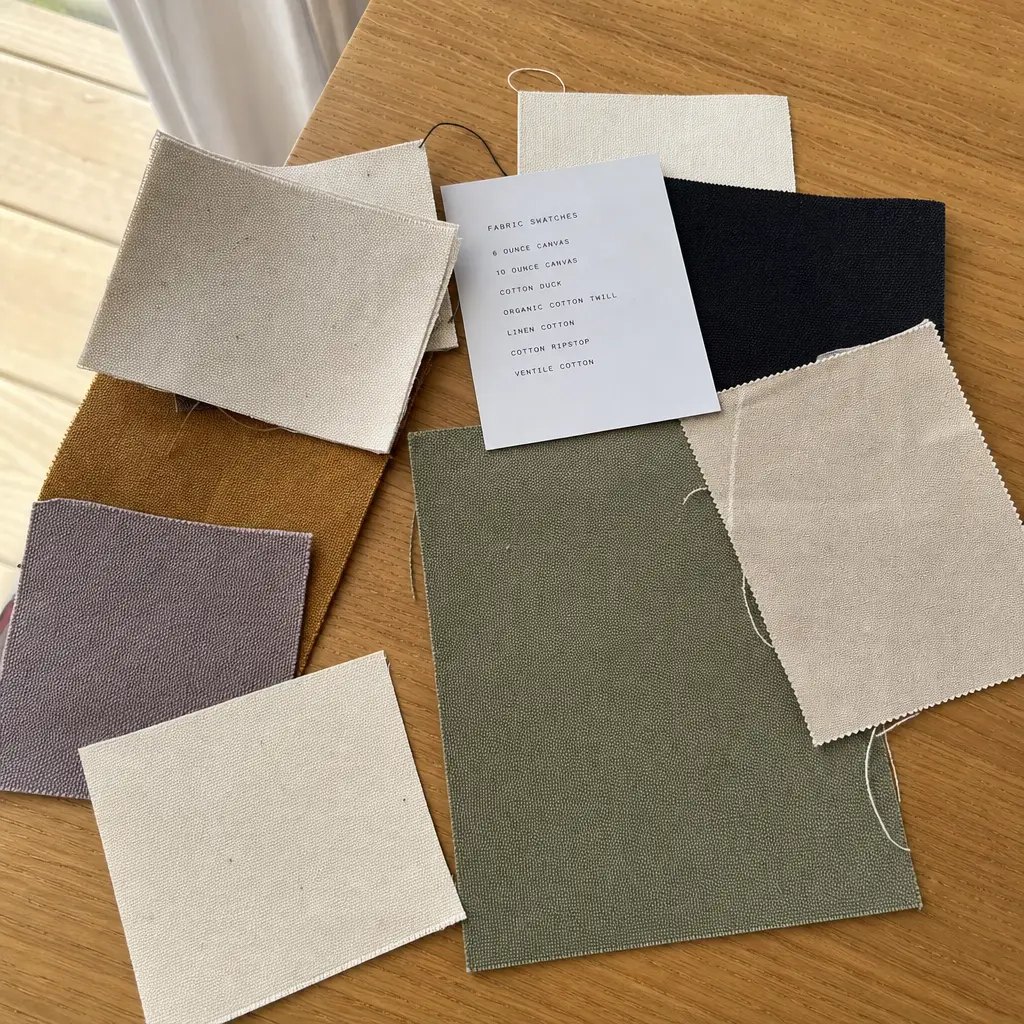
Start With the Carrying Job, Not the Bag Name
A canvas messenger bag for an artisan bakery can mean several different products. A small retail bag for a loyalty program does not need the same fabric, strap, lining, or hardware as a staff bag used for local delivery rounds. Before quoting, define what the bag must carry: bread subscriptions, coffee bags, recipe cards, wholesale invoices, aprons, jars, or general customer belongings. This prevents suppliers from quoting a low-cost messenger shape that looks acceptable in a photo but fails when loaded.
For procurement teams, the most useful RFQ starts with a usage sentence. For example: natural canvas messenger bag for bakery retail merchandise, intended load 4-5 kg, flap closure, adjustable strap, one-color logo print, flat packed for distributor warehouse. That one sentence tells the factory how strong the strap must be, whether the flap needs structure, whether the canvas can be soft, and how much finishing detail is needed.
- Retail merchandise usually needs cleaner stitching, stronger appearance, and a print finish that looks good on shelf.
- Staff use requires higher load testing, stronger strap anchors, and hardware that will not slip under repeated adjustment.
- Gift programs may justify lining, inner pockets, woven labels, and better packing presentation.
- Low-cost promotional use can accept lighter canvas but should still control seam strength and odor.
Choose Canvas Weight by Structure and Load
Canvas weight is the first material decision that changes both cost and performance. Many buyers specify only 12 oz canvas or 16 oz canvas, but international quotes may also use GSM. As a practical reference, 12 oz cotton canvas often sits around 380-420 GSM, 14 oz around 450-480 GSM, and 16 oz around 500-540 GSM, depending on weave and finishing. The number is not enough by itself because a tightly woven 12 oz canvas can feel firmer than a loose 14 oz canvas.
For artisan bakery messenger bags, 12 oz canvas is usually acceptable for light retail use and foldable promotions. A 14 oz option gives better body on the flap and front panel without becoming too heavy for shipping. A 16 oz canvas is better for premium retail and staff utility bags, but it increases sewing difficulty, carton weight, and freight cost. If the bag has a wide gusset, metal hardware, and inside pockets, heavier canvas may be justified because the bag needs to hold shape.
- Use 10 oz to 12 oz only when the bag is mainly a lightweight promotional item.
- Use 12 oz to 14 oz for most bakery retail messenger bags where cost and hand feel must balance.
- Use 14 oz to 16 oz for premium bags, staff bags, or bags carrying heavier food packaging and accessories.
- Request a fabric swatch and a finished bag sample because GSM alone does not show stiffness, shrinkage, or surface texture.
Natural, Dyed, Washed, or Recycled Canvas
Natural canvas fits many bakery brands because it feels honest, warm, and close to paper packaging or flour sack textures. The commercial risk is that natural canvas shows cotton seed flecks, weaving slubs, oil spots, and water marks more clearly than dark dyed fabric. Those characteristics may be acceptable for a rustic brand, but they should be defined before production. If the buyer expects a clean cream tone, the RFQ should say whether seed specks are acceptable and whether the fabric should be bleached or semi-bleached.
Dyed canvas gives stronger brand color but introduces colorfastness and shade control issues. Washed canvas improves softness and reduces shrinkage, yet it can create shade variation between lots. Recycled cotton canvas can support a sustainability message, but the fiber mix may produce more neps, uneven yarn, or lower tear strength. For distributor or retail buyers, the best approach is to request two swatches: the target surface appearance and an approved tolerance limit for natural marks or shade variation.
- Natural canvas is usually the safest fit for bakery positioning but needs strict stain and mildew control.
- Dyed canvas should be tested for rubbing, especially if the bag will touch light clothing.
- Washed canvas improves hand feel but can make dimensions harder to hold without good pattern control.
- Recycled canvas should be judged by tear strength and consistency, not only by sustainability wording.
Lining, Pockets, and Flap Construction
A simple unlined messenger bag is easier to quote, easier to inspect, and usually more cost-effective. It works well when the bag is sold as a casual bakery merchandise item. However, once the product is positioned as a higher-value retail item, buyers often add lining, inside pockets, zipper pockets, or a padded insert. These features increase labor time and defect risk because hidden seams, pocket corners, and zipper ends need more control.
The flap deserves separate attention. A single-layer canvas flap feels relaxed and folds naturally, which can suit a bakery lifestyle product. A double-layer flap or flap with interlining feels more structured and premium, but it can curl if the materials shrink differently or if the carton is packed too tight. If the flap carries the main logo, approve print placement after the flap is closed on a filled sample, not on the flat panel alone.
- Choose no lining when price, simple production, and natural material story are priorities.
- Choose cotton lining when the buyer wants a fully textile product with a softer premium feel.
- Choose polyester lining when easier cleaning, color consistency, and lower cost matter more.
- Add pocket bartacks or reinforcement at corners because inner pocket failure is common after repeated use.
Straps and Hardware Decide Real Durability
The strap system is often where low-priced messenger bag quotes become risky. A bakery bag may look light, but customers can load it with bread, jars, coffee beans, books, or market purchases. A 38 mm cotton webbing strap is a common starting point, while 50 mm webbing feels more comfortable for heavier loads. Thin straps reduce cost but can make the bag feel cheap and uncomfortable, especially when worn across the body.
Hardware should match the product tier. Plastic adjusters may be acceptable for low-cost promotions, but artisan bakery retail programs usually look better with antique brass, matte nickel, or black metal hardware. The factory should show the exact slider, D-ring, buckle, or snap hook used in the quote. For natural canvas, poor plating can leave dark marks during humid ocean freight, so metal quality and packing dryness are not cosmetic details; they protect the selling condition of the bag.
- Use box stitching or box-X reinforcement at strap anchors for loaded messenger bags.
- Avoid narrow webbing on bags wider than 35 cm unless the intended load is very light.
- Request the strap adjustment range, not only total strap length, because body size varies by market.
- Inspect hardware edges by hand; sharp burrs can damage canvas and create customer complaints.
Print Method for Bakery Branding on Canvas
Screen printing is normally the best balance for bakery logos on canvas messenger bags. It handles solid logos, simple line art, shop names, and one to three colors well. Water-based ink can give a softer hand, while plastisol or thicker ink systems can improve opacity on darker fabric. On rough canvas, small type, fine wheat illustrations, and thin circular logos may lose clarity, so artwork should be simplified for fabric printing rather than copied directly from paper packaging.
Heat transfer is useful for lower MOQs, full-color artwork, or frequent seasonal designs, but it can feel less integrated with canvas and may show edge lines. Embroidery, woven patches, or sewn labels can lift perceived value, but they add setup cost and longer approval steps. If the bakery logo has small text or a seal-style mark, compare a screen print strike-off and a woven label sample before locking the method.
- Screen print works best for bold one-color or two-color logos on natural canvas.
- Heat transfer works for short runs and color-rich artwork but needs wash and peel testing.
- Embroidery suits premium programs but may pucker lighter canvas if backing is not controlled.
- Woven labels are stable, clean, and good for repeat orders where brand consistency matters.
MOQ Logic and Cost Drivers
MOQ is not one number. A supplier may accept 300 bags for sewing if stock canvas is used, but custom dyed canvas may require a fabric mill minimum. A custom woven label, metal hardware finish, printed lining, or retail barcode sticker can each create its own MOQ or setup charge. Buyers comparing quotes should separate bag MOQ, fabric MOQ, print MOQ, and accessory MOQ instead of pushing for one simplified figure.
Cost also changes through small specification choices. Moving from 12 oz to 16 oz canvas increases fabric consumption and shipping weight. Adding lining increases material and labor. A wide strap costs more than a narrow strap. A large flap print uses more ink and may need slower drying. Individual polybags, hangtags, barcodes, and inner cartons are not free. The best RFQ includes a base specification and two optional upgrades so the supplier can show the cost impact clearly.
- Base cost drivers are canvas GSM, bag size, gusset depth, strap width, lining, hardware, and print area.
- Setup cost drivers are screens, embroidery digitizing, woven label tooling, dyeing, and custom carton marks.
- Packing cost drivers are individual polybag, hangtag, barcode sticker, tissue, retail sleeve, and master carton strength.
- Freight cost drivers are carton CBM, gross weight, folding method, and whether the bag is packed flat or compressed.
Sample Approval That Prevents Bulk Problems
A messenger bag sample should not be approved only because it looks attractive in a photo. The buyer should handle it loaded, close the flap, adjust the strap, inspect the inside seams, and compare the print to the approved artwork. The sample should represent real materials and real construction. If the sample uses substitute hardware or available fabric, mark it as a shape sample only and require a pre-production sample before mass production.
For bakery buyers, surface cleanliness is especially important because natural canvas sits next to food packaging in the customer’s mind. Even if the bag is not food-contact packaging, stains, mildew odor, or chemical smell will damage brand perception. The approved sample should establish acceptable fabric marks, print coverage, flap alignment, stitch density, and packaging condition. Keep one signed sample at the factory and one with the buyer or inspection company.
- Measure the finished sample while empty and lightly filled to confirm practical shape and flap coverage.
- Load the bag to the stated target weight for at least 30 minutes and review strap anchor distortion.
- Rub the print by hand and with a dry cloth to check curing and surface adhesion.
- Photograph approved details: label, stitch reinforcement, hardware, print placement, inside finishing, and carton packing.
QC Thresholds Before Shipment
Canvas messenger bags need clear inspection points because many defects are not visible in a front-view product image. The inspection should cover fabric defects, shade variation, stains, loose threads, skipped stitches, seam allowance, print defects, hardware quality, and packing condition. For most import programs, AQL inspection can be used, but critical points such as broken strap anchors, sharp hardware, heavy stains, mildew, and wrong logo should be treated as serious defects rather than normal cosmetic variation.
Set measurable thresholds where possible. Finished dimensions might allow plus or minus 1 cm on body width and height, but strap length may need a wider tolerance if adjustable. Stitch density can be stated as a target, such as 7-9 stitches per inch, depending on canvas thickness. Print placement should have a tolerance from the approved center line or flap edge. If the bag is sold through retailers, carton labels, barcodes, and polybag warnings also need inspection.
- Critical defects include wrong logo, broken strap seam, missing hardware, mold, strong odor, and sharp metal edges.
- Major defects include severe print cracking, visible stains, crooked flap, open seams, wrong dimensions, and loose lining.
- Minor defects include small thread ends, slight natural slub variation, and minor shade difference within approved tolerance.
- Packing defects include wet cartons, crushed cartons, wrong carton marks, over-compression, and print abrasion from poor folding.
Packing and Freight Planning
Packing affects landed cost and product condition. Messenger bags can be packed flat, lightly folded, or individually packed for retail handling. Flat packing protects the flap and logo better but uses more carton volume. Tight folding lowers CBM but can create hard creases across the flap or printed logo. For natural canvas, moisture protection matters because the material can absorb odor and humidity during storage or sea freight.
Importers and distributors should request carton dimensions and gross weight before comparing quotes. A lower unit price can become less attractive if the carton cube is high or if the bag is overpacked with unnecessary retail materials. For retail buyers, packing may need to include barcode stickers, hangtags, warning labels, country-of-origin marking, and carton assortment labels. These details should be quoted early, not added after production starts.
- Use flat packing for premium retail bags where flap appearance and logo surface are important.
- Use individual polybags only when the sales channel requires clean handling or barcode control.
- Add desiccant or moisture-control planning for long sea shipments, especially for natural cotton canvas.
- Confirm carton drop strength when bags are heavy due to 16 oz canvas, metal hardware, or dense packing.
Specification comparison for buyers
| Spec decision | Recommended option | When it fits | Buyer risk to check |
|---|---|---|---|
| Main canvas weight | 12 oz to 16 oz cotton canvas, roughly 380-540 GSM depending on construction | Retail bakery merchandise, staff delivery bags, gift sets, and durable promotional programs | A 12 oz bag can feel soft and foldable, while 16 oz improves body but increases unit cost and shipping weight |
| Canvas finish | Washed natural canvas or dyed canvas with controlled shrinkage | Premium bakery branding where texture and hand feel matter more than lowest cost | Unwashed canvas may shrink after customer washing; dyed canvas needs colorfastness review before approval |
| Lining choice | No lining for simple retail bags; 210D polyester or cotton lining for higher-value messenger styles | Use lining when buyers expect inside pockets, cleaner finishing, or better protection for notebooks and small goods | Lining adds labor and can hide seam issues, so inspect inside stitching and pocket reinforcement |
| Flap structure | Single canvas flap with stitched edge; add interlining only for structured premium styles | Good for bakery gift subscriptions, delivery staff bags, or higher-priced retail add-ons | Too much stiffness makes the flap curl at corners and raises packing volume |
| Strap material | 38 mm to 50 mm cotton webbing or heavy polyester webbing with reinforced box stitch | Daily staff use, farmers market sales, or distributor programs with real carrying load | Thin straps cut into the shoulder and weak webbing can stretch under bread, jars, or bottled items |
| Hardware | Antique brass or matte nickel metal adjuster; plastic only for price-driven promo bags | Metal hardware suits artisan bakery positioning and supports higher retail perceived value | Low-grade plating can oxidize or stain natural canvas during humid sea shipment |
| Print method | Screen print for solid bakery logos; heat transfer only for small runs or full-color art; embroidery for premium patches | Screen print works best for clean logos, shop names, batch slogans, and one to three colors | Ink coverage on textured canvas can look uneven unless artwork is trapped and sample-approved |
| Packing method | Flat pack in export carton with moisture control; individual polybag only when retail presentation requires it | Flat packing reduces creasing and freight volume for importer or distributor stock | Tight folding can create permanent flap creases and scuff printed areas before delivery |
Buyer checklist before sampling
- Define the bag use first: retail merchandise, staff delivery, farmers market kit, corporate gift, or distributor resale.
- Specify fabric weight in oz and GSM, not only the word canvas, because mills and suppliers may classify weights differently.
- State whether the canvas must be natural, bleached, dyed, washed, recycled, organic, or conventional cotton.
- Set a target loaded weight for testing, such as 5 kg for retail use or 8 kg for staff utility use.
- Confirm finished dimensions with tolerance, including flap drop, gusset depth, strap width, and strap adjustment range.
- Approve the print method on actual production fabric, not only on a paper color proof.
- Require photos of seam reinforcement at strap joints, flap corners, inner pockets, and stress points.
- List packing requirements by sales channel: bulk carton, individual polybag, barcode sticker, hangtag, or retail sleeve.
- Request carton dimensions, gross weight, pieces per carton, and estimated CBM before comparing landed cost.
- Lock the sample approval standard before deposit, including fabric hand feel, print color, stitching, hardware finish, and odor.
Factory quote questions to send
- What is the exact canvas weight in oz and GSM, and is the fabric washed, dyed, or untreated after weaving?
- Is the quoted price based on conventional cotton, recycled cotton, organic cotton, or a blended canvas?
- What finished bag dimensions and tolerance are included in the quote, including flap, gusset, and strap length?
- Which print method is included, how many colors, what print area size, and what ink type will be used on canvas?
- What strap webbing width, thickness, and material are included, and what reinforcement stitch is used at the load points?
- Which hardware finish is quoted, and can the factory provide corrosion or rub test results for metal accessories?
- What MOQ applies to the bag body, fabric dyeing, print color, custom label, and hardware color separately?
- How many pre-production samples are included, what is the sample lead time, and are sample charges refundable after bulk order?
- What packing method is included in the unit price, and what is the carton size, gross weight, and estimated CBM?
- What production lead time starts after which approval: deposit, artwork confirmation, fabric arrival, or final sample sign-off?
Quality-control points to confirm
- Fabric weight should match the approved sample within the agreed tolerance, commonly plus or minus 5 percent for canvas.
- Finished size tolerance should be controlled before packing, especially flap alignment, gusset depth, and strap length.
- Strap joints should pass a static load test based on intended use, with no seam opening, webbing tearing, or fabric distortion.
- Screen print should show acceptable coverage on textured canvas with no major pinholes, cracking, heavy bleeding, or off-register edges.
- Metal hardware should not show sharp edges, loose sliders, poor plating, or visible rust marks after normal handling.
- Inside seams should be clean, trimmed, and secured; loose threads near pockets and strap anchors often become early failure points.
- Odor, mildew marks, oil stains, and water spots must be rejected before shipment because natural canvas shows contamination clearly.
- Cartons should be export-grade, dry, correctly marked, and packed to prevent flap creases, print abrasion, and moisture damage.