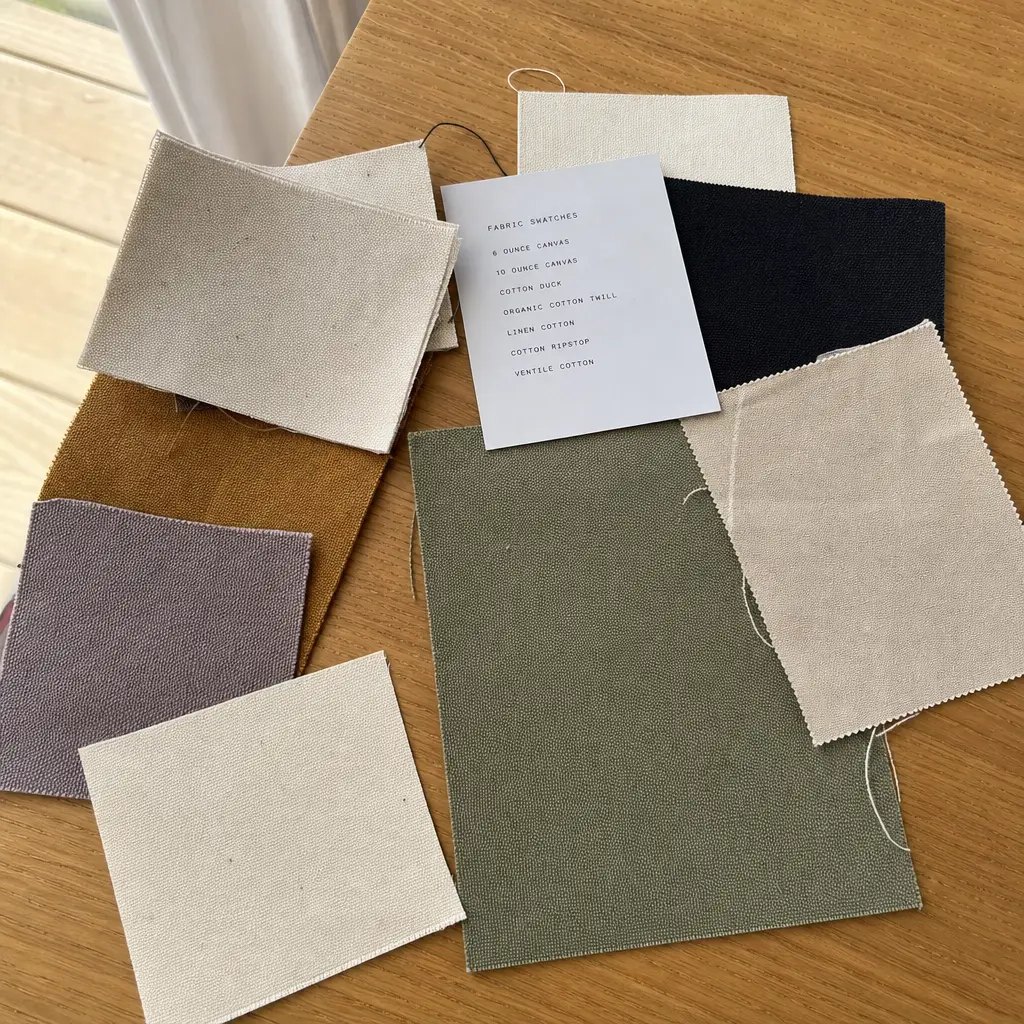
Start With the Pricing Problem, Not the Bag Photo
Liquor retailers often request canvas messenger bags after seeing a good-looking sample from an event, supplier visit, or competitor promotion. The photo helps with style direction, but it does not create a usable bulk pricing plan. A messenger bag has more cost variables than a flat tote: flap construction, gusset depth, shoulder strap length, metal hardware, reinforcement, lining, printing position, and packing method all change the unit price.
For procurement teams, the first decision is the commercial role of the bag. A low-cost event handout, a wine club member gift, a staff sales kit, and a paid retail accessory should not share the same specification. If the bag must carry one or two bottles, catalog sheets, tasting notes, or bar tools, the quote needs load-bearing details. If it is mainly a brand gift, the finish and logo accuracy matter more than maximum weight capacity.
- For a basic promotional bag, keep the body unlined and use standard natural canvas with one-color screen print.
- For a retail-ready item, consider heavier canvas, stronger hardware, cleaner inside seams, and individual packing.
- For bottle-related use, specify bottom reinforcement and strap strength before comparing price.
- For chain store distribution, require carton marks and packing data early so landed cost is not guessed later.
Fabric Weight and Construction Choices
Canvas messenger bags for liquor retail programs usually sit in the 12 oz to 16 oz range, roughly 400 to 540 GSM depending on weave and finishing. A lighter 10 oz canvas can work for simple documents or event giveaways, but it often lacks the hand feel expected for a premium liquor retail promotion. Above 16 oz, the bag becomes more expensive to sew, heavier to ship, and sometimes too stiff for clean flap folding.
The safest way to compare quotes is to require both fabric weight and finished bag weight. Some suppliers quote 12 oz canvas with a loose weave that looks thin after sewing, while another supplier may quote a tighter 12 oz fabric that feels stronger. Natural cotton canvas is usually the most cost-efficient and fastest option. Custom dyed canvas improves brand matching but raises MOQ, adds shade-control risk, and may require lab dip approval before the sample stage.
- Use 10 oz canvas only when price is the main driver and contents are light.
- Use 12 oz canvas for standard promotional messenger bags with moderate strength needs.
- Use 14 oz to 16 oz canvas for premium retail, staff kits, or bottle-related use.
- Request GSM tolerance, finished bag weight, and fabric swatch approval instead of relying on ounce weight alone.
Bag Size, Gusset, and Bottle Fit
Many messenger bag quote errors come from unclear dimensions. A buyer may write 35 x 30 cm and assume the supplier understands the needed depth, while the factory quotes a flat bag. A flat messenger body can look fine in a photo, but it performs poorly when carrying boxed spirits, tasting folders, or multiple bottles. Gusset width, bottom shape, and flap length should be part of the RFQ from the beginning.
For liquor retail use, the bag does not always need to be a dedicated bottle carrier. However, if bottles are part of the expected load, the sample should be tested with the actual bottle shape, not only a sandbag. Round bottles, square bottles, and gift boxes stress the seams differently. A gusset of 8 to 10 cm is often more practical than a narrow decorative gusset, but the correct size depends on the product mix and whether inner dividers are needed.
- State finished size as width x height x gusset, with flap depth and bottom construction noted separately.
- Provide the largest expected bottle or box dimensions if the bag must support liquor products.
- Use reinforced bottom fabric or a removable insert when the bag is expected to carry heavy contents.
- Avoid oversized bags if the program ships by air or parcel, because carton CBM can quickly erase the apparent unit-price saving.
Logo Method and Artwork Cost Drivers
Screen printing is normally the most stable choice for bulk canvas messenger bags with liquor retailer branding, especially for one to three solid colors. It gives good coverage on natural canvas, keeps the unit price controlled, and works well on a flat flap panel. For dark dyed canvas, ink opacity and curing become more important. Buyers should request a print strike-off when the logo includes fine lines, small text, or a large filled area.
Embroidery can make a bag feel more premium, but it is not automatically better. A large embroidered logo on a flap can add weight, distort the fabric, and increase cost. Heat transfer is useful for gradients or detailed artwork, but the buyer should test flexibility and adhesion on canvas. For liquor brands and retailers, a small woven side label plus a clean front print often gives a better balance of brand value and production control.
- Choose screen print for solid logos, campaign marks, store names, and distributor programs.
- Choose embroidery for small premium logos where texture matters more than large coverage.
- Choose woven labels for subtle retail branding or repeat programs with changing front artwork.
- Define logo size, Pantone color, print position from edges, and acceptable skew before sample approval.
How MOQ Changes the Real Price
Bulk pricing for canvas messenger bags is not a straight discount ladder. The MOQ depends on which component is driving the order. Standard natural canvas with a simple logo may start at a few hundred pieces because the factory can cut from available fabric and use normal hardware. Custom dyed canvas, custom webbing, branded metal hardware, or special lining can push the practical MOQ to 1,000 pieces or more because upstream suppliers have their own minimums.
A good pricing plan separates the first order from repeat orders. If a liquor retailer wants to test one region or one seasonal campaign, paying a higher unit price for stock canvas may be smarter than forcing a large custom dye order. If the program is national and repeatable, investing in custom fabric color, dedicated label, and stable packing may reduce rework and protect brand consistency over multiple shipments.
- At 300 to 500 pieces, keep the specification close to stock materials and standard hardware.
- At 1,000 pieces, custom color, upgraded strap, and dedicated woven labels become more practical.
- At 3,000 pieces and above, negotiate component standardization, carton efficiency, and reorder terms.
- Do not compare a stock-fabric quote with a custom-dyed quote as if the only difference is unit price.
What a Clean Factory Quote Should Show
A usable factory quote for canvas messenger bags should include more than one FOB unit price. Procurement teams need enough data to calculate landed cost, compare supplier routes, and avoid late charges. The quote should show fabric weight, finished size, logo method, number of print colors, hardware type, packing method, pieces per carton, carton dimensions, gross weight, net weight, sample cost, setup cost, and lead time after sample approval.
The most common quote trap is an attractive unit price with missing assumptions. One supplier may include a one-color print and individual polybag, while another quotes the blank bag only. One may quote 12 oz canvas and another 16 oz canvas. One may include export cartons suitable for sea freight, while another assumes thin domestic cartons. A quote comparison sheet should normalize these items before any supplier is declared cheaper.
- Require separate lines for bag cost, print cost, setup cost, sample fee, packing upgrade, and optional hardware upgrade.
- Request carton data early because CBM affects sea freight and warehouse handling cost.
- Ask whether the price is FOB, EXW, CIF, or DDP; do not compare different trade terms directly.
- Keep all supplier quotes tied to the same artwork version, dimensions, and fabric weight.
Sample Approval Before Bulk Production
The approved sample is the bridge between the quote and the production order. For this product category, a photo approval is not enough. The buyer should review the physical sample for fabric hand feel, flap shape, logo placement, stitching strength, strap comfort, hardware function, and how the bag sits when loaded. If the sample is made from substitute fabric or substitute hardware, it should be clearly marked as a development sample, not a production approval sample.
A strong sample approval process reduces disputes later. The buyer should measure the sample, photograph all sides, test the strap with realistic contents, and keep one signed reference sample. The factory should keep a duplicate reference sample on the production floor. When the final PO is released, the approved sample details should match the PO specification, including fabric color, GSM, print size, thread color, hardware finish, label position, and packing.
- Approve fabric swatch or lab dip before full sample if the canvas is custom dyed.
- Approve print strike-off before bulk printing when artwork has small type or multiple colors.
- Load test the sample with intended contents for at least a practical handling cycle, not only a static weight.
- Reject production approval if the logo placement, hardware, or fabric weight differs from the final quote.
Quality Thresholds That Prevent Retail Complaints
Canvas is a natural fabric, so small yarn irregularities are normal. The QC plan should not reject every minor slub, but it must protect the visible brand area. On a messenger bag, the front flap is the most important inspection zone because it carries the logo and faces the customer. Heavy stains, oil marks, color streaks, print smears, and obvious fabric defects on the flap should be treated more seriously than small irregularities hidden inside the back panel.
For liquor retail bulk orders, functional defects matter as much as appearance. Broken snaps, weak strap stitching, sharp hardware edges, loose seam ends, and wrong bag size can create store-level complaints. Inspection should include measurement, print position, stitching density, hardware operation, strap attachment, carton condition, and quantity count. The PO should define major defects clearly so the factory and third-party inspector apply the same judgment.
- Classify wrong logo, wrong fabric color, broken strap, unusable snap, and severe stain as major defects.
- Use a tighter inspection focus on front flap, strap attachment, bottom panel, and logo area.
- Set realistic tolerances for sewn goods; canvas bags cannot be controlled like molded plastic parts.
- Keep a signed production sample available during final inspection to settle borderline decisions.
Packing, Cartons, and Distribution Fit
Packing should match the retail distribution path. If the bags ship to one warehouse and are unpacked for store allocation, bulk packing with interleaving may be enough. If the bags are sold or handed out individually, a polybag, hangtag, barcode sticker, or tissue protection may be required. Each added packing element changes labor cost, material cost, carton count, and waste profile.
Canvas messenger bags can crease during transit, especially when the flap is folded tightly or hardware presses into the fabric. The packing method should avoid metal snaps leaving marks on the front panel. Export cartons should be strong enough for sea freight and storage, and moisture control should be considered for long routes. Carton marks are not just paperwork; they help distributors and retail buyers receive the right quantities by store, campaign, or SKU.
- Use folded bulk packing for cost-driven promotions where minor creasing is acceptable.
- Use individual polybag or paper sleeve when the bag is retail-facing or distributed as a premium gift.
- Add tissue or separator only where hardware may mark the canvas during long transit.
- Request pieces per carton, carton dimensions, gross weight, net weight, and carton marking format before PO.
Lead Time and Schedule Risk
A realistic schedule starts after the buyer approves the final sample and artwork, not when the first inquiry is sent. Standard natural canvas messenger bags may move quickly if fabric, hardware, and printing capacity are available. Custom dyed canvas, new hardware, embroidery, woven labels, and complex packing add approval steps. Courier time for samples and buyer feedback time often create more delay than the sewing itself.
Liquor retailers often work around seasonal launches, store openings, festivals, tastings, and holiday gift windows. Missing a launch date can make the cheapest quote expensive. The buyer should map the timeline backward from the in-store date, including sample development, approval, deposit, material purchase, cutting, sewing, printing, final inspection, export customs, freight, destination clearance, and domestic distribution. A supplier who gives a short lead time without listing assumptions is creating schedule risk.
- Allow time for lab dips if the canvas color must match a brand standard.
- Lock artwork before sampling; late logo changes can require new screens, new strike-offs, and new approvals.
- Avoid placing bulk fabric orders before sample construction issues are solved.
- Build buffer for holidays, port congestion, inspection rework, and retailer routing requirements.
Specification comparison for buyers
| Spec decision | Recommended option | When it fits | Buyer risk to check |
|---|---|---|---|
| Supplier route | Direct factory with bag sewing and printing in one workflow | Best for repeat liquor retail programs, store rollouts, and private-label distributor gifts where color, print position, and carton packing must stay consistent | Trading companies may quote low but outsource sewing and printing separately, causing shade mismatch, late approvals, or unclear responsibility for print defects |
| Canvas weight | 12 oz to 16 oz cotton canvas, roughly 400 to 540 GSM depending on weave | Good balance for a messenger bag that carries bottles, catalogs, tasting notes, or retail staff materials without feeling like a luggage item | Quotes using only ounce weight can hide loose weave; request GSM, yarn count if available, and finished bag weight |
| Bag structure | Flap messenger style with reinforced bottom panel and boxed side gusset | Fits liquor retail teams that want a reusable premium bag rather than a thin giveaway tote | Flat bodies without gusset save cost but reduce usable capacity and make bottle inserts or gift packs sit poorly |
| Print method | Screen print for one to three solid colors; heat transfer only for complex artwork; embroidery for small premium logos | Works for liquor retailer logos, distributor names, event branding, or store club programs on natural or dyed canvas | Large ink coverage on dark canvas can crack or feel heavy; confirm ink type, curing, and rub resistance before bulk |
| Hardware | Antique brass or nickel snaps, slider buckle, and reinforced strap stitching | Useful when the bag is positioned as a staff, membership, or premium purchase-with-purchase item | Very cheap hardware can discolor, bend, or fail pull testing; request material and finish before approving price |
| MOQ logic | 300 to 500 pieces for standard natural canvas; 1,000 pieces or more for custom dyed fabric, custom webbing, or special lining | Allows procurement teams to separate a small event order from a controlled retail chain program | A low MOQ on dyed fabric may mean available stock only, not repeatable color for later replenishment |
| Packing | Individual polybag optional, tissue inside flap optional, export carton with moisture control and barcode carton mark | Fits retail distribution where bags move through DCs, store allocations, or promotional kits | Overpacking increases cost and waste; underpacking risks canvas creasing, metal imprint marks, and carton moisture damage |
| Quote basis | FOB unit price with separate lines for mold/tooling, sample fee, print setup, carton dimensions, and estimated CBM | Makes supplier comparison easier and supports landed-cost calculation before PO approval | All-in prices without carton data or setup breakdown can look cheaper but create surprises after artwork or packing is finalized |
Buyer checklist before sampling
- Define the bag use case before requesting price: retail sale, loyalty gift, bottle carrier, staff kit, distributor event, or seasonal promotion.
- State finished bag dimensions in width, height, gusset, flap depth, and strap length range; do not provide only a photo reference.
- Specify canvas weight by ounce and GSM target, and require finished sample weight so suppliers cannot substitute a looser fabric.
- Decide whether the bag must carry bottles; if yes, request reinforced bottom, cross-stitching at strap joints, and a weight-load test.
- Separate base bag cost from logo method, print setup, custom dyeing, hardware upgrade, packing, and inland freight to port.
- Require artwork placement measurements from bag edges and flap seam, not only a centered logo instruction.
- Approve one pre-production sample with final fabric, final logo, final hardware, final label, and final packing before mass production.
- Set acceptance limits for stains, slubs, print skew, stitching defects, broken hardware, loose threads, and carton damage in the PO.
- Request carton size, pieces per carton, gross weight, net weight, and estimated CBM before comparing FOB prices.
- Build schedule buffer for fabric dyeing, print strike-off, sample courier time, and liquor retail launch-date changes.
Factory quote questions to send
- Is the quoted canvas stock fabric or custom dyed fabric, and what is the GSM tolerance after washing or finishing?
- What is the minimum order quantity for the same bag body without logo, with screen print, with embroidery, and with custom dyed canvas?
- Can the quoted bag pass a practical load test for the intended contents, and what load weight and test duration will be used?
- Which print method is included in the unit price, how many colors are included, and what is the maximum printable area on the flap?
- Are print setup, screen charges, embroidery digitizing, woven label tooling, sample fee, and courier cost included or separate?
- What hardware material and finish are used for snaps, buckles, D-rings, and sliders, and can the supplier provide close-up sample photos?
- How many pieces are packed per export carton, what is the carton dimension, and what is the estimated CBM for the full order?
- What inspection standard will be used before shipment, and can the factory share defect classifications for canvas bags?
- What is the realistic production lead time after sample approval and deposit, excluding international freight?
- If the buyer reorders after six months, which components can remain identical and which may vary due to fabric lot or hardware batch?
Quality-control points to confirm
- Finished size tolerance should normally stay within plus or minus 5 mm for width and height and plus or minus 8 mm for gusset on sewn canvas bags.
- Print position tolerance should be agreed before production; for flap logos, plus or minus 3 mm to 5 mm is more realistic than a vague centered instruction.
- Canvas fabric should be free from obvious oil stains, heavy color streaks, mildew smell, broken yarns, or severe slubs on the front flap area.
- Strap attachment points should use bartack or reinforced box stitching, with no skipped stitches, loose lockstitch, or exposed raw seam ends.
- Hardware should open and close smoothly, with no sharp burrs, rust marks, weak snap tension, or plating scratches visible at normal inspection distance.
- Logo print should pass dry rub and light scratch checks without visible peeling, heavy ink cracking, or transfer to packing material.
- Bulk cartons should be dry, strong enough for export handling, and marked with item code, quantity, gross weight, net weight, and carton number.
- AQL levels should classify broken strap, wrong logo, wrong size, wrong color, heavy stain, and unusable hardware as major or critical defects, not minor cosmetic issues.