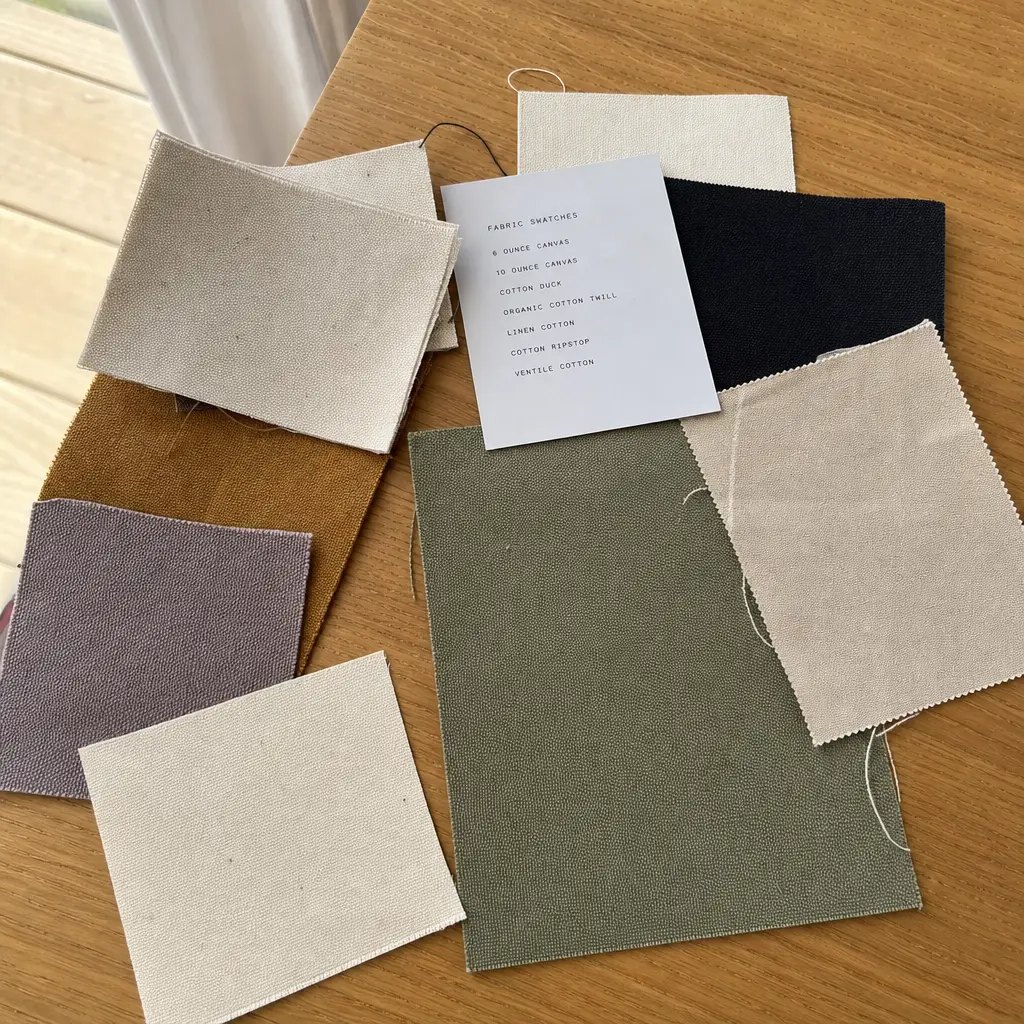
Plan from the shelf date backward
University bookstore bags are usually tied to immovable retail dates: orientation, back-to-school, homecoming, graduation, alumni weekends, or department launches. The factory completion date is only one milestone. Goods still need inspection, export handover, freight, customs clearance, domestic delivery, receiving, ticketing, allocation, and online inventory setup. A shipment that leaves the factory on time can still miss the selling window if the receiving buffer is too thin.
Build the calendar backward from the date bags must be sellable, not the date the purchase order is issued. For example, if the shelf-ready date is August 1, a practical ocean-freight calendar might reserve July 25-August 1 for bookstore receiving and ticketing, July 15-24 for domestic delivery and customs clearance, June 10-July 14 for ocean transit and port handling, June 3-7 for final inspection and export documents, May 1-June 2 for bulk production and packing, April 20-30 for PP sample approval and corrections, and early April for artwork, strike-off, fabric, and trim approvals. A faster air route can compress freight time, but the approval and production gates still need discipline.
- Shelf-ready date: the day units must be available for store or online sale.
- Warehouse arrival date: the day goods must be received for counting, ticketing, and allocation.
- Booking cutoff: the latest date cargo can meet the planned forwarder schedule.
- Factory ready date: the day packed cartons pass inspection with documents available.
- PP approval date: the safest production start point for bulk cutting, printing, and sewing.
Classify the order route before promising a date
A canvas messenger bag lead time depends on route complexity. A standard route uses stock fabric, a simple flap construction, one-color screen print, shared packing, and normal export cartons. A balanced retail route adds stronger construction, barcode labeling, hangtags, carton separation, and perhaps an inner pocket or lining. A custom route adds lab dips, dyed fabric, embroidery, woven labels, padding, special trims, or multiple department versions. Each route can be workable, but it should not be managed with the same calendar.
For planning, use scenario ranges instead of a single promise date. A standard stock-fabric bag may require about 1-2 weeks for artwork proof, strike-off, and PP sample work, then 3-5 weeks for bulk after PP approval. A balanced retail build often needs 2-3 weeks before PP approval and 5-7 weeks for bulk. A custom-dyed or complex construction can need 3-5 weeks before PP approval and 7-10+ weeks for bulk, especially if fabric dyeing, trim production, or sample revisions are required. Freight, holidays, campus licensing review, and receiving time sit outside those factory ranges.
- Standard route: stock canvas, simple construction, screen print, basic retail labeling.
- Balanced route: stronger fabric, inner pocket or lining, barcode stickers, hangtags, carton separation.
- Custom route: lab dip, custom dye lot, embroidery, woven label, padding, hardware changes, or multiple SKUs.
- Critical warning: do not count bulk production days before PP sample, artwork, and material approvals are complete.
Specify canvas and construction precisely
Bookstore messenger bags need enough structure for retail display and daily campus use without becoming unnecessarily heavy. Common choices are 12 oz, 14 oz, and 16 oz cotton canvas, roughly 340-450 GSM depending on weave and finishing. A 12 oz canvas can support value-priced programs and lighter freight. A 14 oz canvas is often the balanced retail choice. A 16 oz canvas feels more premium but can slow sewing, increase carton weight, and create more needle and seam-control issues.
Construction choices affect both cost and calendar. A simple flap bag with one main compartment, adjustable cotton webbing strap, and one inner slip pocket is much faster than a padded laptop messenger with lining, zipper pockets, metal buckles, contrast binding, and multiple compartments. Avoid vague language such as "laptop pocket" or "premium strap." State the laptop size if needed, foam thickness, lining material, pocket dimensions, closure type, strap width, strap adjustment range, and reinforcement method.
- Define body width, height, bottom gusset, flap length, and finished measurement tolerances.
- State fabric weight in both oz and GSM, plus color, wash, coating, or water-repellent finish if required.
- Specify strap width, shortest and longest adjustment, slider material, and strap-join reinforcement.
- Identify closure type: hook-and-loop, magnetic snap, zipper under flap, button, or buckle.
- Clarify each pocket by location, size, lining, closure, and intended use.
Control color, artwork, and decoration gates
Decoration is a common source of late changes. Screen print is usually efficient for solid university marks on the flap or front body panel, especially with one to three colors. Printing on flat panels before sewing can improve placement and consistency, but it means artwork approval must happen before bulk stitching. Printing on finished bags may support late-stage decoration, but placement can be harder near seams, flaps, and gussets.
Embroidery, woven labels, patches, and heat transfers each add specific approval needs. Embroidery needs digitizing, thread color approval, backing selection, and puckering checks on the chosen canvas weight. Woven labels require label sampling and production time. Custom dyed campus colors need lab dips, written shade approval, and sometimes bulk shade confirmation before cutting. For licensed university marks, confirm whether the license owner has already approved the artwork; supplier readiness does not override campus brand approval.
- Lab dip: required when fabric or trim color is custom dyed.
- Strike-off: required before mass printing to approve logo size, color, clarity, and hand-feel.
- Trim card: required for webbing, hardware, zipper, label, thread, patch, and closure confirmation.
- Embroidery sample: required to check stitch density, thread color, backing, and puckering.
- Artwork gate: vector file, Pantone references, print size, placement diagram, and licensing status.
Manage MOQ by real SKU workload
A bookstore assortment can look efficient on paper while becoming fragmented in production. A total order of 2,000 units may become 500 units each across four logo versions, two bookstore branches, or several barcode requirements. The factory must manage separate screens, labels, cartons, packing stickers, and sometimes material changes. Those splits affect MOQ, cost, and lead time.
Ask suppliers to quote MOQ by the factor that changes factory handling: fabric color, decoration version, trim color, woven label, barcode SKU, packing format, and destination carton mark. If the deadline is tight, simplify the assortment. Use one body color, one strap color, one construction, and one decoration method. Department identity can often be handled with hangtags, printed inserts, or barcode allocation instead of changing fabric and trims for every version.
- Best schedule: one fabric color, one construction, one logo, one packing method.
- Moderate complexity: shared bag body with two print versions and separate barcode stickers.
- High risk: multiple fabric colors, custom labels, different trims, and department-specific packaging.
- MOQ question: ask whether the minimum applies per order, per SKU, per color, or per decoration setup.
- Cost check: confirm whether sample, screen, label mold, digitizing, or carton setup charges are separate.
Use PP samples to lock production
A pre-production sample should prove the final bag, not just the general idea. It should use the approved fabric weight, correct color, actual strap webbing, final hardware, approved decoration method, correct pocket layout, and intended retail labeling where possible. A showroom sample or photo reference is helpful for development, but it should not become the production approval standard.
Review the sample like an inspector. Measure the body, gusset, flap, strap, and pocket. Load the bag with typical campus contents. Test strap adjustment and closures repeatedly. Check how the flap sits when the bag is full. Inspect logo position, print hand-feel, stitching, reinforcement, lining, and packing. If the sample is approved with corrections, update the spec sheet and approval form before cutting bulk fabric. Verbal notes are not enough for a bookstore launch with fixed dates.
- Keep one sealed approved PP sample at the factory and one with the buyer or inspection team.
- Approve corrections in writing with photos, measurements, and responsible deadlines.
- Do not release bulk cutting until fabric, trim, decoration, and construction are approved.
- Confirm whether the supplier can hold fabric and production capacity if approval is delayed.
- Record the sample approval date because it becomes the start point for the bulk lead time.
Build packing and receiving into the calendar
Retail packing is often where late orders lose several days. Bookstore bags may need a hangtag, care label, barcode sticker, belly band, individual polybag, department sticker, or destination-specific carton mark. These items require artwork, approval, printing, application, and inspection. If barcode files arrive after bulk goods are packed, cartons may need to be reopened and relabeled.
Carton planning also affects freight and receiving. Heavy canvas, metal hardware, and wide straps can reduce pieces per carton. Overpacked cartons can crease bags or damage hardware impressions into canvas. Oversized cartons increase freight and warehouse handling cost. Ask for carton dimensions, gross weight, net weight, pieces per carton, and SKU separation before freight decisions are made. For distributors serving several campus locations, destination carton marks can save receiving time.
- Provide barcode files, SKU list, country-of-origin requirements, and carton marks before packing starts.
- Require a barcode scan test on retail labels and carton labels before shipment.
- Confirm individual polybag, belly band, hangtag, care label, and sticker placement requirements.
- Use separate cartons for different SKUs when allocation accuracy matters.
- Ask for a carton test or packing photo when cartons are heavy, oversized, or retail presentation is critical.
Compare suppliers on assumptions, not price alone
A true quote comparison should expose what each supplier assumed. One quote may use 12 oz canvas while another uses 14 oz. One may include print strike-off and barcode labeling while another includes only bulk packing. One may quote 30 days from PP approval, while another quotes 30 days from deposit but excludes lab dip, artwork correction, and inspection. These differences change delivery reliability.
Create a quote sheet that forces suppliers into the same structure: fabric weight, GSM, color route, construction, trims, decoration method, sample cost, PP sample time, bulk lead time, MOQ basis, packing inclusions, carton data, inspection window, payment terms, validity, and excluded costs. Also judge response quality. A supplier that answers approval-gate questions clearly before deposit is usually easier to manage when artwork, trim, packing, or schedule issues appear.
- Compare lead time from the same trigger: deposit, artwork approval, material approval, or PP approval.
- Compare unit price only after fabric, construction, decoration, and packing are aligned.
- Compare MOQ by fabric color, logo version, barcode SKU, and trim requirement.
- Compare carton dimensions and gross weight to estimate freight and air-shipment backup cost.
- Compare document readiness: lab dip, strike-off, trim card, PP sample, AQL plan, carton marks, and booking cutoff.
Set inspection standards before bulk starts
Canvas has natural texture, and buyers should define acceptable variation before inspection. Minor slubs and texture differences may be normal; stains, holes, oil marks, severe shade mismatch, broken seams, loose bar-tacks, skewed logos, and unreadable barcodes are not acceptable for bookstore retail. Written standards help the supplier price correctly and help the inspector make consistent decisions.
Use an AQL plan when the order size justifies formal inspection, and define critical, major, and minor defects. Critical issues may include unsafe hardware, wrong licensed logo, or wrong barcode. Major issues may include broken seams, failed strap reinforcement, visible stains, severe print defects, wrong dimensions, or wrong SKU cartons. Minor issues may include small loose threads or slight creasing within the approved standard. Final inspection should compare bulk goods against the PP sample, fabric swatch, trim card, strike-off, packing layout, and purchase order.
- Measurement tolerance: commonly plus or minus 1 cm for body size unless tighter control is stated.
- Fabric tolerance: commonly plus or minus 5 percent weight against approved fabric standard.
- Print tolerance: define acceptable movement from centerline or edge and reject obvious skew.
- Function test: check strap adjustment, closure strength, pocket access, and reinforcement points.
- Packing test: verify carton count, SKU separation, barcode scan, carton marks, and carton condition.
Reduce risk without weakening the product
The safest way to shorten lead time is to remove uncertainty, not to skip essential controls. Use stock natural, black, or navy canvas. Keep one construction. Choose one-color screen print or a standard woven label already within supplier capability. Approve artwork before the PO when possible. Provide barcodes and carton marks early. Book inspection and freight before production is finished.
If the deadline is already tight, split the solution. Produce a smaller launch quantity by air using the simplest SKU, then ship the balance by ocean. Or hold custom-dyed fabric for a later reorder and use a stock color for the first bookstore launch. Avoid last-minute upgrades such as extra pockets, new trims, embroidery, or custom packaging unless the calendar has room for another approval cycle.
- Fastest reliable option: stock canvas, simple flap, one-color print, shared packing, early barcode approval.
- Best retail balance: 14 oz canvas, reinforced strap joins, inner pocket, clean hangtag, barcode sticker, separated cartons.
- Avoid under pressure: custom dye, several logo versions, new hardware, padded laptop construction, and late licensed artwork.
- Protect the deadline: freeze spec, artwork, packing, and SKU allocation before PP sample approval.
- Use air freight selectively for launch quantities, not automatically for the full order.
Specification comparison for buyers
| Quote factor | Supplier A: fastest standard route | Supplier B: balanced retail route | Supplier C: higher-risk custom route | Buyer decision point |
|---|---|---|---|---|
| Lead time basis | 25-35 days bulk after PP sample approval using stock natural or black canvas | 35-50 days bulk after PP approval with 14 oz dyed stock fabric, lining, and retail packing | 50-75+ days after approvals if custom dye, embroidery, woven label, or padded laptop build is included | Confirm whether timing starts from deposit, final artwork, lab dip approval, or PP sample approval |
| Unit cost assumption | Lower cost from simple flap, one-color print, no lining, shared carton packing | Mid-range cost from stronger construction, barcode labeling, hangtag, and controlled carton separation | Higher cost from custom material, special trims, more sewing operations, and extra approval samples | Compare the same fabric weight, dimensions, packing, and decoration before choosing the lowest price |
| MOQ basis | Usually easier if one fabric color, one logo, and one packing SKU | MOQ may apply per fabric color, logo version, or retail barcode SKU | MOQ often applies to fabric dye lot, woven label, embroidery setup, and trim color | Ask for MOQ by fabric color, decoration version, and packing SKU, not only total quantity |
| Sample and approval gates | Fabric swatch, digital artwork proof, print strike-off, PP sample | Fabric swatch, trim card, print strike-off, PP sample, packing layout | Lab dip, bulk fabric shade approval, trim card, embroidery or label sample, carton test, PP sample | List every approval gate in the PO calendar so missing decisions do not stop production |
| Freight and receiving risk | Lower carton weight and simpler receiving if cartons are single SKU | Moderate freight impact; retail packing saves bookstore labor but needs early barcode files | Higher carton volume and possible air freight penalty if schedule slips | Request carton dimensions, gross weight, pieces per carton, and carton marks before finalizing freight |
| Quality risk | Main risks are fabric consistency, print placement, strap stitching, and carton labeling | More inspection points: lining, pockets, barcode scan, hangtag, reinforcement, and packing accuracy | Highest risk: shade variation, embroidery puckering, trim mismatch, padding fit, and late sample changes | Use an AQL plan and approved PP sample as the inspection reference |
| Deadline fit | Best for urgent semester launches and smaller reorders | Best for bookstore retail when shelf presentation and receiving accuracy matter | Best only when campus color matching or premium construction justifies the extra calendar time | Choose custom only if the sell date allows lab dip, strike-off, revision, and freight buffer |
Buyer checklist before sampling
- Confirm the shelf-ready date, warehouse arrival deadline, domestic delivery window, freight booking cutoff, and required factory ready date.
- Specify bag dimensions, fabric weight in oz and GSM, canvas color route, finishing, strap length range, gusset depth, pocket layout, and closure type.
- Provide vector artwork, Pantone references, licensed logo approval status, maximum print area, and whether decoration is applied before or after sewing.
- Give the SKU split by fabric color, logo version, bookstore branch, barcode, hangtag, and packing format before requesting final pricing.
- Ask whether MOQ is based on total units, fabric dye lot, decoration setup, trim color, or packing SKU.
- Require approval gates for fabric swatch, lab dip if dyed, strike-off, trim card, PP sample, packing layout, carton mark, and barcode scan.
- Build the calendar from PP sample approval, not from PO issue date, because production should not start until final materials and decoration are approved.
- Reserve time for final random inspection, carton correction, export documents, forwarder booking, customs clearance, and bookstore receiving.
- State QC standards for measurements, fabric weight, print placement, stitching, reinforcement, hardware, barcode readability, carton strength, and SKU accuracy.
- Keep one sealed approved PP sample with the supplier and one reference sample with the buyer or inspection team.
Factory quote questions to send
- What is the lead time from deposit, final artwork, and approved materials to PP sample, and from PP sample approval to packed bulk goods?
- Which canvas colors and weights are in stock now, and which require weaving, dyeing, washing, coating, or a lab dip?
- Is the MOQ quoted per total order, per fabric color, per logo version, per trim color, per barcode SKU, or per packing method?
- Can you quote the same construction in 12 oz, 14 oz, and 16 oz canvas with carton dimensions and gross weight for each option?
- What approval documents will you provide: fabric swatch, lab dip, bulk shade record, strike-off, trim card, PP sample, packing layout, carton mark, and carton test?
- What decoration method do you recommend for our logo size and placement, and will printing happen on flat panels before sewing or on finished bags?
- What tolerances will you apply for body size, gusset depth, flap length, strap length, print position, fabric weight, and shade variation?
- What reinforcement is included at strap joins, flap corners, pocket openings, gusset seams, and hardware attachment points?
- What packing is included in the unit price: polybag, belly band, hangtag, barcode sticker, care label, master carton, SKU separation, and carton marks?
- What are the forwarder booking cutoff, factory handover terms, inspection date, document release date, and latest safe approval date for our target shelf date?
Quality-control points to confirm
- Compare bulk goods against the approved PP sample, approved fabric swatch, trim card, and strike-off, not only against the written specification.
- Fabric weight should match the approved standard within the agreed tolerance, commonly plus or minus 5 percent unless a different tolerance is written.
- Finished measurements should follow the approved measuring method, commonly plus or minus 1 cm for body width and height and plus or minus 1.5 cm for strap-related dimensions.
- Canvas should be free from unacceptable stains, holes, severe slubs, oil marks, heavy creasing, and obvious shade mismatch across panels.
- Logo decoration should match the approved strike-off for size, position, color, clarity, adhesion, and hand-feel, with no cracking, pinholes, skew, bleeding, or heavy ink buildup.
- Stitching should be secure at strap joins, flap edges, gusset corners, pocket openings, and stress points, with no skipped stitches, broken seams, loose thread nests, or unsecured bar-tacks.
- Hardware should open, close, slide, and adjust smoothly, with no sharp edges, rust, plating defects, weak magnets, or color inconsistency against the approved trim card.
- Inner seams, binding, and lining should be cleanly finished, with no exposed raw edges likely to fray during normal campus use.
- Hangtags, care labels, barcodes, retail stickers, and carton marks should match the PO, SKU list, and destination allocation, and barcodes should pass a scan test before shipment.
- Cartons should meet the approved quantity per carton, dimensions, gross weight, carton strength, and SKU separation plan, with no crushed units after normal packing compression.