Start Lead Time From the Approval Point
For canvas messenger bags, the safest planning method is to count production from the last buyer approval, not from the first inquiry. A factory can quote quickly, but bulk production cannot properly start until the bag size, fabric, logo artwork, print position, trims, packing, and payment terms are confirmed. If your startup has a launch event, onboarding kit, retail drop, or distributor deadline, the production calendar should work backward from the warehouse arrival date.
A practical custom order often needs 6-8 weeks after final approval when the design is new. That window normally includes sample preparation, sample courier time, approval comments, fabric and trim booking, printing, cutting, sewing, thread trimming, packing, final inspection, and export handling. If sea freight or consolidated freight is used, transit planning is separate. A fast quote that says “25 days production” may be accurate only after everything is approved and materials are ready.
- Use warehouse arrival date as the planning anchor, not factory finish date.
- Separate sample time, bulk time, inspection time, and freight time in your RFQ.
- Do not approve bulk production from artwork mockups alone if the bag construction is new.
- Add buffer before public launch dates because messenger bags have more sewing variables than flat totes.
Choose a Bag Spec That Matches the Deadline
Lead time changes quickly when a canvas messenger bag moves from a simple promotional item to a retail-grade carry bag. A natural canvas body with standard cotton webbing and one-color screen print is much faster than dyed canvas, custom lining, metal hardware, multiple pockets, woven patches, or individual retail packaging. Procurement teams should decide which details protect the brand experience and which details only add delay.
A common startup specification is 12 oz cotton canvas, roughly in the 400 GSM range depending on fabric construction, with a flap closure, one inner slip pocket, cotton webbing shoulder strap, and screen printed logo. For a sturdier retail feel, 14 oz canvas can work, but it increases fabric cost, sewing difficulty, carton weight, and sometimes needle marking risk. Lower weights such as 8-10 oz can be acceptable for light giveaways, but they may not feel like a proper messenger bag.
- Fastest route: stock natural canvas, standard webbing, simple pocket, one-color print.
- Balanced route: 12 oz canvas, reinforced strap anchors, adjustable strap, one inner pocket.
- Premium route: 14 oz canvas, lining, metal hardware, woven label, retail packing.
- Highest schedule risk: custom dyed canvas, multi-color artwork, custom buckles, many compartments.
Translate Fabric Weight Into Real Use
Fabric weight is not just a cost line. It decides how the messenger bag hangs on the shoulder, how the flap sits, how clean the print edge looks, and how much weight the carton carries. Buyers often request “heavy canvas” without a number, then receive quotes that cannot be compared. Use oz or GSM, and state whether the fabric should be natural, bleached, dyed, organic cotton, recycled cotton blend, or washed finish.
For most B2B canvas messenger bags, 12 oz cotton canvas is the starting point when the bag needs to carry a laptop sleeve, documents, charger, notebook, or event materials. If the order is mainly for conference giveaways, 10 oz may be enough if the size is smaller and the strap points are reinforced. If the product is sold through retail or used as an employee work bag, 14 oz or lining may justify the cost, but the sample must be checked for bulkiness and seam turning.
- State target fabric weight in oz and accept equivalent GSM only within an agreed range.
- Request the quoted fabric composition because cotton-poly blends can look and print differently.
- Use lining when the inside appearance matters, but allow extra sample and sewing time.
- Avoid very stiff canvas if the bag must fold flat for economical packing.
Plan Printing Before the Sample Is Made
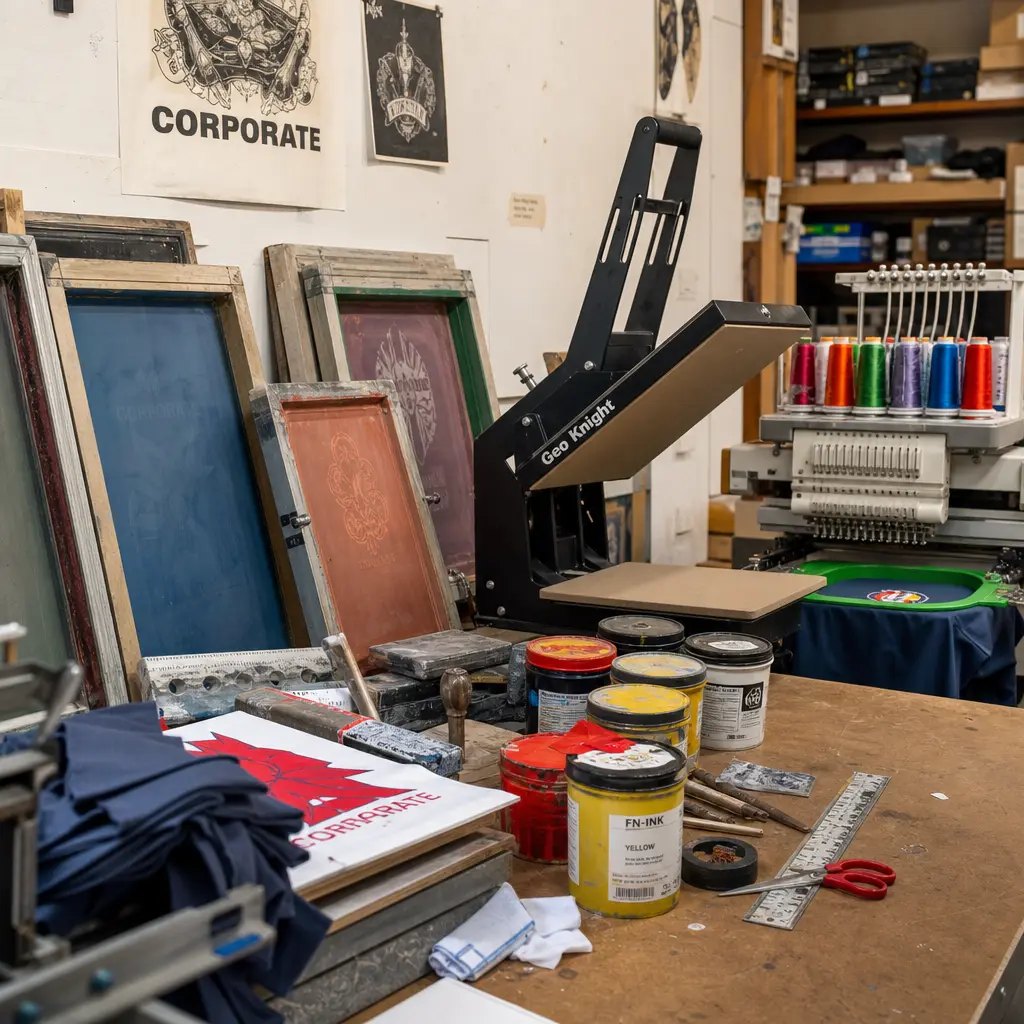
Print method affects both schedule and defect risk. Screen printing is usually the most stable choice for solid startup logos, simple icons, and one to three colors. It gives good opacity on natural canvas and works well for medium to large order quantities. Heat transfer can handle gradients, small quantities, or full-color artwork, but the buyer should review hand feel, edge durability, and how the transfer behaves on textured canvas.
Tech logos often include thin lines, small type, and precise brand colors. Coarse canvas can swallow fine artwork, especially if the ink deposit is heavy. Before making a printed sample, the factory should review minimum line width, printable area, flap curvature, seam distance, and whether the logo sits on a flat panel. A logo placed too close to a seam or flap edge can look off-center after sewing even if the print plate was centered during printing.
- Use vector artwork and Pantone references instead of low-resolution PNG files.
- For screen print, list the exact number of colors and whether white underbase is required.
- For transfer print, approve hand feel and wash or rub resistance before bulk.
- Keep important artwork away from seams, folds, magnetic closures, and strap anchors.
Understand MOQ by Component
MOQ for canvas messenger bags is rarely only one number. The real MOQ depends on fabric availability, dyeing requirement, strap color, hardware finish, woven labels, print setup, and packing method. A factory may accept 300 pieces for natural canvas with standard trims, but the same bag with custom dyed fabric and branded metal sliders may require 500, 1000, or more pieces because upstream suppliers have their own minimums.
When comparing quotes, ask what is standard and what is custom. Low MOQ can be commercially useful for a startup, but it usually means using stock fabric colors, available webbing, existing hardware, and simpler packing. Higher MOQ can reduce unit cost and improve brand control, but only if the buyer can absorb inventory and the launch forecast is reliable. The best RFQ gives target quantity plus a second quantity tier so the factory can show where the price breaks actually happen.
- Request quote tiers such as 300, 500, 1000, and 3000 pieces if your forecast is not fixed.
- Separate MOQ for bag body, strap, lining, label, hardware, and printed carton marks.
- Do not assume a low sample MOQ means the same spec is economical in bulk.
- Ask whether overrun or underrun tolerance applies, especially for dyed fabric.
Use Samples to Remove Production Guesswork
A useful sample process is not only about seeing the logo. For a new canvas messenger bag, the first sample should prove construction: finished size, gusset depth, flap length, pocket access, strap width, strap adjustability, closure position, and how the bag stands or folds. Once construction is approved, the printed pre-production sample confirms artwork size, ink color, print position, label placement, and packing appearance.
Skipping sample stages can save a few days early and lose weeks later. If the flap is too short, the strap bites into the shoulder, or the inner pocket cannot hold the intended device, the factory may need to revise the pattern. Pattern changes after cutting bulk fabric create waste and argument. The approval record should include photos, a measurement sheet, and written comments, not only a message saying “sample approved.”
- Measure laptop or document size if the bag is expected to hold a specific device.
- Load the sample with realistic weight and check strap comfort for at least several minutes.
- Photograph the approved sample from front, back, inside, side, bottom, and packed view.
- Freeze the approved sample as the production standard before bulk cutting begins.
Build a Schedule With Real Factory Steps
A practical production calendar for canvas messenger bags should show more than one production block. Artwork checking can take 1-2 working days when files are clean. A blank or printed sample may take 5-10 working days depending on pattern complexity and print plates. Courier delivery and buyer review can add another week if internal approval involves marketing, procurement, and finance teams.
After approval, bulk production includes fabric inspection, cutting, logo printing, curing or drying, panel matching, sewing, trimming, pressing, packing, and inspection. For a standard order, sewing may not be the longest step; waiting for fabric, reworking print issues, or correcting packing labels can consume more time. If the delivery date is firm, the buyer should reserve inspection and freight booking before the final cartons are packed.
- Typical new-order planning: 1-2 weeks sampling, 3-5 weeks bulk production, plus inspection and transit.
- Rush orders work best when using stock canvas, existing pattern, simple print, and bulk packing.
- Avoid approving samples right before major factory holidays or peak export periods.
- Treat artwork revision time as buyer-side lead time, not factory delay.
Control Packing Before It Controls Freight Cost
Packing is often decided late, but it affects carton size, labor cost, warehouse receiving, and delivery damage. Canvas messenger bags can be packed flat, folded once, individually polybagged, wrapped with paper band, or packed directly into master cartons. Retail buyers may need barcode stickers, warning labels, hangtags, carton marks, and exact carton quantities. Event buyers may prefer bulk pack to reduce waste and handling.
The bag shape matters. A structured 14 oz canvas messenger bag with hardware and adjustable strap may not compress like a flat tote. Overpacking cartons can bend flaps, crease prints, deform buckles, and create uneven carton weight. Underpacking increases freight volume. Ask the factory for carton dimensions and gross weight based on the final sample, then use those numbers for landed-cost comparison instead of estimating from unit price alone.
- Bulk pack is usually lowest cost for internal events and employee kits.
- Individual polybag protects each bag but adds labor, material, and plastic compliance concerns.
- Paper band or tissue wrap can improve presentation without fully retail-style packing.
- Carton marks should match purchase order, SKU, color, quantity, and destination rules.
Compare Quotes Beyond the Unit Price
Messenger bag quotes can look similar while hiding different assumptions. One supplier may quote 12 oz canvas with reinforced strap anchors and individual packing. Another may quote 10 oz canvas, fixed strap, no inner pocket, and bulk pack. The lower unit price may not be wrong, but it is not the same product. Procurement teams should normalize every quote into a comparison sheet before negotiating.
Useful quote data includes fabric weight and composition, finished size, print method and color count, pocket structure, hardware material, strap width, MOQ, sample charge, sample refund policy, production lead time, packing method, carton size, gross weight, payment terms, inspection allowance, and Incoterms. If the buyer is importing, FOB unit price alone does not show landed cost. Carton cube, gross weight, duty classification, and domestic delivery can change the real economics.
- Compare on approved spec, not on product name.
- Convert carton data into estimated freight volume before selecting a supplier.
- Separate one-time setup costs from repeat-order unit cost.
- Flag any quote that does not state fabric weight, print method, MOQ basis, or packing.
Set QC Thresholds Before Bulk Sewing
Quality control for canvas messenger bags should focus on the defects that affect use and brand perception. Buyers should define critical issues such as broken strap stitching, wrong logo, wrong size, sharp hardware, severe stains, or incorrect packing. Major issues include crooked flap, obvious print misalignment, loose threads, skipped stitches, uneven strap length, and poor seam finishing. Minor issues may include small thread ends or slight natural slub variation in cotton canvas.
The inspection plan should include measurement, loading, print adhesion, seam strength, visual shade review, carton count, and packing accuracy. Natural canvas can have small cotton specks, but oil stains, water marks, mold smell, and heavy shade panels should not pass. If the order is for retail, define acceptable and unacceptable fabric marks with photos during sample approval. That prevents late disputes when the production team sees natural fabric character differently from the brand team.
- Use the approved pre-production sample as the golden sample for final inspection.
- Check strap anchors under load because this is the highest functional risk point.
- Inspect print after curing, not immediately after ink application.
- Record defect categories in writing so rework decisions are not subjective.
Specification comparison for buyers
| Spec decision | Recommended option | When it fits | Buyer risk to check |
|---|---|---|---|
| Canvas weight | 12 oz cotton canvas for most laptop-style messenger bags; 14 oz for heavier premium builds | 12 oz balances structure, printability, and freight weight for startup merchandise or retail drops | Quotes using 10 oz may look cheaper but can collapse under laptop weight unless lining and reinforcement are upgraded |
| Bag construction | Flap closure with inner slip pocket, boxed bottom, reinforced strap anchors | Suitable for onboarding kits, event gifts, and light daily carry | Flat pouch construction is faster but may not meet buyer expectations for a messenger bag |
| Print method | Screen print for solid logos; heat transfer for gradients or small batch artwork | Screen print is cost-efficient once artwork and color count are stable | Fine tech logos can fill in on coarse canvas if line width and ink deposit are not reviewed |
| Strap type | Cotton webbing strap with adjustable metal slider for retail-grade appearance | Works when the bag must fit different users and carry a laptop or documents | Thin fixed straps reduce cost but create return risk if the drop length is not approved |
| Sample path | Digital mockup, blank construction sample, then printed pre-production sample | Best for first-time custom bag buyers or new brand artwork | Skipping the construction sample can hide pocket size, flap alignment, and strap comfort problems |
| MOQ logic | 300-500 pcs for standard canvas and simple print; higher MOQ for dyed fabric, custom hardware, or woven labels | Good for startup launches that need controlled inventory without paying excessive setup cost per unit | Very low MOQ often uses stock fabric only and may limit Pantone matching, packing options, and trims |
| Packing format | Individual polybag or paper band only when retail presentation is required; master carton for bulk events | Bulk carton packing lowers labor and material cost for internal distribution | Retail buyers may need barcode labels, carton marks, and carton strength confirmed before shipment |
| Lead time buffer | Plan 6-8 weeks from approved artwork and deposit for a new custom order | Realistic for sample approval, fabric booking, printing, sewing, QC, and export handling | A quote showing only sewing time can miss artwork revision, sample courier, holiday, and inspection delays |
Buyer checklist before sampling
- Define the delivery event, warehouse arrival date, and latest acceptable ship date before requesting quotes.
- Specify bag dimensions, gusset depth, canvas weight in oz or GSM, strap width, pocket layout, closure, and reinforcement points.
- Send logo files in vector format with Pantone references and a print-size limit in centimeters or inches.
- State whether the order is for giveaway, employee kit, retail resale, distributor stock, or subscription packaging.
- Request sample photos showing flap alignment, strap anchor stitching, print registration, inner pocket, and carton packing.
- Separate sample lead time, bulk production lead time, inspection time, and transit time in the schedule.
- Require carton dimensions, gross weight, units per carton, and packing method in the formal quotation.
- Confirm MOQ by fabric color, print method, trim color, woven label, and packing style instead of accepting one vague MOQ.
- Set written approval rules for pre-production sample, shade tolerance, print tolerance, and functional loading test.
- Keep a two-week decision buffer for artwork corrections, sample courier delays, and internal brand approval.
Factory quote questions to send
- What canvas weight and GSM are included in this quote, and is the fabric stock greige, dyed, washed, or custom colored?
- Is the lead time counted from deposit, artwork approval, fabric arrival, or pre-production sample approval?
- What is the sample lead time for blank construction and printed sample, and what courier method is assumed?
- What print method is quoted, how many colors are included, and what is the maximum printable area on the flap or body?
- What MOQ applies separately to bag body fabric, strap color, metal hardware, woven side label, and individual packing?
- Can you provide photos or a measurement sheet for a similar messenger bag construction before sample payment?
- What stitch type, stitches per inch, strap reinforcement, and load test standard will be used for the shoulder strap?
- How many pieces per carton, what carton size, what gross weight, and whether cartons can meet our warehouse label rules?
- What is the normal inspection point: inline, final random inspection, or both, and can defects be reworked before shipment?
- What cost changes if we reduce print colors, use stock natural canvas, bulk pack the bags, or remove custom hardware?
Quality-control points to confirm
- Canvas weight tolerance should be agreed before production; for example, 12 oz canvas should not be substituted with lighter 10 oz fabric without buyer approval.
- Finished size tolerance should normally be controlled within about plus or minus 0.5 cm for width and height on standard messenger bag bodies.
- Flap edge alignment should sit straight when the bag is empty and loaded; crooked flaps are visible in product photos and retail displays.
- Strap anchor stitching should use reinforcement such as box stitch or bartack, with no skipped stitches, loose threads, or weak backstitching.
- Print position tolerance should be documented, especially for centered flap logos where a 5 mm shift can look obvious.
- Ink adhesion should be tested by rub, tape pull, and light fold movement after curing, not only checked while the ink is fresh.
- Metal sliders, snaps, or magnetic closures should be checked for burrs, sharp edges, rust marks, and smooth function.
- Cartons should pass handling expectations for the shipping route, with clean marks, no overpacking bulge, and correct unit count.