Lead time mistakes usually start before the PO is placed
Eco apparel brands often treat canvas messenger bags as a simple add-on because cotton canvas feels familiar and the silhouette looks less technical than outerwear or backpacks. In procurement terms, however, a messenger bag is a small cut-and-sew program with fabric, trims, hardware, printing, labels, packaging, and inspection dependencies. The factory may be able to sew the bag quickly once all components are ready, but the actual lead time is shaped by decisions made before the purchase order is released.
The biggest scheduling failures usually come from unclear inputs: the fabric weight is described as 'heavy canvas' instead of 12 oz or 16 oz; the design team has not released final artwork; the buyer has not decided between antique brass and matte black hardware; the brand wants a sustainability claim but has not defined what documentation is required; or retail packaging changes after the pre-production sample is approved. Each late decision can stop a different supply path, and the slowest path becomes the real critical path.
For a seasonal apparel launch, the useful date is not the ex-factory date. It is the date goods must be received, checked in, ticketed if needed, allocated, and available for wholesale, retail, or DTC fulfillment. A bag leaving the factory on time can still be late if it misses a freight cutoff, lacks correct carton labels, or arrives without enough time for warehouse receiving. Buyers should therefore build the calendar backward from the in-warehouse requirement and include approval lag, inspection, freight booking, customs clearance, and receiving buffer.
Messenger bags also carry a higher coordination load than a flat tote. A flap bag may include a zipper under the flap, inside pocket, lining, side tabs, webbing strap, adjuster, buckles, snaps, woven labels, print, hangtag, and retail barcode. If one of those items is custom or late, the sewing line may not be able to complete finished units. Strong lead time planning is less about asking 'How fast can you make it?' and more about asking 'Which component can delay the whole order, and when do we need to approve it?'
- Plan from the in-warehouse date, not only the supplier's ex-factory date.
- Separate development lead time, material lead time, bulk production time, inspection, and freight buffer.
- Treat fabric, print, labels, webbing, zippers, buckles, and packing as separate timing paths.
- Assign one internal owner for approvals so design, marketing, and operations do not issue conflicting sample comments.
- Ask the supplier for milestone dates, not just one final ready date.
Translate the launch requirement into a production-ready bag specification
A practical specification starts with the commercial use case. A messenger bag sold as a retail accessory needs a different quality threshold than a low-cost event giveaway. A bag bundled with an eco apparel capsule may need stronger brand alignment, cleaner print execution, and packaging that supports the sustainability story. A wholesale order going into retailer distribution may need barcode labels, carton marks, and size or color codes that a DTC-only order does not require.
The first technical decision is the bag body. For many retail canvas messenger bags, 12 oz to 16 oz canvas, roughly 340-450 GSM, gives enough structure for a flap silhouette while remaining workable in sewing and reasonable in carton weight. Lighter canvas can reduce cost but may collapse, wrinkle, or show print distortion on the front flap. Heavier canvas can look premium but increases seam bulk, needle stress, and sometimes freight cost. If the style includes multiple folded seams or thick strap tabs, a very heavy fabric can slow the line and increase defect risk.
Construction complexity has a direct timing impact. A stable first-run format is a flap messenger with one main compartment, a zipper under the flap, one inside zipper or slip pocket, reinforced strap joins, and an adjustable webbing strap. This gives enough function for retail without turning the bag into a highly engineered laptop case. Once the design adds padded laptop sleeves, contrast lining, magnetic snaps, multiple zip pockets, custom piping, or special binding, the number of operations rises quickly. More operations mean more sample corrections, more QC points, and more time on the sewing line.
For eco apparel brands entering the category, the fastest route is often to adapt a factory's proven body pattern rather than develop a new silhouette from zero. A stock pattern can still feel branded through fabric color, print, patch, label, hangtag, or packaging. Full custom pattern development makes sense when the buyer has repeat volume, a distinct functional requirement, or a retail price point that justifies more development time.
- Define the use case first: retail accessory, GWP, employee kit, wholesale SKU, or DTC add-on.
- Use measurable specs: GSM or oz, finished dimensions, gusset, flap depth, strap width, strap length range, and pocket count.
- Keep first-run construction controlled unless the launch calendar can absorb extra sampling rounds.
- Use a factory pattern for speed; reserve fully custom engineering for proven volume or unique brand requirements.
- Document every trim and closure before quoting so suppliers do not price different assumptions.
Fabric and sustainability claims can become the critical path
For a canvas messenger bags lead time planning guide for eco apparel brands, fabric deserves early attention because it is often the slowest and most compliance-sensitive part of the order. Buyers may focus on whether the material is organic, recycled, undyed, or conventional, but the schedule impact depends on stock availability, dyeing requirements, and whether documents can support the claim. A supplier may quote a short sewing lead time while assuming that fabric is already available. If the fabric must be woven, dyed, finished, or certified against a specific order, the calendar changes.
Material disclosure should be requested in plain operational terms: composition, weight, weave, color, finish, source, stock status, shrinkage expectation, and available documents. If the bag is marketed as organic cotton canvas or recycled cotton canvas, ask what proof is available for your order. A general factory certificate may not be enough for all retail or brand compliance teams. The buyer should confirm whether the paperwork supports the fiber, the mill, the transaction, and the quantity being claimed.
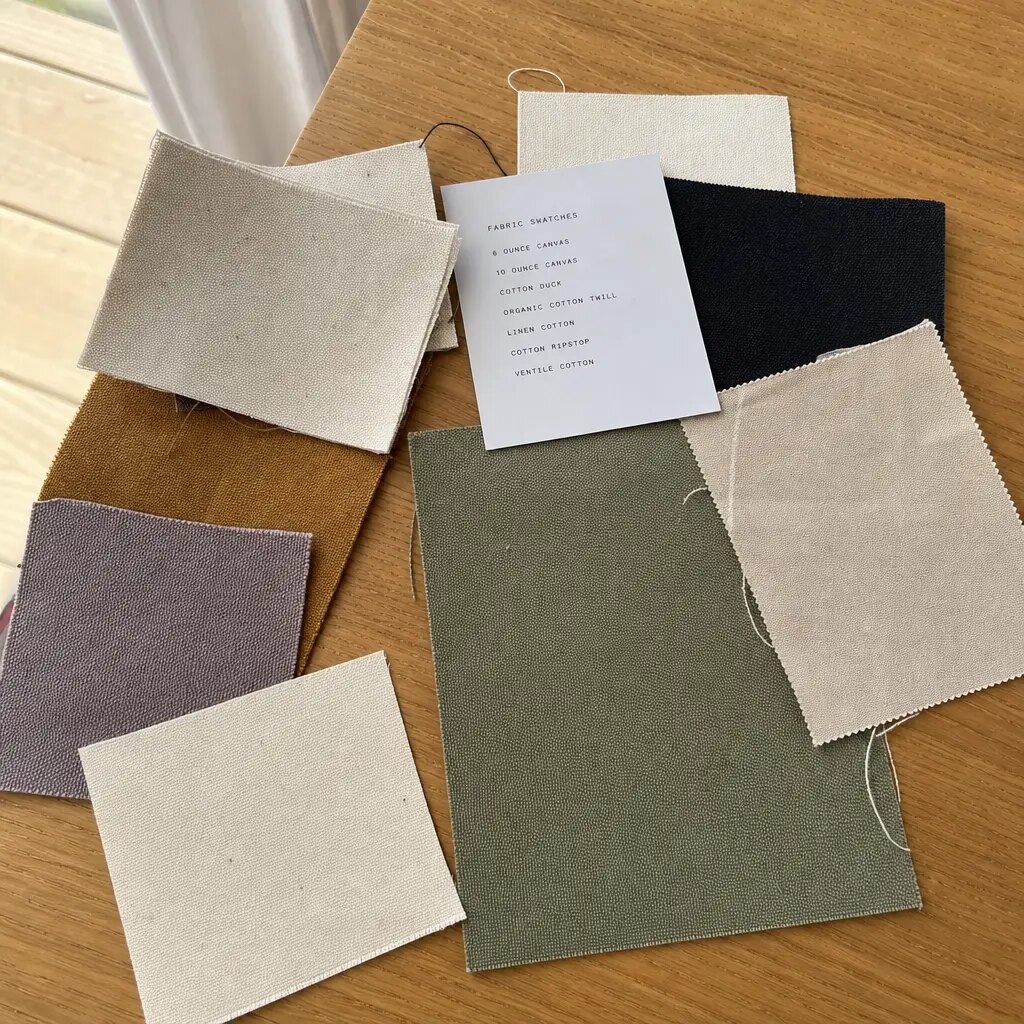
Natural canvas can shorten lead time because it may avoid custom dyeing, but it is not automatically risk-free. Natural cotton shade can vary by lot, and that variation becomes visible when bags are displayed together or photographed beside apparel. If shade matters, approve a physical swatch and agree how much variation is acceptable. For dyed canvas, build in time for lab dips or strike-offs, review under consistent lighting, and expect that one extra round may be needed if the color must match a seasonal palette.
Recycled or organic materials can be available quickly when the supplier has stock in the right weight and color. They can also add time when the required fabric is not on hand, when the mill has minimum dye quantities, or when documentation has to be collected from several parties. Buyers should avoid vague RFQ wording such as 'eco canvas if possible.' Instead, define the claim hierarchy: required, preferred, or optional. That allows suppliers to quote realistic alternatives and lead times.
- Ask whether fabric is mill stock, greige stock to be dyed, or fresh production.
- For natural canvas, approve a shade standard and decide whether lot variation is acceptable.
- For custom dyed canvas, include lab dip review and potential re-dip time in the schedule.
- For organic or recycled claims, ask what order-level evidence can be provided before promising claims to retailers.
- State whether sustainability attributes are mandatory or optional so suppliers can quote realistic routes.
Customization choices should match MOQ, timeline, and first-run risk
Messenger bag MOQ is not one number. It is a stack of minimums attached to the body pattern, fabric color, webbing, labels, zippers, buckles, snaps, patches, print setup, and packaging. A supplier may be able to make 300 pieces using stock canvas, existing pattern, stock hardware, and a simple screen print. The same supplier may need a much higher effective MOQ if the buyer requests custom dyed canvas, branded zipper pullers, custom webbing color, woven labels, and molded hardware.
A staged customization strategy is usually stronger for an eco apparel brand testing a new accessory category. Start with a proven pattern and stock trims, then customize the visible brand elements: screen print, woven side label, hangtag, care label, paper band, or cotton patch. This protects brand identity without forcing every component into custom development. If the first run sells through and reorder volume becomes reliable, the next round can add custom hardware, lining artwork, unique pocket layout, or a revised silhouette.
Buyers should also decide what level of differentiation matters to the customer. A custom buckle may be expensive and slow but not noticed by the end user. A better fabric hand feel, clean print placement, sturdy strap, and sustainable packing may create more value. Conversely, if the bag is a premium retail accessory, a branded patch, durable hardware, and refined inside finishing can support the price point. The key is to spend development time where it affects perceived quality or function.
When comparing supplier MOQs, ask for the component minimums separately. A quote that says 'MOQ 500 pcs' may still require 1,000 pcs worth of woven labels or a surcharge for low hardware volume. If a buyer ignores those sub-minimums, the final price may rise after sampling, or the supplier may substitute stock components to protect margin.
- Use stock body plus custom branding for first runs where speed and MOQ matter.
- Ask for separate MOQs on fabric color, webbing, label, zipper, buckle, snap, print, and packaging.
- Avoid custom hardware unless volume and timeline can support component development.
- Prioritize customization that affects retail appearance, function, or brand recognition.
- Compare low-MOQ quotes by total assumptions, not just the headline unit minimum.
Printing and branding decisions affect schedule, defects, and reorder consistency
For most bulk canvas messenger bag programs, screen printing is the safest and most scalable branding method. It works well for one- or two-color artwork, gives predictable cost, and is suitable for medium to heavy canvas. It is especially practical for eco apparel brands using simple logos, capsule graphics, or tonal branding. The buyer should still define ink color, print size, print location, curing expectations, and tolerance. A clean one-color print can look premium when placement and ink coverage are controlled.
Digital print and heat transfer may be useful for small runs, gradient artwork, or detailed illustrations, but they change both the cost curve and the production path. Digital methods may have slower throughput or different color behavior on textured canvas. Transfers can introduce hand-feel concerns or edge durability questions. Embroidery can add perceived value but may pucker heavy canvas or distort pockets if the placement is not engineered correctly. Woven labels and patches are excellent for repeat consistency, but they add their own MOQ and lead time.
Placement is a common source of buyer disappointment. A logo centered on a flat artwork file may look off-center once the flap folds over the body. Printing on cut panels often improves positioning relative to seams, but it requires print setup before sewing and careful panel handling. Printing on assembled bags may simplify some workflows but can be affected by seams, pockets, flap thickness, and uneven surfaces. The supplier should confirm the method before sampling and maintain the same method for bulk unless the buyer approves a change.
Artwork timing is another hidden lead time factor. Factories cannot finalize screens, strike-offs, or print costing from rough mockups. Buyers should provide vector artwork, Pantone references where relevant, target print size, and exact placement measurements. For physical approval, a print strike-off on the intended canvas is stronger than a digital mockup because canvas texture, ink absorption, and fabric shade change the final look.
- Choose screen print for most 1-2 color bulk logos when speed and consistency matter.
- Approve a physical print strike-off on the intended canvas when color and placement matter.
- Define print position with measurements, such as top edge distance from flap stitch line and center tolerance.
- Confirm whether printing occurs on cut panels or finished bags before costing and sampling.
- Use labels or patches when you want repeatable premium branding with less risk of large print variation.
Sampling should remove ambiguity before bulk materials are committed
A good sample process is not about collecting as many samples as possible. It is about approving the right information at the right stage. For canvas messenger bags, the usual sequence is fabric swatch, lab dip if dyed, logo strike-off, prototype sample, pre-production sample, and sometimes shipment sample. Not every order needs every step, but first orders, custom fabrics, new artwork, or special hardware should not skip the pre-production sample.
The prototype should prove the shape, proportions, pocket layout, strap range, and basic construction. It may use substitute fabric or trims if clearly labeled, but the buyer must not treat it as bulk approval if key materials are different. The pre-production sample should use bulk-intended fabric, print, webbing, hardware, labels, and packing assumptions. It becomes the physical standard for inspection and dispute resolution. If the buyer approves only from an early prototype, the factory may still be making important sourcing choices when bulk starts.
Sample comments must be measurable. 'Logo too low' is not enough; 'top of print 30 mm below flap stitch line, tolerance ±5 mm' gives production a control point. 'Strap feels short' is subjective; 'adjustable wearing length from 95 cm to 135 cm' is actionable. 'Bag looks flimsy' should be translated into fabric weight, reinforcement, interlining, or seam construction requirements. Clear comments reduce remake time and protect the production slot.
Approval discipline is just as important as supplier speed. If a sample sits with the buyer for ten days, the project loses ten days even if the factory made the sample quickly. Brands should decide who signs off on fabric, construction, artwork, and packaging. If several departments review the sample, consolidate comments into one written response with priorities: must change, nice to have, and accepted. This prevents the common problem of design requesting a change that operations cannot support within the launch calendar.
- Use prototype approval for shape and construction; use pre-production approval for bulk-intended execution.
- Keep a sealed or signed reference sample for inspection and future reorders.
- Provide sample comments in dimensions, tolerances, material names, and placement measurements.
- Separate must-fix comments from optional improvements to avoid unnecessary remake rounds.
- Return approvals quickly; buyer review time is part of the lead time whether or not it appears on the factory schedule.
Build a realistic milestone calendar, not just a single delivery date
A realistic production schedule depends on material status, customization level, order size, factory capacity, and the buyer's approval speed. A stock-body messenger bag using natural stock canvas, stock webbing, standard hardware, and one-color screen print may move from final approval to ex-factory in roughly 30-45 days. A more customized version with dyed fabric, multiple pockets, lining, special labels, and fresh trim sourcing may need about 50-75 days or more after approval. These ranges are planning examples, not guarantees, but they show why a single generic lead time can mislead procurement teams.
The calendar should be broken into milestones: RFQ clarification, fabric and trim confirmation, sample making, sample shipping, buyer review, sample correction if needed, pre-production approval, material booking, cutting, printing or embroidery, sewing, inline inspection, finishing, final inspection, packing, and shipment handover. Each milestone should have an owner and a due date. If the buyer sees only 'production 45 days,' it is difficult to know which part is late until the damage is already done.
Line booking is one of the most common hidden delays. A factory may reserve a sewing slot based on expected sample approval. If approval slips by one week, the order may not simply move one week later; it may miss the line slot and wait behind other confirmed orders. This is especially important before holiday periods, peak apparel seasons, or when the factory has limited bag-making capacity. Procurement teams should ask what happens to the slot if approvals are late.
Freight planning should also be included early. Messenger bags are bulkier than flat totes because straps, gussets, hardware, and structured flaps take carton space. Air freight may be expensive if the launch is missed, while sea freight requires earlier handover and more buffer. The buyer should estimate whether the order can ship entirely by sea, whether a small launch quantity should move by air, or whether the timeline needs to shift to avoid emergency freight.
- For simple stock-material orders, plan roughly 30-45 days after final approval as a working estimate, then verify with the supplier.
- For custom dyed fabric, special trims, or complex construction, plan roughly 50-75 days or more after approval.
- Add time before approval for swatches, strike-offs, prototypes, sample shipping, and internal review.
- Ask the factory to confirm the sewing slot and the consequence of late approval.
- Include freight booking, customs, and warehouse receiving in the master calendar.
Packing choices influence landed cost, damage risk, and sustainability perception
Packing is often left until the end, but it affects cost, freight efficiency, warehouse handling, and brand perception. A canvas messenger bag cannot always be packed as flat as a tote. The flap, gusset, strap, buckle, zipper puller, and hardware can create bulk or rub against visible fabric. If suppliers quote different fold methods or carton quantities, the unit price and CBM estimate may not be comparable.
Eco apparel brands often want to reduce plastic, and that can be appropriate when the distribution environment is controlled. However, eliminating protection without a replacement plan can create dirty canvas, moisture marks, rubbed prints, scratched hardware, and retailer chargebacks or claims. A lower-plastic solution might use a paper band, recycled tissue, kraft sleeve, carton liner, or bulk packing with dividers. The right answer depends on canvas color, print coverage, hardware type, transit time, warehouse conditions, and retail requirements.
Retail readiness must be specified before bulk packing starts. If the order requires hangtags, barcode stickers, country-of-origin labels, care labels, SKU stickers, or carton-level assortment labels, the supplier needs artwork and placement instructions early. Incorrect barcode placement can delay receiving even when the product quality is acceptable. Carton marks should match the packing list, and carton weight should remain manageable for handling requirements.
Packing also affects freight planning. Fewer pieces per carton can reduce crushing and improve presentation but increase CBM. More pieces per carton can save freight but may create pressure marks or make cartons too heavy. Procurement teams should request carton dimensions, pieces per carton, gross weight, and estimated CBM during quoting, not after production. This allows a more accurate landed cost comparison.
- Define fold method, unit protection, carton quantity, carton size, and gross weight limit before quote comparison.
- Use low-plastic packing only when it still protects against dust, moisture, abrasion, and hardware scratches.
- Confirm hangtags, care labels, barcode labels, and carton marks before packing materials are printed.
- Request CBM estimates so freight cost is considered with unit price.
- Check retailer packaging rules early to avoid late repacking or relabeling.
Quote comparison should expose assumptions, not reward the cheapest headline price
The cheapest quote is often based on the thinnest or most optimistic assumptions. One supplier may quote 12 oz canvas while another assumes 16 oz. One may include zipper under the flap, inside pocket, woven label, and reinforced strap joins; another may quote a simpler open-pocket version. One may price bulk packing, while another includes individual bags, barcode labels, and stronger cartons. Unless the buyer normalizes the specification, the quote comparison is not meaningful.
A strong RFQ for canvas messenger bags should include target quantity, dimensions, fabric weight, composition, color, construction, pocket layout, closure type, hardware finish, strap details, print method, label requirements, packing method, inspection expectations, and required delivery date. It should also state whether sustainability documents are mandatory. The more complete the RFQ, the easier it is to see which supplier is realistic and which supplier is relying on gaps to offer a lower opening price.
Buyers should ask suppliers to separate the major cost drivers where possible: fabric, trims and hardware, printing or label setup, cut-and-sew labor, packaging, sample charge, and special development costs. Not every factory will share a full cost breakdown, but they should be able to explain what changes price. For example, increasing canvas weight, adding lining, switching to custom hardware, or using individual retail packing may all change the unit cost and lead time.
Quote validity also matters. Canvas, hardware, and freight costs can move, and a quote based on available stock may expire when that stock is used. Procurement should confirm how long the quote is valid, whether fabric is reserved only after deposit, and whether the quoted timeline starts from PO, deposit, final artwork, or sample approval. Many timeline disputes come from different assumptions about when the clock begins.
- Normalize every quote against the same fabric weight, construction, trim list, print method, and packing method.
- Ask what is excluded from the quote, including sample freight, testing, barcode labeling, and special documentation.
- Clarify whether lead time starts from PO, deposit, artwork approval, or pre-production sample approval.
- Request quote validity and stock availability timing.
- Compare landed cost implications, including carton CBM and potential freight mode, not only ex-factory price.
Quality control should match how the bag will be sold and used
Messenger bags are worn, opened, adjusted, loaded, displayed, and handled more aggressively than many apparel accessories. QC should therefore cover both retail appearance and functional strength. A clean logo matters, but so do strap attachment, zipper operation, flap alignment, stitch security, hardware finish, and inside trimming. If the bag will be sold at a premium price point, small visible issues such as loose threads, off-center print, scratched buckles, or dirty canvas can damage perceived value.
The inspection standard should define defects in practical terms. For visible outer panels, obvious oil stains, dirt marks, holes, severe slubs, or shade mismatch should be treated seriously. For print, check registration, color, position, coverage, and smudging. For construction, check seam puckering, skipped stitches, loose threads, uneven flap shape, pocket symmetry, and raw edges. For function, open and close zippers, adjust straps, test buckles or snaps, and inspect bartacks at stress points.
Inline inspection is especially useful on first orders. If the first bulk pieces show print drift, seam puckering, wrong strap length, or hardware scratching, the factory can correct the process before the full order is completed. Final inspection alone may catch the issue but not leave enough time to fix it without delaying shipment. Buyers should ask for photos of the first finished bulk pieces and, where order value justifies it, arrange an inline check.
Measurement tolerances should be realistic for canvas bags. Fabric thickness, seam bulk, and hand sewing operations can create slight variation. The buyer should set tolerances by point of measure rather than expecting perfect uniformity. For example, body dimensions may allow a wider tolerance than print position on the front flap. Strap length range should be controlled because it affects user comfort. The inspection sheet should reflect what truly matters to function and retail presentation.
- Inspect both appearance and function: print, shade, stitching, strap adjustment, zipper movement, and hardware finish.
- Define major defects on visible panels, including stains, holes, severe shade mismatch, and front-facing print errors.
- Check stress points such as strap joins, D-ring tabs, flap corners, zipper ends, and pocket openings.
- Use inline inspection or first-bulk-piece review for new styles and new suppliers.
- Set measurement tolerances by point of measure and connect them to actual usability.
Specification comparison for buyers
| Spec decision | Recommended option | When it fits | Buyer risk to check |
|---|---|---|---|
| Fabric weight | 12 oz to 16 oz canvas, roughly 340-450 GSM, with tolerance stated on the spec sheet | Best for retail messenger bags that need enough structure for a flap silhouette without becoming too heavy for daily commuting or costly to ship | Below about 300 GSM can collapse, wrinkle heavily, and distort after printing; above about 500 GSM can increase needle breakage, seam bulk, carton weight, and freight cost |
| Cotton type | Conventional canvas, organic cotton canvas, recycled cotton blend, or certified blended canvas only when the claim is supported by order-level documentation | Fits eco apparel programs that need sustainability claims tied to real sourcing evidence, not generic supplier wording | Broad terms such as 'eco canvas' or 'green cotton' without composition, lot reference, certificate scope, or transaction evidence can create retail compliance problems |
| Color route | Natural canvas or mill-stock color for faster timelines; custom dyed canvas only when the calendar allows lab dips and shade approvals | Useful when the bag must coordinate with seasonal apparel colors, retail fixtures, or capsule branding | Custom dyeing can become the critical path; natural canvas can still vary by lot and should have an approved shade range |
| Bag construction | Flap messenger with zipper under flap, inside pocket, reinforced strap joins, adjustable webbing strap, and a manageable gusset | Good balance of perceived value, practical storage, and stable production for branded merchandise and apparel retail channels | Extra pockets, padded laptop sleeves, bindings, magnetic snaps, contrast lining, and piping add sewing operations and can stretch production if the line is full |
| Print method | 1-2 color screen print for most bulk programs; woven label, cotton patch, or embroidered patch for a premium brand detail | Works when artwork is stable, reorder consistency matters, and the design does not need photographic detail | Large coverage prints can shift on cut panels, thick ink can crack on folded areas, and digital print can slow output or raise unit cost on larger runs |
| Hardware finish | Standard antique brass, nickel, gunmetal, or matte black from approved stock components | Best for keeping sampling and bulk aligned when the brand wants a durable mainstream finish without component development | Custom plating, custom zipper pullers, and branded buckles usually add component MOQs, approval cycles, and replacement risk if the finish is inconsistent |
| MOQ route | Use stock body pattern with custom print and label for roughly 300-500 pcs where available; consider full custom pattern from about 800-1000 pcs upward | Useful for eco brands testing messenger bags before committing to repeat SKU volume or retail rollout | Forcing full custom development at low volume can create high sample charges, weak price competitiveness, and slower correction rounds |
| Packaging format | Paper band, recycled tissue, master carton liner, or bulk pack where acceptable; individual polybag only when required by retailer or logistics conditions | Supports sustainability positioning while controlling dust, moisture, and abrasion risk during shipment and warehouse handling | Skipping protection entirely can cause rubbing marks, moisture exposure, barcode loss, and claim disputes on light-colored canvas |
| Approval method | Physical pre-production sample signed against color, print position, measurements, hardware list, packing, and trim card | Necessary when the launch date is linked to a seasonal apparel drop, retail floor set, influencer kit, or coordinated DTC release | Approving only from photos often misses strap length, hand feel, flap balance, inside finishing, hardware weight, and true canvas shade |
Buyer checklist before sampling
- Define the required in-warehouse date, then work backward from receiving, labeling, retail allocation, and launch needs rather than using only the ex-factory date.
- Lock the commercial use case: retail sale, gift-with-purchase, employee kit, wholesale accessory, or DTC add-on, because quality thresholds and packing needs differ.
- State fabric composition, target weight in GSM or oz, weave, finish, color route, and acceptable tolerance before requesting price comparisons.
- Specify whether canvas must be organic, recycled, undyed, low-impact dyed, or conventional, and list exactly what documents are required to support any sustainability claim.
- Confirm whether natural canvas shade variation is acceptable, and request a physical swatch or approved shade band if the bag will sit beside apparel in store.
- List finished bag dimensions, gusset, flap depth, strap width, adjustable strap range, pocket count, closure type, lining, binding, and hardware finish.
- Decide early whether the program uses stock pattern modification, semi-custom construction, or full custom pattern development, and connect that decision to MOQ and timeline.
- Provide print-ready artwork with size, print colors, Pantone references where relevant, print location, print position tolerance, and whether printing is on cut panels or finished bags.
- Request the sample sequence you need: fabric swatch, lab dip if dyed, logo strike-off, prototype, pre-production sample, and shipment sample if required by your internal process.
- Define measurement tolerance by point of measure, including body width, height, gusset, flap drop, pocket opening, strap length range, and webbing width.
Factory quote questions to send
- What exact fabric weight, weave, finish, and composition do you propose, and is the quoted material from mill stock, existing greige stock, or fresh weaving?
- If the quote includes organic cotton, recycled cotton, or other sustainability attributes, what certificates or transaction documents can be provided for this specific order?
- Does the quoted price assume natural canvas, stock dyed canvas, or custom dyed canvas, and how many lab dip rounds are included before extra charges apply?
- Is the bag pattern already in your production library, or does the quote include new pattern development, fit correction, paper pattern work, and remake sampling?
- Which parts of the construction are included in the base quote: zipper under flap, inside pocket, lining, binding, padded sleeve, reinforced strap joins, bartacks, or bottom gusset reinforcement?
- How many print colors, print locations, screens, strike-offs, and print strokes are included in the quoted unit price?
- Will the logo be printed on cut panels or finished bags, and what print placement tolerance can you control in bulk production?
- What MOQ applies separately to the bag body, fabric color, webbing color, woven label, printed patch, zipper, buckle, snap, custom hardware, and packaging?
- Which components are stock items and which require outside sourcing, including zippers, sliders, buckles, D-rings, webbing, lining, labels, hangtags, and carton labels?
- What lead time do you estimate for swatch approval, lab dips, logo strike-off, prototype, pre-production sample, material booking, cutting, sewing, printing, final QC, and packing?
Quality-control points to confirm
- Fabric weight should match the approved specification within agreed tolerance, and the fabric should show no major slub inconsistency, crease damage, weaving fault, hole, oil stain, or shade mixing across visible panels unless accepted as natural character.
- Composition and sustainability documentation should match the buyer's claim requirements; certificates should be checked for scope, validity, material type, and whether they support the order rather than only the supplier's general marketing language.
- Body dimensions, gusset width, flap drop, pocket placement, strap width, and adjustable strap length range should match the approved measurement sheet within defined tolerances.
- Print color should align visually to the approved strike-off or standard under consistent lighting, with no major pinholes, smudging, bleeding, ghosting, misregistration, cracking, or off-position placement beyond tolerance.
- Print position should be checked on finished bags, not only on flat panels, because flap fold, seam allowance, pocket shape, and bag structure can change the visual centering.
- Stitch density should be consistent on visible seams, and back-tacking or bartacking should be secure at stress points such as strap joins, D-ring tabs, flap corners, pocket openings, zipper ends, and side seams.
- Seams should not pucker heavily, twist, skip stitches, expose raw edges where binding is specified, or create bulky corners that distort the flap or body shape.
- Hardware should open, close, and adjust smoothly without burrs, plating flake, sharp edges, rust marks, cracked coating, loose rivets, or obvious color mismatch between components.
- Zipper operation should be smooth across the full opening, with no tape twisting, broken teeth, slider jamming, skipped stitches, or puckering around zipper installation.
- Webbing should be clean, correctly threaded through adjusters, securely stitched, and free from fraying, waviness, shade mismatch, or rough cut ends that irritate the wearer.