Start With the Real Delivery Date
For artisan bakeries, canvas messenger bags are rarely ordered just as bags. They are usually tied to a store opening, holiday hamper, subscription program, staff launch, market event, or retail shelf reset. That means the useful planning date is not the factory ship date. It is the date the bags must be received, counted, unpacked, and ready for the bakery team or distributor to use.
Work backward from the required in-warehouse date. A practical calendar should include artwork finalization, sample production, sample shipping, sample review, any revision, deposit, material booking, bulk production, inspection, export packing, vessel or air booking, customs clearance, and local delivery. If the bag is for Christmas gift sets, Mother’s Day bakery boxes, or a new branch opening, do not treat the event date as the receiving date. Give the receiving warehouse or store team time to handle carton damage, count shortages, and repacking.
- For repeat styles using approved fabric and print, plan roughly 25-40 days for bulk production after deposit and final approval.
- For a new canvas messenger bag with labels, lining, hardware, or revised construction, plan sample and approval time before counting bulk production.
- For custom dyed fabric, custom woven labels, or special hardware, add material lead time before cutting can start.
- For ocean shipment, keep shipping time separate from production time; a fast factory lead time does not solve a late vessel booking.
- For retail launch programs, set a final sample approval deadline and treat missed approval as a schedule change.
Build the RFQ Around One Bag Use
A messenger bag for bakery staff carrying order sheets, aprons, and a tablet is not the same product as a retail gift bag for customers buying sourdough kits. The staff bag may need heavier canvas, an adjustable strap, internal pocket, and darker fabric. The retail bag may need a cleaner front flap, lower unit weight, barcode sticker, and folded presentation. When one RFQ tries to cover all uses, quotes become difficult to compare because each supplier fills in missing details differently.
Define the primary use in the first line of the RFQ. Then lock the visible features before discussing price: finished size, flap depth, gusset, handle or shoulder strap, closure, pocket layout, print position, label position, and packing. For bakery buyers, the most common mistake is specifying only a logo and bag dimensions while leaving fabric weight, reinforcement, and packing unclear. That creates a cheap quote that may not survive real use or may arrive in cartons that retail stores cannot handle efficiently.
- Staff carry bag: prioritize 14oz canvas, adjustable strap, inside pocket, darker color, reinforced strap box stitch.
- Retail merchandise bag: prioritize clean flap print, neat stitching, consistent folding, barcode label, carton-ready packing.
- Gift packaging bag: prioritize lower weight, attractive presentation, controlled print placement, and carton count accuracy.
- Distributor program: prioritize stable repeat specifications, carton marks, pallet compatibility, and clear re-order lead time.
- Bakery market bag: prioritize durability, easy cleaning instructions, and enough gusset for pastry boxes or wrapped loaves.
Choose Canvas Weight Before Negotiating Price
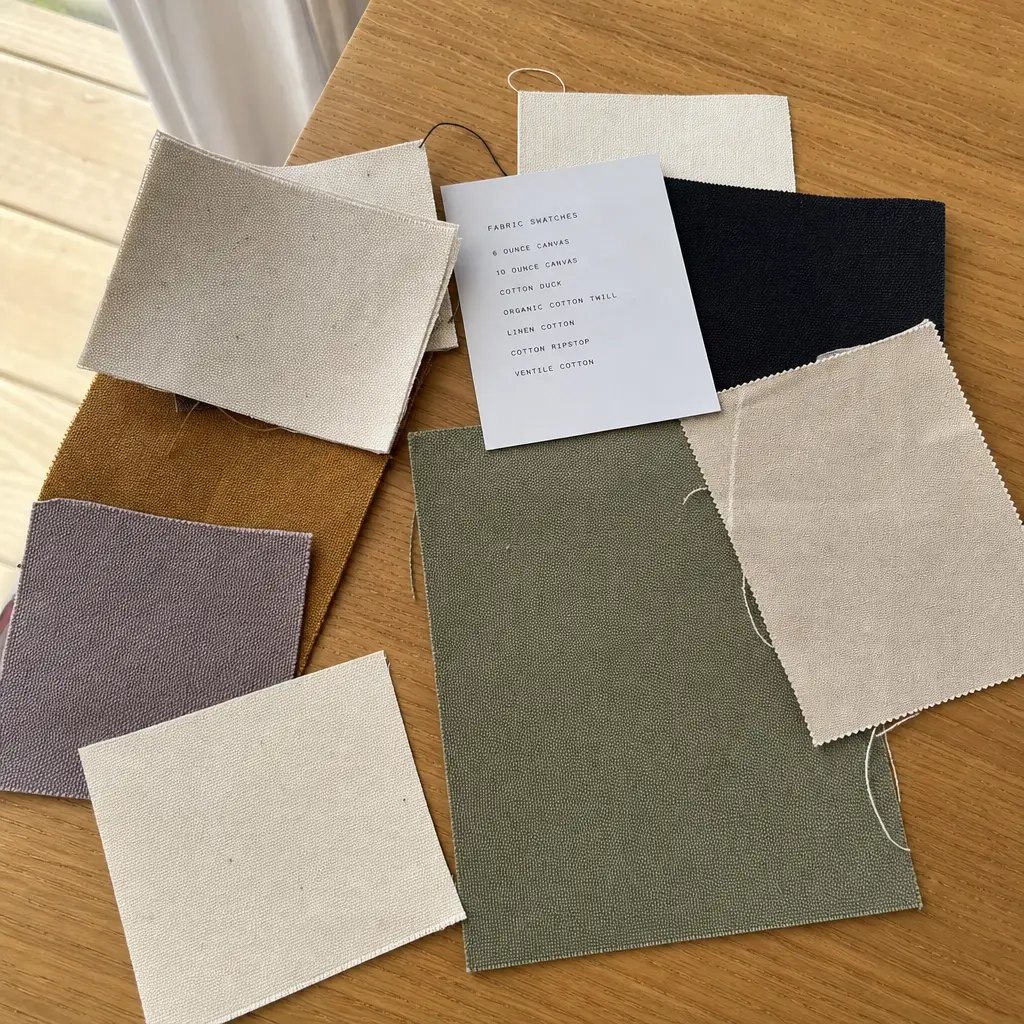
Canvas messenger bag prices change quickly when fabric weight changes. A natural 10oz canvas may look acceptable in a photo but feel soft when filled with baked goods, catalogs, or staff tools. A 12oz canvas, around 400 GSM, is often the balanced choice for branded bakery messenger bags because it has enough body for retail presentation while keeping sewing and freight weight reasonable. A 14oz or 16oz canvas can feel premium, but it increases material cost, needle wear, carton weight, and sometimes sewing time.
Do not accept a quote that says only cotton canvas. Ask for both oz and approximate GSM because suppliers in different regions may use different descriptions. Also clarify whether the fabric is greige, finished natural, bleached, dyed, washed, or pre-shrunk. Washed or pre-shrunk canvas can reduce after-sale shrinkage, but it may soften the structure and increase cost. If the bakery brand uses a clean natural look, approve the exact shade range because natural cotton can vary from cream to beige between fabric lots.
- 10oz canvas: lower cost, lighter carry, suitable for promotional runs, but less structure for a messenger bag.
- 12oz canvas: balanced weight for most bakery retail and brand programs, especially with reinforced strap points.
- 14oz canvas: stronger hand feel for paid merchandise, staff use, and higher perceived retail value.
- 16oz canvas: premium and durable, but heavier for freight and less forgiving on tight seam turns.
- Pre-shrunk fabric: useful when customer washing is expected, but it should be sampled because texture changes.
Select Print Method by Artwork Risk
Most bakery logos work well with screen printing because they use one or two solid colors, simple typography, and a front flap position. Screen print is cost-efficient for bulk messenger bags and keeps the lead time predictable after screens are made. The risk is not the method itself; the risk is artwork that is too small for coarse canvas. Thin serif letters, tiny establishment dates, detailed wheat drawings, and low-contrast beige-on-natural artwork often lose clarity on textured canvas.
Digital print may help with gradients or multi-color illustrations, but it can change the hand feel and may not match the durability expectation of a heavy canvas bag unless tested. Embroidery can look premium on staff bags, but it may pucker the flap if the canvas is not stabilized or if the artwork has a dense stitch count. For lead time planning, screen print is usually the fastest controlled route, while embroidery and woven labels add sample steps and approval points.
- Use screen print for one to two color bakery logos, simple slogans, and repeat retail programs.
- Use embroidery only when the bag structure can support the stitch density without flap distortion.
- Use woven labels for subtle brand detail, but book label production early because MOQ and color approval can delay bulk.
- Avoid printing across flap fold lines, heavy seams, or areas likely to crease during packing.
- Set print placement tolerance, such as plus or minus 5 mm, before approving bulk print panels.
Understand MOQ Logic by Component
MOQ for canvas messenger bags is not one number controlled by sewing alone. The body fabric, printing, labels, webbing, hardware, dyeing, and packing materials may each have their own minimums. A factory may accept 300 pieces using stock natural canvas and a one-color print, but the same bag with custom dyed canvas, custom woven label, branded slider, and retail barcode sleeve may require a much higher order quantity or a higher unit price.
For procurement teams comparing quotes, separate MOQ by component. This prevents a common buying error: choosing the lowest bag MOQ and later discovering that the label supplier, dye house, or hardware vendor requires more units than the bag order. If the bakery chain expects reorders, it may be worth buying extra labels or reserving fabric. If the order is a one-time seasonal promotion, stay closer to stock fabric, standard webbing, and simple screen print to protect the schedule.
- Bag sewing MOQ is usually lower when stock fabric and standard webbing are used.
- Custom fabric dyeing often creates a higher MOQ and a longer approval route for lab dip and bulk shade.
- Woven labels may have their own MOQ, setup cost, and color approval process.
- Metal hardware can require MOQ by finish, especially antique brass, matte black, or branded components.
- Retail packing materials such as kraft sleeves, barcode labels, or hangtags should be quoted as separate line items.
Use Samples to Remove Schedule Risk
Sampling is not only for appearance. It protects the production schedule by exposing unclear specs before bulk material is cut. A first proto sample should prove the construction: size, flap proportion, strap comfort, pocket access, reinforcement, closure position, and overall weight. It can use near fabric or available trim if the buyer understands that the final material still requires approval.
A pre-production sample should be treated differently. It should use final fabric weight, final color, final print, final label, final closure, and final packing method where possible. This is the sample that bulk production should follow. For bakery buyers with a fixed campaign date, skipping the pre-production sample may save one week at the start but can cost much more time if bulk bags arrive with wrong print placement, weak strap stitching, or carton folding marks across the logo.
- Proto sample approval should focus on dimensions, structure, strap comfort, pocket layout, and basic workmanship.
- Pre-production sample approval should focus on final fabric, print color, label, hardware, packing, and carton method.
- Sample comments should use measurable changes, such as increase flap by 20 mm or move logo down 15 mm.
- Photos alone are not enough for new fabric weight; buyers should handle the sample before bulk approval when time allows.
- Approved samples should be signed, photographed, and referenced in the purchase order or production file.
Plan the Lead Time by Production Stage
A reliable lead time plan breaks the order into stages instead of asking for one total number. For a standard canvas messenger bag, the critical path usually runs through artwork approval, sample approval, material booking, cutting, printing or embroidery, sewing, trimming, inspection, packing, and shipment release. If the print is applied before sewing, printed panels must be cured and inspected before assembly. If embroidery is done after cutting, the embroidery schedule must align with sewing capacity.
Bakery brands often place orders around peak seasons when factories are handling many promotional and retail packaging programs. A small delay in artwork approval can push the order behind another production slot. The purchase order should state which approvals release production and what happens if the buyer delays feedback. This protects both sides: the buyer understands the calendar, and the factory can reserve material and sewing capacity based on firm approval dates.
- Artwork and label approval: usually the first schedule risk because it depends on buyer feedback.
- Material booking: starts only when fabric weight, color, quantity, and deposit are confirmed.
- Cutting and print panel preparation: depends on fabric inspection and print layout confirmation.
- Sewing: affected by bag complexity, number of pockets, closure type, lining, and reinforcement points.
- Inspection and packing: should not be compressed too aggressively because carton errors are expensive to fix after shipment.
Control Packing Before It Becomes a Freight Problem
Packing looks like a small detail until cartons arrive at a bakery warehouse with crushed corners, mixed counts, or heavy boxes that store staff cannot handle safely. Messenger bags are bulkier than flat totes because of flap, gusset, strap, hardware, and sometimes lining. The fold method must protect the print and avoid permanent creases across the front flap. If the bag is sold as retail merchandise, the individual presentation needs to be approved together with the bag, not decided after production.
Carton data also affects landed cost. Two suppliers may quote the same unit price, but one may pack more air because the strap is not folded efficiently or the carton size is not optimized. Ask for pieces per carton, carton dimensions, gross weight, net weight, and total CBM at the quote stage. This helps importers and distributors estimate ocean freight, warehouse handling, and pallet configuration before committing to the order.
- Individual polybag protects from dust but adds material cost and may conflict with plastic reduction policies.
- Recyclable kraft sleeve improves retail presentation but adds packing labor and should be tested for scuffing.
- Bulk pack is cheaper but requires store or warehouse teams to sort and may increase handling marks.
- Desiccant or moisture control is useful for long ocean shipments, especially during humid seasons.
- Carton marks should include SKU, color, quantity, gross weight, net weight, carton number, and country of origin if required.
Compare Quotes on Total Delivered Value
A cheap unit price is not always a cheaper program. For canvas messenger bags, quote comparison should include fabric weight, print method, label type, hardware, packing, inspection readiness, sample policy, carton efficiency, and lead time reliability. A supplier quoting 10oz canvas with bulk packing should not be compared directly with a supplier quoting 12oz canvas, woven label, reinforced stitching, and individual retail packing.
Create a quote comparison sheet that normalizes the specification before choosing a supplier. If the bakery buyer needs delivery before a fixed launch, schedule confidence may be worth more than a small unit price difference. A factory that provides clear stage lead times, carton data, sample photos, and QC tolerances gives the procurement team better control than a supplier that only sends a low FOB price and a vague delivery estimate.
- Compare fabric by weight, finish, shrinkage control, and shade approval process.
- Compare decoration by method, color count, print area, setup charge, and durability test.
- Compare construction by reinforcement, stitch density, lining, pockets, closure, and strap hardware.
- Compare packing by individual presentation, carton quantity, carton strength, CBM, and barcode handling.
- Compare schedule by sample time, material time, production time, inspection time, and shipment release process.
Set Acceptance Criteria in the Purchase Order
The purchase order should do more than repeat the price and quantity. It should define what an acceptable canvas messenger bag looks like when bulk production is inspected. Without written tolerances, disputes become subjective. A buyer may reject loose threads or print variation that the factory considers normal for canvas. A factory may ship bags with slight flap skew because no tolerance was stated. Clear acceptance criteria reduce the chance of late arguments when the goods are already packed.
For artisan bakery programs, the most important acceptance areas are fabric weight and shade, finished measurements, print clarity, print position, strap strength, closure function, stitching, and packing accuracy. The tolerances do not need to be complicated, but they should be measurable. For example, finished width plus or minus 10 mm may be acceptable for a soft canvas bag, while logo placement plus or minus 5 mm may be required for a front flap print. The approved pre-production sample should be the physical reference for all visual decisions.
- Measurement tolerance: define width, height, gusset, flap depth, strap length, and pocket size tolerance.
- Print tolerance: define placement, color reference, minimum line clarity, curing, rub resistance, and no major smudging.
- Stitching tolerance: define no open seams, no skipped stitches at stress points, and clean thread trimming on visible areas.
- Hardware tolerance: define correct finish, firm attachment, smooth operation, and no sharp edges or rust marks.
- Packing tolerance: define carton count accuracy, carton condition, label placement, moisture control, and fold direction.
Specification comparison for buyers
| Spec decision | Recommended option | When it fits | Buyer risk to check |
|---|---|---|---|
| Canvas body fabric | 12oz cotton canvas, about 400 GSM, pre-shrunk if the bag will be washed | Most bakery retail programs needing a sturdy reusable bag without becoming too heavy for daily carry | Unwashed canvas can shrink after customer laundering and may distort flap alignment or printed artwork |
| Premium fabric upgrade | 14oz to 16oz canvas, about 475-540 GSM, with reinforced flap and stress points | Gift sets, higher retail price points, staff uniforms, and durable loyalty merchandise | Heavier fabric slows cutting and sewing, increases carton weight, and may require stronger needles and longer lead time |
| Print method | One to two color screen print on the flap or lower body panel | Clean bakery logos, store names, simple line illustrations, and seasonal runs needing repeatable cost control | Thick ink on coarse canvas can fill small letters; artwork should be tested at actual print size |
| Branding detail | Woven side label plus screen print, or cotton label sewn inside for subtle branding | Retail buyers who want the bag to feel more like merchandise than disposable packaging | Label lead time can add several days, especially for custom woven labels with small MOQ and color matching |
| Closure type | Magnetic snap or metal buckle only when required; plain flap is fastest | Magnetic snap suits daily carry, buckle suits heritage styling, plain flap suits lowest risk bakery giveaway programs | Hardware color, nickel-free request, and pull strength must be specified or suppliers may quote different components |
| MOQ planning | 500-1,000 pieces for custom print; higher if custom dyed fabric or woven labels are needed | Regional bakery chains, distributors, and seasonal gift packaging programs with predictable demand | Very low MOQ often means stock fabric, manual handling, higher unit cost, and less control over shade consistency |
| Sample approval | One proto sample for construction, one pre-production sample using final fabric, print, label, and packing | Any order where the bag will be sold retail or used as branded packaging for premium baked goods | Skipping the pre-production sample creates risk that the approved proto differs from bulk print placement or fabric shade |
| Packing format | Individually folded in recyclable polybag or kraft sleeve, then export carton with moisture control | Retail-ready bakery merchandise, distributor shipments, and stores with limited backroom sorting capacity | Tight folding may crease screen print; carton weight should stay practical for store handling and warehouse receiving |
Buyer checklist before sampling
- Define final use: retail merchandise, staff carry bag, gift packaging, wholesale distributor item, or customer loyalty bag.
- Specify canvas weight by oz and approximate GSM, not only the word canvas.
- Provide finished dimensions, flap depth, gusset width, strap length range, pocket layout, closure type, and reinforcement points.
- Send vector artwork with Pantone references, actual print size, print position tolerance, and label requirements.
- State whether fabric must be natural, bleached, dyed, washed, recycled cotton blend, or certified material if documentation is required.
- Build the calendar from required in-warehouse date backward, including artwork approval, sample revision, bulk material booking, production, inspection, and shipping.
- Separate proto sample approval from pre-production sample approval when the bag includes hardware, labels, lining, or multiple print positions.
- Define packing: fold method, individual bag or bulk pack, carton quantity, carton marks, barcode label, moisture control, and pallet needs.
- Request quote data in comparable format: MOQ, sample cost, bulk unit price, lead time by stage, packing cost, carton dimensions, gross weight, and Incoterm.
- Set quality tolerances before production: fabric shade range, measurement tolerance, print position tolerance, stitch density, hardware function, and carton condition.
Factory quote questions to send
- What canvas weight are you quoting in oz and GSM, and is it greige, washed, dyed, or finished natural canvas?
- Is the price based on stock fabric or fabric booked specifically for this order, and what is the fabric lead time?
- What MOQ applies to the bag body, custom print, woven label, hardware, and dyed fabric separately?
- How many days are needed for proto sample, sample revision, pre-production sample, bulk cutting, sewing, printing, packing, and final inspection?
- Which print method are you quoting, what is the maximum print area, and how many colors are included in the base price?
- Can you provide carton dimensions, pieces per carton, gross weight, net weight, and estimated CBM before order confirmation?
- What measurement tolerance, print placement tolerance, and color tolerance will be used for bulk inspection?
- Will the factory provide photos of bulk fabric, first printed panel, first sewn bulk piece, and final packed cartons before shipment?
- What happens to the schedule if artwork approval, label approval, or deposit is delayed by three working days?
- Which Incoterms are included in the quote, and are export carton, inner packing, barcode labels, and document fees included?
Quality-control points to confirm
- Canvas weight verified against approved sample, with fabric hand feel and shade compared under consistent light.
- Finished bag dimensions checked flat and filled, including flap alignment, gusset width, strap length, and pocket opening.
- Print adhesion tested by rub test and tape test on actual canvas texture after curing.
- Logo placement checked against approved artwork, with tolerance stated before bulk printing begins.
- Stress points inspected at strap attachments, flap corners, pocket corners, and any hardware reinforcement.
- Stitch density and thread trimming reviewed on visible seams, especially around the front flap and shoulder strap.
- Magnetic snaps, buckles, sliders, zippers, and labels checked for correct color, placement, function, and pull strength.
- Packing checked for fold marks across print area, moisture risk, carton strength, carton marks, barcode labels, and count accuracy.