Start MOQ Negotiation With The Retail Job, Not The Lowest Number
Canvas messenger bags for hotel retail are not the same buying problem as a giveaway tote. The bag sits on a shelf, carries a retail price, and reflects the hotel brand after the guest has left the property. MOQ negotiation should protect that retail value while still giving the buyer a quantity that does not overload inventory.
The useful starting point is not simply, "What is your lowest MOQ?" A factory can often make a very small batch if the buyer accepts stock canvas, standard hardware, simple print, and a higher unit cost. The better question is which parts of the specification trigger material purchasing, cutting efficiency, printing setup, and sewing line changeover. Once those triggers are visible, procurement can negotiate quantity intelligently.
- Use one MOQ number per fabric color, not only per total order.
- Separate MOQ for bag construction from MOQ for custom dyeing, lining, and hardware.
- Treat 300-500 pcs as a practical test range for a first hotel retail program when using standard materials.
- Expect better unit economics around 1,000 pcs if the same bag will be replenished across several properties.
- Do not trade away strap comfort, snap reinforcement, or print quality just to reduce first-order quantity.
Choose Canvas Weight Before Asking For Price Breaks
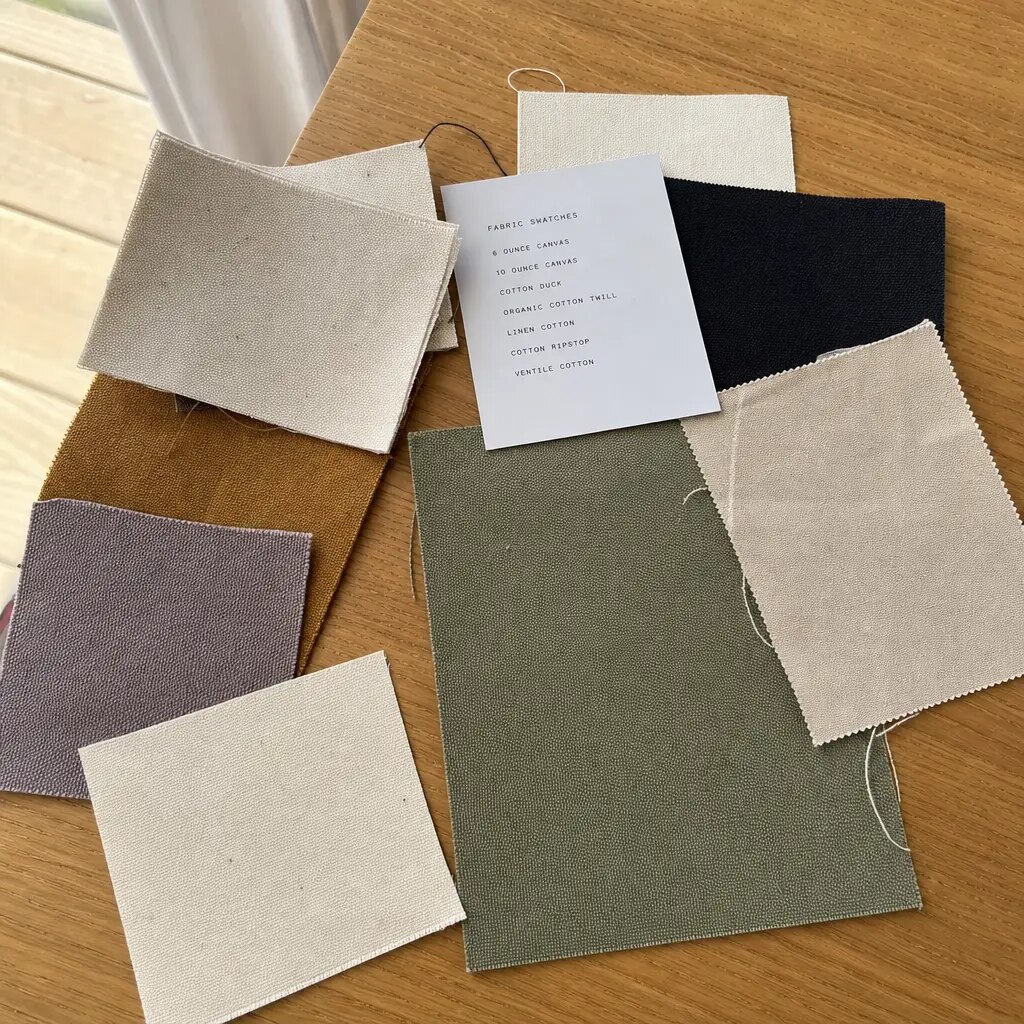
Fabric weight drives both cost and perceived quality. For hotel retail messenger bags, common options are 10 oz, 12 oz, 14 oz, and 16 oz canvas. In GSM terms, 10 oz is often around 330-340 GSM, 12 oz around 380-420 GSM, 14 oz around 450-480 GSM, and 16 oz can be above 500 GSM depending on yarn and weave. Exact conversion varies by mill, so the RFQ should state both oz and expected GSM range.
A 12 oz canvas is usually the safest starting point for a retail messenger bag: firm enough for a clean flap, strong enough for daily guest use, and still manageable for sewing, folding, and freight volume. A 10 oz canvas can work for a light promotional look, but it may feel too soft for a paid retail item. A 14 oz or 16 oz fabric improves structure but raises material cost, needle wear, sewing difficulty, carton weight, and sometimes MOQ if the fabric is not stocked.
- For a soft casual resort look: consider 10-12 oz canvas with a simple pocket layout.
- For mainstream hotel retail: specify 12 oz canvas with tight weave and stable handfeel.
- For premium boutique retail: consider 14 oz canvas, but test flap folding and strap seam bulk.
- For washed canvas: approve shrinkage, colorfastness, and post-wash measurement before bulk cutting.
- For natural canvas: define acceptable slubs because visible dark knots near the logo can cause disputes.
Understand The MOQ Logic Behind A Factory Quote
MOQ is rarely one single factory rule. It is built from smaller minimums: fabric roll purchasing, dye lot, cutting table efficiency, print screen setup, hardware pack quantity, sewing line changeover, and packing material production. A supplier may accept 300 pcs of a standard natural canvas bag because the fabric, snaps, strap webbing, and cartons are common. The same supplier may require 800 or 1,000 pcs if the buyer wants custom dyed canvas, special lining, custom metal color, and private-label packaging.
For negotiation, ask the factory to show which specification creates the MOQ. If the blocker is custom fabric dyeing, keep natural, black, or khaki stock fabric for the first order. If the blocker is custom hardware, use standard antique brass or nickel hardware and move branding to the woven side label or flap print. If the blocker is print setup, combine hotel property names under one master design system instead of creating many small artwork versions.
- Fabric MOQ increases when the color is custom dyed or washed.
- Print MOQ increases when each property needs separate screens or many color separations.
- Hardware MOQ increases when buckles, snaps, zipper pullers, or rivets need custom plating.
- Packing MOQ increases when retail sleeves, hangtags, or printed cartons are customized.
- Sewing MOQ increases when the bag has unusual pockets, padding, lining, or binding steps.
Build A Spec That Can Be Negotiated Without Re-Sampling Everything
A good hotel retail RFQ should define the core bag clearly while leaving room for factory advice. State finished size, fabric weight, flap style, gusset, strap width, closure, pocket layout, logo size, print location, and packing. When these items are missing, suppliers fill the blanks differently, and the buyer receives quotes that cannot be compared. One quote may include lining and metal sliders; another may include no lining and plastic hardware.
For a typical canvas messenger bag, procurement can start with a size around 36 cm wide by 28 cm high by 9 cm gusset, with a 3.8 cm adjustable cotton webbing strap, flap closure, one internal slip pocket, and reinforced stress points. This is only an example, not a fixed rule. The key is to describe the construction enough that the factory can calculate material consumption and labor minutes correctly.
- State whether dimensions are finished outside measurements or flat panel measurements.
- Show the flap shape and where the logo sits after the flap is closed.
- Define whether the strap is fixed length, adjustable, or detachable.
- Specify cotton webbing, polyester webbing, or self-fabric strap because each has different MOQ and performance.
- Keep the first-order pocket plan simple unless the retail price depends on added organization.
Use Decoration Choices To Control MOQ And Defect Risk
Logo method has a direct effect on MOQ, sample timing, and defect rate. For canvas messenger bags in hotel retail, screen printing is usually the most practical choice for a flap logo, destination graphic, or simple brand mark. It gives strong coverage on natural canvas and keeps the surface flat. For one to three spot colors, it is usually easier to control than digital print, especially on textured canvas.
Embroidery can be suitable for a small crest, monogram, or side panel mark, but large embroidery on a messenger flap may pucker the fabric. Heat transfer can handle detailed graphics but needs careful testing for adhesion, texture, and long-term cracking. Woven labels are excellent for understated branding and can reduce artwork defects, but label MOQ may be separate from bag MOQ. If a hotel group wants multiple property names, a shared bag with interchangeable hangtag or small printed mark may be easier than multiple full-flap prints.
- Screen print: best for solid hotel logos, simple resort artwork, and controlled Pantone colors.
- Embroidery: best for small premium marks, not large dense flap graphics.
- Woven label: good for repeat programs, but label MOQ and lead time must be confirmed.
- Digital print: useful for detailed artwork, but canvas texture and color base affect clarity.
- Heat transfer: test wash, rub, and edge lifting before approving for paid retail.
Compare Quotes By Cost Drivers, Not Only Unit Price
The cheapest unit price can be the least useful quote if it hides downgraded fabric, reduced pocket structure, thinner strap, or weak packing. For canvas messenger bags, the quote should separate material, decoration, sample, packing, and freight-relevant data. Even if the supplier does not provide a full cost sheet, procurement should request enough line detail to understand why one price is lower.
A practical quote comparison uses the same spec at three quantities. For example, request 300, 500, and 1,000 pcs with identical fabric, logo, hardware, and packing. The price curve will show where setup costs are being absorbed. If the 300 pc price is much higher but the 500 pc price improves sharply, the factory may be spreading cutting and printing setup over too few units. If there is little price difference between 500 and 1,000 pcs, material may be the main cost and further MOQ pressure may not produce much saving.
- Require fabric weight and GSM in every quote version.
- List logo method, print size, number of colors, and print position.
- State whether sample cost is refundable, credited, or separate.
- Request carton dimensions, gross weight, net weight, and CBM estimate.
- Separate tooling, screen, label, hangtag, and packing setup charges from unit price.
- Compare Incoterms carefully because EXW, FOB, CIF, and DDP quotes are not interchangeable.
Approve Samples With Retail Acceptance Criteria
Sampling is where MOQ negotiation becomes real. A factory may agree to a lower MOQ, but the sample shows whether the simplified spec still looks retail-ready. The first prototype should confirm construction, size, strap comfort, flap proportion, pocket placement, and logo scale. The pre-production sample should then use the final canvas, final print method, final hardware, final label, and intended packing.
Do not approve a canvas messenger bag only from front-view photos. Canvas handfeel, flap stiffness, shoulder strap comfort, snap strength, and print opacity all need physical review. For hotel retail, the bag may be touched by many guests before purchase, so weak structure or visible quality issues will hurt sell-through. Sample approval notes should be written as measurable changes, not general comments such as "make better" or "more premium."
- Measure finished width, height, gusset, flap drop, strap width, and strap length range.
- Load the sample with realistic contents such as a tablet, guidebook, wallet, and water bottle.
- Open and close snaps or zippers repeatedly to test reinforcement and user feel.
- Place the bag on a shelf to judge whether the flap sits flat after folding.
- Review logo color under daylight and indoor hotel retail lighting.
- Keep a signed approval sample for incoming inspection and bulk dispute resolution.
Set QC Thresholds Before Bulk Cutting Starts
Canvas has natural character, but paid retail goods still need clear quality thresholds. The buyer and factory should agree which issues are acceptable, which are minor, and which are rejectable. Natural slubs, small yarn variation, and slight shade difference may be acceptable within a range. Oil stains, mildew odor, heavy dark marks across the logo, broken stitches, untrimmed thread clusters, crooked flaps, and weak strap attachments should not pass.
For inspection, define the critical points tied to product use. Strap seams and closure reinforcement affect safety and durability. Logo alignment and print color affect shelf appearance. Dimensions affect packing and perceived value. Carton condition affects delivery to hotel stores. AQL can be used, but it should be supported by product-specific checkpoints so the inspector does not treat a crooked flap or staining problem as a vague cosmetic issue.
- Critical defects: broken strap attachment, sharp hardware, non-functioning snap or zipper, severe mold odor.
- Major defects: visible stain on front flap, wrong logo color, crooked logo, missed reinforcement stitch, wrong size.
- Minor defects: small thread end, slight internal mark, very small slub outside the main visible area.
- Functional test: pull strap attachment and closure points using an agreed force or practical load method.
- Visual test: inspect front flap, logo panel, strap, and bottom corners under consistent light.
- Packing test: open cartons from top and middle positions to check crease, print transfer, and moisture risk.
Plan Packing Around Store Handling And Freight Volume
Packing affects both cost and retail condition. A canvas messenger bag with a printed flap can be damaged by aggressive folding, metal rubbing, or moisture trapped during shipment. For hotel retail, the bag may go from import carton to backroom to sales floor with limited repacking. The factory should pack in a way that protects the product and supports store handling without adding unnecessary volume.
Individual polybags are common because they protect natural canvas from dust and carton abrasion, but some hotel brands prefer reduced-plastic packing. A paper belly band, glassine bag, or recycled polybag can be considered if it protects the print and meets the buyer's sustainability policy. Whatever the option, confirm the fold line does not run through the main printed logo and that hardware cannot press a permanent mark into the canvas.
- Avoid folding directly across a large screen-printed flap graphic.
- Use tissue, paper wrap, or positioning method if metal hardware touches visible canvas.
- Specify units per inner pack if hotel stores distribute stock by property or department.
- Keep carton gross weight practical for warehouse and hotel receiving teams.
- Request carton drop-resistance suitable for export handling when the bag has metal parts.
- Print carton marks clearly with PO number, SKU, color, quantity, and destination code.
Negotiate Lead Time With Approval Gates, Not Hope
A low MOQ does not automatically mean a short lead time. The schedule depends on sample revision speed, fabric availability, print approval, hardware purchasing, sewing capacity, inspection booking, and export packing. Hotel retail launches often connect to opening dates, seasonal tourism peaks, conferences, or resort store resets, so procurement should map the approval gates before confirming the order.
A realistic planning model separates sample lead time from bulk lead time. Prototype sampling may take about one to two weeks depending on complexity. A pre-production sample can take additional time if final fabric, print, and hardware must be sourced. Bulk production timing then starts after deposit and sample approval, not after the first email quote. If the buyer delays artwork approval or changes the print color after screen setup, the factory schedule will move.
- Reserve time for artwork checking before the sample screen or digital file is made.
- Do not allow bulk fabric cutting before the final size and construction are approved.
- Confirm whether fabric is in stock before promising a hotel launch delivery date.
- Book third-party inspection early if the shipment must leave before peak season.
- Keep final packing approval separate from bag construction approval.
- Add buffer for customs, inland delivery, and hotel receiving if goods go directly to properties.
Specification comparison for buyers
| Spec decision | Recommended option | When it fits | Buyer risk to check |
|---|---|---|---|
| Fabric weight for hotel retail | 12 oz canvas, about 400 GSM, pre-shrunk if washing is required | Best balance for resort gift shops, conference retail, and boutique hotel merchandise where the bag must feel substantial but not too heavy | Quotes using 10 oz or loose-weave fabric may look cheaper but feel soft, wrinkle badly, or show print-through after packing |
| Entry MOQ structure | 300-500 pcs per color with standard fabric and existing hardware | Works for first hotel launch, regional resort test, or seasonal gift shop reorder planning | Very low MOQ may require stock fabric only, limited color choice, higher unit cost, or no custom lining |
| Logo decoration | Screen print for 1-3 solid colors; embroidery only for small marks on thicker panels | Screen print suits hotel logos, resort names, destination graphics, and retail artwork with controlled Pantone colors | Embroidery on large flap artwork can pucker canvas, distort thin letters, and increase rejected pieces |
| Colorway plan | One base fabric color plus one print version for first order | Reduces cut loss and helps factories combine fabric purchasing, dye lot control, and sewing setup | Multiple fabric colors at low quantity can split MOQ by shade and cause shade variation between sample and bulk |
| Closure and hardware | Magnetic snap or antique brass metal snap with reinforced patch behind flap | Fits retail bags that need simple use, clean appearance, and reliable opening for guests | Unreinforced snaps can tear canvas after repeated opening; cheap plated hardware can stain natural canvas |
| Interior structure | One main compartment plus inside slip pocket; optional zipper pocket above 500 pcs | Keeps sampling simple and cost predictable while giving retail customers enough function | Too many pockets at low MOQ increase labor minutes, measurement tolerance problems, and sample revision cycles |
| Packing method | Individual polybag or paper belly band, then export carton with anti-crush packing | Polybag protects natural canvas from carton dust; paper band improves retail presentation for lower-plastic programs | Tight folding can crease printed flap; unprotected metal parts can rub fabric during sea freight |
| Sample approval route | Prototype sample first, then pre-production sample with final fabric, print, hardware, and packing | Useful when the first order supports a hotel opening date, store reset, or branded retail launch | Approving only a photo sample can miss fabric handfeel, strap comfort, snap strength, and print opacity |
| Supplier route | Direct factory for customized MOQ negotiation; trading company for mixed-category small buys | Direct factory is better when the same messenger bag will reorder; trader is useful when bags are one item inside a mixed hotel amenity program | A trader may quote low MOQ but hide which specs are consolidated, making repeat color, print position, and material control harder |
Buyer checklist before sampling
- Define the exact retail use: hotel gift shop, resort boutique, conference retail, staff merchandise, or VIP guest amenity.
- State target order quantity by design, fabric color, and print version instead of giving only one total quantity.
- Specify fabric as canvas weight in oz and approximate GSM, with weave tightness and shrinkage expectations if relevant.
- Provide finished bag dimensions, flap size, gusset depth, strap width, strap length range, and pocket layout.
- Limit first-order customization to the elements that affect sell-through: logo, color, strap comfort, closure, and packing.
- Request MOQ options at two or three quantities, such as 300, 500, and 1,000 pcs, with the cost drivers separated.
- Require a pre-production sample using bulk fabric, final logo method, final hardware, and intended retail packing.
- Set measurable QC points for seam strength, print registration, shade tolerance, dimensions, stains, odor, and carton condition.
- Confirm carton size, carton weight, folding method, units per carton, and whether the packed bag can go directly to store.
- Align approval deadlines with the hotel retail launch date, not only the factory lead time after deposit.
Factory quote questions to send
- What is your MOQ per fabric color, per print design, and per bag construction for this canvas messenger bag?
- Can you quote 300, 500, and 1,000 pcs using the same spec so we can compare the true MOQ price curve?
- Is the quoted canvas greige, dyed, washed, or pre-shrunk, and what is the actual GSM tolerance in bulk production?
- Which logo method do you recommend for our artwork on the flap, and what is the maximum print area without distortion?
- Are the shoulder strap, binding, lining, snaps, zipper, and buckles standard stock items or custom-purchased components?
- What sample stages are included, what is charged separately, and how many revision rounds are realistic before bulk cutting?
- What are your normal production lead times for sample, material purchasing, printing, sewing, final inspection, and packing?
- Can you provide carton dimensions, gross weight, net weight, packing method, and estimated CBM before we approve the order?
- What inspection standard do you use for canvas stains, loose threads, print defects, seam strength, and hardware function?
- Which specification changes would reduce MOQ without weakening the retail value of the bag?
Quality-control points to confirm
- Fabric weight should match the approved spec within an agreed tolerance, commonly plus or minus 5%, and should feel consistent across cut panels.
- Finished dimensions should stay within agreed tolerances, such as plus or minus 0.5 cm for small panels and plus or minus 1 cm for bag width or height.
- Print color should be compared against approved Pantone reference or signed print swatch under consistent light, not only by phone photo.
- Flap logo position should be measured from fixed seam points so the mark does not drift after folding or topstitching.
- Shoulder strap attachment should pass a practical pull test suitable for expected retail use, especially if the bag may carry tablets or books.
- Snaps, buckles, and zippers should open and close smoothly without staining, sharp edges, or plating defects.
- Main seams, flap edges, pocket seams, and strap box stitching should have no skipped stitches, broken threads, or unsecured thread ends.
- Natural canvas should be inspected for oil marks, mildew odor, dark slubs in visible logo areas, and heavy creases before packing.
- Packing should prevent print transfer, metal rubbing, moisture exposure, and carton crushing during inland transport and export handling.