Start With the Retail Price Target
A bulk pricing plan for canvas messenger bags should start from the hotel retail shelf, not from a random supplier unit price. A resort boutique, city hotel gift shop, conference store, and staff merchandise counter may all buy messenger bags, but they do not need the same fabric weight, strap system, or branding level. If the product will retail as a practical day bag, the buyer usually needs stronger canvas, cleaner flap shaping, better hardware, and more controlled packaging than a giveaway bag.
Procurement teams should translate the retail target into a factory brief before requesting quotes. The factory cannot price responsibly if the RFQ only says canvas messenger bag with logo. A useful brief states the intended retail channel, expected retail price band, target order quantity, durability expectation, and whether the design should feel promotional, mid-market, or premium. This prevents suppliers from quoting different bag constructions while appearing to compete on the same item.
- For entry hotel retail, consider 12 oz canvas with simple flap, fixed strap, and one-color screen print.
- For premium resort retail, consider 14 oz to 16 oz canvas, reinforced strap joints, inner pocket, and woven label.
- For conference resale or sponsor programs, prioritize print clarity, carton efficiency, and repeatable lead time.
- For staff or uniform-related merchandise, prioritize washing behavior, strap strength, and long-term color consistency.
Choose Canvas Weight by Use, Not Habit
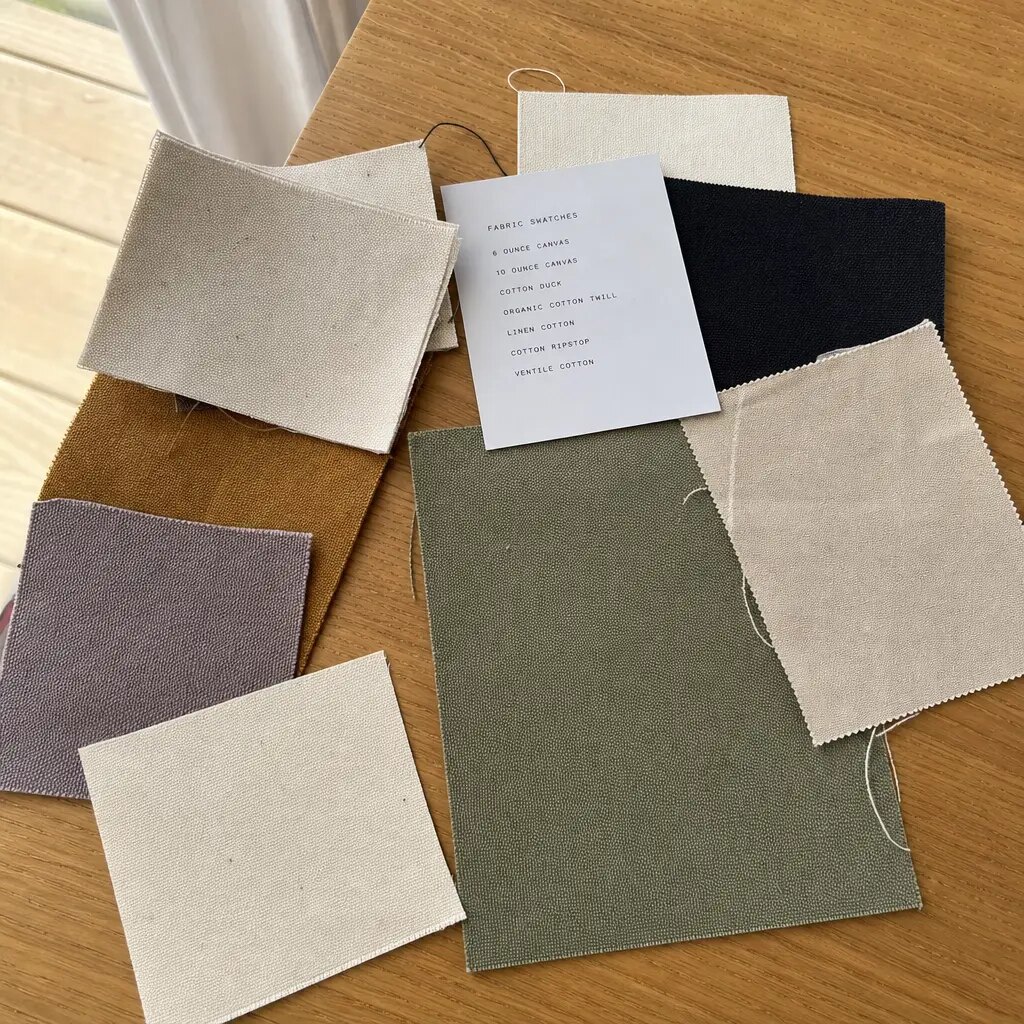
Canvas messenger bags are often compared by ounce, but buyers should also request GSM because fabric construction varies between mills. A 12 oz canvas may feel firm from one supplier and soft from another depending on yarn, weave density, finishing, and whether it is washed. As a working guide, 12 oz canvas is commonly around 380 to 410 GSM, 14 oz around 450 to 480 GSM, and 16 oz around 500 to 540 GSM. These ranges are not universal, so the approved sample must control the final decision.
The heavier fabric is not always the better buy. Heavier canvas increases material cost, sewing difficulty, carton weight, and sometimes import freight cost. It can also make the flap bulky if the design has double layers or thick binding. For hotel retail, the right choice is the lightest fabric that still supports the expected retail positioning and use. A soft 12 oz bag may be enough for a beach hotel souvenir, while a city travel shop may need 14 oz or 16 oz to avoid looking like a promotional item.
- Request fabric weight in oz and GSM, plus actual cutting sample or swatch before final quote comparison.
- Confirm whether the quoted canvas is natural, bleached, dyed, washed, enzyme-washed, or coated.
- Avoid switching fabric weight after sample approval unless the factory requotes sewing time and carton data.
- For dyed canvas, include colorfastness and shade band expectations in the sample approval record.
Control the Construction Before Comparing Prices
The construction of a messenger bag changes cost as much as fabric weight. A basic flap bag with one large compartment and a fixed webbing strap is fast to sew. Adding an adjustable slider, inner zipper pocket, front pocket, magnetic snaps, binding, piping, lining, or rivets changes labor time and defect risk. If suppliers quote without the same construction drawing, the cheapest price may simply be missing operations that another factory included.
For hotel retail, the highest-risk areas are strap joints, flap corners, pocket openings, and closure alignment. These points receive pulling, folding, and repeated handling on the shop floor. A proper RFQ should define reinforcement rather than leaving it to the factory. For example, state whether strap ends need box stitching, cross stitching, bartack, or rivets. If the bag carries bottled water, travel guides, or guest items, the strap reinforcement is not decorative; it is a safety and returns issue.
- Define finished size, gusset depth, flap height, and strap drop with measurement tolerance.
- Specify fixed or adjustable strap, strap width, and whether cotton webbing or polyester webbing is acceptable.
- List every pocket, zipper, snap, buckle, rivet, lining, label, and hangtag as separate quote items.
- Use the approved sample as the construction standard, but keep a written spec sheet to avoid interpretation disputes.
Build MOQ Around Real Cost Drivers
MOQ for canvas messenger bags is not one number. The body fabric, fabric dyeing, custom webbing, hardware finish, woven label, printed label, hangtag, carton mark, and final assembly can each have a different minimum. A supplier may accept 300 pieces for a simple natural canvas bag with screen print, but the same bag in custom dyed canvas with branded hardware may need a much higher MOQ because the mill, dye house, or trim supplier sets the minimum.
A good bulk pricing plan separates the price breaks from the reasons behind them. At low quantity, setup cost, cutting waste, sample handling, and line changeover are spread over fewer bags. At higher quantity, the fabric yield is better, printing setup is diluted, and sewing line efficiency improves. The buyer should request tiered pricing using the same specification, not cheaper construction at higher volume. Otherwise procurement cannot see whether the price break is from volume efficiency or from an unapproved spec reduction.
- Quote tiers should use the same fabric, logo size, packing, trims, and inspection standard.
- For custom dyed canvas, request the dye lot MOQ and the expected overage or shortage tolerance.
- For woven labels, clarify whether the label MOQ exceeds the bag order and who owns leftover labels.
- For repeat orders, negotiate holding trim inventory only after sales forecast and storage responsibility are clear.
Select Printing and Branding for Production Reality
Most hotel retail messenger bags use screen print, embroidery, woven label, leather patch, rubber patch, or a combination. Screen print is usually the most controlled option for clear logos on canvas, especially with one to three solid colors. Embroidery can look more premium, but dense stitches may pucker lighter canvas or distort thin logo details. Woven labels are cost-efficient for a subtle retail finish and are less exposed to abrasion than large prints on the flap.
The logo position matters. Printing across a flap fold, over seam thickness, or too close to the edge can create uneven ink coverage and alignment problems. If the hotel brand requires exact PMS matching, the buyer should understand that natural canvas color influences the visible ink tone. A white underbase may be needed on dark dyed canvas, adding cost and another production variable. Artwork approval should include print size, placement reference, color standard, and acceptable deviation.
- Use vector artwork and state logo width, height, PMS colors, and print position from seam or flap edge.
- For screen print, define ink type, number of colors, underbase requirement, and curing expectations.
- For embroidery, test stitch density on the actual bulk fabric before approving the final logo size.
- For woven labels, approve label size, fold type, sewing position, and whether the label touches the skin or contents.
Use Sample Approval as a Cost Lock
Sampling should not be treated as a design formality. It is the point where cost, appearance, construction, and production method become locked. A first prototype can be made from available fabric to test size and construction, but the pre-production sample should use actual bulk fabric, approved trims, real logo method, and intended packing. If the factory cannot make this sample, the buyer should not assume mass production will be smoother.
The sample record should include photos, measurements, material notes, print details, and defect corrections. Many disputes start because the buyer approved the look but not the hidden details, such as strap reinforcement, zipper quality, canvas GSM, or carton packing. For bulk pricing, the approved pre-production sample is also the reference for whether a later quote remains valid. Any change after this stage should trigger a formal price and lead time review.
- Measure width, height, gusset, flap, pocket, strap length, and strap drop on the approved sample.
- Cut open or inspect one sample to verify seam allowance, reinforcement, lining, and hidden trim quality.
- Test snap strength, zipper movement, strap pull feel, and flap alignment before signing off.
- Keep one sealed approval sample at the buyer side and one at the factory side for inspection reference.
Request Quote Data That Can Be Compared
A supplier quote should show more than unit price. For canvas messenger bags for hotel retail bulk pricing plan decisions, the quote should identify fabric weight, logo method, sample cost, setup charges, MOQ, tiered unit prices, packing assumptions, carton data, production lead time, payment terms, and trade term. Without this data, procurement may choose a low unit price that becomes more expensive after artwork, packing, inspection, or freight details are added.
Importers and distributors should also compare quote validity. Cotton fabric prices, exchange rates, dyeing capacity, and shipping conditions can change. A quote that is valid for a short time may be reasonable, but the supplier should clearly state what triggers adjustment. If a hotel group needs a program price for several properties, the buyer can request a framework quote: confirmed first order price, repeat order price logic, and conditions for holding the same fabric and trims.
- Ask whether setup charges are included or listed separately for printing, embroidery, labels, and tooling.
- Require carton dimensions and gross weight because messenger bags can create freight surprises.
- Clarify whether the price is EXW, FOB, CIF, DDP, or another trade term before comparing suppliers.
- For repeat programs, request reorder MOQ, lead time, and whether fabric shade may vary between lots.
Plan Packing for Retail and Freight
Packing affects both shelf presentation and landed cost. A flat-packed messenger bag usually saves carton volume and keeps the flap cleaner than random bulk packing. However, metal hardware, buckles, and snaps can mark the canvas if the bag is compressed without protection. For natural or light-colored canvas, moisture and carton dust can also create visible stains. The packing instruction should balance cost, protection, and the hotel retailer's unpacking process.
Retail buyers often need hangtags, barcode stickers, belly bands, paper wraps, or individual polybags. Each option affects labor cost and packing speed. If the hotel brand has sustainability rules, the buyer should define whether recycled polybag, paper band, plastic-free packing, or master-carton-only packing is acceptable. The factory should quote the exact method instead of assuming the cheapest packing. Carton size and gross weight should be approved before bulk packing starts, especially for air shipments or mixed container loading.
- Define individual packing: none, paper band, polybag, recycled polybag, tissue wrap, or retail sleeve.
- State hangtag, barcode, price sticker, warning label, and country-of-origin label requirements.
- Set carton quantity by finished bag size and hardware protection, not only by target carton count.
- Request carton drop suitability or stronger export cartons when bags ship through multiple warehouses.
Protect the Schedule From Hidden Delays
Lead time should be broken into stages: artwork confirmation, material sourcing, sample making, sample revision, fabric production or dyeing, cutting, printing, sewing, finishing, inspection, packing, and export booking. A quoted lead time that starts after deposit may still be unrealistic if artwork, labels, or packing files are not ready. Hotel retail programs are often tied to opening dates, seasonal travel periods, or event calendars, so the schedule risk needs to be visible before the purchase order.
The most common delays are custom dyed fabric, late logo approval, failed print trial, missing barcode data, and slow pre-shipment inspection booking. Buyers can reduce risk by approving neutral canvas and standard trims when timing is tight. If a custom color or special hardware is non-negotiable, the schedule should include buffer for lab dips, trim sampling, and possible rework. A practical plan is to freeze the specification before deposit and freeze the packing file before bulk sewing ends.
- For stock natural canvas with simple print, sampling and production are usually faster than custom dyed fabric.
- For custom dyed canvas, build in time for lab dip approval, bulk dyeing, drying, and shade inspection.
- For embroidery or complex printing, schedule a strike-off approval before cutting all panels if possible.
- Book final inspection after packing quantity is sufficient, not on the same day goods must leave the factory.
Set Acceptance Criteria Before Shipment
Quality control should be measurable. For canvas messenger bags, visual defects such as stains, oil marks, weaving defects, crooked flaps, poor printing, and loose threads are common inspection points. Functional defects include weak strap joints, broken snaps, rough hardware, zipper failure, and incorrect pocket construction. Measurement defects include wrong bag size, uneven flap, strap length error, and inconsistent gusset depth. Procurement should define which defects are critical, major, and minor before production starts.
For bulk hotel retail orders, an AQL inspection is often more useful than a casual photo check. The buyer can specify inspection level, sample size, defect limits, and carton selection method. Photos are still useful during production, especially for first output inspection and packing confirmation, but they do not replace random finished-goods inspection. The approved sample, spec sheet, packing instruction, and purchase order should all be available to the inspector so judgment is based on agreed standards, not personal preference.
- Critical defects include unsafe sharp hardware, broken strap attachment, wrong logo, mold, and severe contamination.
- Major defects include visibly crooked print, weak stitching, wrong size beyond tolerance, missing label, or poor closure function.
- Minor defects include small loose threads, slight shade variation within approved band, or minor removable marks.
- Inspection should verify product, packing, carton marks, quantity, barcode, and shipping document consistency.
Specification comparison for buyers
| Spec decision | Recommended option | When it fits | Buyer risk to check |
|---|---|---|---|
| Direct factory bulk order | One confirmed construction with tiered quantities for 500, 1000, 3000, and 5000 pieces | Best for hotel chains, distributors, and retail programs needing repeatable unit cost and consistent trims | Confirm whether the same fabric lot, strap width, print setup, and packing method are used across all price tiers |
| Trading company or consolidator | Use when combining messenger bags with other amenities or gift shop items in one shipment | Works for buyers who need mixed cartons, multi-supplier coordination, or smaller total bag volume | Require factory name, production photos, pre-shipment inspection access, and clear responsibility for defects |
| Stock blank bag with decoration | Choose an existing body size in 12 oz or 14 oz canvas and add screen print or woven label | Good for fast hotel openings, seasonal retail drops, or low-risk souvenir programs | Check available inventory, dye lot consistency, shrinkage after pressing, and whether stock bags match retail hangtag claims |
| Fully custom construction | Specify fabric GSM, flap shape, strap length, pocket layout, hardware, and retail packaging from the start | Best when the bag is part of a branded merchandise line or has a target retail price point | Prototype cost, pattern tolerance, sample rounds, and longer lead time must be included in the pricing plan |
| Fabric weight choice | 12 oz to 16 oz cotton canvas, usually 380 to 540 GSM depending on weave and finish | 12 oz suits lightweight gift shop bags; 14 oz to 16 oz suits premium retail and daily-use positioning | Do not compare only by ounce; request GSM, yarn count if available, finish, shrinkage, and actual handfeel sample |
| Decoration route | Screen print for solid hotel logos, embroidery for premium marks, woven label for understated branding | Screen print gives the cleanest cost control for 1 to 3 colors on canvas messenger bags | Artwork size, ink coverage, PMS tolerance, placement on flap, and print cracking on folded areas affect reject rate |
| MOQ planning | Separate MOQ for body fabric, dyed fabric, custom hardware, woven label, and final bag assembly | Useful when procurement wants realistic price breaks instead of one blended quote | A low MOQ can hide higher fabric wastage, handwork cost, or shared production line scheduling delays |
| Packing method | Flat packed in polybag or paper band, 20 to 50 pieces per export carton depending on size and hardware | Flat packing keeps carton volume down for hotel retail bulk orders and protects flap shape | Confirm carton dimensions, gross weight, inner packing, barcodes, carton marks, and moisture protection before PO |
Buyer checklist before sampling
- Define the retail use case: hotel gift shop, staff merchandise, guest welcome kit, conference bag, or resort boutique item.
- Lock one target bag size with finished tolerance, not only an approximate inch or centimeter measurement.
- Specify canvas weight in both oz and GSM where possible, including whether the fabric is natural, dyed, washed, or coated.
- State strap width, strap length, reinforcement method, and whether the shoulder strap is adjustable or fixed.
- Confirm pocket layout, flap closure, hardware finish, and whether metal parts need anti-rust protection for humid hotel locations.
- Send vector artwork with print size, PMS colors, placement distance from seam, and acceptable logo tolerance.
- Request tiered prices using the same specification at practical quantities such as 500, 1000, 3000, and 5000 pieces.
- Ask for carton dimensions, pieces per carton, gross weight, packing material, and barcode or hangtag application cost.
- Approve a pre-production sample with actual bulk fabric, trims, print, label, and packing before mass cutting.
- Reserve time for incoming material inspection, printing approval, sewing inspection, final AQL inspection, and export documentation.
Factory quote questions to send
- What canvas weight, GSM, width, shrinkage rate, and finish are included in your quotation?
- Is the price based on stock fabric, greige fabric dyed to order, or a custom woven canvas lot?
- What are the separate MOQs for fabric color, logo print, woven label, hardware, and carton packing?
- Can you quote the same bag at 500, 1000, 3000, and 5000 pieces using identical specifications?
- Which print method is included, and how many logo colors, print positions, and setup charges are covered?
- What is the sample cost, sample lead time, and number of revision rounds included before bulk production?
- What sewing reinforcement is used at strap joints, flap corners, pocket edges, and stress points?
- What packing method, carton size, carton weight, and export marks are assumed in the quote?
- What production lead time starts after deposit, artwork approval, fabric approval, or pre-production sample approval?
- Which inspection standard, AQL level, defect categories, and measurement tolerance will be used before shipment?
Quality-control points to confirm
- Finished bag size within agreed tolerance, commonly plus or minus 0.5 cm for main dimensions on standard messenger bags.
- Canvas GSM and handfeel match approved pre-production sample, with no mixed fabric lots unless authorized.
- Print placement remains centered and within agreed tolerance from flap edge, seam, or pocket reference point.
- Ink adhesion passes rub testing after drying, especially on darker dyed canvas or heavy ink coverage.
- Strap joints use reinforced stitching, bartack, box stitch, or cross stitch according to the approved sample.
- Metal snaps, buckles, sliders, and rivets are secure, aligned, and free from sharp edges or rust marks.
- Flap closes naturally without twisting, puckering, or pulling the main body out of shape.
- Loose threads, skipped stitches, oil marks, stains, and fabric slubs are controlled by agreed defect limits.
- Inner pockets, labels, hangtags, and barcodes match the purchase order and retail packing instruction.
- Cartons meet agreed strength, weight, moisture protection, shipping marks, and pallet or container loading requirements.