What procurement buyers should optimize first
For tech startups, the buying decision is rarely about style alone. The real job is to source a canvas messenger bag that protects a laptop, carries enough daily gear to be useful, and still looks credible when it lands in front of employees, clients, or event attendees. When the order is wholesale, those needs have to be translated into a spec that a factory can actually build and a procurement team can actually compare.
The fastest way to lose control is to start with decoration. A logo can be changed later. A wrong bag structure is much harder to fix. If the carry load is underestimated, the bag may sag, the strap may bite into the shoulder, or the base may collapse after a few weeks of use. If the carton plan is weak, the bags can arrive wrinkled, crushed, or mispacked even when the sewing itself is fine.
So the first decision is not the color or the print. It is the use case. A conference giveaway bag can tolerate lighter canvas and simpler construction. An employee commuter bag needs better strap reinforcement and a more serious fit for a laptop. A retail SKU needs tighter appearance control because customers will compare it against every other bag on shelf. A client gift sits somewhere in between, but the presentation still has to feel intentional.
That is why a procurement checklist matters. It turns the buying brief into measurable choices: bag size, fabric weight, logo method, MOQ logic, packing, and inspection criteria. Once those items are defined, supplier quotes become useful. Before that, the numbers are mostly guesses with different assumptions buried inside them.
- Define the use case before discussing decoration or packaging.
- Set the laptop fit target first; it drives body size, gusset depth, and load stress.
- Treat the RFQ as a technical document, not just a request for a price.
Fabric weight, weave, and finish: the base spec that drives everything
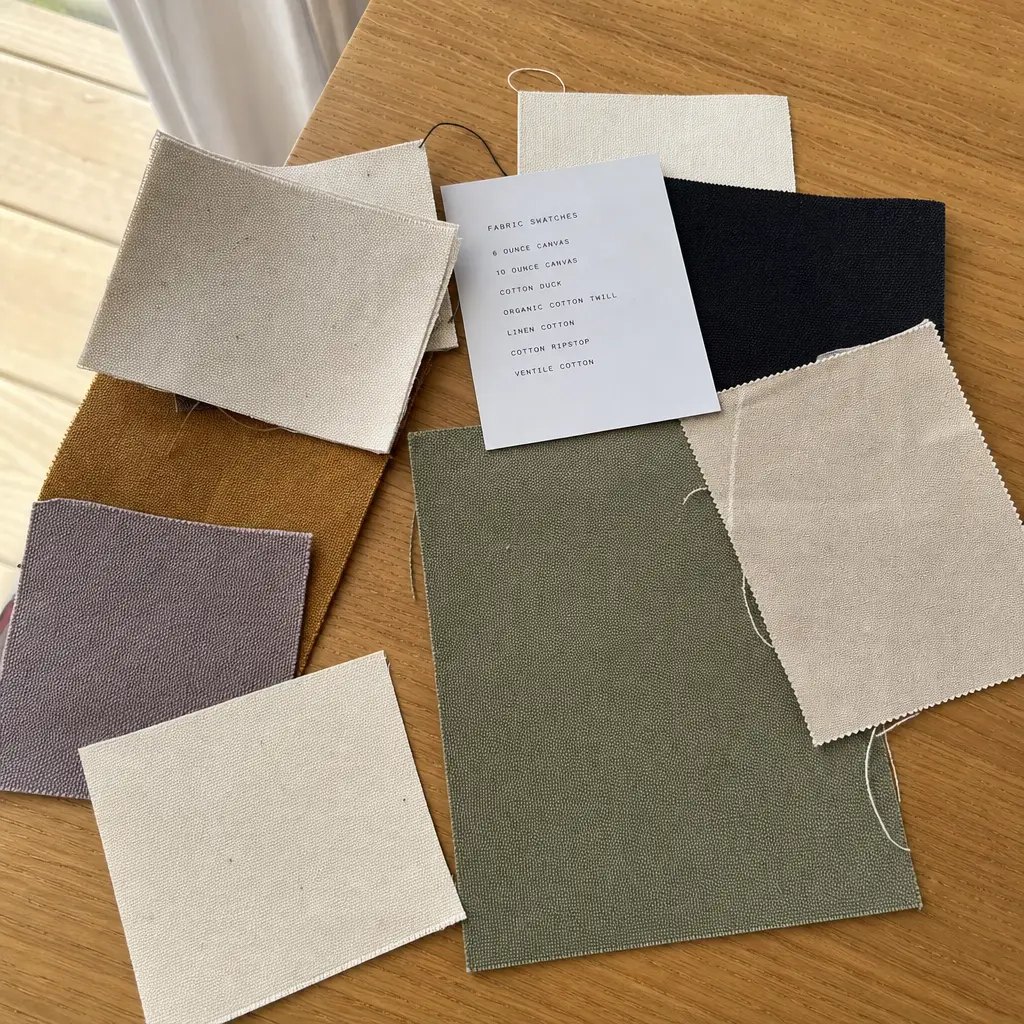
Canvas messenger bags are commonly sourced in the 10 oz to 16 oz range, but the right choice depends on the balance between structure, comfort, and freight cost. For many startup programs, 12 oz to 14 oz cotton canvas is the most practical middle ground. It has enough body for daily use without becoming so heavy that the bag is awkward to carry or expensive to ship in bulk.
Ask suppliers to quote the fabric in numbers, not adjectives. That means GSM or ounce weight, weave type, whether the canvas is pre-shrunk, and whether it is raw, washed, or enzyme-treated. Those details matter because canvas changes after finishing. A washed canvas can feel softer and appear more relaxed. A tighter untreated weave may hold shape better but can be stiffer to sew and more sensitive to shrinkage after the first wash or humid transit.
The weave also affects decoration. A tight, even weave usually gives cleaner print edges and more predictable cutting. A looser weave can feather printed edges, distort seams, and make the bag appear less refined than the sample photo. If the canvas is dyed, ask about shade control between lots. For repeat orders, even a subtle color shift can make a replenishment look like the wrong product.
Buyers should also think about how structure is created. If the bag needs a sharper silhouette, it may be better to add lining, interfacing, or a hidden reinforcement panel instead of simply going to a heavier canvas. That keeps the bag comfortable while still preventing the soft, collapsed look that sometimes appears after repeated use. In other words, the fabric spec should support the intended shape, not fight it.
- 10 oz to 11 oz: lighter and cheaper, but test load-bearing and shape retention carefully.
- 12 oz to 14 oz: balanced for most branded corporate and retail programs.
- 15 oz to 16 oz: stronger body and more premium hand feel, but higher weight and harder sewing.
Bag architecture: dimensions, laptop fit, and structural details
A messenger bag spec is more than a body size. Real usability depends on the usable interior width, gusset depth, opening angle, and whether the bag includes a padded sleeve or organizer panel. For tech buyers, the first question should be what device the bag must actually hold. A product that says it fits a 15-inch laptop may still be impractical if the opening is too narrow or the internal pocket steals the space needed for charging cables and a notebook.
Dimensions should be written as finished measurements with a clear tolerance. A useful RFQ should list body width, height, and gusset depth, plus any internal pocket dimensions if the design includes organizers. If the bag uses a flap, magnetic snap, zipper top, or buckle closure, ask where the usable opening begins and ends. Those details change the carrying capacity far more than a marketing description does.
Strap geometry deserves the same attention. Buyers often ask for an adjustable shoulder strap, but adjustment range matters more than the word adjustable. Ask for the shortest and longest carry length, the strap width, webbing thickness, and whether the shoulder pad is fixed or movable. A narrow strap may be acceptable for a light promotional bag. For an employee commuter bag with a laptop and charger, it can become a comfort problem quickly.
If the bag includes pockets, state their purpose. A front slip pocket sounds simple, but it can change the front panel shape, add sewing time, and affect the position of the logo. Interior divider pockets can also steal depth from the main compartment. The procurement team should decide which features are truly functional and which are just nice to have. That keeps the quote focused and avoids overbuilding the bag for a use case that does not need it.
- Record finished body width, height, and gusset depth on the RFQ.
- Specify the target device size, not just a general laptop bag description.
- Ask for strap adjustment range and shoulder pad detail, not only strap length.
Print method and branding control for startup logos
For most canvas messenger bags, screen printing is the most practical starting point for startup branding. It works well for one to three solid colors, gives repeatable results, and is easier to price across suppliers than more decorative methods. On canvas, screen print also handles larger logo areas well when the factory controls ink deposit and curing properly. For procurement teams, the appeal is simple: once the screen setup is approved, the same artwork is easier to reproduce on the next order.
Embroidery can be a strong choice when the brand wants a more premium look or a smaller mark. It also brings more variables into the conversation. Stitch density, underlay, backing visibility, and puckering all need checking on the actual canvas. A dense embroidered logo on the front panel can distort the fabric or create a raised area that affects carton stacking. If the logo is small and the artwork is simple, embroidery may work well; if the mark is detailed, it should be tested carefully before becoming the production standard.
Heat transfer and digital transfer are often useful for sampling or very short runs, but they are not automatically the best wholesale choice. On textured canvas, transfers can lift at the edges, show a gloss difference, or wear faster in flex points. If the buyer expects daily use, ask the supplier for actual rub expectations rather than a generic durability claim. It is better to know the limits in advance than to discover them after the bags have been distributed.
The key is to match the print method to the texture and to the order profile. A simple branded program with repeat orders usually favors screen print. A premium internal gift may justify embroidery. A sample order may use a transfer if the goal is only to validate placement and proportion before production. The method should serve the business case, not the other way around.
- Screen print: best for 1-3 color logos and repeat orders.
- Embroidery: best for small premium marks, but test for puckering and backing visibility.
- Transfers: useful for sampling, but confirm edge adhesion and flex durability before bulk.
Supplier routes and how to compare them fairly
A fair quote comparison starts by identifying who is really making the bag. Direct factories usually give the most control over fabric sourcing, sewing, printing, and packing, but they require a stronger tech pack and faster decisions from the buyer. Trading companies can simplify coordination and may be helpful for mixed-product orders, but they sometimes bundle costs in ways that hide where the margin sits. Local decorators can be convenient when the bag body is already fixed, but they are not always the right route when construction quality needs to be controlled.
The right route depends on the level of transparency required. If the bag will be reordered, retailed, or distributed as a long-running startup merch item, direct factory sourcing is usually worth the extra documentation. If the order is small and time-sensitive, a trading route can still work, but only if the supplier gives a line-item quote and clearly explains what is included in the unit price. Without that breakdown, it is hard to benchmark the offer or compare it with another source.
Ask each supplier the same questions in the same format. Otherwise, one factory may be quoting a lighter bag with fewer reinforcements, while another is quoting the complete spec you actually want. Those numbers are not comparable even if they look similar on the page. Procurement buyers save the most time when the quote template removes room for interpretation and forces every supplier to answer the same spec, the same trade term, and the same pack plan.
- Direct factory: best for repeatability, documentation, and cost transparency.
- Trading company: workable for small or multi-SKU orders if line-item pricing is clear.
- Local decorator: useful for decoration only, but limited for bag construction control.
The RFQ checklist that prevents quote drift
A strong RFQ makes suppliers quote the same item. For canvas messenger bags, the minimum technical detail should include finished dimensions, canvas weight, weave or finish, lining requirement, closure type, strap width, reinforcement points, logo art file, print method, color count, packing method, and target trade term. If any of those are missing, the factory will fill the gap with a default assumption. That is usually where the hidden cost starts.
The checklist below is the practical minimum for a procurement team. It is not about writing a long document for the sake of it. It is about eliminating the places where suppliers make assumptions, then later say the quote was based on their standard construction. If the order is for a startup merchandise program, the RFQ should be detailed enough that a second factory could quote the same item without asking basic follow-up questions.
A helpful addition is a visual reference sheet. Include one approved product photo or drawing, a color reference if the bag uses Pantone-matched branding, and a short note on which parts are fixed and which are open to supplier recommendation. For example, a buyer might allow hardware finish substitutions but not a different bag width or a lighter fabric. That kind of clarity speeds up sourcing and makes sample approval much smoother.
- Bag dimensions, gusset depth, and laptop fit target.
- Canvas weight, weave type, lining requirement, and finish.
- Logo artwork, print method, logo size, and placement tolerance.
- Hardware type, zipper spec, strap width, and reinforcement points.
- Pack count, carton dimensions, carton marks, and trade term.
MOQ, price breaks, and the hidden drivers behind unit cost
MOQ on canvas messenger bags is rarely driven by the bag body alone. It can be set by fabric color minimums, screen setup, lining color, hardware finish, or packing constraints. That is why two suppliers can quote the same style and still produce very different MOQ numbers. Ask directly what component is setting the MOQ and whether changing one element can reduce it. Without that answer, a low MOQ may be more of a marketing number than a real production threshold.
Unit cost usually moves most with fabric weight, number of pockets, lining material, print color count, closure style, and hardware selection. A padded laptop sleeve, organizer pockets, or premium metal zipper adds labor and materials faster than many buyers expect. The safest procurement move is to lock the base bag first and only add features that support the actual use case. Every extra detail should have a commercial purpose, not just a design preference.
Comparing quotes also means separating one-time charges from recurring costs. Screen setup, artwork conversion, mold charges, and sampling fees should be listed clearly. If they are buried inside the unit price, the order may look cheaper than it really is, especially at lower volumes. Good suppliers can explain which charges repeat every batch and which are one-time only. That conversation often reveals the true cost structure faster than a spreadsheet does.
- Ask what actually sets MOQ: fabric, print setup, hardware, or packing.
- Freeze the base structure first, then add pockets or premium trims selectively.
- Separate one-time setup charges from recurring unit costs in every quote.
Sample approval: what to inspect before bulk production starts
A sample is not approved just because the logo looks right. It has to prove the bag works in use. Load the sample with the heaviest expected contents, such as a laptop, charger, notebook, and a small accessory pouch. Then check how it rides on the shoulder, whether the flap or zipper closes without strain, and whether the base holds shape when the bag is set down. A bag that looks neat in an empty photo but collapses under real load is not ready for bulk.
The sample stage should confirm the production-critical details. Measure final dimensions, inspect seam consistency, check strap reinforcement, and verify that print placement matches the approved drawing or reference sample. A photo proof is useful for fast alignment, but it does not replace a physical sample when the order includes structure, multiple pockets, or a specific laptop fit. For more complex programs, request pre-production photos of the main seam, zipper end, inside pocket, and carton label before the line starts full cutting.
If any part of the sample is off, document it before approving production. The common mistake is to say the sample is close enough and assume the factory will correct it automatically. Usually, that only creates drift later. Clear sample comments reduce the chance of rework, especially when the logo, panel size, or material changes after the first round. When the spec changes materially, reset the approval step rather than treating it as a small adjustment.
- Test the sample with the heaviest expected daily load.
- Measure logo placement and key dimensions against a reference, not memory.
- Check seam reinforcement, zipper feel, and strap comfort under use.
- Request pre-production photos when the order has multiple colors, pockets, or trims.
Quality-control tolerances buyers should write into the order
Quality control is stronger when the buyer states tolerances before production. A procurement team should not simply ask for good workmanship. It should define what counts as acceptable on dimensions, decoration, appearance, and packing. For a canvas messenger bag, that can include a practical dimension tolerance on body size, a placement tolerance for the logo, and clear language on acceptable shading, broken stitches, or loose threads. The more measurable the rule, the easier it is to enforce later.
For sizing, use tolerances that match real manufacturing capability rather than ideal precision. A practical approach is a modest tolerance on overall body dimensions and a tighter one on visible branding placement. The actual numbers should be agreed with the supplier before cutting starts. Logo placement usually deserves more control than the bag body because buyers and end users notice it immediately, especially when the bag is used as branded merch.
Workmanship checks should focus on stress points. Strap ends, side seams, pocket tops, zipper stops, and flap corners are the places where failure usually appears first. Ask the factory what internal test it uses for pull strength or seam security and record the method in the PO or spec sheet if the bag will be used every day. If the order is retail facing, define what cosmetic flaws are rejectable too, such as stain marks, broken yarns, mis-threaded webbing, or uneven topstitch lines.
Packing QC deserves its own line item. A good product can still arrive damaged if cartons are overfilled, labels are wrong, or the bag shape is compressed too tightly. Include carton count, net and gross weight, carton marks, and whether the goods are folded, stuffed, or flat-packed. If the bags are going to a warehouse with barcode receiving, make sure the carton label matches the SKU and purchase order format.
- State size tolerances before cutting, not after inspection.
- Tighten the tolerance on logo placement more than on bag body dimensions.
- Define stress-point checks at straps, seams, pocket tops, and zipper ends.
- Add packing and labeling requirements to the QC sheet, not just the product spec.
Packing, carton planning, and freight damage prevention
Packing affects both landed cost and product quality. A messenger bag can be compressed too much in a master carton and come out with permanent strap creases or flattened structure. It can also be packed too loosely and shift during transit, which creates scuffing and carton damage. Buyers should ask the supplier to propose the packing method, then review whether it protects the bag shape and still keeps freight density reasonable.
The packing spec should state whether the bag is folded, lightly stuffed, or flat-packed, whether each piece is individually polybagged or wrapped in tissue, and how many pieces go into each carton. If the order is humidity-sensitive, ask whether desiccant or moisture protection is included. Also ask for master carton dimensions and gross weight, because that information is needed for freight quotes and warehouse handling rules. A carton that looks efficient on paper may be too heavy to handle comfortably at destination.
Export buyers should also think about transit handling. Cartons need enough edge strength to survive stacking and loading without collapsing corners. If the bags are premium retail items, ask for a packaging test sample or a carton photo after final pack-out. That gives the buyer a chance to see how the bags sit in the carton before the entire production run is locked in. It is far easier to adjust the pack plan early than to discover crushed corners after the shipment lands.
- Use a packing method that protects shape without overcompressing the body.
- Confirm master carton size, gross weight, and piece count before freight booking.
- Add SKU marks and carton labels that match receiving requirements at destination.
- Ask for carton photos or a pack-out sample if the item is retail facing.
Specification comparison for buyers
| Spec decision | Recommended option | When it fits | Buyer risk to check |
|---|---|---|---|
| Fabric weight | 12 oz to 14 oz cotton canvas; specify GSM if supplier works in metric | Best for daily commuting, laptop carry, and branded retail use | Too light can collapse or bag out; too heavy raises sewing resistance, freight weight, and carton compression risk |
| Canvas construction | Plain woven cotton canvas with a tight, even weave and consistent yarn count | Good for clean print edges and predictable pattern cutting | Loose weave can feather print edges, distort seams, and vary in panel shrinkage |
| Main print method | Screen print for 1-3 colors; embroidery only for small premium marks; heat transfer for short-run sampling | Best when artwork is simple and repeatable across orders | Fine details can fill in, crack, or lift if the method does not match the canvas texture |
| Supplier route | Direct factory sourcing with a complete tech pack and line-item quote | Best for volume control, custom trims, and repeat replenishment | Weak documentation can hide fabric substitution, finish changes, or packing drift |
| MOQ logic | Set MOQ by fabric color, print setup, and hardware variation, not only by bag style | Useful when one bag body supports several logo or trim variants | MOQ confusion makes quotes look cheaper than they are and blocks apples-to-apples comparison |
| Closure and hardware | Zipper top or flap closure with reinforced stitching, durable zipper tape, and corrosion-resistant hardware | Good for commuter use and higher perceived value | Weak anchoring, thin webbing, or poor plating can fail under load or humidity |
| Packing method | Individual polybag or tissue wrap plus export master carton with SKU label and carton mark | Suitable for export, warehouse receiving, and retail intake | Overpacked cartons crush gussets and straps; underpacked cartons increase transit scuffing |
| Lead time model | Sample approval first, then production after deposit, with a separate schedule for materials and print setup | Reasonable for custom orders with normal seasonal load | Ignoring sample, material booking, and inspection time makes the delivery calendar unrealistically short |
| Cost comparison route | Quote on the same trade term and request ex-factory plus packed carton and landed estimates | Best for comparing factories, decorators, and forwarders fairly | Comparing unit price alone hides freight, carton cost, duties, and local delivery exposure |
Buyer checklist before sampling
- Confirm the use case: conference giveaway, employee commuter bag, retail merch item, or client gift.
- Set the laptop target first: 13-inch, 14-inch, or 15-inch fit drives body width, gusset depth, padding, and strap load.
- Lock the fabric spec in measurable terms: canvas weight in oz or GSM, weave type, finish, and whether pre-shrunk or washed.
- Define the bag dimensions, gusset depth, strap width, strap adjustment range, and pocket count before requesting a quote.
- Specify the closure type, zipper gauge if applicable, hardware finish, and reinforcement points at strap anchors.
- State the print method, logo size, number of colors, and acceptable placement tolerance on the finished bag.
- Ask suppliers to quote the same basis: EXW, FOB, or landed, and separate bag cost from print, packing, and freight.
- Request a physical sample or pre-production photo set before bulk cutting, with close-ups of seams, logo, and hardware.
- Approve carton size, quantity per carton, net and gross weight, and any pallet or warehouse labeling requirement.
- Set an inspection plan with dimensional tolerances, visual defect thresholds, and random sample size before shipment.
Factory quote questions to send
- What exact canvas weight are you quoting, in GSM or oz, and can you share a swatch or previous production reference?
- What is the weave count or weave density, and do you pre-shrink or wash the canvas before cutting?
- What are the exact finished bag dimensions, gusset depth, seam allowance, and internal fit target for the laptop size?
- Which component actually drives MOQ: fabric color, print screens, hardware finish, lining color, or carton packing?
- Which print method are you recommending for this artwork, and what are your expected limits for edge sharpness, color match, and rub resistance?
- Can you quote EXW, FOB, and packed carton cost separately, and list any separate screen, plate, or setup charge?
- What are the strap width, webbing thickness, stitch pattern, and reinforcement spec at the strap anchors?
- What is the zipper spec if applicable: size, tape type, slider style, puller finish, and source brand or equivalent?
- How many samples are included before bulk approval, and what exact change triggers a new sample charge or new lead time?
- What carton size, piece count per carton, gross weight, and master carton mark are you proposing?
Quality-control points to confirm
- Fabric weight should stay within an agreed tolerance, typically within about ±5% of the specified GSM or oz unless the factory’s standard is tighter and documented.
- Panel-to-panel shade should be visually consistent under daylight and warehouse light; reject obvious shade bands, streaks, or dye lot mismatch.
- Cut dimensions should match the approved pattern within a practical tolerance, commonly around ±0.25 inch for key body dimensions and tighter on visible logos or pocket placement if the design is simple.
- Logo placement should be measured from fixed reference points such as top edge and side seam, with placement drift capped before production; do not rely on visual judgment alone.
- Stitching should be even, with no skipped stitches, loose thread tails, broken seams, or obvious tension imbalance at strap ends, side seams, and pocket edges.
- Reinforcement points should be pull-tested manually or with a defined load check so strap anchors do not pop or elongate under normal carry weight.
- Print should be legible after flexing; reject cracking, bleeding, mis-registration, or ink build-up that bridges canvas texture.
- Zippers should run smoothly through repeated open-close cycles, with no snagging, wave, or tape distortion, and the puller should sit square at rest.
- Hardware should be corrosion-resistant and firmly attached; loose rivets, bent sliders, or uneven plating are rejectable before shipment.
- Cartons should match the approved pack plan, with clear SKU marks, correct count, no corner crush, and no packing compression that warps the bag shape.