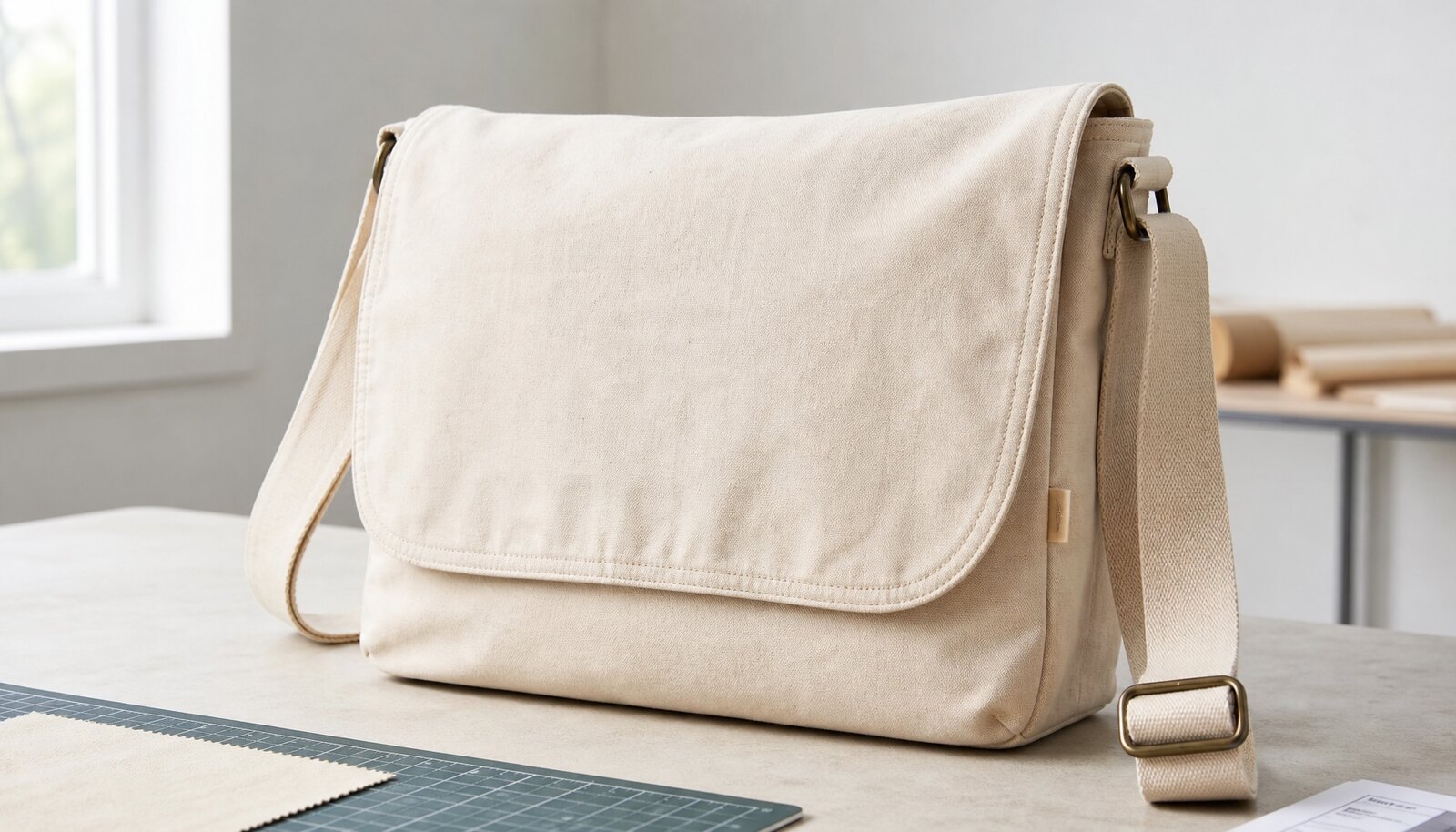
Why gift-shop messenger bags fail more often than they look
Canvas messenger bags for gift shops look simple on a line sheet, but the failure points are usually hidden in the details buyers do not write down. A bag can be technically usable and still get rejected by a retailer if the front panel is off-center, the strap sits awkwardly, the print breaks across a fold, or the carton arrives with crushed corners and loose thread inside the polybag. For gift-shop channels, presentation is part of product quality, not a separate concern.
The risk rises when the supplier is asked to produce several versions from the same base pattern. One order may include a natural souvenir messenger bag, a zip-top retail version, and a printed design with a pocket or label variation. Each change affects the sewing path, the pack-out method, and the inspection profile. If the spec is vague, the factory can legally hit the quote while missing the commercial intent. The buyer's job is to define the finished bag well enough that the sample, bulk run, and carton release all point to the same product.
Define the bag before you request quotes
The first sourcing decision is not the artwork. It is the product class. A light souvenir bag for impulse retail usually works on 10 oz to 12 oz canvas with a simple unlined structure. A more premium gift-shop messenger bag often sits in the 12 oz to 14 oz range because the extra body helps it stand up on a shelf, hold a cleaner fold, and feel closer to a branded retail item. Once you move into 14 oz and above, sewing resistance increases and the factory's needle control, seam consistency, and material handling discipline matter more.
A useful spec does more than name fabric weight. It identifies weave type, finish, color standard, and whether the cloth is natural, bleached, dyed, or prewashed. It also defines the size of the bag in measurable terms: body width, height, gusset or depth, strap width, strap length, pocket depth, closure type, and whether the interior is lined. For a gift shop program, that detail prevents one supplier from quoting a slim tourist bag while another quotes a heavier utility profile and both call it the same item. If the team wants repeatability, the quote has to start from the same pattern language.
Choose fabric and construction for shelf appeal, not just unit cost
Canvas buyers often focus on weight and miss the effect of construction. A looser weave can look softer and more rustic, but it may also absorb print differently and show more distortion after packing. A tighter weave usually gives a cleaner graphic edge and a neater shelf appearance, but it can increase cost and make some sewing operations slower. If the bag includes a flap, buckle, zipper, or structured pocket, the fabric choice affects how those elements sit after folding and how much reinforcement the factory needs at stress points.
Construction choices also drive defect risk. A flat bag body is faster and easier to inspect, but once you add a gusset, inner pocket, zipper, or decorative trim, you create more alignment points and more chances for mismatch. For a gift-shop line, the goal is not to maximize features. It is to pick the minimum set of features that supports the retail price point and the customer use case. If the bag is meant for postcards, small souvenirs, or light daily carry, overbuilding the pattern adds cost without helping sell-through. If it is supposed to feel like a branded retail item, then reinforced seams, cleaner edges, and a more stable shape are worth the extra sewing time.
Comparison table: pick the sourcing route that matches the spec
The cheapest supplier is not always the right supplier. For canvas messenger bags, the real question is how much control you need over fabric consistency, decoration placement, and pack-out quality. The same bag can be acceptable from a trading company and risky from a small factory, or the reverse, depending on how much documentation you need and how much variation you can tolerate across reorders. Use the table as a sourcing shortcut, not as a replacement for a sample check.
For buyers running gift-shop assortments, the tradeoff is usually speed versus control. A stock or semi-custom supplier gets you to market fast, but the cost of that speed is limited control over weight, color, and retail presentation. A bag-specialist factory usually gives a better balance because they already understand strap reinforcement, print alignment, and carton packing. Integrated OEM/ODM partners become more useful when the order is part of a private-label program and the production file needs to survive multiple seasons without drift.
Control artwork, labels, and trim before the sample is approved
Artwork is one of the most common sources of hidden variation because suppliers often treat it as a separate task from the bag itself. In reality, the decoration method changes the feel, cost, and failure mode of the product. Screen print usually makes sense for one- or two-color art at repeat volume because the edges are cleaner and the result is easier to repeat. Digital or transfer methods can work for colorful artwork or short runs, but they can change the surface feel and may age differently after handling. Buyers should decide the method based on the art and the reorder plan, not just the setup fee.
The same discipline applies to labels and trims. A woven side label, leather patch, metal badge, or printed neck label all affect the sewing path and the final retail presentation. The quote should make clear where the label sits, how it is attached, and whether the label is included in the base price or charged separately. The placement should avoid strap pressure points, fold lines, and areas where the bag is compressed in the carton. For gift-shop buyers, a crooked label or print that lands too close to a seam can be enough to make the product look cheaper than it is, even if the rest of the bag is sound.
Approve samples against the real production path
A sample is only useful if it represents the actual production path. If the pre-production sample uses a different canvas weight, different ink, different webbing, or a different folding method from the bulk order, it is a visual reference rather than a true approval sample. Procurement teams should treat that distinction seriously because many quality disputes start when a good-looking sample is approved and the factory later swaps materials to protect margin or simplify production. The sample should lock the finished bag, not just the look of the bag.
The approval check should mirror how the bag will be received in retail. Fold it the same way it will be packed, place it in the same polybag, and inspect it after compression. Then measure the body, strap, pocket, and print placement against the spec sheet. If the bag includes a zipper or flap, test how it closes after folding and reopening. A sample that looks excellent on a bench but deforms in packaging is not production-ready for a gift-shop shelf. Once the sample passes, freeze the BOM and packing method before the PO is issued.
Ask the factory questions that expose real capability
A clean quote is not proof of capability. The supplier should be able to show who will actually sew the bag, where the print happens, who does in-line inspection, and how the carton is packed. Ask for production evidence from a similar order: fabric roll photos, cutting layout photos, sewing-line photos, print strike-off photos, and a carton photo from a recent shipment. These are not marketing extras. They show whether the factory can maintain process control on a product that looks simple but still depends on accurate alignment and packing discipline.
The best RFQ questions are specific enough to force a useful answer. Ask for the exact canvas construction, the MOQ by color and artwork, the exclusions in the price, and the lead-time breakdown from artwork approval to shipment readiness. Ask what happens if the preferred color is not in stock, and who signs off on corrective action if an inspection finds a defect. If the supplier cannot answer clearly, that is a commercial risk even if the unit price looks good. For gift-shop programs, weak documentation usually becomes a weak reorder story.
Use inspection criteria that match how the bag actually fails
Inspection works best when it follows the real failure modes of the bag. Start with the front panel because that is what the retail buyer sees first. Check the fabric for color consistency, stains, oil marks, slubs that are outside the approved look, and any visible damage from cutting or sewing. Then inspect the print for alignment, edge clarity, coverage, and whether it shifts when the bag is folded. A print that looks fine flat but cracks or smears at the fold line is a retail problem even if the bag functions.
After the face check, move to the load-bearing areas. That means strap anchors, side seams, base corners, pocket openings, zipper attachments, and any seam that carries weight when the bag is full. Seams at those points should have no skipped stitches, open corners, or thread breaks. Reinforcement should cover the webbing cleanly, and the stitching should not cut into the canvas. A static hang test on sample verification pieces is useful because it reveals poor anchoring before you discover it in the field. For a gift-shop order, it is better to reject one weak batch than to absorb returns across multiple stores.
Package the bag like a retail item, not just a sewn product
Packing issues create avoidable claims because the retailer receives the bag as a finished consumer item, not as fabric and thread. The fold direction should be approved in advance so the bag lands consistently in the carton and the print is not crushed by the strap or the flap. Polybags should be clean, correctly sized, and sealed or open in the way the buyer requested. If the bag includes a hangtag, care label, or size sticker, their location should be fixed in the packing spec rather than left to the factory's default practice.
Master cartons need the same discipline. Carton counts, SKU allocation, inner packing method, and carton marks should all match the packing list exactly. A clean sewing line cannot save a mispacked shipment. If the goods are intended for gift shops, the packaging should arrive dry, odor-free, and visually presentable because buyers often open the carton and inspect the product immediately. That means the factory should check moisture, dust, and solvent smell before release, then photograph the packed cartons so there is a record if the shipment later needs to be traced.
Compare quotes on landed cost and reorder risk, not only unit price
The best quote is the one that holds up after the full order is built, packed, and shipped. Compare suppliers on landed cost, but include the parts that often get missed: setup fees, artwork charges, label charges, packaging costs, carton counts, inland handling, and the risk of rework if the sample is not truly production-aligned. A supplier that appears cheaper at the unit level can become more expensive once you split the order across multiple artwork versions or retail SKUs.
A good quote comparison worksheet should use the same spec, same packing method, and same delivery term for every supplier. Then score the supplier on four practical questions: can they prove the fabric, can they show a similar product in production, can they state the tolerances, and can they explain how a defect will be corrected before shipment. If one supplier is slightly higher but has stronger control of sample approval, final inspection, and reorder files, that is often the safer commercial choice for gift-shop programs. For canvas messenger bags, the cost of one bad shipment usually outweighs a small unit-price gap.
Specification comparison for buyers
| Sourcing route | Typical bag spec profile | QC and documentation maturity | Best-fit buyer use case | Main cost driver or risk to verify |
|---|---|---|---|---|
| Trading company | Usually standard 10-12 oz canvas, simple print, basic strap webbing, and stock hardware with limited pattern changes | Quality control depends on the trader's own discipline; ask who owns fabric booking, sewing, inspection, and carton release | Small teams that need faster quoting, mixed product bundles, or less factory management on the buyer side | Verify the actual factory, not just the seller; hidden handoffs can weaken print consistency, strap reinforcement, and sample traceability |
| Small direct factory | Often 10-14 oz canvas, straightforward gusset or flat body, basic lining, one main pocket, and limited trim complexity | Usually capable on sewing flexibility but may have uneven document control, measurement discipline, or reorder records | Gift shops, regional distributors, and brands that need moderate customization without a complex supply chain | Watch fabric substitutions, loose tolerance control, and pack-out drift when the order repeats or expands across SKUs |
| Bag-specialist factory | Typically 12-14 oz canvas, stronger seams, better strap anchoring, consistent print placement, and optional zippers or pockets | More likely to have bag-specific QC checks for stitch density, reinforcement, folding, and carton presentation | Retail programs that need repeatability, multi-SKU assortments, and fewer post-shipment claims | Often a slightly higher setup cost, but lower defect risk on seam failure, print misalignment, and carton rework |
| Integrated OEM/ODM factory | Can support 12-16 oz canvas, custom pattern work, specialty labels, branded hardware, and controlled pack-out specs | Usually strongest on process documentation, BOM control, and repeatable reorder files when the relationship is established | Private label buyers and gift-shop chains that need a reusable production file for seasonal reorders | Higher MOQ or tooling/setup charges may apply; confirm whether custom trims, labels, and inserts are included in the quote |
| Stock or semi-custom supplier | Works from existing bag bodies, usually 8-12 oz canvas with limited decoration, color, or trim changes | Fastest route to market, but QC tends to focus on visible presentation rather than detailed spec control | Seasonal gift-shop runs, promo programs, and test orders where speed matters more than full customization | Low unit price can hide weak control of body dimensions, artwork placement, strap length, and retail packaging quality |
| Material | 10-16 oz canvas, washed canvas, rPET canvas, lining fabric, interfacing, and hardware finish | Before price comparison | Different cloth weights, backing, or certification claims make quotes hard to compare | |
| Construction | flap shape, strap webbing, buckle, D-ring, inner pocket, zipper pocket, seam allowance, and load path | Before sampling | Weak stress points create returns and failed inspections | |
| Decoration | embroidery, woven patch, leather patch, metal label, or print placed away from flap folds and hardware pressure | Before artwork approval | The wrong method can crack, bleed, pucker, or fail on the chosen fabric |
Buyer checklist before sampling
- The spec sheet states the exact fabric weight in oz or GSM, weave type, finish, color standard, and whether the canvas is natural, bleached, dyed, prewashed, or washed for handfeel.
- The bag structure is defined in measurable terms: body width, height, gusset or depth, strap length, strap width, pocket count, closure type, and whether the bag needs a lined interior or an unlined utility build.
- The quote separates base bag cost, print setup, decoration cost, label cost, strap cost, lining cost, packaging cost, carton marks, and any inland handling or export fees.
- MOQ is confirmed by color, artwork version, and pack-out format, not only by a single total order number.
- The approved sample uses the same fabric, thread, hardware, print method, label format, and fold style that will be used in mass production.
- The buyer has written acceptance criteria for dimensions, logo placement, seam strength, thread cleanliness, odor, stain control, zipper function, and polybag condition.
- The supplier identifies which steps are handled in-house and which are outsourced: fabric sourcing, printing, sewing, bartacking, final inspection, packing, and carton marking.
- The supplier can share evidence from a similar order, such as cutting photos, in-line sewing photos, strike-off photos, packed carton photos, and a recent inspection report.
- The lead time is broken into sample approval, material booking, bulk sewing, finishing, final QC, packing, and shipment booking.
- The inspection plan names the defect categories, AQL target, critical defect rules, and the exact pass/fail rule for any item that will be sold directly to retail buyers.
Factory quote questions to send
- What exact canvas construction are you quoting, including oz or GSM, weave type, and whether the fabric is pre-shrunk, washed, or finished for a softer handfeel?
- Which factory will actually sew this bag, and which operations are in-house versus outsourced: printing, bartacking, label attachment, zipper installation, packing, and carton marking?
- What is the MOQ by fabric color, by artwork version, and by pack-out format, and how does pricing change if we split the order across multiple gift-shop SKUs?
- What is the exact decoration method, how many colors are included, and what setup charges apply for screens, plates, embroidery files, or digital preparation?
- What are your measurement tolerances for body width, body height, gusset depth, strap length, and pocket placement, and how are those measurements taken on the finished bag?
- Can you share current production evidence for a similar item, including fabric roll photos, cutting layout photos, sewing-line photos, print strike-off photos, and carton packing photos?
- What does the quote exclude, such as extra thread colors, zipper pull changes, custom woven labels, hangtags, inner polybags, carton marks, or delivery to port?
- What is the full lead-time breakdown from artwork approval to shipment readiness, and which step is most likely to move if the preferred canvas color is not in stock?
- Which defect types trigger rework, replacement, or rejection at final inspection, and who signs off on corrective action before the shipment is released?
- If we reorder the same bag next season, what production file do you retain so the fabric, print placement, construction, and packing stay consistent?
Quality-control points to confirm
- Use AQL 2.5 for major defects and 4.0 for minor defects at final inspection, with critical defects set to zero acceptance unless the buyer specifies an even tighter retail standard.
- Body dimensions should generally stay within +/-0.5 cm for panels up to 30 cm and +/-0.7 cm for larger panels; strap length should stay within +/-1.0 cm unless the design calls for a tighter fit window.
- Print placement should stay within about 3 mm of the approved centerline or reference edge; visible ghosting, smearing, pinholes in solid areas, or obvious color shift should fail.
- Seams at load points must have no skipped stitches, broken thread ends, open corners, or needle-cut fabric; strap anchors should be fully covered by a box-x or bartack pattern.
- A strap reinforcement sample should withstand a 10 kg static hang test for 1 minute without stitch pop, seam opening, or visible deformation at the anchor point.
- If the bag includes a zipper, it should run smoothly end to end, stop correctly, and pass a 20-cycle open-close check without snagging, wave distortion, or missing teeth.
- Panel-to-panel shade variation should stay within the approved lot range; obvious mismatch on the front face panel, dirty marks, or uneven wash effects should be treated as major defects.
- Labeling should be checked for position, legibility, and attachment strength; a crooked woven label, loose tag, or missing care label can become a retail return issue even if the bag itself is functional.
- Packaging must be clean, count-accurate, dry, and properly folded; torn polybags, crushed bags, incorrect size stickers, or wrong carton marks should be corrected before release.
- Odor, moisture, and contamination should be checked before packing; strong solvent smell, damp goods, grease marks, or dust inside the polybag should fail pre-shipment review.