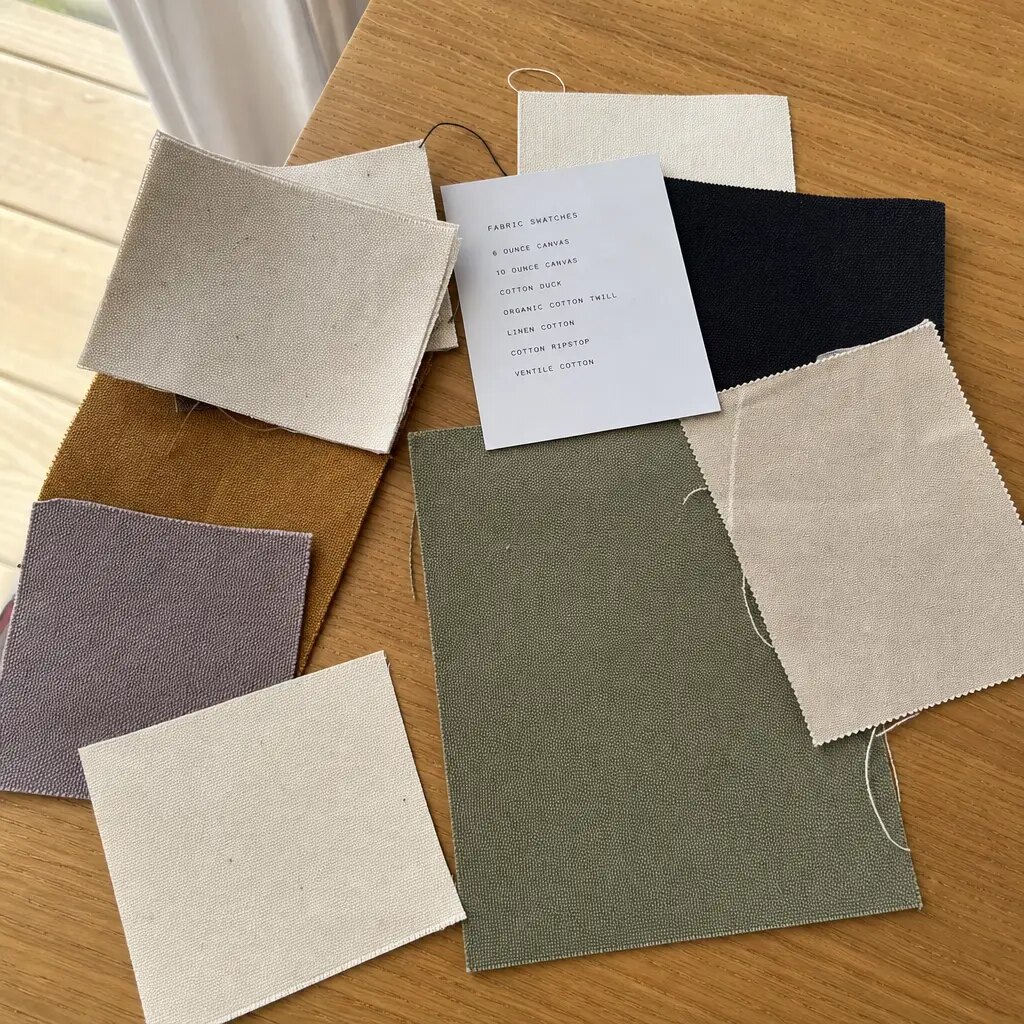
Start With the Carry Profile, Not the Artwork
For farmers market vendors, canvas messenger bags are working bags first and branded bags second. They move between the booth, the vehicle, the register table, and the packing station. That means the right fabric weight depends more on what the bag carries than on how the logo looks. If the bag only holds flyers, cards, a phone, and a pen, a medium canvas can be enough. If it must carry produce samples, jars, a tablet, POS accessories, or a small tool kit, the structure needs to move up fast.
This is where RFQs often fail. Buyers describe the bag as a lifestyle accessory and the factory quotes a fashion build that is too soft for repeated load-bearing use. The first problem is usually not a dramatic seam burst. It is gradual distortion. The bag sags, the flap no longer closes cleanly, the pocket opens up, and the product feels cheaper after a few weekends of use. For procurement, that is a spec failure, not a cosmetic issue.
- Light use: promo materials, order pads, cards, phone, and a few flat items.
- Mixed use: vendor tools, small produce, packaging supplies, and a tablet or notebook.
- Heavy use: jars, bottled goods, POS gear, or resale inventory that needs a firmer base and stronger straps.
- If the bag is used all day, require a strap and body spec that hold shape after repeated opening, closing, and shoulder wear.
What GSM and Ounces Mean in a Real RFQ
The fastest way to compare canvas quotes is to force them onto the same basis. Some factories speak in ounces, others in GSM, and some use vague phrases that do not survive close comparison. In practical sourcing terms, 10-12 oz canvas is light to medium, 14 oz is the common middle ground, 16 oz starts to feel substantial, and 18 oz moves into heavier, more structured territory. Exact results still vary by mill and finishing, so the quote should name the finished basis, not just the raw cloth weight.
For canvas messenger bags used by farmers market vendors, 14-16 oz usually lands in the best tradeoff zone. It gives the bag enough body to look intentional, supports a usable strap, and keeps sewing cost within reason. If the bag is intended as a premium retail item or will routinely carry heavier contents, 16-18 oz is safer. If the bag is a low-cost handout or lightweight kit carrier, 12-14 oz can work, but only if the buyer accepts a softer hand and less standing structure.
- 12-14 oz: lighter, lower cost, easier to fold, but more likely to collapse under mixed loads.
- 14-16 oz: balanced for daily vendor use, better shape retention, and more dependable print appearance.
- 16-18 oz: stronger feel and better structure, but higher cost, more sewing resistance, and more pack bulk.
- Always ask whether the quoted weight is raw fabric or finished fabric, because wash and dye processes can change the final number.
Translate Use Case Into a Spec Buyers Can Compare
A useful bag spec does more than name the material. It tells the factory exactly how the bag will be used, which in turn determines the right weight, structure, and finishes. For farmers market vendors, that means writing the spec around the daily workflow. Will the bag be worn across the body while walking the stall, or slung over one shoulder while loading the car? Will it need to hold paperwork and a phone, or a combination of packaged goods and personal items? Will it sit on a table and stand upright, or live mostly on the vendor’s body?
Once that use case is defined, the rest of the spec becomes easier to defend. The finished width, height, and gusset depth should fit the intended carry volume, not just look balanced on a product sheet. Strap drop should match body size and expected layering in use. Pocket count should reflect actual operator behavior, because extra pockets add sewing cost and can shrink the main compartment. A good procurement spec removes ambiguity before the supplier starts interpreting the design.
- If the bag needs to stand upright, specify a reinforced base or base insert.
- If the bag is worn for long periods, prioritize strap comfort and width over decorative detail.
- If the bag is a retail item, note the desired visual structure so the factory understands the brand positioning.
- If the bag is a working tool, prioritize durability, easy access, and clear organization.
- If multiple teams will use the bag, define the worst-case load, not the average load.
Construction Details That Matter More Than Fabric Alone
A heavier fabric does not automatically create a better bag. The sewing plan often determines real-world performance more than the cloth weight. Strap anchors, side seams, bottom reinforcement, gusset design, and opening shape decide whether the bag survives repeated load cycles. If the bag carries irregular items such as jars or produce, a reinforced base panel matters more than a small increase in fabric ounces. If the bag needs to sit upright at a booth, a base insert or double bottom is worth more than decorative topstitching.
Buyers should also decide early whether they want a simple single-layer body or a lined build. A lining can improve perceived quality and help with small-item organization, but it adds steps and can hide bad workmanship until the first inspection. For most vendor-use messenger bags, a plain body with reinforced stress points and a clean internal finish is more commercially sensible than a fully lined fashion build. The bag should feel capable, not over-engineered.
- Require bar tacks or equivalent reinforcement at every strap anchor.
- Specify a double-layer bottom or insert if the bag must handle upright load bearing.
- Use lining only when the interior use case justifies the added labor and cost.
- Keep seam allowances consistent so the finished dimensions do not drift after sewing and pressing.
- Ask the factory where the main seam stress points are and whether the chosen stitch density supports the target load.
Choose Closures, Pockets, and Strap Specs for the Way Vendors Work
Closures and pocket layouts are not small details. They change sewing time, defect risk, and how the bag performs in real vendor use. A flap with a hidden snap often gives the best balance of access and protection for market sellers. It keeps the opening controlled without forcing the user into a zipper on every interaction. A zipper makes sense when theft, travel, or weather exposure are real concerns, but it adds cost, more hardware sourcing, and another point of failure.
Pockets should be functional, not decorative. One exterior slip pocket for quick access and one internal divider for cards, receipts, or a phone is usually enough for the average vendor program. Too many pockets increase labor and can make the main compartment too small for the actual carry load. Strap width matters just as much. A 1.5-inch webbing strap or comparable self-fabric strap spreads weight better than a narrow strap, and the drop length needs to fit the intended body size and use posture.
- Use an open top only if access speed matters more than security or weather protection.
- Use a flap if the buyer wants easier booth access with better item retention.
- Use a zipper if contents are valuable enough to justify the added cost and sewing time.
- Confirm strap drop on a filled sample, because empty-bag fit can be misleading.
- If the bag is used over outerwear, specify the strap drop based on the thickest expected garment layer.
Print and Branding That Still Reads on the Market Floor
On canvas, the branding method should follow the use case. Screen print is usually the most practical choice for bold logos and simple artwork because it reads clearly from a distance and scales well across volume. Embroidery can work for smaller premium marks, but it adds cost and may not suit large artwork or thin canvas panels. Woven labels and sewn side labels are useful when the buyer wants a cleaner look, a subtle brand signature, or a secondary identity mark on the side seam or flap.
The key question is whether the bag is being worn by vendors or sold by them. If it is a working bag, the logo should be visible but not placed where constant folding or abrasion will damage it. If it is a retail item, the decoration has to stay crisp after handling, storage, and display. For both cases, ask the factory to quote decoration as a distinct cost line if the size, color count, or placement can change. That keeps the unit price comparable and prevents hidden fees later.
- Screen print: best for bold logos, flat color, and repeat runs with stable artwork.
- Embroidery: best for smaller premium marks, but check backing, density, and weight on the fabric.
- Woven or sewn label: best when the brand wants a low-risk mark that survives handling and packing.
- Do not place the logo across a fold line unless the carton pack has already been designed around that fold.
- Ask for print coverage dimensions in millimeters so artwork changes do not get interpreted loosely.
MOQ and Pricing Logic Buyers Should Force Into the Quote
A useful quote separates the bag into the parts that actually move cost. Fabric weight, fabric width, strap material, decoration method, lining, closures, and packing all change the number. If the factory gives only one unit price, you cannot tell whether the quote is competitive or simply stripped down. A proper RFQ should state the finished size, the canvas basis, the strap drop, the print coverage, the pocket count, and the packing method. Without those details, one supplier may be pricing a lighter body or a simpler sewing path than another.
MOQ logic matters because every added option creates setup friction. Custom-dyed canvas, full lining, extra pockets, and zipper closures can move the minimum order up quickly. Buyers who need multiple colorways should usually standardize the body spec and vary only the print or label. That preserves material efficiency and keeps production more predictable. For recurring programs, ask the factory to quote at least three volume tiers so you can see whether the real break price is in materials, labor, or packing.
- Request separate lines for body, decoration, packing, and sample cost.
- Ask for volume pricing at at least three quantities so you can see the real breakpoints.
- Standardize the strap and base across colorways when you want several SKUs without multiplying MOQ.
- Treat custom dyeing, lining, and zipper additions as cost drivers, not minor options.
- Ask whether the MOQ changes if the decoration artwork changes but the bag body stays the same.
How to Approve a Sample Without Missing Bulk Problems
A sample is only useful if it is tested against the actual use case. Do not approve a messenger bag just because it looks clean on a table. Load it with the weight it will carry in the field, wear it on the shoulder, open and close the flap or zipper repeatedly, and inspect the bag when the contents shift. That is where strap length, body balance, and gusset depth become obvious. A bag that photographs well can still be awkward when packed with real vendor gear.
The written approval should tie the physical sample to a spec sheet. The buyer needs the finished dimensions, the agreed fabric basis, the logo placement, the stitch standard, and the pack method captured in writing. If the factory revises one detail after sample sign-off, the risk is not just aesthetic drift. It can change the sewing line speed, the carton pack, and the order schedule. The pre-production sample should match the approved sample closely enough that the bulk line can copy it without interpretation.
- Check strap drop with a real load, not an empty bag.
- Verify logo position against seams and fold points, not just by eye.
- Compare the sample to the approved spec sheet before giving bulk approval.
- Reject any sample that hides poor stitching under heavy pressing or temporary fixing.
- Ask for a photo set of the sample from the factory if you cannot inspect it in person.
- If a sample uses substitute material, make the substitution explicit so it does not become the bulk baseline by accident.
Quality Control Checks That Protect Your Bulk Order
Quality control for canvas messenger bags should focus on the points where failure becomes expensive. Finished size is important, but load-bearing seams, strap anchors, and edge finishing matter more because they determine whether the product survives daily use. A visual inspection on an empty bag is not enough. The buyer should define a QC routine that checks stitching, reinforcement placement, print alignment, hardware operation, and the bag’s response under a realistic load. For a farmers market vendor program, the bag should feel stable when full, not just look clean when empty.
This is also where tolerances matter. If the spec allows too much variation in strap drop or gusset depth, the bags will feel inconsistent in use, even if they pass a basic AQL check. Buyers should ask for a written tolerance on key measurements, a clear defect list, and a rework rule for visible print or seam issues. If the factory includes lining, zipper tape, or a base insert, inspect those pieces as well, because hidden defects often appear inside the bag before they appear on the outside.
- Measure strap drop, finished width, finished height, and gusset depth on random units.
- Check stitch density and backtack consistency at all load-bearing points.
- Inspect print edges for bleed, misregistration, cracking, or incomplete ink coverage.
- Test snaps, zippers, and labels for alignment and smooth operation.
- Review inside seams, loose threads, and corner finishing if the bag includes lining or an internal pocket.
- Define an acceptable defect list in writing before production starts, not during inspection.
Packing, Folding, and Carton Planning
Packing changes the bag more than many buyers expect. A messenger bag with a printed flap can pick up hard fold marks if the carton pack is not designed around the logo area. The same is true for structured bottoms or inserts. If the product is folded too tightly, the canvas can crease permanently. If it is packed too loosely, the carton count becomes inefficient and freight cost rises. The right answer depends on whether the bag is being shipped retail-ready, flattened for distribution, or inserted into an outer polybag for shelf protection.
For export orders, ask the factory to define the folding sequence and carton quantity in the quote. This lets procurement compare landed cost more honestly. A low FOB price can disappear once you add bulky cartons, extra polybags, or poor nesting efficiency. If the bag includes a woven label or side patch, the carton should protect that detail from abrasion. The packing plan should also state carton marks, master carton count, and any moisture protection needed for long sea transit.
- Use a fold method that keeps the logo away from the sharpest crease.
- Confirm polybag use only if it adds real protection or retail value.
- Ask for carton dimensions and carton count before comparing freight.
- Include moisture protection when the route, season, or transit time creates a real risk.
- Ask whether the carton spec changes if the bag includes a base insert or thicker canvas.
- Request photos of a packed carton before authorizing final shipment.
Specification comparison for buyers
| Spec decision | Recommended option | When it fits | Buyer risk to check |
|---|---|---|---|
| Fabric weight | 14-16 oz finished canvas, roughly 475-540 GSM, for most vendor-use bags; 16-18 oz if the bag carries heavier produce, bottles, or kit | Daily market carry where the bag needs body, durability, and enough structure to hold shape | Weight claims vary by mill and finishing method, so require finished GSM or oz, not a marketing phrase like heavy canvas |
| Weave and finish | Plain weave or sturdy twill with the finish stated in the RFQ: raw, bleached, dyed, enzyme washed, or garment washed | Programs that need repeatable appearance and predictable handfeel across replenishment orders | Finishing changes shrinkage, drape, and final weight, so a raw fabric quote is not comparable to a finished-fabric quote |
| Body structure | Single-layer body with bound seams or light lining; add full lining only when the SKU needs a premium interior or small-item control | Simple messenger bags for booth use, vendor carry, or moderate-value retail programs | Lining adds labor and can hide sewing problems, so verify inside seam quality before approving bulk |
| Bottom reinforcement | Double-layer base panel, base insert, or internal reinforcement patch plus bar-tacked strap ends | Bags expected to hold jars, produce, scales, or point-of-sale gear | A strong bottom alone is not enough if strap anchors are weak; load must transfer cleanly into the body |
| Closure | Open top or flap with hidden snap; add zipper only when theft, travel, or weather exposure is a real use case | Fast access at a booth where vendors open the bag many times per hour | Zippers add cost, sewing time, and failure points, and they can interfere with decoration placement |
| Print method | Screen print for bold logos, woven label or embroidery for smaller premium marks | Brand visibility from a few feet away and repeat production runs with stable artwork | Canvas texture affects ink coverage and fine detail, so confirm registration, handfeel, and rub durability |
| Handle style | 1.5-inch cotton webbing or self-fabric strap with reinforced stitch patterns and a 10-12 inch drop | Shoulder carry and handheld use during market days | Straps that are too narrow or too short create comfort issues and returns even when the bag body is strong |
| Pocket layout | One exterior slip pocket plus one internal divider for common vendor tools | Vendors who carry receipts, cards, a phone, or small tools and need quick access without overbuilding the bag | Too many pockets raise sewing complexity, slow production, and shrink the main compartment |
| Sourcing route | Direct factory for recurring bulk orders; trading company only when you need mixed-category consolidation or less internal sourcing overhead | Importers and brand buyers with enough volume to standardize one spec across seasons | Direct sourcing needs tighter spec control; trading company quotes can mask the true mill, labor path, and issue owner |
Buyer checklist before sampling
- Define the real load: what the bag must carry, how often it will be used, and whether it needs to stand upright at a booth.
- Lock the fabric basis in the RFQ as finished GSM or oz, not just a phrase like heavy canvas.
- State the finished size, strap drop, pocket count, gusset depth, closure type, and whether the bag must sit upright when loaded.
- Choose the print method before sampling; logo size, color count, placement, and decoration coverage change cost and lead time.
- Ask for a prototype and a pre-production sample before bulk cutting, especially when the bag will carry real load or use custom decoration.
- Confirm carton pack, fold method, and whether the print area can tolerate a fold line without visible damage.
- Request written tolerances for size, stitch quality, color variation, and acceptable seam appearance.
- Compare quotes on the same basis: fabric weight, decoration, packing, testing, and Incoterm.
- Ask how the factory will verify strap strength, seam reinforcement, and final weight before shipment.
- Ask for photos of bulk packing, carton marks, and finished units before the order leaves the factory.
Factory quote questions to send
- What exact fabric construction are you quoting, including weave, yarn count if available, and finished GSM or oz after finishing?
- Is the canvas raw, bleached, dyed, enzyme washed, or garment washed after sewing, and what shrinkage range do you expect after that process?
- What reinforcement do you use at the strap anchors, bottom corners, pocket openings, and flap stress points?
- Which print method are you pricing, how many colors are included, and what is the setup charge for screens or artwork?
- What is your MOQ for the base spec, and how does MOQ change if I add lining, a zipper, a woven label, a base insert, or a custom pocket layout?
- What are the finished size tolerance and acceptable stitch standards on load-bearing seams?
- How will the bags be folded, packed, and cartonized for export, and what is the carton quantity per style and color?
- What is your sample schedule: prototype, pre-production sample, and bulk lead time after approval?
- Can you quote the bag with and without a base insert so I can compare the cost and performance difference?
- What inspection standard do you use before shipment, and who signs off on defects?
Quality-control points to confirm
- Finished size must match the approved spec within the agreed tolerance, especially strap drop, gusset depth, and flap alignment.
- Fabric weight should match the approved finished basis, with no unexplained downgrade in handfeel, thickness, or drape.
- Load-bearing seams and strap anchors need even stitch density, clean backtack, and no skipped stitches or loose threads.
- Bar tacks or reinforcement patches must sit exactly where the bag takes stress, not just where they are easiest to sew.
- Print placement should stay centered and legible, with no blotting, cracking, bleeding, or misregistration at the edges.
- Zippers, snaps, and labels must operate cleanly and be aligned before the bag is packed.
- Carton packs should protect the print and avoid permanent fold marks across the logo area.
- Random sample inspection should include a real load test, not just a visual check on an empty bag.
- If a lining is included, inspect the inside for loose threads, exposed seam edges, and trapped material at corners.
- Check that the bag sits flat or upright as intended, because a poor base design becomes obvious once product is loaded.