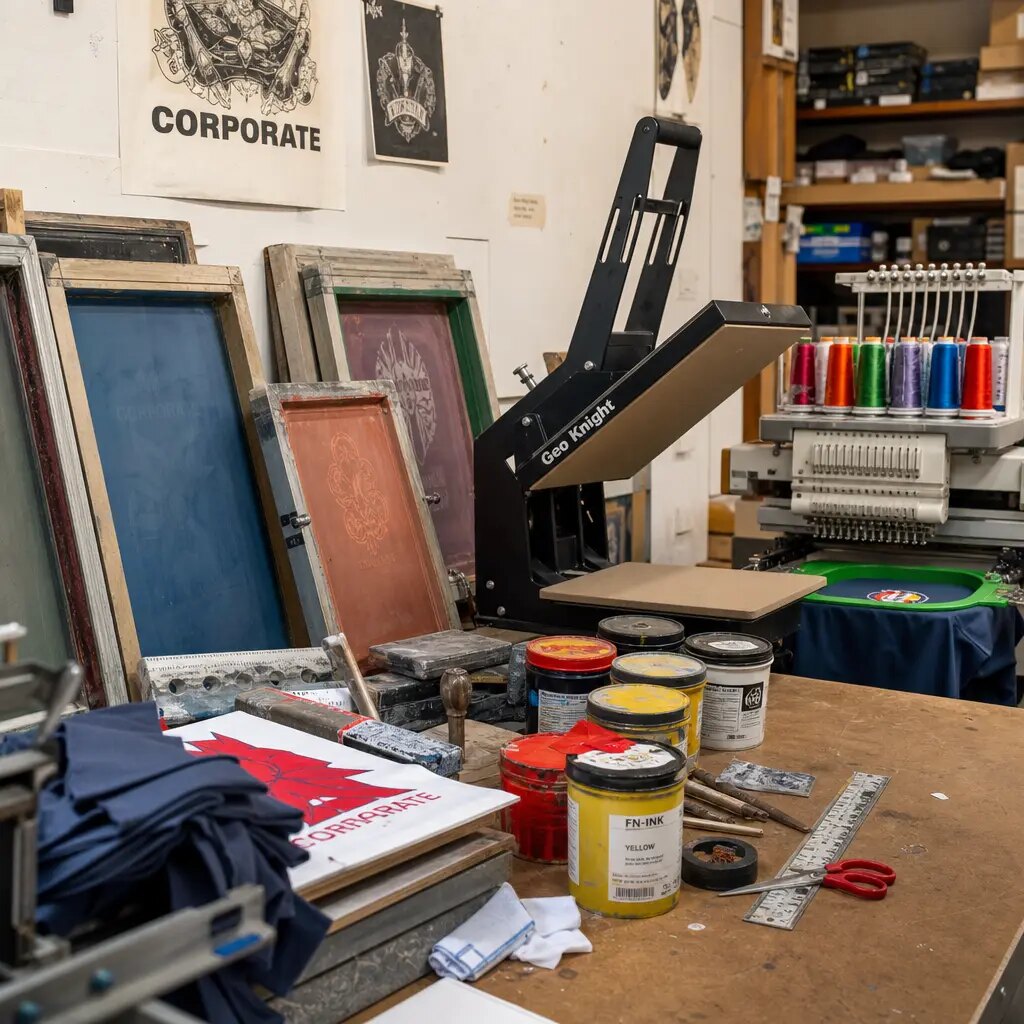
Why durability matters more than style for market use
Farmers market vendors use messenger bags differently from office buyers or fashion shoppers. The bag is opened and closed all day, placed on folding tables, carried through parking lots, and sometimes stuffed with cash box tools, notebooks, produce labels, or a tablet. That means durability is not a vague quality claim. It is a set of stress points that must hold up under repeated lifting, rubbing, and contact with damp surfaces.
For procurement teams, the key is to translate that daily abuse into a testable spec. A messenger bag that looks fine in a sample room can still fail in three predictable ways: strap tear-out, seam slippage at the base, and print wear where the shoulder strap rubs the panel. If you define those failure points early, supplier quotes become comparable and the risk of late rework drops sharply.
- Daily market use creates repeated load, not one-time carry.
- The highest risk areas are strap anchors, base seams, and logo zones.
- A buyer spec should describe performance, not just appearance.
Start with the use case before choosing canvas weight
The correct canvas weight depends on how the bag will be sold and what vendors will actually put inside it. For light promotional use, a 12-14 oz canvas body can be acceptable if the straps and bottom are reinforced. For regular market carry, 16-20 oz is usually the safer range because the body resists sagging and the seams have more material to hold. If the bag is expected to carry produce, payment devices, a water bottle, and small stock items, the lower end of the range often becomes false economy.
Do not quote fabric by weight alone. Ask the factory whether the number refers to finished fabric after washing, dyeing, and coating, or whether it is a greige measurement before finishing. The same nominal canvas weight can feel very different once the supplier adds coating, resin, or heavy calendaring. In RFQs, list body fabric, pocket fabric, lining, and reinforcement zones separately so a supplier cannot hide a weak panel behind a strong headline spec.
- 12-14 oz works for lighter programs if reinforcement is built in.
- 16-20 oz is the safer range for repeat daily carry.
- Finished fabric weight should be specified, not just raw yarn or greige data.
Use a durability checklist that targets real failure points
A good checklist does not ask whether the bag is strong. It names the exact places where strength matters. For canvas messenger bags for farmers market vendors, focus on strap anchors, shoulder pad attachment, flap hinge points, base corners, and the stress zone around zippers or magnetic closures. Those are the areas that split first when a bag is overfilled or swung onto a shoulder repeatedly.
The most useful buyer checklist is one you can attach to sample approval and final inspection. For example, define acceptable stitch density, whether bar tacks are required at all load points, the minimum strap width, and how much distortion is allowed after a loaded carry test. If the bag is intended for resale rather than internal use, also include appearance durability: no loose threads, no skewed logo panels, and no fuzzy print edges after abrasion.
- Specify the exact stress points to test.
- Tie durability criteria to sample approval and final QC.
- Include both mechanical performance and visible appearance standards.
Durability test methods that buyers can actually use
Factories may offer in-house load tests, but not every test is equally useful. A static hanging load test is the simplest starting point: load the bag with a defined weight and hold it for a defined period while observing seam opening, strap creep, and hardware deformation. That test is easy to repeat and easy to compare across suppliers. If you can only request one number from each quote, make it the maximum load the bag can carry without visible failure under the agreed test condition.
For more realistic validation, ask for repeated lift or swing testing on the strap anchors, plus abrasion checks in the logo area. A messenger bag worn daily does not fail only from weight. It fails from movement. Repetition matters because thread abrasion and stitch elongation show up after cycles, not after a single lift. If the factory cannot run a formal lab test, it should still be able to show a simple internal test setup with documented weight, cycle count, and pass criteria.
- Use a defined static load test for quote comparison.
- Add cycle-based strap and abrasion checks for real-use validation.
- Ask for documented test conditions, not verbal assurances.
Print, branding, and trim choices that affect durability
A logo can survive or fail faster than the bag body itself. Screen print remains practical for many canvas messenger bags because it gives solid coverage and reasonable cost, but the ink system must be cured properly and positioned away from high-rub zones. If the strap crosses the printed field, expect wear. For premium retail bags, embroidery or a woven patch often holds up better, though both can add stiffness and change how the panel folds.
Trim choices also change the durability outcome. A metal zipper can outlast a low-grade nylon coil in a heavy-use bag, but it also raises cost and can create a cold, harder hand feel. Metal D-rings and sliders improve perceived quality, yet if the plating is weak they can discolor. In the quote, require the exact trim grade, not just metal hardware or nylon zipper. If the bag is intended for wet outdoor conditions, ask how the print, thread, and hardware respond to moisture and storage after use.
- Avoid placing print where the strap or elbow will rub it constantly.
- Embroidery and woven patches can improve wear life but may stiffen the panel.
- Hardware grade matters as much as the body fabric in long-use programs.
How to compare supplier quotes without getting misled
A low unit price is only useful if it includes the same material and workmanship standards as the other quotes. When you compare canvas messenger bags for farmers market vendors, line up the quotes by body fabric weight, reinforcement method, logo application, hardware type, and packing. If one supplier quotes a 12 oz body with simple stitching and another quotes 18 oz with bar tacks and a metal zipper, the price gap is not really a gap at all. It is a different product.
The cleanest way to compare is to ask each supplier to quote a base spec and a premium spec. Base spec can be a functional market bag with standard print and standard trim. Premium spec can add heavier canvas, reinforced strap anchors, upgraded zipper, and retail-ready packing. That gives your team a realistic spread for landed cost decisions and reduces the chance that one supplier appears cheaper only because it left out an important component.
- Compare quotes only after normalizing fabric, trim, print, and packing.
- Request a base spec and a premium spec from each supplier.
- Use landed cost, not unit cost, as the final decision metric.
What MOQ logic should look like for branded buyers
MOQ is often presented as a fixed number, but in practice it changes with fabric inventory, print setup, color matching, and trim sourcing. A supplier may offer a lower MOQ if you accept stock canvas and a standard print size. If you want custom dyed canvas, special hardware, or multiple logo versions, the MOQ usually rises because the factory must reserve material and schedule additional setup time. Buyers should treat MOQ as a function of complexity, not as a random factory rule.
For procurement teams supporting retail brands or distributor accounts, the best approach is to ask for MOQ by option. Get one number for stock fabric and standard branding, another for custom color or heavier weight, and a third for packaging changes such as branded hangtags or inserts. That makes it possible to build a tiered assortment. It also helps you avoid a quote that looks workable on paper but fails when the order moves into production planning.
- MOQ rises with custom color, special hardware, and multiple logo versions.
- Ask for MOQ by option instead of accepting one blanket number.
- Use tiered pricing to match order risk and demand uncertainty.
Sample approval should include structure, not just appearance
A sales sample that looks good can still fail in bulk if the structure is not verified. The right sample process starts with a prototype or pre-production sample that matches the intended fabric weight, stitch construction, and hardware. Then the buyer should compare it against a sealed gold sample or written approval sheet. If the supplier changes seam allowance, lining, or strap width after approval, that is a production change, not a harmless tweak.
During sample review, stuff the bag to realistic weight and inspect the top edge, the flap, the base, and the strap anchors after carry. Look for twisting, hard corners, zipper drag, or print distortion. If the bag is intended for resale, also inspect cosmetic points that affect shelf appeal: logo placement, symmetry, stitching line straightness, and the way the bag folds when packed. Once those features are approved, they should be locked in writing before bulk cutting begins.
- Approve structure, not only color and logo placement.
- Compare samples against a sealed reference or signed spec sheet.
- Any change after approval should be treated as a formal revision.
Packing, lead time, and schedule risk
Packing can quietly change both product condition and freight cost. Flat packing reduces volume and usually helps container efficiency, but the folding method must not crush coated canvas, damage embroidery, or create permanent crease lines in branded areas. Polybag size, desiccant use, and carton count should be included in the quote because they affect warehouse receiving and moisture protection. If the bag has a structured flap or insert, ask the factory how it will be packed without deforming the profile.
Lead time should be broken into clear stages: sample development, material booking, bulk production, final inspection, and dispatch. The main risk is not the nominal factory lead time but the hidden delay created by fabric confirmation, print approval, and hardware sourcing. For seasonal farmers market programs, schedule risk matters more than a small unit-price delta. A bag that lands after peak market season is a failed buy, even if the production quote was attractive.
- Require packing details in the quote: polybag, carton count, and carton size.
- Flat packing should not damage the shape or print finish.
- Separate sample, production, and transit time when planning the order.
Landed-cost comparison for a realistic buying decision
To compare sourcing routes, build the cost from the buyer’s side of the dock, not from the factory gate. The landed cost should include product price, print setup, internal cartons, outer cartons, freight, duty, and any rework or relabeling. A bag with a slightly higher factory price can still be cheaper overall if it packs more efficiently or needs less inspection correction. Conversely, a very low quote can become expensive if the supplier ships mixed shades, weak straps, or cartons that collapse in transit.
A practical landed-cost model also helps brand owners decide whether to buy direct, through a trading company, or from a local decorator. Direct factory sourcing usually offers better control over canvas weight and reinforcement, but it demands stronger spec management. A trading company can simplify coordination across several factories, yet the buyer must verify who is actually making the bag. A local decorator is useful for speed, but only if the blank bag already meets the durability standard you need.
- Use landed cost to compare all sourcing routes fairly.
- A cheaper factory quote can be more expensive after freight and rework.
- The sourcing route should match your internal control capacity.
Specification comparison for buyers
| Spec decision | Recommended option | When it fits | Buyer risk to check |
|---|---|---|---|
| Sourcing route | Direct factory with sample room and QC records | You need repeat orders, controlled branding, and changes to fabric, print, or trim | Confirm the factory really makes messenger bags, not only tote bags, and ask for in-house seam or load test evidence |
| Sourcing route | Trading company with multi-factory sourcing | You need mixed SKUs, lower internal workload, or a small first order | Verify who actually owns the spec, who approves samples, and whether hidden markups reduce fabric weight or hardware quality |
| Sourcing route | Local decorator plus imported blank bags | You need fast reorders and simple logo application | Check whether the blank bag construction still meets load and abrasion targets after decoration and re-packaging |
| Fabric weight | 16-20 oz canvas for main body, with reinforced base panels | Bags used daily for produce, payment tools, flyers, and light promo stock | Ask whether the quoted GSM is finished fabric weight after wash and coating, not only yarn count or greige weight |
| Fabric weight | 12-14 oz canvas with reinforcement at strap and stress points | Budget-sensitive programs with light to medium daily use | Watch for soft bodies that distort under load and test seam slippage after repeated lifting |
| Print method | Screen print or woven label for higher wear zones | You expect repeated rubbing, strap contact, and wet-cleaning exposure | Confirm curing, wash resistance, and whether print sits outside the handle path to reduce cracking |
| Print method | Embroidery or patch for premium retail lines | Branding must survive abrasion and support a higher perceived value | Check needle density, backing stiffness, and whether dense logos weaken the panel on lighter canvas |
| Hardware and closure | Metal zipper, metal D-rings, and bar-tacked load points | Messenger bags carry heavier contents or are sold as durable work bags | Inspect salt-spray or corrosion claims, zipper gauge, and the supplier’s bar-tack count at strap anchors |
| Packing route | Flat packed with polybag, size label, and master carton spec | You want lower freight volume and simpler warehouse handling | Verify folding marks do not damage print, coated linings, or foam inserts, and confirm carton compression limits |
Buyer checklist before sampling
- Set the use case first: daily market carry, branded retail resale, or promotional handout, because the durability target changes fast.
- Lock the fabric spec in GSM or oz, plus any coating, wash treatment, or base reinforcement, before requesting quotes.
- Require seam and strap reinforcement details in the RFQ: stitch density, bar-tack locations, and thread type.
- Request a production sample, a pre-production sample, and a sealed gold sample for comparison.
- Ask for load test evidence and define the pass level in kilograms or pounds, not vague phrases like strong or heavy duty.
- Confirm print method, logo placement, and color tolerance on actual canvas, not only on a digital mockup.
- Review packing dimensions, folding method, and master carton count so freight and warehouse costs are not guessed.
- Get lead time split into sample time, material booking time, production time, and transit time.
- Ask for a defect handling plan that covers crooked stitching, broken zippers, print misregistration, and staining.
- Compare landed cost, not unit price alone, because freight, duties, carton size, and rework can erase the cheapest quote.
Factory quote questions to send
- What is the finished fabric weight in oz or GSM for the body, lining, and reinforcement panels?
- Which stitching spec do you quote at the strap anchors, base seams, and zipper ends?
- What load test can you run on the strap and body seam, and what is the pass/fail threshold?
- Which print method is included in the price, and how many color passes or setup charges apply?
- What is the MOQ per color and per logo version, and does changing trim or lining increase the minimum?
- Can you share a pre-production sample schedule, and what is the sample approval gate before bulk cutting?
- How do you pack the bags for shipment, and what is the carton size, carton count, and gross weight target?
- What is your normal production lead time after sample approval, and what delays should we plan for in peak season?
- Can you break out unit price by fabric, print, hardware, labor, and packing so we can compare quotes fairly?
Quality-control points to confirm
- Main fabric weight should match the approved spec within the supplier’s stated tolerance, and the hand feel should not be the only acceptance standard.
- Strap attachment points should show consistent bar tacks or reinforced box stitching with no skipped stitches, loose thread bundles, or seam puckering.
- Seam strength should hold under a defined static load without tearing, seam opening, or thread popping at the base corners.
- Zippers, snaps, D-rings, and sliders should cycle smoothly and survive repeated use without coating loss, sticking, or misalignment.
- Print or embroidery should stay clear at the edges with no cracking, bleeding, or needle damage to nearby fabric after rubbing.
- Lining and internal pockets should align with the approved pattern and not twist, sag, or expose raw edges after stuffing.
- Cartons should hold the agreed count and protect shape during compression, with no moisture damage, odor, or crush marks on arrival.
- Final inspection should reject mixed shades, wrong logo placement, visible oil stains, broken needles, and distorted handles.