Start With the Selling Math
A useful canvas messenger bags for craft fairs bulk pricing plan starts before the first supplier quote. The buyer needs a commercial ceiling: target retail price, expected wholesale price if the bags will be resold to shops or maker collectives, required gross margin, markdown allowance, and maximum landed cost. Without that ceiling, the RFQ drifts. One supplier quotes a thin unlined bag in bulk cartons. Another quotes a lined bag with hangtags and individual polybags. A third excludes setup charges. The lowest number may look attractive, but it is not a clean comparison.
Craft-fair pricing is practical and unforgiving. The bag has to feel credible in the customer’s hand, display well on a hook or table, hold real purchases, and still leave enough margin for the booth, organizer, or wholesale account. A low-cost event souvenir may only need an unlined body, one-color print, bound seams, and bulk packing. A product headed to gift shops or museum-style retail may need lining, barcode labels, hangtags, stronger hardware, and tighter finishing. Both can be right. They should not be priced as if they are the same item.
Landed cost should include the quiet charges that appear after the unit price: sample fees, courier fees, pattern work, screens or print setup, labels, hangtags, barcode stickers, export cartons, inland freight, international freight, duties or taxes where applicable, inspection cost, receiving labor, relabeling, repacking, and a defect allowance. For event-driven programs, stock that arrives late can cost more than a slightly higher ex-factory price because missed fairs are hard to recover.
Build two ceilings in the buying file: one for a base bulk-packed bag and one for a retail-ready bag. That makes the sourcing conversation cleaner. If the retail-ready version breaks the margin target, procurement can decide whether local tagging is cheaper than factory tagging instead of pressuring the supplier to remove quality from the bag itself.
- Set retail price, wholesale price, target margin, and maximum landed cost before requesting quotes.
- Keep base product cost separate from merchandising and packing cost.
- Add setup, freight, duty, inspection, receiving, repacking, and defect allowance to the landed-cost model.
- Treat delivery date as a commercial requirement when the bags are tied to fair calendars.
Convert Craft-Fair Use Into Specs
Craft-fair buyers are not all buying the same messenger bag. Some need organizer merchandise for a weekend event. Some need a branded resale item for a maker collective. Others need a repeatable private-label accessory for gift shops, bookstores, subscription boxes, or local-market wholesale. The use case changes the specification, so the RFQ should explain what the bag must carry, how it will be displayed, whether it will be reordered, and how closely customers will inspect it before purchase.
Start with load, size, and handling. A messenger bag for stationery, textiles, small gifts, and daily essentials can often use 12 oz canvas with clean reinforcement. A bag expected to carry books, packaged candles, small ceramics, tools, or multiple purchases needs closer attention to fabric weight, strap width, strap joins, flap corners, and closure strength. A common mid-size reference might be W 35 cm x H 28 cm x D 9 cm with a 24 cm flap, but buyers should avoid vague terms such as medium, large, heavy duty, or premium unless they are tied to numbers.
Display behavior matters because craft-fair merchandise is handled constantly. Bags are hung from hooks, stacked in bins, opened by shoppers, folded back into cartons, and moved between events. The flap should sit flat enough to show the artwork. The strap should not cover the logo when the bag is hanging. The body should recover acceptably after folding. If the print disappears into a flap curve or the bag collapses in a display basket, the product may meet the drawing while still missing the selling moment.
A concise functional brief helps suppliers quote the right thing. For example: finished canvas messenger bag for craft-fair resale; carries light-to-medium daily goods; front-flap logo visible when hung; unlined interior with bound seams; adjustable 38 mm strap; snap or magnetic closure; bulk packed for event team tagging; reorder possible within six months. That level of detail reduces guesswork and makes the quote more useful.
- Specify what the bag must carry, not only what it should look like.
- State finished dimensions, flap depth, gusset, strap width, strap range, and pocket dimensions.
- Check how the bag hangs, folds, stacks, opens, closes, and recovers after packing.
- Replace vague words like sturdy or premium with measurable construction details.
Know the Fast Price Drivers
The fastest cost drivers are fabric weight, finished size, construction complexity, lining, decoration, hardware, and packing. Fabric weight is often the first lever because it affects raw material cost, cutting yield, sewing difficulty, carton weight, and perceived value. For many B2B craft-fair programs, 12 oz canvas, roughly 400-410 GSM depending on mill and finish, is a sensible starting point. Moving to 14 oz, roughly 475-485 GSM, can improve hand feel and load confidence, but it should be tied to a higher retail price or a real carrying requirement.
Canvas weight needs careful wording. Oz is common in canvas buying, while GSM is useful for textile comparison. Ask for both. Also ask whether weight is measured before washing, after washing, or after finishing. A washed canvas may feel softer and more lifestyle-oriented, but it can bring shrinkage, shade variation, and dimension movement. Unwashed canvas usually gives a crisper print surface and more predictable sizing, though it may feel less broken-in at first touch.
Construction can add more cost than buyers expect. One main compartment, a flap, one slip pocket, an adjustable webbing strap, and one closure will quote more consistently than a bag with lining, zipper compartments, piping, contrast binding, several trims, and decorative topstitching. Every feature should earn its place. If the customer will not notice or value the extra pocket, procurement should question it before negotiating down the unit price.
Hardware deserves the same discipline. A 38 mm or 40 mm strap, one adjuster type, one closure type, one zipper grade if used, and one finish color reduce component risk. If every SKU uses different metal, webbing, or closure parts, the supplier may face separate MOQ rules, longer lead times, and more inspection work. Those costs may not show clearly in the first quote, but they often surface during production or reorder.
- Use 12 oz canvas as a practical baseline and move to 14 oz for heavier use or premium positioning.
- Request both oz and GSM, plus the measurement stage before or after washing or finishing.
- Remove hidden complexity that does not support sell-through or durability.
- Standardize strap width, adjuster type, closure type, zipper grade, and hardware finish across the line.
Build a Quote Matrix
A quote matrix keeps procurement from comparing mismatched offers. Instead of asking, ‘How much for canvas messenger bags?’, send one specification and require the same cost lines, quantity breaks, MOQ basis, packing assumption, approval steps, and trade term. This is especially important for canvas messenger bags for craft fairs because small differences in print method, lining, label, cartonization, and trim can make one quote look cheaper while moving work to the buyer’s warehouse or event team.
The matrix should show base unit price, fabric weight, finished dimensions, canvas finish, lining status, pocket count, strap specification, hardware specification, print method, print colors, print locations, MOQ basis, sample fee, courier fee, pattern charge, screen or setup charge, label cost, hangtag cost, barcode cost, polybag cost, export carton cost, lead time, pieces per carton, carton dimensions, gross weight, net weight, estimated CBM, and trade term. If freight is part of the comparison, use the same destination and shipment assumption.
Quantity breaks should match the buying path. A buyer may test 300 pieces, reorder 1,000 pieces, and scale to 3,000 pieces for a seasonal calendar. Asking for all three levels in the first RFQ shows whether the supplier can support both trial and growth. A factory may look expensive at 300 because setup and cutting preparation are spread over too few units, then become competitive at 1,000. Another supplier may offer a low trial price but weak scaling if print or fabric purchasing is inefficient.
The quote matrix should also expose assortment risk. If one supplier allows 500 units split into two stock colors and another requires 500 units per color, the second quote may be poor fit for a craft-fair color test even if the unit price is lower. If one quote includes barcode labels and another does not, add the buyer’s receiving labor back into the comparison. The goal is not the lowest isolated unit price. It is the best total cost for the way the bags will actually be sold.
- Quote 300, 500, 1,000, and 3,000 units against the same specification and trade term.
- Break out sample, setup, print, label, hangtag, polybag, carton, and inspection-support charges.
- Compare carton CBM and gross weight because freight can erase a unit-price saving.
- Record MOQ rules next to every price, especially for color, artwork, and packing splits.
Clarify MOQ and Assortment Rules
MOQ is rarely just one number unless the supplier confirms it in writing. For canvas bags, MOQ may apply by style, body color, print design, print color count, lining color, hardware finish, label type, packing format, or fabric lot. Craft-fair buyers often want variety: assorted colors, local-market artwork, seasonal graphics, or limited runs for specific events. That strategy only works when the MOQ structure supports it. Otherwise, the buyer overbuys slow colors just to satisfy production rules.
Ask direct split questions. Can a 500-piece order be divided 250/250 across two stock colors? Can it split 200/150/150 across three colors? Does each artwork require a separate screen charge? Can the same screen be used on natural and black canvas if ink color changes? Will a print color change trigger setup or cleaning charges? Suppliers may allow flexibility when the same canvas, hardware, print method, and packing format are used. Custom dyed colors usually need more planning because dye-lot MOQ, lab dips, and future shade matching come into play.
A test order and a reorder should not be judged by the same economics. A 300-piece test may be sensible even with a higher unit cost if it validates retail price, color mix, display method, and shopper response. The mistake is treating that trial price as long-term bulk pricing. Before issuing the first PO, ask for reorder pricing at 1,000 and 3,000 units, and confirm whether patterns, screens, labels, and trim sources can be reused.
Material continuity matters on reorders. Stock colors such as natural, black, navy, olive, and grey are often easier to replenish than custom seasonal shades, but stock availability can still change. If a color is central to the buyer’s brand, request a color standard, shade tolerance, and approval process for new lots before cutting. If the reorder is tied to a major craft season, build in time for fabric procurement, print approval, production, inspection, and freight.
- Confirm MOQ by style, color, artwork, print color count, trim, lining, packing, and fabric lot.
- Ask whether one total quantity can split across colors and what surcharge applies.
- Use small runs to test demand, not to define long-term cost expectations.
- Lock reorder pricing, reusable screens, approved patterns, and trim sources early.
Control Artwork and Print Risk
Decoration is one of the easiest places for a quote to change. For simple event logos, maker collective marks, and bold one- or two-color artwork, screen printing is often efficient at bulk quantities. It can give good opacity on canvas when the artwork is clean, ink is suitable, and curing is controlled. But screen printing becomes less efficient when artwork has many colors, gradients, small details, or frequent seasonal changes because every color and location may need setup.
Heat transfer and digital print can be useful for shorter runs, complex graphics, or artwork that changes by event. Do not approve either method from a digital mockup alone. Canvas texture can soften fine lines. Transfers can create a different surface hand feel. Digital print color can shift with fabric shade and pretreatment. Procurement should request a strike-off, printed panel, or full pre-production sample on the same canvas color and construction that will be used in bulk production.
Placement needs numbers. A front-flap print may look centered on a flat panel but appear low, high, or tilted after sewing, folding, pressing, and packing. The RFQ should state artwork size, reference point, distance from flap edge or center line, acceptable tolerance, and restricted zones. These zones may include seams, flap folds, pocket openings, snaps, buckles, high-abrasion edges, and areas hidden when the bag hangs. A tolerance such as +/-5 mm may be reasonable for many designs, but it must be agreed against the actual artwork and construction.
Approval should happen in sequence. A strike-off can approve print color, opacity, adhesion, and surface feel. A full pre-production sample approves final placement on the sewn bag. Keep the approved sample, artwork file name, color reference, and print method on record. If the factory changes canvas color, ink, transfer film, print shop, print stage, or curing method, approval should restart because the finished result can change.
- Use screen print for simple repeat graphics; compare transfer or digital for complex or changing artwork.
- Approve decoration on the actual canvas color and texture, not only from a digital proof.
- Define artwork size, color reference, location, restricted zones, and placement tolerance.
- Keep approved strike-offs, sample photos, artwork file versions, and color references for reorders.
Assign Process Accountability
Supplier route affects cost, visibility, and problem resolution. A direct factory that cuts, sews, and manages printing closely can be efficient for repeat programs because the buyer has clearer access to production details. A trading company or sourcing partner can also be useful when the buyer needs multiple bag styles, lower administrative workload, or coordination across factories. The right choice depends on order size, complexity, internal bandwidth, and how much process visibility the buyer needs.
If dyeing, washing, printing, embroidery, labeling, or packing is subcontracted, responsibility must be written down. Procurement should ask where each process happens, who checks quality before goods move to the next stage, who pays for rework, and who owns the schedule if a subcontractor is late. Without that clarity, a sewing factory may blame a print shop for defects while the print shop points to fabric texture or panel distortion. The buyer needs one accountable supplier contact and a written corrective-action path.
Print stage deserves special attention. Printing on cut panels before sewing can give cleaner access to a flat surface, but the factory must control panel orientation and sewing alignment. Printing on finished bags can reduce the chance that artwork is sewn off-center, but seams, pockets, flap structure, and gussets can make the print harder to place cleanly. The bulk process should match the approved sample process. A change after approval can alter placement, hand feel, and defect risk.
Repeatability is as important as sample quality. One attractive sample proves basic capability; it does not prove that the supplier can repeat fabric, hardware, print, labels, packing, carton data, and communication across multiple POs. Ask how components are controlled, how substitutions are approved, and how production changes are communicated before bulk goods are affected.
- Choose the supplier route that gives enough visibility for the program’s risk and volume.
- Document subcontracted dyeing, washing, printing, embroidery, labeling, and packing processes.
- Assign one party responsible for rework, schedule recovery, and replacement decisions.
- Require written approval before changing fabric lot, print shop, trim source, or packing method.
Treat Samples as Standards
A sample should be more than a sales prop. It should become the production standard. Canvas messenger bags have tactile and functional details that photos do not show well: fabric hand feel, strap comfort, flap alignment, pocket depth, closure strength, lining behavior, print texture, and interior finishing. Unless the item is a repeat of an already approved style, procurement should approve a physical sample before bulk production starts.
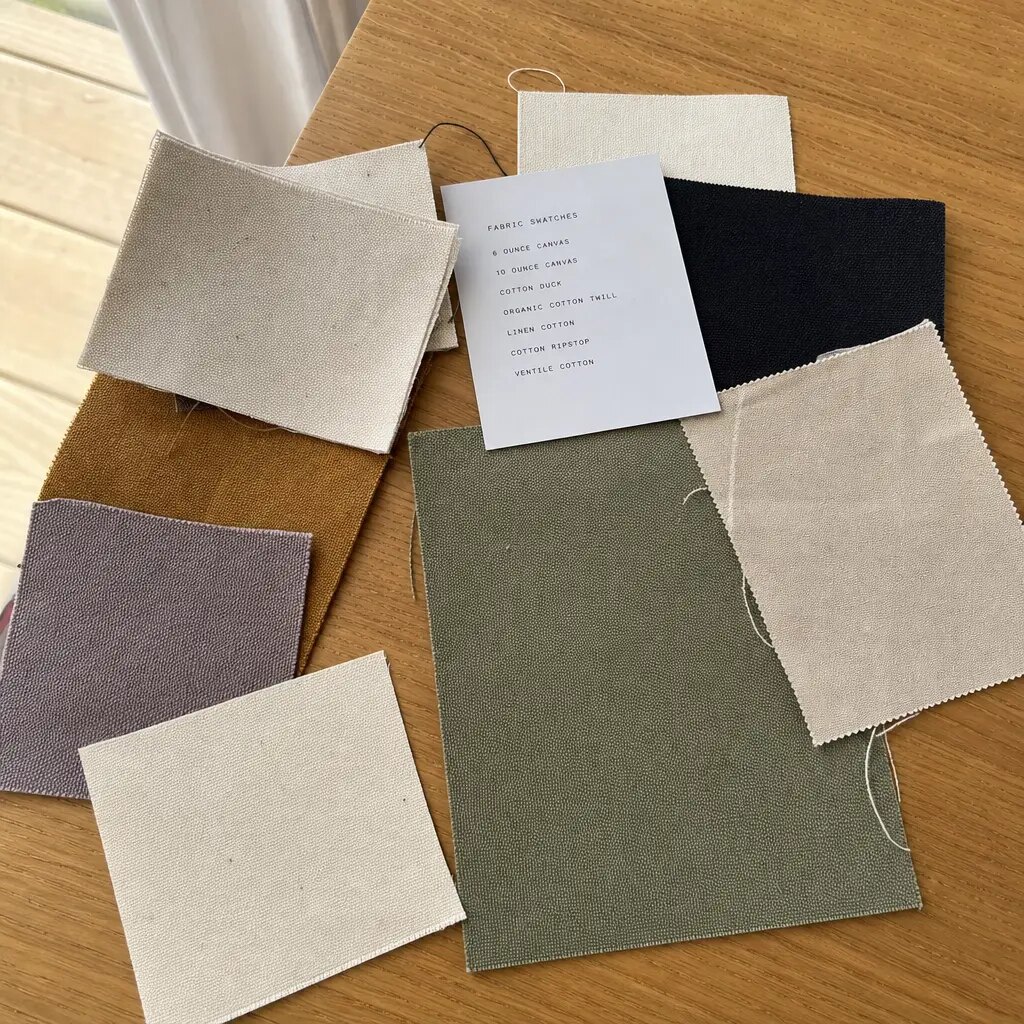
Use staged sampling when the calendar allows it. A prototype confirms structure and size. A swatch confirms canvas weight, shade, and finish. A print strike-off or printed panel confirms color, opacity, edge sharpness, adhesion, and surface feel. A pre-production sample confirms the final commercial product: agreed canvas, construction, stitching, print, hardware, label, hangtag, barcode if used, packing method, and carton label. The pre-production sample should be approved by procurement and, where relevant, merchandising or sales.
Sample review should imitate real use. Load the bag with expected contents. Adjust the strap. Wear it crossbody. Open and close the closure several times. Check whether the flap sits flat. Inspect strap joins and pocket openings. Hang the bag the way it will be displayed. Fold it and see how it recovers. Customers at craft fairs often open the bag before buying, so the interior must be checked with the same seriousness as the exterior.
Document the approval in a way that can survive a reorder. Record sample date, version number, fabric weight, canvas finish, color reference, artwork file name, print color, trim details, stitch color, label position, packing method, and approved deviations. Keep one approved sample with the buyer and one with the supplier when possible. If inspection later finds a disagreement, the signed sample and spec sheet should be the reference points.
- Approve a physical pre-production sample in final materials, trims, artwork, labels, and packing.
- Test the sample by loading, wearing, hanging, folding, opening, closing, and repacking it.
- Measure the sample against the spec sheet before signing approval.
- Record sample version, fabric data, artwork file, trim details, packing method, and approval date.
Put QC Into the Purchase Order
Quality control belongs in the PO, not in a complaint after production is finished. The purchase order should include the approved spec sheet, approved sample reference, defect definitions, inspection timing, measurement tolerances, print tolerances, packing requirements, and remedy process. If the only standard is ‘good quality,’ the buyer and supplier may disagree when goods are already sewn, printed, and packed. Written criteria make inspection more practical and less personal.
Use measurable tolerances where possible. Finished dimensions may be stated as +/-1 cm for body width and height, +/-0.5 cm for pocket depth, and +/-2 cm for strap length, depending on design. Print placement may be set at +/-5 mm from the approved reference point if the construction supports that level of accuracy. Fabric weight may be controlled with a written tolerance, commonly around +/-5% unless a tighter standard is agreed. These figures are useful RFQ discussion points, not universal rules. The buyer and supplier should agree the final values before cutting.
Inspection should focus on failure points, not just neatness. Strap joins, flap corners, pocket openings, zipper ends, closure tabs, buckle loops, and stress seams need reinforcement such as bartacks, box stitching, double stitching, or the agreed method. Inspectors should check skipped stitches, open seams, loose threads, fraying, seam puckering, oil marks, stains, needle cuts, crooked labels, uneven topstitching, and raw edges. Hardware should be opened and closed repeatedly by hand. Strap adjusters should not slip under normal handling.
Many buyers use AQL sampling for final inspection, but the sampling level and acceptance limits must be agreed before production. Define critical defects such as unsafe sharp edges, severe stains, broken closures, incorrect artwork, wrong SKU labels, or missing components. Define major defects such as open seams, wrong dimensions outside tolerance, poor print adhesion, or nonfunctional hardware. Define minor defects such as small loose threads or slight cosmetic variation within the approved standard. Clear defect classes make inspection results actionable.
- Attach the spec sheet, approved sample reference, tolerances, and defect definitions to the PO.
- Agree dimension, fabric-weight, print-placement, and shade tolerances before production.
- Inspect stress points more closely than low-risk decorative areas.
- Define critical, major, and minor defects so acceptance decisions are clear.
Plan Packing and Receiving
Packing is a cost decision, a freight decision, and a labor decision. Bulk packing can reduce factory cost and packing material, which works well when a distributor, wholesaler, or event team will tag and merchandise bags locally. Retail-ready packing costs more but may reduce receiving labor, protect goods during handling, and speed booth setup. The right choice depends on the buyer’s labor cost, sales channel, and damage risk.
Retail-ready details should be quoted separately: individual polybag, hangtag, barcode sticker, care label, insert card, branded tissue, size or color sticker, carton routing label, and master carton label. Each item adds material cost, labor time, approval work, and potential defects. A barcode is useful only if the data matches the buyer’s SKU system. A hangtag helps presentation only if placement is consistent and does not damage the fabric. Individual polybags protect bags but may increase carton volume and trigger packaging-policy review for some buyers.
Cartonization affects landed cost directly. Ask for pieces per carton, carton dimensions, gross weight, net weight, estimated CBM, carton material, carton strength if relevant, folding method, and moisture protection. A carton that is too heavy may be damaged during handling. A carton that is too loose can increase freight cost and allow bags to shift. A carton packed too tightly may create deep creases that slow event setup and make the product look tired on the table.
Before shipment release, request photos of folded bags, inner packing, SKU separation, carton labels, and sealed master cartons. Confirm whether cartons are single-SKU or mixed-SKU, whether a packing list is included, and whether carton labels show buyer PO, SKU, color, quantity, carton number, gross weight, net weight, and destination routing where required. For event-driven inventory, receiving teams need to find the right goods quickly. Poor carton labels can turn available stock into missed selling time.
- Choose bulk pack when local tagging and merchandising labor is available and economical.
- Choose retail-ready packing when it reduces receiving work, damage, or booth setup enough to justify cost.
- Quote hangtags, barcode stickers, polybags, inserts, and carton labels as separate lines.
- Approve carton dimensions, pieces per carton, CBM, weight, label format, and packed photos before shipment.
Specification comparison for buyers
| Sourcing decision | Procurement-grade specification | Use when | Tolerance or quote detail to confirm |
|---|---|---|---|
| Fabric weight | 12 oz canvas, approximately 400-410 GSM, for standard resale; 14 oz canvas, approximately 475-485 GSM, for heavier carry or premium positioning | Use 12 oz when the bag must look sturdy but stay within event-merchandise pricing; use 14 oz when carrying books, packaged candles, tools, or heavier goods | Ask whether weight is measured before washing, after washing, or after finishing; accept a normal fabric-weight tolerance only if written, commonly about +/-5% unless a tighter standard is agreed |
| Finished size | Quote finished bag dimensions such as W 35 cm x H 28 cm x D 9 cm, flap depth 24 cm, with adjustable strap range stated separately | Use when comparing suppliers because small size changes alter fabric yield, labor time, print placement, and carton volume | State finished-size tolerance by dimension, for example +/-1 cm on width and height, +/-0.5 cm on pocket depth, and +/-2 cm on strap length |
| Canvas finish | Unwashed canvas for crisper structure and cleaner screen print surface; enzyme-washed or garment-washed canvas for softer hand feel | Unwashed works for sharper branding and more predictable dimensions; washed works for lifestyle or vintage-style bags | For washed canvas, confirm shrinkage allowance, shade variation, hand-feel standard, odor control, and final measurements after washing and sewing |
| Lining and interior | Unlined with bound seams for value programs; 210D/420D polyester or cotton lining for premium interior and small-item protection | Unlined is suitable for simple event merchandise; lined construction fits higher retail pricing, gift shops, and repeated daily use | Specify seam binding width, lining fabric, lining color, pocket attachment, and no exposed sharp trim ends; reject loose lining that twists or blocks pocket entry |
| Print method | Screen print for 1-2 solid colors; heat transfer or digital print for gradients, small batches, or frequent artwork changes | Screen print fits repeatable logos; transfer or digital fits short seasonal artwork or complex graphics | Require artwork size, Pantone or approved color reference, ink/transfer type, print location, curing method where applicable, and placement tolerance such as +/-5 mm |
| Hardware and strap | 38 mm or 40 mm cotton or poly-cotton webbing strap, metal or acetal adjuster, specified snap/magnetic/hook-and-loop closure, defined zipper grade if used | Use when bags are handled repeatedly at booths and customers test closures before purchase | Quote material, finish, plating color, strap width tolerance, adjuster type, puller style, and replacement approval process if a component is out of stock |
| MOQ basis | MOQ stated by style, body color, print design, print color count, fabric lot, lining color, hardware finish, and packing format | Critical for craft fair assortments where buyers want multiple colors, regional artwork, or limited seasonal runs | Ask if 500 units can split into colors, such as 250/250, and whether each print design triggers a separate screen charge or setup fee |
| Packing format | Bulk packed 20-50 pcs/carton for warehouse handling; individual polybag, hangtag, barcode, insert card, and carton routing label for retail-ready delivery | Bulk pack fits distributors and event teams that tag locally; retail-ready fits gift shops, wholesale customers, and fast booth setup | Require pieces per carton, carton dimensions, gross weight, net weight, estimated CBM, folding method, moisture protection, and carton label sample |
| Inspection plan | Pre-production sample approval, inline check after first production output, final AQL inspection, and packed-carton verification | Use when timing is event-driven and replacement stock would arrive too late | Set defect definitions and acceptance standard in the PO; common final inspection uses AQL sampling, but the actual level and limits must be agreed before production |
Buyer checklist before sampling
- Set the target retail price, expected wholesale price if any, required gross margin, markdown allowance, and maximum landed cost before requesting unit quotes.
- Define the sales channel: craft-fair booth retail, event organizer merchandise, maker collective wholesale, gift shop resale, subscription box, corporate gifting, or local-market promotional resale.
- Issue one written spec sheet with finished width, height, gusset, flap depth, strap width and range, pocket count, closure type, lining status, hardware finish, fabric weight, canvas finish, stitch color, and logo method.
- Ask all suppliers to quote the same quantity breaks, such as 300, 500, 1,000, and 3,000 units, using the same trade term and packing assumption.
- Request separate cost lines for base unit price, sample fee, courier fee, pattern charge, screen or setup charge, artwork adjustment, woven label, hangtag, barcode sticker, individual polybag, export carton, inspection support, and freight basis.
- Clarify MOQ by style, canvas color, print design, print color count, lining color, hardware finish, packing format, fabric lot, and carton assortment.
- Require fabric weight in oz and GSM, yarn/weave description if available, color reference, finish type, and whether weight is measured before or after washing or finishing.
- Approve a physical pre-production sample in the final fabric weight, print method, trim, stitch color, label, closure, strap, lining if used, and packing format before bulk production.
- Confirm measurable tolerances for finished dimensions, strap length, print placement, print color, fabric shade, stitch density, loose threads, hardware function, carton count, and carton dimensions.
- Ask for clear photos of inside seams, strap joins, closure points, pocket openings, print edges, folded packing, carton labels, and master carton condition before shipment release.
Factory quote questions to send
- What exact canvas weight are you quoting in oz and GSM, and is it measured before washing, after washing, or after finishing?
- What is the fabric composition, weave type if known, finish, stock color reference, and normal fabric-weight tolerance for this canvas?
- Can you send a fabric swatch from the quoted stock lot or the closest available lot, and will bulk production use the same lot or a new purchase lot?
- What are the finished bag dimensions you are quoting, including width, height, gusset, flap depth, strap width, adjustable strap range, pocket size, and closure position?
- What finished-size tolerances do you accept for body width, body height, gusset, flap depth, pocket depth, strap length, and print placement?
- Is the quoted print process screen print, heat transfer, digital print, embroidery, woven patch, or another method, and is it done in-house or by a subcontractor?
- If screen printed, how many screens are required, what is the screen/setup charge per color and location, and can screens be reused for reorder production?
- At what stage is printing done: on fabric roll, on cut panels before sewing, or on the finished bag, and who approves print color and placement before bulk printing?
- What is the MOQ by style, body color, print design, print color count, lining color, hardware finish, packing format, and fabric lot?
- Can one order be split across colors or artwork versions if the same canvas, hardware, print method, and packing format are used?
Quality-control points to confirm
- Canvas weight is checked against the approved oz/GSM specification, with any agreed tolerance documented before cutting; visibly lighter, loose-woven, or substituted fabric is not accepted without written approval.
- Finished dimensions are measured after sewing, washing or finishing if applicable, pressing, and normal packing recovery, including width, height, gusset, flap depth, pocket depth, strap width, and adjustable strap range.
- Fabric shade is compared with the approved swatch or sample under consistent lighting; shade bands are separated by SKU if variation cannot be avoided.
- Canvas finish is checked for hand feel, odor, stains, oil marks, excessive slubs, abrasion, needle damage, washing streaks, and unacceptable shrinkage or distortion.
- Print color, opacity, edge sharpness, curing, transfer adhesion, cracking, smudging, bleed-through, and surface hand feel are compared with the approved print strike-off or pre-production sample.
- Print placement stays within the written tolerance window, for example +/-5 mm when agreed, and does not drift into seams, flap folds, closure points, pocket openings, or high-abrasion edges.
- Stitching is straight and secure, with appropriate stitch density, no skipped stitches, open seams, seam puckering beyond approval, broken thread, or loose topstitching.
- Stress points such as strap joins, flap corners, pocket openings, zipper ends, D-rings, buckle loops, and closure tabs have reinforcement such as bartacks, box stitches, or agreed double stitching.
- Thread trimming is clean, with no long loose threads, fraying seam allowances, exposed raw edges unless intentionally specified, sharp trim ends, or lining obstruction.
- Zippers, buckles, snaps, magnetic closures, and hook-and-loop closures open and close smoothly, align correctly, and remain secure during repeated manual checks.