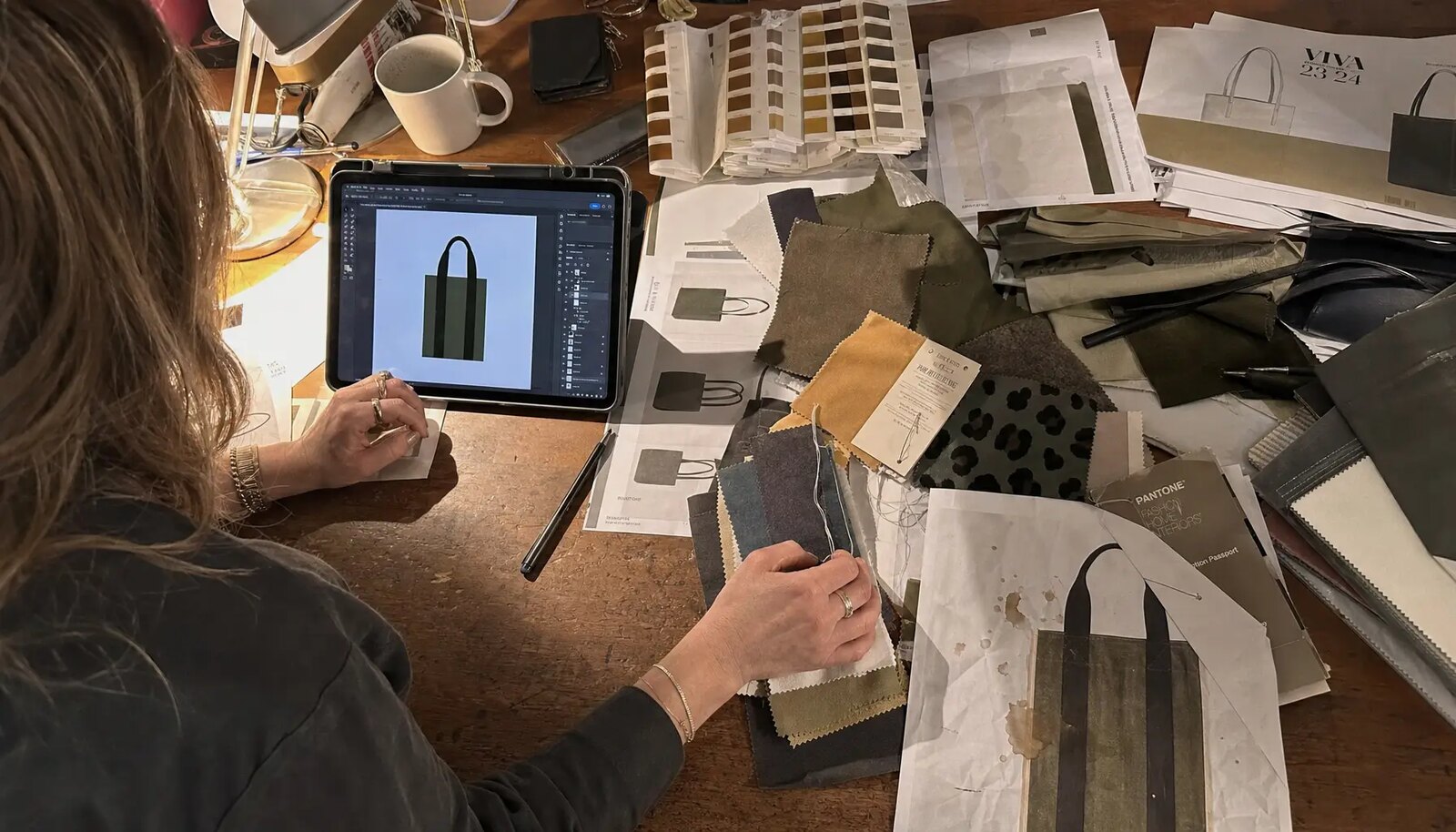
Why coffee roaster messenger bags need tighter control than basic totes
Canvas messenger bags for coffee roasters may look simple in a digital mockup, but bulk production has more risk than a flat tote. A messenger bag adds a flap, gusset, shoulder strap, closure hardware, pocket layout, possible lining, and several visible topstitching zones. Each added operation creates another place where a supplier can save cost or make a workmanship mistake.
The front flap is the main selling surface. On a cafe shelf, merch wall, or wholesale counter, buyers notice the logo, flap symmetry, edge stitching, and closure alignment before they inspect the inside. A slightly crooked print, weak magnet, wavy flap edge, or twisted strap can make a solid fabric bag feel cheap.
Coffee brands also tend to underestimate the real load. A bag planned for one 250 g coffee pack may later carry notebooks, sample bags, brew tools, staff materials, or retail purchases. That changes the inspection focus from decoration only to load-bearing construction.
- Highest-risk visible zone: front flap, including logo placement, flap symmetry, closure alignment, and edge topstitching.
- Highest-risk functional zones: strap attachment, side seams, bottom corners, zipper pocket, adjuster hardware, and flap hinge.
- Coffee environments add stain, rub, odor, and warehouse-handling risk from oils, chaff dust, cartons, and back-of-house storage.
- Treat retail merchandise bags differently from event giveaways; construction level and acceptable defects should not be the same.
Write an RFQ that factories can price without guessing
A useful canvas messenger bags for coffee roasters quality inspection checklist begins with the RFQ. If the request says only “14 oz canvas messenger bag with logo,” suppliers can quote very different products and still appear compliant. One quote may include lining, reinforced strap tabs, and an inside zipper pocket. Another may assume an unlined body, narrow strap, basic magnet, and bulk packing.
Write the RFQ as measurable lines, not as a sketch plus a target price. Finished width, height, gusset depth, flap drop, strap length range, strap width, pocket opening, logo size, fabric weight, lining, closure, labels, and packing should all be specified. Photos are useful for style direction, but they do not replace dimensions.
Rank the features too. A hidden magnet may be required for quick access. Decorative buckles may be optional. A rear slip pocket may add useful function, while five compartments may add cost and defect risk without improving the retail offer.
- Include: finished width, height, gusset, flap drop, strap width, strap length range, body GSM, lining, pocket count, closure, hardware finish, print method, packing, and carton count.
- State the channel: cafe retail, subscription packing, staff use, wholesale gifting, event distribution, or distributor resale.
- Clarify whether pricing includes samples, artwork screens, lab dips, hangtags, barcode stickers, individual polybags, and inspection support.
- Ask suppliers to list assumptions, exclusions, substitutions, and optional adders separately so quotes are comparable.
Choose canvas weight, finish, and color for actual cafe use
Fabric weight drives both cost and perceived quality. For value programs, a buyer may define 12 oz finished canvas around 400-420 GSM as a practical starting point. For retail-grade messenger bags, 14 oz finished canvas around 475-490 GSM is often a stronger target because it gives the body more structure and supports a large flap logo. These are procurement examples, not universal standards; the final spec should match load, budget, and factory capability.
Do not rely on the ounce label alone. Ask whether the quoted weight is greige fabric, dyed fabric, washed fabric, coated fabric, or finished fabric in the completed bag. Dyeing, washing, brushing, coating, and pre-shrinking can change the final hand feel and weight. Put the tolerance in the PO and keep the approved swatch as the reference.
Color changes the inspection plan. Natural canvas fits many coffee brands and prints well with dark ink, but it shows oil marks, dirt, creases, and handling stains. Black, navy, olive, brown, charcoal, and forest green hide grime better, but they bring shade variation, lint visibility, crocking, and print-opacity risk.
- Approve fabric after the same finishing route planned for bulk: dyed, washed, pre-shrunk, coated, brushed, or unwashed.
- For natural canvas, inspect stains, shade panels, dirt, weaving defects, odor, and unacceptable slubs.
- For dark dyed canvas, inspect shade consistency, crocking, lint visibility, and print opacity.
- Require the supplier to confirm whether quoted GSM is finished fabric GSM and what tolerance applies lot to lot.
Match the logo method to the flap and fabric
For coffee roasters, branding usually lives on the front flap. That makes the logo a quality-control item, not a decoration afterthought. Inspectors should compare bulk goods against the approved artwork, approved sample, and the bag’s closed appearance. A print can be centered on the flat panel and still look wrong after the flap folds over the body.
Screen printing is usually the most practical bulk method for bold one- or two-color roaster logos on medium to heavy canvas. It has a workable cost curve and is easier to control on flap panels than many heat transfers. For dark canvas, confirm whether the supplier will use a white underbase, extra pass, or different ink system to reach acceptable opacity.
Heat transfer can suit small runs, full-color artwork, or urgent trial programs, but it must be tested on the production canvas. Uneven pressure, rough texture, short dwell time, or incompatible film can lead to lifting, cracking, or a plastic hand feel. Embroidery can work as a small badge, woven patch, or side label; large dense embroidery on the flap may pucker the fabric.
- Define logo size, distance from flap edge, distance from center line, color reference, and placement tolerance before sampling.
- Inspect the logo with the bag closed, empty, and lightly loaded; visual centering matters more than flat-pattern centering alone.
- For screen print, confirm ink type, number of colors, underbase, curing method, and Pantone matching cost.
- For heat transfer, require adhesion, bend, and rub observation on the actual canvas texture.
Construction details that separate retail bags from weak promo bags
Start with the strap attachment. A messenger bag carries diagonal stress through the strap, side panels, and body seams. If the strap is held by a short single-row stitch, the bag may pass a quick photo review and still fail in use. Better construction uses box-and-cross stitching, bartacks, reinforced tabs, or strap ends integrated into the side seam with enough seam allowance.
Strap width affects comfort and value perception. A 38 mm strap is a practical minimum for many retail canvas messenger bags. For heavier daily-use positioning, 45-50 mm may feel better. Cotton webbing supports a natural brand look but can stretch, twist, or absorb dirt if too thin. Polyester webbing may hold shape more consistently, but the edge finish and hand feel should be approved.
The flap controls the face of the bag. If it is cut off grain, sewn under uneven tension, or pulled by a misaligned magnet, the logo can look skewed even when the print is correct. Inspect flap edge stitch spacing, seam allowance, binding, topstitch consistency, and closure alignment with the bag closed.
Pockets and lining add value but also add sewing operations. One inside zipper pocket and one rear slip pocket often provide a good balance for retail merchandise. Too many compartments increase puckering, zipper complaints, stitch variation, and inspection time.
- Use reinforced tabs, bartacks, or box-and-cross stitching at load-bearing points instead of single-row stitches.
- Specify stitch density if important, for example an agreed range suitable for the fabric, thread, and machine setup.
- Inspect seam allowance at side panels, bottom corners, flap hinge, pockets, and strap zones.
- Check hardware from both outside and inside; sharp rivet backs or exposed parts should not pass.
- For lined bags, inspect raw edges, trapped fabric, loose threads, puckering, and pocket attachment.
Use pre-production samples to lock the standard
The pre-production sample should not be treated as a courtesy sample. It is the moment to decide whether the bag closes straight, whether the flap sits flat after printing, whether the strap angle is comfortable, and whether the body holds shape when loaded. Problems are cheaper to correct before bulk cutting than after sewing is complete.
The PP sample should use actual production materials wherever possible: finished canvas, lining, webbing, hardware, thread, print method, logo size, label, and intended packing. If a factory sends a showroom sample or substitutes hardware to save time, call it a design sample. Do not make it the production reference unless every substitution is documented and later approved.
Sample review should be physical, not only visual. Load the bag to the buyer-defined target, close the flap, hang it, adjust the strap, open and close the magnet or buckle, run the zipper, and check whether the flap shifts. Photograph the front, back, side, top, inside, strap attachments, bottom corners, zipper ends, rivets, binding, and packing.
- Measure and record body width, height, gusset, flap drop, strap minimum and maximum length, pocket opening, and logo placement.
- For daily-use positioning, a buyer may request load observation around 8-10 kg; for light promotional use, define a lower target.
- Open and close magnets, buckles, zippers, and sliders repeatedly to find alignment, snagging, or weak-closure problems.
- Keep one approved sealed sample with the buyer or inspector and one signed reference sample at the factory where possible.
Set AQL rules and defect classifications before inspection day
Final inspection works best when the standard is written before cartons are ready. For canvas messenger bags, inspection should cover measurements, materials, print, sewing, hardware, function, packing, and documentation. If the PO does not define defects, buyer and supplier may end up negotiating on the production floor when rework time is limited.
Use your company’s normal AQL framework if one exists, but adapt the definitions to this product. Critical defects should block shipment or require full review. Examples include sharp hardware, mold, severe contamination, broken load-bearing attachment, unsafe rivet setting, or wrong product identity.
Major defects are issues likely to cause returns, rejection, or functional failure: wrong logo, wrong color, open seam, nonfunctional zipper, weak magnet, missing part, severe print skew, or measurement outside tolerance. Minor defects are small issues that do not affect function or front-facing sellability, such as a trimmable loose thread in a hidden area.
Canvas is sewn, so slight variation is normal. That does not make everything acceptable. Front-facing areas deserve stricter judgment than hidden interior seams, especially the flap, logo area, top edge, strap attachment, and closure zone.
- Critical examples: sharp hardware, mold, severe contamination, broken strap attachment, unsafe rivet, wrong style packed as correct style.
- Major examples: wrong fabric color, wrong logo, open seam, missing pocket, nonfunctional zipper, weak magnet, severe print skew, out-of-tolerance measurement.
- Minor examples: small hidden loose thread, slight non-facing stitch waviness, or natural slub within the approved standard.
- For mixed artwork or color orders, sample cartons across every version, not only the largest PO line.
Bulk inspection checklist for coffee roaster messenger bags
A practical inspection should follow the way defects are found: product identity, material, branding, workmanship, function, packing, and documents. Coffee roaster merchandise is often tied to seasonal launches, cafe openings, subscription campaigns, or wholesale promotions. Late quality problems can miss a selling window even when the issue is technically fixable.
Begin with identity and assortment. Confirm PO number, style code, artwork version, bag color, trim color, labels, hangtags, barcode stickers, carton marks, and packed quantity. Many disputes start because the wrong version was packed neatly. This is especially important for city editions, seasonal artwork, wholesale gifts, or multiple cafe group logos.
Next, inspect material and workmanship. Compare fabric shade and hand feel to the approved sample. Look for stains, odor, holes, slubs beyond tolerance, weave defects, abrasion, and panel shade variation. Review stitching at strap attachments, side seams, flap edges, bottom corners, pocket openings, zipper ends, binding, and inside seams.
Then test selected units as a user would. Load the bag, close the flap, adjust the strap, run the zipper, and check hardware alignment. A bag can look acceptable flat on a table and fail once it is lightly loaded.
- Product identity: correct PO, style, size, colorway, artwork file, label, hangtag, barcode, carton mark, and assortment.
- Material: approved shade, acceptable slub level, no oil stains, no mold, no strong odor, no holes, no abrasion, and no panel shade mismatch.
- Branding: logo position, registration, opacity, curing, color match, edge sharpness, no smears, no transfer marks, and no skew when closed.
- Workmanship: stitch density, no skipped stitches, no open seams, no raw fray beyond tolerance, neat binding, symmetrical flap, clean corners, and secure pocket seams.
- Function: strap adjustment, load-bearing attachment, zipper smoothness, magnet alignment, buckle operation, pocket usability, and flap closure when lightly loaded.
- Packing: correct count, correct assortment, tissue or interleave where needed, carton gross weight within limit, clean export cartons, clear shipping marks, and packing list match.
Compare quotes without letting low prices hide spec drift
Two quotes can look close on a spreadsheet while the actual bags are very different. The biggest price drivers are finished GSM, lining, strap width, reinforcement, pocket count, hardware quality, print method, fabric finishing, and packing. A low quote is not automatically bad; it may simply be based on the lightest interpretation of the brief.
MOQ structure matters for coffee roasters because orders often involve seasonal drops, limited logos, cafe group programs, or mixed colorways. A supplier may show a low unit price and later add screen charges, lab dip charges, trim surcharges, colorway minimums, barcode fees, or special packing costs. Ask for these before comparing vendors.
Push suppliers to state what is included and what is optional. “Metal buckle” is not enough. Ask for material, finish, slider type, rivets, and whether plating can stain fabric. “Screen print” is not enough. Ask about size, colors, underbase, ink type, curing, and Pantone matching. “14 oz canvas” is not enough. Ask whether it is finished fabric weight and what tolerance applies.
- Compare finished GSM, not headline canvas ounce only.
- Check whether lining, zipper pocket, rear pocket, magnet, buckle, adjustable slider, woven label, hangtag, and packing are included.
- Ask for price breaks at 500, 1,000, and 3,000 pieces to understand launch and reorder economics.
- Compare landed cost, including carton cube, gross weight, packing style, and palletization if applicable.
- Require every supplier to list exclusions, substitutions, assumptions, and optional adders separately.
Packing and logistics checks that protect the sellable face
A well-sewn messenger bag can still arrive unsellable. Poor packing can cause print rub, flap creasing, hardware abrasion, moisture exposure, or carton crushing. Treat the front flap as the sellable face. If hardware from one bag presses into the printed flap of another, use tissue or interleave. If bags are over-compressed, flap edges can crease and magnets can leave pressure marks.
Individual polybags are not always necessary. They may be required for retail scanning, marketplace fulfillment, barcode separation, compliance, or dust control. For wholesale shipments to cafes or distributors, flat bulk packing with controlled interleave may be more efficient. Base the decision on channel requirements, print rub risk, moisture risk, and how cartons will be handled.
Carton count should balance cube efficiency with handling safety. Messenger bags are bulkier than totes because of flaps, straps, pockets, and hardware. A practical range may be 10-20 pieces per export carton, but the right count depends on bag size, hardware, individual packing, and carton strength. State a gross weight limit so receiving teams can handle cartons safely.
- Protect the flap logo from direct contact with buckles, rivets, zipper pulls, and rough carton surfaces.
- Use individual polybags only when required by retail, barcode, dust-control, or compliance needs; otherwise evaluate flat bulk packing with interleave.
- Set carton gross weight and dimensions in the PO to avoid oversized, crushed, or hard-to-handle cartons.
- Check that mixed artwork, colorways, and PO lines are separated or assorted exactly as ordered.
- Include packing photos in the inspection report: open carton, folded bag orientation, interleave, label placement, carton mark, and sealed carton.
Specification comparison for buyers
| Spec decision | Practical buyer option | When it fits | Buyer risk to check |
|---|---|---|---|
| Canvas body weight | Buyer-defined example: 12 oz finished canvas around 400-420 GSM for value programs; 14 oz finished canvas around 475-490 GSM for retail programs; tolerance agreed in PO | 12 oz can work for event gifting or light merch. 14 oz is safer for retail, staff use, notebooks, coffee packs, and daily carry positioning | Quotes may use greige weight instead of finished weight. Require finished GSM after dyeing, washing, coating, or printing and compare to the approved swatch |
| Finished dimensions | Example retail size: 36-40 cm W x 27-30 cm H x 8-10 cm gusset, with flap drop and strap range specified separately | Allows true quote comparison and prevents size reduction to save fabric | Pattern size and finished closed-bag size differ. Define measurement points and tolerances for body, flap alignment, and logo placement |
| Lining | Unlined with bound seams for value orders; 210D polyester, rPET polyester, or 6-8 oz cotton lining for premium orders | Unlined suits simple gifting. Lined suits retail, zipper pockets, darker interiors, and cleaner presentation | Lining can hide weak seams, short allowance, trapped fabric, and loose threads. Inspect inside corners and pocket attachment |
| Shoulder strap | 38 mm minimum webbing for most retail bags; 45-50 mm for heavier daily-use positioning; reinforced tabs or box-and-cross stitch at load points | Important when users carry coffee packs, tablets, notebooks, sample kits, or tools | Thin webbing, single-row stitches, loose sliders, or side seams carrying all force can fail. Define sample load observation target in advance |
| Closure system | Hidden magnetic snap for convenience; buckle-and-strap trim only when styling justifies added cost | Good for cafe retail, staff bags, and subscription gifts where quick access matters | Off-center magnets make the flap crooked. Weak magnets open under load. Sharp rivets, scratches, and plating stains should be major defects |
| Logo method | Screen print for bold 1-2 color logos; heat transfer only after adhesion testing; embroidery mainly as patch, badge, or small label | Screen print usually gives the best bulk balance on medium or heavy canvas | Large embroidery can pucker the flap. Transfers can lift on textured canvas. Require placement tolerance, rub check, opacity approval, and underbase decision |
| Pocket layout | One inner zipper pocket plus one rear slip pocket for many retail programs | Adds function without excessive sewing operations | Extra compartments increase cost and defect points. Inspect pocket openings, zipper smoothness, pocket bag security, and symmetry |
| Packing | Flat pack 10-20 pcs per carton with tissue/interleave where hardware can touch print; individual polybag only when required | Balances protection, cube, and warehouse handling for wholesale and cafe group orders | Underpacking causes print rub, flap creases, hardware abrasion, moisture exposure, and carton compression damage |
Buyer checklist before sampling
- Define the use case before quotation: retail sale, staff carry bag, subscription insert, wholesale account gift, event giveaway, or seasonal merch drop.
- State finished measurements: width, height, gusset depth, flap drop, strap length range, strap width, pocket opening width, and measurement tolerance.
- Specify finished fabric weight in GSM and ounces, and confirm whether quoted weight is greige, dyed, washed, coated, pre-shrunk, or finished fabric.
- Approve canvas color by swatch or lab dip. State whether natural slubs are acceptable and what level of stain, oil mark, shade variation, or odor is not acceptable.
- Define construction: seam allowance, stitch density range if required, seam binding or overlock method, bottom reinforcement, corner turning, strap tab construction, and stress-point reinforcement.
- Set logo requirements: artwork file, logo size, number of colors, ink type, underbase requirement, print position tolerance, curing expectation, and rub or crocking check.
- Require a pre-production sample using actual fabric, trim, print method, lining, strap width, hardware, labels, and intended packing before bulk cutting.
- List hardware details: magnet type and placement, buckle or slider material, plating finish, zipper size and puller, rivet setting, sharp-edge standard, and corrosion expectations.
- Confirm MOQ by bag color, artwork, fabric dye lot, trim color, and packing version; request price breaks at 500, 1,000, and 3,000 pieces if reorders are possible.
- Define export packing: pieces per carton, carton gross weight limit, carton dimensions, shipping marks, PO separation, polybag rules, tissue interleave, hangtag, barcode, and silica gel if needed.
Factory quote questions to send
- What is the exact finished canvas GSM after all finishing, and what lot-to-lot tolerance do you apply? Is the quoted weight greige, dyed, washed, coated, or finished fabric weight?
- What finished dimensions, flap drop, gusset depth, strap length range, and dimensional tolerances are included in your quote?
- Is the bag unlined or lined? If lined, what material, denier or GSM, color, seam finish, and pocket bag fabric are included?
- What webbing material, strap width, strap thickness, adjuster type, reinforcement stitch pattern, and thread type are included in the base price?
- Does the quote include magnetic snaps, buckles, rivets, inner zipper pocket, rear slip pocket, woven label, hangtag, base reinforcement, and retail packing, or are these adders?
- Which print method is included, how many colors are covered, what is the maximum print size, and what extra cost applies for Pantone matching, white underbase, or artwork screens?
- Can the pre-production sample be made with actual production fabric, hardware, webbing, lining, print method, labels, and packing? If anything is substituted, what is substituted?
- What MOQ applies by fabric color, artwork, trim color, and packing method? Can one order include mixed colorways or mixed logos, and how are cartons assorted?
- What lead time is needed for artwork setup, lab dip, material booking, PP sample, bulk cutting, printing, sewing, packing, and final inspection after sample approval?
- What test records or inspection references can you provide for GSM, shrinkage, colorfastness to rubbing, print adhesion, zipper function, hardware finish, and packing?
Quality-control points to confirm
- Finished body width, height, gusset, flap drop, strap length range, and pocket opening should match the PO. Buyer-defined examples are plus or minus 1 cm for body dimensions and plus or minus 0.5 cm for logo placement and flap alignment, unless otherwise agreed.
- Fabric weight should be checked as finished fabric, not supplier declaration only. A common procurement example is plus or minus 5% against approved finished GSM, but the PO should define the final tolerance.
- Canvas shade, hand feel, weave density, slub level, odor, stains, oil marks, holes, abrasion, and panel-to-panel color variation should match the approved swatch or PP sample.
- Logo placement, color, opacity, registration, edge sharpness, curing, and rub resistance must match the approved sample. Front-flap skew should be assessed with the bag closed and lightly loaded.
- Strap attachments must show the approved reinforcement pattern, with no skipped stitches, loose bartacks, seam grin, fabric tearing, webbing slippage, or thread breakage after agreed load observation.
- Magnetic snaps, zippers, buckles, sliders, rivets, and adjusters must align cleanly, operate smoothly, and show no sharp edges, weak closure, plating damage, mis-set parts, or fabric staining.
- Inside seams should be bound, overlocked, or finished as specified, with no raw fray beyond tolerance, no exposed seam allowance causing unraveling, and no trapped loose threads in corners.
- Flap shape should be symmetrical when empty and when lightly loaded. Curling, twisting, diagonal closure, or off-center magnet pull should be classified according to visibility and function.
- Pockets should be usable: zipper teeth run smoothly, pullers do not snag, pocket bags are secured, openings match the spec, and pocket stitching is acceptable for retail presentation.
- Cartons must match packing count, gross weight limit, dimensions, assortment rules, PO line separation, barcode rules, hangtag placement, carton marks, and packing list.