Start with the bookstore use case
A canvas messenger bag for a university bookstore should be specified from its selling role, not from a catalog photo. The same silhouette can be a welcome-week item, a mid-priced campus retail product, a faculty gift, a department order, or a private-label bag expected to sell through several semesters. Each role changes the acceptable canvas weight, reinforcement level, logo method, packing standard, and inspection budget.
Write one use-case sentence before asking for quotes. For example: the bag must carry a 14-inch laptop, two medium textbooks, a notebook, charger, keys, and a small bottle for daily student use. That sentence turns vague durability language into a practical load target and helps every supplier quote the same product promise.
Procurement should also name failure points that would create returns, poor reviews, or receiving delays. For bookstore messenger bags, the highest-risk failures are strap tear-out, bottom seam opening, zipper separation, logo peeling, strong odor, color transfer, wrong school mark, and carton labeling errors.
- Name the program type before quoting: retail, orientation, alumni, department, staff, or private-label.
- Translate the program into expected contents, target loaded weight, carry style, selling window, and retail price position.
- Use the same use-case statement in the RFQ, sample approval notes, purchase order, and inspection brief.
- Reject unsupported claims such as heavy duty unless the supplier agrees to specific checks and pass criteria.
Specify canvas by weight, finish, and tolerance
Canvas weight is often stated in ounces per square yard, but procurement should also request approximate GSM and the stage of measurement. As a practical reference, 12 oz canvas is about 407 GSM, 14 oz is about 475 GSM, and 16 oz is about 542 GSM. Those figures can shift with dyeing, washing, coating, and finishing, so the quote should state whether the weight is greige, dyed, washed, coated, or fully finished.
For many university bookstore messenger bags, 12 oz to 14 oz canvas is a strong working range when reinforcement is properly engineered. Ten-ounce canvas may be suitable for lighter promotional programs. Sixteen-ounce canvas can improve structure and perceived value, but it adds cost, sewing difficulty, carton weight, and freight exposure. Heavier cloth does not fix weak strap anchors, poor seam allowance, or an underspecified zipper.
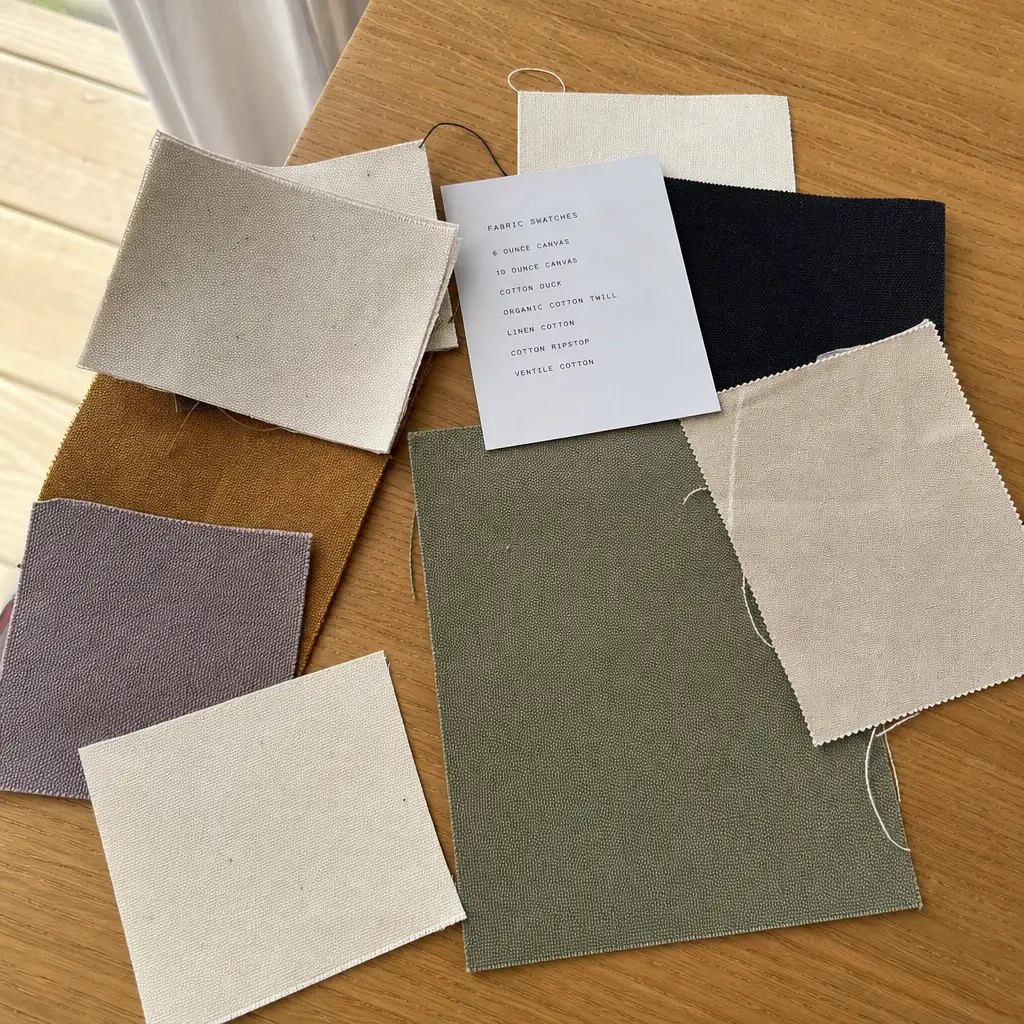
Finish affects performance as much as weight. Natural, pigment-dyed, enzyme-washed, waxed-look, and water-resistant finishes differ in shrinkage, hand feel, odor, colorfastness, and logo adhesion. For dark navy, black, maroon, forest green, saturated red, and other school colors, approve lab dips or strike-offs before bulk fabric release.
- List body canvas weight in ounces and approximate GSM.
- State whether the tolerance applies before or after finishing.
- Require a written fabric weight tolerance, commonly plus or minus 5 percent unless the supplier proposes a tighter verified range.
- Confirm shrinkage expectations for dyed, washed, or coated canvas.
- Run dry and damp color-transfer checks on dark canvas.
- Confirm whether the finish affects screen print curing, embroidery puckering, transfer adhesion, or odor.
Build the bag as a bill of materials
A useful messenger bag quote should read like a compact bill of materials. It should identify body canvas, lining, reinforcement panels, thread, binding, zipper, slider, buckle, snaps, webbing, labels, hangtags, unit packing, and master carton. This keeps suppliers from quoting similar-looking bags with different load-bearing components.
Strap construction deserves special attention because campus use concentrates stress at a few points. Many bookstore messenger bags use webbing in the 38 mm to 50 mm range, roughly 1.5 to 2 inches, depending on style and target load. The strap should be evaluated as a system: webbing, adjuster, anchor patch, stitching, and body panel must all hold together.
Stitching must be described clearly enough for inspection. Ask for stitch density, seam allowance, thread type, reinforcement patch size, bartack count, and box-X placement. The highest-risk points are strap anchors, side tabs, handle bases, flap hinges, bottom corners, zipper ends, pocket openings, and laptop sleeve seams.
- Specify finished width, height, gusset, flap drop, strap range, pocket size, laptop sleeve size, and logo placement.
- Require reinforcement patches behind strap anchors and other load-bearing points.
- Use bartacks, box-X stitching, or an approved equivalent at side tabs and strap anchors.
- Include zipper ends, internal pockets, and the laptop sleeve in the reinforcement map.
- Require close-up photos of load-bearing stitching from the approved pre-production sample.
Use practical durability checks, not vague claims
A durability testing checklist for university bookstore canvas messenger bags should be repeatable and written before bulk production. The checks below are buyer-defined practical acceptance criteria, not formal certified standards unless the buyer links them to a recognized method such as ASTM, ISO, AATCC, or a retailer-specific protocol. That distinction matters because practical checks are useful for procurement decisions, while certified claims require controlled methods and documentation.
For daily campus carry, many buyers can start with a practical test weight such as 15 lb or 7 kg, then adjust up or down based on the product promise. After a 24-hour static hold, there should be no strap-anchor tearing, seam opening, broken stitches, hardware distortion, zipper separation, or flap deformation that affects function. Minor cosmetic compression may be acceptable only if it matches the approved standard.
Dynamic checks matter because students drop, swing, overfill, and carry bags unevenly. A loaded drop check exposes weak bottom corners. A loaded carry check reveals strap slip and balance issues. Closure cycling shows whether zipper alignment survives use. Rub and color-transfer checks protect the school mark and reduce complaints about staining.
- Static loaded hold: 15 lb or 7 kg for 24 hours, with no functional failure at anchors, seams, bottom, flap, hardware, or zipper.
- Loaded drop check: 5 drops from 30 in or 75 cm onto base, corner, and side positions, with no seam opening, hardware breakage, or closure failure.
- Loaded carry check: 20 minutes of shoulder and crossbody carry or an agreed route, with strap slippage no more than 1 in or 25 mm.
- Zipper cycle check: 200 open-close cycles on sample bags, including loaded checks, with no jamming, tooth separation, slider failure, or seam distortion.
- Logo rub check: 20 dry rubs and 20 damp rubs with white cloth, with no unacceptable ink loss, cracking, peeling, or edge lift.
- Color-transfer check: dry and damp white-cloth rubs on dark canvas, with no transfer that would be visible on light clothing or light packaging.
- Odor check: open packed cartons after storage and reject mildew, solvent, or strong coating odor outside the agreed standard.
Approve samples against production reality
A sample is valuable only if it represents production. Confirm that the pre-production sample uses final canvas, finish, webbing, hardware, thread, lining, decoration, labels, and packing. If any component is temporary, document the substitution and decide whether a corrected sample is required before production release.
Sample review should be physical and loaded. Measure the bag flat, then load it with the intended contents. Adjust the strap, open and close closures, pull gently on pockets, check the laptop sleeve, and carry the bag as a student would. Then judge it as retail merchandise: logo straightness, flap alignment, hand feel, shelf appearance, and perceived value all affect sell-through.
Keep a labeled golden sample after approval. Note supplier name, item number, version, approval date, fabric weight, color, logo method, trim details, packing method, and any tolerance decisions. For reorders, the golden sample is the fastest way to catch drift in fabric weight, hardware finish, logo placement, and stitch quality.
- Confirm the sample uses final materials, trims, decoration, labels, and packing.
- Measure body, gusset, flap, strap range, pockets, laptop sleeve, and logo placement against written tolerances.
- Load the sample before judging strap comfort, closure function, and body distortion.
- Inspect inside seams, pocket attachments, zipper ends, binding, and reinforcement patches.
- Require a revised sample when fabric, finish, hardware, logo method, reinforcement, or packing changes.
- Store approved samples for inspection, receiving, and reorder comparison.
Choose campus branding by wear risk
University marks should arrive clean and remain presentable after normal handling. Screen printing can be practical for bold flat artwork on cotton canvas, but performance depends on fabric texture, ink system, curing, opacity, and placement. A print placed across a flap fold or under a strap path will wear faster than the same print placed on a lower-friction panel.
Embroidery can create a premium look on heavier canvas, but it should be checked for puckering, backing stiffness, thread loops, and panel distortion. Woven labels and patches are useful when the bookstore wants a durable identity detail rather than a large printed mark. Heat transfers can support detailed artwork or shorter runs, but textured canvas makes flex, rub, and edge-lift testing important.
If decoration is subcontracted, assign responsibility before production. The buyer should know who owns misprints, off-center labels, poor registration, embroidery puckering, transfer lift, and scuffing that happens after decoration and before packing.
- Screen print: approve opacity, curing, placement, registration, and rub resistance.
- Embroidery: inspect puckering, backing, thread tension, and panel distortion.
- Woven label: use for durable side tabs, flap details, internal labels, and smaller brand marks.
- Patch: inspect edge stitching, adhesive if used, and placement consistency.
- Heat transfer: test edge lift, cracking, flexing, and abrasion on textured canvas.
- Avoid logo placement across flap folds, zipper tracks, strap friction zones, and pocket edges.
Compare cost, MOQ, and schedule by component
MOQ is shaped by fabric roll size, dye lot, cutting efficiency, trim purchasing, decoration setup, labor batching, and packing requirements. A supplier may price 1,000 pieces much better than 300 pieces because setup costs are spread across more units. That can be reasonable, but procurement needs quantity tiers before choosing a pilot, launch order, or reorder plan.
Ask for pricing at realistic breaks, such as 300, 500, 1,000, and 3,000 pieces when those quantities match the bookstore's buying pattern. Separate blank bag cost, fabric upgrade, lining, labels, hangtags, hardware, decoration, packing, samples, inspection, and export carton cost. This exposes whether a lower quote removed reinforcement, barcode labels, or inspection instead of improving price.
Lead time should be shown by stage: artwork review, lab dip or strike-off, sample making, sample freight, revision, pre-production approval, material booking, cutting, sewing, decoration, final inspection, packing, and ex-factory release. Semester starts, orientation, admissions events, homecoming, and holiday selling windows make schedule accuracy as important as unit price.
- Request MOQ by body color, lining color, canvas weight, logo method, custom label, hardware, and packing style.
- Ask for tiered pricing instead of one quantity.
- Separate required costs from optional upgrades.
- Confirm who pays for revisions caused by buyer changes versus supplier failure against the approved spec.
- Build sample review, durability checks, and final inspection time into the calendar.
- Do not approve bulk production before final materials, decoration, and packing are confirmed.
Set AQL inspection and shipment-release rules
Final inspection should not rely on general impressions. Define critical, major, and minor defects before the inspection date. Critical defects include unsafe sharp hardware, mildew, severe odor, wrong school mark, or structural failure. Major defects include strap-anchor weakness, broken zipper, missing reinforcement, incorrect dimensions outside tolerance, poor logo placement, or carton count errors. Minor defects include small loose threads or slight cosmetic marks within the agreed limit.
Many consumer goods buyers use ANSI/ASQ Z1.4 or ISO 2859-1 as common attribute sampling references when appropriate for the order. A practical plan may set critical defects at 0, major defects around AQL 2.5, and minor defects around AQL 4.0, but the buyer should set levels according to risk, retail promise, and receiving policy. These AQL levels are inspection choices, not proof that the bag is certified to a durability standard.
For a 1,000-piece shipment, a buyer using general inspection level II under common single-sampling tables may inspect 80 units, depending on the selected standard and plan. Procurement should not treat this example as universal; it is a planning illustration. The purchase order should state the chosen standard, inspection level, AQL limits, defect definitions, and whether failed lots require sorting, rework, reinspection, discount approval, or cancellation before shipment release.
- Critical defects: wrong logo, unsafe hardware, mildew, severe odor, structural failure, or prohibited material issue; acceptance should normally be 0.
- Major defects: failed load point, broken zipper, missing reinforcement, wrong dimensions, poor logo placement, barcode error, or carton count discrepancy.
- Minor defects: trim thread, slight washable mark, minor cosmetic inconsistency, or small packing presentation issue within the agreed standard.
- Select cartons from different pallet positions or lot areas, not only the easiest cartons near the door.
- Record inspection results with photos, defect counts, carton numbers, measurements, and corrective actions.
- Release shipment only when inspection results, packing checks, carton labels, and required documents meet the purchase order.
Control packing and bookstore receiving
Packing is part of product quality. Canvas messenger bags can crease across the flap, scuff at the logo panel, flatten at the base, absorb moisture, or arrive with distorted hardware if folded poorly. Approve the fold method and packed presentation before production, especially when the bag will go directly to retail shelves, orientation kits, or department distribution.
Receiving requirements should be written into the purchase order. Confirm master carton quantity, inner pack if used, carton dimensions, gross weight, carton strength, PO number, SKU, color, barcode, country of origin where required, and destination details. If the bookstore, campus warehouse, or distributor has routing rules, send them before cartons are printed.
Moisture control may matter depending on route, season, and storage time. Canvas can hold odor if packed damp or stored poorly. For long routes or humid seasons, discuss carton liners, desiccants, pallet protection, and maximum carton weight. Good bags can still be delayed or rejected if cartons are mislabeled, crushed, damp, or counted incorrectly.
- Approve a fold method that protects the flap, logo panel, base, zipper, and hardware.
- Check carton count, carton strength, gross weight, SKU labels, barcodes, and PO marks.
- Use moisture controls when route, season, and storage conditions justify them.
- Open cartons from top, middle, and bottom positions during inspection.
- Confirm overage, shortage, and mixed-carton policies before shipment.
- Tie shipment release to agreed inspection and packing requirements where commercially appropriate.
Specification comparison for buyers
| Sourcing route | Best fit order type | Lead time and MOQ profile | QC control and cost exposure |
|---|---|---|---|
| Direct factory | Repeat private-label bookstore program with defined canvas weight, reinforcement, lining, logo, labels, carton marks, and inspection terms | Usually longer because fabric booking, sampling, cutting, sewing, decoration, packing, and inspection are controlled in sequence; MOQ is often driven by fabric color, trim, and line setup | Strongest construction control when the spec is complete; buyer must manage sample approval, defect limits, inspection access, and shipment-release criteria |
| Trading company | Custom or semi-custom program where procurement wants one vendor to coordinate fabric, sewing, decoration, packing, and export documents | Similar production timing to a factory, with possible sourcing convenience; MOQ depends on the actual sewing factory, decorator, and material suppliers | Useful coordination layer, but require disclosure of where sewing and decoration occur, who owns corrective action, and whether inspection can be performed independently |
| Stock importer plus local decoration | Pilot order, urgent semester program, smaller department order, or event merchandise where existing blank construction is acceptable | Fastest route when blanks are in stock; lower MOQ may be possible, but color, dimensions, hardware, and reinforcement choices are limited | Lower development risk but weaker control over canvas weight and load-bearing construction; inspect blank bags before spending on decoration |
| Domestic decorator using supplied blank | Short-run bookstore logo program where the chosen blank already meets the buyer's durability expectation | Decoration timing can be short after artwork approval; MOQ follows decorator setup minimums and blank availability | Good logo control and faster rework; buyer still carries risk if the blank fails strap, seam, zipper, or packed-carton checks |
| Local cut-and-sew shop | Premium small batch, development sample, campus-made story, or complex revision cycle before a larger program | Flexible sampling and low MOQ may be possible, but unit cost is higher and scale can be limited | Strong communication and revision speed; confirm whether the shop can document fabric, trims, reinforcement, durability checks, labeling, and packed-carton requirements |
| Material | 10-16 oz canvas, washed canvas, rPET canvas, lining fabric, interfacing, and hardware finish | Before price comparison | Different cloth weights, backing, or certification claims make quotes hard to compare |
| Construction | flap shape, strap webbing, buckle, D-ring, inner pocket, zipper pocket, seam allowance, and load path | Before sampling | Weak stress points create returns and failed inspections |
| Decoration | embroidery, woven patch, leather patch, metal label, or print placed away from flap folds and hardware pressure | Before artwork approval | The wrong method can crack, bleed, pucker, or fail on the chosen fabric |
Buyer checklist before sampling
- Define the selling role: retail merchandise, orientation kit, alumni item, faculty gift, department order, staff issue, or private-label bookstore product.
- State the intended carry load in the RFQ, such as a 14-inch laptop, two textbooks, notebook, charger, keys, and bottle, with a practical test weight such as 15 lb or 7 kg for daily campus carry.
- Specify body canvas weight in ounces and approximate GSM, including whether the stated weight is greige, dyed, washed, coated, or finished.
- Set written tolerances for fabric weight, finished dimensions, strap length, logo placement, color, shrinkage, carton count, barcode placement, and packed presentation.
- Map load-bearing points: strap anchors, side tabs, handle bases, flap hinge, bottom corners, zipper ends, laptop sleeve seams, and pocket openings.
- Require reinforcement patches plus bartacks, box-X stitching, or an approved equivalent at each load-bearing point.
- Choose logo placement after checking flap fold lines, strap abrasion paths, zipper tracks, pocket edges, and high-touch areas.
- Approve a physical pre-production sample made with final canvas, trim, decoration, labels, and packing before bulk cutting or decoration begins.
- Run practical checks for static load, loaded drop, loaded carry, strap slip, zipper cycling, logo rub, color transfer, odor, dimensions, and packed cartons before shipment.
- Define AQL level, sample size, defect classes, carton selection, barcode checks, overage policy, and shipment-release rules directly in the purchase order.
Factory quote questions to send
- What exact canvas weight, weave, finish, and approximate GSM are included for the body, flap, gusset, bottom, lining, and reinforcement panels?
- Is the quoted canvas weight measured before dyeing, after dyeing, after washing, after coating, or after all finishing, and what production tolerance do you allow?
- What are the finished dimensions and tolerances for width, height, gusset, flap drop, strap range, pocket size, laptop sleeve size, and logo placement?
- What thread, stitch density, seam allowance, binding method, and reinforcement method will be used at strap anchors, side seams, flap hinges, bottom corners, handles, and pocket openings?
- How many bartacks, box-X stitches, or equivalent reinforcement points are included per bag, and can you provide close-up photos from the pre-production sample?
- What strap width, webbing composition, webbing thickness, adjuster material, buckle finish, and shoulder pad construction are included in the quoted price?
- Will the pre-production sample be checked to our practical durability criteria, such as a 15 lb or 7 kg static hold, loaded drops, zipper cycling, logo rub, and color transfer, unless we approve different criteria in writing?
- Which logo methods can you support on this canvas finish, and who is responsible if decoration is subcontracted and fails rub, adhesion, registration, or placement inspection?
- Can you separate the quote into blank bag cost, fabric upgrade, decoration, woven label, hangtag, hardware, packing, sample, inspection, and export carton cost?
- What is your MOQ by body color, canvas weight, lining color, logo color count, custom hardware, woven label, hangtag, and packaging style?
Quality-control points to confirm
- Fabric weight, color, hand feel, weave, and finish match the approved golden sample and remain within the written tolerance band.
- Canvas panels are cut on grain, and the flap, front panel, back panel, gussets, and lining do not twist or skew after loading.
- Finished dimensions stay within tolerance for body width, height, gusset, flap drop, strap length, pocket position, laptop sleeve, and logo placement.
- Strap width, webbing density, adjuster hardware, reinforcement patches, and attachment method match the signed construction specification.
- Bartacks, box-X stitches, or approved equivalent reinforcement are present at all load-bearing points, with no missing rows, loose starts, broken threads, or skipped ends.
- Stitch density and seam allowance are consistent on side seams, bottom seams, flap attachment, pocket edges, handle points, binding, and lining seams.
- No skipped stitches, loose threads, seam puckering, raw edge exposure, needle damage, oil spots, stains, odor, mildew, or visible fabric defects appear on inspected units.
- Zippers, snaps, buckles, magnetic closures, and hook-and-loop areas function smoothly when the bag is empty and when loaded to the agreed test weight.
- Print opacity, logo placement, color alignment, registration, edge sharpness, curing, and rub resistance match the approved decorated sample.
- Embroidery, woven labels, patches, or heat transfers are secure, centered within tolerance, and free from backing show-through, puckering, thread loops, or edge lift.