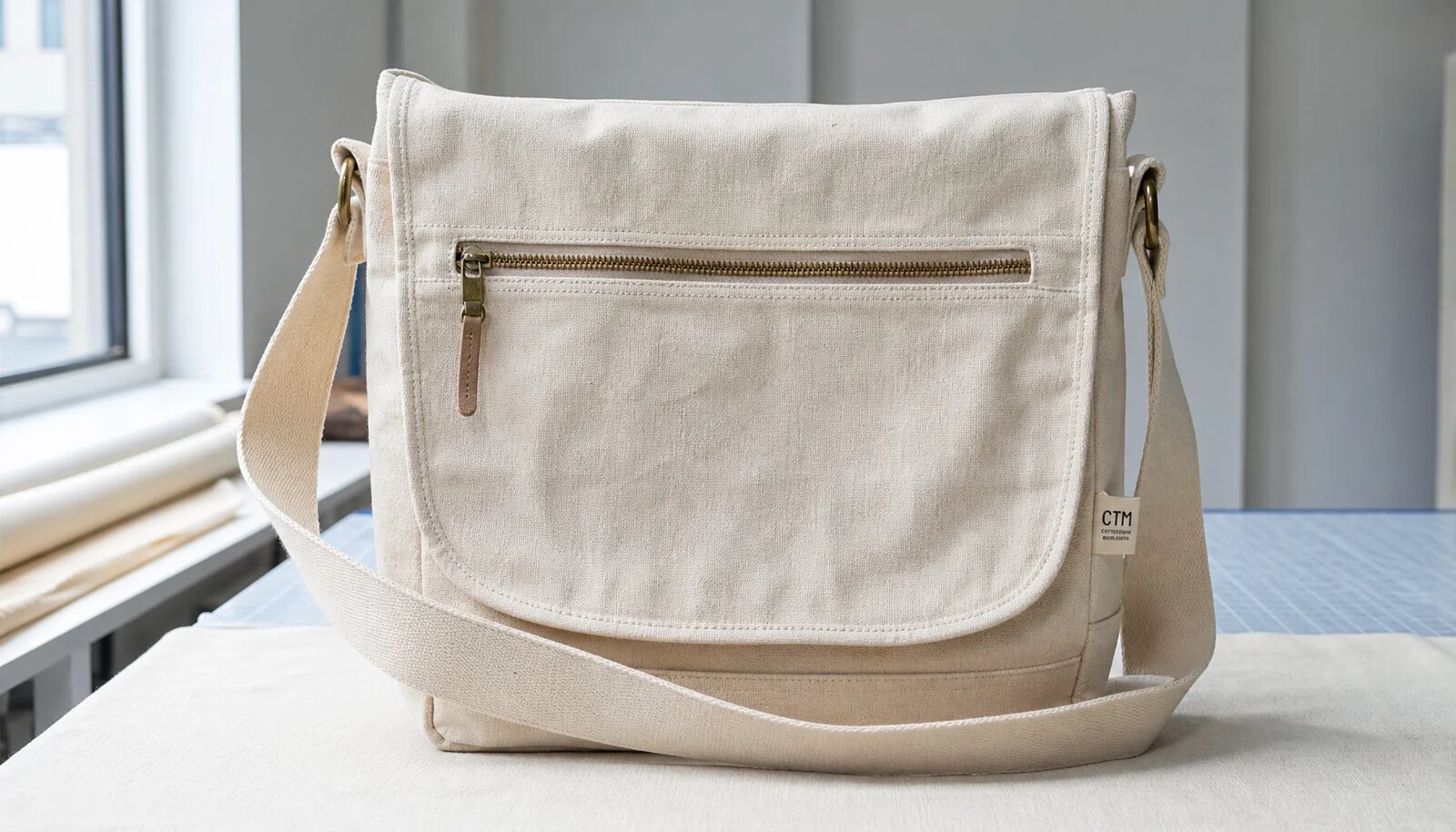
Start With The Event Load, Not The Bag Photo
A useful canvas messenger bags durability testing checklist for event planners starts with the real event load. A product photo tells the supplier the general style, but it does not define what the bag must survive. A registration giveaway with an agenda, map, pen, badge insert, and slim notebook may weigh less than 1.5 kg. A speaker, staff, or VIP bag with a tablet, metal bottle, charger, printed deck, and sponsor samples can move into the 3 kg to 5 kg range. Those two bags should not be quoted or tested as the same product.
Write the use case before requesting price. State who receives the bag, how long they will carry it, whether it will be pre-packed, and whether it must remain presentable after the event. A one-day handout can usually accept lighter construction than a staff bag used across setup, registration, backstage movement, and travel. A sponsor-branded bag needs extra cosmetic control because crooked logos, scuffed print, and distorted flaps are visible to stakeholders before anyone studies the sewing.
Durability includes more than shoulder carry. Event bags are folded, stacked, carton-packed, pulled from pallets, handled by venue staff, unpacked quickly at registration, and sometimes loaded with inserts days before distribution. If bags are pre-kitted, the carton compression and fold direction can damage the logo before attendees see it. The RFQ should describe this handling chain so suppliers can quote the right fabric, strap, closure, reinforcement, and packing standard.
- List every planned insert and estimate the packed bag weight in kg or lb before requesting quotes.
- Separate attendee handout, staff-use, VIP gift, sponsor kit, resale, and room-drop requirements.
- State whether bags will be handed out empty, pre-kitted, bulk packed, individually polybagged, or packed by logo version.
- Define whether the bag must look good after one day, several event days, or repeated post-event use.
- Include venue handling in the spec: folding, carton stacking, pallet unloading, fast distribution, and temporary storage.
Turn The Use Case Into A Buyable Specification
A B2B bag specification should remove supplier guesswork. Canvas weight matters, but it is only one line of the build. A controlled spec should name the finished fabric weight, body size, gusset depth, flap shape, lining, pocket layout, strap width, reinforcement, closure, decoration method, and packing method. Without those details, one supplier may quote an unlined 12 oz cotton canvas bag while another quotes a lined 16 oz bag with reinforced strap anchors and a stronger carton. The prices will look comparable even though the products are not.
Use finished fabric weight, not vague terms such as medium canvas or heavy cotton. For many event messenger bags, 12 oz canvas can work for flat printed material and light attendee kits. A 14 oz fabric gives more structure for mixed contents. A 16 oz or heavier canvas is better when the bag may carry a tablet, drinkware, samples, or staff gear. If your supplier quotes in GSM, ask for the finished GSM after dyeing or finishing. If the supplier quotes in ounces, confirm whether it is finished fabric weight, because mill labels and local naming conventions vary.
Construction choices should follow the load. A flat unlined bag is cost efficient and easy to pack, but it may show interior seams and wrinkle quickly. A lined bag looks cleaner and protects contents better, but it requires inspection for pocket alignment, trapped threads, turning quality, and seam bulk. A gusset increases capacity and improves packed shape, but adds stress points at corners and side seams. If the bag must photograph well for a sponsor or be sold as merchandise, specify flap alignment, front-panel flatness, and whether the base needs reinforcement or interfacing.
- State finished fabric weight in GSM or ounce class after finishing, with an approved swatch reference.
- Define construction: unlined, full lining, bound seams, gusset, base reinforcement, internal pocket, front pocket, and flap style.
- Specify typical tolerances such as +/-10 mm for body dimensions, +/-15 mm for strap length, and +/-5 mm for logo placement unless tighter control is required.
- Use one written spec sheet for all suppliers so fabric, hardware, decoration, and packing differences are visible.
- Attach drawings or annotated photos for pocket position, closure placement, strap anchor location, and logo placement.
Set Practical Fabric And Material Tests
Canvas is durable when the fabric and finishing are appropriate, but not all canvas behaves the same. Yarn count, weave density, dyeing, finishing, shrinkage, coating, and cutting direction all affect performance. A buyer does not need a full lab program for every event order, but the RFQ should include practical checks that a supplier, in-house QC team, or third-party inspector can repeat. The aim is to prevent weak cloth, shade variation, odor, heavy shrinkage, panel mismatch, and fabric that creases or rubs poorly in the pack-out.
At sample stage, compare the cloth to both the contents and the brand standard. Fold the flap the way it will be packed and check for whitening, deep crease memory, or coating cracks. Rub dyed canvas with a clean white cloth to check for obvious color transfer. Load the sample and watch whether corners distort or the body stretches. Inspect under normal office light as well as bright sample-room light, because shade bands and stains often appear when bags are displayed in rows. Natural cotton canvas can include slubs, but the acceptable level should be defined before bulk production.
Do not test the outer fabric only. Webbing, thread, lining, binding, backing, and reinforcement patches carry much of the failure risk. A strong canvas body is not enough if the lining tears at the pocket seam or the strap webbing frays at the anchor. Ask the supplier to confirm thread type and color, reinforcement size, and whether webbing is cotton, polyester, or blended. If the bag uses a coated canvas or colored fabric, include odor and color-transfer checks because bags may be stored in closed cartons before the event.
- Verify fabric weight against the approved sample and quoted finished GSM or ounce class.
- Inspect for stains, broken yarns, shade bands, oil marks, mildew odor, excessive slubs, and inconsistent finishing.
- Fold and rub the sample to check for whitening, cracking, permanent creasing, or dye transfer.
- Check lining tear risk, pocket fabric, binding, thread, webbing, and reinforcement patches.
- Ask whether shrinkage, colorfastness, and fabric weight can be supported by mill records or third-party testing for large orders.
Stress-Test Straps, Seams, And Load Points
The most common functional failures are usually at load-transfer points rather than in the middle of the canvas panel. Strap anchors tear, gusset seams open, zipper tape pulls away, snaps distort the flap, or webbing slips through an adjuster. Messenger bags are lifted by one strap, swung onto shoulders, set on floors, pulled from cartons, and opened while overfilled. Those actions concentrate stress. A clean sample photo does not prove the bag can survive event use.
Define the loaded test weight. For light attendee kits, testing around the expected load may be enough. For staff or VIP bags, ask for a higher load that reflects tablets, bottles, chargers, and samples. The test should include repeated lifts by the shoulder strap, checks at both strap anchors, and inspection of the surrounding seam after testing. The supplier can run a simple in-house pull check, but the buyer should still define pass/fail criteria: no seam opening, no fabric tear, no thread break, no reinforcement separation, and no visible anchor distortion.
Strap width and attachment method need to be named. A 25 mm strap may be acceptable for a very light bag, but 38 mm to 50 mm webbing is more common when comfort and load distribution matter. Ask for box-X stitching, bar-tacks, or another defined pattern at stress points. The pattern should pass through the reinforcement layer and have enough seam allowance. Decorative stitching that does not capture the load path is cosmetic, not functional. Inspect stitch density, thread tension, and whether the anchor sits symmetrically on both sides of the bag.
- Load the sample to the expected packed weight and lift repeatedly by the shoulder strap and handle if present.
- Inspect strap anchors for reinforcement patches, box-X stitching, bar-tacks, thread breaks, and fabric tearing.
- Check gusset corners, flap joins, pocket seams, zipper tape, and base seams after the loaded test.
- Confirm strap width, webbing material, adjuster type, seam allowance, and reinforcement size in the spec sheet.
- Reject bulk production if tested samples show anchor distortion, seam opening, or webbing slippage.
Check Closures And Hardware As A System
Hardware decisions affect function, durability, and attendee experience. A zipper provides security but can fail if the tape, teeth, slider, puller, and end stops are mismatched. Magnetic snaps are fast but can be weak if installed through thin fabric without reinforcement. Buckles and hooks can look sturdy but may scratch printed panels in the carton. Hook-and-loop is inexpensive and easy to use, but it can collect lint, abrade nearby fabric, and create noise during sessions or meetings.
Cycle closures on the final sample, not only on a loose component. Open and close the zipper across the full length and check for snagging, rough pull, missing teeth, tape twisting, loose pullers, or misaligned end stops. Snap and magnet checks should include grip strength, ease of opening, and whether the surrounding fabric puckers or tears. D-rings, swivel hooks, buckles, and adjusters should have smooth edges, stable plating, and no burrs that could catch clothing or scratch sponsor inserts.
Hardware substitution is a real procurement risk. A factory may replace a zipper, D-ring, magnet, or slider with a visually similar part if the original item is out of stock or too expensive. Control this by referencing approved samples, dimensions, finish, and material type. For large event orders, ask suppliers to keep approved hardware lots available before cutting. During inspection, compare bulk hardware against the golden sample and reject undocumented substitutions, even when the replacement looks close in a quick photo.
- Cycle zippers, snaps, magnets, buckles, hooks, and adjusters on the finished bag sample.
- Check for sharp edges, rust marks, plating flakes, weak magnets, loose sliders, and zipper tape twisting.
- Specify hardware finish, size, type, and approved reference sample before bulk production.
- Add reinforcement behind snaps, magnets, hooks, or strap hardware where load or repeated opening is expected.
- Inspect whether hardware contacts the logo during folding, stacking, or carton packing.
Test Branding For Rub, Fold, And Pack-Out Wear
For event buyers, decoration failure can be as serious as a broken seam because the logo is the visible reason the bag was ordered. Print cracks, ink transfers, embroidery puckers, patch corners lift, and labels sew on crooked. The right method depends on artwork detail, color count, canvas texture, quantity, cost target, and wear location. Screen print is efficient for simple one- or two-color marks. Embroidery can look premium for small logos, but dense filled designs can pucker lighter canvas. Woven patches handle detailed logos well but introduce edge-stitching and alignment checks. Heat transfers can support complex artwork, but only after fold and rub testing on the final canvas.
Logo placement is a durability decision. A mark placed on a fold line, under a strap path, near a buckle, or against rough hardware will wear faster. Ask the supplier to mark the proposed carton fold, flap overlap, strap contact zone, and hardware contact points before approving artwork. If the bag is packed with the flap folded over the logo, the decoration may arrive with pressure marks. If the bag is stacked tightly, hardware from one unit can scuff the print on another.
Approve decoration using the final production process. A digital mockup, lab print, or embroidery on a different fabric does not prove bulk performance. After the sample is decorated, fold it as it will be packed, rub it with a dry white cloth, apply light abrasion, and use a tape-pull check where appropriate for the decoration type. For embroidery, inspect backing, thread trimming, puckering, thread tension, and reverse-side feel. For patches and labels, inspect stitch line, corner lift, edge fray, and placement tolerance. Put these checks in the QC list so branding is treated as functional quality, not only appearance.
- Choose screen print, embroidery, woven patch, sewn label, or heat transfer based on artwork, fabric texture, and wear exposure.
- Avoid logo placement on fold lines, under strap paths, or directly against buckles, hooks, or zipper pulls.
- Approve decoration on final canvas at final logo size, color count, and cure or sewing method.
- Test fold resistance, dry rub, light abrasion, color transfer, tape pull where suitable, and carton pressure marks.
- Inspect logo position within tolerance, print registration, ink coverage, embroidery backing, patch edge stitching, and label alignment.
Use Sample Gates Before Bulk Production
A sample plan should produce evidence, not just a good-looking desk sample. For B2B event procurement, the useful sequence is a construction sample, a pre-production sample, a tested sample, and a sealed golden sample. The construction sample confirms shape, dimensions, pocket layout, strap length, closure position, and overall appearance. The pre-production sample confirms the final fabric, lining, hardware, artwork, decoration method, thread, labels, packing fold, and carton approach. The sealed golden sample becomes the reference for final inspection and future reorder comparison.
Do not release production from a rough prototype if key inputs will change. A prototype made with substitute canvas, generic webbing, different zipper, sample-room print, or temporary packing cannot prove bulk durability. The pre-production sample should be built on the same line or with the same production process where possible. It should be tested at the expected load, cycled through closures, folded into the proposed pack-out, and reviewed after resting in the packed position. If timing allows, test more than one sample so you can see variation rather than one carefully prepared unit.
Document sample testing in procurement language. Record the load weight, number of strap lifts, number of zipper cycles, fold duration, visible defects, and pass/fail decision. Take clear photos of strap anchors, gusset seams, closure points, logo condition, lining, and packed shape. Share failures with the supplier before bulk approval so they can adjust reinforcement, stitch density, print cure, pocket construction, packing direction, or carton count. The goal is not to over-engineer a promotional item. The goal is to prevent predictable event-floor failures while there is still time to correct them.
- Approve a construction sample before locking the final production spec.
- Approve a pre-production sample using final fabric, hardware, decoration, labels, thread, and packing.
- Keep one sealed golden sample for inspection disputes and future reorders.
- Test at the real packed weight instead of reviewing only an empty bag.
- Record load, cycles, fold method, defects, photos, corrective actions, and the final approval decision.
Write QC Criteria Inspectors Can Apply
Quality control works when the inspector can make the same decision the buyer would make. Vague phrases such as good sewing, strong strap, or clean print are not enough. Define critical, major, and minor defects before production starts. Critical defects include safety and severe function problems such as sharp metal edges, broken strap anchors, needle fragments, mold odor, severe chemical odor, or a zipper that cannot close. Major defects include open seams, wrong fabric, peeling logos, missing pockets, incorrect logo version, major stains, crooked flap alignment, or carton count errors. Minor defects include small loose threads, slight natural slubs, or small cosmetic variation within the approved tolerance.
Inspection should cover incoming materials, in-line sewing, decoration, finishing, and packed cartons. Waiting until final inspection increases risk because some defects are difficult to repair after packing. In-line checks can catch strap placement, seam allowance, pocket alignment, zipper installation, and flap symmetry before hundreds or thousands of units are finished. Decoration checks should happen after print curing, embroidery trimming, patch sewing, or transfer application, not immediately after application only. Final inspection should include loose bags and packed cartons so the inspector sees the order as the venue will receive it.
Use measurable tolerances where possible. Cotton canvas and cut-and-sew production will have small variation, but dimensions must still support the approved appearance and function. Typical event-bag tolerances may be +/-10 mm for body width or height, +/-10 mm for gusset depth, +/-15 mm for strap length, and +/-5 mm for logo placement, unless the design needs tighter control. Put these tolerances in the PO, sample approval, and inspection checklist. If the event has multiple sponsor versions, each logo version needs its own sample and carton-mark verification.
- Classify defects as critical, major, or minor before production begins.
- Inspect strap anchors, gussets, zipper tape, pocket joins, flap alignment, logo placement, trimming, and interior cleanliness.
- Use written tolerances for body dimensions, gusset, strap length, pocket opening, flap alignment, and decoration position.
- Check random packed cartons, not only loose finished bags on an inspection table.
- Require final inspection photos of critical construction points, representative defects, carton marks, and packed fold condition.
Protect The Bag Through Packing And Venue Delivery
Packing is part of durability because it can damage the bag before the attendee touches it. Canvas can take pressure marks, printed panels can scuff, hardware can scratch nearby bags, and deep folds can run through a sponsor logo. Event orders often pass through factory packers, freight handlers, warehouses, venue receivers, registration teams, volunteers, and room-drop staff. A bag can pass sewing inspection and still arrive looking poor if cartons are overfilled, damp, mislabeled, or compressed.
Choose the pack-out based on the event workflow. Individual polybags keep bags clean and support counting, but they add unpacking labor and plastic waste. Tissue or interleaf paper can protect exposed print, embroidery, patches, or metal hardware. Bulk packing can reduce cost and speed distribution if the logo and shape are protected. Pre-kitted bags need extra control because inserts change the load, pressure points, and carton count. The registration team should be able to open cartons and distribute bags quickly without sorting mixed logo versions or removing unnecessary protective material during peak check-in.
Carton specifications should be written into the quote. State pieces per carton, carton dimensions if required, maximum gross weight, carton marks, PO number, logo version, event name, destination, and whether inner cartons or master cartons are needed. A safe carton gross weight is especially important for venue handling; many teams prefer cartons that can be lifted by one person without strain. If cartons will be stored before the event, ask about moisture control and avoid packing damp canvas in sealed polybags. For high-value or tight-deadline orders, audit packed cartons before shipment release.
- Confirm individual polybag, tissue, interleaf, belly band, desiccant, or bulk pack before quoting.
- Specify fold direction so the logo, flap, strap, and hardware do not damage each other in transit.
- Set pieces per carton, carton size if needed, and maximum gross weight for safe venue handling.
- Require carton marks by event name, PO number, SKU or logo version, quantity, destination, and sequence number for multi-location shipments.
- Inspect packed cartons for count accuracy, moisture damage, crushed corners, burst seams, incorrect labels, mixed versions, and logo pressure marks.
Compare Quotes By Specification, Not Unit Price Alone
A low quote is useful only when it covers the same bag. Canvas messenger bag pricing changes with fabric weight, lining, strap width, hardware grade, decoration method, logo size, print color count, carton count, inspection requirement, and freight assumption. If one supplier quotes a lined 14 oz bag with screen print and individual polybag while another quotes an unlined 12 oz bag with bulk packing, the lower price is not a saving. It is a different product with a different risk profile.
Force every supplier quote into the same structure. Separate the bag body, lining, strap, hardware, decoration, labels, packing, cartons, sample charges, tooling or screens, inspection, inland delivery, export charges, and freight assumptions. For decoration, ask what logo size, color count, screen setup, embroidery stitch count, patch size, backing, or transfer film is included. For fabric, ask whether the price assumes stock canvas, custom dyeing, washing, or coating. For packing, ask whether polybags, tissue, labels, barcodes, carton marks, and inserts are included.
For fixed-date events, landed cost and schedule confidence matter more than FOB unit cost. Include freight, duty, inspection, warehousing, kitting labor, replacement buffer, and rework risk. Ask for lead time after final sample and artwork approval, not from the date of first inquiry. Also ask which steps most often create delays: fabric booking, dyeing, print setup, embroidery programming, hardware sourcing, carton printing, inspection slots, or freight booking. A strong supplier quote tells procurement what the bag costs, what standard is included, and how confidently the order can arrive ready to distribute.
- Use one RFQ template for every supplier and require the same spec fields.
- Separate bag body, lining, decoration, hardware, packing, sample, tooling, inspection, and freight assumptions.
- Ask suppliers to identify stock components versus custom components and the MOQ for each.
- Compare landed cost, approval risk, inspection plan, and schedule reliability, not only unit price.
- Flag any quote that does not name finished fabric weight, decoration method, strap construction, hardware grade, and pack-out.
Specification comparison for buyers
| Spec decision | Recommended option | When it fits | Buyer risk to check |
|---|---|---|---|
| Finished canvas weight | 12 oz for light attendee inserts; 14 oz for mixed conference kits; 16 oz or heavier for staff, tablet, drinkware, or repeat-use programs | Event bags carrying agendas, brochures, notebooks, lanyards, bottles, chargers, samples, or staff gear | Confirm whether the weight is finished fabric weight after dyeing and finishing, not only greige fabric weight before processing |
| Strap construction | 38 mm to 50 mm cotton or polyester webbing with reinforced anchor patches and box-X or bar-tack stitching | Messenger bags expected to carry 2 kg to 5 kg packed load during registration, travel, or multi-day use | Check pull-test method, stitch density, seam allowance, webbing grade, and whether anchors are sewn through reinforcement layers |
| Main closure | Zipper for security; flap with magnetic snap or buckle for fast access; hook-and-loop only when noise and abrasion are acceptable | Attendee bags, staff bags, VIP gifts, or sponsor kits with different opening frequency and security needs | Cycle closures on the final sample and inspect for snagging, weak grip, sharp edges, misalignment, or logo abrasion |
| Decoration method | Screen print for simple logos; embroidery for small marks; woven patch for detailed marks; sewn label for subtle branding; heat transfer only after rub and fold validation | Sponsor programs, internal brand campaigns, resale merchandise, VIP gifts, and multi-logo event versions | Test the decoration on final canvas, at final size, after production curing or sewing, and after the proposed packing fold |
| Sample approval model | Construction sample, pre-production sample, sealed golden sample, and tested sample retained for QC reference | Orders where the event date is fixed and replacement time is limited | Do not release bulk production from a digital mockup or rough prototype that uses substitute fabric, hardware, print, or packing |
| Inspection timing | Incoming material check, in-line sewing check, decoration check, final random inspection, and packed-carton audit | Orders above a few hundred units, multi-logo runs, venue-ready shipments, or bags with hardware and print exposure | Final-only inspection may find defects too late; require photos and defect classification before shipment release |
| Dimension tolerance | Typical finished-bag tolerance of +/-10 mm for body dimensions, +/-15 mm for strap length, and +/-5 mm for logo placement unless the design requires tighter control | Most cut-and-sew canvas messenger bag programs where small sewing variation is normal | Put tolerances in the PO and inspection checklist; do not rely on visual judgment after production |
| Packing standard | Logo-protected fold, individual polybag or bulk pack as required, interleaf for exposed print or hardware, carton count by safe gross weight | Pre-kitted events, sponsor inserts, room drops, retail tables, registration-desk distribution, and multi-location delivery | Confirm carton count, carton marks, gross weight, moisture control, barcode or PO labeling, and whether packing creates logo pressure marks |
Buyer checklist before sampling
- Define the real carry load in kilograms or pounds, including notebook, tablet, bottle, charger, badge holder, sponsor inserts, printed collateral, and staff-use items.
- State the intended use period: one-day handout, multi-day attendee bag, staff carry bag, VIP gift, room-drop kit, resale merchandise, or post-event reusable gift.
- Specify finished canvas weight in GSM or ounce class after dyeing, washing, coating, or finishing, and attach the approved fabric swatch or golden sample reference.
- Define body construction: unlined, lined, bound seams, gusset depth, base reinforcement, flap size, pocket dimensions, internal divider, and whether the bag must stand when packed.
- Set finished dimension tolerances, including width, height, gusset, flap alignment, strap length, logo position, pocket opening, and carton-packed fold shape.
- Specify strap width, webbing material, attachment pattern, reinforcement patch size, seam allowance, thread type, and whether bar-tack or box-X stitching is required.
- Set closure requirements for zipper, snap, magnet, buckle, hook-and-loop, or flap based on access frequency, security, noise, abrasion, and hardware risk.
- Choose the logo method based on canvas texture, artwork detail, color count, fold exposure, rub path, cure requirement, and whether the mark crosses a seam or flap edge.
- Approve a construction sample, a pre-production sample using final materials, a tested sample, and one sealed golden sample for inspection and reorder comparison.
- Request a line-item quote that separates bag body, lining, decoration, hardware, packing, cartons, sample charges, tooling, inspection, freight assumptions, and taxes or duties where relevant.
Factory quote questions to send
- Is the quoted canvas weight based on finished GSM or finished ounce class after dyeing, washing, coating, or finishing, or only on nominal greige fabric weight?
- What fabric tolerance are you pricing, and how will you verify it: fabric mill report, in-house GSM check, third-party lab test, or comparison to the approved swatch?
- What exact construction is included: outer canvas, lining, interfacing, gusset, inside pocket, front pocket, flap, binding, zipper, strap, label, and reinforcement patches?
- What finished dimensions and tolerances are included for bag width, height, gusset depth, flap length, strap length, pocket opening, and logo placement?
- Which decoration method are you pricing, and what logo size, color count, setup charge, screen charge, stitch count, patch size, backing, or heat-transfer film is assumed?
- What strap width, webbing material, stitch pattern, seam allowance, thread type, and reinforcement method are included in the standard price?
- What hardware grade, size, and finish are included for zippers, sliders, pullers, D-rings, swivel hooks, snaps, magnets, buckles, or adjusters?
- What is the MOQ by fabric color, lining color, logo version, hardware finish, packing method, carton mark, and delivery destination?
- How many sample stages are included, what are the charges, what is the sample lead time, and can sample fees be credited against bulk production?
- Can you provide a pre-production sample using final fabric, final artwork, final hardware, final decoration, final carton fold, and final packing before bulk release?
Quality-control points to confirm
- Finished canvas weight matches the approved sample and agreed tolerance, with no undocumented substitution in color, hand feel, weave density, finish, or coating.
- Fabric panels show no major slubs, stains, weaving breaks, shade bands, oil marks, mildew odor, visible dye streaks, or unacceptable color variation within the same bag.
- Cut panels are aligned with the grain where required, and flap, front panel, gusset, lining, and pocket pieces are not twisted, stretched, or visibly asymmetric.
- Finished dimensions, gusset depth, strap length, pocket size, logo placement, flap alignment, and carton fold position match the approved spec sheet and tolerance range.
- Stitching at strap anchors, gussets, flap joins, zipper tape, pocket edges, binding, and reinforcement patches shows no skipped stitches, loose ends, seam puckering, needle damage, or open seams.
- Strap pull testing at the agreed loaded weight does not cause tearing, thread break, seam opening, distortion, D-ring movement, webbing fray, or reinforcement patch separation.
- Zippers cycle smoothly across the full length, with no snagging, missing teeth, loose pullers, slider failure, tape twisting, rough pull, or misaligned end stops.
- Snaps, magnets, buckles, D-rings, adjusters, and hooks close securely without sharp edges, plating flakes, weak grip, excessive opening force, rust marks, or fabric tearing around hardware.
- Logo print, embroidery, woven patch, sewn label, or transfer resists the agreed fold, dry rub, light abrasion, and tape-pull checks without cracking, peeling, ghosting, loose thread, edge lift, or color transfer.
- Bag interior is clean, trimmed, and free of loose thread, needle fragments, excess adhesive, dust, ink transfer, fabric lint buildup, trapped lining scraps, or strong chemical odor.