Why Coffee Roasters Need A Different Durability Checklist
A canvas messenger bag for a coffee roaster is rarely just a giveaway. It may be sold beside retail coffee, used by sales staff carrying tablets and sample sheets, included in a subscription gift set, or handed out at a trade event where the bag becomes part of the brand presentation. The buyer is not only approving a shape and a logo. They are buying a product that has to carry dense contents, sit in cartons, survive handling, and still look credible when a customer opens it.
Messenger bags also fail differently from simple totes. A tote spreads weight between two handles. A messenger bag concentrates stress through a shoulder strap, side anchors, flap edge, closure point, and lower corners. When the contents include coffee packs, brew tools, grinders, sample tins, order forms, or a tablet, the load is compact and unforgiving. A bag can look tidy in a sample photo and still be weak at the exact points that matter during daily use.
That is why the durability checklist has to turn vague phrases into measurable requirements. Heavy-duty is not a spec. Durable canvas is not a test. Procurement teams need the end use, working load, finished GSM, reinforcement map, closure behavior, logo method, packing rule, and inspection threshold in writing. Once those items are fixed, supplier comparison becomes cleaner. You can see which factory is quoting the same bag and which one is quietly removing the details that protect performance.
- Coffee-roaster use can include 250 g to 1 kg coffee packs, brew tools, notebooks, tablets, cupping forms, invoices, and retail inserts
- Dark shades such as black, navy, olive, charcoal, and brown need extra attention on crocking, finish consistency, and edge abrasion
- Retail and B2B gift programs care about how the bag looks after repeated fold and rub exposure, not only how it photographs on day one
- Trade show and launch orders often compress the lead time, so the written spec has to be clear enough to reduce rework
Start With Use Case And Working Load
Before choosing canvas weight or decoration, define how the bag will be used. A staff messenger bag that moves between cafes needs a different durability target from a gift-with-purchase bag that carries one coffee pack and a printed card. A wholesale sample kit may need a reinforced base because the contents are dense. A retail merchandise bag may need better shape retention because it sits on a shelf and must look intentional, not collapsed.
Set a planned working load in kilograms. This does not need to be complicated, but it does need to be specific. Put the likely contents into a sample bag and weigh them: two 1 kg coffee packs, a small notebook, a tablet, a few tools, or whatever the real program requires. That number becomes the basis for strap, seam, base, and closure decisions. Without it, the factory may design for light document carry while the buyer assumes daily retail or staff use.
Use case also affects acceptable wear. A bag for warehouse staff may tolerate scuffs if the structure holds. A resale item cannot. A subscription gift bag may need to arrive clean, flat, and odor-free because the customer receives it alongside coffee. The same canvas messenger bag can be acceptable or unacceptable depending on the channel, so the durability testing checklist should begin with the channel rather than the artwork.
- Classify the order as retail resale, staff carry, cafe delivery, event merchandise, wholesale kit, or subscription gift
- List the expected contents and weigh a realistic loaded bag before approving construction
- Decide whether cosmetic wear, such as flap creasing or mild canvas fading, is acceptable for the channel
- Tell the supplier whether the bag will be used daily, occasionally, or mainly as presentation packaging
- Add the working load to the RFQ so factories quote reinforcement instead of guessing it
Canvas Weight, Weave, And Finish Are Not The Same Thing
For most coffee roaster messenger bags expected to carry real contents, 14 oz to 16 oz canvas, roughly 475 to 540 GSM, is a practical starting point. This range gives the bag enough body for retail merchandise, staff carry, and cafe kits without automatically making it too stiff to sew neatly. Lighter canvas can work for document-only programs or event giveaways, but it should not be presented as equivalent to a daily-carry messenger bag unless the construction is upgraded elsewhere.
The number on the quote is only part of the story. Buyers should ask whether the GSM is measured before or after dyeing, washing, coating, or finishing. A fabric that starts heavy can lose body after processing. A soft washed canvas may feel attractive in hand, but it can also increase shrinkage variation and make the final dimensions harder to hold. A tightly woven canvas at the same nominal weight may sew cleaner and resist distortion better than a looser, softer fabric.
Color matters too. Natural, undyed canvas is usually easier to control than dark custom-dyed fabric. Black, navy, olive, brown, and charcoal can show crocking, shade variation, and fold whitening if the finish is not controlled. If recycled content is requested, ask whether the supplier changes the yarn, weave, hand feel, or shade tolerance. Sustainability goals and durability targets can work together, but they need to be specified rather than assumed.
- Light promo range: about 300 to 400 GSM
- Mid-use retail range: about 400 to 475 GSM
- Heavy-use messenger range: about 475 to 540 GSM
- Ask for finished GSM with a tolerance, commonly plus or minus 5 percent
- If the bag will ever be washed, ask for expected shrinkage after a defined wash cycle
Reinforcement Points Decide Real Service Life
Canvas weight does not make a messenger bag durable by itself. Construction decides whether load spreads through the bag or concentrates at one weak point. Start with the strap anchors. A strap caught only in a side seam may look fine on the first sample, yet repeated swing load can pull the seam open or deform the body panel. Better construction uses webbing inserted deeply into the seam, box-X stitching, bar tacks, folded webbing returns, or hidden reinforcement patches where the force transfers.
The base is the next place to inspect. Coffee-related contents are often small but dense, which means pressure collects at the bottom corners and the base seam. A double-layer self-fabric base or an internal bottom reinforcement panel can help the bag keep shape and resist wear. If the bag includes a divider, laptop sleeve, or inner pocket, check those joins with the same care. Interior failures often create customer complaints before the outside looks damaged.
Pattern geometry matters more than many buyers expect. A body that is too wide for its height can pull the flap and side panels out of alignment when loaded. A flap with too little overlap can strain the magnet or zipper area. A top handle added without enough reinforcement can become a second failure point. Durable construction is a combination of fabric, sewing, pattern balance, and load path.
- Preferred reinforcement methods include box-X stitch, bar tack, folded webbing return, seam tape, hidden patch, and double-layer base panels
- Review flap corners carefully because fold abrasion and edge stress meet there
- If a top handle is included, its anchors should be reinforced independently and not depend on the weakest flap seam
- For lined bags, inspect lining joins, pocket mouths, and divider attachments after loading the bag
- Ask the factory to state seam allowance and stitch density so bulk can be compared to the approved sample
Build Testing Around Load, Motion, Abrasion, And Logo Wear
A useful canvas messenger bags durability testing checklist for coffee roasters should cover four areas: static load, repeated motion, abrasion, and decoration wear. Static load alone is not enough. A bag can hang from a hook with weight inside and still fail after normal use because the strap angle changes, the body swings, the flap flexes, and the closure pulls against the front panel.
Start with a realistic working load, then test above it where possible. If the intended load is 4 kg, ask whether the supplier can test at 1.5 times that load and inspect the bag after unloading. A 24-hour hang test can reveal seam stretching and anchor weakness. Repeated lift-carry-set-down cycles add motion, which is closer to how staff and customers actually use the product. After each test, inspect strap anchors, side seams, base corners, flap edge, lining joins, and hardware attachment points.
Decoration belongs in the durability test, not outside it. A coffee roaster logo often carries the whole retail impression, especially when the bag is sold or gifted as branded merchandise. Screen print, woven label, patch, and embroidery each behave differently under flex and rub. If the logo sits across a fold line or under a strap path, early cracking or scuffing can happen even when the bag structure is sound. Mark the logo zone on the sample and test the bag as a finished product.
- Test the bag at 1.5x the planned working load when possible, then inspect seams, anchors, hardware, and shape after unloading
- Use a 24-hour hang test for load-bearing seam checks when the bag is intended for daily carry
- Repeat open-close and lift-carry-set-down cycles so strap anchors and closures experience real movement
- Check dark fabrics against a white cloth for rub-off before sign-off
- Inspect print cracking, edge lift, embroidery puckering, and label fray after repeated folding and rubbing
Hardware And Closures Need Their Own Spec
Many buyers focus on canvas and logo placement, then leave hardware vague. On messenger bags, that is risky. Buckles, sliders, adjusters, D-rings, rivets, zipper tape, zipper pullers, magnets, snaps, and acetal parts all influence how the finished bag feels and performs. A strong canvas body cannot rescue a rough zipper, a weak magnet, or a strap adjuster that slips under load.
The closure should match the use case. A zipper under the flap usually fits staff carry, commuting, or merchandise bundles where contents need more security. A magnetic snap is faster and cleaner for retail or gift programs, but it needs enough flap overlap and the right magnet strength. Hook-and-loop can be practical, but it adds noise and may collect lint or abrade nearby fabric. The best closure is not the fanciest one. It is the one that still works when the bag is loaded and handled repeatedly.
Hardware finish should be named in the quote. Matte brass, antique brass, gunmetal, black nickel, and durable acetal can all be appropriate, but the supplier should confirm the finish, source, and sample-to-bulk consistency. Deburred edges matter. So does corrosion resistance, especially for humid shipping routes, coastal markets, or storage areas with moisture risk. During QC, hardware should be operated, pulled, rubbed, and inspected rather than treated as decoration.
- Specify buckle, adjuster, rivet, D-ring, zipper, magnet, snap, and puller details, not only the bag body
- Check for sharp edges, coating loss, rust bloom, weak spring action, and deformation after load and rub testing
- Choose the closure based on security, speed, noise, and expected contents
- Confirm that sample hardware and bulk hardware come from the same approved source when possible
- Ask how the factory prevents metal parts from scuffing print or fabric during packing and transit
Decoration Choices Affect Long-Term Appearance
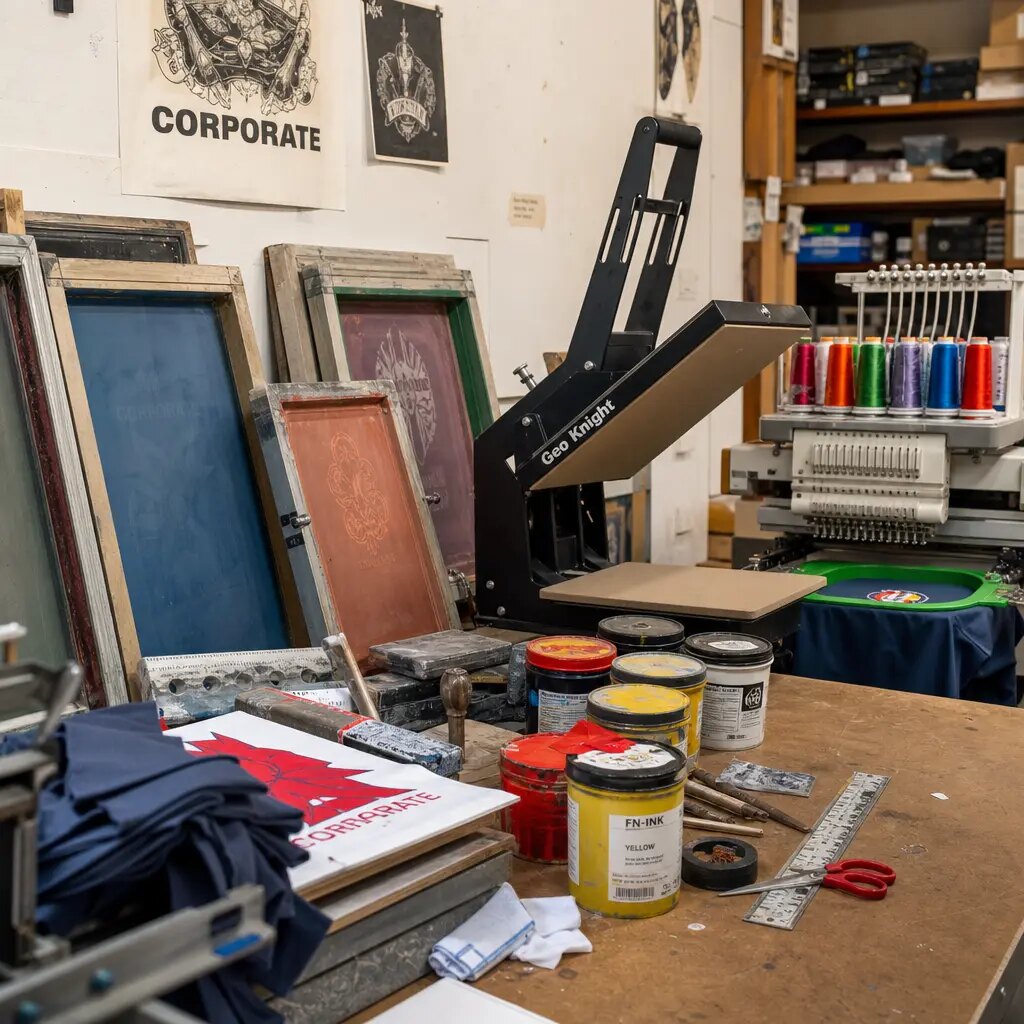
Coffee roaster branding often uses simple marks, earthy colors, tactile labels, and low-contrast artwork. Those choices can work beautifully on canvas, but they still need durability review. Screen printing is common because it is cost-effective for bold one-color or two-color artwork. It also gives buyers good control over logo size. The risk is that ink can crack, scuff, or rub off if the cure is poor or the artwork sits in a high-friction zone.
Woven labels are often a safer choice when the buyer wants branding that avoids large printed surfaces. They work well on side seams, pockets, flap corners outside the fold line, or stable panels. Embroidery can look premium, but it needs the correct backing and stitch density. On lighter canvas, heavy embroidery can pucker the panel. Patches can also work, although the buyer should review attachment stitching, edge wear, material aging, and whether the patch changes how the panel flexes.
Procurement should ask for the decoration method, artwork size, position tolerance, color standard, and factory adhesion or rub check. Keep the logo away from fold lines, strap paths, buckle contact, and lower edges unless visible wear is acceptable. A smaller logo in the right place is often more durable than a large graphic that wins the artwork review and loses the use test.
- Screen print is usually the most cost-efficient option for medium to large runs with simple artwork
- Ask what rub, cure, or adhesion check the factory uses on printed canvas before approval
- Embroidery is durable but can distort lighter canvas if backing and stitch density are not balanced
- Woven labels work well for low-risk logo placement on side panels, pockets, or seam-adjacent zones
- Avoid large solid prints where straps, buckles, folded flaps, or carton pressure will repeatedly rub
Turn The Checklist Into A Supplier Comparison Sheet
The checklist becomes commercially useful when it turns into a supplier comparison sheet. If one factory says heavy-duty and another says premium canvas, the buyer still cannot compare them. Ask each supplier to quote the same measurable fields: finished GSM, fabric composition, webbing width, strap reinforcement, base construction, closure grade, hardware finish, logo method, stitch density, dimension tolerance, sample assumptions, testing support, and packing method.
This is where hidden cost differences appear. One quote may be lower because it uses 400 GSM canvas instead of 500 GSM. Another may omit a bottom reinforcement panel. A third may price a development sample with substitute hardware and leave bulk hardware open. None of those differences is automatically unacceptable, but they must be visible. For B2B procurement, the goal is not to force every supplier into the highest possible spec. The goal is to understand exactly what each price includes.
Use the same comparison sheet during negotiations. If a supplier proposes value engineering, ask which line changes and whether a new sample is required. A change to fabric weight, strap anchor construction, closure hardware, print placement, or packing orientation should trigger review because those items affect durability. A clean RFQ makes the conversation calmer. It also reduces disputes when bulk inspection begins.
- Write the RFQ around end use, working load, GSM, reinforcement points, print method, testing expectation, and packing
- Request photos of stress-point construction if a live sample is not yet available
- Compare quote exclusions carefully, especially sample charges, testing, artwork setup, hangtags, barcode labels, and export packing
- Use final inspection criteria that match the approved sample and written approval comments
- Treat any material substitution at a stress point as a new approval event
Sample Approval Should Match The Bulk Bag
A development sample made from substitute fabric is useful for shape review, not durability approval. The pre-production sample should use bulk-intent canvas, actual webbing width and thickness, final zipper or closure hardware, real print or label method, intended lining, and confirmed seam construction. If those parts are not available yet, label the sample honestly as a reference sample and do not use it as the standard for bulk durability.
Review the sample with real contents. Load it with the planned coffee packs, tools, tablet, inserts, or sample tins. Carry it by the shoulder strap and the top handle if it has one. Open and close the flap while loaded. Put it down on a table and look at the base. Check whether the front panel bows, whether the flap shifts, whether the zipper catches the lining, and whether the interior pockets distort the outside shape. The goal is to find the small annoyances before they become large bulk-order complaints.
Document approval in one place. A written sample comments sheet should record fabric GSM, color standard, webbing width, hardware finish, logo size, logo position, seam reinforcement, stitch pattern, measurement tolerance, and packing method. Photograph the inside and outside stress points. If revisions are made, issue a revised sample code or approval note. That prevents old decisions from slipping back into production after everyone thinks the spec is settled.
- Approve against a written sample comments sheet, not scattered email fragments
- Record fabric GSM, color standard, webbing width, hardware finish, print size, seam reinforcement, and packing method
- Photograph the inside and outside stress points for future bulk inspection reference
- If revisions are needed, issue a revised sample code so older versions do not come back into discussion
- Test the bag with realistic contents before final approval
Packing And Transit Can Create False Failures
Packing is often treated as a freight detail, but for messenger bags it affects both durability and presentation. Hardware can rub against printed panels. Folded straps can press buckle marks into the canvas. Flap corners can crease under carton pressure. A bag that leaves the sewing line in good condition can arrive looking damaged because the pack-out was designed only to maximize carton count.
The right packing method depends on the sales channel. Retail-ready programs may need cleaner presentation, dust protection, hangtag control, barcode placement, and careful hardware separation. B2B replenishment may accept simpler unit packing, but the bag still needs protection from deformation, moisture, and abrasion. If polybags are used, define thickness and whether venting is needed. If the route is humid, ask whether desiccant or carton liners are appropriate. Do not let the factory decide these points after production is finished.
Carton planning also matters. Over-compressed cartons can crush flap edges and distort the body. Underfilled cartons allow movement, which causes scuffing. Carton gross weight should remain practical for manual handling, especially if warehouse teams will relabel, kit, or redistribute the bags. The packing spec should preserve the approved sample condition through ocean freight, air freight, domestic delivery, and warehouse handling.
- Separate hardware from printed or delicate surfaces where possible
- Use neat strap folding so buckle pressure marks do not press into the fabric
- Consider carton orientation so flap edges are not crushed at the bottom layer
- Keep carton gross weight practical for manual handling, especially if warehouse rework is expected
- If polybags are used, define thickness and add venting if humidity or mildew risk is part of the route
Specification comparison for buyers
| Spec decision | Recommended option | When it fits | Buyer risk to check |
|---|---|---|---|
| Finished canvas weight | 14 oz to 16 oz canvas, about 475 to 540 GSM, with a stated tolerance of plus or minus 5 percent | Best for retail merchandise, staff carry, cafe delivery kits, and daily use with real contents | Ask whether the quoted weight is before or after dyeing and finishing, and whether sample fabric matches bulk fabric |
| Finished dimensions | Set a clear size spec and allow a practical tolerance, commonly plus or minus 0.5 cm on small panels and plus or minus 1.0 cm on larger body dimensions | Useful when the bag must fit printed inserts, tablets, notebooks, coffee packs, cupping sheets, or sample kit contents | If dimensions are only described as approximate, flap closure alignment, pocket placement, and carton fit can drift in bulk |
| Strap construction | 38 mm to 50 mm webbing with box-X stitching, bar tacks, and a reinforcement patch or seam insert at the anchor | Needed for shoulder bags expected to carry more than light documents | A neat sample can hide weak strap transfer points that fail under repeated swing load |
| Base construction | Double-layer self-fabric base or an internal bottom reinforcement panel | Good for bags carrying coffee packs, grinders, sample tins, brew tools, or heavier kits | Single-layer bottoms wear through first at the corners and can distort in transit |
| Closure system | Nylon coil zipper under flap, usually #5 for medium use or #8 for heavier openings, or a magnetic snap if fast access matters more than security | Zipper suits staff and commuter use; magnet suits retail, gift, and fast-access programs | Weak pullers, misaligned flaps, or low-grade magnets create complaints that look like structural failure |
| Logo method | Screen print for large simple artwork, woven label for low-wear branding, embroidery only where backing and panel behavior are controlled | Works when the brand wants visible identity without overcomplicating the bag | Artwork across fold lines or strap rub zones cracks, scuffs, or looks aged too early |
| Hardware finish | Corrosion-resistant matte brass, gunmetal, antique brass, or durable acetal with deburred edges | Useful for a rugged retail look and longer service life in humid, coastal, delivery, or warehouse routes | Flaking plating, sharp edges, rough spring action, and metal transfer are early quality-control failures |
| Packing method | Bag shape held with simple stuffing or tissue, hardware separated from printed areas, polybag only when needed, carton weight kept practical for handling | Fits importers balancing product protection, warehouse handling, and freight efficiency | Over-compressed cartons cause flap creasing, hardware marks, mildew risk, and false arrival damage claims |
Buyer checklist before sampling
- Define the end use before sampling: retail resale, staff carry, cafe delivery, event merchandise, subscription gift packs, or wholesale welcome kits
- Set the planned working load in kilograms and ask the supplier to confirm what safety margin they used when quoting durability
- State finished size, measurement method, and tolerance before any sample is approved
- Specify canvas weight in GSM and ask whether the figure is measured before or after finishing, washing, or dyeing
- Call out the reinforcement map: strap anchors, top handle, flap corners, side seams, bottom panel, internal divider, and pocket joins
- Choose the closure style based on use, not appearance alone, and require the exact zipper, magnet, buckle, or snap spec in the quote
- Keep the logo away from folds, strap rub zones, hardware contact points, and bottom edges unless visible wear is acceptable
- Request the same fabric, webbing, hardware, lining, and print process for the pre-production sample and bulk order
- Ask for a written approval sheet that records fabric weight, color, hardware finish, artwork size, stitch pattern, measurement tolerance, and packing method
- Lock carton count, carton dimensions, unit packing, and bag orientation before bulk starts so transport damage is not introduced by the pack-out
Factory quote questions to send
- What is the finished canvas weight in GSM, what tolerance do you hold, and is that measured before or after finishing?
- What canvas composition and weave type are you quoting, and what shrinkage should we expect after the final process?
- What is the exact webbing width, thickness, and stitch pattern at the strap anchors, and do you add a reinforcement patch or insert?
- Which stress points use box-X stitch, bar tack, back stitch, seam tape, folded webbing return, or reinforcement panels, and can you mark them on a sample photo?
- What is the recommended working load for this bag based on similar production, and what test method supports that recommendation?
- What zipper grade or closure hardware are you quoting, and will the sample and bulk use the same supplier, finish, and puller style?
- Which print process are you pricing, what ink or transfer system is used, and how do you check adhesion, cure, and rub resistance on canvas?
- What are the finished dimensions and measurement points, and what tolerance do you allow on body, flap, strap length, pocket placement, and logo position?
- What is included in the unit price: polybag, tissue, silica gel, hangtag insertion, barcode sticker, export carton mark, carton liner, and master carton packing?
- What is the MOQ by color, artwork, and size, and how do price breaks change if we change hardware, lining, reinforcement, or packing?
Quality-control points to confirm
- Fabric weight should stay within the approved GSM tolerance, and the bulk shade should match the signed-off swatch under normal daylight inspection
- Finished dimensions should stay within the agreed tolerance, with special attention to flap overlap, body skew, base shape, strap length, and pocket placement
- Stitching should be consistent, with no skipped stitches, loose thread tails, seam grin, uneven tension, broken bar tacks, or messy back-tacking at load-bearing seams
- Strap anchors should show the approved reinforcement pattern, with no twist, no pull-out gap, no exposed raw edge, and no asymmetry between left and right sides
- Hardware should be smooth to operate, free of sharp edges, visible flaking, rust bloom, rough plating, weak spring action, or deformation after normal pull force
- Zippers or magnetic closures should cycle repeatedly without snagging, popping open, catching lining, or pulling the flap off center
- Printed, woven, patched, or embroidered branding should match the approved size and location, with no edge lift, cracking, ghosting, thread fray, or rub-off after flex
- Internal pockets, dividers, and lining should sit flat and should not distort the bag shape when the sample load is inserted
- Cartons should match the agreed pack plan, with correct quantity, clear carton marks, no crush damage, no wet marks, and no excessive internal movement
- Finished goods should be dry, odor-acceptable, and free from oil transfer, mildew risk, metal scuff marks, loose fibers, and dust contamination