Start with the craft fair use case, not a generic bag photo
Canvas messenger bags for craft fairs are bought for several different jobs. A bag sold as merchandise has to look at home next to handmade goods, stationery, textiles, ceramics, art prints, or craft supplies. A booth staff bag needs to be comfortable through setup, checkout, and restocking. A sponsor giveaway has to show the logo clearly from the aisle. A craft kit bag has to fit the products inside without wasting fabric or looking half-empty on the display table.
That is why a useful wholesale buying checklist begins with the commercial use, the contents, the handling route, and the sales channel. Craft fair inventory may move from a factory carton to an importer warehouse, then into a van, booth storage, checkout area, customer home, and repeat use. Each step exposes different risks: dusty natural canvas, crushed flaps, off-center closures, weak strap joints, prints rubbing against adjacent bags, or carton labels that do not match the allocation plan.
Procurement teams should also separate a bag sold as the product from a bag used as packaging. If the messenger bag is the retail item, pocket shape, print placement, seam consistency, hangtag, barcode label, and individual packing matter. If the bag packages a maker kit, interior size, loaded weight, closure function, and straightforward branding may matter more than premium hardware. The clearer the use case, the easier it is to avoid paying for features the customer will not value—or missing details that create complaints later.
- For resale: include retail finish, hangtag, barcode, individual packing, and front-facing visual defect standards.
- For booth staff: prioritize strap width, reinforcement, stain resistance, usable pockets, and fast closure access.
- For sponsor giveaways: control logo size, ink opacity, color matching, and placement tolerance on the visible flap or front panel.
- For craft kits: provide the factory with actual product dimensions, quantity per bag, and loaded weight before confirming pattern size.
- For distributor stock: define SKU rules, carton labels, mixed-design limits, replenishment consistency, and warehouse receiving requirements.
Choose canvas weight by load, structure, and measurable tolerance
Canvas messenger bag quotes are hard to compare when suppliers use loose terms such as standard canvas, thick cotton, or heavy duty. One factory may quote ounces, another may quote GSM, and another may list only the fabric type. Your RFQ should ask for the exact construction being priced: cotton canvas or blend, quoted weight, measurement unit, tolerance range, color or finish, and whether the weight is measured before or after dyeing and finishing.
For many canvas messenger bags for craft fairs, 12 oz to 16 oz cotton canvas is a practical working range. It often lands roughly around 340-540 GSM, but buyers should not treat that as a fixed conversion. Yarn count, weave density, moisture content, dyeing, and finishing all affect the final measured weight. An 8-10 oz canvas can work for light promotional giveaways, yet it may collapse on a table or feel under-built for resale. A 14-16 oz canvas gives more structure and perceived value, but it also raises material cost, sewing difficulty, carton weight, and freight cube.
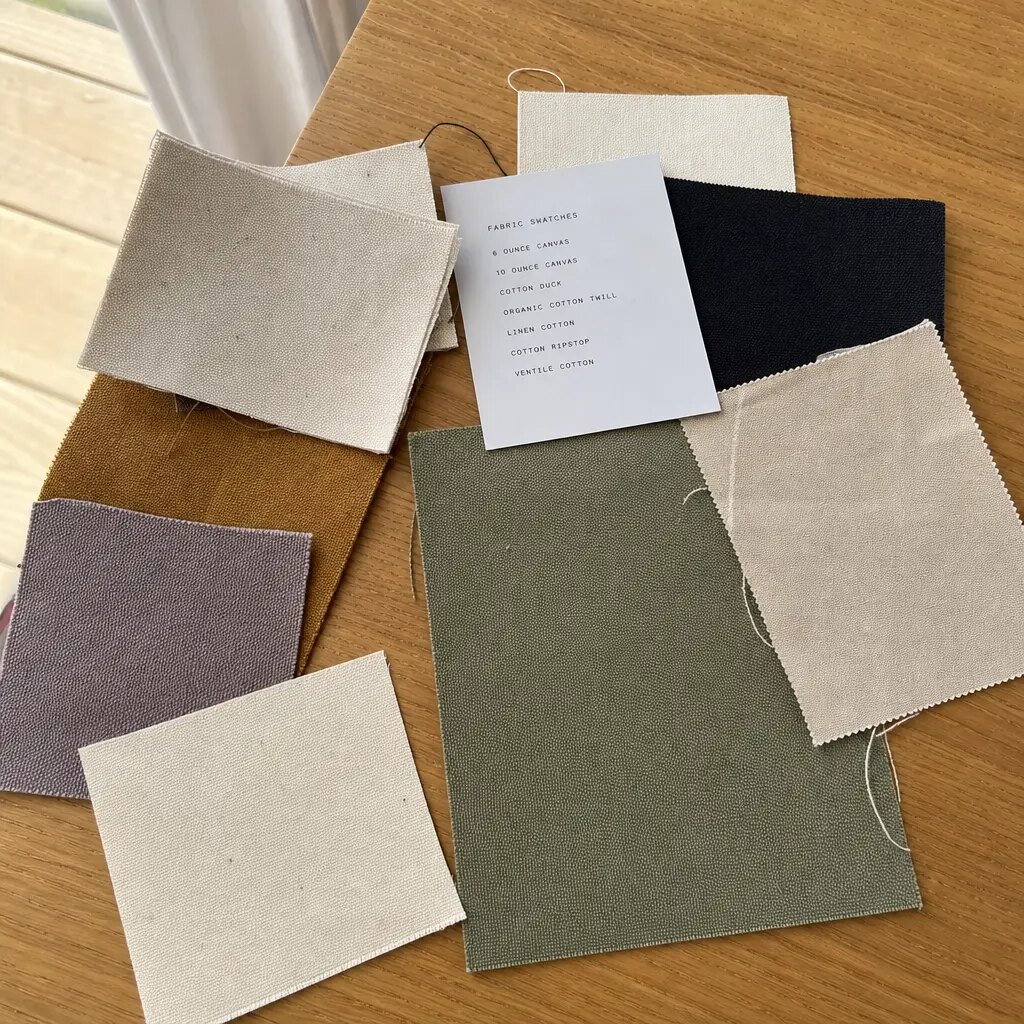
Fabric finish deserves the same attention. Natural canvas supports a handmade, craft-market look, but seed flecks, slubs, and shade variation must be acceptable. Bleached canvas gives a cleaner print background, although it can show dirt more readily. Dyed canvas requires shade approval, and custom dyeing may raise MOQ or stretch the schedule. If organic cotton, recycled cotton, or another sustainability claim is part of the product story, request supporting documentation and avoid language the supply chain cannot verify.
- Light-duty giveaway: 8-10 oz canvas when contents are light and low cost is the main driver.
- Standard craft fair merchandise: about 12 oz canvas for balanced structure, printability, sewing efficiency, and freight cost.
- Premium retail messenger feel: 14-16 oz canvas when the target customer accepts higher price and heavier construction.
- Ask for fabric weight tolerance, such as a supplier-defined GSM range, and keep an approved swatch for incoming inspection.
- Confirm whether dyeing, bleaching, washing, coating, or finishing changes shrinkage, shade, stiffness, odor, or print absorption.
Lock the messenger bag pattern before comparing suppliers
Messenger bags look simple in product photos. In production, small pattern choices change fabric consumption, labor time, carton cube, and inspection results. Finished width and height drive main material use. Gusset depth controls usable capacity and whether the bag can stand or collapses when displayed. Flap length controls the branding area and closure coverage. Rounded flap corners, binding, lining, and interior pockets all add operations. A front pocket may improve usability, but it also creates alignment risk if artwork sits near seams or pocket edges.
A reference size around 35 x 28 x 8-10 cm works for many craft fair and small retail uses, but the correct pattern should be checked with real contents. Notebooks and catalogs need a different proportion from yarn, craft tools, small boxed goods, or art supplies. Load the sample with the actual product set. If the opening is too narrow, booth staff will struggle during checkout. If the body is too deep, the bag can look underfilled and waste fabric.
Freeze the pattern before comparing prices. If one supplier quotes an unlined bag with no inside pocket, another quotes bound seams and an inner zip pocket, and a third assumes a different strap length, the offers are not comparable. Treat the product specification as a commercial control document. It should define finished measurements, material, construction, artwork, tolerance, packing, and inspection references before final supplier selection.
- Specify finished width, height, gusset depth, flap length, opening width, pocket size, and allowed tolerance.
- State whether flap corners are square, rounded, angled, bound, turned, piped, or raw-edge finished if intentionally raw.
- Define pocket count, pocket size, pocket location, and closure type, including zipper, snap, hook-and-loop, or open-top access.
- Include strap width, minimum/maximum strap length, adjuster type, attachment position, reinforcement patch, and stitch method.
- Clarify whether the bag is unlined, lined, bound-seam, French-seam, overlocked, self-facing, or includes an inner divider.
Specify strap, closure, and hardware as functional components
For B2B buyers, straps and closures are not decoration. They are risk controls. A messenger bag is carried from one side of the body, so load concentrates at the side seams and strap attachment points. A narrow strap may reduce cost, but it can dig into the shoulder when the bag is loaded with catalogs, samples, or craft tools. For adult use, an adjustable strap around 3-4 cm wide is often practical, though the final choice should match bag size, expected load, and price point.
Write the reinforcement method into the purchase order. Common options include box stitch, box-with-cross stitch, bartack, rivet plus stitch, side fabric tab, or internal reinforcement patch. The PO should say what is required, where it sits, and whether both sides are constructed the same way. If the bag will carry heavier contents, ask the factory how they check strap attachment strength. A simple inline pull check is still better than finding loose side seams after the entire order is packed.
Closure choice affects both customer experience and QC. Magnetic snaps give a cleaner retail feel, but they need accurate alignment and should not create pressure marks in cartons. Metal snaps are secure, yet they require pull-force and plating checks. Hook-and-loop is quick and economical, though it can catch fibers and feel less premium. Buckles create a classic messenger look but add labor and slow opening. Choose based on the craft fair setting: fast checkout access, retail perception, repeat use, and cost.
- Specify strap material: cotton webbing, self-fabric canvas, polyester webbing, detachable strap, or fixed shoulder strap.
- Define strap width, total length, adjustable length range, slider material, buckle finish, and stitching color.
- Require reinforcement details at both attachment points and inspect the first bulk pieces before the full order is sewn.
- Define closure position from flap edge and body edge so the flap sits flat when the bag is loaded.
- Check hardware for rust, burrs, sharp edges, plating defects, weak magnetic force, staining, and inconsistent finish.
Match print method to artwork, canvas texture, and bulk repeatability
Printing on canvas is different from printing on coated paper, nonwoven material, or smooth polyester. Canvas has texture, absorbency, slub variation, and natural fiber color variation. Fine lines can soften. Large solid areas may need extra ink control. White or pale ink on natural canvas may not look as bright as it does in a digital mockup. For many wholesale canvas messenger bags with one to three solid colors, screen printing remains a practical choice because it is repeatable, cost-efficient at volume, and suitable for bold logos on the flap or front body.
More complex artwork may call for heat transfer, DTF, digital printing, woven labels, or embroidery. Each option solves one problem and introduces another. Transfers and DTF should be checked for edge lift, cracking, handfeel, and adhesion after rubbing and bending. Digital print can reproduce detailed artwork, but the result on textured cotton may appear softer or less saturated. Embroidery can look premium, but it may pucker the flap, need backing, raise cost by stitch count, and perform poorly on large filled graphics.
Placement is not a minor artwork note; it is a procurement control point. Craft fair bags often depend on visible branding from a booth aisle, so an off-center or low-contrast logo can be a commercial defect. Send artwork at actual size with vector files where possible, color references, print dimensions, and measured placement from the flap edge, centerline, pocket seam, or bottom edge. For multi-color screen printing, agree registration tolerance. For color-sensitive orders, approve a physical strike-off on the same canvas before bulk printing.
- Screen print: best for solid logos, repeat orders, and predictable wholesale cost.
- Heat transfer or DTF: useful for complex graphics, but approve handfeel, adhesion, edge lift, and rub performance.
- Digital print: consider for detailed artwork or short design runs, while checking color density on textured cotton.
- Embroidery: suitable for small premium marks, but confirm puckering, backing, stitch count, and thread color standard.
- Woven label: useful for subtle retail branding and less dependent on large print placement accuracy.
Understand MOQ, version control, and price breaks
MOQ for canvas messenger bags is rarely just one total quantity. The true minimum may be driven by fabric color, dye lot, hardware purchase, strap webbing color, label production, print screen setup, cutting efficiency, packing version, or sewing-line setup. A supplier may quote a strong price for 1,000 pieces in one canvas color with one print. Split the same total into ten designs, and the cost can rise because of separate screens, sorting, inspection, carton labeling, and packing lists.
Craft fair programs often include seasonal graphics, local fair logos, sponsor marks, or maker-community artwork. The most efficient structure is usually to keep the base bag identical and change only the artwork or label. If the canvas color, size, strap, closure, and packing method stay the same, the factory can cut and sew the base product as one run and manage print variations separately. Ask suppliers to separate the base construction cost from per-design setup, per-color screen charges, and any small-run surcharge.
Version control must continue into packing. Mixed cartons may look efficient on paper, but they increase receiving errors when goods are distributed to booths, fair dates, retailers, or sponsor locations. If mixed artwork cartons are necessary, the packing list must show style, artwork, color, quantity, carton number, and destination. Also clarify whether overage or shortage tolerance applies to the total order or to each artwork version. A 3% shortage on one design may be a real problem even if the total order quantity is correct.
- Define MOQ by style, fabric color, print artwork, hardware finish, label version, and packing version.
- Use common base construction across multiple artwork designs to reduce cutting, sewing, and packing complexity.
- Expect custom dyed canvas, custom webbing, special plating, and custom woven labels to require higher MOQ or longer lead time.
- Ask for price breaks at realistic quantities, such as 300, 500, 1,000, 2,500, and 5,000 pieces if relevant.
- Require packing lists by SKU and artwork so warehouse teams can allocate inventory without opening every carton.
Use sample approval to prove construction, not only appearance
A production sample should prove that the bag can be made correctly in bulk. It should use the correct canvas weight, fabric color, strap, closure, hardware, print method, stitching, labels, and proposed packing. A rough shape sample made from substitute material can be useful in early development, but it should not become the final approval standard. Many sourcing problems begin when buyers approve a sample-room piece that looks polished but uses different fabric, non-production hardware, or extra-care sewing that will not repeat at bulk speed.
Review the sample the way the final bag will be used. Measure width, height, gusset, flap length, pocket size, print placement, strap length range, and closure position. Load it with the intended contents and see whether the flap closes naturally, the side seams pull, the strap twists, or the bag tips forward. Open and close the closure repeatedly. If the bag will be sold at craft fairs, pack it using the proposed carton method, then inspect for flap creases, hardware pressure marks, print scuffing, and shape distortion.
Approval records should be specific, not casual. Instead of writing approved or looks good, document the actual measurements, accepted deviations, required corrections, artwork version, fabric swatch reference, and packing method. Keep one approved sample with the buyer and one sealed reference sample at the factory. If a print strike-off is approved separately, attach those details to the QC standard with color references and placement measurements.
- Measure the sample and record actual dimensions before approving the pattern for cutting.
- Photograph print placement with a ruler from the flap edge, seam, centerline, or pocket edge.
- Load-test the sample with expected contents and check strap comfort, flap behavior, and seam stress.
- Keep one approved sample with procurement and one sealed sample at the factory for inline and final inspection.
- Do not approve substitute fabric when handfeel, shrinkage, shade, print absorption, or seam bulk affects the final product.
Build the quote around total landed cost and responsibility
A useful quote for canvas messenger bags for craft fairs shows far more than unit price. Buyers need fabric weight, finished dimensions, construction details, closure, strap specification, print method, print colors, setup charges, sample charges, labels, packing method, carton dimensions, pieces per carton, lead time, payment terms, Incoterm, and inspection responsibility. Without these details, two low prices may represent two very different products.
Landed cost matters for event-linked inventory. Carton CBM and gross weight influence ocean freight, air freight, courier cost, warehouse receiving, storage, and domestic transfer to fair locations. A slightly cheaper bag can become more expensive if it uses inefficient flat packing, an oversized gusset, heavy hardware, or large cartons with a low piece count. Ask for carton dimensions, gross weight, net weight, pieces per carton, and estimated CBM during quotation—not after bulk packing.
The quote should also state what happens if the product fails inspection. Some suppliers can sort or repair defects. Others expect negotiation after goods are finished. The purchase order should say whether defective goods will be reworked, remade, discounted, replaced, or held from shipment. For B2B procurement, the strongest quote is the one that makes inclusions, exclusions, timing, documentation, QC responsibility, and shipment readiness clear.
- Compare prices on the same Incoterm, such as EXW, FOB, CIF, DDP, or delivered warehouse.
- Separate one-time charges: screens, artwork conversion, sample fee, lab dip, custom label, mold, or hardware development.
- Include retail packing, barcode labels, hangtags, carton marks, routing labels, and pallet rules if required by the buyer.
- Review carton cube before approving heavier canvas, oversized gussets, padded inserts, or flat retail packing.
- Ask for a written rework, remake, discount, or inspection-failure process before paying the deposit.
Set QC thresholds that reflect real messenger bag failures
Quality control should focus on defects that affect safety, function, brand appearance, and resale value. Major defects for canvas messenger bags include weak strap attachment, skipped stitches at load-bearing seams, off-center flaps, non-functioning snaps, wrong dimensions, wrong fabric weight, incorrect print color, front-panel stains, sharp hardware, missing labels, and mixed SKU packing. A few removable thread ends are less serious than a strap that fails under normal load. Build the defect list for this product rather than copying a generic textile checklist.
Tolerances need to be realistic. Cotton canvas can shift during cutting, printing, sewing, pressing, and packing. A common working tolerance for main body measurements may be around plus or minus 1 cm, but the acceptable range should be agreed based on size and construction. Print placement may need tighter control because a logo that is visibly off-center affects retail presentation. Closure alignment also needs attention because a small shift can make the flap pull, gap, or twist.
Inspection should start before final packing when the order is custom, multi-design, or time-sensitive. Inline checks can catch wrong fabric, print position, strap reinforcement, hardware placement, or stitching method before the full run is complete. Final inspection should compare bulk goods to the approved sample, fabric swatch, print strike-off, packaging sample, and purchase order. If AQL is used, define critical, major, and minor defects for canvas messenger bags and treat structural failures as non-negotiable.
- Critical defect: broken needle fragment, sharp metal burr, unsafe hardware, mold, contaminant, or strong chemical odor.
- Major defect: loose strap attachment, missing reinforcement, broken seam, open seam, or skipped stitches at load-bearing points.
- Major defect: closure misaligned so the flap pulls, gaps, twists, or will not close smoothly.
- Major defect: logo in wrong position, wrong color, poor opacity, visible registration error, peeling transfer, or under-cured print.
- Major defect: front-facing stain, oil mark, shade mismatch, wrong fabric weight, needle damage, or visible fabric defect.
- Minor defect: removable thread end, slight internal chalk mark, or small non-facing inconsistency within the approved standard.
Design packing for clean booth display and accurate distribution
Packing decides whether bags arrive ready to sell or need cleanup before a craft fair. Full flaps can crease if folded too tightly. Magnetic snaps and buckles can create pressure marks if they are stacked in the same position. Natural canvas can pick up dust, moisture marks, or carton abrasion when packed loose. Printed surfaces can scuff when bags rub against hardware or rough seams. If the goods move directly from carton to booth display, presentation affects both staff time and customer perception.
The best packing method depends on sales channel and sustainability requirements. Individual polybags protect against dust and simplify counting, but they add plastic and labor. Paper belly bands reduce plastic and can look retail-friendly, but they offer less protection against moisture and abrasion. Bulk packing lowers unit cost and may suit giveaways or staff use, yet it increases creasing and sorting risk. For hardware-heavy designs, tissue paper, separator sheets, or clear positioning rules can reduce pressure marks.
Plan cartons before production starts. Overfilled cartons crush flaps and deform closures. Underfilled cartons allow movement and abrasion. For distributors and multi-location craft fair programs, carton labels must support receiving without opening every box. Labels should include style, fabric color, artwork, quantity, carton number, gross weight, net weight, destination, and PO number if required. Use mixed artwork cartons only when the buyer accepts the sorting risk and the packing list is detailed enough to control it.
- Use flatter packing when flap appearance, print surface, and retail presentation are priorities.
- Add tissue, separator sheets, or hardware protection when snaps, buckles, sliders, or rivets may press into canvas.
- Specify individual polybag, recycled-content polybag if available, paper band, or bulk pack based on protection and sustainability goals.
- Require carton labels with SKU, color, artwork, quantity, carton number, PO number, gross weight, net weight, and destination.
- Confirm pieces per carton, carton dimensions, carton strength, gross weight, net weight, and CBM before comparing freight cost.
Specification comparison for buyers
| Spec decision | Recommended option | When it fits | Buyer risk to check |
|---|---|---|---|
| Canvas fabric weight | 12 oz to 16 oz cotton canvas for most resale and merchandise bags; request actual GSM, usually about 340-540 GSM depending on yarn, weave, and finish | Craft fair retail merchandise, maker kits, catalog gifts, staff bags, and reusable customer carry bags that need structure without becoming luggage | Do not compare only by the word heavy. Confirm measured fabric weight tolerance, shrinkage behavior, shade standard, and whether quoted weight is before or after dyeing/finishing |
| Bag size and capacity | Medium messenger format around 35 x 28 x 8-10 cm, adjusted after testing the actual product set and loaded weight | Artist supply kits, booth staff bags, small retail carry bags, event merchandise, catalogs, notebooks, and light craft tools | Oversized bags increase fabric consumption, carton CBM, and strap stress; undersized openings cause packing and checkout problems |
| Finished dimension tolerance | Agree a practical tolerance before PO, often about +/-1 cm for main body dimensions and tighter control for print and closure placement where visible | Custom wholesale orders where size consistency, SKU repeatability, and retail appearance matter | Cotton canvas can shift during cutting, sewing, and pressing; no tolerance means disputes after inspection |
| Flap and closure | Full flap with magnetic snap, metal snap, or hook-and-loop; choose based on price point, customer experience, and speed of use | Craft fairs where the flap is the main branding surface and shoppers open/close the bag repeatedly | Magnets add cost and alignment risk; hook-and-loop is practical but can collect lint; metal snaps need pull-force and plating checks |
| Strap construction | Adjustable 3-4 cm cotton webbing or canvas strap with box stitch, cross stitch, bartack, or reinforced side tabs | Adult one-size usability for booth staff, customers, and resale merchandise | Narrow straps can feel cheap and uncomfortable; weak side attachment is one of the highest-risk functional failure points |
| Print method | Screen print for 1-3 solid colors; heat transfer, DTF, digital print, woven label, or embroidery only when artwork and MOQ justify it | Logos, sponsor marks, event graphics, maker-community artwork, and brand marks on flap/front panel | Canvas texture reduces fine detail. Approve an actual-size strike-off and define placement tolerance, opacity, curing, and rub expectations |
| MOQ structure | Quote by style, fabric color, artwork, hardware finish, label, and packing version, not only total pieces | Importers, distributors, and event buyers running multiple craft fair designs under one shipment | Five small artwork runs may cost more than one large run due to screens, setup, sorting, inspection, and carton labeling |
| Sample approval | Approve a production-representative pre-production sample: fabric, size, hardware, print, stitching, label, and packing all correct | Any order where brand presentation, delivery date, and resale value are important | A sample made with substitute fabric or sample-room hardware can hide shrinkage, handfeel, print absorption, seam bulk, and closure issues |
| Packing method | Individual polybag, paper belly band, tissue protection, or bulk pack in export cartons sized to avoid crushing flaps and hardware marks | Wholesale distribution, booth stock, retail replenishment, and multi-location craft fair allocation | Overpacked cartons crease flaps; underfilled cartons allow abrasion; unclear mixed-SKU packing creates receiving errors |
Buyer checklist before sampling
- Define the end use: retail resale item, booth staff bag, sponsor giveaway, craft kit packaging, customer checkout bag, distributor stock, or mixed-purpose merchandise.
- List the exact contents the bag must carry, including product dimensions, quantity per bag, and estimated loaded weight in kilograms or pounds.
- Set target finished dimensions: width, height, gusset depth, flap length, opening width, pocket size, strap length range, and allowed tolerance.
- Choose canvas weight by load and price point: 8-10 oz for light giveaways, 12 oz for standard merchandise, 14-16 oz for heavier retail feel.
- Confirm fabric type: natural, bleached, dyed, organic cotton, recycled cotton blend, cotton/poly blend, or custom Pantone-dyed fabric.
- Specify measured fabric weight in oz and/or GSM, and ask whether tolerance is controlled by roll, lot, or finished fabric after dyeing/finishing.
- State closure type, hardware finish, strap width, strap length range, adjustment method, side-tab construction, and reinforcement stitch pattern.
- Define strap material: cotton webbing, self-fabric canvas, polyester webbing, detachable strap, fixed strap, or adjustable strap with slider.
- Send artwork at actual size with vector file format where possible, Pantone/CMYK references, maximum print area, print location, and placement tolerance.
- Choose print method based on artwork complexity, order quantity, handfeel, rub performance, curing requirements, setup cost, and repeat-order needs.
Factory quote questions to send
- What exact canvas weight are you quoting in GSM and ounce terms, and what production tolerance do you control for bulk fabric?
- Is the fabric greige, natural, bleached, dyed, organic cotton, recycled cotton blend, or custom dyed, and what certification or material documentation is available if claims are used?
- Is the quoted fabric weight measured before or after dyeing, washing, coating, or finishing?
- What finished bag dimensions are included in the price, including width, height, gusset, flap length, opening width, pocket dimensions, strap width, and strap length range?
- What dimensional tolerance do you recommend for this construction after cutting, sewing, pressing, and packing?
- Which closure and hardware are included, and are magnetic snaps, metal snaps, hook-and-loop, sliders, buckles, rivets, antique finishes, or branded hardware quoted separately?
- What reinforcement is included at strap attachment points: box stitch, cross stitch, bartack, rivet, reinforcement patch, or side tab?
- Which print method are you recommending for our artwork, and what are the setup charges by color, screen, artwork, position, or design?
- Can the print be placed on the flap, front body, back panel, strap, inner pocket, or woven label, and what placement tolerance will you guarantee in bulk?
- Can you provide an actual-size print strike-off on the same canvas, with curing and rub testing completed before bulk approval?
Quality-control points to confirm
- Fabric weight should be checked against the approved swatch and PO tolerance using a defined method, not judged only by handfeel.
- Fabric shade, weave, slub level, seed flecks, and surface cleanliness should match the approved standard, especially on natural, bleached, and dyed canvas.
- Finished dimensions should stay within agreed tolerance for width, height, gusset depth, opening width, flap length, pocket size, and strap length.
- Print color, opacity, edge sharpness, registration, curing, rub resistance, and placement should match the approved strike-off and placement measurements.
- Strap attachment should use the approved reinforcement, with no skipped stitches, loose seams, broken threads, weak bartacks, or exposed raw edges at load-bearing points.
- Magnetic snaps, metal snaps, sliders, buckles, rivets, and adjusters should be aligned, functional, and free from rust, burrs, sharp edges, plating defects, and staining.
- Flap should sit flat and centered after packing and should not twist because of uneven seam tension, inaccurate cutting, or off-center closures.
- Seams should be clean with no skipped stitches, loose threads, broken needles, seam puckering, open seams, incorrect seam allowance, or visible raw edges where not specified.
- Interior pockets, zipper pulls, woven labels, care labels, hangtags, barcode tags, SKU stickers, and routing labels should match the purchase order and packing list.
- Cartons should be export-ready and labeled with style, color, artwork, quantity, carton number, gross weight, net weight, destination, and any customer routing data.