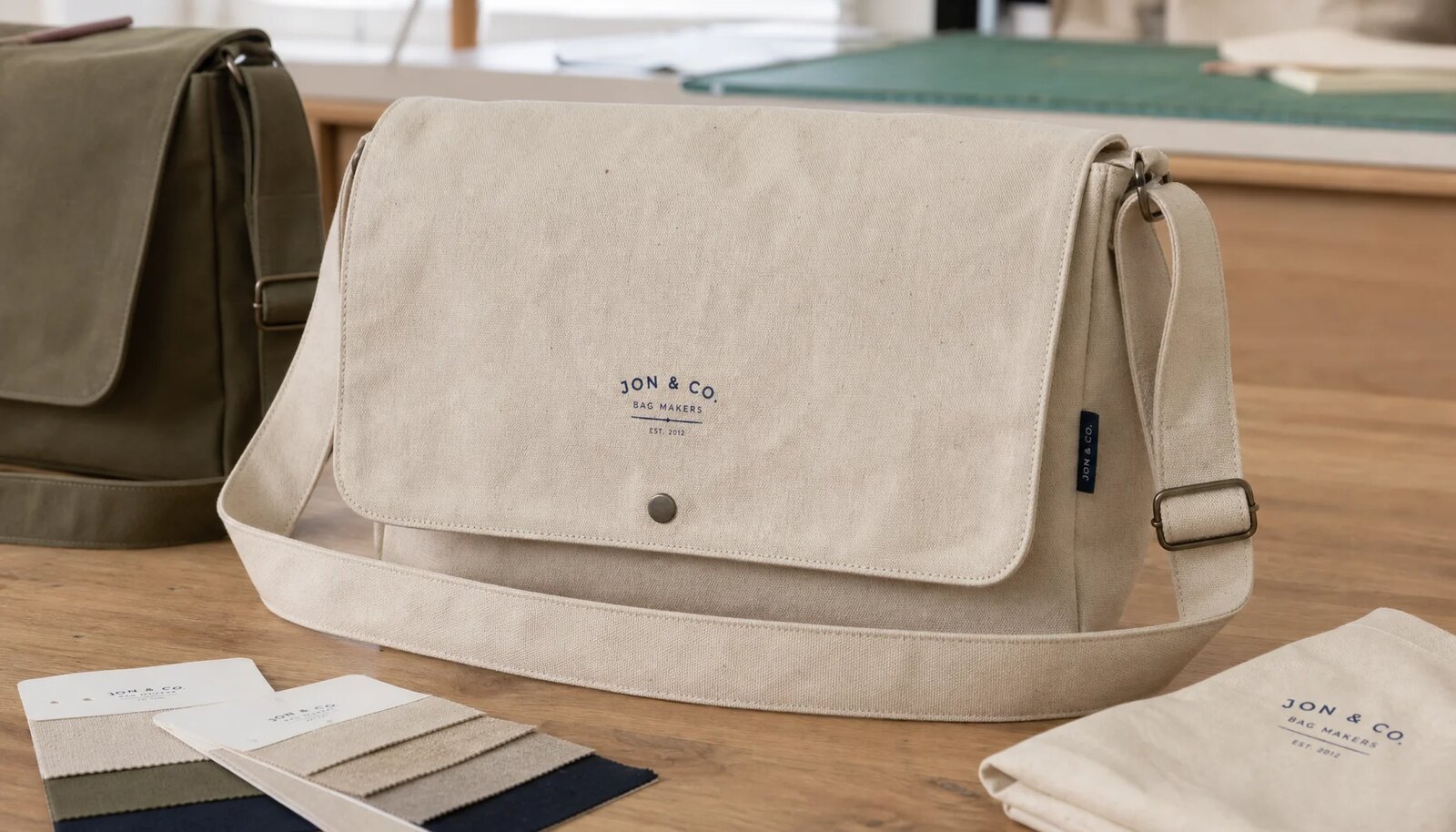
Start With the Craft-Fair Use Case
A useful supplier compliance checklist starts with the way the canvas messenger bag will be used. A vendor staff bag may carry payment devices, notebooks, product samples, pens, chargers, and a tablet for a full event day. A booth resale bag must look clean on a table, feel substantial when handled, and survive use after the fair. A giveaway may be simpler, but it still cannot arrive with weak straps, mold, wrong logos, or packing damage.
Procurement should turn the use case into acceptance criteria before asking for prices. Staff-use bags need strap comfort, anchor strength, and easy access. Resale bags need front-flap presentation, label placement, barcode accuracy, and carton sorting. Distributor or multi-fair orders need SKU separation and carton marks that reduce receiving labor.
The phrase canvas messenger bags for craft fairs supplier compliance checklist describes the practical objective: connect product risk, supplier evidence, and shipment release. The checklist should prevent familiar event-order failures such as late samples, changed fabric, weak strap anchors, misaligned print, missing labels, mixed cartons, and bags creased through the logo.
- Classify the purchase as staff use, resale, giveaway, kit component, distributor stock, or retail inventory.
- State the expected load: brochures, notebooks, tablet, payment device, samples, or light personal items.
- Set the event arrival date, latest inspection date, sample approval deadline, and backup shipping option before deposit.
- Separate non-negotiables from upgrades so suppliers can quote a compliant base item and optional improvements.
- Attach a measurement sketch, artwork file, packing expectation, and reference photo; do not use the photo as the only specification.
Specify Canvas Without Guesswork
Canvas weight is both a quality decision and a commercial decision. Lighter fabric can reduce cost, carton weight, and freight, which may suit simple giveaways. Heavier fabric improves perceived value and structure, which often matters for resale or branded vendor use. The trade-off is bulkier seams, higher freight weight, and possible sewing issues if the factory is not equipped for heavy canvas.
Use measurable fabric terms. In bag sourcing, oz usually means ounces per square yard, while GSM means grams per square meter. The common conversion is 1 oz/sq yd equals about 33.9 GSM. A quote should show both where possible, plus the allowed tolerance. For many soft promotional and retail bags, plus or minus 5% GSM is a practical control point unless the buyer requires tighter acceptance.
Finish affects decoration and customer perception. Natural cotton canvas may show seed flecks, yarn slubs, and shade movement; that may suit handmade or craft-market branding if the range is approved. Bleached canvas gives a cleaner print ground. Dyed and washed canvas need lab dip approval, shrinkage awareness, and stronger shade control. Recycled cotton blends or rPET canvas require material declarations if sourcing claims will be used.
- 8 oz to 10 oz canvas: practical for light giveaways and low-load use.
- 10 oz to 12 oz canvas: balanced for many craft-fair messenger bags where handfeel and packability both matter.
- 12 oz to 16 oz canvas: stronger retail feel, but confirm seam bulk, sewing capability, carton weight, and freight impact.
- Natural canvas: approve slubs, flecks, shade variation, handfeel, and odor condition with a physical swatch.
- Dyed or washed canvas: approve lab dip, shrinkage result, shade tolerance, and whether decoration happens before or after washing.
Control Messenger-Bag Construction Risks
A messenger bag has more failure points than a flat tote. The flap must align with the body, the strap must carry diagonal shoulder load, the closure must work through fabric layers, and side seams must handle stress. If the RFQ only names canvas weight and logo size, the supplier may choose the cheapest construction that resembles the photo.
Strap attachment is the highest-risk area for craft-fair use. Vendor staff may carry the bag for hours, and customers may pull straps while handling display stock. The PO should specify reinforcement at D-ring loops, webbing ends, side seams, and bottom corners. Ask for close-up photos from the approved sample and first production piece. If the supplier cannot show the inside construction, later defect claims become harder to resolve.
Closure choice changes both cost and QC. Magnetic snaps are convenient but need backing washers and enough holding strength through the flap. Press snaps can be secure but may pull out if poorly set. Hook-and-loop is forgiving but can collect lint. Buckles add craft-style appeal but increase alignment checks. A zipper under the flap improves security but adds cost, inspection points, and possible lead-time risk.
- Specify body width, height, bottom depth, flap length, usable opening, pocket dimensions, and internal seam finish.
- State strap width, webbing material, adjuster type, D-ring size, and adjustable length range.
- Require reinforcement at strap anchors, D-ring loops, flap corners, pocket openings, zipper ends, side seams, and bottom corners.
- Define whether the bag folds flat, stands semi-structured, or hangs for display because this affects pattern and packing.
- Check first-piece photos for flap symmetry, strap orientation, pocket placement, closure alignment, and seam bulk.
Approve Decoration on Real Fabric
Artwork approval should happen on the actual bag material, not only on a screen mockup. Canvas texture, slubs, flap folds, and seam positions can change the final logo result. A clean digital proof can become a broken print if fine lines cross rough yarns or if the logo sits too close to a snap, curved flap edge, or stitched seam.
Screen printing is often practical for solid one-color or few-color artwork. Heat transfer can handle gradients and small detail, but adhesion must be checked on the selected canvas. Embroidery can look premium for small logos on heavier fabric, but large filled embroidery may pucker the flap. Woven labels are useful when the buyer wants consistent branding across bags, totes, pouches, and aprons.
Placement should be measurable. For example, center the logo on the flap, 45 mm below the top flap seam, with plus or minus 5 mm tolerance if the design allows it. Avoid vague instructions such as logo on front. If the bag will be resold, confirm whether the brand label belongs on the side seam, inside pocket, flap edge, hangtag, or carton label.
- Approve a strike-off on the same canvas weight, finish, and color planned for bulk production.
- State artwork size, color reference, print position, reference edge, and placement tolerance.
- Check opacity, edge sharpness, curing, dry rub, transfer, cracking, peeling, and bleeding where relevant.
- Avoid placing fine artwork over seams, snaps, heavy slubs, fold lines, or flap curves.
- Keep the approved strike-off with the sealed sample, trim card, artwork version, and inspection file.
Match Supplier Type to Risk
Supplier selection should be based on evidence tied to the bag, not broad claims about being a professional manufacturer. A direct factory may provide better sewing control and faster feedback on first-piece issues. A trading company may be useful for mixed craft-fair assortments, but the buyer still needs to know who makes the bag and who owns defect correction. A stock blank decorator may be fast, but base-bag construction may not be adjustable.
The most useful evidence is specific: fabric swatch, trim card, close-up strap-anchor photos, hardware sample, measurement sheet, print strike-off, packing mockup, and examples of similar messenger-bag construction. If printing, embroidery, washing, or labeling is subcontracted, the supplier should explain how the process is controlled. Subcontracting is common; undisclosed subcontracting is the risk.
Accountability belongs in the PO. If a supplier changes canvas weight, webbing, hardware, strap length, label material, ink, carton count, or packing method without written approval, the buyer needs a remedy path. That may include replacement, rework, sorting, discount, or shipment hold depending on severity. Negotiate this before deposit, not after cartons are packed.
- Request factory identity, production route, subcontracted processes, and QC responsibility before deposit.
- Ask for similar-product photos showing flap alignment, inner seam finish, strap anchors, and hardware setting.
- Require a trim card for canvas, webbing, hardware, zipper, label, hangtag, and packing materials.
- Confirm who approves substitutions and who pays for sorting, rework, replacement, or extra inspection.
- Use a version-controlled specification so reorders do not drift in fabric weight, strap length, hardware, or packing.
Build an RFQ Suppliers Can Price Fairly
A strong RFQ prevents suppliers from quoting different products under the same item name. Break out the bag body, decoration, woven label, care label, hangtag, barcode label, individual packing, master carton, testing, inspection support, inland freight, and setup fees. If these items are bundled, the lowest quote may simply exclude services another supplier included.
MOQ needs the same detail. Natural canvas with standard webbing and one screen print may have a low MOQ. Dyed canvas, washed finishes, custom strap colors, special plating, woven labels, multiple artwork versions, and retail packing can each create separate minimums. Ask whether MOQ applies per style, color, artwork, hardware finish, label, packing method, or shipment.
Lead time must be staged because craft fairs have fixed dates. A single 35-day production promise is not enough. Ask for swatch timing, sample timing, strike-off timing, production time after approval, inspection date, packing date, pickup date, and estimated transit. Request the supplier's latest safe order-release date and the specific changes that would put the schedule at risk.
- Break out sewing, decoration, labels, hangtags, barcodes, packing, cartons, testing, inspection cooperation, and inland freight.
- List setup charges such as screens, embroidery digitizing, cutting dies, label plates, or artwork separation.
- Ask for MOQ by color, artwork, size, hardware finish, woven label, hangtag, and packing format.
- Request finished bag weight, units per carton, carton dimensions, net weight, gross weight, and carton material.
- Confirm trade term, named port or delivery point, quote validity, payment terms, and sample refund policy.
Check Labels, Documents, and Market Fit
Compliance documents depend on the market and sales channel. A bag used internally at a booth may need fewer retail documents than a private-label item sold to consumers. A retail-ready messenger bag may need fiber content information, country-of-origin marking, care instructions, barcode accuracy, SKU labels, carton labels, and retailer-specific receiving rules. A promotional giveaway may focus on logo approval, material declaration, carton count, and shipping paperwork.
Do not treat a generic certificate folder as proof. A test report for a different tote, different fabric, expired batch, or unrelated hardware does not verify the current messenger-bag order. If testing is required by the buyer, retailer, or destination market, the RFQ should define the scope, sample stage, responsible party, timing, and whether testing applies to fabric, ink, hardware, finished goods, or packaging.
Labels should be approved before bulk production because they affect sewing and packing. A sewn-in origin label may require a specific seam location. A barcode sticker may need a flat hangtag or polybag surface. A woven brand label can change MOQ and lead time. If the product is child-focused or includes small removable parts, buyers should review applicable safety expectations with qualified compliance support rather than relying on a general supplier statement.
- Confirm material declaration, fiber content basis, country-of-origin marking, care label, brand label, and hangtag needs.
- Match documents to the actual canvas, ink, hardware, label materials, production period, and PO where possible.
- Approve barcode data, SKU naming, carton marks, destination labels, and retailer packing rules before production packing.
- Define whether labels are sewn, printed, stickered, attached by hangtag, applied to polybag, or placed on carton only.
- Store final documents with the sealed sample, trim card, inspection report, invoice, and packing list.
Use Samples as Production Gates
A digital mockup is useful for discussion, but it is not a production approval. Physical samples show whether the canvas weight works, the flap aligns, the strap sits correctly, the closure is strong enough, and the logo looks right on real fabric. The sample path can be simple or detailed depending on order risk, but buyers should not release custom production based only on photos.
A practical sequence is swatch or lab dip, construction sample, decoration strike-off, pre-production sample, and packing sample. The pre-production sample should represent final canvas, webbing, hardware, labels, decoration, measurements, reinforcement, and packing. If any part is substituted for sample speed, write down the deviation and close it before production starts.
Sample comments should be measurable. Instead of improve stitching, specify add bartack at each D-ring loop, remove thread ends longer than 5 mm, move logo 8 mm upward, change magnetic snap to 18 mm antique brass, or reduce body width from 310 mm to 300 mm. Keep a signed sample record with version number, date, photos, open deviations, and release status.
- Swatch or lab dip: confirms color, fiber feel, weave, finish, shade range, slubs, and odor condition.
- Construction sample: confirms pattern, dimensions, flap length, strap range, pocket layout, closure, and reinforcement.
- Decoration strike-off: confirms print, embroidery, transfer, or woven-label result on the actual canvas.
- Pre-production sample: confirms all final materials and workmanship before bulk cutting or full sewing.
- Packing sample: confirms fold direction, polybag or bulk pack, hangtag, barcode, carton count, and crease risk.
Inspect for Event-Day Failures
Final inspection should reflect how the bag will fail in the real event environment. For craft fairs, common risks include strap failure, distorted flaps, visible logo defects, dirty natural canvas, closure misalignment, mixed SKUs, creased retail presentation, and missing labels. A generic soft-goods checklist can miss these if it focuses only on stitch appearance and total carton count.
The PO or inspection appendix should define critical, major, and minor defects. Critical defects are safety or order-stopping issues: sharp hardware, mold, severe contamination, wrong product, wrong material, wrong logo, missing legally required label, or strap failure under agreed handling. Major defects include open seams, skipped stitches in load-bearing zones, closure failure, severe print shift, print transfer, wrong carton count, wrong SKU mix, visible stains, and measurements outside tolerance.
If AQL sampling is used, state the inspection level and acceptance limits. AQL is a sampling method, not a product specification. The inspector still needs the approved sample, measurement sheet, artwork file, trim card, packing standard, PO, and defect list. For event-critical shipments, first-piece and during-production checks may prevent more damage than finding systemic defects after all cartons are packed.
- Check the approved sample, trim card, measurement sheet, artwork file, packing spec, PO, and carton label format before judging defects.
- Measure body dimensions, flap length, pocket size, strap width, strap range, hardware position, logo position, and label position.
- Test function by loading sample units, adjusting straps, opening closures, checking snap alignment, and pulling strap anchors within the agreed method.
- Inspect presentation: flap shape, front-panel creasing, logo visibility, hangtag placement, barcode readability, and cleanliness after unpacking.
- Define the shipment decision path: accept, rework, sort, replace, reinspect, discount, or hold shipment.
Pack for Receiving, Not Just Shipping
Packing is part of compliance because craft-fair orders often have fixed receiving windows and limited staff to sort problems. Messenger bags can arrive unsellable if the flap logo is folded sharply, hardware dents the front panel, cartons are overfilled, bags are packed damp, or SKU labels are missing. A packing sample should be approved before the factory packs the full order.
Carton data affects landed cost and event handling. Request units per carton, carton dimensions, net weight, gross weight, and carton material before the PO is finalized. Heavy cartons may be hard for booth teams to move. Loose cartons cause wrinkling and shifting. Tight cartons crush flaps, snaps, buckles, and printed panels. For sea freight, humid routes, or long storage, specify reasonable moisture protection and require bags to be packed dry.
Receiving rules should be clear if the order goes to multiple locations. Cartons can be sorted by SKU, color, artwork, booth team, region, distributor account, or store. The more sorting the supplier does correctly, the less work the buyer's warehouse or event team performs under deadline. Shipping marks should match PO number, SKU, color, quantity, carton number, gross weight, destination, and any required account label.
- Approve fold direction so no hard crease crosses the logo, flap edge, front display panel, or barcode label.
- Define individual polybag, paper band, bulk pack, hangtag attachment, barcode placement, inner pack, and master carton method.
- Request carton dimensions, units per carton, gross weight, net weight, and carton strength before freight booking.
- Use SKU, color, artwork, destination, PO number, carton number, and quantity on carton marks where receiving teams need sorting speed.
- Ask for packed-carton photos and shipping-mark photos before shipment release.
Specification comparison for buyers
| Supplier option | What to verify | Commercial advantage | Buyer risk to control |
|---|---|---|---|
| Direct sewing factory | hardware trim card, strap-load photo, lining close-up, approved flap sample, and first-piece production photos | Better sample-to-bulk control and faster production feedback | May be weaker on export paperwork or branded packing unless checked early |
| Trading company | Factory name, production photos, trim-source proof, and who owns QC decisions | Can coordinate small mixed orders and extra services | Markup can hide real factory capability and slow defect decisions |
| Specialized bag workshop | flap shape, strap webbing, buckle, D-ring, inner pocket, zipper pocket, seam allowance, and load path | More practical for detailed construction, trims, and repeat programs | Capacity may be limited during peak seasons |
| Low-price general supplier | 10-16 oz canvas, washed canvas, rPET canvas, lining fabric, interfacing, and hardware finish | Useful for simple promotional runs with loose specs | Material downgrades, weak packing, and vague inspection scope can erase savings |
| Retail-ready supplier | shape support, strap folding, hardware protection, individual bag, carton drop expectation, and retailer hangtag placement | Can handle labels, SKU separation, carton marks, and receiving rules | Higher unit cost must be compared against reduced warehouse work |
| Compliance-focused supplier | Fabric records, labeling review, test plan, and production traceability | Safer for retail programs and repeat brand orders | Documentation claims need evidence, not only sales language |
| Local sample room plus bulk factory | Signed sample, bulk factory handoff, first-piece photos, and deviation owner | Good for complex branding before large production | Sample room quality may not match bulk line unless handoff is controlled |
Buyer checklist before sampling
- Classify the order first: vendor staff bag, booth resale item, giveaway, kit component, distributor stock, or retailer shipment. The use case sets the fabric weight, reinforcement, labels, packing, and inspection depth.
- Send a measurement sheet with body width, height, bottom depth, flap length, usable opening, strap width, adjustable strap range, pocket sizes, logo position, label position, and hardware location.
- Specify canvas by fiber content, oz/sq yd, GSM, weave, finish, color standard, accepted shade range, and GSM tolerance. Avoid vague terms such as heavy canvas, premium canvas, or craft quality.
- Require the quote to show both oz/sq yd and GSM where possible. The common conversion is 1 oz/sq yd equals about 33.9 GSM, but acceptance should follow the agreed test method and tolerance.
- Break MOQ by fabric color, artwork version, hardware finish, strap color, lining, woven label, hangtag, barcode label, and packing method so hidden minimums do not appear after deposit.
- Name reinforcement at strap anchors, D-ring loops, flap corners, pocket openings, zipper ends, side seams, and bottom corners. Ask for inside and outside photos from the sample and first production piece.
- List all hardware: closure type, magnetic snap diameter or press snap size, buckle material, D-ring size, adjuster size, zipper gauge if used, plating color, backing washer, and whether plastic hardware is allowed.
- Approve decoration on the actual canvas through a print strike-off, embroidery sample, transfer sample, or woven label sample. Confirm artwork size, color reference, placement tolerance, curing, adhesion, and rub expectations.
- Control sample gates: swatch or lab dip, construction sample, decoration strike-off, pre-production sample, and packing sample. State which approval releases bulk fabric cutting and which releases bulk sewing.
- Verify order documents before final payment where relevant: invoice, packing list, material declaration, country-of-origin marking plan, label artwork, carton marks, inspection report, and test reports tied to the actual order.
Factory quote questions to send
- What exact canvas is included in the quoted price: fiber content, oz/sq yd, GSM, weave, finish, color, and allowed GSM tolerance?
- Is the fabric natural greige, bleached, piece-dyed, yarn-dyed, pigment-dyed, washed, recycled cotton blend, rPET canvas, or another blend?
- Can you provide a swatch or lab dip before bulk purchase, and will the approved swatch become the shade and handfeel standard?
- What finished dimensions and tolerances are quoted for body width, height, bottom depth, flap length, opening size, strap width, strap range, and pockets?
- Which operations are in-house: cutting, sewing, printing, embroidery, hardware setting, woven-label attachment, inspection, packing, and export documentation?
- Which operations are subcontracted, and who is responsible for defects caused by printing, embroidery, washing, relabeling, or final packing?
- What reinforcement is included at strap anchors, D-ring loops, side seams, flap corners, pocket openings, zipper ends, and bottom corners?
- Can you provide close-up photos of inside and outside strap-anchor construction from a similar messenger bag or the first approved sample?
- What functional load or pull check do you use for strap anchors, and can you follow our agreed check during first-piece and final inspection?
- What closure is included: magnetic snap, press snap, hook-and-loop, buckle, zipper under flap, or no closure? What size, finish, and backing reinforcement are included?
Quality-control points to confirm
- Bulk fabric weight should be checked against the approved GSM or oz/sq yd using an agreed method. A style name such as 12 oz messenger bag is not proof of material weight.
- Shade and finish should be compared with the approved swatch or lab dip under consistent lighting. Natural canvas slubs and flecks are acceptable only within the approved visual range.
- Finished measurements should be checked by part. For many soft canvas messenger bags, body width, height, and depth can use plus or minus 1 cm, while adjustable strap length may use plus or minus 2 cm if the functional range remains correct.
- Strap anchors, D-ring loops, flap corners, pocket openings, zipper ends, and bottom corners should show approved reinforcement such as bartack, box stitch, cross stitch, or dense backtack. Decorative single stitching should not be accepted as load-bearing reinforcement.
- Functional checks should simulate craft-fair use: load the bag with expected contents, adjust the strap, open and close the flap repeatedly, check snap alignment when partly filled, and confirm strap hardware does not slip.
- Retail presentation should be inspected separately from basic workmanship. Check flap shape, front-panel creasing, visible stains, logo alignment, hangtag placement, label cleanliness, barcode readability, and whether bags display neatly after unpacking.
- Print inspection should cover position, opacity, edge sharpness, color reference, curing, dry-rub transfer, wet-rub risk if specified, cracking, peeling, bleeding, and whether seams, folds, or heavy slubs interrupt artwork.
- Hardware inspection should cover correct size, finish, placement, smooth operation, no sharp burrs, no rust marks, no plating flake, no loose backing washer, and no obvious color mismatch within the shipment.
- Packing inspection should verify fold direction, polybag or bulk-pack method, hangtag or barcode placement, carton quantity, carton marks, gross weight, moisture protection if specified, and absence of hard creases through the logo.
- Critical defects should include sharp or unsafe hardware, mold, severe contamination, wrong product, wrong material, wrong logo, missing required label, or strap failure under agreed functional handling.