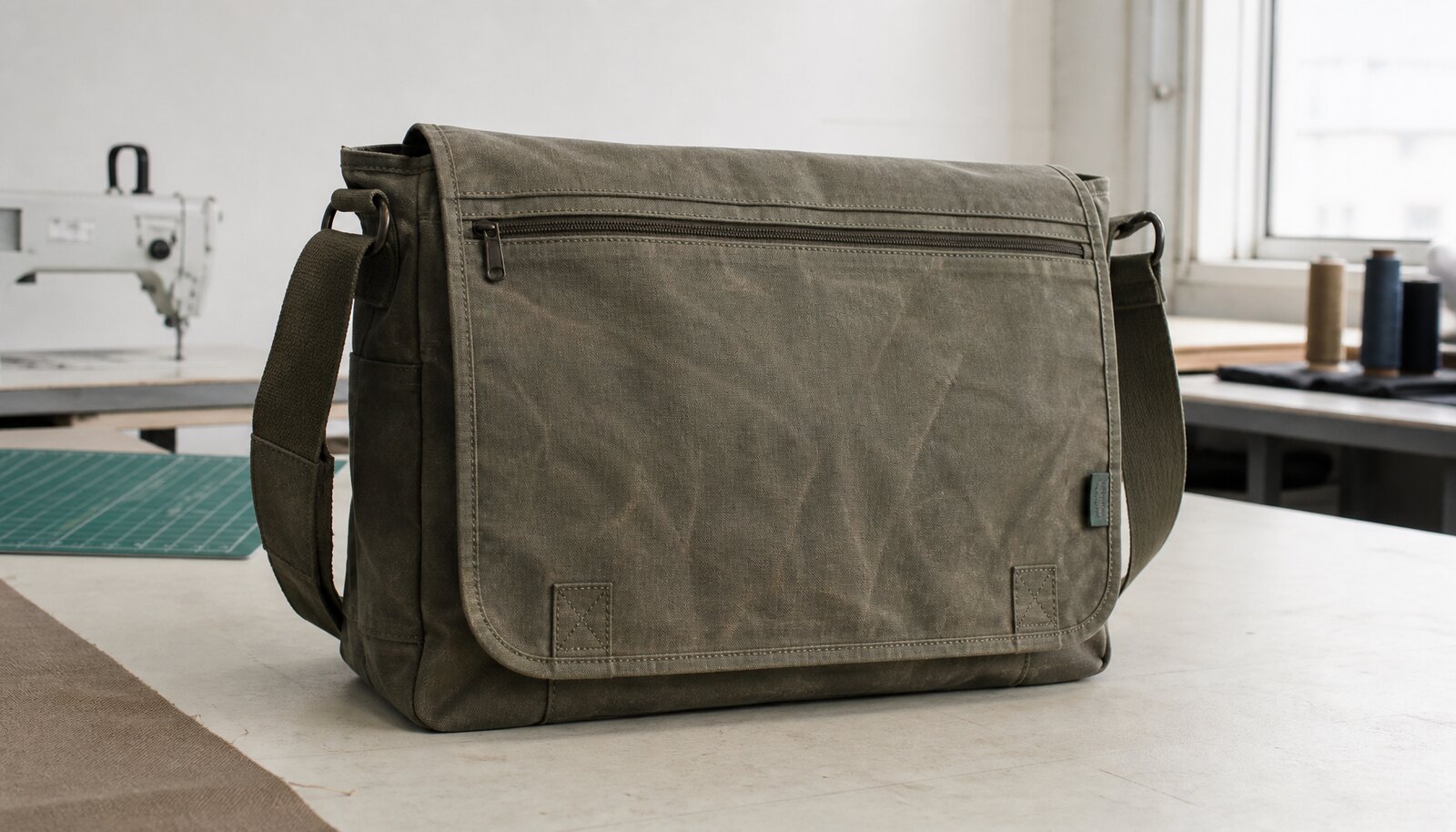
What corporate gifting buyers actually need from a canvas messenger bag
For corporate gifting, a canvas messenger bag is not just a branded accessory. It has to carry a specific set of items, survive distribution through multiple hands, and still look presentable when the recipient opens it. That means the buying decision should start with use case, not with a generic bag photo. A bag for a conference kit has different requirements than a premium sales incentive or a retail-style employee gift.
The most common mistake is buying off a catalog image and assuming the bag will fit the program. The better approach is to define the contents first: notebook size, bottle size, brochure count, laptop sleeve, charger pouch, or mixed swag set. Once the contents are fixed, the required body width, depth, flap style, pocket count, and closure type become much easier to specify.
- Start with what the recipient will carry, not with the supplier’s standard style name.
- Decide whether the bag is for one-time handout or repeated daily use.
- Use the bag as part of a set: logo placement should work with the rest of the gift pack.
- For executive gifting, handfeel and finishing matter more than the lowest unit price.
Fabric weight, feel, and construction choices that change the quote
Canvas messenger bags are usually quoted by fabric weight, and this is where many RFQs become vague. Suppliers may say 12 oz canvas, 14 oz canvas, or 16 oz canvas, but the buyer should ask how that fabric is measured and whether it is pre-wash or post-finish weight. A 12 oz bag can be perfectly suitable for light gifting, while a 14-16 oz build gives more structure and a more substantial retail feel. If the bag is meant to be reused for commuting, heavier canvas generally performs better.
Construction also matters as much as the fabric itself. An unlined bag keeps cost down, but it can show internal stitching and may not hold shape as well. A partial lining in the flap or body can improve the inside finish without making the bag expensive. If you need a premium visual, ask for reinforced base stitching, bar-tacks at load points, and a strap attachment method that will not twist after packing.
- 12 oz: lighter promotional use, lower cost, softer drape.
- 14 oz: balanced option for most corporate gifting programs.
- 16 oz: better structure, better perceived value, usually higher sewing cost.
- Lining adds cost but improves structure, presentation, and print concealment.
Print method selection: what looks good in a sample room and what survives use
For canvas messenger bags, the print method should match logo complexity, quantity, and expected handling. Screen printing is usually the most practical choice for simple logos with one or two colors, especially when the run size is large enough to justify setup. It gives a strong flat appearance and is usually the most cost-efficient route for corporate gifting. If the logo has small text or multiple colors, screen print can still work, but registration tolerance becomes important.
Embroidery feels premium, but it is not automatically the best option. On thin canvas, embroidery can pucker the fabric or distort the flap if the backing is weak. Heat transfer is useful for small quantities or variable names, but the buyer should understand durability expectations before approving it for a bag that will be used often. For buyers sourcing for long-term brand exposure, the key question is not which method looks best in isolation, but which one still looks acceptable after shipping, stuffing, and repeated handling.
- Screen print: best for simple logos and repeat volume.
- Embroidery: good for premium brand marks on heavier fabric and smaller designs.
- Heat transfer: useful for short runs, variable names, or complex art.
- Always approve print on the actual canvas color, not on paper artwork alone.
Supplier route comparison: factory direct versus trading company versus local decorator
The cheapest quote is not always the lowest-risk sourcing route. For canvas messenger bags for corporate gifting, the three common routes are direct factory, trading company, and local decorator or print shop that imports blank bags. Each has a different cost structure and a different level of control over fabric, sewing, print quality, and packing. If your program needs repeat orders, the supplier route matters as much as the sample itself.
Direct factories are usually the strongest option when the buyer needs custom dimensions, specific fabric weight, and controlled packing. Trading companies can be useful when you need mixed categories or smaller volumes, but you must verify whether they actually control production. Local decorators are easy for very short runs, yet they often depend on imported blanks, which can limit customization and create hidden delays.
- Direct factory: better for repeat programs, custom specs, and clearer production visibility.
- Trading company: useful for bundled sourcing or fragmented requirements.
- Local decorator: practical for very low MOQ, but often weaker on structural customization.
- Ask where sewing, printing, and final packing actually happen.
Comparison table: how sourcing routes affect cost and risk
The table below is the practical way to compare sourcing routes. It is not enough to compare unit price. A clean quote should tell you whether the supplier controls fabric, sewing, printing, inspection, and packing, because those are the steps that affect the final delivered product. A low-cost middleman quote may still be the right choice if your run is tiny or highly mixed, but the risk profile needs to be visible before you commit.
For procurement teams, the best comparison is often not between two supplier names, but between two different sourcing strategies. If the bag is part of a recurring gifting calendar, direct factory pricing usually wins over time. If the program is one-off and urgent, a reseller with blanks on hand can be acceptable, provided the spec is tightly bounded.
MOQ logic: why the minimum order is not just a number
MOQ for canvas messenger bags is usually driven by fabric color, print setup, sewing line efficiency, and whether the order uses stock components or custom parts. A supplier may quote a low MOQ for a standard bag in natural canvas with one-color print, but the same factory may require a much larger minimum if you want custom dyed fabric, lining, branded zipper pulls, or multiple logo versions. That is normal, not a warning sign by itself.
The real sourcing mistake is comparing MOQs without comparing what is included in the build. A quote for 300 pieces with simple screen print is not equivalent to a quote for 300 pieces with custom weave label, zip top, and internal pocket. If the buyer needs multiple drop points or region-specific names, the MOQ should be checked against each version, not just the total program volume.
- MOQ can change by color, print color count, and packaging style.
- Extra components like lining and zippers increase minimums or setup cost.
- Multiple logo versions often behave like separate SKUs.
- Ask for MOQ by style, not only by total order value.
Sample approval: the checks that prevent expensive surprises later
A good sample approval should test the things that are hard to see in artwork. The sample needs to show the actual fabric handfeel, the finished bag shape, the logo placement, the strap length, and the closure function. If the buyer approves only the visual front shot, the production bag may still fail on balance, seam strength, or internal finish. For canvas messenger bags, the sample should be filled with the intended contents so you can see how it hangs and whether the flap closes cleanly.
Do not treat the pre-production sample as a marketing sample. Treat it as a production standard. Measure body width, height, gusset depth, strap length, and print position. Open and close all closures several times. Check the seams at the strap junction and the corners where stress concentrates. If the bag is for corporate gifting, the recipient will notice crooked prints and weak structure immediately, even if the logo itself is correct.
- Approve the sample with actual contents inside the bag.
- Confirm dimensions in both flat and filled condition.
- Check print sharpness, color density, and edge clean-up.
- Inspect smell, loose fibers, and the interior seam finish.
Packing details that affect transit damage and presentation
Packing is often treated as an afterthought, but it changes both freight cost and the customer experience. For most corporate gifting programs, a bulk polybag inside a master carton is enough, especially when the bag is going to be redistributed or packed again with other items. If the bags are retail-facing or being presented as executive gifts, a simple insert card or tissue wrap may be worth the extra cost. The key is to align packing with the program outcome rather than adding decoration that does not protect the product.
Carton sizing should be based on how the bag folds, not on a theoretical unit count. Overstuffed cartons crush corners and create print rub marks. Underfilled cartons waste freight space and increase movement. Ask for carton dimensions, gross weight, and loading count early, because these three numbers affect both shipping cost and warehouse handling. If the buyer works with a distribution center, carton labeling and case pack consistency matter almost as much as the bag itself.
- Use polybag protection when fabric can pick up dust or friction marks.
- Specify master carton count to match warehouse handling and pallet planning.
- Keep print surfaces separated to prevent abrasion in transit.
- If retail presentation matters, define inserts, tissue, or belly bands before sampling.
Lead time planning: where schedules usually slip
A realistic lead time starts with sample approval, not with the date the quote is issued. Canvas messenger bags can move quickly if the factory already has suitable fabric in stock and the print method is simple. Delays usually happen when the buyer changes logo placement, adds a pocket, approves a fabric color late, or requests a revised packing style after sampling. Those changes may be small on paper, but they often affect cutting, printing setup, and sewing sequence.
If the order is tied to a conference, launch date, or seasonal gifting event, build in a buffer for final approval, carton labeling, and origin-side inspection. Do not assume the earliest ship date is the real ship date. A practical schedule should include sample time, production time, final inspection time, and freight booking time. Suppliers that quote only one production number without explaining the pre-production steps are usually the ones that create schedule friction later.
- Lead time changes when fabric is custom dyed or components are sourced separately.
- Complex logo decoration can add setup and cure time.
- Packing changes can add several days when labels or inserts are needed.
- Build margin for inspection and rework before the dispatch date.
Quote comparison: how to read the numbers without getting misled
A useful quote should separate material, sewing, printing, packing, and any extra decoration or sample charges. If those costs are bundled into one line, the buyer cannot tell what is driving the price or where savings are possible. For canvas messenger bags, the biggest price swings usually come from fabric weight, lining, closure type, strap reinforcement, and decoration method. Freight and duty may be outside the factory quote, but they still need to be estimated for landed-cost comparison.
When comparing quotes, make sure the product descriptions match exactly. A bag with a zipper top, one external pocket, and embroidery is not the same product as an open-top bag with one-color screen print. If two quotes look far apart, the first step is to normalize the spec, not to push for a discount. Buyers who do this well usually save more by removing ambiguity than by negotiating hard on an incomplete spec.
- Request separate pricing for bag body, decoration, and packing.
- Normalize all quotes to the same fabric weight and construction.
- Include sample fees, carton fees, and surcharge triggers in the comparison.
- Compare landed cost, not only ex-factory price.
Specification comparison for buyers
| Spec decision | Recommended option | When it fits | Buyer risk to check |
|---|---|---|---|
| Fabric weight | 12 oz to 16 oz canvas, with 12 oz for light gifting and 14-16 oz for premium use | Choose 12 oz when the bag carries brochures, notebooks, and light giveaways; use 14-16 oz for heavier corporate sets or long reuse | Thin fabric can distort after printing and feel cheap at retail handfeel; confirm finished fabric GSM, not just yarn count |
| Bag structure | Unlined body for budget programs; light lining or partial lining for premium gifting | Unlined works for short campaigns and lower unit cost; lined bags suit executive gifts and branded resale | Unlined bags can show print strike-through and internal thread marks; lined bags increase sewing time and needle risks |
| Print method | Screen print for simple logos; heat transfer or embroidery for smaller runs and detailed marks | Screen print fits large logo runs with one to two colors; embroidery suits a premium look on compact logo areas | Heat transfers can crack or peel under rough use; embroidery can pucker on thin canvas if backing is not specified |
| MOQ route | Factory direct for higher volume; trading route for mixed items or very low MOQ | Factory direct is better when you can commit to a repeat program and need tighter cost control | Low MOQ quotes often hide weak control on fabric lot consistency, print alignment, or carton packing |
| Handle and strap build | 25-38 mm webbing strap with reinforced cross-stitch or box-X stitching | Use a wider strap for heavier loads and daily commuter use; narrow straps work only for light promotional content | Weak strap reinforcement is the fastest failure point in corporate gifting bags; inspect stitch density and bar-tack placement |
| Closure and pocket layout | Main flap with hook-and-loop, zipper top, or open top depending on use case; one external pocket is often enough | Zipper top suits transit and privacy; open top suits trade show kits and fast handout programs | Complex pocket layouts increase sewing cost and failure risk; confirm pocket size against the item set to avoid tight fit complaints |
| Supplier route | Direct manufacturer with sample room and sewing line visibility | Best for buyers who need repeatability, custom options, and controlled lead time | Verify real production photos, stitching standards, and whether the supplier outsources printing or embroidery |
| Packing method | Bulk polybag with master carton; retail-ready insert only if required | Use simple packing for internal gifting and distributor replenishment; add inserts for retail or premium unboxing | Overpacking adds cost and delays; underpacking can cause dirt marks, crushed corners, and shape loss in transit |
Buyer checklist before sampling
- Confirm final bag size, gusset, handle drop, and usable loading weight.
- Specify fabric type, GSM/oz weight, color tolerance, and shrinkage expectations.
- Send vector artwork and define logo size, print position, and Pantone references.
- Ask for sample photos plus one physical pre-production sample before bulk approval.
- Agree carton packing, barcode or hangtag needs, and shipment marks before production.
- Record inspection checkpoints for stitching, print adhesion, stains, and quantity count.
Factory quote questions to send
- What is the exact fabric spec in GSM or oz, and is it measured before or after finishing?
- Is the quote based on in-house sewing and printing, or are any steps outsourced?
- What is the MOQ per color, per logo version, and per packing style?
- What sample type is included: stock sample, pre-production sample, or full custom sample, and what are the sample charges?
- What carton size, units per carton, and outer carton test standard are included in the quote?
- What lead time applies after sample approval, and what parts of the schedule are most likely to shift?
- What quality checks are done on fabric shade, stitch density, logo placement, and final packing count?
- What cost changes if we switch from screen print to embroidery or add a lining, zipper top, or extra pocket?
Quality-control points to confirm
- Fabric weight matches the approved spec range and is consistent across the lot.
- Canvas is free from heavy slubs, broken yarns, visible stains, and uneven dye marks in the logo zone.
- Logo placement is within the approved tolerance, with clean edges and no ink bleed, cracking, or thread puckering.
- Stitching at strap joins and corners uses reinforced construction with no skipped stitches or loose thread tails.
- Zippers, snaps, or hook-and-loop closures operate smoothly and align properly after repeated opening and closing.
- Bag dimensions stay within the agreed tolerance so the finished product fits the intended gift set or collateral pack.
- Cartons are packed to prevent crushing, moisture exposure, and print abrasion during transit.