Start with the buying objective, not the artwork file
Coffee roasters buy canvas messenger bags for different reasons, and those reasons change the specification. A bag for café retail has to look good on a shelf, photograph cleanly, and feel worth the retail price. A staff bag must survive daily handling. A subscription gift may need to stay inside a tight unit-cost and carton-volume target. A distributor item needs stable reorders, clear SKU labeling, and predictable packing. If the RFQ begins with only a logo and a reference photo, the supplier has to guess which of those priorities matters most.
Start with use and load. A messenger bag meant for two 250 g or 340 g coffee bags, a cupping notebook, and a small accessory does not need the same construction as a commuter-style bag carrying a 13-inch laptop, charger, water bottle, and sales samples. Load drives the canvas GSM, strap width, base reinforcement, lining, closure, and inspection method. Even when the bag does not break, it can still fail commercially. A sagging flap, crooked logo, thin strap, or crushed display shape makes roaster merchandise feel cheaper than intended.
Put that business context into the quote request. Say whether the bag is a low-cost event giveaway, a mid-range café merchandise SKU, a staff-use item, or a repeat wholesale program. Clear positioning helps prevent the factory from quietly removing reinforcement, downgrading canvas, simplifying packing, or choosing lighter trims just to win the first price round.
- Café retail merchandise: prioritize appearance, print consistency, fabric handfeel, clean folding, and shelf presentation
- Staff or sales-rep use: prioritize strap reinforcement, secure closure, laptop/tablet fit, and long-term function
- Subscription or gift-with-purchase: prioritize MOQ flexibility, unit cost, packing density, and predictable lead time
- Distributor stock item: prioritize repeatable materials, standard carton labeling, SKU control, and reorder stability
- Event resale or trade show item: prioritize fast sampling, clear branding, easy carrying, and controlled landed cost
Turn the idea into a quote-ready specification
A quote-ready specification does not have to be a full technical pack, but it should remove the big assumptions. Include finished dimensions, canvas composition and weight, fabric color and finish, logo method, closure, strap construction, interior layout, hardware finish, sample process, packing, and Incoterm. Without those details, one supplier may quote an unlined 10 oz promotional bag while another quotes a lined 14 oz bag with zipper pocket, metal hardware, and reinforced strap anchors. Both can truthfully call the item a canvas messenger bag. They are not quoting the same product.
Use finished bag dimensions rather than only a screenshot or flat pattern estimate. State body width, body height, gusset depth, flap drop, strap width, adjustable strap length range, pocket size, and print position from fixed reference points. For textile bags, a body tolerance of +/-0.5 cm to +/-1 cm is a common starting point, depending on size and construction complexity. Strap length often needs a wider tolerance, such as +/-2 cm. Logo placement on a visible flap should be tighter where feasible, often around +/-0.5 cm, because small shifts are obvious in product photos.
Avoid sourcing language that sounds helpful but cannot be inspected. Heavy-duty, premium, eco, vintage, and durable describe a direction, not a measurable product. Replace them with specifics: 100% cotton canvas, 12 oz to 14 oz, approximately 340 to 400 GSM; 38 mm webbing strap; metal slider; magnetic snaps under flap; one interior zipper pocket; one-color screen print, 220 mm wide, centered on flap; 15 pieces per export carton. That level of detail makes supplier quotes comparable and gives QC teams a standard to inspect against.
- Attach front, back, side, bottom, and interior sketches or annotated reference photos
- State finished dimensions and tolerance instead of saying similar to photo
- List every paid component: shell fabric, lining, webbing, zipper, hardware, label, print, patch, hangtag, and packing
- Confirm whether the supplier should quote FOB, EXW, CIF, DDP, or another Incoterm
- Require suppliers to state exclusions, setup charges, sample charges, and when lead time begins
Choose canvas weight, composition, and finish with intent
For canvas messenger bags for coffee roasters, 12 oz to 14 oz canvas is a practical wholesale starting point. In GSM terms, that is roughly 340 to 400 GSM, although conversion varies with weave, yarn, and finishing. This range usually gives enough body for a flap, screen print, strap hardware, and moderate daily use without making the bag overly heavy or bulky to sew. Lighter 8 oz to 10 oz canvas can work for simple promotional bags, but it may collapse on display, wrinkle around the flap, or feel less substantial to retail customers.
Heavier is not automatically better. A 16 oz canvas can add structure, but it also increases material cost, carton weight, seam bulk, sewing difficulty, and needle wear. Thick seams at the flap, gusset, and strap anchors can be hard to keep neat, especially when the bag also has lining, padding, and folded seam allowances. For a premium staff or laptop-compatible bag, heavier canvas or targeted reinforcement may be justified. For a first café merchandise launch, mid-weight canvas with strong strap anchors often gives a better balance of cost, handling, and perceived value.
Composition and finish carry their own risks. Natural 100% cotton canvas has a familiar handfeel and usually accepts screen printing well. Washed canvas feels softer and more casual, but it may lose structure and show more measurement variation. Dyed canvas supports brand-color programs, yet it needs lab dip approval, shade tolerance, and print-opacity testing. Recycled cotton blends may fit a sustainability-focused range, but buyers should define acceptable flecks, shade variation, and handfeel before bulk cutting.
- 8 oz to 10 oz: lower-cost promotional use, softer structure, higher wrinkle and collapse risk
- 10 oz to 12 oz: light retail use where cost control matters more than strong shape retention
- 12 oz to 14 oz: balanced range for most roaster merchandise and daily-carry programs
- 14 oz to 16 oz: stronger structure but higher freight weight, seam bulk, and sewing complexity
- Ask for fabric weight tolerance, commonly around +/-5%, and verify bulk fabric against the approved swatch
Specify the construction details customers will actually feel
The outline of the bag matters, but durability usually comes from stress-point construction. The shoulder strap is the highest-risk part because it carries dynamic load as the user walks, lifts the bag, or swings it across the body. A 38 mm webbing strap with a metal adjuster is a sensible baseline for medium loads. For staff use, commuting, or laptop carry, 50 mm webbing or a shoulder pad may be worth the upgrade. The strap attachment should use box-cross stitching, bartacks, reinforcement patches, or reinforced side panels, not only a folded top seam.
Base and gusset construction should match the intended contents. A flat envelope-style messenger bag is slimmer and cheaper, but it may not hold coffee bags, notebooks, and accessories cleanly. A gusseted base improves capacity and usefulness, though it adds seams that must be sewn straight and finished well. If the bag will carry coffee samples, a laptop, or a water bottle, ask whether the base has a double layer, lining support, seam binding, or reinforcement at the side panels.
Closure choice also affects returns and user satisfaction. A flap with magnetic snaps is clean and easy to use. A top zipper under the flap improves security but adds cost and more QC work, especially around zipper ends and bulky flap corners. Buckle straps create a heritage look, but they slow access and introduce more hardware variability. Choose the closure for the sales channel. A café customer buying casual merchandise may prefer simplicity. Staff and wholesale reps carrying electronics may need better security.
- Specify 38 mm webbing for common daily carry and consider 50 mm for heavier laptop-oriented use
- Require box-cross stitching, bartacks, or hidden reinforcement patches at strap anchors
- Inspect flap corners, top edge, side seams, base seam, and gusset seams as stress points
- Use magnetic snaps for simple retail use and flap plus zipper when security matters
- Avoid unnecessary interior partitions if cost, sewing accuracy, and defect reduction are priorities
Match the logo method to the artwork and fabric
Coffee roaster branding often looks natural on canvas because the material fits a craft, hospitality, and retail environment. The most common wholesale method is screen printing, especially for one-color or two-color logos on natural canvas. It is cost-effective for flap graphics, café names, simple icons, and clean typography. Still, artwork that prints sharply on paper may not reproduce as cleanly on textured fabric. Fine strokes, small reversed text, and halftones should be checked before bulk printing.
Dark dyed canvas adds a technical step. White, cream, metallic, or light brand-color inks may need an underbase to achieve opacity. That underbase adds a print pass, can increase cost, and may slightly change the handfeel. If one supplier includes the underbase and another does not, the price comparison is not valid. Send vector artwork, Pantone references where available, maximum print dimensions, and placement instructions. Ask for a print strike-off when logo quality is important or when the canvas is dark, washed, or visibly textured.
Printing is not the only answer. A woven label can be better for small, subtle branding, especially if the roaster plans a family of totes, aprons, pouches, and messenger bags. Embroidery can look premium on compact marks, but it may pucker lighter canvas and is not ideal for large flap graphics. Heat transfer can handle detail and multiple colors, but buyers should test handfeel, cracking, and abrasion. The best choice depends on artwork, fabric color, order quantity, retail price target, and durability expectations.
- Screen print: best value for simple artwork, large flap prints, and one to two ink colors
- Woven label: best for small repeat branding, minimalist programs, and multi-product consistency
- Embroidery: suitable for compact logos on stable fabric, not tiny text or large detailed artwork
- Heat transfer: useful for detailed or multi-color graphics, but test handfeel and rub resistance
- Define print size, Pantone references, placement tolerance, underbase, curing, and strike-off approval
Control MOQ, cost drivers, and color splits early
MOQ is often driven by materials and trims, not only by sewing capacity. A factory may accept a more manageable first order if the buyer uses stock natural canvas, standard webbing, standard hardware, standard zipper tape, and a simple screen print. MOQ usually rises when the order requires custom dyed fabric, special zipper tape, branded snaps, custom metal pullers, multiple labels, multiple colorways, or custom patches. For a first roaster merchandise launch, stock natural canvas with a one-color print and standard hardware is often the cleanest way to test demand.
Ask exactly what the MOQ applies to. Is it per order, per fabric color, per logo version, per size, per label set, or per shipping mark? This matters when a roaster group wants separate café logos, a distributor asks for mixed colors, or a corporate channel requires different barcodes. A total order of 1,000 pieces can become inefficient if it is split across four fabric colors, five logo versions, and separate carton labels. Cutting, printing, packing, and inspection all become smaller-batch operations.
Cost also moves with details buyers sometimes forget to list. Lining, zipper pockets, padded laptop sleeves, shoulder pads, reinforced bases, metal hardware, individual polybags, barcodes, hangtags, and custom carton marks each add material or labor. Some features raise perceived retail value and reduce complaints. Others may not matter to the end customer. Before negotiating, separate must-have features from optional upgrades so the supplier does not cut the wrong corner.
- Lower-MOQ route: stock natural canvas, standard webbing, standard hardware, one-color screen print
- Higher-MOQ route: custom dyed fabric, custom zipper tape, branded hardware, several colorways, custom patches
- Confirm whether setup charges for screen, label, embroidery, patch, or mold are included or separate
- Use the first order to validate sell-through before adding custom colors and complex trims
- Compare MOQ together with color split, logo split, packing requirements, and lead-time assumptions
Compare supplier quotes on one normalized buying sheet
The lowest unit price is often the quote with the most hidden assumptions. A low number may be based on lighter canvas, no lining, smaller print area, cheaper webbing, plastic hardware, no reinforcement patches, bulk packing, or a lead time that starts only after several approvals. Put every supplier quote into the same comparison sheet. Include canvas GSM, composition, finish, dimensions, lining, pocket count, closure, strap width, hardware material, logo method, print size, sample cost, MOQ, packing, carton quantity, lead-time basis, and Incoterm.
Itemized alternatives make negotiation more productive. Instead of asking a supplier to reduce price with no guidance, request controlled options: 12 oz versus 14 oz canvas, unlined versus lined, magnetic flap versus flap plus zipper, screen print versus woven label, individual polybag versus bulk paper wrap, standard slider versus upgraded metal finish. This gives you real cost choices without encouraging invisible reductions that hurt quality.
FOB pricing is useful for comparing factory product cost, but delivered pricing may be needed for internal budgeting. If you request DDP or another delivered term, still require carton size, gross weight, net weight, and packing method. Freight cost changes with packing density, carton dimensions, and shipment mode. Over-compressed bags can cause crease complaints. Over-protected bags can raise landed cost. Quote comparison should include packaging and logistics, not just sewing cost.
- Use one approved spec sheet and require every supplier to quote against it
- Separate unit price from sample cost, setup fees, artwork charges, label costs, packing, freight, and duty assumptions
- Ask suppliers to state what is excluded from the unit price
- Confirm whether production lead time starts after deposit or after signed pre-production sample approval
- Treat vague terms such as thick canvas, premium hardware, and standard packing as quote risks until defined
Use sampling to test function, measurements, and artwork
A pre-production sample should be reviewed like a small inspection, not just a visual mockup. Buyers naturally look first at the logo, color, and overall style, but many bulk-production problems come from dimensions, reinforcement, and function. Measure the sample for body width, height, gusset, flap drop, strap width, strap length range, pocket dimensions, and logo placement. Record the measurements, photos, fabric details, trim details, and any approved deviations. If the approved sample is not measured, final inspection becomes subjective.
Functional testing does not need to be complicated. Load the sample with the expected contents: coffee bags, notebook, tablet, laptop, charger, water bottle, or sales samples. Wear it across the body, adjust the strap, open and close the flap, run the zipper, and check whether the bag twists, sags, or pulls at the strap anchors. If magnetic snaps are used, check alignment when the bag is empty and half-filled. If there is a top zipper, check whether it waves under the flap or catches at the ends.
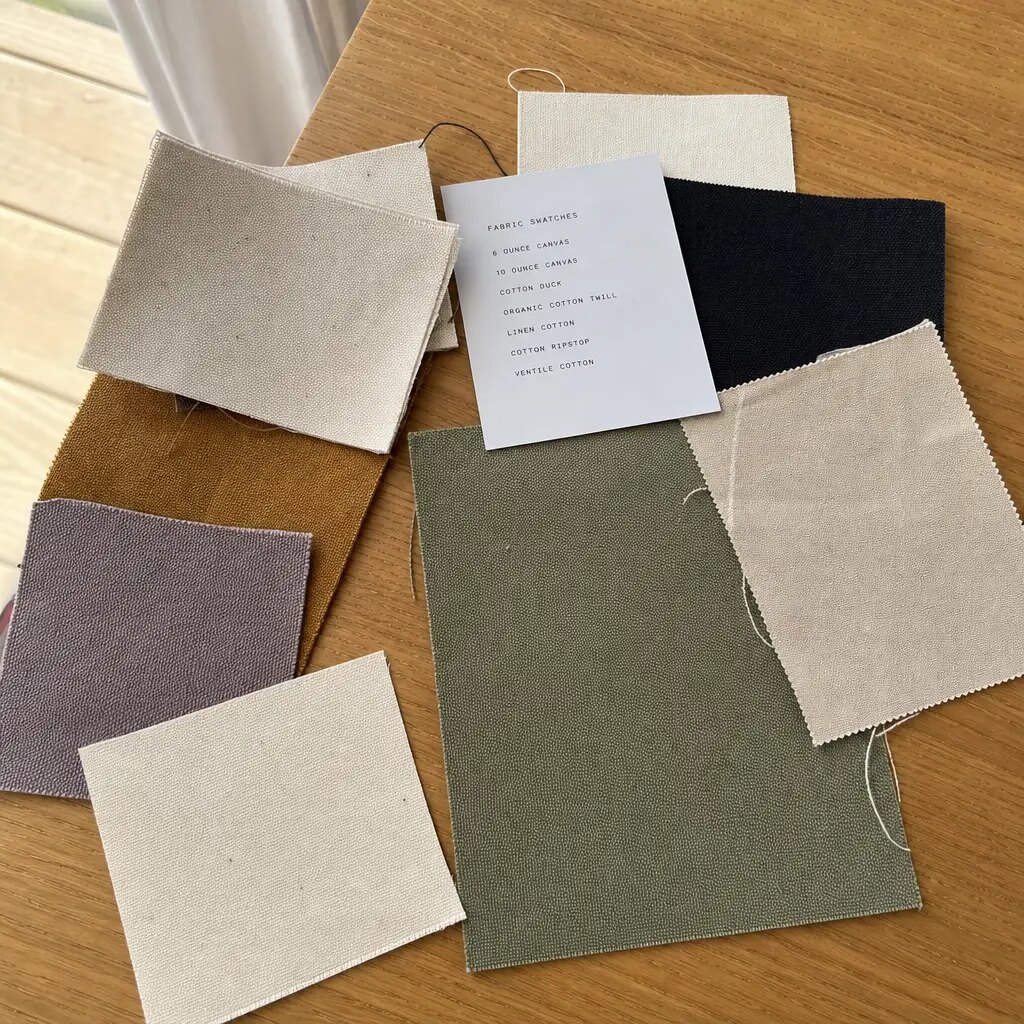
Separate material and artwork approvals when they carry risk. If natural canvas shade, recycled flecking, washed finish, or dark-fabric printing matters, approve swatches and print strike-offs before making the full sample. The final pre-production sample should combine the approved fabric, construction, logo method, hardware, trim, dimensions, and packing direction. Bulk cutting should not begin until that sample is signed off.
- Create a signed sample approval sheet with measurements, photos, materials, trim, print, and packing notes
- Test with realistic load instead of approving an empty bag only
- Check flap alignment empty, half-filled, and filled to the intended use level
- Approve actual hardware finish samples, not only supplier catalog images
- Do not release bulk cutting until artwork, materials, construction, trim, and packing are confirmed
Define QC criteria before production starts
Quality control works best when acceptance criteria are agreed before defects appear. Canvas is a natural textile, so minor slubs, flecks, and weave variation may be acceptable if they match the approved swatch. Stains, holes, oil marks, severe shade mismatch, crooked flaps, off-center printing, weak strap anchors, broken hardware, and strong odor should not be treated as normal variation. Coffee roaster merchandise often depends on a clean but tactile look, so buyers need to separate acceptable natural texture from avoidable workmanship defects.
Measurement control should cover the full bag, not just the outer body. Inspectors should measure width, height, gusset depth, flap drop, strap length range, pocket size, zipper length, and print placement from fixed reference points. Logo placement often needs tighter control than body size because the eye notices a crooked flap print immediately. A bag that is 5 mm wider may still be usable. A logo that is 15 mm off center on the flap may be unacceptable for retail.
Functional checks belong in the inspection plan. Open and close magnetic snaps repeatedly, run zippers several times, adjust the shoulder slider, check for sharp hardware edges, and pull lightly at strap anchors according to the agreed method. Interior pockets should not be twisted, sewn shut, or smaller than specified. Lining should not sag into the zipper path. Inspect cartons from different production lots to verify shade, trim, and packing consistency before shipment.
- Appearance checks: stains, shade mismatch, smudged print, flap skew, puckering, loose threads, crooked labels
- Measurement checks: body size, gusset, flap drop, strap range, pocket dimensions, zipper length, logo position
- Function checks: zipper running, snap alignment, strap adjustment, hardware finish, pocket usability
- Strength checks: strap anchors, bartacks, base seams, flap corners, top-edge stress points
- Packing checks: carton count, folding method, barcode placement, shipping marks, carton weight, and shape protection
Plan packing, labels, and cartons before the PO is final
Packing is part of the product specification because it affects freight cost, receiving efficiency, and retail presentation. A canvas messenger bag with a flap can crease if it is folded too tightly or compressed under heavy cartons. At the same time, shipping every unit with excessive stuffing can raise the freight cost per bag. The right packing depends on the channel. Café retail may need cleaner individual protection and fewer wrinkles. Distributor inventory may prioritize barcode accuracy, carton marks, and efficient palletization. A sustainability-focused brand may prefer reduced plastic, but the packing must still protect against dust and moisture during transit.
Individual polybags are common for dust protection and e-commerce handling, but paper wrap, belly bands, or bulk packing may be acceptable for some buyers. If polybags are used, confirm suffocation warnings, vent holes, recycling marks, and bag thickness if the destination requires them. If the order will enter a 3PL, retailer, or distributor warehouse, barcode label size and placement should be finalized before packing. Last-minute relabeling can add repacking cost and delay shipment.
Carton planning should balance protection and density. A medium canvas messenger bag may pack around 10 to 20 pieces per export carton depending on bag size, fabric weight, lining, and whether it ships flat, folded, or lightly supported. Ask for estimated carton dimensions, net weight, gross weight, and pieces per carton in the quote. This helps estimate container volume, airfreight exposure, warehouse handling, and carton-lifting practicality before purchase order approval.
- Define whether bags ship flat, folded, lightly stuffed, or supported at the flap area
- Specify individual polybag, paper wrap, plastic-free packing, or bulk packing before final quote comparison
- Provide barcode, hangtag, inner label, and shipping mark artwork with placement instructions
- Set maximum carton gross weight if the receiving warehouse has handling limits
- Request packing photos, carton dimensions, and carton marks before shipment release
Specification comparison for buyers
| Spec decision | Recommended option | When it fits | Buyer risk to check |
|---|---|---|---|
| Canvas weight | 12 oz to 14 oz canvas, approximately 340 to 400 GSM, with fabric weight tolerance stated as about +/-5% unless otherwise agreed | Most coffee roaster merchandise, staff bags, café retail, and daily-carry programs needing structure without excessive freight weight | Some suppliers may substitute 8 oz to 10 oz canvas or quote by marketing terms only. Require GSM/oz on the proforma invoice and verify bulk fabric against the approved swatch. |
| Fabric composition | 100% cotton canvas for a natural handfeel; recycled cotton or cotton-poly blends only with confirmed composition and shade/fleck tolerance | Roaster brands that want a craft, tactile, print-friendly product with a natural canvas appearance | Recycled blends can vary in flecking, handfeel, shrinkage, and dye uptake. Define acceptable visual variation before cutting and do not rely only on catalog photos. |
| Finished size | Quote in centimeters with tolerance: body width/height/gusset +/-0.5 cm, flap drop +/-0.7 cm, strap length range +/-2 cm, print position +/-0.5 cm where possible | Any wholesale order where multiple suppliers are being compared or where the bag must fit laptops, coffee bags, retail inserts, or shipping cartons | If the factory quotes from a photo, finished size may drift. Confirm whether measurements are external finished dimensions, not flat pattern dimensions. |
| Fabric color | Stock natural or stock black canvas for manageable MOQ; custom dyed canvas only when the buyer accepts higher MOQ, lab dip approval, and shade tolerance | First merchandise launches, seasonal café retail, roaster subscription gifts, and repeat SKUs needing reliable replenishment | Custom dye lots may have MOQ per color, longer lead time, and Delta E or visual shade approval requirements. Ask whether shade variation between panels/cartons is acceptable. |
| Closure style | Flap with magnetic snaps for clean access; flap plus top zipper when security matters; buckle straps only when heritage styling justifies added labor | Retail merchandise, staff bags, trade show resale, laptop-compatible daily carry, and gift programs | Common defects include magnetic snap misalignment, flap skew over 1 cm, zipper waviness, loose zipper ends, and bulky corners under the flap. |
| Strap construction | 38 mm cotton or poly-cotton webbing with metal slider; 50 mm webbing or shoulder pad for heavier laptop use; box-cross stitch or bartack reinforcement | Medium loads such as notebooks, tablets, coffee samples, chargers, and packaged coffee; upgraded strap for commuting use | Thin webbing, plastic sliders, unreinforced side seams, or loose bartacks can cause returns. Ask for strap-anchor construction photos and load-test the pre-production sample. |
| Logo application | 1-color or 2-color screen print on natural canvas; woven label for subtle repeat branding; embroidery only for compact marks on suitable fabric weight | Coffee roaster logos, café retail, wholesale merch, staff bags, and distributor programs needing clean branding at controlled cost | Fine lines under roughly 0.5 mm, small reversed text, halftones, and light ink on dark canvas require testing. Confirm underbase, curing, rub resistance, and placement tolerance. |
| Interior organization | One zipper pocket plus one slip pocket as a practical baseline; laptop sleeve only when the bag is positioned as work/commuter carry | Retail customers, staff use, sales reps, or corporate gifting where utility matters | Extra dividers add labor, alignment risk, and inspection time. Specify pocket size, zipper length, sleeve padding, and opening direction in measurable terms. |
| Hardware finish | Standard nickel, matte black, gunmetal, or antique brass; approve actual trim samples for sliders, D-rings, snaps, zipper pullers, and rivets | Bags where visible hardware contributes to brand style or perceived quality | Black and antique finishes may vary between parts if sourced separately. Check coating scratches, sharp edges, magnet pull, zipper smoothness, and finish consistency across cartons. |
Buyer checklist before sampling
- Define the commercial use before quoting: café retail merchandise, staff carry, subscription gift, trade show resale, wholesale account gift, distributor stock, or event giveaway.
- State expected load in practical terms: for example two 250 g coffee bags plus notebook, or 13-inch laptop plus charger and daily accessories. Use this to set canvas GSM, strap width, base reinforcement, and closure.
- Provide finished bag dimensions in centimeters: width, height, gusset, flap drop, strap width, adjustable strap range, handle drop if any, pocket dimensions, and logo position from fixed seams.
- Set realistic tolerances in the RFQ: body width/height/gusset usually +/-0.5 cm to +/-1 cm depending on construction, strap length +/-2 cm, and logo placement preferably +/-0.5 cm for visible flap prints.
- Specify fabric by composition, weave, and weight, such as 100% cotton plain-weave canvas, 12 oz to 14 oz, approximately 340 to 400 GSM, with fabric weight tolerance around +/-5% unless agreed otherwise.
- Clarify fabric finish: natural, bleached, garment washed, enzyme washed, dyed to Pantone reference, waxed, recycled blend, water-repellent finish, or untreated. State acceptable shade, slub, fleck, and shrinkage expectations.
- Define the logo method precisely: screen print color count, Pantone references, maximum print size, position, print tolerance, woven label size, embroidery placement, patch material, or heat-transfer requirements.
- Ask whether white, cream, metallic, or light ink on dyed canvas needs an underbase, how many print passes are included, and whether curing/rub testing is part of the production process.
- List interior features only if needed: lining, zipper pocket, slip pocket, key loop, laptop sleeve, pen divisions, bottle pocket, padded back panel, or no interior organization for a simpler cost-controlled bag.
- Define hardware material and finish for sliders, D-rings, buckles, magnetic snaps, zipper teeth, zipper tape, zipper pullers, rivets, and snap caps. Approve actual trim samples, not only photos.
Factory quote questions to send
- What exact fabric composition, weave, oz weight, and GSM will be used in bulk, and what fabric weight tolerance will you guarantee?
- Is the quoted fabric stock natural canvas, stock dyed canvas, or custom dyed canvas? Is the MOQ per color, per order, per logo, or per shipping destination?
- Will bulk fabric come from one lot or multiple lots, and how will shade consistency be controlled across panels and cartons?
- What shrinkage should we expect after washing, steaming, or normal use, and are the quoted dimensions before or after any washing process?
- Does the unit price include lining, inside pockets, laptop sleeve, base reinforcement, shoulder pad, binding, all hardware, labels, hangtags, and packing shown on the drawing or sample?
- What print method is included, what maximum print area is priced, how many ink colors are included, and what is the print placement tolerance from the flap edge or center line?
- If the logo uses white ink, cream ink, metallic ink, or light ink on dyed canvas, is an underbase required, how many passes are needed, and is that included in the unit cost?
- Can you provide a print strike-off or printed fabric panel before the full pre-production sample, and what are the cost, timing, and approval steps?
- What hardware material and finish are included for sliders, D-rings, buckles, magnetic snaps, zipper teeth, zipper tape, zipper pullers, rivets, and snap caps?
- Are hardware finishes from one supplier or multiple suppliers, and can actual trim samples be approved before bulk trim purchasing?
Quality-control points to confirm
- Measure finished width, height, gusset, flap drop, strap width, strap length range, pocket dimensions, and logo placement against the approved sample and agreed tolerance before final packing.
- Verify bulk fabric composition, GSM, weave feel, color, finish, and handfeel against the approved swatch and pre-production sample, especially if multiple fabric lots are used.
- Check fabric defects including stains, holes, oil marks, dye streaks, abrasion, severe slubs outside the approved natural-canvas tolerance, panel shade mismatch, and strong odor.
- Inspect print position from seams and flap edges, ink opacity, color match, registration, edge sharpness, curing quality, cracking, smudging, and dry/wet rubbing resistance where required.
- Check that woven labels, patches, care labels, hangtags, barcode labels, and carton labels match approved size, spelling, color, orientation, placement, and SKU information.
- Inspect strap reinforcement for skipped stitches, loose threads, stitch density, box-cross accuracy, bartack placement, seam back-tacking, reinforcement patches, and symmetry on both sides.
- Open and close magnetic snaps, zippers, sliders, buckles, and adjusters repeatedly to catch weak attachment, misalignment, sharp edges, rough zipper running, or coating scratches.
- Review inside pocket placement, zipper pocket function, lining attachment, seam binding, and interior cleanliness because hidden construction defects are often missed in quick visual checks.
- Confirm hardware finish consistency across the lot, especially matte black, gunmetal, antique brass, and mixed hardware sets on the same bag.
- Check flap alignment when the bag is empty, half-filled, and filled to expected use level. A flap skew over about 1 cm is often visually obvious on a messenger bag.