What coffee roaster buyers usually get wrong in messenger bag RFQs
The most common problem is that the RFQ describes the bag by use case instead of by build spec. A buyer writes "canvas messenger bag for café staff and retail merch" and receives three very different quotes: one for a light unlined promo bag, one for a structured commuter bag, and one for a gift-style bag with upgraded hardware. All three can technically match the description, but the prices, lead times, and defect risks are not comparable.
Coffee roasters also tend to underestimate how much branding and interior construction change the quote. A plain flap messenger in 12 oz canvas is one thing; the same bag with zipper closure, padded divider, woven label, inside print, and custom-dyed webbing becomes a different product family. If the RFQ does not lock these variables early, the cheapest quote usually wins first review and then expands later with hidden add-ons.
- Avoid use-only descriptions such as premium, artisanal, barista carry bag, or everyday retail messenger
- Attach a simple front, side, and inside sketch even if final artwork is not ready
- Separate must-have features from nice-to-have features so suppliers can quote both base and upgraded versions
- Use one target sample spec for all vendors instead of asking each vendor to propose their own interpretation
Build the RFQ around the actual product use
For coffee roasters, messenger bags usually land in one of three commercial uses: retail merchandise, staff issue, or distributor and event gifting. Retail merchandise needs better shape retention, cleaner print finish, and consumer-facing packaging. Staff issue needs stronger straps, practical closures, and less concern about boutique presentation. Distributor gifting often sits in between, with a stronger need for low MOQ and cost control across multiple logo versions.
Your RFQ should state the expected carrying load and the intended environment. A bag meant to hold a 12 oz retail bean pack, notebook, and catalog can be lighter than one meant for sample cupping tools, tablet, apron, and water bottle. Without this context, factories often quote the most common construction they already run, not the one that matches your channel.
- Retail shelf item: prioritize cleaner seams, print appearance, and shape after packing
- Staff or field-sales use: prioritize reinforced strap points, secure closure, and pocket function
- Promo or event gift: prioritize MOQ flexibility, stock material use, and freight efficiency
- Write intended load guidance such as up to 3 kg daily carry or light retail accessory use
Fabric and structure choices that change price and performance
Canvas messenger bags for coffee roasters usually work best in 340 to 450 GSM fabric, roughly 12 oz to 16 oz canvas. Lighter fabric can reduce cost but often loses shape at the flap edge, especially after folding in export cartons. Heavier canvas gives a more substantial retail feel and supports larger print areas better, but it raises material cost, sewing effort, and carton weight. If your bag has no lining, the body fabric becomes even more important because every seam and print impression shows more clearly.
Structure also matters more than many RFQs reflect. A self-fabric body with no padding is the lowest-risk build. Add foam, lining, binding tape, and internal sleeves only if the end use justifies them. For coffee roaster programs, an unpadded or lightly structured messenger often gives the best margin because it preserves the natural canvas look while keeping unit labor and freight under control.
- 340 to 380 GSM: suitable for lower-cost retail or event programs if dimensions stay moderate
- 400 to 450 GSM: stronger handfeel for branded retail merchandise and repeat use
- Natural canvas shows print and soil differently than dyed canvas; approve both color and cleanliness standard
- Lining adds polish but can hide poor seam control; request inside photos of finished samples
- If wash finish is requested for a softer handfeel, specify shrinkage tolerance before bulk production
Branding method: what works on messenger bags for coffee brands
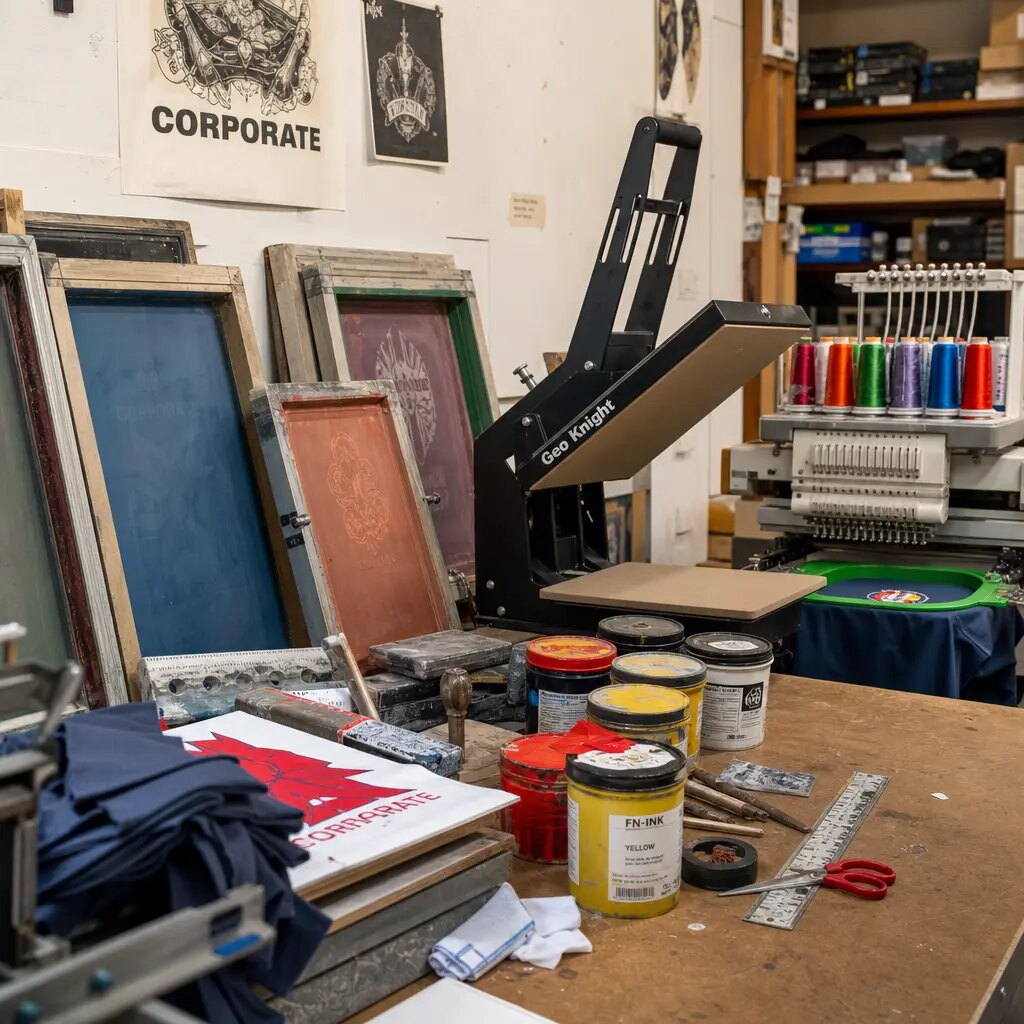
Most coffee roasters use bold logos, seal graphics, or simple line art. Screen printing is usually the most practical option for these designs because it holds cost well at volume and performs predictably on cotton canvas. On natural or light canvas, one-color and two-color prints are straightforward. On dark canvas, a white underbase may be needed to keep the logo sharp, which adds both setup and print steps. If suppliers do not break this out, quote comparisons become misleading.
Embroidery looks premium in small doses, especially for a corner logo or side placement, but large embroidery on a flap can pull the canvas and distort shape. Woven labels are low-risk and useful when the main panel already carries heavy print. Heat transfer can reproduce finer detail or gradients, but adhesion and aging on textured canvas should be tested on actual fabric, not only on a paper proof.
- Screen print: strongest balance of cost, speed, and visual impact for coffee brand logos
- Embroidery: best for smaller marks; require backing detail in quote if placed on lighter canvas
- Woven label: good for discreet branding and easy supplier consistency across reorders
- Heat transfer: use only after rub test and adhesion approval on the final canvas finish
- Request strike-off on approved fabric color, not on a substitute swatch
MOQ logic: how to lower commitment without losing control
Messenger bag MOQ is driven less by sewing and more by material and customization decisions. If you use stock natural canvas, standard webbing, and common hardware, factories can usually quote lower MOQs because they do not need to buy full lots of dyed material. Once you move into custom body color, dyed-to-match strap webbing, branded zipper pullers, custom lining print, or multiple logo versions, MOQs rise quickly or the unit price climbs to absorb leftovers.
A practical strategy for coffee roasters is to separate launch risk from brand ambition. Start with one stock body color, one print location, and one hardware finish. Keep the pattern stable. Then build variants later through label changes, artwork color changes, or pack-in inserts. This gives cleaner quote comparison and avoids paying for custom material on an untested SKU.
- Lowest MOQ path: stock canvas, stock webbing, standard hardware, one print position
- Mid-range MOQ path: custom print plus one custom label or hangtag, but stock materials
- Higher MOQ path: custom-dyed body, custom webbing, custom lining, or branded hardware
- If ordering multiple artwork versions, clarify whether MOQ applies per style, per color, or per total order
- Ask whether leftover custom materials are reserved for repeat orders or absorbed into current price
How to compare supplier quotes without being misled by low prices
A usable quote for a canvas messenger bag should separate material, printing, hardware, sewing complexity, and packing assumptions. If one supplier gives only a total FOB number and another lists fabric GSM, pocket count, and carton quantity, the more detailed quote is usually more reliable even if it looks slightly higher at first glance. Detail reduces the room for later substitution. It also gives your team better leverage when negotiating alternate versions.
For coffee roasters importing under margin pressure, landed cost often matters more than unit FOB. A slightly heavier bag with better carton efficiency can sometimes ship more economically than a bulkier design with decorative features. Likewise, a cheaper unit with oversized cartons may become expensive once freight and warehouse handling are included. The quote review should therefore cover both unit economics and cube efficiency.
- Request FOB based on one fixed port and one packing method for all suppliers
- Ask suppliers to note carton quantity, gross weight, and estimated carton size
- Compare quoted hardware level, because weak sliders and adjusters are a common hidden downgrade
- Flag any quote that says canvas bag without GSM, closure detail, or print coverage
- Review cost deltas for options such as zipper top, inside pocket, woven label, and individual polybag
Sample approval should prove function, not just appearance
Many buyer teams approve messenger bag samples too early because the logo looks right. For this product, the sample stage should prove scale, carry comfort, flap behavior, hardware function, and the way the bag sits when partially loaded. A beautiful flat sample can still fail once the strap is adjusted or the flap loses alignment after packing. Coffee roaster buyers should load the sample with realistic items such as bean packs, notebook, cupping spoon roll, or tablet-sized insert to judge balance and opening access.
Use at least two sample stages if the order value justifies it. A blank or lightly branded proto is enough to lock dimensions and construction. A pre-production sample should then confirm final fabric, print, label, and packing method. This sequence reduces costly revisions after bulk material booking. If your team skips the second stage, the final production run becomes the test.
- Measure actual sample dimensions and compare to RFQ drawing before approving print
- Open and close zippers and magnetic flap at least 20 cycles during review
- Load the bag to intended weight and inspect strap comfort plus seam stress points
- Check print cracking or roughness where the flap bends repeatedly
- Fold packed sample as it would ship and inspect creasing on arrival the next day
- Approve side label position, because labels placed too high on flap seams often look inconsistent
QC thresholds that matter more than generic AQL language
AQL references are useful, but they do not replace product-specific acceptance rules. Canvas messenger bags fail in repeatable ways: flap misalignment, skewed print, weak strap joints, wavy zipper insertion, and visible shade difference between body panels or webbing lots. Your quality file should convert these known risks into measurable pass-fail points. That gives both the supplier and third-party inspector something practical to enforce.
For coffee roaster programs with natural canvas, surface cleanliness should be a written standard. Small oil marks, dark cotton specks, or print offset can easily reach retail if the standard is vague. Also define tolerance for symmetry. Messenger bags are visually front-facing products; a 1 cm off-center flap or logo can look more serious to consumers than a small hidden seam issue.
- Finished size tolerance example: plus or minus 1 cm on width and height, plus or minus 0.5 cm on flap overlap if critical to closure
- Print placement example: center deviation not more than 0.5 cm from approved artwork position
- Strap reinforcement: require box-x or equivalent at specified joints with no skipped stitches
- Color matching: approve body, webbing, and label against standard under consistent light source
- Reject if magnets are not aligned or if zipper catches repeatedly during normal operation
- Reject visible oil marks, heavy fabric slubs in key logo area, or broken topstitching on front-facing seams
Packing, carton planning, and landed-cost control
Packing is where many otherwise solid bag programs lose margin. Messenger bags with structured flaps, thick straps, and interior dividers can consume carton volume quickly. If the factory folds them aggressively to reduce cube, the bags may arrive with permanent flap creases or distorted corners. If the bags are packed too loosely, shipping cost climbs. The right solution depends on the sales channel. Retail-ready stock may need shape support or tissue between layers; wholesale distributor stock often works with simpler folded packing.
For importers, carton dimensions should be reviewed before purchase order release, not after production. Oversized cartons can trigger handling inefficiencies even when weight is acceptable. Ask suppliers to test-pack the approved sample and send actual estimated carton dimensions and packing quantity. This is especially important if the bag includes foam, heavy hardware, or a rigid insert panel.
- Clarify whether each bag needs an individual polybag, recycled bag, paper wrap, or no inner packing
- If consumer presentation matters, request stuffing or insert board only where shape retention justifies added cube
- Set a target master carton gross weight appropriate for your warehouse handling standards
- Request drop photos or test-pack photos if the bag flap is large or printed across the fold line
- Include carton marks, barcode labels, and assortment details in the packing instruction sheet
Lead time planning and the schedule risks unique to custom canvas bags
Lead time for canvas messenger bags is usually affected by three things more than buyers expect: custom dyeing, print approval loops, and hardware sourcing. Stock natural canvas with one-color screen print can move relatively fast once the sample is approved. But if your coffee brand requests custom body color, custom webbing, and branded hardware pulls, the factory may need multiple upstream bookings before cutting starts. That changes the real schedule, even if the sewing time itself is short.
The safest schedule is one that separates material readiness from factory line booking. Ask the supplier to show the timeline by stage: sample approval, fabric booking, dyeing or lab dip, print strike-off, cutting, sewing, final inspection, and export booking. This makes it easier to spot where the actual risk sits. For seasonal coffee promotions or holiday gift releases, this visibility is more useful than a single promised ship date.
- Stock-material programs reduce schedule risk more than minor unit-price savings on custom materials
- Artwork delays often push production because screen approval is needed before bulk printing
- Hardware substitutions happen late when sourcing is vague; lock hardware photos and finish early
- Peak season may affect both production capacity and vessel booking, so request ex-factory and vessel-cutoff timing separately
- Build buffer time if the bag must arrive for a roast launch, café rollout, or distributor conference
Specification comparison for buyers
| Spec decision | Recommended option | When it fits | Buyer risk to check |
|---|---|---|---|
| Canvas weight | 12 oz to 16 oz canvas, about 340 to 450 GSM | Daily retail use, coffee bean merch, branded staff or wholesale gift programs | Suppliers may quote lower GSM fabric after sampling; require finished fabric weight tolerance and fabric swatch approval |
| Fabric composition | 100% cotton canvas for softer handfeel, or cotton-poly canvas if abrasion resistance matters more | Cotton works for natural brand positioning; blended canvas works for high-wear distributor programs | Mixed fiber content can change print result, shrinkage, and customs description; state exact composition on RFQ |
| Closure style | Magnetic flap plus zippered main compartment | Best balance for commuters carrying coffee tools, notebooks, small devices, and daily essentials | Magnets can shift in sewing if pattern control is weak; zipper quality and flap alignment must be on sample approval |
| Strap construction | 38 mm to 50 mm cotton webbing with adjustable slider and box-x reinforcement | Standard for medium-load messenger bags sold in retail or used as subscription gift packs | Narrow straps cut into the shoulder; weak hardware or missing reinforcement causes field failures |
| Print method | Screen print for bold logos, heat transfer for detailed artwork, embroidery only for small brand marks | Screen print suits most coffee brand art and keeps unit cost stable at volume | Dark canvas may need underbase; embroidery on flap can pucker lighter canvas; approve strike-off on actual fabric color |
| Interior organization | One padded sleeve or divider plus one zipper pocket | Useful when the bag is positioned for roastery staff, sales reps, or coffee equipment demo kits | Extra pockets increase sewing minutes and defect points; ask supplier to show pattern drawing and inside construction photo |
| MOQ route | Use stock canvas colors for lower MOQ; custom-dyed fabric only when volume supports it | Best for testing a new retail SKU or distributor-exclusive coffee merch line | Custom color fabric can trigger higher MOQ and dye-lot variation; request Pantone tolerance and bulk lab dip timing |
| Packing format | Individual polybag only if needed, otherwise paper wrap or master carton packing with shape support | Works for wholesale distribution where outer carton efficiency matters more than boutique unboxing | Overpacking raises freight cube; underpacking can crease flaps and distort shape before retail receipt |
| Quote basis | FOB price with fabric weight, print coverage, hardware grade, and carton spec listed separately | Makes it easier to compare vendors and isolate cost drivers before order confirmation | Lump-sum quotes hide substitutions in hardware, GSM, pocket count, or carton quantity |
Buyer checklist before sampling
- State target bag size in centimeters, including gusset depth and strap drop range, not only a lifestyle description like medium messenger bag
- Specify canvas weight in GSM or oz and whether tolerance applies before or after washing or finishing
- List exact fabric composition, color standard, and whether stock fabric is acceptable
- Define closure type: open top, zipper top, flap with magnet, buckle, or mixed construction
- Include pocket map with count, placement, and whether an interior divider or laptop sleeve is required
- Name print method by panel: screen print, embroidery, woven label, heat transfer, deboss patch, or mixed branding
- Set logo size, placement, and maximum print colors to avoid broad quote assumptions
- Describe strap width, webbing material, hardware finish, and reinforcement requirement at load points
- Request sample approval sequence: blank proto, branded pre-production sample, print strike-off, and packaging sample if retail-packed
- Define packing method, master carton count, target carton size limit, and whether barcode labels or carton marks are required
Factory quote questions to send
- What is the exact finished fabric weight in GSM and what tolerance do you apply across bulk production?
- Is the quoted canvas stock color or custom dyed, and what MOQ changes if Pantone matching is required?
- What print method is included in the price, and is there any extra charge for underbase, oversized artwork, or second-side printing?
- Which hardware grade is quoted for sliders, magnets, D-rings, and adjusters, and is any salt-spray or plating standard used?
- How many sewing operations and pockets are included in this price, and which details would increase labor cost?
- What is the sample cost structure for proto sample, pre-production sample, and revised sample after artwork or construction changes?
- How are bags packed per inner and per master carton, and what carton dimensions and gross weight are estimated?
- What is your MOQ by color, by print design, and by total order quantity if we use stock fabric and standard webbing?
- What are the normal production lead times in low season and peak season after sample approval and deposit?
- Which in-line and final inspection points do you perform for print registration, measurement tolerance, stitching, and hardware function?
Quality-control points to confirm
- Measure finished bag width, height, gusset, flap coverage, and strap length against approved tolerance sheet
- Verify fabric weight and handfeel against approved swatch; watch for hidden substitution to lighter canvas
- Check print color, position, registration, adhesion, and rubbing resistance on actual production fabric
- Inspect stitching density, skipped stitches, thread ends, seam puckering, and reinforcement at strap joints and pocket corners
- Test zipper running quality, magnet alignment, buckle function, and hardware plating consistency
- Confirm interior pocket count, divider size, and lining attachment if the bag has internal organization
- Review color shade consistency across panels, straps, and labels, especially when body and flap are cut from different lots
- Perform carton drop and compression review if bags are folded tightly or packed in high carton counts
- Check barcode labels, care labels, country-of-origin labels, and carton markings against shipping instructions
- Approve cleanliness standard: no oil marks, loose fibers, needle damage, or print ghosting on natural canvas