Start MOQ negotiation from the real buying problem
For coffee roasters, canvas messenger bags are usually not a simple giveaway item. They may be sold as retail merchandise, used by wholesale sales reps, included in subscription campaigns, or bundled with premium coffee equipment. Each use has a different acceptable cost, durability requirement, and reorder pattern. MOQ negotiation becomes easier when the factory understands whether the first order is a market test, a seasonal campaign, or the start of a repeat program.
The common mistake is to open the conversation with only one sentence: “What is your MOQ?” A better RFQ explains the target quantity, expected repeat potential, and which specifications can stay standard. A factory can often support a lower opening quantity if the buyer accepts stocked fabric, standard hardware, one print position, and consolidated packing. If the buyer requires custom-dyed fabric, multiple logo versions, and special retail packaging, the practical MOQ rises even if the factory wants the order.
- Low-risk first run: 300 to 500 pcs, stocked canvas, one color, one logo placement.
- Better unit cost run: 800 to 1,500 pcs, stable construction, possible label customization.
- Higher complexity run: custom dye, multiple pockets, branded lining, or custom hardware.
- Repeat program: negotiate not only MOQ but also retained labels, fabric planning, and reorder lead time.
Choose a canvas weight that supports the MOQ target
Fabric weight is one of the strongest MOQ drivers. For messenger bags, coffee roasters usually need more structure than a basic tote. A practical range is 12 oz to 16 oz cotton canvas, roughly 400 to 540 GSM depending on how the mill measures and finishes the cloth. A 10 oz canvas can work for light promotional bags, but it may collapse when used for catalogs, laptops, cupping notebooks, or sample packs. At the other end, very heavy canvas can look premium but increases needle wear, sewing time, carton weight, and freight cost.
If the order quantity is sensitive, choose from the factory’s stocked canvas options. Stocked natural canvas is usually the easiest route because it avoids fabric dye MOQ and lab dip approval. Black, navy, olive, and other standard colors may also be available, but availability changes by season and mill batch. Custom Pantone body color is possible, yet it often requires a separate minimum fabric order that may exceed the bag quantity needed for a trial.
- 12 oz canvas: good for lighter retail merchandise and lower freight weight.
- 14 oz canvas: balanced choice for structure, sewing stability, and perceived quality.
- 16 oz canvas: stronger hand feel for premium merchandise, but quote freight and sewing cost carefully.
- Custom dyed canvas: suitable for brand programs with repeat volume, less suitable for a small test order.
Keep the first construction commercially clean
A coffee roaster messenger bag does not need excessive compartments to feel useful. A strong first specification is one main compartment, a flat internal pocket, an outside front pocket under the flap if needed, reinforced bottom corners, and an adjustable shoulder strap. This gives the buyer enough function for retail and staff use without pushing labor time too high. Every additional pocket adds cutting, folding, positioning, stitching, and inspection time, which makes small MOQs less efficient.
The closure also affects MOQ and cost. Magnetic snaps are efficient and retail-friendly, while metal buckles create a more heritage look that fits many coffee brands. Buckles, sliders, D-rings, and rivets are not just design details; they are inventory items. If the buyer selects non-stock antique brass hardware or a custom shape, the factory may face a separate hardware MOQ. For negotiation, use standard hardware on the first order and reserve custom hardware for a reorder once sales volume is proven.
- Good base size: around 34 cm wide by 28 cm high by 8 cm gusset, adjusted to buyer use.
- Strap width: 3.2 cm to 3.8 cm for comfort and common hardware matching.
- Reinforcement: bartack or box stitch at strap joins and high-stress corners.
- Avoid in first run: custom lining, too many divided pockets, rare hardware colors, and oversized flap shapes.
Select branding methods that do not break the MOQ
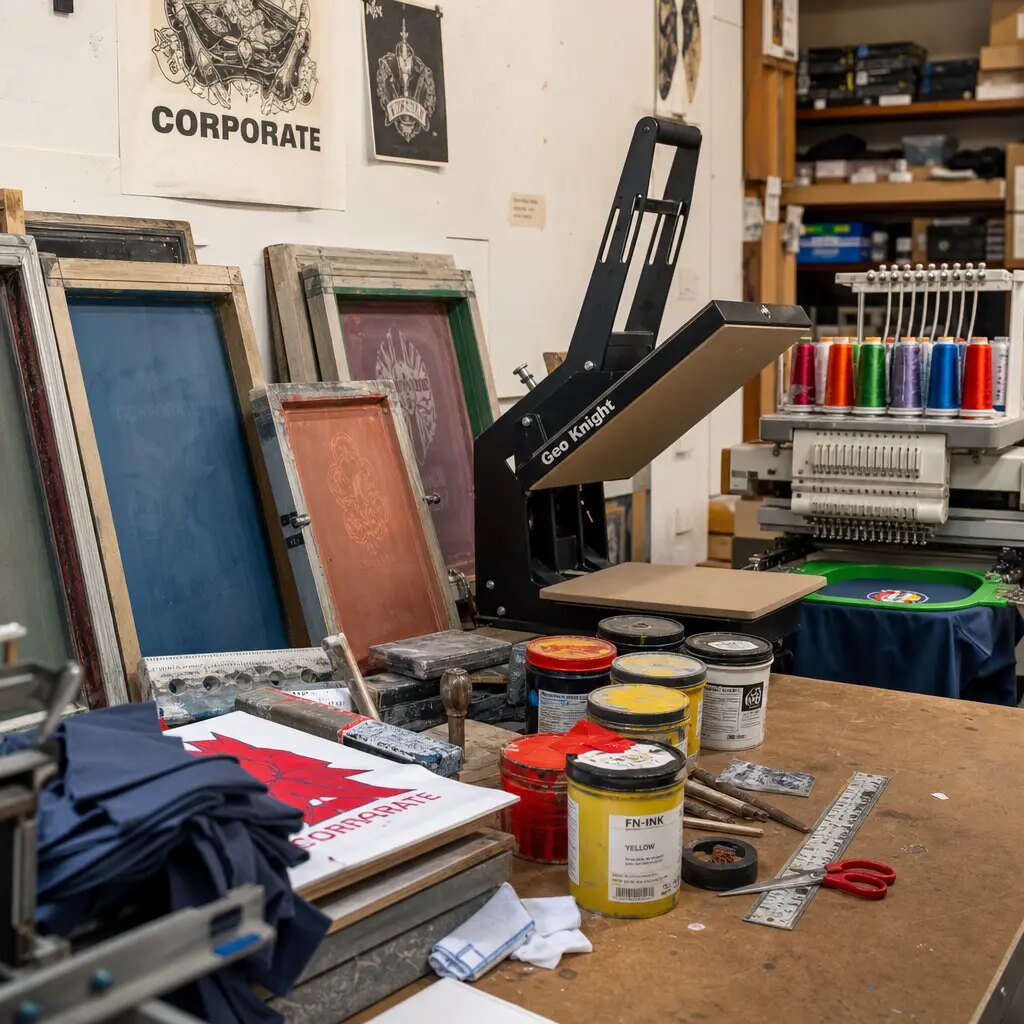
For most coffee roasters, screen printing is the practical branding method for canvas messenger bags. It handles bold logos, roaster marks, simple illustrations, and short brand statements well. On textured canvas, a single-color or two-color print is safer than fine gradients or small type. Large ink coverage can stiffen the fabric and may show unevenness if the canvas surface is coarse, so a print strike-off should be approved before bulk production.
Woven labels or cotton printed labels are useful when the buyer wants a more retail-style finish. A small CTM-style side label, brand tab, or inside care label can elevate the product without changing the whole bag. However, labels often have their own MOQ. If the bag order is 300 pcs but the woven label supplier requires 1,000 labels, the buyer should decide whether the factory stores the balance for repeat orders or ships the leftover labels with the order. This detail prevents confusion later.
- Screen print: best for simple logos, moderate cost, and low to mid quantity orders.
- Heat transfer: useful for certain full-color marks, but test adhesion and hand feel on canvas.
- Embroidery: premium look, but can pucker heavy canvas and raises labor cost.
- Woven label: strong retail detail, but confirm label MOQ, size, fold type, and leftover control.
Understand the factory’s MOQ logic before negotiating
A factory MOQ is not only a sales rule. It comes from fabric purchasing, cutting efficiency, print setup, labor line arrangement, packing material, and administrative cost. A small messenger bag order can consume nearly the same sampling and setup time as a larger order. If the buyer wants a lower MOQ, the solution is to reduce the number of variables that create setup loss.
Useful negotiation is specific. Instead of demanding 100 pcs with full customization, compare scenarios. For example, request pricing at 300 pcs, 500 pcs, and 1,000 pcs using the same stocked canvas and standard hardware. Then request the cost impact of custom dyed fabric, second print position, woven label, and individual retail packaging as separate add-ons. This turns the quote into a decision tool rather than a single number that hides the reasons behind cost.
- Negotiate total order quantity only after clarifying MOQ per color and per design.
- Combine quantities across similar SKUs only if fabric, construction, and hardware remain the same.
- Use one shared blank bag with different labels only if the factory confirms label changeover cost.
- Accept a reasonable sample fee when it protects a larger bulk order from construction mistakes.
Use quote data to compare real cost, not just unit price
The lowest unit price can become expensive if it excludes packing, sample revisions, label storage, carton marking, or inland freight to the port. For canvas messenger bags, freight matters because the product is bulkier than flat cotton pouches. A heavier 16 oz canvas bag with buckles may have a better retail feel, but it may also reduce pieces per carton and increase CBM. Procurement teams should compare unit price together with carton data.
A complete quote should include fabric weight, dimensions, print method, hardware material, packing method, sample cost, bulk lead time, payment term, carton size, pieces per carton, gross weight, and estimated CBM. If one supplier quotes only a unit price and another provides full shipping data, the second quote is usually more useful for landed-cost planning. Coffee roasters selling through ecommerce or retail shops also need to know if the bag arrives ready for resale or needs repacking after import.
- Compare 300, 500, and 1,000 pcs on the same specification.
- Record whether quoted price includes individual polybag, hangtag, care label, or carton marks.
- Review carton weight for warehouse handling; avoid cartons that are too heavy or easily crushed.
- Estimate landed cost using CBM and gross weight, not only FOB unit price.
Approve samples with production-style acceptance criteria
A messenger bag sample should not be approved only because it looks attractive in photos. It should represent the actual production method. The strongest pre-production sample uses production canvas weight, final print method, approved hardware, correct strap, final pocket layout, and intended packing fold. If the factory sends a sample in substitute fabric, that sample may be useful for shape review but not for final approval.
Coffee roaster branding often includes fine lines, small text, batch-inspired graphics, or vintage marks. These designs can lose clarity on coarse canvas. Approve a print strike-off on the same fabric before bulk production. For construction, load the sample with realistic contents: a notebook, laptop sleeve if intended, sample coffee bags, catalogs, or a small cupping kit. The buyer should confirm strap comfort, flap coverage, pocket access, and whether the bag keeps an acceptable shape.
- Measure finished dimensions and compare against the RFQ drawing or specification sheet.
- Review print clarity, ink coverage, edge sharpness, color match, and placement.
- Pull the strap attachment by hand and inspect stitching after loading.
- Check flap alignment after the bag is filled, not only when empty.
- Photograph and sign the approved pre-production sample for factory and buyer reference.
Set QC thresholds before bulk goods are packed
Canvas messenger bags have more failure points than flat totes. Main areas include strap joins, flap seams, bottom corners, pocket openings, hardware attachment, and print surface. A practical QC plan classifies defects before production starts. Major defects include open seams, broken stitches at stress points, wrong logo, heavy stains, missing hardware, sharp metal edges, and bags outside critical dimensions. Minor defects may include small thread tails, slight shade variation within approved range, or tiny print specks that do not affect saleability.
Inspection should compare bulk goods to the approved sample. If the approved sample has 14 oz natural canvas, a magnetic snap, one inside pocket, and a centered flap print, the bulk order should match those points. Tolerances need to be realistic. Cotton canvas can shrink, twist slightly, or show natural slubs, but uncontrolled variation creates retail complaints. For a coffee roaster selling the bag as branded merchandise, cosmetic quality is part of brand protection.
- Stitch density: keep consistent with approved sample; no skipped stitches on visible or stress seams.
- Dimension tolerance: commonly plus or minus 1 cm for body size unless the design requires tighter control.
- Print tolerance: placement drift commonly limited to 3 mm to 5 mm for visible front branding.
- Cleanliness: no oil marks, mildew smell, insect contamination, or heavy dust inside packing.
- Function: snaps, buckles, sliders, and zippers must work smoothly on every inspected piece.
Plan packing around resale channel and freight cost
Packing decisions influence both cost and presentation. For wholesale distribution, individual polybags may protect the bag from dust and moisture during transit. For a lower-plastic program, paper sleeves or bundled packing can work if the buyer accepts higher handling exposure. Retail buyers may need barcode stickers, hangtags, care labels, or carton sorting by SKU. Each packing element adds material cost and packing labor, so it should be quoted separately when MOQ is tight.
Messenger bags should not be crushed into cartons only to reduce freight. A badly folded flap can arrive with permanent creases, especially on heavier canvas. Export cartons should fit the folded bag shape and remain within practical handling weight. The quote should state pieces per carton, carton dimensions, gross weight, and estimated CBM. This data helps importers compare sea freight, air shipment for urgent launches, and warehouse receiving cost.
- Standard export packing: individual bag protection plus master carton, unless buyer requests plastic-free packing.
- Carton marks: include PO number, SKU, color, quantity, gross weight, net weight, and carton count.
- Retail prep: barcode, hangtag, care label, and country-of-origin marking should be confirmed before production.
- Shape protection: avoid over-compression that bends flaps, buckles, or reinforced bottoms.
Build a lead time that leaves room for corrections
MOQ negotiation often fails when the buyer also demands a rushed schedule. A practical timeline includes artwork review, material confirmation, sample making, sample shipping, buyer approval, bulk material preparation, cutting, printing, sewing, inline inspection, final inspection, packing, and export booking. If custom dyeing or custom woven labels are involved, add time for lab dip, label proof, and possible revision.
For planning purposes, buyers can think in stages rather than fixed promises. A simple stocked-fabric sample may move faster than a fully custom sample. Bulk production after approval is also affected by factory season, holiday periods, and whether the order is inserted into an existing production line. Coffee roasters launching holiday gift sets or seasonal blends should approve the bag specification early, because bag delays can hold up the entire bundle.
- Artwork and spec clarification: prevent delays by sending vector files and dimension drawings at RFQ stage.
- Sample stage: include time for one correction round if branding or construction needs adjustment.
- Bulk stage: do not start production until fabric, print, hardware, and packing are signed off.
- Pre-shipment inspection: schedule before final balance payment and before freight booking cutoff.
- Reorder planning: keep approved samples and quote data so repeat orders do not restart from zero.
Specification comparison for buyers
| Spec decision | Recommended option | When it fits | Buyer risk to check |
|---|---|---|---|
| Fabric weight | 12 oz to 16 oz cotton canvas, roughly 400 to 540 GSM depending on mill standard | Most coffee roaster retail, staff, and wholesale rep bags where structure and durability matter | Too light looks promotional; too heavy raises freight cost, sewing difficulty, and MOQ if fabric is not stocked |
| Canvas color | Natural, black, or standard dyed colors from stocked fabric | Best for first production run or MOQ-sensitive launch | Custom-dyed Pantone fabric usually increases fabric MOQ, lab dip time, and risk of shade variance between lots |
| Branding method | Single or two-color screen print on flap or front pocket | Clean roaster branding, moderate cost, stable for 300 to 1,000 pcs | Large ink coverage on textured canvas may need strike-off approval and rub testing before bulk production |
| Logo label | Woven side label or cotton printed label added to seam | Premium retail look without changing bag construction | Label MOQ can be separate from bag MOQ; leftover labels should be documented for repeat orders |
| Closure | Magnetic snap or metal buckle with webbing strap | Magnetic snap for retail convenience; buckle for heritage coffee or workwear style | Buckles add labor time and inspection points; magnets need pull-force and placement checks |
| Internal structure | One main compartment plus flat inner pocket and reinforced bottom | Good balance for laptops, notebooks, coffee catalogs, and cupping tools | Too many pockets force higher labor cost and make a low MOQ harder to negotiate |
| Strap | Adjustable cotton webbing or polyester webbing, 3.2 cm to 3.8 cm width | Daily-use messenger bag with acceptable comfort and cost | Natural cotton webbing may shrink or shade differently from body fabric; hardware fit must match webbing width |
| MOQ negotiation lever | Use stocked fabric, standard hardware, and shared production schedule before reducing quantity | When buyer wants 200 to 500 pcs but needs factory-grade quality | A very low MOQ with custom dye, complex pockets, and multiple prints usually becomes expensive or unstable |
| Packing | Individual polybag or paper sleeve, 20 to 40 pcs per export carton depending on size and weight | Wholesale, ecommerce, or distributor shipment with clean presentation | Oversized cartons can deform flaps and increase damage claims; carton weight should stay practical for handling |
Buyer checklist before sampling
- Define the bag purpose before negotiation: retail merchandise, staff bag, wholesale rep bag, loyalty gift, or event bundle.
- Choose fabric weight in oz and approximate GSM, not only the word canvas.
- Separate must-have features from nice-to-have features before requesting MOQ reduction.
- Use stocked canvas colors if the first order is below normal factory MOQ.
- Limit the first run to one body color and one print placement when testing market demand.
- Provide logo artwork in vector format and state Pantone references for ink or woven label colors.
- Specify bag dimensions with tolerance, including flap length, gusset depth, strap length range, and pocket size.
- Require a pre-production sample using production fabric, production print method, and final hardware.
- Confirm whether MOQ is calculated per color, per design, per print version, or total order.
- Request carton dimensions, gross weight, pieces per carton, and estimated CBM before comparing supplier quotes.
Factory quote questions to send
- What is your normal MOQ for this canvas messenger bag using stocked natural canvas, and what changes if we use dyed canvas?
- Is MOQ counted per color, per logo, per size, or total quantity across the purchase order?
- Which canvas weights are currently available from stock, and what are their oz and GSM values?
- What is the minimum fabric quantity required for custom dyeing if we need a Pantone-matched body color?
- Can the same construction be produced at 300 pcs, 500 pcs, and 1,000 pcs, and how does the unit cost change at each level?
- Which hardware is standard stock, and which buckles, sliders, snaps, or zippers require separate MOQ?
- What print method do you recommend for textured cotton canvas, and what is the print size limit on the flap?
- What sample types are included in the quotation: blank construction sample, print strike-off, pre-production sample, or shipment sample?
- What are the expected sample lead time and bulk lead time after sample approval?
- How many pieces are packed per export carton, what is the carton size, and what is the estimated CBM for the quoted quantity?
Quality-control points to confirm
- Fabric weight should match approved sample within a practical mill tolerance, commonly plus or minus 5 percent unless otherwise agreed.
- Finished bag dimensions should stay within agreed tolerance, typically plus or minus 1 cm for body measurements and plus or minus 2 cm for strap length.
- Print placement should not drift beyond approved tolerance, usually 3 mm to 5 mm depending on logo size and seam position.
- Screen print should pass a dry rub test and show no major cracking, pinholes, heavy bleeding, or visible registration shift.
- Main seams, strap attachment, flap edges, and bottom corners should have consistent stitching with no skipped stitches or open seams.
- Stress points should use bartack, box stitch, or reinforced stitching as approved on the sample.
- Metal hardware should open and close smoothly, show no sharp edges, and be free from rust, heavy scratches, or plating peel.
- Bags should be clean, dry, odor-free, and free from oil marks, mildew, insect contamination, and loose threads.
- Each carton should match the packing list quantity and be strong enough for export handling without crushing the bag shape.
- Final inspection should compare bulk goods against the signed pre-production sample, not only against a written description.