Start with the selling channel, not the fabric name
For coffee roasters, a canvas messenger bag is rarely just a blank bag with a logo added to the flap. It may sit beside retail coffee bags in a café, ship with a subscription launch, carry sample packs for wholesale reps, work as event merchandise, or form part of a staff welcome kit. Each use pulls the specification in a different direction. A one-day event bag can be softer and simpler. A paid retail accessory needs cleaner lining, stronger straps, controlled decoration, and better presentation when it comes out of the carton. A distributor program may care less about a premium handfeel and more about SKU labels, carton handling, and repeatable packing.
The procurement mistake is easy to make: send a general request for “canvas messenger bags with logo” to several suppliers, then compare the lowest unit price. Those prices may not describe the same product. One supplier might quote 10 oz unlined cotton canvas with magnetic snaps and basic polybag packing. Another may include 16 oz canvas, polyester lining, a zipper under the flap, a reinforced bottom, metal adjusters, a woven label, and barcode-ready individual packing. Both quotes can be reasonable, but they cannot be compared line by line until the spec is measurable.
Before discussing price, describe what the end user will carry. Two 12 oz coffee bags and a notebook create a different stress pattern from a 13-inch laptop, charger, water bottle, and sales catalogues. Dense coffee packs put pressure on the bottom corners and strap anchors. Electronics require smoother interior finishing, often a padded sleeve, and more attention to zipper protection. If the bag is mainly brand merchandise, the fabric handfeel and print result may matter more than pocket count. Material selection is therefore a commercial decision as much as a design decision.
- Define the bag as café retail merchandise, online bundle, staff-use item, event product, commuter accessory, wholesale kit, or corporate gift before requesting quotes.
- Give suppliers an example load, such as two 12 oz coffee bags, a notebook, a tablet, a charger, or light daily carry only.
- Compare prices only after fabric weight, lining, strap width, closure, logo method, pocket layout, and packing are aligned.
- For resale, judge handfeel, structure, odor, decoration quality, and shelf presentation, not only ex-factory price.
- For distributor or warehouse programs, include carton labels, barcodes, SKU separation, and pick-pack needs from the first RFQ.
Canvas weight: make GSM and oz weight impossible to misread
Words like heavy, durable, thick, and premium sound useful in a brand meeting, but they are too loose for production. In a purchasing specification, canvas weight should be written in oz per square yard or GSM, and the supplier should confirm that the number refers to the shell fabric only. For most coffee roaster messenger bags, 12 oz to 16 oz cotton canvas, roughly 340 to 450 GSM, is a practical working range. It gives a flap enough body, supports pockets and reinforcement, and avoids making the bag unnecessarily difficult to sew or expensive to ship.
A 10 oz to 12 oz shell, approximately 280 to 340 GSM, can still be the right choice for event merchandise, light café resale, or a first market test. It will feel more relaxed and may not stand well when partly filled. A 12 oz to 14 oz canvas is often the middle ground for café retail because it takes screen print well, folds without extreme bulk, and still feels substantial in hand. A 14 oz to 16 oz shell suits lined interiors, larger flaps, stronger silhouettes, and commuter positioning. Once the canvas moves above 16 oz, the product may look rugged, but seam bulk, needle selection, sewing speed, carton weight, and print behavior all need closer review.
Tolerance matters as much as the target number. Fabric weight changes by mill, lot, finishing process, and even moisture level. A written tolerance such as plus or minus 5% is clearer than a verbal assurance that the fabric is “about 14 oz.” Ask for bulk roll cuttings before cutting starts, especially if the final bag will be sold across multiple café locations or reordered later. For washed canvas, approve the finished bag after washing rather than relying on the pre-wash fabric number. Shrinkage and softening can make the same nominal weight feel quite different.
- Use fabric-only GSM or oz weight; do not accept total bag material weight as a substitute for shell fabric weight.
- 10 oz to 12 oz: suitable for lighter event, giveaway, or low-structure promotional messenger bags.
- 12 oz to 14 oz: a balanced choice for many café retail and branded carry programs.
- 14 oz to 16 oz: stronger option for lined, structured, or daily-use commuter styles.
- State the allowed GSM tolerance, commonly plus or minus 5%, and verify bulk roll cuttings before cutting.
Natural, dyed, washed, and recycled canvas each has a different approval risk
Natural cotton canvas fits coffee branding well. It sits comfortably next to kraft coffee bags, roasting sacks, wood shelving, and craft retail displays. It is often easier to source from stock than a custom color, which can reduce MOQ pressure and shorten development. Still, natural canvas is not one fixed shade. Seed specks, yarn neps, faint shade movement, and uneven cotton character may show on the surface. That can look authentic, but only if the brand accepts it. Keep sealed swatches and define what is acceptable before approving bulk fabric.
Dyed canvas gives stronger visual control in black, navy, olive, charcoal, rust, brown, or a brand-led color. The trade-off is shade management. A stock dyed color may be available at a lower MOQ, but it may not match a brand guide exactly. Custom dyeing can improve color control, yet it adds lab dip approval, fabric MOQ, extra time, and a larger shade risk if the bulk lot drifts. Dark canvas also shows lint, creases, chalk marks, and rubbing more clearly. Ask whether webbing, zipper tape, thread, lining, and binding will match the shell, intentionally contrast, or use the closest stock option.
Washed canvas brings a softer handfeel and a relaxed retail look. Enzyme wash, garment wash, and similar treatments can make a messenger bag feel less stiff and more lived-in. They also introduce shrinkage, twisting, fading, seam puckering, and less precise print edges. Approve the finished washed bag, not only an unwashed fabric swatch. Recycled cotton and recycled blends can support a sustainability-led merchandise story, but they do not always behave like conventional cotton. Expect more visible slub, nep, fuzz, and lot variation. If environmental claims will appear on hangtags, websites, or wholesale sell sheets, request the necessary certification or traceability documents before marketing copy is approved.
- Natural canvas can support lower-MOQ programs, but visible cotton character needs a written appearance standard.
- Dyed canvas requires shade approval for shell, webbing, zipper tape, binding, lining, and thread.
- Custom dye should include lab dip approval, bulk shade-band approval, and no-substitution language.
- Washed canvas must be measured after wash, with finished-bag tolerances approved on the sample.
- Recycled cotton blends need clearer visual standards and claim documentation before any sustainability claims are used.
Inside construction separates retail merchandise from a basic promo bag
The outside canvas creates the first impression. The inside often decides whether the bag feels well made. Lining attachment, pocket reinforcement, seam binding, corner turning, zipper ends, and bottom support all affect the customer’s experience once the flap opens. An unlined messenger bag can work well for simple coffee merchandise if the internal seams are neatly bound or consistently overlocked. It costs less, keeps the canvas character visible, and avoids lining shrinkage. The downside is obvious: raw edges, loose threads, and uneven seam allowances are visible every time the customer uses the bag.
A 210D polyester lining is a common cost-controlled option when the buyer wants a cleaner interior for notebooks, documents, catalogues, chargers, and personal items. Cotton lining has a more natural feel and can match a premium brand story, but it may add cost, weight, and shrinkage risk. If the bag is intended for a laptop or tablet, lining alone is not protection. The RFQ should specify foam, padded sleeve dimensions, hook-and-loop closure, elastic retention, or a separate compartment. Adding padding after the first sample usually changes the pattern, seam bulk, and carton volume.
Bottom support should match the contents. A double-layer self-fabric bottom is often enough for coffee packs, notebooks, and daily carry. An internal reinforcement panel can help the bag keep shape without making it too rigid. A removable board can improve shelf display, but it may shift during use and may not be washable. Pockets need the same attention. A phone pocket stitched only to thin lining can tear quickly. Pocket opening corners should be bartacked or otherwise reinforced, especially if the bag will be used by staff, wholesale reps, or commuters.
- For unlined bags, specify bound seams or overlock quality; do not leave internal finishing to assumption.
- For lined bags, state lining material, denier or fabric weight, color, pocket layout, and attachment method.
- Inner pocket opening corners should receive bartacks or reinforcement stitches.
- Laptop use requires a defined sleeve and padding spec, not just a lined compartment.
- Define bottom support as double canvas, fixed panel, removable board, washable, or non-washable before quoting.
Straps, webbing, hardware, and closures carry the real load
A strong canvas body does not guarantee a durable messenger bag. In daily use, load concentrates at the shoulder strap, side tabs, D-rings, adjusters, closure points, and side seams. Coffee products are dense, and many customers will add a laptop, books, a bottle, or sample boxes without thinking about the original design limit. For that reason, strap and hardware details should be treated as core materials, not minor accessories chosen after the shell fabric.
For many coffee roaster merchandise bags, 38 mm cotton webbing is a practical strap width. It looks natural with canvas and is wide enough for moderate loads. A 50 mm strap improves comfort and perceived value when the product is positioned as a commuter bag or daily-use accessory. Cotton webbing has a matte, craft look but can vary in shade. Polyester webbing may offer better color consistency and strength, though it can look shinier unless a matte finish is selected. Specify the material, width tolerance, thickness or weight if known, color, adjuster size, and adjustable length range.
Reinforcement should be visible on the sample and repeatable in bulk. Box-x stitching, bartacks, folded side tabs, and reinforcement patches should be documented with close-up photos or a construction sheet. Hardware should be specified by finish, such as antique brass, gunmetal, nickel, or matte black, and by size compatibility with the webbing. Closures need the same precision. A zipper under the flap improves security for commuter use. Magnetic snaps are quick and clean, but they must align when the bag is filled. Buckles and tuck locks add visual value but add inspection points. Even a few millimeters of closure misplacement can affect flap symmetry and daily usability.
- Use 38 mm webbing for most retail merchandise; consider 50 mm for heavier commuter styles.
- Specify cotton, polyester, or blended webbing, plus width, color, hardware size, and adjustability range.
- Require box-x stitching and bartacks at strap anchors, D-ring tabs, pocket openings, and other stress points.
- Check closure alignment with the bag filled to the intended load, not empty only.
- Inspect hardware for burrs, sharp edges, plating scratches, oxidation, oil residue, and finish mismatch.
Logo decoration should follow the fabric, not fight it
Coffee roaster merchandise lives or dies by brand presentation, but decoration should be chosen after the fabric and finish are set. Screen printing is usually the most efficient method for bold front-flap logos, launch graphics, and one- to three-color artwork. It performs especially well on natural canvas and medium-weight dyed canvas. The RFQ should include vector artwork, print size, print colors, placement from edges, and whether the artwork is centered to the flap, to the bag body, or to the visible front face when the bag is filled.
Dark canvas changes the decoration plan. White, cream, yellow, or other light inks often need a white underbase to achieve opacity. That underbase can affect cost, setup time, and print handfeel. If it is discovered only after sampling, the buyer may face a late price change or schedule delay. Coarse, slubbed, or washed canvas can also soften print edges. Whenever possible, approve printing on the actual bag panel or finished bag instead of a flat loose fabric piece. Seams, flap curvature, and fabric movement influence the final result.
Woven labels offer a quieter premium look and work well for small logos, side tabs, inner labels, or reorder programs where the main print may change by season. Embroidery can work on compact marks, but it should be tested for puckering, backing visibility, needle holes, and flap distortion, especially on lighter canvas. Patches made from PU, cork, leather-look material, or other substrates can look premium, yet they add colorfastness, care-label, compliance, and attachment-strength questions. Many roasters get the best cost-to-brand balance from one clear screen print plus a small woven label rather than stacking several decoration methods onto one bag.
- Screen print is usually the best value for bold roaster branding on front flaps.
- Confirm whether dark canvas requires a white underbase and whether that cost is included in the quote.
- Approve decoration on actual canvas panels or finished bags, not only on flat loose fabric.
- Use woven labels for subtle retail branding, side labels, and reorder-friendly identity.
- Test embroidery and patches for puckering, edge lifting, colorfastness, and attachment strength before bulk approval.
MOQ depends on material availability as much as sewing capacity
Minimum order quantity is not only a factory sewing question. It is often driven by canvas availability, dye lots, webbing, zipper tape, hardware, labels, decoration setup, and packing materials. A supplier may be able to produce 300 to 500 pieces per color if the buyer selects stock natural canvas, standard webbing, available hardware, and an existing or lightly modified pattern. The same style can require a much higher MOQ if it uses custom-dyed canvas, custom zipper tape, printed lining, special pullers, unique woven labels, or non-standard retail packaging.
For a first café retail test, stock materials are usually the safer route. The buyer can put budget into stronger construction, cleaner print execution, and better packing instead of taking on custom dye risk. Once sell-through is proven, custom colors or upgraded trims may be easier to justify. For established roasters with multiple locations, wholesale demand, or repeat seasonal programs, custom fabric and hardware can make sense because approval work and MOQ risk are spread across more units.
Be cautious with low-MOQ quotes that depend on leftover or mixed material lots. They may create shade differences between panels, webbing that does not match the shell, different zipper suppliers across batches, or hardware tone variation. Those details are visible when bags sit together on a retail shelf. The purchase order should require written approval before any substitution of shell fabric, lining, webbing, zipper, thread, hardware, labels, or packing. A sealed pre-production sample should become the standard for bulk comparison.
- Use stock canvas and standard trims for trial runs, event orders, and lower-risk café merchandise launches.
- Consider custom dye only when the program quantity and reorder plan justify fabric MOQ and approval time.
- Ask suppliers to list under-MOQ surcharges separately instead of hiding them in the unit price.
- Require same-lot fabric or written shade-band approval for dyed and repeat programs.
- Include no-substitution language for fabric, webbing, zipper, hardware, lining, label, and packing materials.
Sampling should prove function, not just appearance
A sample that looks good on a table may still fail in use. Load the messenger bag with realistic contents: coffee bags, notebook, water bottle, tablet, charger, catalogues, or sales samples. Then check what happens. Does the flap still cover the opening? Does the zipper run smoothly? Do magnetic snaps align? Does the strap sit comfortably? Does the body twist or collapse? Do the bottom corners distort under dense items? If the answer is yes, the root cause may be fabric weight, pattern balance, strap position, lining, or base support.
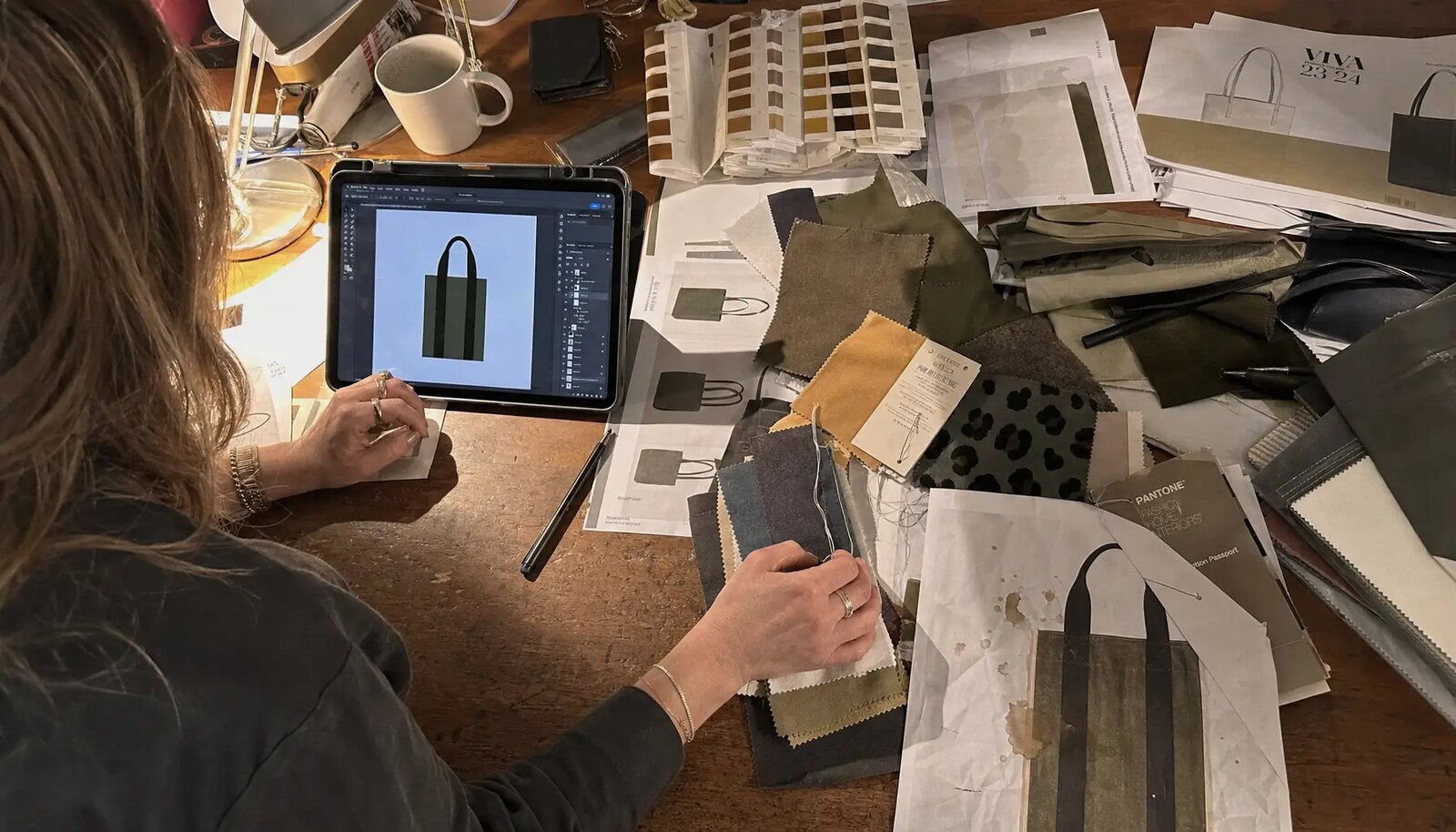
A staged sample process helps prevent confusing revisions. Start with a material card that includes shell canvas, webbing, lining, zipper tape, hardware, binding, thread, label, and a decoration reference. Materials need to be reviewed together because a warm natural canvas can clash with cooler webbing, zipper tape, or thread. Next, approve a blank construction sample if the pattern is new or modified. This lets the buyer focus on size, strap placement, pockets, flap shape, seam finishing, and how the bag hangs. After that, approve a logo strike-off, printed panel, or decoration sample. The final pre-production sample should combine every approved detail.
Each approved sample should turn into measurable standards. Record finished dimensions, fabric weight, strap width, pocket size, flap length, logo placement, stitch color, hardware finish, packing method, and carton assumptions. Photos are useful, but they do not replace a physical sealed sample for shade, handfeel, and structure. For important orders, keep one sealed sample at the factory and one with the buyer or inspection team. Bulk production should not start until the pre-production sample and written spec sheet match.
- Approve fabric and trim swatches before approving a fully branded sample.
- Use a blank construction sample to isolate pattern, pocket, strap, and size issues.
- Load the sample with realistic contents and check closure alignment, strap comfort, and body balance.
- If washed canvas is specified, measure the sample after wash and approve post-wash tolerance.
- Keep sealed approval samples for factory production, buyer reference, and final inspection comparison.
QC needs clear tolerances and practical use checks
Canvas messenger bags need more QC detail than simple totes because they include flaps, closures, adjustable straps, hardware, lining, pockets, bottom structure, and more complex branding. The inspection plan should be agreed before production starts. At minimum, define critical, major, and minor defects. A sharp hardware burr, broken zipper, failed strap anchor, missing closure, or severe print defect should not be treated the same as a small loose thread.
Quality control should begin before cutting. Check bulk fabric roll shade, GSM, stains, holes, weave defects, wash consistency, and obvious lot differences. For natural canvas, separate acceptable cotton character from unacceptable contamination or weaving faults. During in-line production, inspect strap anchors, bartacks, pocket openings, flap symmetry, zipper ends, lining catch points, and bottom corners. These issues are much easier to correct when only part of the order is sewn.
Final inspection should include measurement, function, and packing. Finished-dimension tolerances for soft sewn bags may often be around plus or minus 1 cm on width and height, but the right tolerance depends on style, fabric, and wash condition. Smaller points such as logo placement, pocket opening, flap length, and strap width may require separate controls. Open and close zippers repeatedly, fasten snaps or buckles, adjust straps through the full range, and hang a loaded bag for a practical stress review. Before shipment release, inspect carton count, barcode, hangtag, moisture condition, odor, carton strength, and gross weight.
- Check fabric roll GSM, shade, and defects before cutting rather than relying only on final inspection.
- Define critical, major, and minor defects in writing before production starts.
- Inspect strap anchors, pocket corners, zipper ends, closure placement, lining attachment, and bottom corners in-line.
- Set finished-dimension tolerances for width, height, gusset, flap length, pocket opening, strap range, and logo placement.
- Verify packing, carton marks, barcodes, moisture condition, odor, and carton gross weight before release.
Packing and freight can change the true landed cost
Packing is part of the product specification, not an afterthought. It affects landed cost, warehouse handling, and the customer’s first impression. Fold-flat packing reduces carton volume and is common for promotional or distributor programs. It can also crease the flap, flatten the body, and make a structured messenger bag look less premium when unpacked. For soft unlined canvas, that may be acceptable. For lined, reinforced, or higher-retail-price bags, light stuffing, tissue, flap protection, and hardware wrapping may justify the extra labor and carton space.
Different coffee channels need different downstream packing. A wholesale distributor may want bulk cartons with SKU labels and simple individual polybags. A café retail program may need hangtags, paper belly bands, barcode stickers, care labels, color labels, and store-level carton assortments. An online bundle program needs each unit to arrive clean, scannable, and easy to pick in a warehouse. These requirements should be included in the RFQ because packing materials, labor, and carton dimensions affect price.
Freight should also influence material selection. A 16 oz lined messenger bag with metal hardware and a removable board may deliver a strong retail impression, but it increases gross weight and can reduce pieces per carton. Shaped packing protects presentation but increases volume. Ask for estimated carton dimensions, pieces per carton, net weight, gross weight, folding method, and packing photos during quotation. For dark or washed canvas, confirm that goods are fully dry and odor-free before sealing. Moisture, lint transfer, and trapped odor can become expensive claims at destination.
- Fold-flat packing saves space but can crease flaps and reduce shelf presentation.
- Stuffing, tissue, and hardware wrapping improve presentation but increase carton volume and labor.
- Confirm individual polybags, paper wraps, hangtags, barcodes, care labels, and carton marks in the quote.
- Request carton dimensions, pieces per carton, net weight, gross weight, and packing photos before comparing landed cost.
- For washed or dark canvas, check moisture, odor, lint transfer, and rubbing marks before carton sealing.
Specification comparison for buyers
| Spec decision | Recommended option | When it fits | Buyer risk to check |
|---|---|---|---|
| Outer shell canvas | 12 oz to 16 oz cotton canvas, approximately 340 to 450 GSM fabric-only weight, with target tolerance stated in writing | Best range for café retail merchandise, coffee subscription gifts, staff bags, distributor kits, and daily-use commuter styles that need structure without excessive freight weight | Confirm the quoted GSM is shell fabric only, not including lining, coating, padding, or interlining; request roll cuttings from the bulk fabric lot and a written GSM tolerance, commonly plus or minus 5% |
| Lower-cost fabric route | 10 oz to 12 oz canvas, approximately 280 to 340 GSM, preferably with a simple pattern and clean seam finishing | Suitable for event resale, launch giveaways, light café merchandise, and short-term campaigns where retail structure is less important | Large flaps may wrinkle and bags may collapse when partly filled; define whether the buyer accepts softer handfeel and less standing shape |
| Cotton canvas type | Conventional cotton canvas for repeatability; recycled cotton or recycled cotton blend only when visible yarn character and shade variation are acceptable | Conventional cotton works for ongoing reorder programs and cleaner print expectations; recycled blends fit sustainability-led merchandise with a natural surface story | Recycled blends can show more nep, slub, fuzz, seed specks, and lot-to-lot shade movement; approve physical swatches and define acceptable character with photos |
| Finish | Unwashed canvas for sharper print placement and tighter size control; enzyme-washed or garment-washed canvas for softer handfeel and a casual retail look | Unwashed fits bold screen print, lower cost, and repeat orders; washed finishes fit premium café merchandise where relaxed texture is part of the product | Washing can shrink, twist, fade, soften structure, and move measurements; approve final tolerances on finished washed bags, not cut panels |
| Lining and inner finish | Unlined with bound seams for simple merchandise; 210D polyester lining for cost-controlled clean interiors; cotton lining for more natural premium positioning | Unlined fits casual promotional or lower-retail-price bags; 210D lining fits daily carry and document use; cotton lining fits premium brand stories | Lining can hide poor seam work and adds shrinkage or puckering risk; inspect pocket reinforcement, lining attachment, corner turning, and raw edge control |
| Shoulder strap | 38 mm to 50 mm webbing, adjustable, with box-x stitching plus bartacks at anchor points | 38 mm suits most café merchandise bags; 50 mm improves comfort and perceived strength for heavier daily-use or laptop-oriented styles | Ask for webbing material, width tolerance, thickness or weight, adjuster size, anchor construction, and practical load-test method; weak anchor stitching usually fails before the canvas body |
| Closure system | Top zipper under flap for secure commuter style; magnetic snaps or tuck lock for casual retail; buckles for heritage styling | Zipper suits online retail and commuter use; magnetic snaps suit fast access; buckles and tuck locks suit higher visual value | Specify zipper size, teeth type, tape color, slider finish, snap diameter or magnet strength, placement tolerance, and function test; closure alignment must be checked with the bag filled |
| Logo decoration | Screen print for bold roaster graphics; woven label for subtle retail branding; embroidery only on reinforced stable panels; patch only with compliance and care review | Screen print works for front flaps and launch artwork; woven labels fit premium lines and reorders; embroidery works for compact marks on heavier canvas | Dark canvas may need white underbase; embroidery may pucker; patches add colorfastness and material-compliance checks; approve decoration on actual bag panels, not loose fabric only |
| Bottom and structure | Double-layer self-fabric bottom for most orders; internal reinforcement panel or removable board only when structure is required | Double canvas bottom fits coffee packs, notebooks, catalogues, and daily carry; board inserts help retail display shape and laptop-like structure | Loose boards can shift, increase carton volume, and complicate care instructions; specify board material, thickness, removability, and whether board is included in the unit price |
Buyer checklist before sampling
- Define the commercial role first: café retail shelf, online merchandise, wholesale distributor program, event resale, staff kit, subscription gift, or corporate gifting.
- Write the realistic target load, such as two 12 oz coffee bags plus notebook, 13-inch laptop plus charger, brewing accessories, catalogues, or light daily carry only.
- State shell fabric by fiber content, weave if known, fabric-only GSM or oz weight, and acceptable tolerance instead of using vague terms such as heavy canvas or premium cotton.
- Confirm whether the fabric is conventional cotton, organic cotton, recycled cotton blend, or mixed fiber, and request any required certification documents before quoting if claims will be used in marketing.
- Choose the desired finished feel: soft and casual, medium structured, or boxy and commuter-ready. This affects canvas weight, lining, bottom support, and packing.
- Specify finished bag dimensions, gusset depth, flap coverage, and whether measurements are taken empty, filled, or after washing.
- List every functional component: front pocket, inner slip pocket, zipper pocket, bottle loop, pen slot, key clip, back pocket, laptop sleeve, bottom board, and care label.
- Choose the closure system before RFQ: zipper under flap, magnetic snap, tuck lock, buckle, hook-and-loop, or open flap. Each changes labor, material cost, and QC checks.
- Define lining or unlined construction and state how inner seams must be finished, such as binding tape, overlock, French seam, or lined clean finish.
- Specify strap width, material, adjustable length range, hardware size, reinforcement patch, box-x dimensions if required, bartack positions, and stitch color.
Factory quote questions to send
- What is the exact shell fabric construction, fiber content, fabric-only GSM or oz weight, and accepted GSM tolerance before cutting?
- Is the quoted canvas greige stock, natural stock, mill-dyed stock color, or custom-dyed fabric, and what MOQ applies to each fabric lot and color?
- Can you provide physical swatches for shell canvas, webbing, lining, zipper tape, hardware, binding, thread, labels, and printed ink drawdown before sample confirmation?
- Does the quoted unit price include lining, all pockets, zipper, magnetic snaps or buckles, metal adjusters, bottom reinforcement, labels, hangtags, individual packing, and carton marks?
- What logo method is included, how many print colors are included, what maximum artwork size is assumed, and is a white underbase included for dark canvas?
- If the bag is washed or enzyme-treated, are you quoting pre-wash or post-wash measurements, and what shrinkage, twisting, and shade tolerance will apply to finished bags?
- What sample timeline applies to material swatches, blank construction sample, logo strike-off or panel sample, final pre-production sample, and any revised sample?
- What finished size tolerance will you apply to width, height, gusset depth, flap length, pocket opening, strap width, strap adjustable range, and logo placement?
- Which stress points receive bartacks, box-x stitching, reinforcement patches, double stitching, or rivets, and can you share close-up construction photos from similar production?
- What zipper specification is quoted, including size, teeth type, tape material, slider, puller finish, end-stop construction, and whether the zipper is branded or generic?
Quality-control points to confirm
- Verify shell fabric GSM from bulk roll cuttings before cutting, not only from supplier spec sheets, sample yardage, or lab dips.
- Check fabric shade, weave texture, slub level, seed specks, neps, stains, holes, color streaks, and surface defects against the approved swatch and written appearance standard.
- Confirm that dyed or washed canvas meets the approved shade band and that webbing, zipper tape, thread, lining, and binding either match or intentionally contrast as specified.
- Measure finished bag dimensions on a defined sample set against approved tolerance, including width, height, gusset, flap length, pocket opening, strap width, and adjustable strap range.
- Inspect print color, opacity, edge sharpness, registration, handfeel, ink bleeding, curing, and placement from flap edge, side seam, pocket edge, and bag centerline.
- Perform dry and light wet rub review on representative print colors, especially white or light ink on black, navy, olive, rust, charcoal, or other dark canvas.
- Check strap attachment with loaded hang review and close visual inspection for skipped stitches, broken stitches, loose threads, insufficient bartack length, and weak box-x reinforcement.
- Open and close zippers repeatedly to review tooth alignment, tape wave, slider smoothness, end-stop security, puller attachment, and whether lining fabric catches in use.
- Test magnetic snaps, buckles, tuck locks, and adjusters for alignment when the bag is both empty and filled to the intended load.
- Inspect lining attachment, inner pocket seam strength, pocket opening reinforcement, corner cleanliness, seam binding, loose threads, needle holes, and hidden raw edges inside the bag.