Why Carton Planning Belongs in the Bag RFQ
For canvas messenger bags ordered by artisan bakeries, the shipping carton is not a back-end warehouse detail. It controls freight cube, print protection, flap shape, storage cleanliness, and how quickly a distributor can receive and allocate stock. A good bag specification can still become expensive if the carton quantity is guessed after production. Messenger bags are wider and less compressible than simple totes because they have flaps, straps, closures, and sometimes boxed bottoms or pockets. That structure must be planned before the factory cuts fabric.
The buying problem is usually simple: the bakery brand wants a durable canvas bag that looks premium in store, but the importer also needs predictable carton dimensions and carton weights for freight quotes. If the RFQ only says canvas messenger bag, logo printed, packed export carton, each supplier will make different packing assumptions. One factory may quote 50 pieces per carton with heavy compression. Another may quote 25 pieces per carton to protect the flap. The unit price comparison then becomes misleading because carton cube and handling cost are not equal.
- Include carton quantity, carton size, gross weight, and folding method in the first RFQ, not after price negotiation.
- Treat packing as part of product engineering when the bag has a flap, closure, thick strap, or large logo print.
- Compare supplier quotes on unit cost plus estimated CBM, because low unit cost can lose value in freight.
Define the Bakery Use Case Before Choosing the Carton
Artisan bakeries use canvas messenger bags in different ways. A retail merchandise bag needs a clean presentation and a flap that recovers well after storage. A staff operations bag may need stronger strap attachment and more practical inner pockets. A gift program bag may be packed with packaged cookies, coffee, recipe cards, aprons, or vouchers after import. These use cases change the bag structure and therefore the carton plan. A flat promotional messenger bag can often be packed more tightly than a boxed-bottom bag designed to carry bakery retail products upright.
The carton plan should also reflect the distribution route. If one importer receives all cartons at a central warehouse, larger export cartons may be acceptable as long as they fit pallet patterns and manual handling limits. If cartons are broken down for individual bakery locations, smaller cartons with clear labels may reduce errors. For franchise bakeries or seasonal gift programs, carton numbering and SKU separation become as important as fabric and printing. The best RFQ tells the factory not only what to make, but how the goods will move after production.
- Retail merchandise: prioritize clean folding, individual protection, and carton recovery after storage.
- Staff issue bags: prioritize strap strength, lower packing cost, and carton quantity that matches store allocation.
- Gift bundle bags: test whether the finished bag must later hold bakery boxes, jars, or packaged goods upright.
- Distributor stock: require carton labels that support picking by SKU, color, print version, and destination.
Canvas Weight and Structure Affect Carton Cube
Canvas messenger bags are commonly specified by ounce weight, but buyers should translate that into practical GSM and packed volume. A 12 oz cotton canvas is often around 400 GSM, depending on yarn and weave. A 16 oz canvas can be around 540 GSM and feels more premium, but it increases carton weight and does not compress as easily. For bakery retail programs, 12 oz to 14 oz may be enough if the bag is flat and the logo is the main value. For a premium reusable merchandise item, 16 oz can be justified, but carton count may need to drop to prevent bulging cartons.
Structure matters as much as fabric weight. A flat messenger bag with a simple flap can be layered efficiently. A bag with a boxed bottom, inner lining, padded laptop-style compartment, or thick adjustable strap uses more space. Hardware also affects packing. Metal sliders, magnetic snaps, and buckles create pressure points that can mark neighboring bags if packed without separators. The factory should propose a folding method based on the actual approved sample, not a generic carton count from a previous tote bag order.
- For light retail programs, start testing at 12 oz canvas if the bag does not need to stand upright.
- For premium bakery merchandise, test 14 oz or 16 oz canvas with the actual print and strap hardware.
- Avoid approving fabric weight before seeing packed recovery, because thick canvas can hold fold lines.
- If the bag is lined, padded, or boxed, request carton cube again after sample approval.
Print Method Changes Packing Risk
Most bakery logos on canvas messenger bags are suitable for screen printing, especially one-color or two-color bakery marks on the flap. Screen printing is cost-effective for bulk orders and works well on cotton canvas when the ink system and curing are controlled. The risk is not only print sharpness. If the print surface is thick, under-cured, or packed face-to-face too early, ink can transfer or block during storage. This is more likely when bags are compressed tightly in export cartons.
Heat transfer may be useful for gradients, small order runs, or artwork with many colors, but it can change the hand feel on canvas and may not age the same as screen print under folding. Embroidery works for small premium marks, side badges, or staff bags, but it adds thickness and can press into adjacent pieces if packed tightly. A woven side label with CTM/CottonToMaker or the buyer brand is usually easier to protect than a large flap print. The RFQ should state whether print protection is required and whether separators, alternating orientation, or longer curing time are part of packing.
- Screen print: best for solid bakery logos, but require curing and rub checks before final packing.
- Heat transfer: useful for complex artwork, but test folding marks on thick canvas.
- Embroidery: premium for small logos, but adds raised areas that need pressure control in cartons.
- Woven label: good for subtle branding and lower carton marking risk.
Build a Carton Plan From Bag Dimensions
A practical carton plan starts with the finished bag size, not the factory’s standard carton. For example, a messenger bag around 38 x 30 cm with a flat flap and adjustable strap may pack differently depending on whether the strap is folded inside the body, wrapped behind the flap, or laid flat along the side. A boxed-bottom version with a 10 cm gusset may require a lower piece count even if the flat dimensions look similar on paper. Buyers should request a carton layout based on length, width, height, quantity, gross weight, and CBM.
The carton should be strong enough for the shipping route. Sea freight with pallet stacking needs cartons that resist compression and humidity better than short domestic courier movement. Air freight may make carton cube more expensive than gross weight because canvas messenger bags are bulky. If the bakery program has seasonal timing, such as holiday gift packs, carton planning also affects how quickly the warehouse can receive and dispatch stock. A carton that is too heavy slows handling. A carton that is too large can collapse, crease flaps, and increase dimensional freight charges.
- Target a carton gross weight that warehouse staff can handle safely, often under 15-18 kg unless the buyer specifies otherwise.
- Request both carton dimensions and CBM per carton, then calculate total shipment cube from the order quantity.
- Avoid carton counts copied from tote bags, because messenger bag flaps and straps change packing behavior.
- If pallet shipping is planned, align carton size with pallet pattern before production packing begins.
MOQ Logic for Bakery Messenger Bag Programs
MOQ for canvas messenger bags is usually driven by more than sewing time. Fabric availability, dye color, hardware color, print setup, strap webbing, and carton labels can each create a separate minimum. If the bakery wants natural canvas with a one-color logo, the MOQ may be more flexible because fabric is often available from stock. If the buyer wants a custom-dyed canvas, custom lining, antique brass hardware, or several store-specific logo versions, MOQ becomes less about the bag and more about material purchasing and production changeover.
Carton planning can also affect MOQ logic. A small trial order may still need custom cartons, barcode labels, hangtags, or individual polybags. These packing materials have their own minimums and setup time. Buyers should not force a low MOQ without understanding what gets compromised. A lower MOQ may use stock carton sizes and simpler inner packing. A higher MOQ can justify optimized carton dimensions, printed carton marks, and more efficient cutting and sewing. A good quote separates these effects so the buyer can decide whether the extra packing control is worth it.
- Stock natural canvas plus one-color print usually gives the most flexible MOQ path.
- Custom canvas dyeing increases MOQ because fabric mills run minimum batch quantities.
- Multiple bakery branch logos can raise print setup cost even when the bag body is identical.
- Custom carton printing may not be economical for a small pilot order; use carton labels instead.
- Bundle packing by store allocation can reduce downstream labor but adds factory packing control.
Sample Approval Should Include a Packed Carton
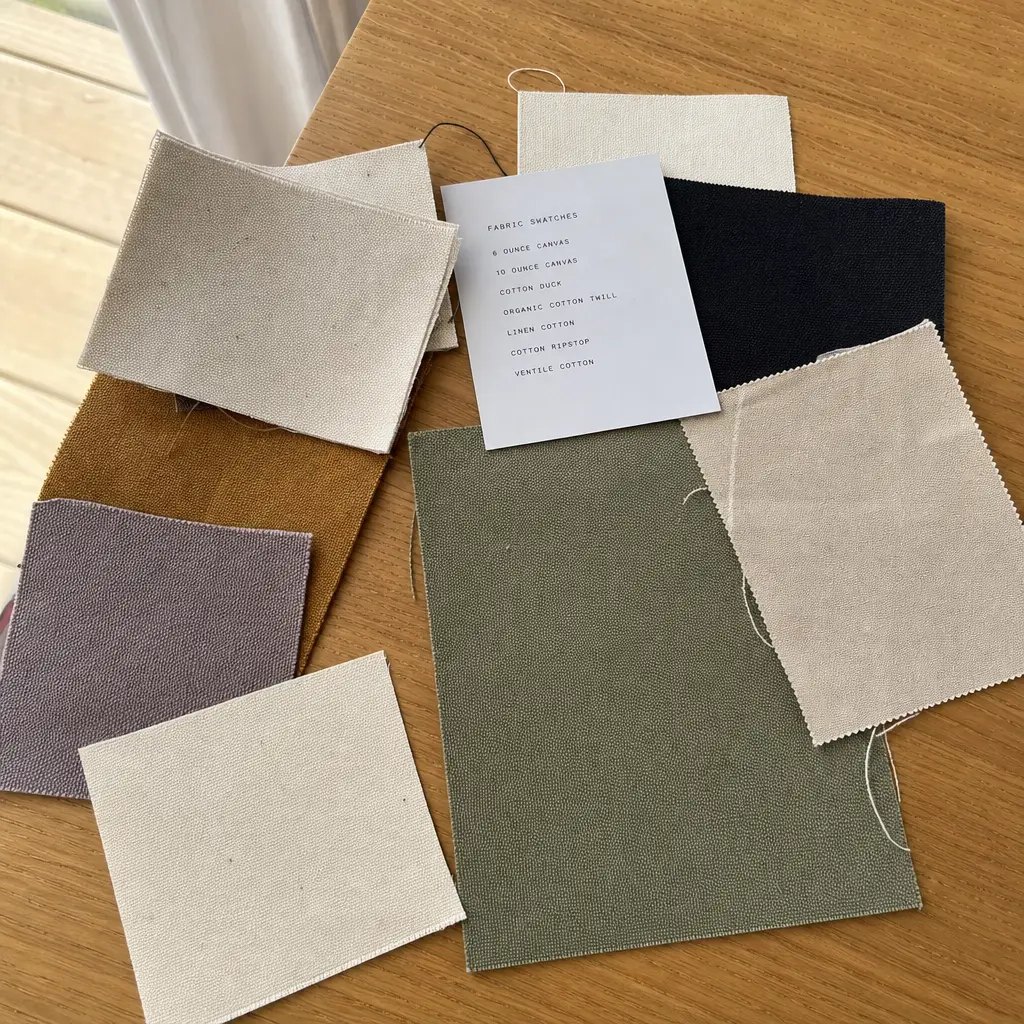
Many buyers approve a messenger bag sample on a table, then discover carton problems only after mass production. A better process is to approve three levels of samples: material or fabric swatch, printed pre-production bag, and packed carton sample or mock-pack. The packed sample does not always need to be a full commercial carton, but it should prove how the strap, flap, print, and closure behave under pressure. For large orders, the factory can pack a trial carton from early production pieces and share dimensions, gross weight, photos, and recovery results.
The sample review should include acceptance criteria. After a bag is packed for 48 hours, the flap should recover without deep crease lines through the logo. The closure should align without twisting the flap. The strap should not leave a permanent impression on the printed area. Natural canvas should not pick up visible carton dust or dark hardware marks. If the bag will be sold as bakery merchandise, the buyer should treat poor packing marks as a product defect, not only as a freight issue.
- Measure finished size before and after the packed recovery test.
- Photograph the fold line, logo area, strap position, closure position, and carton fill level.
- Test one carton using the proposed master carton quantity before releasing full packing.
- Reject any packing method that creates repeatable logo creasing, ink transfer, or distorted flap corners.
Quote Data Needed for Landed-Cost Comparison
A buyer cannot compare landed cost accurately with only an FOB unit price. Canvas messenger bags are often cube-sensitive, so carton dimensions can change the real delivered cost more than a small difference in sewing price. The RFQ should request unit price, print cost, packing cost, carton quantity, carton size, gross weight, net weight, CBM per carton, total carton count, and estimated total shipment CBM for the target order quantity. If the supplier cannot provide carton data at quote stage, they should at least state assumptions clearly.
Importers and distributors should also compare the cost of packing formats. Individual polybags may improve retail cleanliness but add material cost, labor, weight, and sometimes sustainability objections. Bundle packing may reduce factory cost but may create store-level repacking labor. A smaller carton may reduce manual handling risk but increase carton count and receiving work. A larger carton may reduce carton count but raise damage risk. The best commercial choice is rarely the cheapest packing line item; it is the packing method that protects the product while keeping freight and warehouse labor predictable.
- Compare quotes using estimated total CBM, not only unit price.
- Request carton data for each SKU if colors, hardware, or structures differ.
- Separate bag cost, print cost, packing cost, and carton cost where possible.
- Use carton quantity to estimate receiving labor and store allocation workload.
- Reconfirm carton data after final sample approval if dimensions or fabric weight changed.
Packing Materials and Sustainability Tradeoffs
Bakery brands often care about sustainable presentation, but the packing decision must still protect the canvas. Natural cotton canvas can collect dust, carton fiber, and moisture marks during long storage. Individual polybags keep each bag clean for retail sale, but they may conflict with brand packaging goals or local plastic rules. Paper bands, tissue separators, glassine-style sleeves, or bundled packing can reduce plastic, but they need testing because paper materials can scuff prints or absorb humidity.
The buyer should specify packing based on the final sales channel. If bags are sold directly on bakery shelves, each unit may need a hangtag, barcode label, and clean unit protection. If bags are issued to staff or used as gift packaging after arrival, bundle packing may be enough. For darker dyed canvas, color transfer and lint are bigger concerns. For natural canvas, moisture and dust protection are more important. Carton lining, desiccant, and clean folding tables in the packing area can matter as much as the outer carton.
- Use individual polybags when retail cleanliness and barcode scanning are required.
- Use bundle packing when the buyer will repack bags locally into gift kits or staff packs.
- Add tissue or paper separators only after testing print scuffing and moisture behavior.
- Keep silica gel and moisture control proportional; avoid loose packets that can fall into bags.
- State any restricted packaging materials before the supplier quotes.
Schedule Risks From Packing Decisions
Packing can create schedule risk even after sewing is finished. Custom carton production, barcode labels, hangtags, printed inserts, polybags, and store allocation lists all add steps. If the bakery launch date is fixed, these details should be frozen before bulk sewing starts. A late change from bundle packing to individual retail packing can slow the line because workers must fold, insert, label, and scan each bag differently. A late carton size change can also delay shipping documents and freight booking.
Lead time should be discussed in stages: sample development, material purchasing, printing, sewing, finishing, packing, inspection, and shipping handover. Canvas messenger bags with stock fabric and simple screen print may move faster than custom-dyed, lined, multi-pocket bags with branded cartons. Buyers should build approval gates into the schedule. The most useful gate is the pre-production sample with confirmed folding and carton plan. Once that is approved, the factory can cut fabric and order packing materials with lower risk.
- Freeze artwork, carton label format, and packing method before bulk cutting where possible.
- Allow time for print curing before tight carton packing, especially for large flap prints.
- Do not schedule final inspection before cartons are packed in the approved method.
- If store allocation packing is required, send the allocation file early and keep SKU codes stable.
- For seasonal bakery campaigns, keep a backup plan for stock cartons if custom cartons run late.
Specification comparison for buyers
| Spec decision | Recommended option | When it fits | Buyer risk to check |
|---|---|---|---|
| Canvas body fabric | 12 oz to 16 oz cotton canvas, about 400-540 GSM depending on weave density | Retail merchandise, staff welcome packs, bakery gift bundles, and reusable customer loyalty bags | Too light fabric collapses in cartons and feels promotional; too heavy fabric increases carton weight and seam stress |
| Bag structure | Flat messenger body with boxed bottom only if products need upright carriage | Flat body fits printed catalogs, bakery order sheets, aprons, small packaged goods; boxed bottom fits gift sets | Boxed gussets raise packed volume and can create uneven folding if carton plan is not tested |
| Flap and closure | Full flap with snap, magnetic button, or hook-and-loop depending on retail positioning | Snap or magnetic closure works for premium bakery merchandise; hook-and-loop suits staff utility bags | Magnetic closures need pull testing and can add cost; hook-and-loop can catch lint during packing |
| Print method | Screen print for solid bakery logos; heat transfer only for gradients or short sample runs; embroidery for small premium marks | Screen print is usually the safest bulk choice on canvas messenger bags with one to three spot colors | Thick canvas needs ink penetration control; poor curing can cause print blocking when bags are stacked |
| Folding method | Fold strap inside, flatten flap, avoid hard fold through logo area, pack logo-facing alternated if print is raised | Protects print surface and keeps bag shape consistent during sea freight or warehouse storage | Aggressive compression can crease flaps, mark dark prints, and distort magnetic closure positions |
| Inner packing | Individual polybag only when retail cleanliness is required; otherwise 5 or 10 pieces in a recyclable master inner bundle | Bakery retail shelves, distributor shipments, and mixed-SKU warehouse picking benefit from cleaner unit separation | Unnecessary individual polybags add cost and compliance burden; no inner protection can cause dust transfer on natural canvas |
| Master carton size | Keep carton weight usually under 15-18 kg and avoid overlong cartons that bend during stacking | Works for importer warehouses, parcel repacking, and bakery distribution centers with manual handling | Oversized cartons reduce handling safety and can crush lower cartons; undersized cartons force costly extra cartons |
| Carton labeling | Print PO number, SKU, color, quantity, carton number, gross/net weight, and destination code | Reduces receiving errors when bags are split among stores, franchise bakeries, or gift program locations | Missing carton data causes warehouse delays and makes carton-level claims difficult after delivery |
Buyer checklist before sampling
- Define the actual use case before quoting: staff bag, retail merchandise, gift bundle packaging, franchise opening kit, or loyalty reward.
- Specify body dimensions, flap depth, strap width, strap length range, closure type, pocket layout, and whether the bag must hold bakery product boxes upright.
- Choose canvas by weight and hand feel, not only by ounce label; request GSM, yarn count if available, and whether fabric is washed or unwashed.
- Set print placement with a measured artwork file showing distance from flap edge, seam line, snap button, and fold line.
- Approve one packed sample carton or carton mock-pack before mass production if the order is bulky or carton cube affects freight budget.
- Limit carton weight to a warehouse-friendly range and state whether cartons must survive pallet stacking, courier handling, or direct store delivery.
- State inner packing rules clearly: individual polybag, tissue separator, bundle quantity, barcode label, hangtag, silica gel, or no plastic.
- Request quote data in a format that separates bag unit cost, printing cost, packing cost, carton quantity, carton dimensions, gross weight, and lead time.
- Review pre-production sample for print curing, seam strength, strap alignment, flap symmetry, and carton recovery after 48 hours packed.
- Confirm whether MOQ is driven by canvas dyeing, print setup, hardware purchasing, carton customization, or labor efficiency.
Factory quote questions to send
- What canvas weight and GSM are you quoting, and is the fabric stock greige, dyed stock, or custom dyed?
- What is the estimated packed quantity per carton, carton dimension, gross weight, and carton CBM for the quoted specification?
- Can you pack one trial carton before bulk cutting so we can confirm folding method, logo protection, and carton cube?
- Which print method is included in the price, and what is the maximum printable area on the flap or body without distortion?
- Are closures, buckles, strap adjusters, and snaps included in the quoted cost, or listed as separate hardware charges?
- What MOQ applies to each color, each artwork, each hardware finish, and each carton label version?
- What sample types can you provide: fabric swatch, print strike-off, pre-production sample, and packed carton sample?
- What are the expected production lead time, sample lead time, and packing lead time after artwork and material approval?
- What carton board grade or burst strength is planned, and is palletization available if the shipment goes by sea freight?
- What quality tolerance do you use for dimensions, print position, color shade, seam strength, and carton quantity?
Quality-control points to confirm
- Fabric weight should match approved swatch within an agreed tolerance, commonly about +/-5% for bulk canvas weight.
- Finished bag dimensions should be measured flat before packing and again after carton recovery to catch shrinkage or compression distortion.
- Main seams, strap attachment, flap corners, and stress points should have consistent stitch density and reinforced bar tacks where specified.
- Print should pass dry rub and light scratch checks after curing, with no ink transfer between stacked flaps during carton testing.
- Closure alignment should allow the flap to sit flat without pulling the printed area off center.
- Strap length range should match the approved sample, especially if the bags are used by staff or sold as a wearable retail item.
- Carton count should match the packing list by SKU, color, print version, and carton number.
- Master cartons should not bulge, collapse, or exceed agreed gross weight after the bags are packed in the approved folding method.
- Natural canvas should be protected from dust, moisture, and carton fiber rub during storage and transit.
- Random final inspection should include both bag-level workmanship and carton-level packing verification, not only visual logo checks.