Why the carton plan decides whether the order works
For canvas messenger bags sold to farmers market vendors, the carton plan is not a shipping afterthought. It affects freight cost, warehouse handling, crease marks on the flap, and whether the first retail presentation looks clean enough to sell. A bag that photographs well in sample form can still arrive with a crushed body, distorted logo, or damaged strap if the fold method and carton density are wrong.
That is why buyers should define the packing plan at the same time they define the bag spec. If the bags will be sold through a distributor, displayed on a shelf, or repacked for ecommerce, the case count, inner protection, and carton size must fit the channel. If the bag is used by vendors in daily field work, the build should tolerate repeated folding and unpacking without showing permanent crease lines or print stress.
- Treat fold method, carton count, and master carton size as part of the product spec.
- Keep one style, one color, and one logo version per carton unless you have a clear mixed-SKU plan.
- Plan around the worst handling point, not the neatest factory packing table.
Choose the build that survives daily use and export handling
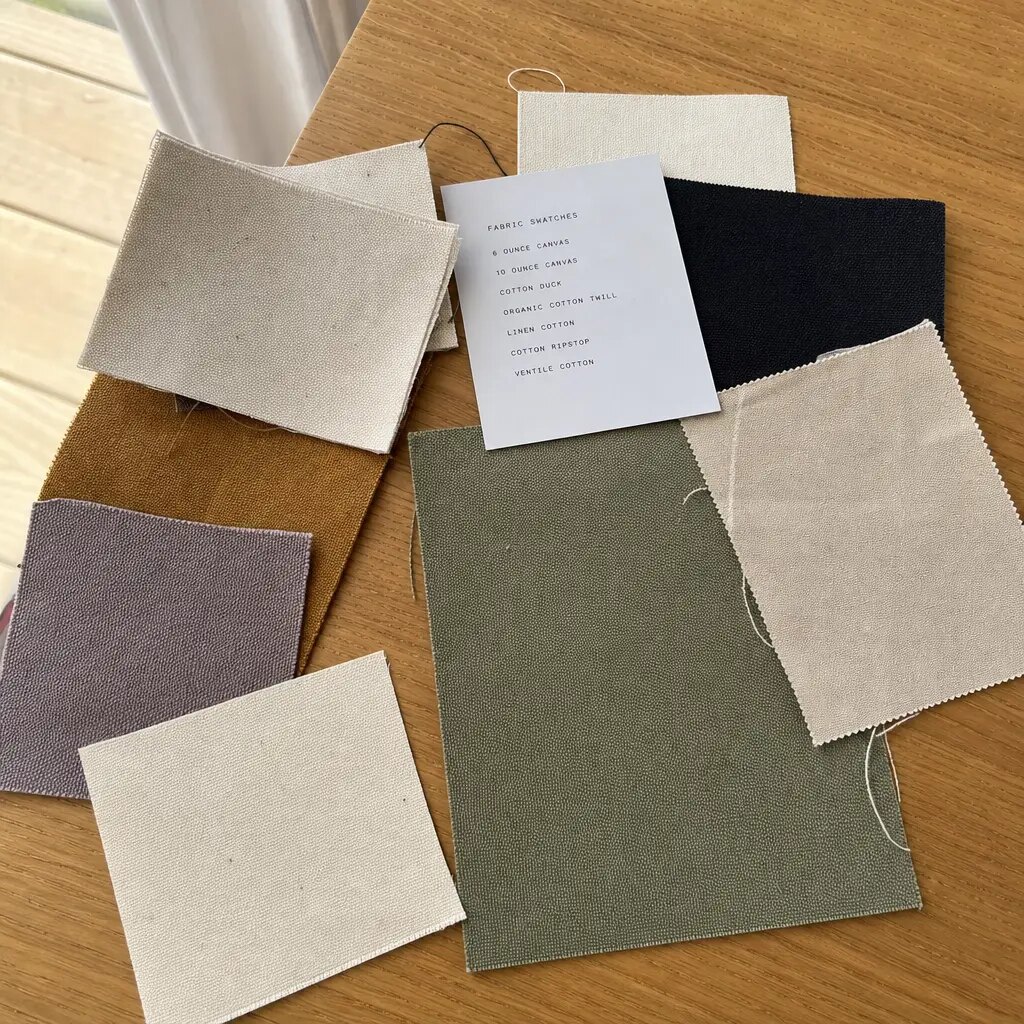
The right canvas weight depends on how the bag will be used and how much structure the buyer expects. For a soft, lightweight messenger bag, 12 oz canvas, or roughly 407 gsm, can be enough if the lining is simple and the customer does not carry heavy loads. For a sturdier retail bag with a flap, pocket, and longer service life, 14 oz to 16 oz canvas, about 474 to 542 gsm, is usually a better commercial choice. Once the bag gets heavier, the strap width, stitch density, and reinforcement patches matter as much as the fabric weight itself.
Print method also changes the packing outcome. A one- or two-color screen print is often the most economical option on canvas and usually holds up well if the ink cure is correct. If the artwork is complex, a heat transfer or patch label can preserve detail, but it may increase unit cost or create a ridge that marks during folding. For farmers market vendors, a cleaner structure matters more than decorative complexity. The bag should sit flat in the carton, recover its shape quickly, and keep the logo visible after packing.
- 12 oz canvas suits lighter-use programs and price-sensitive trials.
- 14 oz to 16 oz canvas fits repeat-use retail bags and heavier vendor loads.
- Screen print works well for simple logos; woven labels or stitched patches suit premium branding.
- Reinforce strap joins and flap corners before adding more print colors.
Compare supplier routes before you compare bag prices
Many buyers start with the unit price and only later discover that the supplier cannot hold a consistent carton pack-out. That is a weak sourcing method for this product. Direct factories are usually best when you need control over fabric weight, print method, and case configuration. Trading companies can be useful when you need one contact to coordinate several components, but they may not own the packing discipline or the sample approval process. Domestic stock suppliers can move fastest, but they rarely offer the most precise carton structure or the cleanest private-label execution.
For this category, the better question is not only who is cheapest. It is who can repeat the same bag, fold, print placement, and carton count without rework. A buyer planning a seasonal program should prefer a supplier that can send a pre-production sample, a carton pack sample, and a clear quote tied to production realities. If those pieces are missing, the offer may look attractive on paper but create loss later in freight, damages, or relabeling.
- Use direct factory sourcing when you need stable repeat orders and private-label control.
- Use a trader or consolidator when the order mixes multiple SKUs or materials.
- Use stock or domestic private-label supply only when speed matters more than customization.
How to build the carton plan around channel reality
A farmers market vendor usually values portability, quick access, and a bag that does not look oversized when carried across a stall. That commercial reality should drive the carton plan. If the bag is compact and lightly structured, a higher pack count per carton may be acceptable. If it has a stiff front flap, zipper pocket, or reinforced base, lower the carton count so the cases do not over-compress the product. The goal is to keep gross weight manageable and the bag shape recoverable after unpacking.
The safest practice is to keep one carton format per style and color. Mixing sizes or color assortments in the same case creates picking errors and makes warehouse counts harder. If the bag is sold in retail channels, include a clean polybag or tissue wrap to protect the canvas from rub marks. If it is sold direct to vendors who will use the bag immediately, the protection can be simpler, but the carton still needs enough rigidity to survive stacking and long transit.
- Use carton counts that keep cases easy to lift and re-stack in the warehouse.
- Keep master cartons to a practical gross weight rather than maximizing volume.
- Specify outer case marks, SKU labels, and color codes before production starts.
- Add moisture protection if the route includes long ocean transit or humid storage.
Sample approval should include packing, not just the bag
A serious sample process should include more than a photo of the finished bag. First, approve the fabric handfeel, color, and logo position on a strike-off or sample print. Then review a pre-production sample that includes the final strap, lining, hardware, and closure details. The last step is a carton pack sample that shows how the bag folds, how much room it occupies, and whether the logo or flap shape is damaged by compression. If the supplier skips the packing sample, the bulk order is still under-defined.
For this product, the sample should be tested in the same way the customer will use it. Fold it, reopen it, load it with a realistic weight, and rub the printed area by hand after compression. Check whether the shoulder strap twists, whether the flap edge curls, and whether the bag springs back to its intended shape. A buyer who approves only a flat sample risks receiving a product that looks right on the bench but fails in a carton or on a retail shelf.
- Approve one strike-off for print color and placement.
- Approve one pre-production sample with all trims and closures attached.
- Approve one packing sample that shows fold direction and case count.
- Reject any sample that changes shape after light compression or repeated opening.
What a usable factory quote must show
A proper quote for canvas messenger bags should be a production document, not a casual unit price. It should state the fabric weight in GSM or oz, the lining or backing material if any, the print method, the hardware count, the carton count, and the Incoterm. Buyers also need to see whether the quoted price includes labeling, polybags, hangtags, or carton marks. If a supplier only sends one number per piece, the real landed cost is still hidden.
A good quote should also show breakpoints by quantity. Ask for pricing at a trial quantity, a mid-volume quantity, and a repeat-order quantity so you can see where the real cost drops. That tells you whether the supplier is giving a serious scale structure or just guessing. If the quote does not mention setup costs, sample costs, or rework fees for artwork changes, assume those costs will appear later unless you force them into the order terms.
- Require unit price by quantity tier, not just one flat number.
- Require carton dimensions, gross weight, and packed quantity per case.
- Require separate lines for sample cost, print setup, and special labels.
- Require the quote to state FOB, EXW, or another trade term clearly.
QC points that protect margin after the bags leave the factory
Quality control for this item should focus on the parts that fail in use: strap stitching, flap alignment, print durability, zipper or snap performance, and carton integrity. Canvas looks forgiving, but small errors become visible fast. A strap that is 10 mm too short may not be noticed in the sample room, yet it changes how the bag hangs on the body. A print that sits too close to a fold line can crack after packing. A weak carton can crush the front flap and create returns that look like product defects when they are really packing defects.
Before approving bulk shipment, define the acceptance criteria in practical terms. The bag should match the approved sample on dimensions, color, and logo placement. Stitch lines should be even, with no skipped stitches at load points. Hardware should function smoothly, and the carton count should match the PO. If the factory can supply pre-shipment photos of the packed cartons and one sealed master carton, it is worth requesting them. That simple step catches many errors before freight leaves the building.
- Measure size, strap length, and pocket position against the approved sample.
- Inspect stitching at all stress points, not only on the visible front panel.
- Test closure function and logo wear after folding.
- Confirm carton marks, case count, and seal condition before dispatch.
Lead time risk is usually a material and packing problem
The schedule for a custom canvas messenger bag order is often longer than buyers expect because several steps depend on approval, not just machine time. Sample development may take a week or two depending on artwork and trim changes. Bulk material booking can add more time if the canvas weight, lining, or hardware is not already in stock. After cutting and sewing, the packing line still needs to fold, bag, and case the product correctly. If carton specs change late, the final stage can become the bottleneck.
Seasonality matters for farmers market demand. Buyers who launch too close to the selling season usually accept rushed samples, incomplete carton tests, and vague quotes. That creates hidden cost later. A better method is to work backward from the market date, leave room for one sample revision, and avoid changing logo method after bulk material has been booked. The production schedule should include a buffer for inspection, repacking, and export loading so the order is not exposed to one missed step.
- Plan for sample approval before bulk material booking.
- Leave time for one revision cycle on artwork, trim, or carton size.
- Treat packing and loading as production steps, not warehouse extras.
- Avoid late spec changes once fabric and hardware are committed.
Compare landed cost, not just the bag price
The cleanest way to compare offers is to convert each quote into landed cost per sellable unit. That calculation should include unit price, print setup, carton cost, freight volume, and any repacking or labeling labor you will absorb after arrival. A bag with a lower ex-factory price can still cost more if the carton is oversized, the gross weight is inefficient, or the packing method causes damage. The more structured your carton plan is, the easier it becomes to compare suppliers on equal terms.
For this product, the best buying decision often comes from a simple tradeoff. A domestic stock supplier may win on speed but lose on customization and repeat consistency. A direct factory may require a longer lead time but give you better control over fabric weight, logo quality, and pack density. A trader may simplify communication but add a layer between you and the real production line. Once those variables are visible in a quote sheet, the cheapest line item stops hiding the real cost.
- Compare total landed cost per sellable bag, not only FOB unit price.
- Use the same carton size and same pack count when comparing suppliers.
- Account for damage risk, relabeling time, and warehouse handling in the final decision.
- Choose the supplier who can repeat the same cost structure on the next order.
Specification comparison for buyers
| Spec decision | Recommended option | When it fits | Buyer risk to check |
|---|---|---|---|
| Need full control over carton count, fold method, and label placement | Direct factory | You want a custom program with repeat orders and stable pack-out rules | Verify the factory can hold one packing method across all sizes and colors |
| Need the lowest development risk on a first order | Trading company with factory access | You need one contact to coordinate bag, trim, print, and carton details | Confirm who owns QC and who signs off on the packing sample |
| Need the fastest launch before the farmers market season starts | Domestic stock or private-label supplier | You are testing demand and cannot wait for bulk fabric procurement | Watch for limited color choices, weaker customization, and inconsistent carton specs |
| Need a durable logo that survives folding and abrasion | Direct factory with screen printing or woven label capability | The bag will be used daily and the brand mark must stay legible | Test print rub resistance and placement on the folded bag |
| Need to combine several SKUs in one shipment | Trading company or consolidator | You are shipping a mixed program with accessories, inserts, or size variants | Make sure carton marks, SKU separation, and case counts are written into the PO |
| Need repeatable spec control for a private-label line | Direct factory | You plan to reorder the same bag across seasons and sales channels | Lock the fabric GSM, thread count, strap width, and carton pack-out before mass production |
| Need the smallest viable MOQ for a market trial | Domestic stock supplier or factory sample run | You want to test sell-through before committing to a full production wave | Expect higher unit cost and fewer options for custom pack configuration |
| Need the clearest landed-cost picture | Direct factory quoting FOB with carton details | You compare multiple origins and need freight volume to be predictable | Ask for carton dimensions, gross weight, and packed quantity per case, not only unit price |
Buyer checklist before sampling
- Fabric weight is fixed in GSM or oz, and the quote states whether the canvas is raw, washed, or pre-shrunk.
- Logo method is named clearly, with color count, placement, and approval sample type written into the spec.
- Carton pack-out is defined by pieces per carton, inner polybag or tissue use, and target gross weight.
- Bag dimensions, strap length, stitch allowance, and pocket count match the channel use case.
- The supplier gives MOQ by color and by print method, not a single vague minimum.
- Sample approval includes print strike-off, pre-production sample, and carton pack sample.
- Lead time is split into sample, material sourcing, production, inspection, and loading windows.
Factory quote questions to send
- What is the exact canvas weight in GSM or oz, and is it one layer or double-layer construction?
- Which print method is quoted, and what setup cost changes if the logo color count changes?
- What is the MOQ per color, per logo version, and per carton pack configuration?
- What carton size, gross weight, and pieces per carton are included in the quote?
- Is the price based on FOB, EXW, or another Incoterm, and which port is used for the quote?
- Which sample type is included before bulk, and what will be charged separately?
- What are the tolerance ranges for bag size, strap length, seam allowance, and print placement?
- How many days are needed for material booking, production, inspection, and carton loading?
Quality-control points to confirm
- Verify canvas GSM or oz against the approved reference, not a verbal description.
- Measure finished bag width, height, gusset, and strap length within the agreed tolerance.
- Inspect stitch density and stress-point reinforcement on strap joins, flap corners, and pocket openings.
- Rub-test printed logos and label edges after folding to see whether ink cracks or transfers.
- Check zipper movement, snap closure alignment, and buckle function on every sample style.
- Confirm carton count, case marks, and inner pack method against the packing sample.
- Review carton compression and corner strength so the cases survive warehouse stacking and export handling.
- Approve one pre-production sample before bulk cutting starts.