Why coffee roasters need a different packing plan
Canvas messenger bags for coffee roasters are not generic fashion bags. They are often used for sample kits, event handouts, wholesale retail bundles, or subscription inserts, which means the carton plan affects more than freight cost. If the bag arrives crushed, wrinkled, or with print rub, the buyer may lose sell-through even when the sewing quality is acceptable.
The biggest mistake is treating the bag as a simple unit-count item. For this category, you need to plan around bag bulk, flap shape, hardware, print sensitivity, and the way cartons will be handled during export. That is where landed cost is won or lost.
- Coffee roaster orders often include mixed SKUs, which makes carton balance more important than pure piece count.
- Printed canvas can scuff against carton walls if the interior pack is too tight or the stack direction is wrong.
- Heavy fabric and webbing straps can drive freight cost faster than buyers expect if the carton size is not controlled.
Start with the bag spec, not the carton
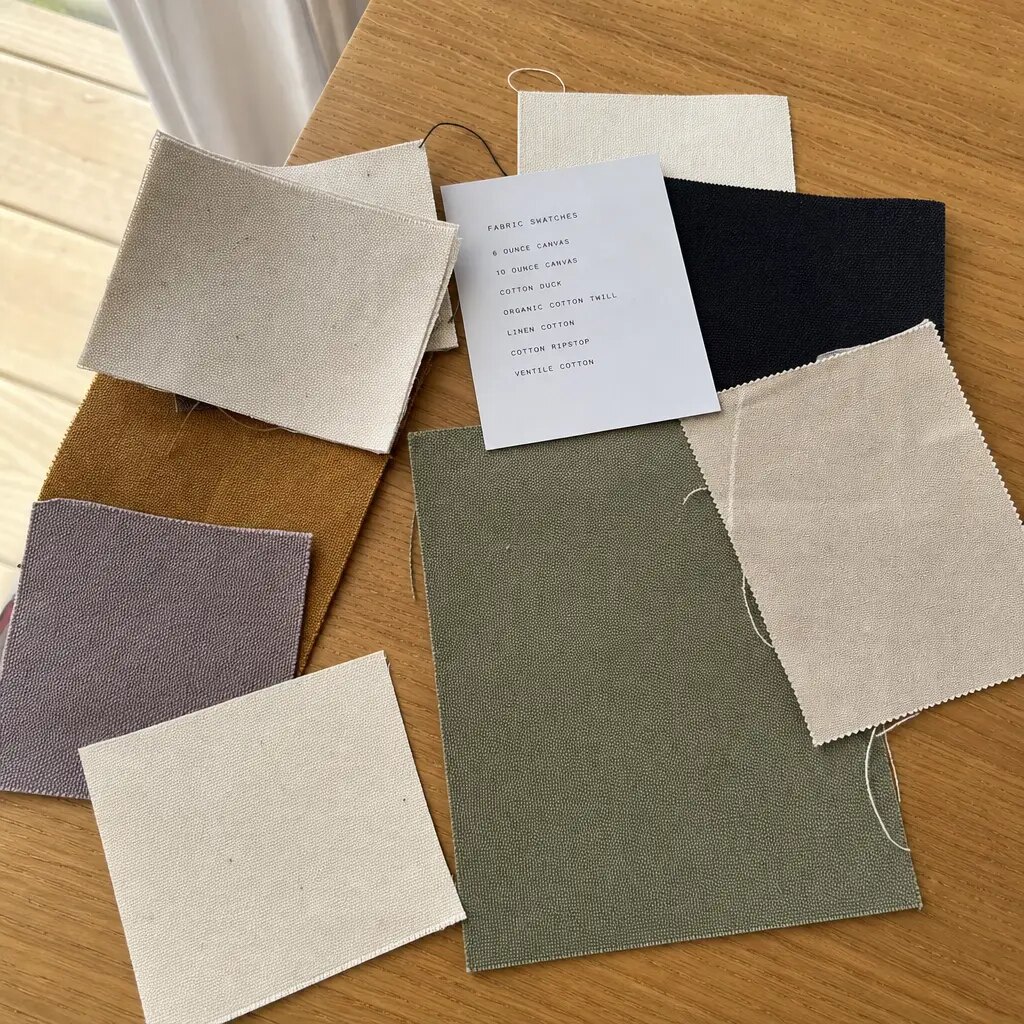
A workable canvas messenger bag usually starts at 12 oz canvas, with many buyer programs landing between 340 and 450 GSM. Below that range the bag can look soft and low-cost; above it, the bag may become stiff and expensive to sew, especially if it includes a flap, lining, and multiple pockets. For coffee roaster use, the right point is usually the lightest construction that still holds shape when loaded with product inserts or a small retail box.
The body structure also changes the packing plan. A single-layer bag folds flatter and allows more units per carton, but a lined bag with a zipper top, internal pocket, or foam insert needs more cubic space and often needs a wider carton. Buyers should align the spec with the real use case: event giveaway, retail shelf, or durable carry bag.
- 12 oz / 340 GSM is usually the minimum practical weight for a structured branded messenger bag.
- 14 oz to 16 oz / 400 to 450 GSM suits premium retail or repeated daily use.
- If the bag includes a lining, allowance for bulk should be built into the quote from the start.
Choose a print method that matches canvas texture
For simple coffee roaster branding, screen print is usually the most cost-efficient method. It works well for one- or two-color logos, especially when the logo area is large and the artwork has bold lines. On textured canvas, screen print holds up better than buyers expect, but the ink laydown must be controlled so it does not fill the weave or crack at fold lines.
Embroidery, transfer print, and woven labels each solve a different problem. Embroidery creates a premium look but adds cost and thickness. Transfer print is flexible for small runs or detailed artwork, but buyers should test abrasion because some transfers rub faster on rough canvas. A woven label or side label is often the safest mark when the customer only needs brand identification, not a large visual logo.
- Use screen print when the design is bold and the order repeats in volume.
- Use embroidery when the brand wants a premium craft signal and the logo area is small.
- Use a woven side label when the pack must stay low-risk for rubbing during carton transit.
What drives MOQ and quote spread
For canvas messenger bags, MOQ should never be treated as one flat number. The real MOQ breaks into fabric color, print color, hardware type, strap color, and packing format. A factory may be happy to quote 1,000 bags overall, but a three-color logo, custom zipper pull, and special carton insert can all create separate setup costs. That is why two quotes with the same unit price can still produce different landed cost results.
Buyers should read the quote in layers. First, identify the base bag cost. Next, separate decoration cost, trim cost, carton cost, and packing labor. Finally, map where the supplier is adding margin for small-run complexity. If the supplier cannot explain these layers, the quotation is not ready for a sourcing decision.
- Ask for MOQ by design element, not only by total quantity.
- Separate setup charges from unit price so later repeat orders are comparable.
- Request pricing for one-color and multi-color versions if the program may expand.
How supplier routes change your landed cost
The supplier route affects more than factory price. A direct factory usually gives better control over carton packing, approval samples, and trim choices. An agent may simplify communication, but the buyer can lose visibility into how the bag is actually sewn or packed. A distributor can be useful for urgent replenishment, yet the price often includes extra handling and less flexibility on custom packing.
For coffee roaster buyers, direct sourcing is usually the best route when the bag needs logo consistency, mixed-SKU packing, or a carton plan that supports retail shelf or fulfillment handling. If the order is small and speed matters more than specification control, a stockholder or distributor may be acceptable, but the buyer should accept less packing customization.
- Direct factory: best control, better for custom pack rules, and easier to audit sample consistency.
- Agent: helpful for communication, but ask who actually owns sewing and packing decisions.
- Distributor: fastest for small repeat orders, but usually weakest on packing customization.
Packing plan choices that protect shape and freight
The right carton plan starts with how the bag is folded. Messenger bags usually ship flat, with straps tucked in a repeatable way so the flap does not crease sharply. If the bag has a structured flap, a printed front panel, or a hard insert, the pack method should reduce pressure on the visible face. Overstuffing a carton saves little freight if it creates scuffed print or deformed flaps at arrival.
A practical carton target is to use the largest carton size that still stacks cleanly and stays under carrier or warehouse handling limits. For export buyers, that means balancing piece count against gross weight, carton dimensions, and pallet efficiency. If the bag includes a lining or hardware, many buyers do better with fewer units per carton and a stronger outer carton rather than chasing maximum count.
- Flat-pack messenger bags reduce volumetric weight and usually ship better than stuffed bags.
- Use tissue, polybag, or a light cardboard insert only where it prevents print rub or shape collapse.
- Keep carton count consistent across cartons unless the order is intentionally mixed by color or size.
A comparison of sourcing options for this product
The best sourcing route depends on how much control you want over the carton plan and approval process. A buyer who needs a retail-ready branded bag for coffee roasters should compare options on packing flexibility, sample discipline, and the ability to repeat the same result on reorder. The table below focuses on decision tradeoffs, not generic factory labels.
If your shipment is going into retail distribution, wholesaler fulfillment, or coffee subscription kits, the carton decision can matter as much as the fabric spec. A supplier who understands the end-use can reduce both damage and hidden labor at receiving.
- Write decisions in measurable language, not only descriptive wording.
- Ask for sample photos plus one physical approval sample for important orders.
- Keep quotation, sample approval, and inspection notes tied to the same spec version.
Build the sample approval path before bulk order release
For canvas messenger bags, approval should not stop at a photo. The buyer should see a cut sample or pre-production sample that matches the fabric weight, print method, strap width, closure, and carton packing approach. If the bag will be sold as part of a coffee roaster program, test how it behaves with the intended insert or sample pack inside. A bag that looks good empty can fail once product weight is added.
The most useful sample approval is a matched set: one bag, one packed carton layout, and one approved logo position. When the buyer signs off, the supplier should keep a sealed gold sample or at least detailed reference photos with measurements. That reduces the chance of a post-approval dispute on bulk production.
- Check logo position from seam to center line, not by eye alone.
- Open and close the closure 20 to 30 times on the sample to find weak hardware or alignment issues.
- Replicate the carton pack exactly in sample approval, including tissue, polybag, or insert if used.
Inspection points that prevent costly rejects
The main quality failures for canvas messenger bags are predictable: off-center logo print, uneven strap length, weak bartacks, crooked flap shape, and packing marks created by pressure inside the carton. Buyers can reduce rejects by writing acceptance criteria that match the visible value of the bag. A bag for internal coffee roaster staff may tolerate small cosmetic variation, while a retail bag on a shelf needs cleaner finish and more consistent print.
For carton-packed export orders, the receiving risk is often more about damage than sewing defects. A unit can pass in the sewing line and still fail at warehouse unpacking if the strap is crushed into the flap, the carton is too tight, or the printed face rubs against the polybag. That is why pre-shipment review should include packed appearance, not just open-bag inspection.
- Set a practical logo tolerance window and use a ruler or template during inspection.
- Require bartack visibility at all strap ends and load-bearing points.
- Review at least one packed carton from each production lot before final shipment release.
Landed-cost comparison: where buyers usually overspend
The final unit cost is rarely lost in fabric alone. Buyers usually overspend through oversized carton dimensions, unnecessary decorative details, or a packing format that adds labor without increasing sales value. A thicker canvas can be worth the added cost if it improves retail perception, but an oversized flap or excessive lining often becomes dead freight. The real goal is to pay for the features the coffee roaster customer can see and use.
When comparing supplier quotes, convert every option into landed cost terms: unit price, inner pack labor, carton material, outer dimensions, and expected freight impact. A lower ex-factory price can be misleading if the cartons are packed loosely or if the bag needs rework before shelf use. The cheapest quote is often the one that creates the highest receiving cost.
- Compare carton dimensions, not only unit price, because freight is volume-sensitive.
- Add the cost of sample rounds and approval delay when a quote is unusually cheap.
- Do not pay for decorative complexity that the end customer cannot perceive.
Specification comparison for buyers
| Spec decision | Recommended option | When it fits | Buyer risk to check |
|---|---|---|---|
| Canvas weight | 12 oz to 16 oz cotton canvas, usually 340–450 GSM | Brand-use messenger bags that must hold catalogs, sample packs, or laptops without collapsing | Too light leads to wrinkling, seam stress, and a cheap handfeel; too heavy raises freight and sewing difficulty |
| Body construction | Single-layer body with lining only where needed, or full lining for premium retail | Use single-layer for utility and promo programs; use full lining for retail and repeated daily carry | Unlined bags can show print-through and fray on raw edges if binding quality is weak |
| Print method | Screen print for simple logos; transfer or embroidery for small runs or multi-color marks | Screen print suits large repeat orders and bold branding; embroidery suits premium positioning and small logo zones | Fine detail can blur on textured canvas; embroidery adds thread bulk and may affect flap closure |
| Closure style | Magnetic snap or zipper top with flap cover | Coffee roaster kits, event bags, and wholesale retail sets where contents need protection | Cheap snaps loosen in transit; zippers can pinch lining or fail if gauge is too light |
| Strap build | 30–38 mm webbing strap with reinforced stress points | For sample kits, trade show carry, and daily-use retail bags | Weak strap bartacks fail first; confirm stitch density and pull-test target before approval |
| Carton pack density | Pack by bag thickness and shape, not only by unit count | Best for mixed orders with printed bags, lining, inserts, or rigid foam parts | Overfilled cartons crush corners, distort flap shape, and raise dispute risk at destination |
| Supplier route | Direct factory with carton test samples and pre-production approval | Best for importers and brands who want control over spec, packing, and unit cost | Agents may hide packing details; distributors may not control in-house sewing or packing standards |
| MOQ approach | Set MOQ by print color, fabric color, and hardware type separately | Useful when one design is sold in multiple cafe or roaster SKUs | A single MOQ number often masks setup cost changes across variants and creates quote surprises |
Buyer checklist before sampling
- Confirm the exact canvas GSM, weave count if available, and whether the bag is stonewashed, enzyme-washed, or raw finish.
- Lock the bag size, flap overlap, strap length, and the usable internal space needed for coffee sample packs or retail inserts.
- Define print method, logo size, Pantone reference, and acceptable color variance on textured canvas.
- Specify whether the bag needs lining, zipper top, magnetic snap, inner pocket, or gusset reinforcement.
- State carton count target, carton size limits, stacking requirement, and whether cartons must survive palletized export handling.
- Request a pre-production sample, a sealed gold sample, and a carton drop sample if the bag is premium or heavy.
Factory quote questions to send
- What canvas GSM, weave density, and finish are you quoting, and can you show a cut swatch or sample photo for each option?
- Is the logo price based on one color, multiple colors, embroidery, or transfer print, and what is the setup fee per design?
- What is the MOQ by fabric color, print color, and hardware color, not just the total bag quantity?
- What carton size do you recommend, how many bags per carton, and what is the gross carton weight?
- Can you quote both flat-packed and stuffed-packed carton options so we can compare freight and deformation risk?
- What sample stage do you provide before bulk production, and what items will be matched to the approved sample?
- What is your production lead time after sample approval, and what delay risk appears if we change artwork or packing after approval?
Quality-control points to confirm
- Fabric GSM tolerance should be agreed before production; for 12 oz class canvas, a practical buyer range is about ±5% unless the supplier offers a tighter measured report.
- Logo placement should be fixed with a measured tolerance window, such as within 5 mm for centered prints and 8 mm for embroidered marks on textured canvas.
- Stitching at strap anchors and side gussets should be visually clean with no skipped stitches, no loose thread tails longer than a few millimeters, and no puckering at load points.
- Carton compression should not deform the flap, strap fold, or printed face; if the bag is premium, require a carton drop test or at least a transit-style sample pack review.
- Hardware, if used, should open and close smoothly in sample approval and not stain the fabric during rubbing, shipping, or humid storage.
- Pack count accuracy should be verified by carton opening count, not only by total shipment count, because mixed-color cartons often hide short packs.