Why the carton plan matters on winery orders
For boutique wineries, a canvas messenger bag is rarely bought as a generic accessory. It is usually a retail gift, a wine club insert, a tasting room impulse item, or a seasonal branded product that has to look clean as soon as the carton is opened. That makes the packing plan part of the product definition, not a warehouse detail. If the bag arrives creased, dusty, unevenly folded, or with the logo sitting on a hard fold line, the winery absorbs the cost in repacking time and lost confidence.
The carton plan also changes landed cost. A bag that looks fine in a sample room can fail commercially if the carton cube is too large, if decoration rubs against another panel, or if mixed colors are packed without a controlled count. For procurement teams, the useful question is not only what the bag costs. It is what the bag costs after fold method, carton size, master carton weight, freight lane, and receiving labor are all included.
- Treat carton data as part of the product spec, not as shipping paperwork added at the end.
- Write the intended use on the RFQ so the supplier knows whether the order is for retail display, club gifting, event merch, or distributor stock.
- Compare suppliers only after the packing method, carton size, and carton count are aligned.
Start with the bag spec that drives the packout
Canvas weight changes the entire pack plan. A lighter canvas, often around 10 oz, can be acceptable for low-cost giveaway programs, but it usually collapses more in the carton and is less forgiving if the bag has a printed flap or long strap. A heavier body, often in the 12 oz to 14 oz range, usually gives the buyer better structure, better shelf presentation, and less wrinkling during transit. The tradeoff is higher material cost and some increase in freight weight. For winery merch, the midpoint is often the better commercial choice unless the bag is carrying something heavy or is meant to feel premium in hand.
Construction details matter just as much as fabric weight. A messenger bag with a flap, zipper pocket, magnetic closure, or thick shoulder strap cannot be packed the same way as a soft tote. The strap folding rule, board size, and whether the bag ships flat or lightly stuffed all change carton density. If the decoration sits near a fold line, the factory should protect that area with tissue or a separator sheet so the receiving team does not see crease damage on day one.
- Use one fold pattern for the entire order.
- Fix the strap position so the packer is not improvising at the line.
- Protect any printed area that will touch a carton wall or another bag inside the stack.
Compare sourcing routes before you compare unit price
A low quote is not useful if the supplier cannot control packing or confirm carton counts. For boutique winery programs, the sourcing route matters as much as the sewing line. A direct factory is usually the strongest choice when carton control, repeatable decoration, and export packing discipline matter. A trading company can still work, but the buyer should insist on the actual sewing site, the actual packing site, and the way the supplier controls specification changes between runs.
Hybrid sourcing can also make sense when a program needs local label finishing, mixed product consolidation, or a very short seasonal window. The risk is handoff drift. If the decoration happens in one place and the final pack happens in another, the buyer needs a named owner for count accuracy, label placement, and carton marks. The key decision is not factory versus trader in the abstract. It is whether the supplier can own the entire chain from fabric purchase to master carton release.
- Ask who signs off on the carton spec and who physically packs the finished cartons.
- Require the supplier to disclose the sewing site, decoration site, and export packing team if they are different.
- Do not accept a quote that omits inserts, labels, carton printing, or packing labor.
Choose a packing method that protects the bag without wasting cube
For most canvas messenger bags, flat-packed cartons are the best starting point. Flat does not mean unprotected. A simple insert board, a tissue sheet, or a strap wrap can keep the bag from shifting while still preserving good cube efficiency. If the bag has a structured front panel or a printed logo on the flap, the inner pack needs to keep the logo face away from the carton wall and away from another decorated surface. That matters more on long sea shipments and humid routes, where canvas can absorb moisture and become more prone to pressure marks.
A lightly stuffed pack is worth considering only when the bag must arrive in display-ready shape or when the body collapses too much under flat packing. That decision raises freight cost, so it should be tied to a real retail need, not preference. In most winery programs, one SKU per carton and one color per carton are the safest choices. Mixed cartons can work, but they require tighter labeling, a carton map, and a warehouse team that can receive assortments without opening every box.
- Keep the same fold direction and strap position from sample approval through bulk.
- Specify whether polybags are required, and whether they need vents or seals.
- If the route is humid, ask for moisture control only after confirming it will not affect the canvas or decoration.
Use carton math and pack-out examples, not habit
Carton size should be selected from the bag dimensions and the protection method, not from a supplier's default box. As a practical starting point, a folded bag around 38 x 30 cm may fit in a master carton in the 58 x 38 x 40 cm range when flat-packed with an insert board, but the usable count depends on flap thickness, strap bulk, and the amount of empty space left in the box. If the bag uses embroidery, a patch, or a thick closure, the carton usually needs fewer units than a thin-printed version.
For warehouse handling, gross carton weight matters as much as cube. Many buyers set a manual handling ceiling so cartons are easy to move by one person. If your receiving team lifts cartons by hand, it is reasonable to ask the factory to quote to a weight ceiling rather than forcing the maximum count into every box. In practice, a slightly smaller carton that protects the bag and stays easy to receive is often cheaper than a dense box that creates damage or repacking labor later.
Use the same logic when comparing sea freight and air freight. A compact carton can lower cube, but if the fold line crushes the logo or the stack compresses the front panel, the savings are false. The safest calculation is landed cost per salable unit, not shipped unit.
- Ask the supplier to state the empty space percentage in the carton, not just the unit count.
- Set a weight ceiling for manual receiving if the buyer warehouse has one.
- If you need to reduce freight cost, reduce void first before you reduce protection.
Choose decoration around packing, not around artwork alone
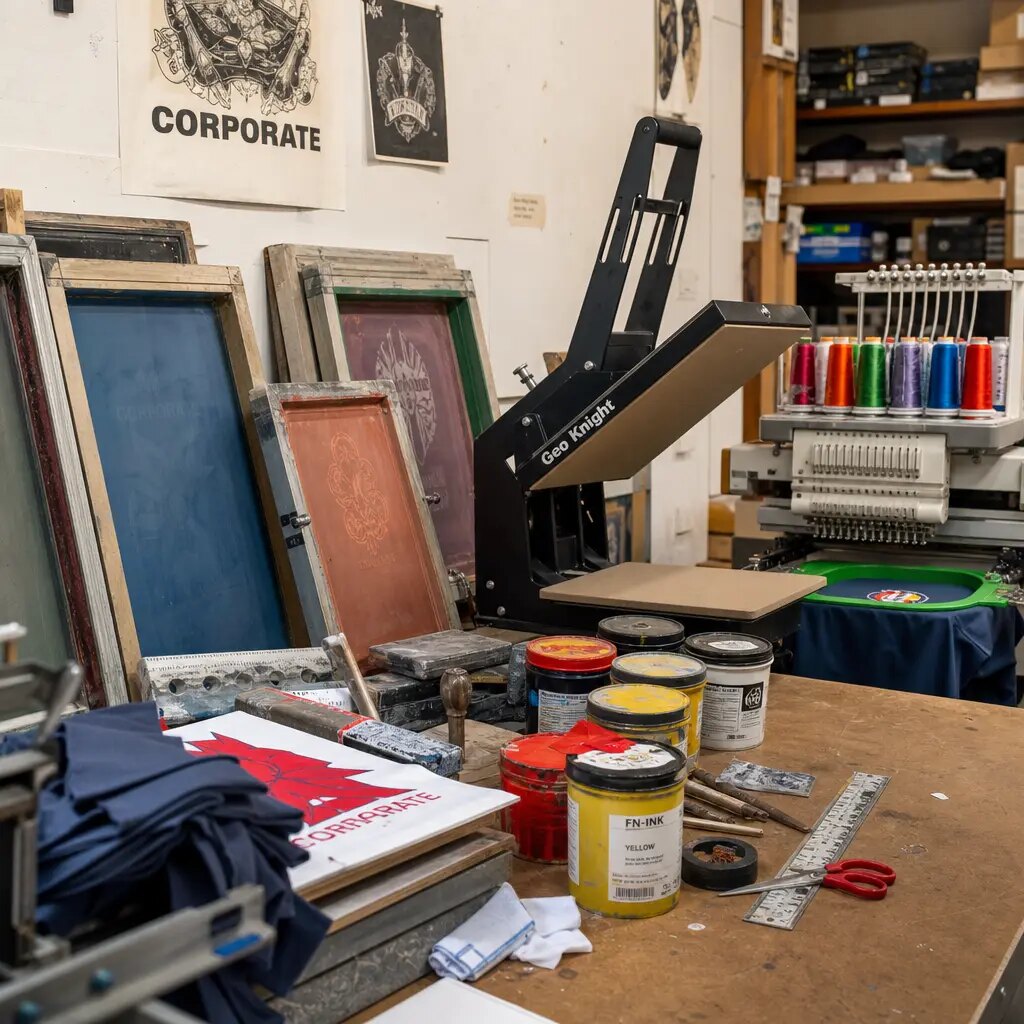
The decoration method changes how the bag behaves inside the carton. Screen print is often the best balance for winery programs because it is durable, visually clear, and usually thin enough to pack cleanly when the ink is fully cured. Woven labels are also a strong choice when the buyer wants a premium brand mark with low bulk. Embroidery and sewn patches can look more elevated, but they create thickness that can show through stacked bags or create pressure points if the carton is too tight.
The packing sequence should follow the decoration method. A wet or under-cured print should not be sealed in a tight polybag and loaded straight into a carton. A raised patch should not sit face-to-face with another patch unless the pack method includes a separator. If the logo is on a side label, the carton plan should protect that edge from rubbing because side labels are often the first place a buyer notices finishing problems.
- Approve decoration after the bag is folded and packed, not only on a flat artwork proof.
- Ask the factory what cure, bond, or set time is required before carton sealing.
- Use separators when thick decoration would otherwise rub against itself in transit.
Build sample approval around the final pack state
A useful sample is not just a look sample. For this kind of order, the buyer should approve the bag in the same folded state, with the same closure position, the same label placement, and the same inner pack that will be used in bulk production. That is the only way to catch strap twist, logo shift after folding, flap misalignment, and seam distortion before the PO is locked. If the factory sends a loose unboxed sample and bulk production is packed a different way, the approval is incomplete.
The sample checklist should be practical and measurable. The bag should open and close smoothly, the logo should sit where it was approved, the strap should stay flat after folding, and the seam lines should remain straight when the bag is loaded into the carton. A winery buyer does not need laboratory language here. What matters is whether the sample still looks saleable after it has been handled, folded, and repacked by someone other than the original sample maker.
- Approve one pre-production sample in the final carton format.
- Check print clarity, color match, strap alignment, fold memory, and closure function.
- Use the sample to confirm carton weight, bag count, and how the product settles inside the box.
Set MOQ logic against the actual cost drivers
Minimum order quantity is usually driven by more than sewing labor. Fabric dye lot, print screen setup, carton artwork, insert boards, and color count all affect the real MOQ. A supplier may quote a low MOQ for the bag body, but if the carton print or label set-up is treated as a separate run, the true minimum can be higher. For boutique wineries, this is important because small seasonal assortments can look cheap if the order is split across too many colors or logo variations.
The buyer should ask whether the MOQ is based on finished units or on a single production configuration. A clean buying structure is one bag size, one logo version, and one packing method per order. If color assortment is required, the supplier should state the minimum per color and the carton mix rules in writing. That keeps the quote comparable and prevents the common problem where the sales quote promises flexibility but the packing line creates count errors or partial cartons.
- Separate MOQ for body fabric, decoration setup, and carton print if the supplier uses different sources.
- Keep the first order simple: one size, one logo, one packing method.
- If multiple colors are needed, ask for a per-color MOQ and a per-carton color ratio before approval.
Use landed cost to decide the final pack plan
Carton packing affects landed cost directly. A bag packed too loosely increases cube and raises freight cost. A bag packed too tightly can crush the silhouette and create claims when the product reaches the winery. The buyer should compare quotes on a landed-cost basis using carton dimensions, units per carton, gross weight, and the destination handling method. If the bags are going to a central warehouse first, a more efficient master carton may be worth more than a cheaper but fragile retail carton. If they are going straight to tasting-room stock, the other way around can be true.
The most useful quote comparison uses the same Incoterm, the same carton specification, and the same pack format. Otherwise, one supplier may look cheaper only because they excluded insert boards, carton printing, or a moisture barrier. If the winery uses more than one channel, such as retail, club, and distributor, ask whether one pack format can serve all channels or whether a second format is cheaper over the life of the program. Repacking after arrival is almost always more expensive than designing the carton correctly in the first place.
- Compare quotes only after carton size, gross weight, and units per carton are aligned.
- Use the same shipping term across suppliers before ranking unit price.
- Do not accept a quote that omits packing labor, labels, carton marks, or protection materials.
Screen the factory like a production partner, not a catalog seller
A useful RFQ for canvas messenger bags should read like a production brief, not a style request. It should include the bag size, canvas weight, closure type, strap length, logo method, carton count target, carton marking requirements, and destination climate or transit route. For boutique wineries, it also helps to note whether the bags will be used in tasting rooms, wine club kits, distributor promotions, or retail shelves, because those use cases change the required pack strength and the visual finish buyers should demand.
The quote should come back with enough detail to compare production risk, not just price. A supplier who can give sample timing, bulk timing, pack format, carton dimensions, and defect standard in one response is much easier to manage than one who only lists a bag cost. If the supplier avoids carton detail at the quote stage, that is often a sign that the packing line will default to whatever is easiest that week. That is exactly how buyers end up with mixed carton counts, inconsistent folds, and packing corrections after approval.
- Send the tech pack, logo file, carton target, and destination details together.
- Ask for sample lead time, bulk lead time, and export packing lead time separately.
- Require carton marks, pack list format, and label placement before PO release.
Specification comparison for buyers
| Spec decision | Recommended option | When it fits | Buyer risk to check |
|---|---|---|---|
| Sourcing route | Direct factory with an export packing team | Best when you need control over carton count, carton marks, and repeatable fold direction | Verify that the factory, not only the sales office, owns final packing and carton release |
| Sourcing route | Trading company with named factory disclosure | Useful when you need several SKUs or a single commercial contact for a wider program | Ask for the actual sewing site, packing site, and whether the supplier can swap factories mid-season |
| Sourcing route | Factory with external print or label finishing | Works for rush programs or small runs where decoration is the only major variable | Check handoff risk, color drift, and abrasion during inter-site transport |
| Packing format | Flat-packed with insert board and tissue | Good for structured canvas messenger bags that must arrive clean and presentable | Confirm the board size does not crease the flap or push against seams |
| Packing format | Lightly stuffed with paper and fixed strap folding | Fits softer bags that collapse too much in flat pack or need retail display shape | Watch cube growth, higher freight cost, and inconsistent stuffing density |
| Packing format | Retail-ready individual polybag plus master carton | Appropriate when bags are sold through shelves, clubs, or e-commerce fulfillment | Make sure the polybag does not trap odor or rub uncured print |
| Decoration route | Screen print or woven label | Usually the easiest balance for winery merch programs that need durability and clean stacking | Verify cure, rub resistance, and exact placement after folding |
| Decoration route | Embroidery or sewn patch | Fits premium programs where texture matters more than cube efficiency | Check for pressure marks, raised edges, and higher snag risk inside cartons |
| Shipment structure | Single-SKU, single-color cartons | Best for receiving speed, accurate counts, and low warehouse handling error | Avoid mixed cartons unless the color ratio and carton map are locked in writing |
Buyer checklist before sampling
- Write the use case on the RFQ: tasting room retail, wine club gift, event merch, or distributor resale.
- Lock the bag spec first: finished size, canvas weight, lining, closure type, strap length, and any board or insert needed for packing.
- Approve one fold pattern only and state strap position, logo face direction, and whether tissue or insert board is mandatory.
- Ask for exact carton dimensions, gross weight, units per carton, and carton grade before the PO is issued.
- Set a hard ceiling for carton gross weight if the winery warehouse uses manual receiving, then ask the factory to quote to that ceiling.
- Confirm whether cartons must be single-SKU and single-color, or whether mixed assortments are allowed and how they are labeled.
- Request a pre-production sample packed the same way as bulk goods, not a loose sample in a different carton.
- Get print files, label placement, carton marks, and packing list format approved together so the factory is not guessing at handoff.
- Ask for the supplier's defect standard in writing, including critical, major, and minor defects, before bulk production starts.
- Separate product cost, decoration cost, packing labor, and carton cost where possible so the quote is actually comparable.
Factory quote questions to send
- Which factory will sew the bags, which team will decorate them, and which team will do the final carton pack?
- What canvas weight, weave density, and finishing do you recommend for this messenger bag, and what tradeoff does each option create?
- How many units fit per carton with your proposed flat-pack or lightly stuffed method, and what empty space remains in the carton?
- What are the exact carton dimensions, gross weight, corrugated grade, and any palletizing assumptions behind your quote?
- Is the MOQ based on finished bags, fabric dye lot, print setup, carton artwork, or all of these separately?
- What is your proposed AQL plan for critical, major, and minor defects, and who performs the inspection?
- Can you provide a packed pre-production sample, plus photos of carton labels, count layout, and the final folded bag inside the carton?
- Which decoration method will hold up best to carton stacking, freight handling, and repeated retail handling after receipt?
- What are the expected lead times for sample approval, bulk sewing, decoration, export packing, and booking to the port?
- Can you share your carton marks, inner pack label format, and packing list template before production starts?
Quality-control points to confirm
- Critical defects are zero tolerance: wrong size, wrong color, wrong logo, open seam, broken strap attachment, or missing closure hardware.
- Finished dimensions should stay within the approved tolerance, typically about plus or minus 5 mm on bag body dimensions unless your spec says tighter.
- Canvas weight should stay within the approved band, commonly plus or minus 5 percent of the approved sample or the agreed gsm target.
- Major seams should be straight, fully formed, and free of skipped stitches, with no seam opening visible under normal hand pressure.
- Stitch density should match the approved sample; ask the factory to state the stitch count on key seams rather than leaving it implied.
- Strap anchors should include the agreed reinforcement method, such as bar tacks or boxed reinforcement, with no lift, fraying, or asymmetric placement.
- Logo placement should land within the approved artwork tolerance, with no obvious skew, crowding, or fold-line interference after packing.
- Print, embroidery, patch, or woven label should show no smearing, bubbling, loose thread tails longer than the agreed limit, or adhesion failure.
- A dry rub check on a white cloth should show no visible transfer beyond the allowed factory standard before bags are sealed for shipment.
- Closure hardware should operate smoothly across the sample set, with no sticking, weak magnets, bent snaps, or zipper snagging.