Define the buying job before asking for prices
Canvas messenger bags work well for craft fairs because the front flap creates a clear branding area and the shape carries prints, books, small boxes, packaged food, apparel, and registration materials better than many flat totes. The procurement challenge is not finding a bag called a messenger bag. It is choosing the level of construction that fits the commercial use, event date, and resale expectation.
Start by assigning the order to a buying tier. A giveaway tier should stay simple: standard natural canvas, one print position, standard strap, basic closure, and bulk cartons. A resale tier needs better fabric hand feel, cleaner seams, reliable print placement, and storage protection. A premium sponsor, VIP, or exhibitor-kit tier may justify lining, an inside pocket, wider strap, magnetic snap, woven label, barcode control, and tighter carton sorting.
This early decision prevents quote drift. Without a tier, one supplier may price a light unlined promotional bag while another prices a heavier lined product. Both may use the same product name, but they are not comparable. A good canvas messenger bags bulk pricing plan for craft fairs starts with the buying job, then turns that job into measurable specifications.
- Giveaways: protect budget with one base fabric, one print, standard webbing, and bulk packing.
- Resale: prioritize fabric feel, print quality, seam finish, strap comfort, and clean handling.
- Exhibitor kits: plan carton labels, destination splits, pockets, and delivery timing.
- Artist collaborations: keep the base bag stable and manage variety through artwork versions.
- Fixed event dates: simplify the specification before compressing production or paying for emergency freight.
Use a numeric pricing model, not only a unit quote
Bulk pricing is easier to compare when every supplier responds to the same cost structure. Ask for a base product price, setup charges, sample charges, packing charges, inspection support if needed, freight terms, and exclusions. Then spread one-time costs across the order quantity to see the practical cost per bag.
For example, an internal planning sheet can use this formula: estimated total cost per bag = product unit price + packing adders + freight per bag + duty/tax per bag + local delivery per bag + setup charges divided by quantity + inspection or receiving costs divided by quantity. The exact numbers will depend on supplier, country, Incoterm, fabric, trim, and freight market, but the model helps prevent a low product price from hiding expensive setup or logistics.
Use sample tier scenarios during RFQ review. At 300 pcs, a screen setup, sample fee, and courier cost may add a noticeable amount per bag. At 1000 pcs, those same fixed costs are spread more efficiently, but storage and cash commitment increase. At 3000 pcs, fabric buying and cutting may improve, but only if the design is stable and the fair program can actually use the inventory.
Do not let the main comparison be only a product-spec table. Build a price-planning comparison with quantity, base construction, unit price, setup fees, adders, Incoterm, carton CBM, gross weight, and landed-cost assumptions. This makes artwork splits, individual packing, and upgraded trims visible before the order is approved.
- Request price breaks at 300, 500, 1000, and 3000 pcs using the same construction spec.
- List setup fees per screen, transfer, embroidery file, patch, label, hangtag, barcode, and carton split.
- Ask whether the quoted price is EXW, FOB, CIF, DAP, or DDP and what is excluded.
- Compare carton CBM and gross weight because canvas bags can be bulky and freight-sensitive.
- Calculate setup cost per bag separately so marketing can see the cost of adding designs.
- Keep a landed-cost column for freight, duty, tax, brokerage, local delivery, and event handling.
Specify canvas weight, finish, and approval tolerance
The word canvas is not a complete purchase specification. A supplier may call 10 oz, 12 oz, 14 oz, or 16 oz material canvas, and each will produce a different bag. For many craft fair messenger bags, 12 oz to 16 oz cotton canvas is the practical range to evaluate, but the right choice depends on use, size, strap design, and target selling price.
Lighter canvas lowers material cost, carton weight, and sewing difficulty. It may be suitable for a short-term giveaway or a bag carrying light papers and event materials. Heavier canvas gives stronger perceived value and better structure, but it increases material cost, seam bulk, shipping weight, and the need for reinforcement at closure and strap points.
Finish matters. Natural unbleached canvas has a maker-friendly look and is commonly requested for craft fairs, but it can show cotton specks, slubs, and shade variation. Bleached canvas gives a cleaner print base but marks more easily. Dyed, pigment-dyed, washed, or coated canvas can look more retail, yet it may raise MOQ, shade risk, and shrinkage questions.
Ask for oz/yd², GSM where available, fiber content, finish, color name, and tolerance. Approve a physical swatch or roll cutting, not just a photograph. If a quote says heavy canvas, eco canvas, or premium canvas without numeric weight and a swatch approval process, it is not ready for price comparison.
- 12 oz: common budget-sensitive starting point when the bag still needs substance.
- 14 oz: useful middle option for resale and general fair merchandise.
- 16 oz: stronger hand feel, with higher cost and more attention needed at seams and folds.
- Natural canvas: approve acceptable specks, slubs, and shade range before production.
- Dyed or washed canvas: confirm MOQ per color, shrinkage, shade tolerance, and colorfastness expectations.
Build a construction spec sheet suppliers can actually price
Messenger bag pricing changes with almost every construction detail. Finished size, gusset depth, lining, seam finish, pocket count, closure, strap width, adjuster type, reinforcement, labels, hangtags, and packing all affect cost. A short request such as “quote canvas messenger bag” invites suppliers to make their own assumptions.
Define the body first. A flat envelope-style bag uses less fabric and packs efficiently for prints, brochures, and thin books. A gusseted body costs more but works better for boxed candles, coffee bags, folded apparel, craft kits, and mixed purchases. If shoppers will use the bag during the event, quote the gusset rather than defaulting to the cheapest flat body.
Interior finish should match the sales channel. Unlined overlocked seams may be fine for giveaways. Bound seams look cleaner for resale. A lined body with a slip pocket increases perceived value but adds cutting, sewing, inspection, and possible color-transfer issues. If lining is included, specify material, color, pocket dimensions, and whether seams are hidden or bound.
The strap is a high-risk trim. A 38 mm cotton webbing strap can work for smaller bags and light loads. A 50 mm strap is usually more comfortable for heavier fair purchases. Require adjustment range, slider material, anchor construction, and reinforcement. Strap failure is more serious than a cosmetic thread end, so it must be specified before pricing.
- Size: width, height, gusset, flap length, and measuring method.
- Seams: overlocked, bound, lined, or another clearly described finish.
- Closure: magnetic snap, hook-and-loop, buckle, zipper, or no closure, including backing reinforcement.
- Strap: width, material, color, adjustability, length range, slider material, and anchor reinforcement.
- Pockets: no pocket, slip pocket, zipper pocket, pen pocket, or divider, with dimensions.
- Brand trim: woven label, printed label, patch, hangtag, care label, and barcode as separate quote lines.
Control artwork splits before they damage bulk economics
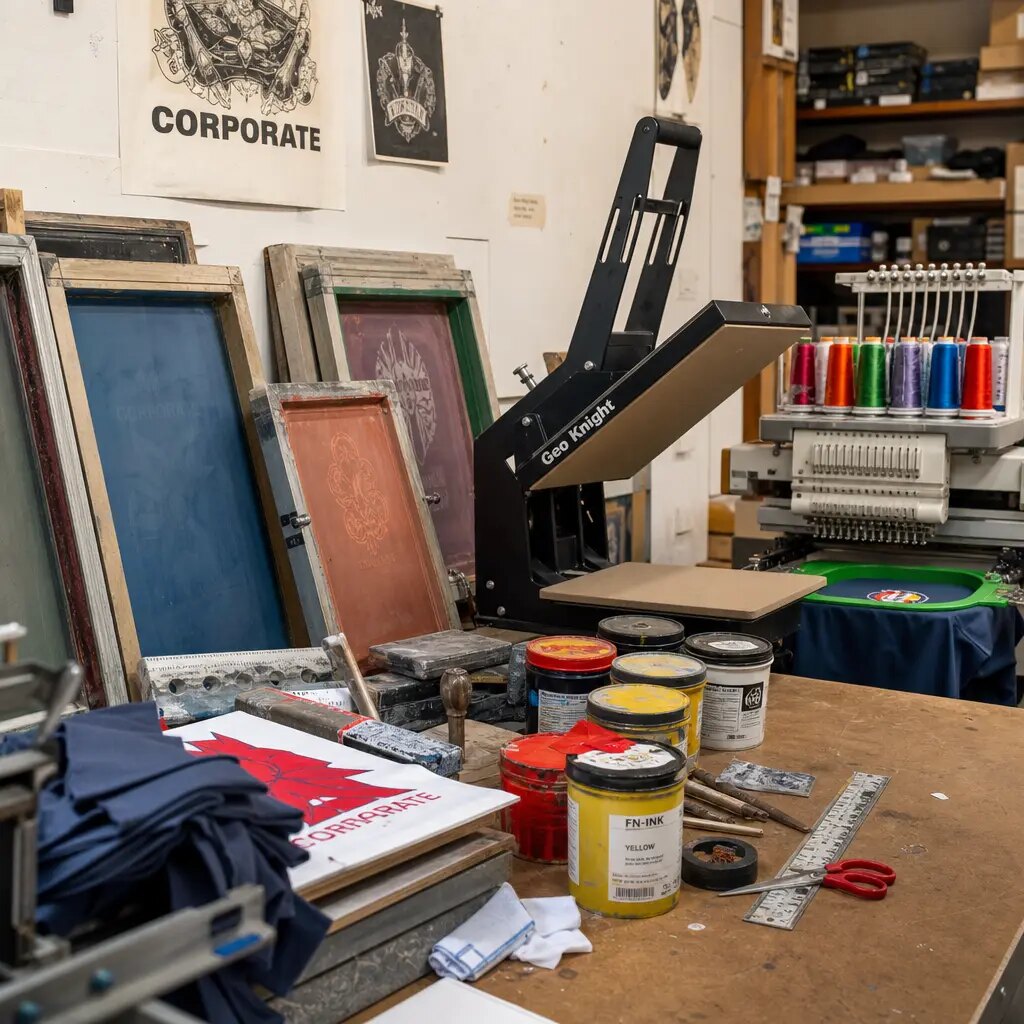
The front flap is the main visual area, so decoration planning has a direct effect on both perceived value and cost. Screen printing is often practical for one to three spot colors, including fair names, sponsor logos, line art, and bold maker graphics. Heat transfer can support detailed or full-color art, but it needs checks for edge lift, cracking, scorching, and performance where the flap bends. Embroidery and patches work best for smaller premium marks rather than large full-flap designs.
Bulk pricing becomes weaker when the order is divided into many artwork versions. A 500 pc order split into ten 50 pc artist designs may require separate screens or transfers, separate curing checks, separate counting, and separate carton labels. The factory behavior is closer to multiple small runs even though the total quantity looks like a bulk order.
Ask for minimum quantity per artwork and setup cost per design. If the creative team wants many designs, show the cost difference between one artwork, three artwork versions, and ten artwork versions. This keeps the pricing plan commercial rather than emotional.
Artwork files should be production-ready before sample approval. Provide vector files for screen print where possible, color references if needed, and a layout showing distance from the flap edge, centerline, seam, snap, label, and fold line. Avoid placing large prints where straps, closures, or hardware rub the surface.
- Screen print: efficient for bold spot-color graphics and repeatable bulk decoration.
- Heat transfer: useful for detailed art; inspect edge adhesion and flap-fold performance.
- Embroidery or patch: best for small premium logos and badges.
- Artwork MOQ: ask minimum per design, per print colorway, and per setup.
- Placement: define tolerance from a measurable edge or centerline.
- Cutoff date: freeze sponsor logos and artist files before PP sample approval.
Clarify MOQ, price breaks, and variable minimums
MOQ is tied to real production factors: fabric purchasing, cutting efficiency, webbing rolls, hardware minimums, print setup, label production, packing complexity, and sewing-line scheduling. For a standard natural canvas messenger bag with common trim and one-color decoration, some factories may consider 300-500 pcs, depending on region, season, and capacity. Add dyed fabric, special hardware, custom lining, several artworks, or retail packing, and the practical minimum may rise.
Separate total order MOQ from variable MOQ. A supplier may accept 1000 pcs total but require minimums per fabric color, lining color, artwork, print colorway, label version, or packing format. One natural canvas base bag with several flap prints is usually easier than several body colors, strap colors, linings, and closures.
Price breaks reveal the cost structure. A strong drop between 300 and 500 pcs may reflect setup spreading and line efficiency. A smaller improvement above 1000 pcs may mean fabric and labor dominate. A better break at 3000 pcs may reflect fabric purchase and cutting efficiency, but only if the program can use the volume without obsolete artwork.
Keep all setup and adders visible. Ask for separate lines for base bag, print setup, label setup, hangtag, barcode sticker, individual packing, tissue interleaving, carton sorting, and sample charges. This prevents surprise charges after the purchase order is approved.
- Ask MOQ per style, fabric color, artwork, print colorway, label, packing method, and destination split.
- Compare 300, 500, 1000, and 3000 pcs on the same fixed specification.
- Treat very low MOQ plus very low price cautiously; recheck fabric weight, strap width, size, and reinforcement.
- Use a pilot-run quote if testing demand instead of expecting full bulk economics.
- Consolidate several fair dates only when artwork and storage plans are stable.
Approve samples with real-use and packing checks
Product photos help early communication, but they should not be the approval standard. Approve a physical pre-production sample made with final canvas, final print method, final closure, final webbing, final labels, final stitch color, and intended packing method. If a development sample uses substitute fabric or hardware, record that clearly and require a true PP sample before bulk production.
Test the sample as a fair visitor would use it. Load it with realistic items such as prints, books, boxed candles, coffee bags, folded apparel, or registration materials. Wear it on one shoulder and crossbody if the strap is intended for both. Open and close the flap repeatedly. Look for twisting, weak snap backing, uncomfortable strap edges, print rubbing, body collapse, and poor pocket access.
Write the approval notes. Record measurements, shade, swatch reference, print location, print color, stitch color, strap range, closure alignment, label position, and packing method. If corrections are needed, mark them before production release. A weak sample approved under deadline pressure can become the factory’s bulk standard.
For multiple designs, approve one fully finished PP sample and printed strike-offs for the remaining artworks, or finished samples for each version if color and placement are critical. Each design should be checked on the actual flap shape, not only on a flat digital layout.
- Load test with realistic merchandise, not an empty bag.
- Measure body, gusset, flap, strap, pocket, label, and print placement.
- Open and close the flap repeatedly to check alignment and reinforcement.
- Flex or rub the decoration using the agreed method.
- Fold and pack the sample as bulk will ship to check creases and pressure marks.
- Keep dated photos, swatches, artwork files, and supplier confirmation for inspection reference.
Set QC rules for fabric, sewing, print, and cartons
Canvas texture is normal; defects are not. Minor slubs and cotton specks may be acceptable if they match the approved natural canvas standard. Oil stains, rust marks, mold odor, heavy dirt, holes, broken yarns, severe shade panels, crooked flaps, open seams, loose straps, and wrong artwork should not be accepted as natural character.
Use an inspection checklist that reflects the bag’s risks. Critical defects may include unsafe sharp hardware, mold, wrong artwork that cannot be distributed, broken straps, unusable closures, or missing legally required labels where applicable. Major defects can include open seams, severe stains, non-working snaps, out-of-tolerance size, major print misplacement, missing components, and mixed SKU cartons. Minor defects may include small thread ends or minor fabric irregularities within the approved range.
Strap anchors and closures deserve extra inspection. Check bar-tacks, box stitching, reinforcement patches, snap backing, hook-and-loop alignment, and fabric distortion. A practical pull check should be agreed before inspection so the factory and buyer understand the expectation.
Front-flap print QC should cover placement, color, curing, bleeding, pinholes, ghosting, transfer edge lift, scorching, cracking, and contamination. For craft fairs, carton accuracy is part of quality. Good bags packed under the wrong artist design, sponsor code, or destination label can still fail operationally.
- Use agreed measurement tolerances, often around ±1 cm for body dimensions unless stricter requirements apply.
- Check strap adjustment range, often with a practical tolerance around ±2 cm unless otherwise agreed.
- Inspect fabric shade against the approved swatch or cutting.
- Verify every artwork version against the PO, approved file, and carton label.
- Check carton quantity, SKU separation, barcode, destination code, and carton sequence.
- Inspect before shipment while rework is still possible.
Treat packing and timeline as part of the price plan
Packing affects cost, freight, sustainability goals, storage, and the condition of the bag on arrival. Bulk packing is economical and reduces packaging material for direct event distribution. Individual polybags or paper sleeves are better for resale storage, barcode scanning, dust protection, and cleaner handling, but they add material and labor cost.
Messenger bags can mark themselves in transit. Metal sliders, magnetic snaps, buckles, and strap ends can press into canvas, especially during long shipments. If the flap has a large print, define whether tissue is needed, how straps are tucked, whether flaps are folded open or closed, and how many pieces go into each carton. Ask for carton dimensions, gross weight, net weight, CBM, and pieces per carton before approving the packing plan.
Craft fair dates require backward scheduling. Include specification drafting, swatch approval, artwork finalization, sample making, courier time, sample revision, deposit, material purchasing, cutting, printing, sewing, trimming, inspection, rework, packing, freight booking, customs, local delivery, receiving, counting, and booth allocation. Standard sampling may take about 7-14 days after final spec and artwork, while bulk production may often fall around 30-50 days after deposit and PP approval for standard specs, depending on supplier capacity and order complexity.
If the date is close, reduce variables instead of relying on last-minute air freight. Natural canvas, standard hardware, one base construction, one-color screen print, and bulk packing are usually lower-risk than dyed fabric, custom lining, many artworks, retail labels, and split-destination packing.
- Bulk pack: lowest packaging cost and less waste for direct distribution.
- Individual packing: better for retail inventory, barcodes, dust control, and long storage.
- Tissue interleaving: useful for large prints, dark inks, transfers, and hardware pressure risk.
- Carton plan: confirm pieces per carton, carton size, gross weight, net weight, and CBM.
- Timeline: set deadlines for artwork, PP approval, deposit, inspection, freight release, and local delivery.
- Shipping marks: include PO, SKU, artwork version, quantity, carton count, and destination code.
Specification comparison for buyers
| Price-planning line item | Budget fair bag example | Resale-ready example | Premium exhibitor or sponsor example |
|---|---|---|---|
| Indicative quantity tier | 300-500 pcs, usually one base color and one artwork to protect setup efficiency | 500-1000 pcs, one base construction with limited artwork versions | 1000-3000 pcs, often needed when adding lining, custom trim, multiple SKUs, or destination packing |
| Base construction variable | 12 oz natural cotton canvas, unlined, overlocked seams, simple flap, 38 mm webbing | 14 oz natural or bleached canvas, cleaner internal finish or bound seams, gusset, 38-50 mm adjustable webbing | 14-16 oz canvas, lined body, inside pocket, reinforced closure points, wider strap, woven label |
| Illustrative FOB-style unit range to request | Ask whether a simplified spec can land around a low promotional unit target before freight and duty; confirm fabric weight is not being reduced | Expect a mid-tier unit price because fabric, seam finish, strap comfort, and print control add labor and material | Expect the highest unit price; lining, pocket, trim, retail packing, and tighter QC all add cost |
| Setup charges to separate | One screen or transfer setup; sample fee; possible artwork placement layout fee | Screen setup per color and per artwork; label or hangtag setup if used; PP sample charge | Multiple screens/transfers, label program, hangtag, barcode, carton label, embroidery or patch setup, possible custom hardware mold if applicable |
| Common unit-price adders to quote separately | Upgrade from 12 oz to 14 oz, wider strap, magnetic snap backing, tissue interleaving | Lining, bound seams, inside pocket, 50 mm strap, individual packing, extra print colors, woven side label | Custom dyed fabric, washed finish, special hardware, embroidery/patch, barcode labels, split-destination packing, inspection support |
| Landed-cost variables | Freight may be a meaningful share because canvas is bulky; compare carton CBM and gross weight, not only unit price | Individual packing and heavier canvas increase carton volume and shipping cost; check duty/tax assumptions by destination | Air freight can become expensive quickly; plan earlier rather than relying on emergency freight for heavy canvas bags |
| Example cost model to build internally | Unit product cost + setup divided by quantity + packing + inspection + freight + duty/tax + local delivery + event handling | Compare 500 pcs versus 1000 pcs by spreading setup and sample charges across more units while watching storage risk | Compare consolidated production for several fairs versus separate runs with more artwork flexibility |
| Main pricing risk | Supplier quotes a lighter, smaller, or less reinforced bag to hit the target price | Artwork splits and packing upgrades make the order behave like several smaller runs | Custom details improve perceived value but can raise MOQ, lead time, inspection points, and landed cost |
Buyer checklist before sampling
- Define the buying purpose first: resale merchandise, sponsor giveaway, exhibitor kit, artist collaboration, staff bag, VIP gift, or gift-with-purchase.
- Choose one construction tier before requesting prices: budget unlined, resale-ready with cleaner seam finish, or premium lined messenger bag.
- Specify finished size, gusset, flap length, strap width, strap adjustment range, closure type, pocket details, label position, and print area.
- State canvas clearly: cotton or blend, oz/yd², GSM if available, natural/bleached/dyed/washed finish, shade tolerance, shrinkage expectation, and acceptable slubs.
- Ask for physical swatches or roll cuttings before approving the pre-production sample.
- Request price breaks at 300, 500, 1000, and 3000 pcs when relevant, with setup fees shown separately.
- Clarify MOQ per total order, bag style, fabric color, artwork version, print colorway, lining color, label version, and packing method.
- Keep the base bag stable if using multiple artist or sponsor designs; control variety through artwork instead of changing fabric, trim, and packing together.
- Approve a PP sample made with final fabric, final webbing, final closure, final print method, final labels, and intended packing method.
- Set inspection tolerances before bulk production, including measurement, shade, print placement, strap strength, closure alignment, carton labels, and SKU separation.
Factory quote questions to send
- What exact canvas is quoted: oz/yd², GSM if available, fiber content, finish, color name, and expected tolerance?
- Can you send a physical swatch or roll cutting from the quoted fabric before sample making, and will bulk fabric match that approval standard?
- Is the canvas natural, bleached, piece-dyed, pigment-dyed, washed, coated, or otherwise finished?
- What shrinkage should we expect for the fabric and webbing, and is any washing, steaming, or pressing done after sewing?
- What are the finished dimensions and tolerances for width, height, gusset, flap length, strap width, strap length range, pocket size, and label position?
- Is the quoted construction unlined, bound-seam, or lined, and are reinforcement patches or bar-tacks included at strap anchors and closure points?
- What is the MOQ per bag style, fabric color, artwork design, print colorway, label version, and packing format?
- Which decoration method is included, what print area is allowed, how many colors are included, and what setup fee applies per screen, transfer, embroidery program, or patch?
- Can you provide a print layout showing exact placement from the flap edge, centerline, seam, snap, label, or fold line?
- What carton dimensions, gross weight, net weight, CBM, pieces per carton, shipping marks, and destination labels are included in the quote?
Quality-control points to confirm
- Fabric weight should match the approved swatch within the agreed commercial tolerance; random bulk rolls should not be visibly thinner, looser, more transparent, or different in hand feel.
- Canvas shade should match the approved standard within the agreed tolerance, especially for natural, bleached, dyed, pigment-dyed, or washed canvas.
- Natural canvas character must be defined in advance; minor slubs and cotton specks may be acceptable, but oil stains, rust marks, mold odor, dirt, holes, and color contamination should not pass.
- Finished dimensions should be checked against the approved measuring method; practical tolerances are often around ±1 cm for body width, height, gusset, flap length, and pocket placement unless stricter retail rules are agreed.
- Strap length should be checked at minimum and maximum adjustment; a practical tolerance is often around ±2 cm unless the bag is sold with a precise size claim.
- Strap anchors should have clean bar-tacks, box stitching, or agreed reinforcement with no skipped stitches, broken thread, loose ends at stress points, or fabric tearing during a practical pull check.
- Flap closures should align with the approved sample, close without twisting the flap, and include reinforcement behind magnetic snaps, hook-and-loop pressure points, or metal fasteners.
- Print placement should meet the agreed tolerance, with no obvious ink bleeding, ghosting, scorching, transfer-edge lift, adhesive marks, or cracking along the flap fold.
- Print color should be compared with the approved artwork standard or Pantone reference where applicable, and every artwork version should match the purchase order and carton label.
- Packing inspection should verify folding direction, strap placement, print protection, carton quantity, SKU separation, barcode labels, shipping marks, and destination codes.