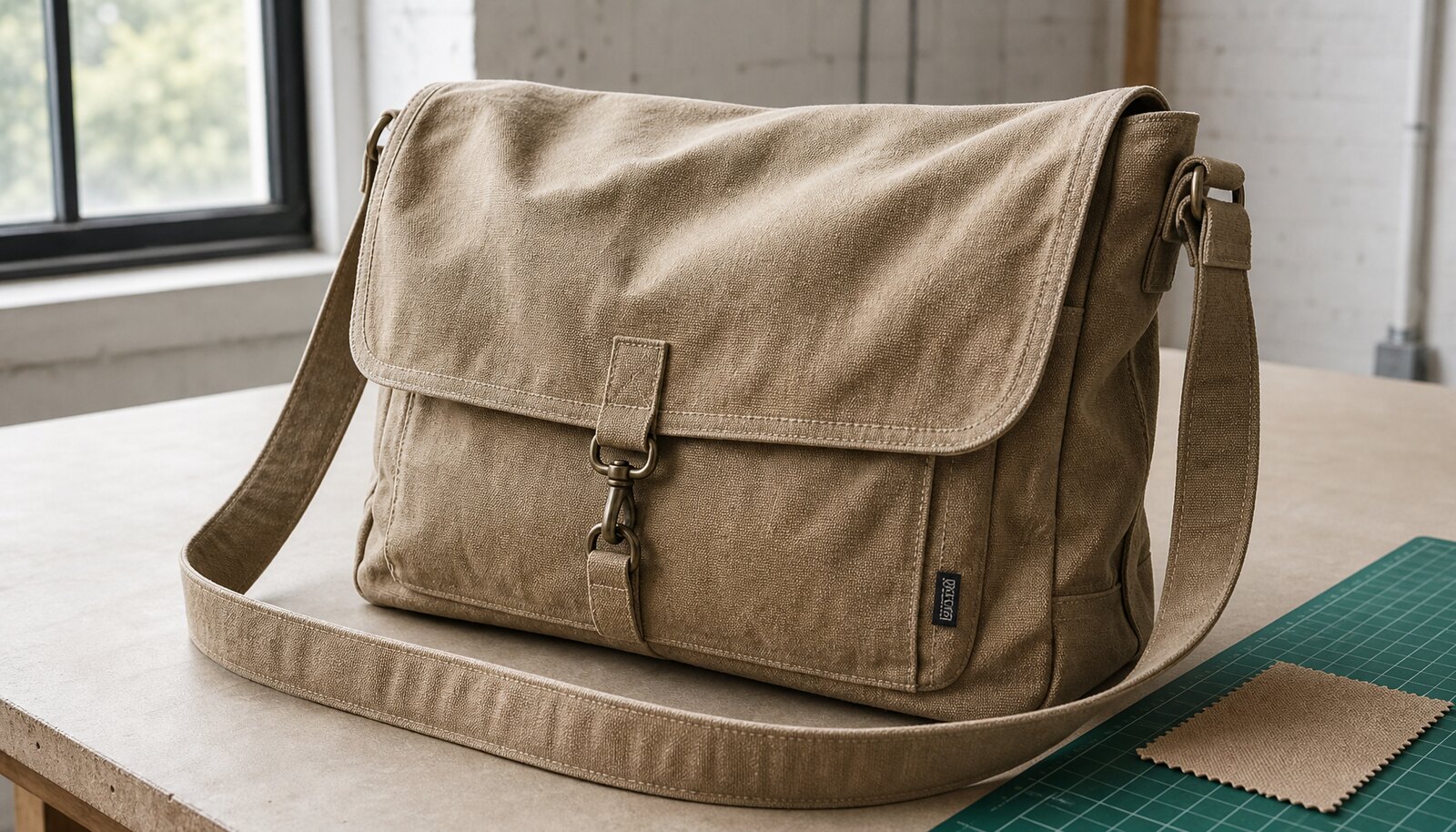
Why winery buyers source canvas messenger bags differently
Canvas messenger bags for boutique wineries sit at the intersection of retail packaging, branded merchandise, and practical carry gear. A tasting-room gift bag, a staff utility bag, and a resale item can all share a similar silhouette, but the buying logic is different. A boutique winery may want the bag to feel like a gift at first touch, then survive repeated use in the cellar or at events. That means the buyer has to define the use case before comparing quotes, or the factory will optimize for appearance alone.
The product also works in a very visible environment. It may sit beside wine accessories at the point of sale, be folded into a bottle gift set, or be handed over directly in front of customers. In those moments, the bag is part of the brand story, not just a carrier. A thin canvas, crooked print, or badly packed carton can reduce the perceived value of the wine program itself. For that reason, procurement should balance look, structure, cost, and repeatability instead of chasing the lowest fabric price.
There is also a practical logistics angle. Winery orders often mix seasons, campaigns, and channel needs, so the same style may be reordered in small runs over time. That makes lot consistency more important than for a one-off event bag. If the same SKU is used for spring club shipments, summer tastings, and holiday bundles, the supplier needs to repeat the approved fabric, decoration, and packing spec without improvisation. The sourcing brief should therefore read like a product control document, not a marketing note.
- Retail resale needs cleaner shape retention, tighter finishing, and stable color across repeat orders.
- Tasting-room gifts need carton presentation that looks intentional when opened in front of customers.
- Staff carry bags need seam strength, usable pockets, and a strap that does not twist under load.
- Seasonal promotions need flexible MOQ, predictable lead time, and a spec that can be reordered without redesign.
Define the bag around the contents, not the logo
A winery buyer gets better quotes when the bag is described by what it must carry. If the bag is only for brochures and tasting notes, the key dimension is flat interior space. If it needs to hold a bottle, inserts, or a tasting kit, then gusset depth, closure style, and weight distribution become more important than the logo size. If the bag is for staff, pocket layout and comfort during repeated carry matter more than the front-panel visual. These are different products wearing the same silhouette.
The cleanest way to keep the RFQ honest is to describe the packed contents in plain terms. State the bottle size, brochure count, notebook dimensions, or accessory set that must fit without bulging. If the bag is supposed to stand upright on a counter, say so. If it is supposed to fold flat for distribution, say that too. This prevents the supplier from quoting a generic messenger bag that looks acceptable in a render but fails in the actual tasting-room workflow.
Buyer-side fit checks should be simple enough to repeat. Put the real contents in a sample, close the bag, and observe whether the opening distorts, whether the strap tilts the body, and whether the bag still looks retail-ready when loaded. A flat cosmetic pouch may not work in a bottle program, and a deep gusset may look bulky if the bag is sold as a gift item. Matching the construction to the contents keeps the program from drifting toward a compromise shape that satisfies no one.
- Describe the contents by weight, shape, and quantity rather than by category alone.
- State whether the bag must stand upright, fold flat, or keep a structured retail shape.
- Specify whether the closure is functional transit protection or mostly visual finishing.
- Test the sample with the actual bottle diameter, bottle height, or kit dimensions you plan to pack.
Set the canvas weight and finish before you discuss print
Canvas weight is the most useful first filter because it changes the bag’s hand-feel, seam behavior, perceived value, and freight weight at the same time. For most boutique winery programs, 12 oz to 14 oz is the practical range. Twelve-ounce canvas works when the bag should feel softer, the content load is light, and the budget needs to stay controlled. Fourteen-ounce canvas is usually the best middle point for retail and gift use because it provides enough body to read as substantial without turning the bag into a rigid box. Sixteen-ounce canvas is a premium option, but it can push the product toward a stiffer profile and may raise sewing difficulty.
The buyer should not accept a quote that says only canvas. Ask for the exact oz or GSM, the measurement method, and the tolerance band from the approved swatch. If the supplier proposes washed canvas, ask what the wash is meant to accomplish: softer feel, reduced shrinkage, or a more relaxed look. If the fabric is raw, expect a crisper appearance but also more dimensional drift. The important point is that the approved sample should reflect the same finish as production, because finishing can change appearance more than the weave itself.
There is also a cost-to-value tradeoff that matters at scale. Heavier canvas can make a bag feel more premium in the hand, but it does not automatically make it more useful. If the bag is sold primarily as a gift carrier, extra body may be worth the cost. If the bag must be packed flat in cartons and distributed in volume, too much body can create bulk, shipping inefficiency, and shelf stiffness. The best choice depends on whether the winery wants softness, structure, or a stronger retail signal.
- 12 oz canvas: lighter, lower cost, and acceptable for simple promotional use.
- 14 oz canvas: balanced option for most boutique retail and tasting-room orders.
- 16 oz canvas: stronger premium signal and better body, but higher sewing load and more bulk.
- Ask for the exact swatch used for approval, not a generic fabric name or catalog image.
Use fiber content and lining to control shape and shrinkage
100% cotton remains the safest choice when the winery wants a natural texture and a classic canvas look. It prints well, especially for simple logos, line art, and solid-color branding, and it supports the tactile impression many premium buyers expect from a winery accessory. The drawback is movement. Cotton can crease more, shrink more, and show lot variation if the mill or finishing process is inconsistent. For a reorder program, the buyer should care about pre-shrunk treatment and lot traceability, not just the quoted unit price.
A cotton-poly blend can be worth considering when shape control is the bigger concern. It can reduce wrinkling, improve packing consistency, and help the bag retain a cleaner retail profile when it is filled with inserts or accessories. The tradeoff is brand positioning and print behavior. Some wineries want a fully natural story and may not want blend content in a front-of-house item. Others value the fact that a blend can keep the bag looking neat after being folded, shipped, and displayed. The right choice depends on where the bag will be seen and how much structural consistency the channel demands.
Lining and interfacing can also change the product more than many buyers expect. A lightly lined bag can help a premium gift program hold shape and protect printed inserts, but it adds a sewing step and can introduce twist or bulk if the lining is not anchored well. If you choose lining, ask the factory how the corners, pocket mouths, and strap zones are secured. A lined bag with weak anchoring can feel luxurious at first glance and then fail in daily use because the hidden structure does not match the visible finish.
- 100% cotton: best fit for a natural brand story and classic canvas appearance.
- Cotton-poly blend: better shape retention and lower wrinkle visibility.
- Pre-shrunk fabric: reduces surprise after humidity changes, storage, or handling.
- Lining or interfacing: useful for retail presentation, but only if anchor points are reinforced properly.
Specify straps, seams, and hardware as load-bearing parts
A messenger bag usually fails at the load-transfer points, not at the logo. That is why strap anchors, top seams, pocket openings, and closure points deserve more attention than the decoration area. If the bag will ever carry a bottle, notebook, accessory bundle, or staff tool kit, the supplier should state the stitch density on the load-bearing zones and show exactly where bartacks or reinforcement patches sit. A neat front panel does not mean the bag is durable if the anchoring is thin or the seam allowance is too narrow.
For winery programs, a sensible buyer-side target is at least 10 kg static load for light retail use and around 15 kg when the bag is expected to carry heavier contents or see repeated staff use. That target should be written into the approval file so the sample is tested against an actual requirement, not a vague comfort judgment. It also helps the factory decide whether the strap webbing, thread, and reinforcement need to be upgraded. The goal is not to overbuild every bag; it is to make sure the construction matches the intended load and use frequency.
Hardware deserves the same discipline. Magnetic snaps, zippers, rings, and buckles should sit flat, close cleanly, and avoid sharp edges that can scuff the fabric or snag during packing. If the warehouse, tasting room, or distribution route includes humid storage conditions, ask for rust-resistant hardware and confirm the plating or finish. Metal quality is easy to overlook in samples because it looks fine in a controlled room, then shows burrs, staining, or finish wear after transport and handling.
- Ask for 6-8 stitches per inch on body seams and 8-10 stitches per inch at stress points.
- Require bartacks or equivalent reinforcement at strap ends and load-transfer locations.
- Reject sharp edges, visible coating flaws, or hardware that marks the fabric in transit.
- Record the static load target in the approval file so later production can be compared against it.
Choose decoration for durability, not just appearance
Screen print is usually the most efficient option when the winery logo is simple and the color count is limited. On canvas messenger bags, it can give a clean face, predictable repeatability, and reasonable unit economics across medium runs. The main procurement risk is not the method itself but the match between ink, fabric, and cure process. A print that looks crisp on the sample board can strike through, feel tacky, or crack if the fabric finish changes or if the curing process is not matched to the canvas weight.
Embroidery is often chosen when the winery wants a more premium finish for a smaller crest or badge-style logo. It can look excellent on heavier canvas, but it needs the right stabilizer and placement to avoid puckering. On lighter fabric, dense embroidery can distort the panel and create a pulled appearance. Heat transfer can work for small runs or more complex artwork, but it should be treated as a niche option rather than the default for a bag that will be folded, handled, and repacked many times. For durable retail use, buyers should always test decoration on the final canvas, not on a substitute fabric or blank board.
The most useful evaluation is a simple handling test. Fold the bag the way it will be packed, rub the printed area lightly after cure, and inspect whether the logo cracks, smears, or leaves residue on adjacent fabric. If the mark sits on a seam or pocket edge, check whether the placement distorts when the bag is filled. The best decoration method is the one that survives actual use with the least rework risk, not the one that looks most impressive in a flat artwork proof.
- Screen print: best for simple logos, solid fills, and better cost control.
- Embroidery: premium effect, but test for puckering and distortion on the exact canvas.
- Heat transfer: useful for short runs or complex art, but less forgiving under repeated handling.
- Woven label or sewn label branding: useful when the winery wants subtle branding and low surface risk.
Compare supplier routes by landed value, not quote style
The cleanest-looking quote is not always the best sourcing choice. A direct factory often gives the strongest ex-works price, but the buyer must control sampling, artwork changes, and component decisions closely. A trading company can simplify communication across multiple SKUs and colors, but the margin structure may be embedded in the line items. A domestic decorator is often the fastest option for smaller runs and short lead times, though the fabric options and unit economics may be less competitive on larger orders. For boutique wineries, the right supplier route depends on whether the bag is a one-off promotion, a seasonal launch, or a repeat retail SKU.
When comparing suppliers, line up the same approved spec and separate the cost items that actually move landed value. Fabric, sewing, decoration, hardware, packing, and freight assumptions should be visible as distinct line items. If one supplier includes tissue wrap, barcode labels, and a zipper pocket while another quotes a plain open-top bag, the unit price is not comparable. The useful question is which supplier can hold the approved sample across repeat production without drifting on canvas weight, print placement, or carton size.
One practical tip for procurement teams is to ask each supplier which element of the spec is most likely to affect lead time. That answer often reveals where risk sits: a custom zipper, a specialty webbing color, a new print screen, or a different carton format. Once the long-lead item is known, the buyer can decide whether to standardize it, stock it, or accept a longer replenishment cycle. That is more valuable than a generic promise that the order can be done quickly.
- Use the same sample spec before asking multiple suppliers to quote.
- Separate fabric, decoration, packing, and freight assumptions so the numbers are comparable.
- Check whether the sample fee is deductible from the bulk order or treated as a sunk cost.
- Ask which component has the longest lead time, because it usually sets the schedule.
Use the sample stage to prove the bag works in winery conditions
A good sample is not simply a preview of the design. It is evidence that the final production method can make the bag at the agreed quality level. The sample should use the final canvas, final strap webbing, final hardware, and final decoration process. If the factory changes any of those after approval, the sample stops being a reliable control point. That matters in a winery program because the bag is often judged at close range, where seam alignment, print finish, and fold consistency are easy to see.
The sample should also be tested the way the bag will actually be used. Put in the real bottle, brochure set, accessory kit, or staff items the bag is meant to carry. Check whether the top opening collapses, whether the strap twists, whether the closure still works when loaded, and whether the printed face rubs against itself when folded. If the bag is intended for a bottle bundle, test the exact bottle diameter and neck height, not a generic bottle shape. Real use cases expose the mistakes that a flat visual review will miss.
For a repeat program, it helps to keep photo records of the approved sample. Save front, back, inside, seam, and hardware images together with the artwork version, fabric lot, and packing style. That makes later reorder reviews much faster and reduces disputes when a supplier changes a detail that was not obvious in a text-only spec. A sample library may feel basic, but it is one of the most effective controls for a small B2B merchandising program.
- Approve a pre-production sample made from the final fabric lot whenever possible.
- Measure critical dimensions on the sample and record them as the reference spec.
- Check logo placement against seam lines, pocket edges, and fold lines.
- Keep photos of the approved sample linked to the SKU, artwork version, and packing method.
QC thresholds should be measurable and easy to enforce
Quality control for canvas messenger bags should focus on the defects buyers can actually see, feel, and receive complaints about. The common issues are uneven stitching, weak reinforcement, inconsistent dimensions, print misregistration, and hardware that scratches or rusts. A useful QC sheet gives a clear pass-fail rule for each of those issues. That is far better than broad phrases such as good workmanship, because those words mean different things to different factories. For a winery buyer, the standard should be specific enough that an inspector can check it quickly without second-guessing.
Start with size, stitching, and decoration. A practical threshold is no open seams, no skipped stitches on load-bearing sections, and no loose exterior threads longer than 1 cm. Keep the print aligned to the approved placement, with no obvious bleeding or tackiness after cure. If you want to use AQL, do it as a layer on top of these basics, not as a replacement for them. AQL tells you how many defects to accept in a lot; it does not define which defects matter most for a retail bag that needs to look consistent in front of customers.
It also helps to define what failure looks like in context. A minor fabric shadow on an interior panel may be acceptable if it never shows in use. A crooked pocket or a distorted logo on the front panel is not. A loose thread at the seam can be trimmed; a pulled strap anchor cannot. This kind of hierarchy makes inspection faster and prevents the factory from arguing that every issue is equally small. The best QC plan is practical, visible, and tied to the actual customer experience.
- Set a size tolerance and measure it on the first and last bags in the lot.
- Reject any open seam, broken bartack, or visible gap at the strap anchor.
- Test for color transfer after cure with a dry white cloth on the printed area.
- Check hardware finish under direct light, not only warehouse lighting, to catch burrs and coating defects.
Packing, cartons, and reorders affect margin as much as fabric does
Canvas messenger bags are bulky enough that packing choices can change freight, warehouse labor, and even the perceived quality of the product. A basic polybag is usually enough for wholesale shipments, while retail-ready programs may need tissue, barcode labels, inserts, or a cleaner fold direction. The more presentation work you add, the more important it becomes to standardize the fold and pack order. Otherwise, the first cartons that arrive at the winery look different from later cartons, and that inconsistency can undermine shelf presentation or gift-set assembly.
Carton planning should be confirmed before mass production begins, not after the sample is approved. Ask for carton dimensions, gross weight, and pack count in the quote. If the warehouse receives by hand, keeping gross weight under 15 kg makes handling easier and reduces the chance of repacking. If the shipment will be palletized, ask the supplier to confirm pallet height, stack pattern, and whether the carton size is stable enough for repeat orders. Reorders are easier when the same carton format can be received, counted, and replenished without changing the warehouse workflow.
This is also where many margin surprises show up. A bag that looks economical on paper can become less attractive if the folding method adds labor, the carton is too large for efficient palletizing, or the packing includes materials the buyer did not intend to pay for. If the program is seasonal, the buyer should decide early whether presentation packaging is a brand requirement or a convenience. That distinction helps separate real merchandising value from avoidable cost.
- Use a consistent fold direction so every bag presents the same way when cartons are opened.
- Polybag each unit when the bags will cross a distribution center or retailer receiving dock.
- Add tissue or inserts only when shelf presentation justifies the extra labor and freight volume.
- Keep carton dimensions stable across reorders so warehouse receiving does not need to rework the pack.
Specification comparison for buyers
| Decision | Practical threshold | Best fit for winery buyers | Total-value tradeoff / risk check |
|---|---|---|---|
| Canvas weight | 12 oz to 14 oz covers most retail and tasting-room programs; 16 oz is worth considering when the bag must feel premium and hold shape | Choose 12 oz for lighter promo use, 14 oz for core boutique retail, and 16 oz when shelf presence and structure matter more than softness | Ask the supplier to state oz or GSM, the measuring method, and a tolerance band from the approved swatch. Heavier fabric can improve perceived value, but it may slow sewing, increase unit cost, and make fold-and-pack labor less efficient. Compare not only fabric price but also stitchability and freight volume because dense canvas can add weight without adding much usable function |
| Fabric weight tolerance | A working buyer-side band is about ±5% from the approved sample weight, provided the same weave and finish are used | Useful for repeat orders that must match an existing retail program or seasonal packaging line | A tolerance number without a measurement method is weak sourcing control. Ask whether the factory weighs fabric per square meter, per yard, or by mill certificate, and confirm whether the sample was measured before or after washing/finishing. If lots drift outside the band, the bag may still look acceptable in photos but feel noticeably thinner or stiffer on shelf |
| Fabric construction | 100% cotton for a natural hand-feel and classic canvas appearance; cotton-poly blend when crease control and dimensional stability matter more | Cotton is usually the safer brand fit for premium tasting-room presentation. Blends fit programs where shape retention and lower wrinkle visibility matter | Do not compare fiber content by name alone. Ask for the exact ratio, yarn count if available, and finishing method. Blends can reduce shrink risk but may change print softness, color absorption, and drape. The right choice depends on whether the bag is mainly a retail item, a gift insert, or a utility carrier |
| Stitch density | 6-8 stitches per inch on body seams; 8-10 stitches per inch at load-bearing seams and pocket openings | A practical baseline for bags that carry brochures, accessories, or a single bottle in light retail use | Stitch density should be verified on the approved sample and first production lot, not assumed from the quote. Higher density improves seam appearance and may reduce open-thread risk, but if too tight on heavy canvas it can create puckering and slower production. Ask where bartacks are used and whether seam allowance is wide enough to survive repeated handling |
| Strap load target | At least 10 kg static load for light retail use; 15 kg when bottles, staff tools, or heavier kits are expected | Use the lower target for giveaway bags and the higher target for resale or staff carry programs | A quoted load target only matters if the factory can describe the test method and failure point. Request the sample test setup, whether the load is hung or carried, how long it is held, and what constitutes rejection. A bag can pass a visual check and still fail at strap anchoring if reinforcement is underspecified |
| Lining and structure | Unlined for low-cost giveaways; light lining or interfacing when the bag must keep a cleaner retail shape | Lining helps when the bag is sold on shelf, used as a gift bag, or needs to hold inserts without sagging | A lined bag can hide weak workmanship if the buyer does not inspect the seam anchoring. Ask how the lining is attached at corners, strap points, and pocket openings. More structure usually improves presentation, but it also increases sewing steps, inspection points, and rework risk if the lining twists |
| Decoration method | Screen print for simple logos; embroidery for small premium marks; woven or sewn label for subtle branding | Screen print works for most winery logos. Embroidery suits premium marks where texture matters and the logo is small | Decoration cost alone is not a good decision rule. Compare rub resistance, cure time, puckering risk, and the chance of rework on the actual canvas weight. On natural fabrics, overly heavy ink or dense embroidery can change the drape and make the bag look overbuilt for the brand position |
| Supplier route | Direct factory for stable repeats at 500+ pcs; trading company for mixed SKUs or one PO; domestic decorator for urgent small runs | Pick the route that matches volume, speed, and change-control needs rather than only the lowest ex-works price | The real comparison is landed value: sample control, freight, packing, revision risk, and repeatability. A low quote can become expensive if the supplier cannot hold the same fabric lot, packing count, or carton size across reorders |
| Carton size | Standardize carton dimensions and keep gross weight under 15 kg if the warehouse receives by hand | Useful for tasting-room replenishment, retail distribution, and e-commerce receiving | Oversized cartons increase handling time and can create freight surprises. Ask for carton dimensions before sample approval, then confirm fold direction and pack count so the factory packs to the warehouse process, not just to factory convenience |
Buyer checklist before sampling
- Define the use case before asking for a price: retail resale, tasting-room gift, staff carry, seasonal event giveaway, or bottle bundle packaging.
- Specify the exact fabric target in oz or GSM, the fiber content, and whether the canvas is raw, washed, or pre-shrunk.
- Lock the bag dimensions, gusset depth, pocket layout, closure style, and the contents it must hold without distortion.
- Request the logo method, artwork size, allowed color count, and a durability expectation for folding, rubbing, and repeated handling.
- Approve a sample made from the final fabric, strap webbing, lining, hardware, and closure, not a photo sample or a blank lookalike.
- Set measurable acceptance criteria for stitching, seam symmetry, fabric weight, color variation, print registration, and surface defects.
- Confirm packing details early: inner polybag, tissue, barcode label, fold direction, carton count, carton dimensions, and gross weight.
- Ask for a line-item quote that separates fabric, sewing, decoration, hardware, packing, and freight terms so suppliers can be compared like-for-like.
Factory quote questions to send
- What is the exact canvas specification in oz or GSM, and what tolerance do you hold from lot to lot?
- Is the fabric raw, washed, or pre-shrunk, and what shrinkage should we expect after handling or storage?
- What is the fiber composition, and can you confirm the same ratio on the actual production lot?
- What stitch density do you use on body seams, strap anchors, and pocket edges, and where do you place bartacks or reinforcement patches?
- What static load target do you test for, and what failure point would cause a bag to be rejected?
- Which decoration method is included in the quote, how many colors are included, and what setup charges apply for screens or embroidery digitizing?
- What sample stages do you offer: blank sample, decorated sample, and pre-production sample?
- What parts of the bag are stock components, and which parts would create lead time if we changed them later?
- How are bags packed per inner polybag and per carton, and what are the final carton dimensions and gross weight?
- Which quote terms are included: EXW, FOB, or delivered terms, and what cost items are excluded?
Quality-control points to confirm
- Fabric weight should match the approved swatch within the agreed tolerance band, and the factory should record the lot used for production.
- Critical dimensions should stay within a practical tolerance of about +/-0.5 cm on width and height, with no visible skew that changes the bag shape.
- Load-bearing seams should show no skipped stitches, no open holes, and no loose threads longer than 1 cm on the exterior.
- Strap anchors and handle joins should be reinforced symmetrically, with bartacks or equivalent reinforcement placed where the load actually transfers.
- A retail bag should hold the agreed static load target without seam opening, strap slippage, or hardware pullout.
- Printed artwork should be aligned to the approved placement, with no obvious bleed, smearing, or misregistration beyond 2 mm on the face of the bag.
- After cure and 24 hours of rest, the print should not feel tacky, and a dry rub test should not leave visible color transfer on a white cloth.
- Metal hardware should have a clean finish, no burrs, no sharp edges, and no rust specks or coating defects.
- Interior and exterior fabric should be free from oil stains, dye patches, broken weave areas, and mismatched panels that are visible in retail light.
- Carton count, carton size, and fold direction should match the approved packing spec so the warehouse can receive the product without rework.