Start With the Bakery Use Case
A canvas messenger bag for an artisan bakery can be a staff work bag, a retail merchandise item, a delivery handoff bag, a corporate gift carrier, or a loyalty-program product. Each use drives a different specification. A staff bag may need stronger strap attachment and an easy-clean darker color. A retail bag needs cleaner stitching, a good front-panel logo, and better presentation packing. A wholesale pastry delivery bag may need a wider gusset and lower unit cost because it is handled roughly.
The compliance mistake is treating every canvas bag as a simple promotional item. Messenger bags have more stress points than flat totes: flap corners, shoulder strap ends, pocket openings, hardware loops, and the top edge all carry wear. In the RFQ, describe the actual load and display channel. For example, a bakery retail buyer may specify: designed to carry one tablet, one notebook, a water bottle, and small baked goods, not hot trays or greasy food contact. That sentence prevents overbuilding the product and also prevents a supplier from quoting a thin promotional style that will not survive retail use.
- For staff use, prioritize strap strength, darker colors, and washable appearance.
- For retail sale, prioritize front-flap appearance, label finishing, and consistent carton packing.
- For gift programs, prioritize presentation, barcode labeling, and low crease marks.
- For distributor promotions, prioritize repeatable MOQ, stable unit cost, and simple artwork.
Fabric Weight and Canvas Construction
Fabric weight is the first serious cost and quality decision. Many messenger bag quotes look cheaper because the supplier prices 8 oz or light 10 oz canvas while another supplier prices 12 oz or 14 oz canvas. For bakery merchandise, 10 oz canvas can work for lightweight promotional use, but it may collapse when displayed empty. A 12 oz canvas usually gives a better balance for retail messenger bags. A 14 oz or 16 oz canvas feels more substantial, but it increases sewing difficulty, carton weight, and freight cost.
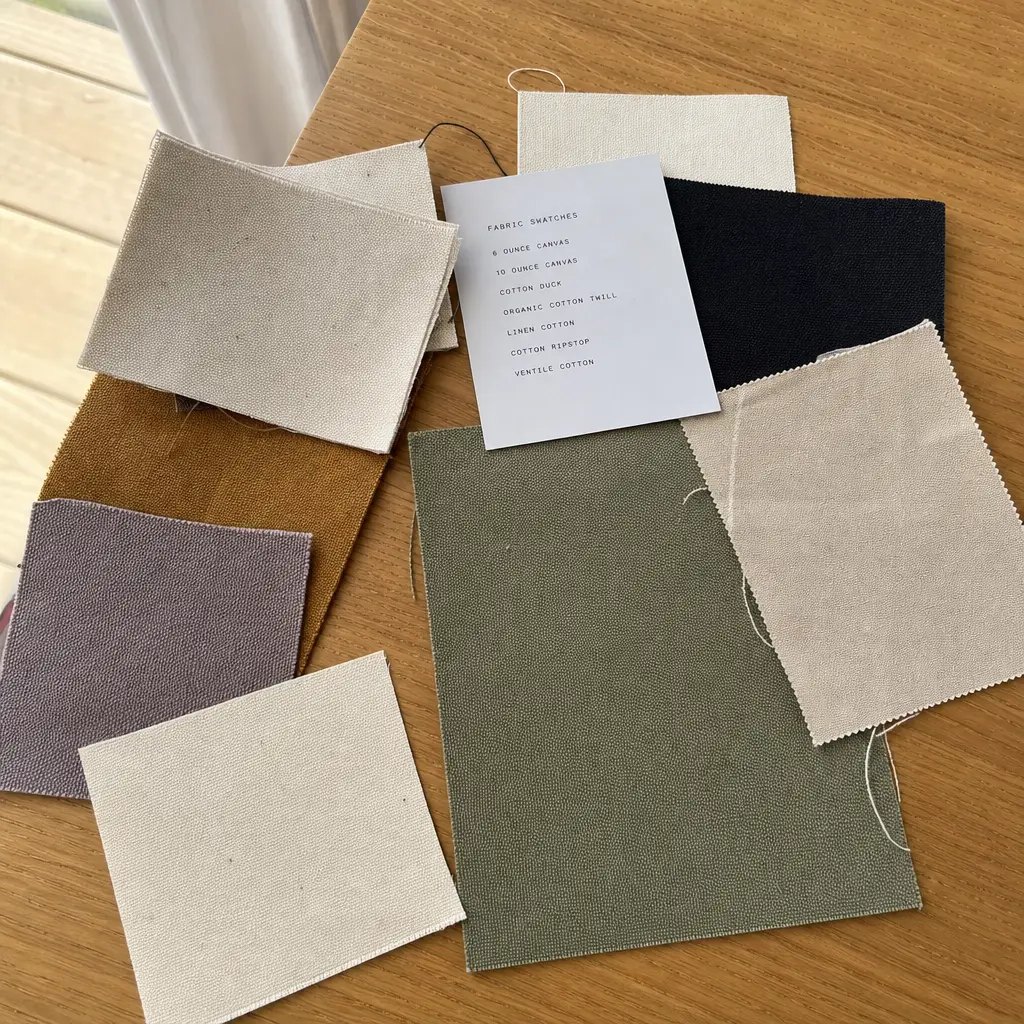
Buyers should specify whether the weight is in GSM or ounces and whether it is measured before or after finishing. Natural canvas, dyed canvas, washed canvas, and recycled canvas can all feel different even at the same nominal weight. A tight weave looks cleaner under screen print than a loose weave. If the bakery brand uses a minimalist logo or fine typography, the fabric surface matters as much as the weight. Request a fabric swatch card with weight, color, composition, and finish written on it, then keep the approved swatch with the pre-production sample.
- 8 oz to 10 oz canvas: lower cost, lighter feel, better for event giveaways than paid retail.
- 12 oz canvas: common balanced choice for branded bakery messenger bags.
- 14 oz to 16 oz canvas: premium structure, higher sewing and freight cost, better for durable retail lines.
- Natural canvas: good bakery look but shade and speck variation must be accepted within limits.
- Dyed canvas: cleaner color control target, but crocking and colorfastness need attention.
Supplier Route and Compliance Evidence
The right supplier route depends on how much control the buyer needs. A direct cut-and-sew factory is usually the best route for repeat retail programs because the factory controls pattern, fabric, sewing, printing coordination, and packing. A trading company can be useful when the buyer is consolidating messenger bags with other bakery packaging or textile items, but the buyer should know which parts are subcontracted. A stock wholesaler is fast, but the buyer gives up control over fabric lot, trim consistency, and future repeat matching.
Supplier compliance is not only about certificates. For canvas messenger bags, practical evidence includes production photos, fabric purchase records, print strike-offs, inline QC records, carton drop experience, and a clear approval chain. If the product is sold through retailers, ask whether the supplier can follow barcode labeling, carton marks, master carton weight limits, and restricted substance requirements. If organic or recycled claims are used, the document scope must cover the material and the supplier role; a random certificate from a yarn mill does not automatically validate the finished bag.
- Request factory profile, export experience, product category photos, and machine capability.
- Confirm whether printing, embroidery, washing, dyeing, or metal hardware finishing is outsourced.
- Match certificate scope to the claim printed on packaging or product hangtags.
- For retail buyers, require packing photos and carton label samples before mass production.
- For importers, record the supplier name, address, Incoterm, payment terms, and inspection access in the purchase order.
Print Method and Brand Placement
Bakery branding often uses warm natural colors, small serif type, wheat graphics, oven icons, or store-location marks. These designs do not all print the same way on canvas. Screen printing is normally the most stable and economical choice for solid logos and limited colors. Heat transfer handles gradients and detail but can feel less integrated with a natural canvas surface. Embroidery gives a premium look on thicker canvas, but small lettering can close up and the reverse side may need backing. Woven labels are useful when the front panel should stay clean or when multiple stores share one bag style.
The front flap is the most visible position, but it is also a moving part. Ink must flex when the flap opens and closes. A large print too close to the flap edge can distort after sewing, especially if the flap has rounded corners. Logo placement should be measured from the finished seam or flap edge, not from cut fabric. For a bakery retail bag, a practical tolerance might be logo center within ±5 mm to ±8 mm on the front flap, depending on size and seam variation. More exact tolerance may raise inspection rejects.
- Screen print: best for one to four solid colors and repeat bakery logos.
- Pigment print: softer hand feel, but color on dark canvas may need testing.
- Heat transfer: useful for photo detail or short runs, but test cracking on flap bends.
- Embroidery: premium appearance, better for simple marks than small ingredient text.
- Woven label: consistent branding across colors and easier repeat orders.
MOQ Logic and Cost Drivers
MOQ is not one number. It can be controlled by fabric color, fabric purchase roll, print setup, label production, strap webbing color, hardware finish, and packing version. A supplier may accept 300 pieces for a stock natural canvas messenger bag with one-color print, but require 1,000 pieces or more for custom dyed canvas with a woven label and special buckle. Buyers comparing quotes should force suppliers to explain what creates the MOQ instead of only negotiating the final number.
The largest cost drivers are fabric weight, bag size, sewing complexity, number of pockets, flap construction, strap type, print coverage, trim customization, and packing. A wide gusset uses more fabric and makes sewing slower. A lined messenger bag feels better but adds cutting and sewing steps. Adjustable cotton webbing is more comfortable but costs more than fixed self-fabric straps. If the target retail price is tight, reduce complexity before reducing fabric too far; a flimsy messenger bag can damage the bakery brand more than a simpler bag with honest construction.
- Lower MOQ route: natural canvas, supplier base pattern, one-color screen print, standard strap, bulk carton packing.
- Mid-range route: 12 oz canvas, custom flap logo, inner pocket, woven side label, individual packing.
- Higher MOQ route: dyed custom color, custom webbing, metal hardware, multiple prints, retail barcode packing.
- Hidden cost item: sample revisions when artwork, strap length, or pocket layout changes after first approval.
- Quote comparison tip: request the same specification from each supplier before judging unit price.
Sample Approval That Prevents Bulk Problems
A proper sample process saves more money than aggressive price negotiation. The first sample should answer construction questions: size, shape, strap drop, flap coverage, pocket usability, and how the bag sits when worn. A print strike-off should be approved separately if color accuracy matters. The pre-production sample should be made with bulk-intended fabric, trims, print method, label, and packing. Once approved, one sealed sample should stay with the factory and one with the buyer or inspection team.
Do not approve a sample only from photos when the order is retail-facing or when the bag has a new pattern. Photos hide canvas stiffness, strap comfort, and print hand feel. If timing forces remote approval, require measurement photos with a ruler, close-ups of strap attachment, inside seams, flap corners, label position, and folded packing. The buyer should also test real use: put expected items inside, carry it over the shoulder, open and close the flap repeatedly, and see whether the print area creases.
- Approve fabric swatch before approving bulk purchase.
- Approve artwork proof with exact print size and placement.
- Approve fit sample for size, strap, pocket, flap, and carrying comfort.
- Approve pre-production sample using bulk materials and final branding.
- Keep sealed reference samples for factory production and third-party inspection.
QC Thresholds for Messenger Bag Construction
Messenger bags need more load testing than basic flat totes. The strap is the main failure point, followed by side seams, flap stitching, pocket openings, and hardware loops. A buyer can define simple acceptance criteria without overcomplicating the order: no open seams, no skipped stitches longer than a defined limit, no broken bartacks, no loose strap ends, no sharp hardware, and no visible oil stains on natural canvas. For retail-grade bags, front-panel appearance should be stricter than inside seams.
Measurement control also matters. A bag that is 2 cm shorter than approved may not fit a tablet or catalog. A strap that is too short may not work over winter clothing. The QC plan should list sample size and inspection level if using a third-party inspector, but even a factory internal report should show actual measurements, not only pass or fail. For bakery buyers, smell and cleanliness are worth adding: canvas bags should not arrive with strong chemical odor, mildew smell, dust, or food-risk contamination from poor storage.
- Body size: commonly controlled around ±1 cm unless otherwise approved.
- Print placement: measure from finished seam or flap edge, not from raw panel.
- Stitching: no broken seams, major skipped stitches, or loose bartacks at strap points.
- Strap pull: test with a realistic loaded bag, not only an empty appearance check.
- Appearance: reject oil marks, mildew smell, heavy slubs on logo area, and visible color bleeding.
Packing and Retail Presentation
Packing determines how the bag looks when the retailer or bakery opens the carton. Canvas messenger bags can crease badly if the flap is folded across the logo or if heavy cartons are stacked for weeks. The packing method should be approved with photos: flat folded, strap tucked inside, flap protected, logo area facing a safe direction, and carton quantity controlled to avoid compression. If the bag is for retail sale, individual packing may include a paper belly band, hangtag, barcode sticker, or recyclable bag according to the retailer requirement.
Packing cost should be quoted separately when comparing suppliers. A low unit price with poor bulk packing can create repacking labor, retail rejects, and presentation problems. Carton data also affects freight. A 14 oz canvas messenger bag with hardware may produce a much heavier carton than expected, and some retailers restrict carton gross weight. Buyers should request estimated carton dimensions, pieces per carton, net weight, gross weight, carton marks, and palletization guidance if shipping to a distribution center.
- Bulk promotional packing: lowest cost, suitable when bags are handed out or repacked locally.
- Individual polybag: protects from dust but may conflict with plastic-reduction policies.
- Paper belly band: better retail presentation but needs accurate sizing and print approval.
- Hangtag and barcode: required for many retail programs; test barcode scan before shipment.
- Carton protection: use clean liners or moisture control when shipping natural canvas in humid seasons.
Lead Time and Schedule Risk
Lead time is often underestimated because buyers count only sewing days. A realistic schedule includes artwork confirmation, fabric and trim sourcing, sample making, sample transit, buyer review, sample revision if needed, bulk fabric purchase, printing, cutting, sewing, finishing, packing, inspection, and freight handover. For a straightforward natural canvas messenger bag with one-color print, the production path is shorter. For dyed fabric, custom labels, embroidery, special packing, or retailer compliance documents, the timeline extends.
Schedule risk usually comes from late artwork, unclear approvals, changed packing, or supplier overbooking before holidays. A buyer can reduce risk by locking the sample before fabric is purchased, approving carton labels early, and avoiding last-minute color changes. If the bakery launch date is fixed, split the project into must-have and optional features. For example, the first shipment can use a woven side label and one-color flap print, while a more complex lining or custom hardware can wait for the repeat order.
- Artwork and proofing: plan time for Pantone decisions and placement approval.
- Sampling: allow extra time if the first pattern changes strap drop, flap size, or pocket layout.
- Material procurement: dyed canvas and custom trims add risk compared with natural stock canvas.
- Bulk printing: schedule before sewing when panels are printed flat.
- Inspection and booking: reserve time after packing, not during the final sewing days.
Quote Data for Landed-Cost Comparison
A clean supplier quote should let procurement compare landed cost, not just ex-factory unit price. The RFQ should request unit price by quantity tier, Incoterm, sample cost, setup charges, fabric specification, print method, label cost, packing cost, carton dimensions, gross weight, production lead time, payment terms, and validity date. Without carton data and packing method, a buyer cannot estimate freight accurately. Without setup charges, a small order may look cheaper than it really is.
For importers and distributors, landed cost should include product cost, inland freight if applicable, export charges depending on Incoterm, international freight, duties, customs brokerage, insurance, inspection, repacking, and domestic delivery. A heavier 14 oz bag may have a stronger retail story but a higher freight burden. A stock 10 oz bag may win on cost but lose on perceived value. The best decision is not always the cheapest quote; it is the quote that matches the bakery program, margin target, compliance requirements, and repeat order plan.
- Request price breaks such as 300, 500, 1,000, 2,500, and 5,000 pieces when relevant.
- Separate one-time charges from repeat-order unit cost.
- Require estimated carton size and weight before freight comparison.
- Compare MOQ by design and color, not only total order quantity.
- Keep a quote matrix showing specification differences so cheap prices are not mistaken for equal offers.
Specification comparison for buyers
| Supplier option | What to verify | Commercial advantage | Buyer risk to control |
|---|---|---|---|
| Direct sewing factory | hardware trim card, strap-load photo, lining close-up, approved flap sample, and first-piece production photos | Better sample-to-bulk control and faster production feedback | May be weaker on export paperwork or branded packing unless checked early |
| Trading company | Factory name, production photos, trim-source proof, and who owns QC decisions | Can coordinate small mixed orders and extra services | Markup can hide real factory capability and slow defect decisions |
| Specialized bag workshop | flap shape, strap webbing, buckle, D-ring, inner pocket, zipper pocket, seam allowance, and load path | More practical for detailed construction, trims, and repeat programs | Capacity may be limited during peak seasons |
| Low-price general supplier | 10-16 oz canvas, washed canvas, rPET canvas, lining fabric, interfacing, and hardware finish | Useful for simple promotional runs with loose specs | Material downgrades, weak packing, and vague inspection scope can erase savings |
| Retail-ready supplier | shape support, strap folding, hardware protection, individual bag, carton drop expectation, and retailer hangtag placement | Can handle labels, SKU separation, carton marks, and receiving rules | Higher unit cost must be compared against reduced warehouse work |
| Compliance-focused supplier | Fabric records, labeling review, test plan, and production traceability | Safer for retail programs and repeat brand orders | Documentation claims need evidence, not only sales language |
| Local sample room plus bulk factory | Signed sample, bulk factory handoff, first-piece photos, and deviation owner | Good for complex branding before large production | Sample room quality may not match bulk line unless handoff is controlled |
Buyer checklist before sampling
- Define the bag use first: staff carry, customer retail merchandise, wholesale pastry delivery, bakery gift set, or distributor promotional program.
- Specify finished size with tolerance, including width, height, gusset depth, flap length, strap drop range, and inner pocket size.
- State fabric construction by GSM or ounce weight, such as 10 oz, 12 oz, 14 oz, or 16 oz canvas, and confirm whether weight is before or after dyeing and finishing.
- Decide whether natural, bleached, dyed, recycled, or organic cotton canvas is required, and list document requirements before requesting price.
- Provide artwork files with print size, Pantone references, placement from seams, and whether print must sit on flap, body, strap, or sewn label.
- Choose the print method based on artwork and use: screen print for solid logos, heat transfer for detailed graphics, embroidery for premium low-detail marks, or woven labels for repeat retail styles.
- Set acceptable print tolerance, color tolerance, stitch density, fabric shade tolerance, and seam strength expectations in the RFQ.
- Request the sample sequence: material swatch, print strike-off, fit sample, pre-production sample, and sealed approval sample when order value justifies it.
- Require a quote that separates bag unit cost, setup charges, sample charges, packing cost, carton data, inspection cost if included, and Incoterm.
- Confirm MOQ by fabric color, print design, size, and packing version, not only by total order quantity.
Factory quote questions to send
- What canvas weights can you run for this messenger bag shape, and are the GSM or ounce figures measured on greige fabric or finished fabric?
- What is the MOQ for natural canvas, dyed canvas, organic canvas, and recycled canvas if the same bag size is used?
- Can you quote the same bag in 10 oz, 12 oz, and 14 oz canvas with the same strap and pocket layout so we can compare cost and structure?
- Which print methods are available in-house, and which are subcontracted? Please state setup cost, minimum print quantity, and sample lead time for each.
- What is your normal tolerance for finished size, strap length, print placement, fabric shade, and logo color?
- Can you provide photos of previous messenger bag seam construction, flap corners, strap attachment, inside binding, and packed carton layout?
- What tests or internal checks do you perform for seam strength, strap pull, crocking, print adhesion, and metal hardware corrosion?
- How many pieces are packed per export carton, what are the estimated carton dimensions and gross weight, and can cartons pass basic drop handling for export?
- What is the realistic timeline for artwork proof, pre-production sample, bulk material purchase, bulk production, inspection, and shipment handover?
- Which costs are included in the quoted unit price, and which are charged separately: screens, labels, hangtags, barcodes, inner packing, carton marks, samples, and document fees?
Quality-control points to confirm
- Finished size tolerance should normally be held within about ±1 cm for body dimensions and ±1.5 cm for strap drop unless the construction is unusually heavy.
- Canvas weight should match the approved swatch; buyers should retain a sealed fabric reference because visual thickness can change after washing, dyeing, or calendaring.
- Print placement should be measured from fixed seams, not estimated by eye; front flap logos are especially visible when the bag is displayed in retail.
- Screen print should pass tape adhesion and light rub checks after curing; dark ink on natural canvas should not feel tacky or crack when the flap bends.
- Strap attachment should have reinforcement stitching or bartacks at load points; decorative stitching alone is not enough for a messenger bag used daily.
- Hardware, if used, should be checked for sharp edges, plating defects, corrosion marks, and noise that can make the product feel cheap in-store.
- Interior seams should be overlocked, bound, or cleanly folded depending on the target price; loose threads inside pockets are a common complaint.
- Cartons should be packed so front panels and printed flaps do not crease under compression; flat-folding needs a packing diagram approved before bulk.
- Random inspection should include appearance, measurement, print, sewing, packing, carton marks, barcode scan if applicable, and an actual carry-load check.