Start With Carton Planning, Not Only Bag Styling
Canvas messenger bags for artisan bakeries often start as a branding project, but procurement problems usually appear later in packing, carton cube, freight, and receiving. A bakery buyer may approve a beautiful heavy canvas sample, then discover that the folded shape is too bulky for the planned carton, the strap creates uneven compression, or the carton weight exceeds the distributor warehouse limit. For importers and retail buyers, carton planning should begin before the purchase order is locked.
The practical buying problem is simple: the bag must carry the bakery brand well, but it also has to move through factories, sea freight, warehouses, retail stores, and franchise locations without creating avoidable cost. A messenger bag has more carton variables than a flat tote because it includes a flap, strap hardware, possible gusset, and sometimes lining or pockets. Each of these features affects folded thickness and packing efficiency.
- Treat folded bag size as a controlled specification, not an afterthought.
- Compare supplier quotes using carton dimensions and CBM per 1,000 pieces.
- Avoid approving a sample without seeing how it folds into unit packing.
- Plan carton weight around the weakest receiving point in your supply chain.
Choose Canvas Weight Around Use Case and Freight
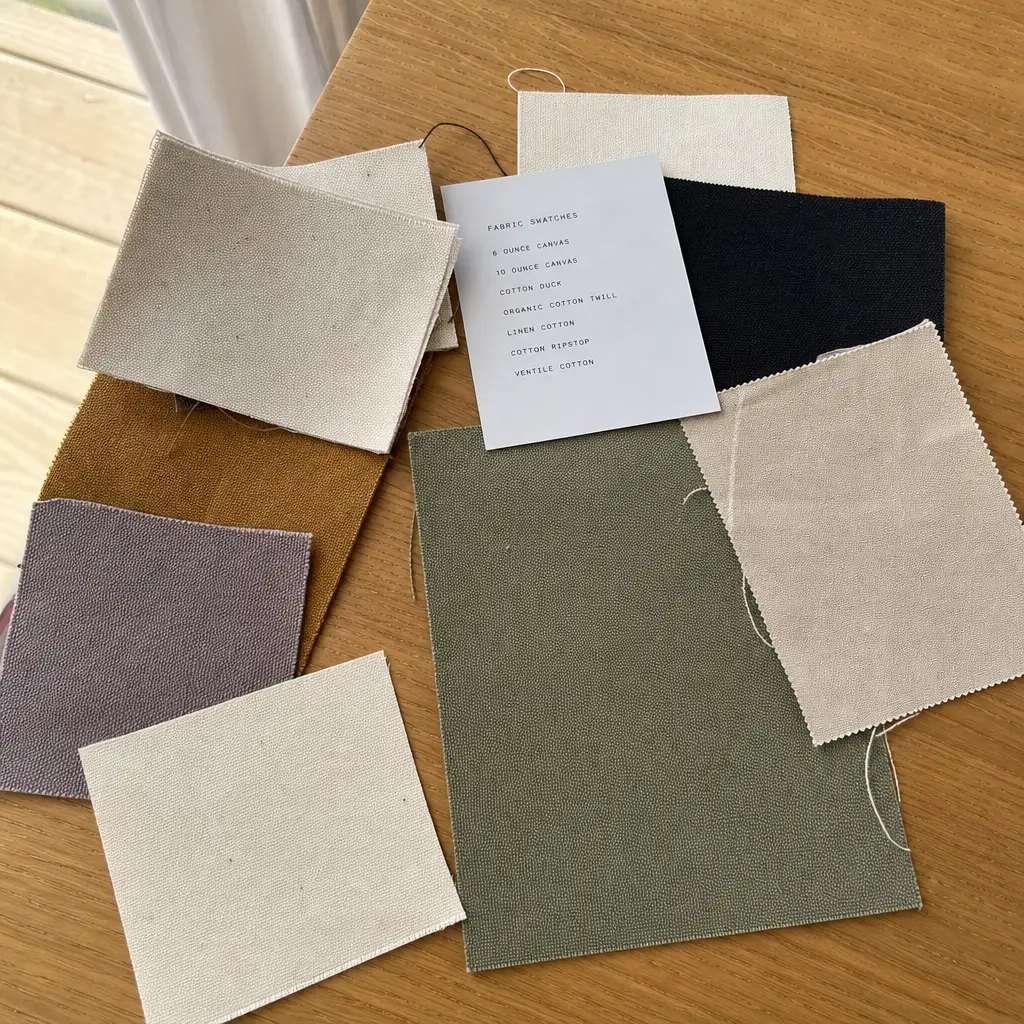
For bakery messenger bags, the common commercial range is 12 oz to 16 oz cotton canvas, roughly 407 to 542 GSM. A 10 oz canvas can work for lightweight promotional use, but it may feel too soft for a messenger profile unless the design is small and simple. An 18 oz or heavier canvas creates a premium handfeel, but the carton cube increases quickly and sewing bulk at the flap, side seams, and strap attachment becomes harder to control.
Procurement teams should not compare quotes that only say cotton canvas or heavy canvas. The quotation should state both oz and GSM, and whether the fabric is natural, dyed, washed, or treated. Natural canvas is common for bakery brands because it matches flour sacks, kraft packaging, and handmade positioning, but it can show cotton seed flecks and shade variation. If a clean retail look is required, the supplier needs to grade fabric appearance and control shade lots more tightly.
- 12 oz canvas: easier folding, lower carton cube, suitable for promotional bakery merchandise.
- 14 oz canvas: balanced handfeel for most retail bakery messenger bags.
- 16 oz canvas: stronger presence, higher freight cube, better for paid merchandise or gift programs.
- Washed canvas: softer finish but possible size variation and more complex color control.
Lock the Messenger Bag Structure Before Pricing
A messenger bag is not one standard product. The cost and carton size change with the flap depth, gusset width, strap type, pocket layout, closure, and lining. For artisan bakeries, many buyers prefer a simple flap bag with one main compartment, a modest gusset, and an adjustable cotton webbing strap. This keeps the product practical for daily use while avoiding unnecessary sewing complexity.
If the bag is for staff uniforms, market delivery, or bakery subscription packaging, the structure may need stronger load points and a wider strap. If it is a retail merchandise item, the buyer may care more about flap appearance, print position, and shelf presentation. The RFQ should describe the actual carrying purpose. A supplier can quote a low price for a thin unlined flap bag, but that quote is not comparable to a reinforced messenger bag with lining, inner pocket, and metal slider.
- State finished size as width x height x gusset, not only an approximate capacity.
- Define flap depth and whether the flap must cover the opening fully.
- Specify strap width, material, adjuster type, and reinforcement stitching.
- Clarify whether lining, inner pocket, zipper, snap, or magnetic closure is included.
Print Method Should Match Bakery Artwork and Canvas Texture
Most artisan bakery logos work well with screen printing, especially one-color or two-color artwork on natural canvas. Screen print is economical for bulk orders, durable when cured properly, and suitable for bold bakery marks, bread illustrations, and simple typography. The limitation is fine detail: rough canvas texture can break thin lines, small serif text, and delicate halftones. Buyers should review artwork at actual print size, not only on a digital proof.
Embroidery gives a premium look but adds weight, cost, and possible puckering on lighter canvas. Woven labels are useful when the bakery has multiple seasonal artworks or when a small brand tag is enough. Heat transfer and digital print can reproduce more colors, but adhesion and handfeel must be tested on the exact canvas. For carton planning, thick prints and embroidery can also affect stacking if bags are folded with the decorated panel compressed.
- Use screen print for simple bakery logos and repeatable wholesale programs.
- Use woven side labels when the same bag body supports multiple brand runs.
- Avoid tiny text under 5 mm height unless the supplier proves it on production canvas.
- Request dry rub, wet rub, and fold-line checks on printed samples.
Build MOQ Logic Around Fabric, Cutting, and Artwork
MOQ for canvas messenger bags is not only a sales number. It usually comes from fabric purchase quantity, dye lot, cutting efficiency, print setup, and sewing line changeover. A plain natural canvas messenger bag with one screen print may have a more flexible MOQ than a dyed canvas bag with lining, custom hardware, and four bakery location logos. Procurement teams should ask what is driving MOQ so they can adjust specifications intelligently.
For multi-location bakeries or distributors serving several bakery brands, the best approach is often to keep one bag body and vary only the print or label. This protects cutting efficiency and carton planning. If every location changes the bag size, fabric color, strap color, and artwork, the supplier must treat the project as several small productions. That increases unit cost, raises the chance of mixed packing mistakes, and complicates carton marks.
- Best MOQ efficiency: one fabric, one size, one strap, one print color.
- Moderate complexity: same bag body with different one-color bakery logos.
- High complexity: multiple dyed fabrics, hardware colors, linings, and artworks.
- RFQ tip: ask for price breaks at realistic order quantities, not one target quantity only.
Sample Approval Must Include Folded Packing
A common sourcing mistake is approving a messenger bag sample on appearance only. The sample may look correct when opened flat, but the flap may crease badly, the strap may not tuck neatly, or the hardware may press marks into the canvas during carton compression. For this product category, the approved sample should include final folding method, unit packing material, and photos showing how bags are arranged in the carton.
The pre-production sample should represent real bulk production as closely as possible: final canvas weight, final print method, final strap width, final reinforcement, and final packing. If the supplier sends a sample made with substitute fabric or temporary hardware, procurement should record what is not final and require approval again before cutting bulk fabric. Sample comments should be written as acceptance criteria, not general preferences.
- Measure opened bag and folded bag after sample approval.
- Photograph strap position before inserting into unit packing.
- Check whether flap creases are acceptable after 24 hours under light compression.
- Approve carton layout using actual sample thickness, not CAD assumptions.
Plan Carton Quantity by Weight and Cube
The best carton quantity is not always the highest number of bags that can be forced into a box. Overpacked cartons bulge, damage flap edges, and create receiving complaints. Underpacked cartons waste freight space and raise landed cost per bag. For canvas messenger bags, carton planning should balance three measurements: folded bag dimensions, gross carton weight, and carton strength.
As a working method, ask the factory to pack a trial carton after the pre-production sample is approved. Record carton length, width, height, pieces per carton, gross weight, net weight, and photos of the internal arrangement. Then calculate CBM per 1,000 pieces. This number lets importers compare suppliers more accurately. A supplier with a slightly lower unit price may become more expensive if its design or packing method creates a much higher cube.
- Target cartons that stack flat without bulging at the sides.
- Keep carton weight practical for hand unloading if the buyer does not use full pallet handling.
- Use stronger export cartons for sea freight, humid routes, or retail DC handling.
- Calculate CBM per 1,000 pieces before confirming the final PO.
Packing Materials Affect Retail Cleanliness and Cost
Packing choice depends on the sales channel. If bags are shipped directly to bakery stores and unpacked by staff, a clean recycled polybag may be enough. If the product is sold as retail merchandise, a kraft sleeve, hangtag, barcode label, or belly band may be needed. If the brand wants lower plastic use, the buyer can choose paper-based packing, but the factory must test whether the canvas stays clean during handling and transit.
Unit packing also affects carton dimensions. A thick paper sleeve, hangtag position, or rigid insert can reduce pieces per carton. Loose packing may save material cost but can create dirty corners and inconsistent folds. For natural canvas, dirt and moisture marks are more visible than on dark dyed fabric. The RFQ should specify packing material, thickness if known, label placement, barcode requirement, and whether mixed SKUs are allowed in one carton.
- No individual packing: lowest material cost, higher risk of dirt and handling marks.
- Recycled polybag: clean unit handling, easy barcode placement, plastic policy must be reviewed.
- Kraft sleeve or belly band: better retail presentation, may reduce carton efficiency.
- Retail hangtag: useful for stores, but position must avoid strap tangling.
Use QC Thresholds That Protect the Brand and the Carton
Quality inspection for canvas messenger bags should cover both product quality and packing quality. Product defects include weak strap stitching, crooked flap, broken stitches, shade variation, print smearing, poor logo placement, sharp hardware, and dirty fabric. Packing defects include wrong carton quantity, weak carton sealing, mixed SKU errors, wrong carton marks, excessive compression, and bags folded differently from the approved method.
Procurement teams should define measurable tolerances before inspection. For example, logo placement may allow plus or minus 5 mm if the design permits it. Bag width and height may allow plus or minus 1 cm depending on size and fabric behavior. Strap length must meet the approved adjustment range. Carton weight and dimensions should match the approved packing specification within reasonable tolerance. Without these thresholds, final inspection becomes a subjective argument.
- Use AQL inspection for appearance and workmanship, with tighter checks on logo and strap load points.
- Open random cartons to verify folding method, unit packing, carton quantity, and carton marks.
- Check print adhesion after rubbing, folding, and light moisture exposure.
- Reject cartons with serious bulging, crushed corners, wet marks, or unreadable shipping marks.
Lead Time Risk Comes From Changes After Sample Approval
A realistic timeline includes sample development, sample revision, material booking, fabric inspection, cutting, printing, sewing, trimming, packing, final inspection, and export handover. Simple canvas messenger bags can move smoothly when the buyer locks specifications early. Delays usually come from late artwork changes, unclear packing instructions, unavailable fabric shade, revised carton marks, or added retail labels after production has started.
For bakery launches, timing often connects to store openings, seasonal campaigns, or holiday gift programs. Procurement should freeze the critical path: artwork, fabric color, canvas weight, print method, packing format, carton quantity, and shipping marks. If the buyer expects several bakery logos, the artwork approval schedule should be separated from the bag body approval schedule so the factory can prepare material and cutting while final print files are completed.
- Sample stage: confirm structure, fabric, print, and packing method.
- Pre-production stage: approve final material, logo placement, and folded size.
- Bulk stage: avoid changing carton quantity after sewing has started.
- Inspection stage: reserve time for rework if carton marks or mixed packing fail.
Specification comparison for buyers
| Spec decision | Recommended option | When it fits | Buyer risk to check |
|---|---|---|---|
| Main fabric weight | 12 oz to 16 oz cotton canvas, about 407 to 542 GSM | Good balance for bakery merchandise bags that must look substantial but still fold into export cartons efficiently | Very heavy canvas increases carton cube, freight cost, and needle breakage risk at flap and strap joints |
| Bag construction | Flat messenger shape with flap, gusset under 8 cm, and adjustable cotton webbing strap | Best for retail gift sets, loyalty merchandise, uniforms, sample kits, and bakery market events | Deep gussets and padded panels reduce carton count per CBM and may force larger master cartons |
| Logo method | Single or two-color screen print on flap, with optional woven side label | Works for bakery identity marks, simple line drawings, and repeatable wholesale branding | Thick ink on textured canvas can crack if cured poorly; request rub and wash resistance checks |
| Inner packing | One folded bag per recycled polybag or kraft sleeve, strap tucked flat | Useful when bags ship to retail stores, franchise bakeries, or distributors needing clean unit handling | Loose straps cause carton bulging, uneven compression, and higher risk of dirty edges during transport |
| Master carton size | Carton planned from actual folded sample size, target weight under 15 kg where possible | Reduces warehouse handling complaints and improves pallet stacking stability | Using a standard carton before sample measurement can create low fill rate or crushed flaps |
| MOQ logic | Combine fabric color, bag size, and print color into one production batch where possible | Keeps dyeing, cutting, screen setup, and carton marking simple for import programs | Splitting many bakery locations into separate small artworks may trigger setup charges and mixed carton errors |
| Sample approval | Pre-production sample packed in proposed folding method and carton layout photo | Allows procurement to approve the bag and shipping volume together, not as separate decisions | Approving only a flat beauty sample misses carton cube, crease marks, and strap packing problems |
| Export carton marking | SKU, artwork code, color, quantity, gross weight, net weight, carton size, and PO number | Needed for distributors, retail DC receiving, and mixed bakery rollouts | Weak carton data creates receiving delays and makes landed-cost reconciliation difficult |
Buyer checklist before sampling
- Define finished bag size, flap depth, gusset, strap length range, and whether bakery staff or consumers will carry it.
- Select canvas weight by carton cube target, not only by handfeel; 12 oz to 16 oz is the practical range for most messenger bags.
- Approve logo size, print position, Pantone reference, ink type, and acceptable print tolerance before bulk cutting.
- Request folded bag dimensions from the approved sample and use them to calculate pieces per carton and CBM.
- Keep gross carton weight practical for warehouse handling, preferably under 15 kg unless your receiving team accepts heavier cartons.
- Specify unit packing clearly: no polybag, recycled polybag, kraft sleeve, or retail belly band.
- Require carton drop, compression, moisture, and strap attachment checks if the order will move through long sea freight or retail DC handling.
- Separate quote lines for bag cost, print setup, label, unit packing, export carton, inspection, and inland transport where possible.
- Confirm whether supplier MOQ is based on fabric purchase, dye lot, cutting batch, or print screen setup.
- Include acceptable overage and shortage percentage in the PO, especially for multi-SKU bakery launches.
Factory quote questions to send
- What canvas weight in oz and GSM are you quoting, and is it greige, dyed, washed, or pre-shrunk fabric?
- What is the finished bag size, flap size, gusset width, strap width, and adjustable strap length range in the quotation?
- How many pieces fit per export carton based on the same folding method used for the approved sample?
- What are the estimated carton dimensions, gross weight, net weight, and CBM per 1,000 pieces?
- Is the quoted print method screen print, heat transfer, digital print, embroidery, woven label, or a combined method?
- How many print colors and screens are included, and what are the extra charges for additional bakery location logos?
- What MOQ applies to one fabric color, one bag size, and one artwork, and how does the price change at 500, 1,000, 3,000, and 5,000 pieces?
- Will the pre-production sample include final fabric weight, final print method, final label, final folding, and proposed packing?
- What lead time is required for sample, material booking, bulk production, packing, inspection, and vessel-ready date?
- Which QC tests or in-line checks are included before final inspection, especially seam strength, print rub, carton weight, and carton drop resistance?
Quality-control points to confirm
- Canvas GSM tolerance should be agreed before bulk fabric approval, commonly within plus or minus 5% if not otherwise specified.
- Finished bag measurements should have written tolerances for width, height, gusset, flap depth, and strap length.
- Print color should be matched under consistent lighting, with acceptable variance agreed for natural canvas texture.
- Print adhesion should pass dry rub and light wet rub checks without obvious peeling, smearing, or heavy color transfer.
- Strap attachment should be reinforced with box stitch or bar tack where load is concentrated.
- Flap alignment should be checked after folding because skewed flaps become more visible in retail display.
- Metal fittings, if used, should be free from sharp edges, rust marks, and weak plating.
- Unit packing should match approved sample photos, including strap position, fold line, and barcode or label placement.
- Export cartons should meet approved dimensions and weight, with no serious bulging, crushed corners, or weak tape sealing.
- Final inspection should record carton count, mixed SKU accuracy, carton marks, and random open-carton verification.