Start With the Bakery Use Case, Not the Bag Name
For wholesale canvas messenger bags for artisan bakeries, the first buying mistake is treating the product as a generic promotional bag. A messenger bag for a bakery can be a retail merchandise item, a staff order bag, a subscription delivery satchel, a gift hamper component, or a distributor resale SKU. Each use changes the correct canvas weight, closure, logo size, packing, and acceptable cost.
A bakery retail bag usually needs better appearance, cleaner stitching, and a flap that sits flat on shelf display. A staff or delivery bag needs stronger strap joints and easier cleaning. A gift program may care more about belly band packing, carton labels, and presentation than a hidden inside pocket. Put the intended use in the RFQ so suppliers do not quote the cheapest possible canvas shoulder bag and leave you to discover the tradeoffs at sample stage.
- Retail merchandise: prioritize flap shape, print sharpness, clean trims, and barcode-ready packing.
- Staff or delivery use: prioritize strap strength, darker lining, reinforced seams, and practical pocket placement.
- Gift-with-purchase: prioritize visible logo, consistent color, compact folded packing, and carton-level assortment control.
- Distributor resale: prioritize repeatable specification, stable MOQ, carton data, and replacement sample control.
Choose Canvas Weight by Carry Load and Shelf Feel
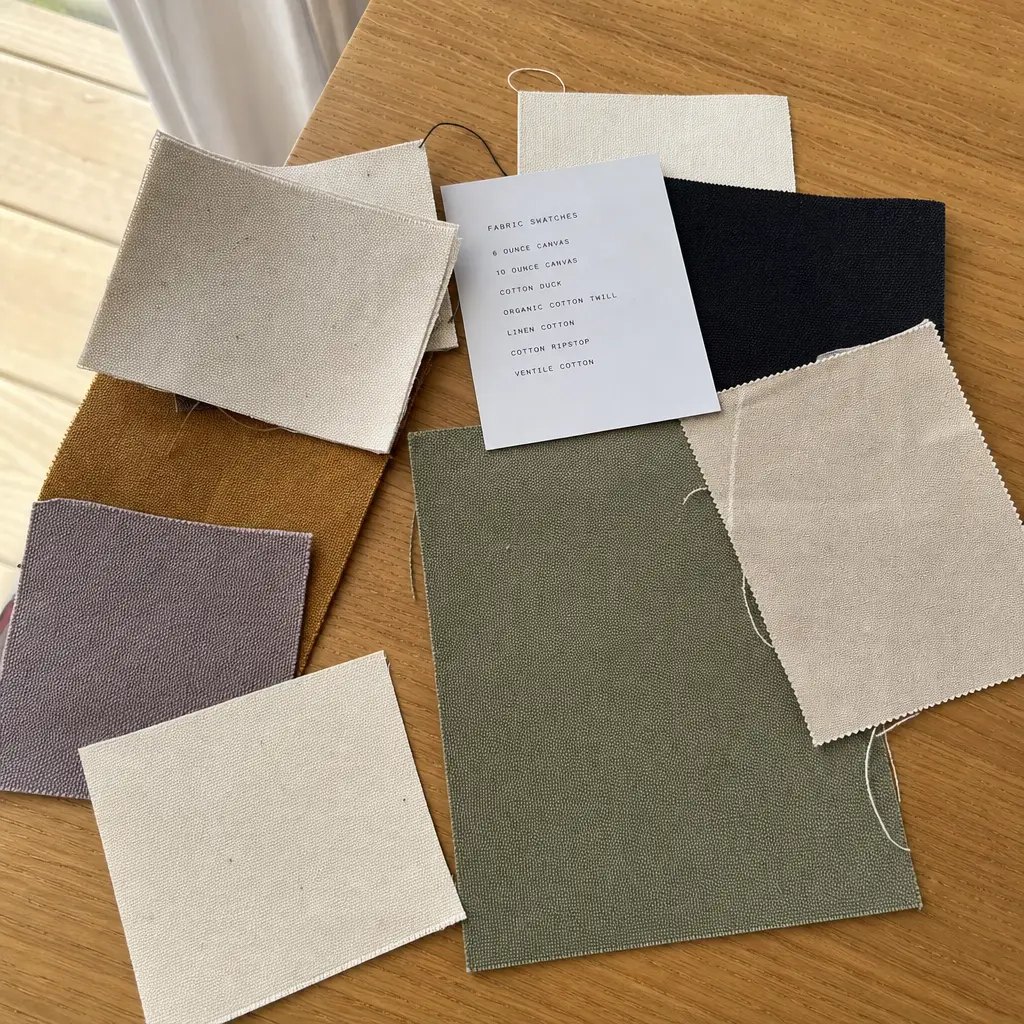
Canvas weight is the biggest specification driver for both cost and perceived quality. For bakery messenger bags, 10 oz canvas can work for light promotional use, but it often feels soft and may not hold a structured flap. A more reliable baseline is 12 oz cotton canvas, roughly 380-410 GSM depending on the mill and finish. For premium retail or repeated staff use, 14-16 oz canvas gives a firmer body but increases sewing difficulty, freight weight, and carton volume.
Do not write only “heavy canvas” in the RFQ. Suppliers may interpret that as 10 oz, 12 oz, or a local fabric that feels heavy because it is stiffened, not because it has stronger yarn. If dimensions matter, note whether the fabric should be pre-shrunk or washed. Natural cotton canvas can shrink, skew, or change hand feel after washing, so the production sample should use the same finish as bulk.
- Light promo range: 8-10 oz, about 270-340 GSM, lower cost but less structure.
- Commercial baseline: 12 oz, about 380-410 GSM, good for most bakery retail programs.
- Premium range: 14-16 oz, about 450-540 GSM, stronger hand feel but higher material and freight cost.
- RFQ wording: include oz, GSM, color, finish, shrinkage expectation, and whether fabric is stock or dyed-to-order.
Build the Construction Around Real Bakery Loads
A messenger bag looks simple until it carries a sourdough loaf, paper-wrapped pastries, a small jar, and a folded menu. The stress points are the strap ends, flap corners, bottom gusset, and closure reinforcement. If the bag is only designed like a flat document satchel, it may photograph well but fail when buyers actually use it in a bakery shop or market setting.
For most bakery programs, a gusset of 6-10 cm is more useful than a completely flat messenger bag. A flap that covers the opening by at least several centimeters helps the bag look finished and protects contents, but an oversized flap adds fabric consumption and may crease in packing. If using magnetic snaps, reinforcement patches are important because repeated pulling can tear through canvas, especially after the print has stiffened the flap area.
- Strap width: 38 mm is a practical minimum for comfortable carry; 50 mm feels more premium but costs more.
- Stitching: specify bar tack or box stitch at strap joints, not just “reinforced.”
- Gusset: 6-10 cm works for bakery retail loads without turning the product into a bulky courier bag.
- Closure: metal snap or magnetic snap suits retail better than Velcro, which catches lint and feels lower value.
- Pocket: one inside slip pocket is usually enough; multiple compartments add labor and inspection points.
Select the Logo Method Before Confirming the Price
Logo application is not a decoration detail to settle later. It affects sampling time, unit price, rejection risk, and production sequence. Screen printing is usually the best value for solid artisan bakery logos, especially one or two colors on natural canvas. It can cover a large flap area and keep the bag commercially affordable. The limitation is canvas texture: very fine type, distressed artwork, gradients, and thin outlines may not print cleanly.
Embroidery can look premium, but it is not automatically better. On a messenger bag flap, embroidery adds stiffness and may pucker the fabric if the logo is large. Woven labels are excellent for understated branding and repeat orders because the label can be stocked and sewn consistently. Heat transfer is possible for detailed artwork, but buyers should test adhesion and hand feel on cotton canvas, especially if the bag may be folded tightly for packing.
- Screen print: best for bold logos, medium to large print areas, and cost-controlled wholesale orders.
- Embroidery: best for small simple marks, not large bakery illustrations across the flap.
- Woven label: best for premium subtle branding, repeat programs, and lower print defect exposure.
- Heat transfer: useful for detailed artwork but must be tested for edge lift, cracking, and surface feel.
- Proof requirement: approve a print strike-off on actual bulk canvas, not only a digital mockup.
Understand MOQ Logic Before Negotiating
MOQ is not only a factory sales number. It comes from cutting efficiency, fabric purchase minimums, printing setup, hardware packs, label weaving, dye lot control, and sewing line changeover. A simple natural canvas messenger bag with one-color screen print may be practical from 300-500 pieces if stock fabric and standard hardware are used. A dyed canvas body, custom lining, custom buckle, or woven label can push the economic MOQ to 800-1000 pieces or more.
If a supplier accepts an unusually low MOQ, the buyer should understand what has changed. The factory may use leftover fabric, substitute hardware, outsource sewing to a small workshop, or charge a higher unit price. None of those are automatically wrong, but they should be visible in the quote. For distributors and retail buyers planning repeat orders, stable material availability is more important than winning the first order at an artificial low MOQ.
- MOQ below 300 pieces usually needs stock fabric, stock trims, simple print, and flexible delivery timing.
- MOQ of 300-500 pieces is realistic for many standard natural canvas bakery messenger bags.
- MOQ of 800-1000 pieces is more realistic for dyed fabric, custom labels, lining, or special hardware.
- MOQ should be tied to the exact construction, not quoted as a general factory capability.
- Repeat programs should reserve the approved fabric and trims or define approved alternates in writing.
Use a Lead Time Calendar With Approval Gates
Lead time planning for canvas messenger bags should start from the required warehouse arrival date and move backward. A common planning error is counting only bulk sewing days. In reality, the calendar includes artwork cleanup, fabric confirmation, blank sample, print strike-off, pre-production sample, sample freight, buyer review, material purchase, cutting, printing, sewing, finishing, inspection, packing, export booking, transit, customs, and domestic delivery.
For a standard order using stock natural canvas and screen print, buyers often plan several working weeks from approved sample to ready goods, plus transit. More complex specifications need longer. Dyed canvas adds lab dip and dye lot time. Custom woven labels add label sampling. Heavy canvas slows sewing and may require needle adjustments. The safest RFQ asks the supplier to break lead time into stages so both sides can see where delays will hurt the launch date.
- Artwork and spec confirmation: 2-5 working days if files are clean and dimensions are settled.
- Blank or construction sample: commonly 5-10 working days depending on fabric and workshop queue.
- Print strike-off: commonly 3-7 working days after artwork and ink references are approved.
- Pre-production sample: commonly 7-14 working days for a full sample with final materials.
- Bulk production: depends on quantity and complexity; separate cutting, printing, sewing, QC, and packing in the schedule.
- Transit buffer: plan separately for air, sea, rail, or courier, and include customs and warehouse receiving time.
Control Cost by Separating Material, Labor, and Packing
A good quote for wholesale canvas messenger bags should show enough structure for buyers to compare suppliers fairly. A low unit price may hide thinner canvas, narrower webbing, weaker hardware, no individual packing, or a vague inspection standard. Procurement teams should request quote data in a format that separates the main cost drivers instead of asking suppliers to compete on one all-in number.
The largest cost drivers are canvas weight and yield, bag size, number of panels, lining, strap width, closure type, print method, number of print colors, pocket complexity, packing, and carton volume. Freight can change the real landed cost more than buyers expect because messenger bags are heavier and bulkier than cotton drawstring pouches. A 16 oz lined canvas bag may look attractive in a sample room but reduce margin after ocean freight, local delivery, and retail storage are included.
- Material cost: canvas GSM, dyed or natural finish, lining, webbing, snaps, sliders, labels, and reinforcement patches.
- Labor cost: number of seams, pocket complexity, flap shape, strap adjustment, lining insertion, and trimming time.
- Print cost: screen setup, color count, print area, ink type, strike-off, and defect allowance.
- Packing cost: individual bag, belly band, barcode sticker, hangtag, carton grade, and pallet requirement.
- Freight impact: request carton size, gross weight, and cubic meters per 1000 pieces before approving the final specification.
Approve Samples With Measurable Acceptance Criteria
Sample approval should not rely on “looks good.” The approved sample becomes the production standard, so it needs measurable criteria. For a bakery messenger bag, measure finished width, height, gusset, flap drop, strap length range, pocket size, and print position from fixed seams. Record the canvas GSM, fabric color, hardware finish, thread color, lining color, and packing style. Keep one sealed sample with the buyer and one at the factory.
Print proofing deserves special attention. Canvas is textured, so the approved artwork may not reproduce as sharply as it does on paper. If the logo includes small bakery illustrations, wheat icons, thin serif type, or distressed texture, the strike-off should be examined at real viewing distance and after folding the flap. Rubbing the print lightly and bending the printed area can reveal poor ink curing or excessive ink thickness before bulk production starts.
- Measurement standard: record finished dimensions and tolerances on the sample approval sheet.
- Print standard: approve ink color, coverage, edge clarity, position, and fold performance on actual canvas.
- Construction standard: approve strap stitching, closure reinforcement, pocket placement, and flap symmetry.
- Material standard: attach or photograph fabric swatch, webbing, hardware, label, and lining for reference.
- Packing standard: approve fold method, individual bag, carton quantity, carton marks, and barcode placement if used.
Specify Packing for Retail, Distribution, and Freight
Packing is often treated as an afterthought, but it can damage appearance and change landed cost. A canvas messenger bag with a printed flap should not be forced into a carton so tightly that the flap creases across the logo. Metal sliders and snaps should not rub directly against the printed surface. If the product is sold through retail or distributed to multiple bakery locations, individual packing, carton labels, and count accuracy are part of the product quality.
For sustainability-minded bakery brands, paper belly bands or recycled polybags may be preferred, but the choice must still protect the bag during export. Natural canvas can pick up dust and moisture marks. If the bag ships without individual protection, require clean inner liners or protective carton bags and inspect for abrasion. Carton size should balance freight efficiency with product presentation; over-compression saves cubic volume but may create a higher defect rate.
- Retail-ready option: folded with paper belly band, hangtag, barcode sticker, and clean carton separation.
- Distributor option: individual recycled polybag with SKU label and 25-50 pieces per carton depending on weight.
- Bulk internal use: master carton packing may be acceptable if print surfaces are protected and cartons stay dry.
- Carton data: require pieces per carton, carton dimensions, gross weight, net weight, and total CBM.
- Damage prevention: separate metal hardware from printed panels with tissue, folding method, or panel orientation.
Compare Supplier Quotes on Evidence, Not Promises
When importers compare canvas messenger bag suppliers, the strongest quote is not always the cheapest or the fastest. A useful quote shows the exact fabric, construction, print method, sample path, packing, carton data, lead time assumptions, and substitution rules. It also explains which parts are stock and which require purchase or development. This evidence allows the buyer to forecast risk instead of discovering it during inspection.
Supplier evidence can be practical: photos of similar messenger bag construction, fabric swatches with GSM, print strike-off photos, sewing detail photos, carton packing examples, and a written production timeline. For bakery programs with a seasonal launch, late delivery can cost more than a small unit price difference. The final sourcing decision should weigh delivery control, sample accuracy, communication speed, and repeatability alongside price.
- Strong quote: names exact canvas weight, print method, packing, MOQ driver, carton data, and lead time split.
- Weak quote: says “as your request,” “heavy canvas,” or “delivery fast” without measurable production details.
- Useful evidence: similar product photos, real material swatches, stitch details, print tests, and packing photos.
- Commercial comparison: evaluate unit price together with defect risk, freight volume, sample accuracy, and approval speed.
- Contract discipline: define no-substitution rules for canvas GSM, strap width, hardware, print method, and packing.
Specification comparison for buyers
| Spec decision | Recommended option | When it fits | Buyer risk to check |
|---|---|---|---|
| Canvas body fabric | 12 oz cotton canvas, about 380-410 GSM, pre-shrunk if tight size tolerance matters | Best balance for bakery merch bags, staff order bags, gift sets, and retail add-on sales | Low GSM substitutions can look similar in photos but collapse after loading bread, jars, and paper packaging |
| Heavy-duty upgrade | 14-16 oz canvas, about 450-540 GSM, with reinforced flap and strap joints | Useful for premium retail, reusable delivery satchels, and higher perceived gift value | Higher freight weight, slower sewing speed, thicker seams, and possible needle marks on dense fabric |
| Lining choice | Unlined canvas for washable casual use, or 150D/210D polyester lining for cleaner interior | Unlined suits rustic bakery branding; lining suits corporate gifting or food-adjacent retail programs | Lining adds cost and QC steps; dark linings can hide loose threads but not solve weak seam construction |
| Logo application | Screen print for solid bakery logos; woven label for small premium branding; embroidery for simple marks only | Screen print fits most wholesale canvas messenger bags with 1-3 color bakery artwork | Fine flour-dust textures, gradients, and tiny serif text may fill in or crack if not proofed on actual canvas |
| Closure construction | Metal snap or magnetic snap under flap; avoid exposed Velcro for bakery retail bags | Snap closures feel cleaner in retail and reduce lint collection from floury shop environments | Magnetic snaps need reinforcement patches; weak backing can tear through canvas after repeated opening |
| Strap specification | 38 mm cotton webbing or cotton-poly webbing with adjustable metal slider | Suitable for everyday carry and staff use without making the bag look like a school backpack | Thin 25 mm straps reduce cost but create shoulder pressure and make the bag feel promotional |
| Packing method | Individual recycled polybag or paper belly band, 25-50 pieces per export carton depending on GSM | Works for distributors, retail buyers, and bakery chains needing clean receiving and barcode control | Over-tight cartons can crease flaps; loose cartons increase abrasion and print scuffing during transit |
| MOQ logic | 300-500 pieces for standard fabric and one-color print; 800-1000 pieces for dyed fabric or custom hardware | Lower MOQ works when using stock natural canvas and standard trims | MOQ below factory efficiency level often raises unit price, sample cost, and risk of inconsistent trim availability |
Buyer checklist before sampling
- Define the bag use first: retail merchandise, staff bag, gift-with-purchase, delivery satchel, or distributor resale.
- Specify finished size, gusset depth, flap length, strap width, pocket layout, closure type, and whether the bag is lined.
- State canvas weight in oz and GSM, not only “heavy canvas,” and require tolerance for finished dimensions.
- Send vector logo files with Pantone or CMYK references and note whether the artwork must survive folding across the flap.
- Request a pre-production sample made in bulk fabric, bulk print method, bulk hardware, and final packing style.
- Set acceptance criteria for print position, seam strength, strap pull, flap symmetry, odor, stains, and carton drop condition.
- Require carton dimensions, gross weight, pieces per carton, HS code suggestion, and packing photos before shipment.
- Build a calendar from required warehouse arrival date backward through artwork approval, sample approval, production, inspection, and transit.
- Separate tooling, sample, unit, packing, inspection, and freight assumptions in the quote comparison sheet.
- Reserve fabric and hardware only after approving the sample and confirming deposit timing, not after informal email agreement.
Factory quote questions to send
- What canvas weight in oz and GSM are you quoting, and is it stock greige, stock natural, dyed-to-order, or washed canvas?
- What is the finished bag size tolerance after sewing, and does the quoted size include the flap or only the main body?
- Which print method is included, how many colors, what maximum print area, and is the logo proofed on actual canvas?
- What MOQ applies to this exact construction, and which component creates the MOQ: fabric, printing, lining, hardware, or label?
- What sample types are included before bulk production: blank size sample, print strike-off, full pre-production sample, or sealed approval sample?
- How many days are required for material sourcing, sample making, sample revision, bulk cutting, printing, sewing, QC, and packing?
- What packing is included in the unit price, and what carton size, gross weight, and cubic meters per 1000 pieces should we use for freight costing?
- What in-line and final inspection points will be documented with photos or reports before shipment?
- If artwork, deposit, or sample approval is delayed, how many production days are lost and when does the next sewing slot reopen?
- What substitutions are allowed only with written approval, especially canvas GSM, webbing width, snap material, lining color, and carton specification?
Quality-control points to confirm
- Canvas weight should match the approved swatch within reasonable mill tolerance and should not be substituted with thinner plain cotton fabric.
- Finished size should stay within the buyer-approved tolerance, commonly plus or minus 1 cm for main body width and height unless tighter control is agreed.
- Print position should align to the approved sample, especially on the flap where stitching, folds, and snap placement can visually shift the logo.
- Screen print coverage should be even on the canvas texture, without pinholes, heavy ink ridges, cracking after folding, or color bleeding into natural fabric.
- Strap joints should be bar-tacked or box-stitched with reinforcement, and should pass the agreed load test for the intended carry weight.
- Magnetic snaps, metal sliders, rivets, and buckles should be rust-free, firmly attached, and protected from scratching the printed panel during packing.
- Interior seams should be clean, with no loose thread nests, raw fabric fraying beyond the agreed finish, or lining caught unevenly in the seam.
- Odor, mildew marks, oil stains, fabric shade variation, and dirty handling marks should be screened before final packing.
- Cartons should be export grade, dry, correctly marked, and not overfilled to the point that flaps or printed surfaces are permanently creased.
- A sealed pre-production sample should remain at the factory and buyer side as the reference for final inspection.