Start with the Real Bakery Use Case
Canvas messenger bags for artisan bakeries should not be sourced as generic accessories. The same style may be used as a staff issue bag, paid retail product, bread subscription package, market-stall carry kit, holiday gift, loyalty reward, or wholesale resale item. Each use case changes the target load, perceived value, packing standard, and acceptable unit cost.
The most common failures are not usually in the center of the canvas panel. They appear at strap ends, D-ring tabs, flap corners, pocket openings, side seams, closure backing, print surfaces, and packing marks. Bakery loads are awkward rather than industrial: a loaf, coffee beans, jam, tins, boxed pastries, order sheets, or a small device can shift while carried and create repeated stress.
A useful durability testing checklist converts that real use into sourcing language. Instead of asking for a durable canvas messenger bag, state the expected load, canvas GSM, finished dimensions, reinforcement method, hardware material, logo test, packing method, and inspection criteria. This keeps the supplier from quoting a low-cost promotional build when the buyer expects retail-grade merchandise.
- Define the product role first: giveaway, staff issue, retail merchandise, subscription packaging, distributor resale, or branch item.
- Set a target working load, commonly 4 kg to 6 kg for bakery retail and staff use, then test above expected daily load.
- Inspect predictable failure points: strap joints, flap closure, side seams, base corners, pocket openings, hardware backing, and print curing.
- Separate appearance approval from functional approval; a good-looking sample can still fail a strap pull or closure cycle check.
- Use signed control samples so the factory, buyer, and inspector judge against the same physical reference.
Specify Canvas Weight, Finish, and Tolerance
Fabric weight is the fastest way to separate a bakery-grade messenger bag from a thin promotional item. A 10 oz canvas can work for lightweight giveaways, but it is less convincing when customers carry boxed pastries, glass jars, coffee bags, or pantry tins. For most bakery retail, staff, and subscription programs, 12 oz to 16 oz cotton canvas, approximately 407 to 542 GSM, is the practical range.
Do not let the word canvas carry the specification. State oz, GSM, acceptable GSM tolerance, weave, color, surface finish, shrinkage tolerance, and whether the fabric is natural, bleached, dyed, washed, laminated, or pre-shrunk. A common commercial GSM tolerance is plus or minus 5 percent unless the buyer sets a stricter rule. Without a tolerance, two suppliers can quote the same nominal fabric while delivering different structure.
Natural unbleached canvas suits many artisan bakery brands because it looks warm, tactile, and less corporate. It also brings normal seed flecks, slubs, yarn irregularity, and shade movement. Approve acceptable variation in advance. Dyed canvas gives tighter brand color control, but it introduces lab dips, shade-lot management, possible re-dyeing, and higher MOQ risk.
- Economy range: 10 oz to 12 oz for light promotional use with limited repeat handling.
- Retail range: 12 oz to 16 oz for bakery merchandise, staff bags, market bags, loyalty programs, and subscription packaging.
- Premium range: 16 oz to 18 oz when substantial handfeel matters more than lower freight cost or soft foldability.
- Fabric data: require oz, GSM, GSM tolerance, weave type, shrinkage tolerance, color standard, and finishing method.
- Dyed canvas control: request lab dips, bulk shade standard, shade-lot marking, and carton separation if multiple dye lots are used.
Control Dimensions and Construction
Messenger bag dimensions need more detail than a sales sketch. The specification should include finished width, height, gusset depth, flap depth, pocket dimensions, seam allowance, strap length range, and strap width in millimeters. For many sewn canvas bags, plus or minus 5 mm may be realistic for small details and plus or minus 10 mm for larger panels, but the supplier should confirm what can be held in bulk before PO release.
Flap coverage deserves attention for bakery use. A short flap may expose receipts, inserts, or small packaged goods when the bag is full. A long flap improves coverage but can become bulky, distort in the carton, and complicate logo placement. Gusset depth is also a cost lever: deeper gussets improve capacity but increase fabric consumption, sewing time, packed volume, and shape-control requirements.
Interior finishing changes both durability and perceived value. Bound seams look cleaner and reduce fraying, but they add labor and material cost. Clean overlocked seams can be acceptable when they match the approved sample and hold the right stitch density. Raw seams are risky for retail merchandise because customers may see loose fibers as soon as they open the flap.
- Dimension set: specify body width, height, gusset, flap depth, pocket size, strap width, strap range, and seam allowance.
- Tolerance rule: agree practical bulk tolerances before sampling, then measure from fixed seams and panel edges.
- Flap check: test with expected bakery contents inside, not only on an empty bag that lies flatter than real use.
- Gusset choice: larger gussets improve capacity but raise fabric consumption, packed volume, and shape-control requirements.
- Interior standard: choose bound seams for higher retail value or clean overlock for controlled cost, but avoid raw fraying seams.
Run Load Tests with Acceptance Criteria
Durability testing should match expected use, not a vague strength claim. Start with a working-load estimate. A retail customer may carry one large loaf, two pastry boxes, coffee beans, and a jar. A gift program may include flour, jam, tea, or a ceramic cup. A staff bag may hold papers, samples, uniforms, and a small device. These loads shift while carried and stress strap joints, side seams, base corners, and closures.
A practical plan combines static and dynamic checks. Static load testing exposes weak strap anchoring, loose snap backing, seam opening, and hardware deformation. Dynamic carry testing catches movement issues such as stitch popping, D-ring rotation, webbing abrasion, and corner stress. If normal use is 4 kg, many buyers test at 6 kg or 8 kg depending on bag size, construction, and target price.
Pass criteria must be visible and measurable. After testing, inspectors should look for broken stitches, elongated needle holes, torn webbing, bent sliders, distorted rings, opened seams, warped flap shape, loose closure backing, and unusual creasing at the base. Ask the supplier to record test weight, duration, sample quantity, post-test photos, and pass or fail notes.
- Working-load definition: list expected contents and convert them into a kilogram target before sampling.
- Static load test: hang the filled bag for 4 to 8 hours and inspect strap joints, rings, seams, and closure backing.
- Dynamic carry test: walk-test or swing-test the loaded bag to expose movement stress that static hanging may miss.
- Low-height placement test: place the loaded bag onto its base from a controlled low height to check bottom corners and seam opening.
- Pass condition: no broken stitches, torn webbing, bent rings, open seams, loose closure backing, or major shape distortion.
Do Not Under-Spec Strap and Hardware
The shoulder strap is often the highest-risk component on a canvas messenger bag. For bakery programs, 38 mm to 50 mm cotton webbing is a practical range. A 25 mm or 30 mm strap can lower unit price, but it feels harsh when the bag carries jars, coffee bags, boxed items, or staff supplies. Wider webbing spreads weight across the shoulder and improves perceived retail value.
Attachment method matters as much as webbing width. A single straight stitch at the strap end is not suitable for a bag expected to carry several kilograms repeatedly. The RFQ should specify box-x stitching, dense bartacks, reinforcement patches, or multi-row stitching at every stress point. If the strap connects through D-rings or sliders, the tabs holding those components need the same reinforcement standard as the strap.
Hardware should be selected for strength, edge finish, and appearance. Zinc alloy and iron hardware are common, but material, wire thickness, plating consistency, spring action, and burr control vary widely. Hardware must not cut webbing, stain natural canvas, or deform under the agreed load. For export orders, ask about nickel-free requirements, rust resistance, and plating shade consistency.
- Strap width: use 38 mm minimum for most bakery messenger bags and 50 mm when comfort and retail value are priorities.
- Strap range: specify minimum and maximum adjustable length, especially for staff uniforms, aprons, and winter clothing.
- Stitch pattern: require box-x, bartack, or multi-row reinforcement at strap ends, D-ring tabs, flap tabs, and pocket stress points.
- Hardware inspection: check plating shade, burrs, sharp edges, snap tension, ring thickness, slider grip, and deformation under load.
- Component approval: require hardware photos or component samples before bulk, then compare incoming components against the approved set.
Test Logo Durability on Final Canvas
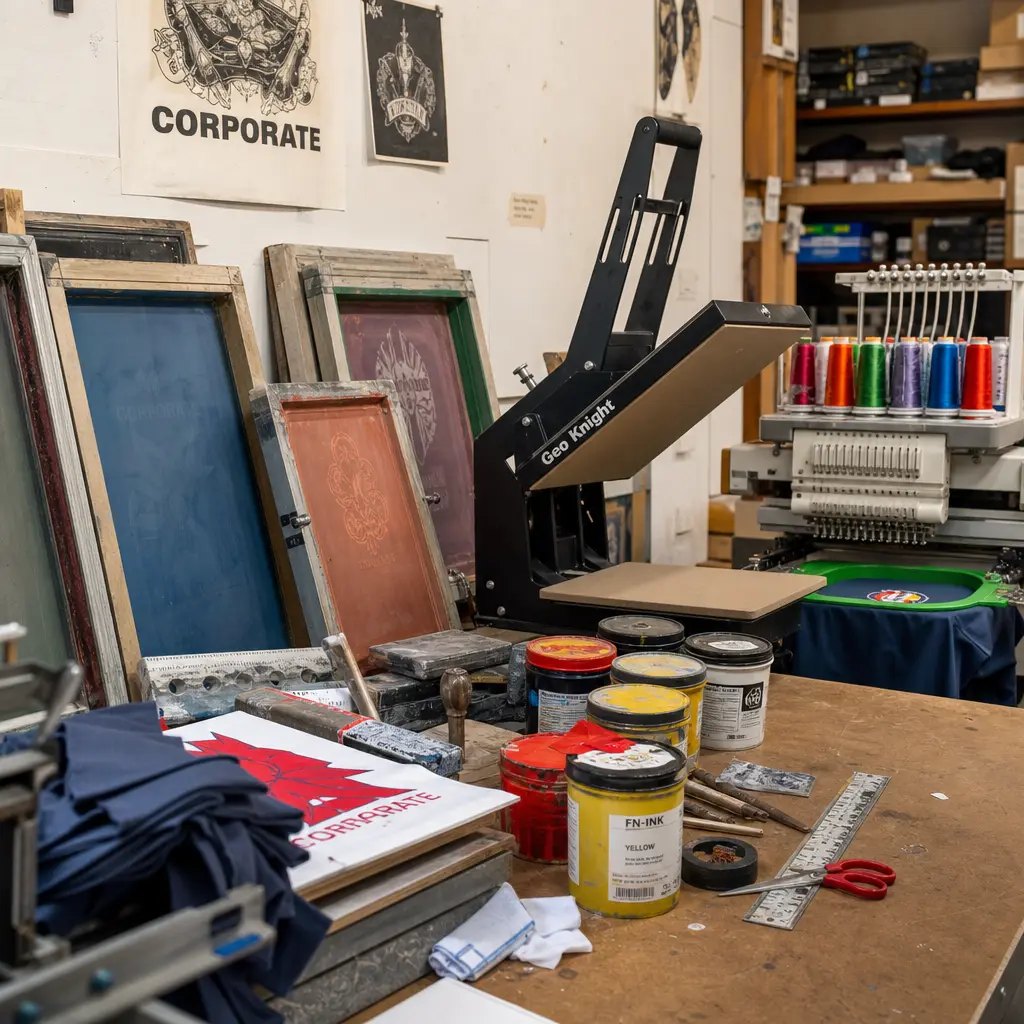
Bakery buyers often prefer quiet branding: a one-color screen print on the flap, a small woven side label, a cotton patch, or a minimal logo near the lower corner. Water-based screen print is a strong match for cotton canvas because it gives a softer handfeel than heavier ink systems. Buyers should still provide Pantone references or approved brand standards rather than relying on screen colors.
Artwork must be tested on the final fabric. Heavy canvas texture changes how fine lines, small text, and solid ink coverage appear. A detailed bakery seal, wheat icon, oven mark, or circular badge can lose definition if lines are too thin. Large ink blocks can feel stiff, crack, or show uneven coverage if ink deposit and curing are not controlled. For fine detail, a woven label or printed cotton patch may be cleaner than direct print.
Logo durability belongs in the product checklist. Buyers should request dry-rub and light wet-rub checks, especially when bags may rub against dark coats, aprons, counters, crates, or shelving. Print position should be measured from stable points such as the flap edge, side seam, or pocket opening. Millimeter tolerance avoids subjective arguments about whether the logo looks too low or off-center.
- Screen print fit: simple bakery icons, flat logos, short slogans, and one to three colors on a smooth print area.
- Woven label fit: subtle premium branding, small side labels, detailed marks, or repeat programs using the same label across styles.
- Patch fit: heritage or handmade look when the buyer wants texture without printing a large area directly on canvas.
- Print tolerance: define logo placement from a seam, flap edge, or pocket edge in millimeters.
- Rub testing: dry rub and light wet rub should not create obvious transfer, blurred edges, peeling, cracking, or tacky ink feel.
Approve Samples in the Right Order
A proper pre-production sample should represent the real order, not a loose interpretation. It should use the actual canvas weight, fabric finish, strap webbing, hardware, logo method, label, seam finish, and proposed packing. A prototype made from substitute fabric can help confirm size or pocket layout, but it should not be treated as final approval for a retail bakery bag.
The approval process can be staged without becoming slow. A fit sample confirms dimensions, flap coverage, strap length, pocket placement, and carrying comfort. A print strike-off confirms ink color, logo edge quality, curing, and print position on final canvas. A pre-production sample confirms materials and workmanship before bulk cutting. Smaller MOQs may combine steps, but the buyer should still identify the binding control sample.
Control sample discipline prevents expensive misunderstandings. Keep one signed and sealed sample with the buyer and one with the factory. Photograph the front, back, inside, strap ends, hardware, logo, label, and packing. If changes are approved after the first sample, list them in writing and confirm whether a revised sample is required.
- Fit sample: confirms finished size, flap coverage, gusset depth, pocket layout, strap length, comfort, and silhouette.
- Material sample: confirms canvas weight, color, handfeel, shrinkage behavior, webbing, thread, and hardware finish.
- Print strike-off: confirms ink color, logo sharpness, curing, rub resistance, and position on the final canvas surface.
- Pre-production sample: confirms all materials, sewing, reinforcement, label, packing, carton logic, and final workmanship.
- Revision control: every change needs a version date so the factory does not mix old dimensions, logo placement, or hardware.
Normalize Quotes Before Comparing Prices
MOQ depends on fabric availability, canvas color, printing method, hardware choice, strap webbing, label type, cutting efficiency, packing, and whether the supplier can use stock components. A standard natural canvas messenger bag with one-color screen print can often support a lower MOQ than a dyed canvas bag with custom buckles, striped webbing, lining, and several branch logos. Ask which specification element is driving the MOQ.
Cost moves with construction complexity. A simple flap, one main compartment, no lining, stock webbing, and one print position is not the same product as a lined messenger bag with zipper pocket, padded shoulder patch, metal buckles, woven label, bound seams, hangtag, barcode, and individual retail packaging. Spend where customers notice value and where failures are costly: stronger canvas, clean branding, comfortable strap width, reinforced stress points, and reliable packing.
Quote comparison should be normalized line by line. A low quote may rely on lighter canvas, thinner webbing, lower stitch density, weaker hardware, raw seams, or no individual packing. Ask suppliers to quote by quantity tier and identify excluded charges such as screens, labels, sample courier, hangtags, barcode stickers, testing, inspection support, and replacement of defective goods found before dispatch.
- Lower MOQ setup: stock natural canvas, stock cotton webbing, stock hardware, one print position, one logo color, and simple packing.
- Higher MOQ setup: dyed fabric, custom webbing, custom metal finish, lining, multiple pockets, branch-specific logos, or special retail packaging.
- Main cost drivers: fabric GSM, hardware grade, strap width, seam finish, print colors, label method, packing type, inspection level, and carton volume.
- Quote data: request unit price by quantity tier, sample cost, setup charges, packing cost, carton dimensions, gross weight, and CBM.
- Procurement rule: compare total specification and landed cost, not only the lowest FOB or EXW unit price.
Pack Natural Canvas Like Retail Stock
A canvas bag can pass sewing inspection and still arrive commercially unacceptable if packing is weak. Natural canvas shows carton dust, moisture marks, oil stains, metal impressions, and deep strap creases more easily than dark synthetic fabric. For retail merchandise, packing is part of the product specification. Approve folding method, inner protection, carton strength, carton weight, and carton marks before shipment.
Individual recycled polybags protect canvas well and reduce carton dust transfer. Paper bands, glassine-style sleeves, or plastic-reduction packaging may fit a bakery’s sustainability position, but they require cleaner handling and stronger carton discipline. If the bag has metal hardware, the hardware should not press directly into the printed logo or leave dents on the flap. Straps should be folded consistently, with sliders kept away from visible panels.
Carton planning affects logistics and quality. Heavy canvas messenger bags are bulkier than flat totes, so units per carton must be realistic. Overloaded cartons deform, burst, or become unsafe for warehouse handling. Buyers should request carton dimensions, gross weight, net weight, quantity per carton, and CBM before PO release. If goods go to multiple bakery branches, carton labels should show item code, color, quantity, PO number, destination, barcode, or branch allocation.
- Retail packing: choose recycled polybag, paper belly band, hangtag, barcode sticker, glassine-style sleeve, or inner carton by channel.
- Export packing: use dry export cartons, moisture control where needed, clear carton marks, and no excessive compression of flap or hardware.
- Carton target: keep gross weight practical for warehouse handling, often below 15 kg to 18 kg unless the buyer standard differs.
- Crease control: fold straps consistently, place sliders away from logos, and prevent metal hardware from pressing into printed panels.
- Inbound check: verify odor, stains, moisture marks, carton damage, count accuracy, barcode labels, and branch allocation before stock release.
Inspect Before Shipment Release
Lead time should be broken into stages because bakery bag programs often connect to fixed commercial dates: store openings, holiday gifting, food fairs, loyalty campaigns, wholesale launches, or seasonal bread subscriptions. A supplier may say production takes 25 to 35 days, but that normally begins only after sample approval, deposit, final artwork, material confirmation, and packing approval.
The biggest schedule risks are custom dyed canvas, delayed artwork approval, unavailable hardware, unclear packing requirements, and sample revisions caused by incomplete specifications. Dyed canvas can require lab dips and shade approval before bulk fabric production. Custom hardware can require mold checks, plating approval, and component lead time. Even a simple screen print can delay production if artwork is low resolution or Pantone references are missing.
Final inspection should happen before balance payment and before goods leave the factory. The checklist should separate critical, major, and minor defects. Critical issues include unsafe sharp hardware, broken strap attachment under load, mold, heavy odor, wrong logo, or mixed customer branding. Major issues include open seams, dimensions outside tolerance, print transfer, weak closures, stains on visible panels, or wrong packing. Minor issues include small thread tails or small cosmetic marks within the agreed limit.
- Sample stage: allow time for material sourcing, pattern making, sewing, printing, packing trial, approval review, and courier transit.
- Bulk stage: starts after sample approval, deposit, final artwork, material booking, and final packing specification confirmation.
- Inspection timing: schedule final inspection before balance payment and shipment release, not after goods have left the factory.
- Defect classification: define critical, major, and minor defects so rework decisions are not negotiated during inspection.
- Release documents: check packing list, carton marks, carton count, photos, test records, and export documents before shipment approval.
Specification comparison for buyers
| Spec decision | Recommended option | When it fits | Buyer risk to check |
|---|---|---|---|
| Main canvas weight | 12 oz to 16 oz cotton canvas, approximately 407 to 542 GSM, with GSM tolerance stated in the PO | Retail merchandise, staff issue bags, bread subscription kits, loyalty gifts, and bakery branch resale | Below 10 oz may sag under jars, tins, coffee bags, or boxed goods; above 18 oz can raise sewing difficulty, carton volume, and freight cost |
| Fabric tolerance | Nominal GSM plus acceptable variance, commonly plus or minus 5 percent unless the buyer sets a tighter standard | Programs needing repeatable structure across stores, cartons, and reorders | Without a tolerance, one supplier may quote lighter canvas while another quotes true heavy canvas, making prices hard to compare |
| Canvas finish | Natural unbleached canvas for an artisan look; dyed canvas only when brand color control justifies lab dips and added lead time | Bakery brands using warm neutral displays, reusable packaging, and low-plastic merchandising | Natural canvas can show seed flecks and shade variation; dyed canvas adds shade-lot and reapproval risk |
| Strap construction | 38 mm to 50 mm cotton webbing with box-x stitching or bartacks and reinforcement patches at stress points | Daily staff use, market-stall carrying, customer loyalty bags, and gift sets expected to carry 4 kg to 6 kg repeatedly | Narrow straps are uncomfortable; single-row stitching, weak D-ring tabs, and low stitch density often fail before the canvas body |
| Finished size tolerance | Dimensions in millimeters, with realistic tolerances such as plus or minus 5 mm for small details and plus or minus 10 mm for larger panels | Retail programs where flap alignment, pocket access, carton packing, and barcode placement must stay consistent | Loose tolerance causes uneven flap coverage, inconsistent logo position, variable gusset depth, and carton quantity changes |
| Logo method | Water-based screen print for simple flat logos; woven label or cotton patch for fine detail or premium understated branding | One to three color bakery logos, wheat icons, heritage marks, branch labels, and reusable merchandise positioning | Heavy ink coverage can crack or feel stiff; fine seals lose detail on textured canvas unless tested on bulk fabric |
| Interior finish | Bound seams for premium resale or clean overlocked seams with 8 to 10 stitches per inch on heavy canvas | Bags customers open in store, wholesale resale programs, subscription kits, and branded staff bags | Raw seams fray, shed fibers, and make a paid merchandise item look unfinished |
| Hardware choice | Specified zinc alloy or iron hardware with material, wire thickness, plating finish, edge smoothness, and corrosion expectation confirmed | Export orders, distributor programs, and bakery chains needing a consistent look across branches and reorders | Thin rings deform, burrs cut webbing, mixed plating shades trigger disputes, and snap backing can loosen under load |
| Packing method | Individual recycled polybag, paper band, glassine-style sleeve, or retail sleeve, then export carton with approved folding | Retail-ready stock, e-commerce fulfillment, distributor warehouses, and branch allocation shipments | Unprotected natural canvas picks up dust, moisture marks, odor, hardware dents, and strap creases during storage and freight |
Buyer checklist before sampling
- Define the real carrying load in kilograms and list the heaviest likely contents: bread, pastry boxes, jam jars, flour packets, coffee bags, ceramic mugs, tins, or gift sets.
- Separate the commercial use case before quoting: staff bag, paid retail merchandise, free promotion, subscription packaging, market-stall kit, distributor resale item, or branch-opening gift.
- Specify canvas in both oz and GSM, including GSM tolerance, shrinkage tolerance, weave, finish, color standard, and whether the fabric is stock, dyed, washed, or made to order.
- State exact finished dimensions in millimeters: body width and height, gusset depth, flap depth, pocket size, strap length range, strap width, and finished-size tolerance.
- Set strap reinforcement standards: box-x size, bartack length, thread type, stitch density, reinforcement patch dimensions, and whether the strap is direct-sewn or attached through rings.
- Require a pre-production sample using actual bulk canvas, actual webbing, actual hardware, final logo method, final label, final seam finish, and proposed packing method.
- Include logo file format, Pantone or brand reference, print size, print position tolerance, ink type, curing expectation, dry-rub check, light wet-rub check, and artwork approval process.
- Ask for a durability test set before packing: static load hang, short dynamic carry test, strap pull check, closure cycle check, seam inspection, hardware deformation check, and print rub test.
- Approve carton size, units per carton, carton gross weight limit, folding method, inner packing, moisture protection, barcode placement, carton marks, and branch labels before shipment.
- Compare quotes using the same specification sheet; do not compare a 10 oz promo bag against a 16 oz retail-grade bag with bound seams, wide webbing, metal hardware, and individual packing.
Factory quote questions to send
- What exact canvas weight are you quoting in oz and GSM, what tolerance applies, and is the fabric stock fabric or made to order for this purchase order?
- Is the quoted canvas natural, bleached, dyed, washed, laminated, enzyme-washed, or pre-shrunk, and what shrinkage tolerance applies after testing?
- Can you confirm finished bag dimensions, flap depth, gusset size, strap length range, strap width, and the millimeter tolerance you can hold in bulk sewing?
- What working load do you recommend for this construction, and what static load, strap pull, and dynamic carry checks can you perform before shipment?
- How will the strap ends, D-ring tabs, flap corners, base corners, and pocket openings be reinforced, and can you share close-up photos of the proposed stitch pattern?
- Which thread type and stitch density are included for main seams, flap edge, strap joints, reinforcement patches, and internal seam finishing?
- Which print method is included, how many colors are included, what is the maximum print size, and what screen, setup, strike-off, or artwork charges are excluded?
- Can you produce a print strike-off on the final canvas and confirm dry-rub, light wet-rub, curing, cracking, and logo-position inspection standards?
- What hardware material, wire thickness, plating finish, nickel-free requirement, edge-smoothing process, and rust-resistance expectation are included?
- What is the sample cost, sample lead time, courier cost, and number of revision rounds included before the order needs new sample charges?
Quality-control points to confirm
- Bulk fabric must match the approved control sample for weight, handfeel, weave density, color shade, visible seed flecks, shrinkage tolerance, surface cleanliness, and odor.
- Fabric GSM should be checked against the agreed tolerance using a consistent sample-cut method, not judged only by touch or supplier declaration.
- Finished dimensions should stay within the agreed tolerance after sewing, pressing, and packing, especially flap width, gusset depth, strap length, pocket opening, and logo placement.
- Strap attachments should pass the agreed static load and pull checks without popped stitches, torn webbing, elongated needle holes, cracked reinforcement patches, or deformed rings.
- Main seams should normally hold 8 to 10 stitches per inch for heavy canvas, with no skipped stitches, open seams, needle cuts, raw fraying, uneven tension, or loose thread tails.
- Stress points should show the approved box-x, bartack, or multi-row reinforcement pattern, and inspectors should verify both the front and back of the stitch area.
- Print should pass dry-rub and light wet-rub checks without obvious transfer, cracking, peeling, blurred logo edges, under-cured tackiness, or ink bleeding into the fabric texture.
- Logo placement tolerance should be measured in millimeters from fixed seams, flap edges, or pocket edges, not judged only by visual alignment.
- Hardware should open and close smoothly, with no sharp edges, loose magnetic snap backing, plating flakes, rust marks, color mismatch, weak spring action, or webbing abrasion points.
- Interior finishing should match the approved sample, including binding, overlock color, seam allowance, pocket attachment, label placement, and trimmed thread ends.