Start With the Date the Bags Must Work
Canvas messenger bags for artisan bakeries are often tied to fixed commercial moments: a holiday gift program, a farmers market opening, a new store launch, a wholesale customer kit, a loyalty reward, a staff issue program, or a retail merchandise drop. Those dates do not move just because a sample needs one more revision. For procurement teams, the first question is not only how the bag should look. It is when the bags must be received, checked, sorted, and ready for use.
Build the calendar backward. Start with the event or in-store date, then set the required warehouse receipt date. Before that, reserve time for receiving, carton sorting, labeling, store allocation, local trucking, customs clearance, freight, export handling, pre-shipment inspection, final packing, sewing, printing, cutting, material preparation, sample approval, and artwork correction. For a standard cotton canvas messenger bag using available fabric and simple screen printing, a realistic baseline is 7-10 days for a pre-production sample, 3-5 buyer days for review, and 25-40 days for bulk production after all approvals. International freight is separate from that factory window.
State the required arrival date and the latest acceptable ex-factory date in the RFQ. This gives suppliers a chance to flag risk early instead of quietly quoting a production window that excludes review days, inspection, freight, customs, and warehouse receiving. If the deadline is tight, simplify the product: stock natural canvas, standard cotton webbing, common hardware, one artwork version, basic packing, and fast artwork approval. Air freight can shorten transit. It cannot recover time lost to late barcode files, unresolved construction details, rejected lab dips, or delayed sample comments.
- Build the timeline from event date to warehouse receipt, ex-factory date, inspection date, sample approval, and material booking.
- Separate factory lead time from courier, air, sea, customs clearance, local delivery, and warehouse receiving time.
- Treat sample approval as a production gate; do not permit bulk cutting before fabric, construction, logo, and packing are approved.
- Add 1-3 weeks for custom-dyed canvas, embroidery patches, custom hardware, retail labels, barcode files, or multi-store sorting.
- Write the lead time trigger into the PO, such as deposit plus final artwork plus approved pre-production sample.
Write Specs That Factories Can Quote
A canvas messenger bag has more cost drivers than a flat tote. Width and height are not enough. The flap drop, gusset, strap width, adjuster, closure, pocket layout, seam finish, reinforcement, lining, hardware finish, and packing fold all affect fabric consumption and sewing time. If those points are missing, each supplier fills the gaps differently. One quote may include a reinforced retail-style bag; another may assume a lighter promotional build. The unit prices will not be comparable.
Use finished dimensions, not cutting dimensions. A useful starting specification for a bakery messenger bag could be 35 cm wide by 28 cm high with an 8 cm gusset, a 20-22 cm flap drop, 12 oz cotton canvas, a 3.8 cm adjustable cotton webbing strap, an inside slip pocket, a magnetic snap or metal snap closure, reinforced strap joins, and one-color screen print on the flap. That is not the only valid build, but it gives the factory enough detail to estimate material, webbing length, hardware, labor, and carton volume.
Tell the supplier how the bag will be used. A staff bag carrying order tablets, water bottles, cash boxes, or daily tools needs stronger strap joins than a light giveaway. A paid retail item needs cleaner folding, more consistent flap symmetry, hangtag placement, and barcode label space. A distributor gift program may care most about carton marks and branch allocation. The use case helps the factory identify practical risks before the first sample is made.
- State finished width, height, gusset depth, flap drop, strap width, and adjustable strap length range.
- Define strap material: cotton webbing, self-fabric canvas, fixed strap, adjustable strap, or detachable strap with hooks.
- List every pocket, including inside slip pocket, zipper pocket, back pocket, pen slot, or divider.
- Identify closure type: magnetic snap, metal snap, buckle, zipper under flap, hook-and-loop, or no closure.
- Specify seam finish: bound, overlocked, folded, lined, or intentionally raw edge.
- Call out reinforcements at strap joins, flap corners, pocket openings, closure points, and bottom gusset corners.
Choose Canvas Weight With Tolerances
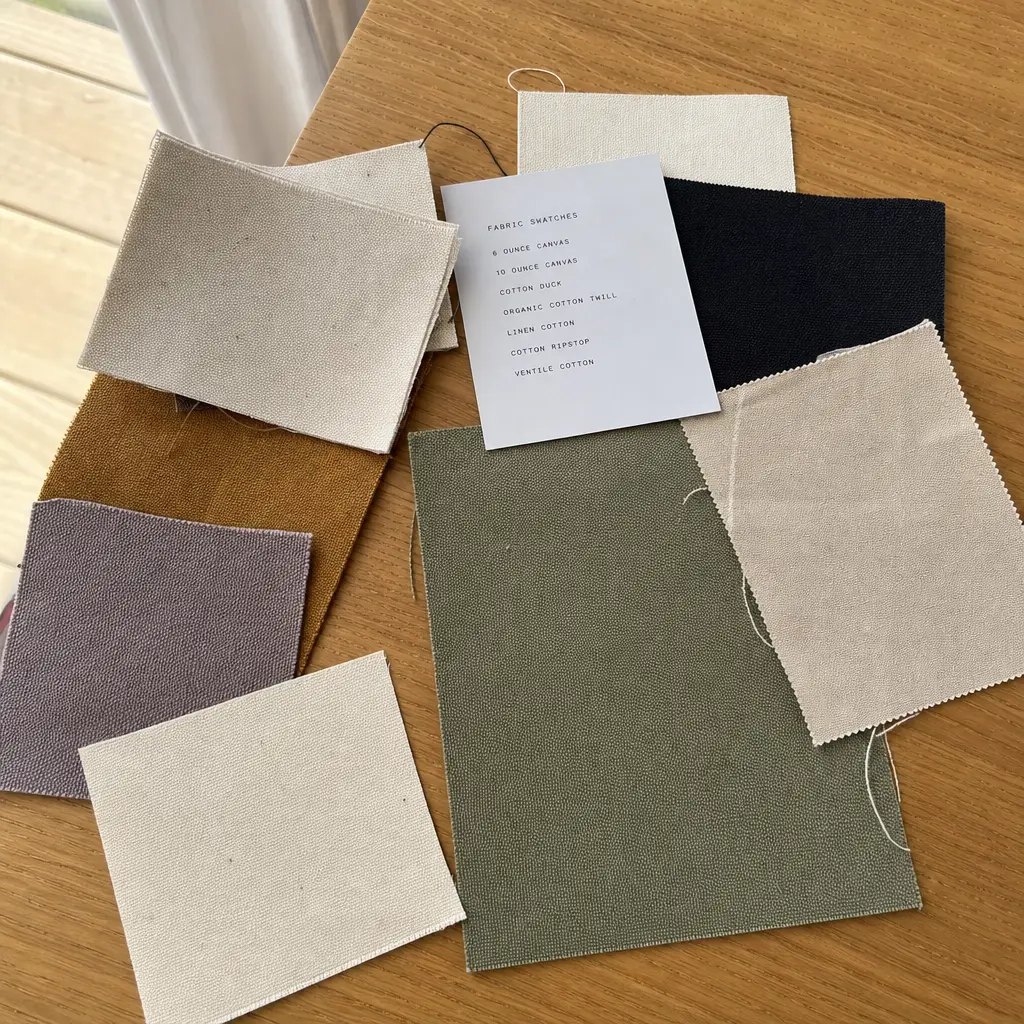
Fabric weight affects cost, hand feel, durability, production speed, and freight. For messenger bags, 10 oz cotton canvas can work for simple giveaways, but it may look soft on a flap construction and may not hold shape well in a bakery retail display. A 12 oz canvas is a practical middle ground for reusable bakery merchandise, loyalty gifts, staff programs, and wholesale customer kits. In metric terms, 12 oz canvas often sits around 380-420 GSM, depending on yarn, weave, finish, and mill practice. A dated swatch is still more reliable than ounce weight alone.
Heavier canvas is not automatically better. A 14 oz or 16 oz body can feel more substantial, but it can also raise unit cost, needle wear, sewing difficulty, carton gross weight, and freight cost. For daily staff use, the smarter upgrade may be stronger webbing, reinforcement patches, bartacks, and better bottom gusset construction instead of simply increasing body fabric weight. Strap joins and closure points usually decide how the bag performs under repeated use.
Color choice changes both timing and inspection. Natural canvas suits many artisan bakery brands and may be faster when stock fabric is available, but buyers must accept seed flecks, slubs, and shade variation in writing. Bleached canvas gives a cleaner ground for bright artwork. Black, navy, chocolate, dark green, or brand-color canvas may require stock dyed fabric or custom dyeing. Custom dyeing adds lab dips, bulk shade approval, possible fabric MOQ, shade-band risk, shrinkage checks, and rubbing checks.
- 10 oz canvas: lighter and lower cost, best for simple giveaways with modest load expectations.
- 12 oz canvas: balanced option for most bakery messenger bags needing reusable value and moderate structure.
- 14 oz canvas: more substantial hand feel, with higher sewing cost, carton weight, and production risk.
- Natural canvas: faster when stocked, but seed flecks and slubs should be accepted in writing.
- Dyed canvas: better brand alignment, but may require lab dips, rubbing checks, and longer lead time.
- Ask for fabric weight tolerance, commonly plus or minus 5%, and keep an approved dated swatch.
Set Branding Before Final Artwork
Branding decisions should come before artwork is frozen because canvas texture changes the final result. Screen printing is usually the most practical method for bakery logos, slogans, and simple illustrations in one to three solid colors. It works well on natural, cream, black, and dyed canvas when the artwork has clean shapes. The weak point is fine detail. Thin wheat stems, distressed badge textures, small store addresses, and delicate script fonts can fill in, break, or print unevenly on coarse canvas.
Heat transfer can reproduce more colors, gradients, and small details, but it creates a different surface feel than ink printed into fabric. On a large flap graphic, that may look less natural. Embroidery can feel premium for a small mark, patch, or monogram, but dense stitching can pucker lighter canvas and often adds time. Woven labels and sewn patches are useful when the same blank messenger bag will support several bakery programs, or when the brand wants a quieter retail-style detail.
Placement needs numbers, not guesswork. The flap curves when the bag is loaded, and a snap or magnetic closure can interrupt the logo area. A logo placed too low may sit on the fold line. A logo too close to a seam may vary more during sewing. State print size, distance from flap edge, distance from side seam, Pantone references or closest available ink match, and placement tolerance. For paid retail merchandise, approve a print strike-off on the actual production canvas before bulk printing.
- Use screen print for solid bakery logos, simple bread icons, slogans, and one-color flap artwork.
- Use heat transfer only when color count, gradients, or fine illustration detail justify the different hand feel.
- Use embroidery, woven label, or sewn patch for smaller premium branding and retail presentation.
- Set minimum line thickness, minimum letter height, Pantone references, and registration tolerance before sampling.
- Approve strike-offs on the actual canvas color and weight, not only on paper proofs or digital mockups.
- Check that the approved packing fold does not crack the print, transfer ink, or crease through the main logo.
Clarify MOQ Before Negotiating
MOQ for canvas messenger bags is rarely one simple total. A quote may say 1,000 pieces, but the working minimum could be 500 pieces per body color, 500 per artwork, one dye lot per shade, one screen setup per print size, or one packing SKU per label version. Bakery buyers often want seasonal, neighborhood, store, or market-event variations. Those variations can break production efficiency even when the total order quantity looks healthy.
MOQ comes from fabric purchase, dyeing, cutting efficiency, screen setup, hardware sourcing, sewing line preparation, and packing labor. A 300-piece trial may be possible when the buyer uses stock natural canvas, standard cotton webbing, common snaps, and one-color screen print. The unit price will usually be higher because setup and management time are spread across fewer pieces. If the buyer changes body color, strap color, snap finish, logo color, and carton label at the same time, the factory may treat each version like a separate mini-order.
A cleaner strategy is to standardize the physical bag and create variation with lower-impact items. Use one natural canvas bag with one main bakery logo, then vary the program through hangtags, insert cards, belly bands, removable stickers, or carton labels. If repeat orders are likely, separate the confirmed PO quantity from forecast demand. A forecast is not a purchase order, but it helps suppliers preserve patterns, screens, swatches, and accessory sources for future runs.
- Clarify MOQ per total order, fabric color, artwork, strap color, hardware finish, hangtag, barcode, and packing SKU.
- Avoid small-batch changes to pocket layout, strap width, closure type, or gusset size unless the cost is accepted.
- Use hangtags, insert cards, belly bands, or carton labels for store-level variation instead of changing construction.
- Ask whether repeat orders can reuse print screens, cutting patterns, approved swatches, and hardware sources.
- Expect higher unit cost below the supplier’s normal cutting and sewing batch size.
- Confirm overrun or underrun tolerance, especially when exact store allocation quantities are required.
Use Samples as Approval Gates
A messenger bag sample should prove the product, not merely show the logo. Test how the flap closes when the bag is empty and partly filled. Check whether the bottom stands or collapses, whether the strap feels comfortable, whether the pocket is useful, whether the snap opens easily, and whether the logo remains visible during normal use. A proper pre-production sample should use final fabric weight, final body color, final strap, final hardware, final thread, final sewing construction, final print method, final print placement, and the proposed packing fold.
Sample comments should be measurable. Instead of saying the flap feels short, write increase flap drop from 20 cm to 22 cm. Instead of saying the strap should be stronger, write add box-and-cross stitching with a reinforcement patch at both strap joins. Instead of saying the logo looks low, write move logo center 15 mm upward from the sample position. Clear comments reduce interpretation errors and help avoid unnecessary resampling.
Once approved, the sample becomes the production reference and inspection standard. For higher-value orders, keep one sealed sample with the factory and one with the buyer or inspection team. Photos are helpful, but they do not fully capture fabric hand feel, hardware force, strap comfort, or print texture. If presentation on arrival matters, approve a packed sample too. A bag can look right when open and still arrive with a permanent crease through the flap if the packing fold was never tested.
- Photograph the approved sample from front, back, side, inside, strap joins, closure, bottom, print close-up, and packed condition.
- Record finished measurements and tolerances before bulk cutting, including flap drop, gusset depth, strap range, and pocket size.
- Load the sample with realistic bakery items, documents, or staff tools to check strap comfort and flap coverage.
- Approve logo size, ink color, print hand feel, print placement, and print durability on production canvas.
- Require written approval for any temporary hardware, substitute webbing, or non-final fabric used in sampling.
- Do not release bulk production until construction, material, branding, and packing decisions are closed.
Plan Around Factory Bottlenecks
The factory clock usually does not start when the inquiry is sent. It starts after the deposit, final artwork, sample approval, material confirmation, and commercial terms are complete. For canvas messenger bags, common bottlenecks include fabric booking, dyeing, hardware arrival, print queue, cutting room capacity, sewing line allocation, trimming, inspection, and packing. Messenger bags take longer than simple totes because the line must control flap alignment, gusset sewing, strap reinforcement, closures, pockets, and more final checks.
A useful production schedule has named checkpoints. Day zero should be defined in writing, often as deposit received plus final artwork plus approved pre-production sample. Material preparation may take 5-12 days when fabric and accessories are available, and longer when custom dyeing, lab dips, or nonstandard hardware are involved. Cutting and printing may overlap only when shrinkage, print placement, and panel orientation are controlled. Sewing, trimming, thread cleaning, pressing, and packing may take 12-25 days depending on quantity and complexity.
Peak season changes the answer. Orders placed before major holidays, regional factory closures, or heavy retail production periods may wait longer for fabric, printing, or sewing capacity. Bakery campaigns are often seasonal, so buyers should not assume every stage can be compressed. The safest acceleration methods are reducing versions, using stock materials, choosing standard hardware, limiting print colors, approving artwork quickly, and simplifying packing. Expedited freight is a transit decision, not a cure for late approvals.
- Define the lead time trigger in writing: deposit, final artwork, approved sample, fabric approval, or all completed.
- Use stock natural canvas and standard hardware when launch timing is more important than full customization.
- Add time for lab dips, bulk dyeing, shade approval, shrinkage checks, and dry-rub checks on dark fabrics.
- Add time for embroidery patches, woven labels, custom snaps, metal adjusters, or nonstandard strap colors.
- Schedule inspection before shipment booking is locked so rework can happen without missing the delivery window.
- Build buyer approval time into the calendar; slow artwork feedback can consume the buffer faster than sewing delays.
Compare Quotes by Landed Cost
Two canvas messenger bag quotes can look similar while describing very different products. One supplier may include 12 oz canvas, reinforced strap joins, an inside pocket, magnetic snap, one-color screen print, individual recycled polybag, export carton, and FOB port. Another may quote 10 oz canvas, no pocket, minimal reinforcement, bulk pack, lighter carton, and EXW factory. The second unit price may look better, but the landed cost can rise quickly after inland transport, inspection, repacking, defects, or rushed freight are added.
Use a comparison sheet that forces each supplier into the same assumptions. Include canvas weight and tolerance, finished dimensions, flap drop, gusset, pocket count, strap material and width, closure type, reinforcement method, print method, print size, color count, packing, units per carton, carton dimensions, gross weight, sample fee, screen charge, mold charge, MOQ, bulk lead time, Incoterm, payment terms, and quote validity. Missing information is not harmless flexibility. It is a procurement risk.
Incoterms create a lot of price confusion. EXW may exclude inland transport, export handling, and export documentation. FOB is often practical for importers who manage international freight because it includes delivery to the export port while keeping freight separate. DDP can be convenient for buyers without import infrastructure, but duties, taxes, delivery limits, and responsibility for delays must be clear. Freight cost depends on carton CBM and gross weight, so carton data is not optional.
- Normalize all quotes to the same Incoterm before comparing unit price.
- Add sample charges, screen charges, mold charges, inspection, bank fees, inland freight, duties, taxes, and destination handling where applicable.
- Use carton dimensions and gross weight to estimate freight cost, not only order quantity.
- Flag missing fabric weight, reinforcement, pocket, closure, packing, carton, or tolerance details as commercial risk.
- Ask for quote validity because cotton fabric, labor, exchange rates, and freight conditions can change.
- Separate required specs from optional upgrades so stakeholders can see the cost of each decision.
Define Packing and Allocation Early
Packing affects arrival condition, receiving speed, store readiness, and distribution labor. Canvas messenger bags with flaps can crease if folded tightly, compressed under heavy cartons, or folded through the printed area. For a bakery retail item, cleaner folding and individual presentation may justify higher carton volume. For a distributor giveaway, bulk packing may be acceptable if the bags are protected from dust and moisture. For a bakery chain, carton labeling and store allocation may matter more than individual packaging.
A common export pack may use 25-50 pieces per carton, depending on bag size, fabric weight, folding method, and maximum carton weight. Individual polybags protect against dirt and handling marks, but they add material and labor. Recycled polybags, paper bands, belly bands, tissue, and hangtags each have trade-offs. Paper bands improve presentation but protect less in humid routes. Bulk packing saves cost but can push sorting work to the destination warehouse.
Packing requirements belong in the RFQ, not in a late email after goods are sewn. If the buyer needs barcodes, hangtags, country-of-origin labels, carton marks, pallet height limits, mixed-SKU restrictions, or store-specific carton allocation, the supplier needs those files before packing starts. Late packing changes can delay shipment even when the bags are finished. For visible flap logos, ask for packed-sample photos or a packed sample before bulk packing begins.
- Avoid folding through the main logo, snap, magnetic closure, or thick seam whenever possible.
- Set carton quantity by maximum carton weight, carton size, flap crease risk, and warehouse handling rules.
- Specify individual polybag, recycled polybag, paper band, tissue, hangtag, barcode label, or bulk pack before quote approval.
- Use carton marks showing PO number, SKU, color, quantity, gross weight, net weight, carton number, and destination.
- Provide barcode, hangtag, country-of-origin, and store allocation files early enough to avoid finished-goods delays.
- Consider moisture-control planning for ocean freight, humid storage, or long consolidation routes.
Set QC Standards Before Inspection
Quality control for canvas messenger bags should cover function, appearance, measurement, branding, hardware, and packing. Functional checks include strap attachment strength, seam security, flap coverage, closure operation, pocket stitching, and bottom gusset alignment. Appearance checks include stains, excessive slubs, shade variation, loose threads, skipped stitches, needle holes, print defects, and flap symmetry. Packing checks include carton count, carton marks, folding method, barcode accuracy, moisture risk, and carton strength.
AQL inspection can be useful, but the inspection plan must define what counts as critical, major, or minor for this specific bag. A broken strap join, detached snap, wrong logo, mold odor, incorrect fabric color, sharp hardware, or wrong store allocation may be critical or major because it affects safety, brand presentation, or launch execution. A small cotton fleck on natural canvas may be acceptable if the buyer approved rustic texture. Print defects on the visible flap should be judged more strictly than small irregularities inside a pocket.
Inspectors should work from the approved sample, approved swatch, artwork proof, packing instructions, and purchase order. They should pull samples from multiple cartons, not only top pieces. They should measure finished bags, open closures, apply the agreed strap pull check, rub the print, inspect seams, confirm carton quantities, and verify labels. If defects are found, the supplier should separate affected goods, propose rework, and provide reinspection access or documented evidence before shipment release.
- Check strap joins for popped stitches, fabric tearing, bartack failure, seam opening, or distortion under agreed pull load.
- Open and close snaps, magnets, buckles, or zippers repeatedly to find weak attachment or sharp hardware edges.
- Rub the printed area with a dry white cloth and flex the flap lightly to check transfer, cracking, peeling, or poor curing.
- Measure goods from different cartons to detect cutting drift, sewing drift, flap misalignment, or inconsistent strap length.
- Check seams for skipped stitches, loose threads, seam slippage, needle cuts, and untrimmed thread ends.
- Verify carton quantity, carton labels, barcode data, store allocation, and packing list before balance payment or shipment release.
Specification comparison for buyers
| Procurement decision | Recommended planning position | When it fits bakery buyers | Risk to verify before PO |
|---|---|---|---|
| Delivery planning | Work backward from event date to warehouse receipt, latest ex-factory date, inspection window, sample approval, material booking, and artwork freeze | Holiday bakery launches, farmers market kits, staff bags, wholesale customer gifts, loyalty rewards, and retail merchandise drops | Quoted production time may exclude buyer review days, inspection, export handling, freight, customs, local trucking, and warehouse receiving |
| Canvas body weight | Use 12 oz cotton canvas, typically around 380-420 GSM depending on yarn, weave, and finish; reserve 10 oz for light giveaways | Reusable messenger bags carrying packaged bakery goods, notebooks, staff items, POS materials, or merchandise | Too-light fabric collapses and weakens perceived value; too-heavy fabric raises sewing difficulty, carton weight, freight cost, and needle-break risk |
| Finished dimensions | Specify finished width, height, gusset, flap drop, strap width, strap length range, pocket size, and closure location in centimeters or inches | Any custom messenger bag where suppliers must quote like-for-like construction | If dimensions are not defined as finished measurements, cutting and sewing allowances may create bulk variation |
| Construction standard | Flap messenger with boxed bottom, reinforced strap joins, inside slip pocket, secure closure, and defined seam finish | Staff issue bags, reusable customer bags, premium promotional campaigns, and bakery retail products | Unspecified reinforcement, shallow flap coverage, weak closures, or narrow straps can cause functional complaints after launch |
| Print method | Screen print for solid logos and simple illustrations; woven label, patch, or embroidery for smaller premium branding | Natural, cream, black, or dyed canvas with one to three brand colors | Fine wheat lines, small store addresses, distressed textures, and script fonts can fill in or break on coarse canvas without strike-off approval |
| MOQ logic | Quote 500-1,000 pieces per colorway/artwork as a practical starting point; ask about lower trials using stock canvas and standard hardware | Regional bakery chains, distributor programs, wholesale baker suppliers, and first merchandise tests | Splitting by body color, strap color, hardware finish, artwork, hangtag, barcode, or packing SKU may create hidden sub-MOQs |
| Sample route | Approve a pre-production sample using final fabric, final strap, final hardware, final print, final measurements, and proposed packing fold | Paid retail bags, launch-tied promotions, seasonal kits, and orders with brand-color requirements | Generic samples do not validate actual print hand feel, fabric weight, flap alignment, strap strength, shrinkage, or carton presentation |
| Bulk lead time | Plan 7-10 days for sample, 3-5 buyer days for review, and 25-40 days for bulk after all approvals for standard builds | Standard natural canvas messenger bags using available fabric, common hardware, and normal screen printing | Dyed fabric, lab dips, embroidery patches, retail labels, custom hardware, delayed artwork, or peak-season queues can add 1-3 weeks |
| Packing method | Set 25-50 pieces per export carton based on carton weight, crease risk, bag size, and warehouse rules; define individual pack or bulk pack | Warehouse receiving, store allocation, retail shelf preparation, cross-docking, and distributor fulfillment | Overpacking increases CBM and cost; tight folding can crease flaps, transfer ink, deform closures, and slow store-ready use |
Buyer checklist before sampling
- Define event date, required warehouse receipt date, latest acceptable ex-factory date, inspection window, and intended freight mode before requesting final pricing.
- Specify finished bag width, height, gusset, flap drop, strap width, adjustable strap length range, pocket dimensions, handle option, closure type, and seam finish.
- State fabric composition and weight, such as 100% cotton canvas 12 oz or approximately 380-420 GSM, plus natural, bleached, black, stock-dyed, or custom-dyed color requirement.
- Confirm whether cotton seed flecks, slubs, shade bands, and natural canvas specks are acceptable or whether cleaner bleached fabric and tighter shade control are required.
- Attach vector artwork with Pantone or closest available ink references, print size, print location, number of colors, minimum line thickness, and placement tolerance in millimeters.
- Require a pre-production sample made with final fabric, final hardware, final strap, final thread, final sewing construction, final print method, and proposed packing fold.
- Set written tolerances for fabric weight, finished dimensions, flap symmetry, print placement, strap length, pocket position, shade variation, and hardware finish before PO release.
- Define functional QC checks for strap pull, seam security, closure attachment, pocket usability, print rub resistance, odor, stains, needle damage, and sharp hardware edges.
- Request carton dimensions, gross weight, net weight, units per carton, carton marks, barcode label method, pallet rules, and store allocation requirements if applicable.
- Clarify MOQ per total order, fabric color, artwork, strap color, hardware finish, hangtag, barcode version, and packing SKU before comparing supplier pricing.
Factory quote questions to send
- What exact canvas weight, GSM range, yarn composition, weave, and finish are included in the quotation, and can you send a dated swatch for approval before sampling?
- Is the quoted MOQ based on total order quantity, per fabric color, per print artwork, per strap color, per hardware finish, per hangtag, or per packing SKU?
- When does the quoted bulk lead time start: deposit date, final artwork approval, fabric swatch approval, pre-production sample approval, accessory receipt, or all of these completed?
- Which areas are reinforced in your standard construction, including strap joins, flap corners, pocket openings, bottom gusset corners, and snap or magnetic closure points?
- What stitch type, stitch density, bartack method, reinforcement patch, or box-and-cross stitching do you use at shoulder strap attachment points?
- What print method do you recommend for our artwork on this canvas texture, and what minimum line thickness, letter height, registration tolerance, and Pantone limitations should we follow?
- Can you quote optional upgrades separately, such as inside slip pocket, zipper pocket, back pocket, metal snap, magnetic snap, antique brass hardware, woven label, sewn patch, or retail hangtag?
- What dimensional, fabric weight, shade, print placement, strap length, and carton-packing tolerances do you apply in bulk production, and can these be written into the PO?
- How many pieces are packed per carton, what are the estimated carton dimensions and gross weight, and can carton marks meet our warehouse receiving or store allocation rules?
- Will the pre-production sample use final materials and final print, and what revision cost or extra days apply if we change measurements, artwork, closure type, or packing?
Quality-control points to confirm
- Fabric weight should match the approved swatch within the written tolerance, commonly plus or minus 5%, with no substitution to lighter fabric without written buyer approval.
- Finished width and height should normally stay within plus or minus 1 cm; gusset depth, flap drop, pocket size, and strap length should have their own stated tolerances.
- Print placement should remain within plus or minus 5 mm from the approved sample for visible flap artwork unless the buyer accepts a wider tolerance for handmade cutting and sewing variation.
- Color shade should be checked against approved swatches under consistent lighting, with carton-to-carton shade variation flagged before mixed allocation to stores.
- Shoulder strap joins should pass the agreed pull check with no popped stitches, tearing fabric, loose bartacks, seam opening, or visible distortion at the attachment point.
- Screen print should resist dry rubbing, light hand flexing, and normal approved folding without cracking, peeling, heavy ink dust, excessive stiffness, or visible registration problems.
- Closures and hardware should open and close smoothly, with no sharp edges, rust marks, plating chips, weak magnetic attachment, loose rivets, or mixed hardware shades across cartons.
- Seams should be secure and clean, with trimmed threads, no skipped stitches, no seam slippage, no needle cuts, and no exposed raw edges unless specified as a design detail.
- Pockets should be usable at the approved dimensions, correctly positioned, and free from blocked openings, twisted lining, weak pocket corners, or loose topstitching.
- Cartons should be export-grade, correctly labeled, free from moisture damage, packed to the approved quantity, and not compressed enough to permanently deform the flap, print, or closure area.