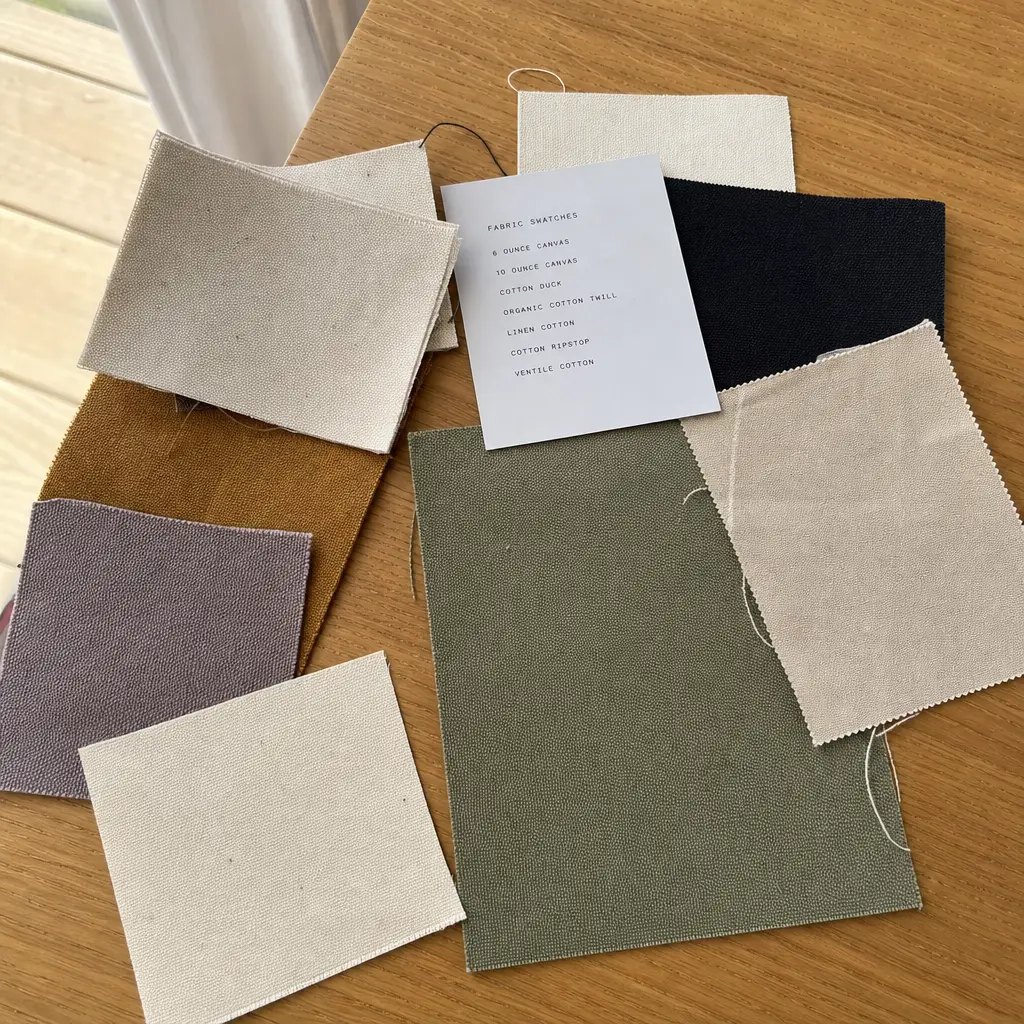
Start With the Buying Role, Not the Cheapest Bag
Canvas messenger bags for artisan bakeries sit in an unusual buying category. They can be staff gear, retail merchandise, loyalty gifts, distributor giveaways, or wholesale account kits. That mix makes them easy to under-specify. A bag that looks fine in a catalog photo may not survive daily market use. A rugged staff bag may be too costly for a short event campaign.
Start the bulk pricing plan with the job the bag must do. A farmers market team needs reliable strap joins, pockets that are easy to reach, and a bag that stays comfortable over an apron or jacket. A retail bakery bag needs neat sewing, clean folding, consistent logo placement, and packaging that looks intentional on the shelf. A distributor giveaway needs controlled cost, stable carton data, and decoration that can repeat without drama.
Write that use case into the RFQ before asking for a unit price. For example, a staff-use brief might say: natural canvas messenger bag for weekly market teams, sized for order sheets, tablet, pens, labels, and small samples. A retail brief might say: bakery merchandise bag with one-color flap print, paper belly band, barcode label, and folded presentation for shop display. Those two sentences lead suppliers toward different construction and packing choices.
This step also protects internal budget conversations. Instead of debating whether a quote is expensive in the abstract, the team can decide whether the proposed bag fits the commercial purpose. That is the difference between buying a generic promotional item and building a repeatable procurement item.
- Staff utility programs should prioritize strap strength, pocket access, washable surfaces, and bulk distribution efficiency.
- Retail merchandise programs should prioritize clean sewing, consistent logo placement, folding, barcode control, and shelf appearance.
- Distributor giveaways should prioritize simple branding, stable MOQ, carton efficiency, and calendar reliability.
- Wholesale account kits should prioritize document storage, reinforced flap edges, and a professional neutral look.
- Subscription or gift programs should prioritize presentation, controlled fold marks, and repeatable reorder quality.
Build a Spec Suppliers Cannot Misread
A messenger bag has more cost variables than a flat tote. Flap length, gusset shape, strap width, adjuster quality, pocket layout, closure type, seam binding, bottom construction, and branding method all change the sewing time. Two suppliers can quote the same outside size and still be pricing different bags. One may assume no closure, no pocket, narrow webbing, and simple seams. Another may include a magnetic snap, internal pocket, wider strap, bound edges, and heavier reinforcement.
For many bakery programs, a practical medium size is about 35-38 cm wide, 28-32 cm high, and 8-10 cm deep after sewing. That range can carry menus, invoices, order pads, tasting cards, small retail goods, or a tablet without becoming a bulky courier bag. If the bag must hold pastry boxes, coffee packs, packaged bread, or sample cartons, measure those items first. Simply enlarging the front panel can create a bag that collapses, distorts the flap, or wastes carton space.
Finished dimensions matter more than cutting dimensions. Cotton canvas loses usable size through seam allowance, folding, binding, washing, and finishing. Strap length also needs a finished adjustment range because staff may wear the bag over aprons, coats, or layered uniforms. A complete RFQ should state body width, body height, gusset depth, flap length, flap width, strap width, strap length range, and whether the bag is unlined, bound, overlocked, or fully lined.
Lock the closure before comparing suppliers. No closure is low cost but less secure. Velcro is economical, though it can catch lint and sound harsh in a quiet shop. Magnetic snaps look cleaner but need alignment checks. Zippers add security and labor. Buckles can look premium but slow production and add hardware risk. None of these choices is automatically right; each one just needs to be priced and inspected honestly.
- Quote finished dimensions after sewing, including body width, body height, gusset, flap, and strap range.
- Define flap style as short branding flap, medium flap, or full protective flap.
- Specify strap width, commonly 3.8 cm or 5 cm, because comfort and material cost change.
- Choose closure type before quoting: none, Velcro, magnetic snap, metal snap, buckle, button, or zipper.
- Identify pocket needs early; one internal slip pocket costs less than multiple zip compartments.
- Confirm seam finish: turned, overlocked, bound, French seam, lined, or reinforced with extra panels.
Choose Canvas Weight by GSM and Use Load
Canvas weight is one of the biggest cost drivers and one of the easiest places for quotes to drift. Suppliers often describe fabric as 10 oz, 12 oz, 14 oz, or 16 oz, but ounce conventions can vary by market and finishing. Procurement buyers should request both ounce and GSM. As a practical reference, 12 oz cotton canvas is often around 380-410 GSM, while 16 oz cotton canvas is often around 520-550 GSM. The exact number still depends on yarn, weave density, finishing, and whether the fabric is natural, bleached, dyed, or washed.
For most artisan bakery messenger bag programs, 12 oz cotton canvas is a strong baseline. It gives more structure than light promotional canvas, accepts screen printing well, and keeps sewing and freight manageable. A 10 oz canvas may work for short event giveaways, but it should not be sold internally as a durable daily staff bag. A 14 oz canvas adds body without all the thickness and carton impact of 16 oz. A 16 oz canvas is best reserved for premium retail resale, long-life staff kits, or programs where the bag itself is a paid product.
State the load expectation in plain working terms. Instead of asking for a heavy-duty bag, list the intended contents and expected weight. A bakery staff bag carrying a tablet, order pad, pens, labels, and samples places stress on strap joins and side seams. A customer merchandise bag may carry lighter personal items. A pickup-program bag may need to fit the shape of bakery packaging, not just a target weight. The stress test should match the real use.
Material composition also affects cost and brand position. Natural cotton canvas usually fits the artisan bakery look and avoids dye-lot complexity. Dyed canvas can support a brand palette, but it requires shade approval and may increase MOQ. Recycled or organic cotton can support brand values, but buyers should request documentation rather than relying on broad sustainability wording. Washed canvas feels softer, yet it adds shrinkage and shade variation risk.
- 10 oz canvas fits light event use but is usually weak for long-term staff programs.
- 12 oz canvas around 380-410 GSM is a practical default for many bakery bulk orders.
- 14 oz canvas adds structure while avoiding some 16 oz sewing and freight penalties.
- 16 oz canvas around 520-550 GSM suits premium resale or heavier daily service.
- Natural canvas simplifies lead time and shade control compared with dyed canvas.
- Dyed, washed, recycled, or organic materials need separate approval and documentation.
Make Branding Decisions Early
Bakery artwork often uses hand-drawn logos, flour-sack typography, wheat illustrations, oven icons, batch seals, and warm neutral colors. These designs work beautifully on canvas when the branding method matches the artwork. The wrong method can blur fine lines, feel too plastic, pucker the flap, or add setup cost that was not in the first quote.
For bulk bakery messenger bags, one-color or two-color screen printing is usually the most economical and repeatable choice on natural canvas. It works well for bold logos, store names, simple line art, and typography. The buyer should provide vector artwork, final print size, placement measured from seams or flap edges, Pantone references, and acceptable ink hand-feel. A soft matte print often suits an artisan bakery better than a thick glossy layer.
Screen printing still needs testing on the actual bulk canvas. Ink opacity and curing can change between natural, dyed, washed, and darker fabrics. Dark brown, black, burgundy, forest green, and navy do not behave the same way on every canvas shade. Ask for a strike-off when color accuracy, rub resistance, or print texture matters.
Woven labels add a retail finish and can be reused across future colors, but they introduce their own MOQ, lead time, and placement checks. Embroidery can work for small marks or patches, yet dense stitching may pucker the flap and may not capture fine bakery illustration. Digital print can handle complex artwork but should be tested on textured canvas. Heat transfer can look sharp, though large transfer areas may feel less natural and should be checked on folds.
Keep branding costs separate from bag construction. Ask for a base price with one-color screen print, then price upgrades such as woven label, second print color, patch, embroidery, or hangtag. This prevents a supplier from switching decoration methods quietly just to meet a target unit price.
- Use screen print for bold logos, text, store names, and repeat bakery programs.
- Use woven labels when the buyer wants subtle retail branding with consistent reorders.
- Use embroidery for small marks or patches, not large detailed illustrations on thin flaps.
- Avoid large heat transfers across fold lines unless adhesion and cracking are tested.
- Approve print color, opacity, position, curing, and hand-feel on the actual canvas.
- Record artwork version, Pantone references, print size, and placement in the PO.
Read MOQ as a Cost Map
MOQ is usually tied to production economics, not just supplier preference. Minimums can come from fabric purchasing, dye lot size, cutting efficiency, print setup, woven label MOQ, hardware MOQ, or sewing-line scheduling. A natural canvas bag with one-color screen print can usually be simpler to launch than a dyed bag with custom labels, metal hardware, several zip pockets, and individual retail packing.
Ask which component creates the MOQ. The answer tells you where to simplify. If fabric is the driver, natural canvas may help. If labels are the driver, a stock label or printed logo may reduce the barrier. If print setup is the issue, fewer artwork versions can help. If hardware is the issue, changing the closure may matter more than changing bag size.
A useful bulk pricing plan requests the same specification at several quantities, such as 500, 1,000, 2,000, and 3,000 pieces. The goal is to see the price curve, not to chase the lowest number blindly. Setup charges, cutting layout, and line changeover spread better at higher quantities. After a certain point, savings may flatten because fabric, labor, print, packing, and freight remain the main costs. A dramatic price drop should come with a clear production reason.
Artwork splits can change the math. A 2,000-piece order divided among four store logos may not price like one 2,000-piece run. The bag body may be identical, but the supplier still has separate screens, print setup, inspection segregation, and packing instructions. If canvas colors change, the order may split into different fabric or dye lots. If labels change, label MOQ may become the blocker.
For quantities below factory MOQ, blank stock plus local decoration can be sensible for pilots or urgent seasonal campaigns. Still, compare total cost and quality. Blank stock may have thinner canvas, weaker strap reinforcement, limited dimensions, or mixed dye lots. If repeat orders are likely, a controlled factory specification is usually easier to scale once demand is proven.
- Below 300 pieces, blank stock plus local decoration may be faster but not always lower cost.
- At 500-1,000 pieces, simple custom natural canvas programs become more realistic.
- At 2,000-3,000 pieces, stable specs usually improve cutting and line efficiency.
- Multiple artwork versions can split setup even when construction is identical.
- Multiple canvas colors increase shade approval and may reduce price efficiency.
- Ask suppliers to identify the MOQ driver before changing the specification.
Compare Landed Cost, Not Just Unit Price
A low unit price is not helpful if it excludes screen charges, label setup, samples, export cartons, carton marking, barcode labels, or realistic packing. Procurement teams should compare supplier quotes using the same specification and the same incoterm. EXW, FOB, CIF, and DDP prices should not be mixed unless factory cost, inland transport, export handling, freight, duty, customs clearance, and final delivery are separated.
Canvas messenger bags also need shipment data before price approval. Ask for pieces per carton, carton dimensions, net weight, gross weight, and estimated cubic meters per 1,000 pieces. A bag that is cheaper by a few cents can cost more after freight if it is packed inefficiently, folded poorly, or built with rigid components that increase carton cube. For importers and distributors, these numbers are part of the price.
Sample and setup terms belong beside the unit cost. Some suppliers quote aggressively and then charge separately for structure samples, print strike-offs, screens, courier, artwork conversion, label setup, hangtags, barcode labels, or re-sampling. Others include standard export cartons but exclude individual retail packing. Payment terms, lead time after sample approval, inspection access, and quote validity also affect procurement risk.
The cleanest comparison table includes fabric GSM, material composition, finished size, strap width, reinforcement, closure, pocket layout, branding method, packing method, carton quantity, carton dimensions, incoterm, port, sample cost, setup cost, lead time, payment terms, and quote validity. A supplier that cannot provide every detail may still be capable, but the quote is not complete until the missing assumptions are confirmed in writing.
- Compare GSM, composition, and construction before comparing unit price.
- Separate body, print, label, hardware, packing, sample, setup, and carton costs.
- Record incoterm, port, freight assumptions, payment terms, and quote validity.
- Request carton cube and gross weight before selecting the cheapest quote.
- Flag quotes that omit sample approval, QC tolerances, or packing method.
- Use the same artwork size, color count, and packing instruction for every supplier.
Approve Samples in Practical Stages
Sample approval should confirm how the bag works, not only how it photographs. For a bakery messenger bag, the buyer should approve fabric hand-feel, finished size, strap comfort, flap coverage, stitch quality, closure function, pocket access, print color, print texture, label placement, and packing appearance. Photo approval may be acceptable for a repeat order with a retained sealed sample, but it is risky for first production because stiffness, strap comfort, and print hand-feel are difficult to judge from images.
The most important sample is the pre-production sample made with bulk materials and final production settings. A development sample made from available fabric can help confirm shape, but it should not be treated as final approval if the bulk canvas, strap, thread, closure, or branding method will change. Before mass cutting, both buyer and factory should keep a sealed approval sample. That sample becomes the reference for inline checks, final inspection, and any dispute.
Test the sample like the bakery team will use it. Load it with order pads, labels, small samples, a tablet, or actual packaged goods. Check whether the strap twists, the flap sits straight, the gusset supports the contents, and the closure aligns without forcing the fabric. Open and close the flap repeatedly. Rub the print with a dry cloth and a lightly damp cloth to check curing and transfer. Fold the bag as it will be packed and see whether the print creases badly.
Sample feedback should be specific enough for the factory to act on. Instead of saying the strap is too short, state the required adjustment range. Instead of saying the print is too high, state the distance from the flap edge or side seam. Instead of saying the bag feels thin, request confirmed GSM and swatch approval. Clear feedback prevents the next sample from fixing one issue while creating a new one.
- Approve material swatches before final sample if shade or hand-feel matters.
- Request a blank structure sample before print if construction is new.
- Approve a printed strike-off before bulk printing, especially on dyed canvas.
- Load the sample with realistic contents and inspect strap, flap, and gusset behavior.
- Keep sealed approval samples with both buyer and factory before mass production.
- Photograph approved seams, strap joins, print position, labels, packing, and carton marks.
Set Product-Specific QC Thresholds
Generic inspection language is not enough for messenger bags. Common defects include stains, oil marks, mildew odor, shade variation, twisted straps, uneven flap edges, skipped stitches, loose threads, crooked labels, weak print opacity, ink bleeding, misaligned closures, and carton compression. Buyers should classify critical, major, and minor defects before production starts. Otherwise, every issue becomes a negotiation after the goods are packed.
For bakery buyers, cleanliness carries extra weight because the bag represents freshness and care. Natural cotton seed flecks and minor slubs may be acceptable if agreed in advance. Dirty handling marks, oil stains, ink smears, rust marks, and musty odor should not be accepted. Functional defects should be treated more seriously than small cosmetic issues. Strap seam failure, broken hardware, sharp burrs, closure failure, and fabric tearing near stitch lines should be major or critical depending on severity.
Inspection should combine measurement, appearance, and function. Inspectors should measure finished width, height, gusset, flap position, strap length range, and print placement. They should check stitch density and reinforcement at strap joins, side seams, flap corners, pocket openings, and bottom stress points. They should also test closure function, strap adjustment, and print rub performance. AQL sampling can guide sample size, but the checklist must include these bag-specific checks.
Production monitoring is useful for first orders, new factories, new canvas colors, or new print methods. Inline photos can catch flap shape, label placement, or print position errors before the full order is sewn. A top-of-production sample confirms the approved sample translated correctly to line production. Final inspection should happen when most goods are packed but rework is still possible.
- Finished width and height should commonly stay within plus or minus 1 cm.
- Print placement should be measured from fixed seams or flap edges, not judged by eye.
- A practical print placement tolerance is often plus or minus 3-5 mm when approved.
- Strap joins should show consistent reinforcement with no skipped bartacks or loose ends.
- Flap symmetry should be checked while hanging and lightly loaded.
- Cartons should be dry, correctly marked, and strong enough for export handling.
Plan Packing Before the PO
Packing is not a small afterthought. It affects cost, presentation, moisture risk, carton cube, freight, and warehouse receiving labor. For staff distribution or internal campaigns, bulk packing can be enough if bags are clean, folded consistently, and protected from dust. For retail sale, ecommerce, distributor resale, or gift bundles, the buyer may need individual protection, paper belly bands, hangtags, barcode stickers, size labels, or carton assortment labels.
Cotton canvas can absorb moisture during storage and freight, especially in humid seasons. Factories should pack only dry goods and use carton lining or desiccant when needed. Over-compression can leave hard fold marks on the flap and print area. Under-packing wastes space and increases freight cost. The packing method should balance presentation, protection, carton efficiency, and receiving convenience.
Carton quantity should be practical for warehouse handling. Very heavy cartons reduce carton count but increase lifting risk and possible damage. Very small cartons are easier to handle but increase carton cost and receiving labor. Request carton dimensions and gross weight early so freight forwarders can estimate accurately. If the order is split by store, distributor, or artwork version, carton marks should show PO number, SKU, color, artwork version, quantity, and destination.
Retail-ready packing must support inventory control. A bakery selling bags online may need barcode labels on each unit and scannable master carton labels. A distributor may need store allocation. A multi-location bakery may need cartons sorted by branch. These services are straightforward when planned early and error-prone when requested after goods are already folded and packed.
- Use bulk packing for staff programs, wholesale kits, and internal distribution.
- Use individual packing for retail, ecommerce, distributor resale, or gift bundles.
- Use paper belly bands when shelf presentation matters and plastic reduction is preferred.
- Place hangtags and barcodes where they do not crease the flap print.
- Keep carton gross weight practical for manual handling and warehouse receiving.
- Mark cartons with PO, SKU, artwork version, color, quantity, and destination.
Keep a Reorder-Ready Procurement File
The best bulk pricing plan becomes a reusable procurement file, not a one-time email thread. After the first approved order, keep the final specification, artwork files, Pantone references, approved fabric swatch, sealed sample photos, carton data, inspection checklist, packing instruction, and supplier quote history. This reduces re-sampling time and prevents future teams from reinterpreting the product.
Repeat orders still need controls. Cotton canvas shade, strap webbing, hardware finish, and ink behavior can vary between production lots. The reorder PO should reference the approved sample and state which changes are not allowed without written approval. If the bakery changes artwork, canvas color, packing, or delivery destination, the supplier should re-confirm setup charges, carton plan, and lead time. Small changes can create real production differences.
Decide which features are standard and which are upgrades. A base bakery messenger bag might use 12 oz natural cotton canvas, one-color screen print, cotton webbing strap, one internal pocket, Velcro or snap closure, and bulk cartons. Upgrade options might include 16 oz canvas, woven label, paper belly band, barcode label, magnetic snap, zipper pocket, or store allocation packing. This structure helps stakeholders choose by budget and use case rather than rebuilding the RFQ every time.
A clear file also improves supplier accountability. If defects appear, the buyer can compare the goods against the approved sample, tolerance sheet, and inspection checklist instead of relying on subjective impressions. If pricing changes, the buyer can see whether the cause is fabric weight, labor, packing, freight, currency, or a specification change. That is the value of a B2B sourcing plan: it turns a branded bakery bag into a controlled purchasing item.
- Save the final spec sheet, artwork, swatches, sealed sample photos, and carton data.
- Reference the approved sample and tolerance sheet on every reorder PO.
- Require written approval for changes to canvas, strap, closure, print, label, or packing.
- Keep base and upgrade pricing separate so stakeholders can choose deliberately.
- Track carton CBM, gross weight, and packing format for landed-cost comparison.
- Review defect records after each order and update the QC checklist before reorder.
Specification comparison for buyers
| Spec or sourcing decision | B2B recommendation | Typical fit | Procurement risk to verify |
|---|---|---|---|
| Direct factory bulk order | One factory manages canvas sourcing, cutting, sewing, branding, packing, carton data, and export documentation under one RFQ | Best for 500+ pieces per artwork or repeat bakery merchandise where consistent construction matters | Confirm finished-size tolerance, GSM, strap reinforcement, sample approval, AQL level, setup charges, carton cube, and carton marks before comparing price |
| Trading company consolidation | Trading partner coordinates the bag factory, print supplier, trim supplier, and other bakery merchandise SKUs in one shipment | Useful when bags ship with aprons, pouches, uniforms, gift boxes, or point-of-sale materials | Require separated line costs, factory capability evidence, pre-production sample approval, and written responsibility for QC failures |
| Local decorator on blank stock | Buy domestic or imported blank messenger bags and print bakery branding locally | Works for urgent events, pilots, and quantities below factory MOQ | Blank stock may vary by dye lot, GSM, strap strength, and dimensions; compare total landed cost against custom factory production |
| Natural 12 oz canvas base spec | Cotton canvas around 380-410 GSM, cotton webbing strap, reinforced strap joins, one internal pocket, and one-color screen print | Balanced choice for staff use, retail merchandise, farmers market teams, and wholesale visit kits | Do not accept only the term 12 oz; request GSM method, fabric composition, and approved swatch reference |
| Heavy 16 oz canvas upgrade | Cotton canvas around 520-550 GSM with stronger binding, bartacked stress points, and higher structure | Premium retail bags, long-life staff kits, subscription pickup programs, or higher perceived value programs | Higher fabric cost, slower sewing, thicker seams, larger carton cube, and possible comfort issues if strap width is not upgraded |
| Screen print branding | Factory screen prints 1-3 spot colors using vector artwork, Pantone references, approved print size, and curing checks | Best for bakery logos, typography, wheat illustrations, store names, and repeatable wholesale programs | Check ink opacity, curing, dry and wet rub results, print placement tolerance, and whether screen charges are included |
| Woven label plus small print | Custom woven side label or flap label paired with an optional small screen print | Good for subtle retail branding and multi-season bakery merchandise lines | Label MOQ, label lead time, edge finish, stitch placement, and color approval can delay sewing if not locked early |
| Importer-managed freight | Quote FOB with carton quantity, carton dimensions, gross weight, net weight, HS code suggestion, and loading details | Useful for distributors, importers, and bakery groups consolidating several items | A low EXW unit price can be offset by poor carton efficiency, unclear export handling, or late carton data |
| Retail-ready packing | Individual bag protection, paper belly band, barcode label, hangtag, carton label, or store allocation plan specified before PO | Needed for bakery shops, online resale, distributor programs, and gift bundles | Packing labor, material cost, carton volume, barcode accuracy, and plastic-reduction goals must be quoted separately |
Buyer checklist before sampling
- Define the commercial role first: staff market bag, retail merchandise, wholesale account kit, distributor giveaway, bread club pickup bag, event gift, or premium set. The right construction depends on the job the bag must do.
- Specify finished dimensions after sewing, including body width, body height, gusset depth, flap length, flap width, strap width, and adjustable strap length range. Avoid quoting from photos or cutting dimensions only.
- State canvas by both ounce and GSM, such as 12 oz cotton canvas around 380-410 GSM or 16 oz around 520-550 GSM. Confirm whether the material is natural, bleached, dyed, washed, recycled blend, organic cotton, or polyester-cotton blend.
- Set a realistic load requirement before choosing fabric and reinforcement. Ask suppliers to test against the intended contents instead of accepting vague claims such as heavy duty or premium quality.
- Lock strap material, strap width, slider material, strap length range, stitch pattern, and reinforcement at the strap joins. Strap join failure is one of the main functional risks on messenger bags.
- Confirm flap coverage, closure type, and pocket layout before quote comparison. Velcro, magnetic snaps, metal snaps, zippers, buckles, inner pockets, and tablet sleeves all change labor cost and inspection risk.
- Provide artwork as vector files with print size, print position measured from seams or flap edges, Pantone references, number of colors, and acceptable ink hand-feel.
- Ask for line-item pricing for bag body, print, woven label, patch, hardware, packing, sample, screen charge, artwork adjustment, export carton, and carton marking so hidden costs do not distort comparison.
- Require a pre-production sample using bulk canvas, bulk strap, bulk thread, final closure, final branding method, and intended packing before mass cutting. Keep sealed samples with both buyer and factory.
- Set measurable tolerances for finished size, gusset depth, flap alignment, strap length, print position, color shade, stitch quality, closure alignment, carton weight, moisture control, and packaging labels.
Factory quote questions to send
- What exact canvas are you quoting in oz and GSM, and how will GSM be verified: mill report, fabric swatch approval, or cutting-and-weighing test?
- What is the material composition: conventional cotton, organic cotton, recycled cotton blend, polyester-cotton blend, or another blend? Can you state the approximate blend ratio if it is not 100% cotton?
- What are the finished dimensions after sewing: body width, body height, gusset depth, flap length, flap width, strap width, and adjustable strap length range? What tolerance is included in the quote?
- Is the canvas natural, bleached, dyed, pigment dyed, washed, pre-shrunk, or untreated? What shade tolerance should we expect between batches and reorder lots?
- Which seams and stress points are reinforced with bartack, box stitch, cross stitch, double stitching, binding, or added fabric layers? Can you provide close-up photos of the reinforcement method?
- What closure is included in the base price: no closure, Velcro, magnetic snap, metal snap, button, buckle, zipper under flap, or another construction?
- What pocket layout is included: no pocket, internal slip pocket, zipper pocket, pen slot, outer back pocket, document pocket, padded tablet sleeve, or divider panel?
- What drives the MOQ: fabric purchasing, dye lot, printing setup, woven label MOQ, hardware MOQ, cutting efficiency, or line scheduling? What changes would reduce MOQ?
- Which branding method is included: screen print, heat transfer, digital print, embroidery, woven label, cotton label, leather patch, imitation leather patch, rubber patch, or a combination?
- Are screen charges, label setup, sample fee, courier fee, artwork adjustment, packing material, hangtag, barcode label, export carton, and carton marking included or charged separately?
Quality-control points to confirm
- Fabric weight should be verified by GSM test, mill report, or buyer-approved swatch. Do not rely only on verbal descriptions such as thick, premium, or heavy canvas.
- Finished body width and height should normally remain within plus or minus 1 cm unless the buyer approves another tolerance. Measure flat without stretching and record the measurement method.
- Gusset depth should be checked at several points because uneven gussets reduce usable capacity, distort the flap, and change carton packing efficiency.
- Strap length should be measured at minimum and maximum adjustment. Strap webbing should be checked for twisting, fraying, inconsistent width, and rough edges.
- Strap joins should be inspected for bartack consistency, skipped stitches, loose thread ends, broken needle marks, fabric tearing, and correct stitch position away from the edge.
- Print position should be measured from fixed seams, flap edges, or approved reference points. A practical tolerance is often plus or minus 3-5 mm depending on artwork size and buyer approval.
- Ink curing should pass dry rub and light wet rub checks on the approved canvas color. This is especially important for dark ink on natural canvas and light ink on dyed canvas.
- Print appearance should be checked for pinholes, bleeding, weak opacity, ghosting, crooked placement, ink buildup on canvas texture, and contamination from lint or loose threads.
- Closures, sliders, snaps, magnets, buckles, and metal hardware should be checked for burrs, rust marks, plating defects, weak grip, sharp edges, and correct alignment.
- Flap alignment should be checked with the bag hanging and lightly loaded. A flap that appears straight when flat can twist once contents are inside.