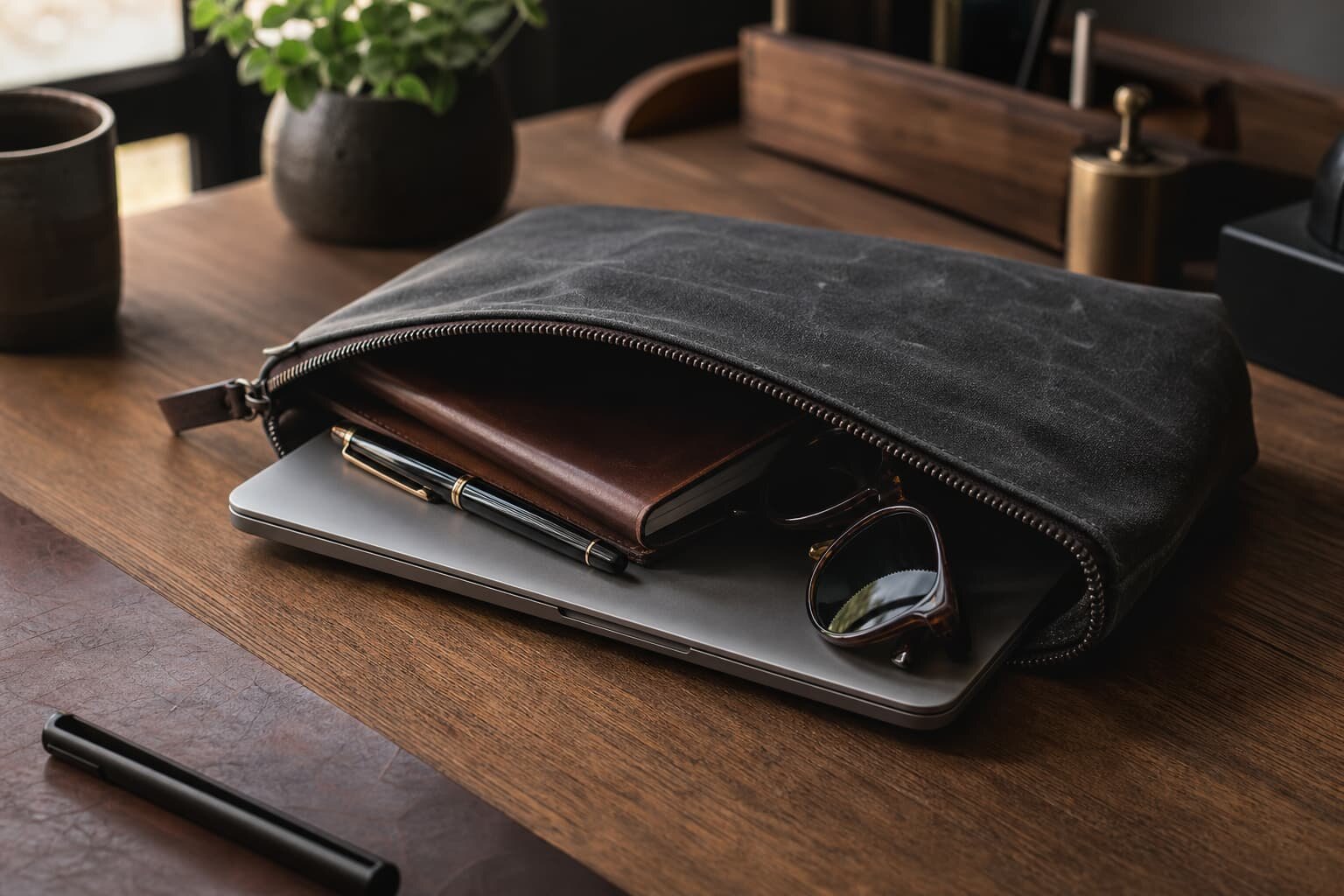
Why zipper track inspection matters on a canvas messenger bag
For a canvas messenger bag, the zipper track is not a minor trim detail. It is part of the customer's daily handling experience, the bag's perceived quality, and the seller's complaint rate after shipment. A track that looks acceptable on a flat sample can still fail once the bag is filled with paper, a tablet, or a laptop sleeve. That is why buyers should treat zipper inspection as a functional approval item, not just a visual check.
The risk rises when the canvas is heavier, the front panel is structured, or the zipper sits close to a flap, pocket seam, or logo area. If the factory cuts the zipper too tight, the panel pulls and waves. If the zipper tape is too soft, the track shifts during sewing. If the slider and puller are not matched to the tape, the bag may pass a quick hand-open test but fail after repeated use. Buyers who define the track clearly in the RFQ usually avoid more rework than buyers who only say 'add a zipper.'
- Treat the zipper as a use-case component, not a decoration.
- Approve the track under load, not only on a loose sample panel.
- Write the zipper spec into the tech pack with the same care as canvas GSM.
Define the zipper stack in the tech pack before you ask for a quote
Factories can quote very different constructions under the same word 'zipper.' For a canvas messenger bag, the buyer should define zipper size, tape type, slider finish, puller style, end-stop method, and any branding on the puller or tab. If the bag uses a flap, specify whether the zipper is fully exposed, partly covered, or hidden under a facing. That placement changes cutting, sewing sequence, and labor time.
The tech pack should also lock the surrounding materials. A 12 oz canvas body with a lightweight lining behaves differently from a 16 oz body with laminated interfacing. If the bag has print, embroidery, or a woven patch near the zipper, say exactly where it sits so the factory can avoid interference with the seam line. The more clearly the stack is defined, the easier it is to compare quotes without hidden assumptions.
- State canvas weight in oz or GSM, and confirm whether the zipper panel uses the same cloth.
- Specify zipper size and type, such as #5 nylon coil, rather than leaving it open.
- Mark print, label, and pocket positions so they do not collide with the zipper path.
Choose the right zipper construction for the bag's use case
Most buyers for mid-market canvas messenger bags should start with a nylon coil zipper rather than metal teeth unless the product line clearly needs a heavier look. Coil zippers usually run more smoothly on a curved panel, are easier to sew through canvas layers, and tend to be more forgiving when the bag is filled unevenly. Metal zippers can look premium, but they often need tighter control around the curve and can add noise, weight, and cost.
The construction choice should match how the customer uses the bag. A commuter bag carrying documents and a tablet may need a cleaner top-opening zipper with a moderate puller. A school or utility messenger may need a wider zipper tape, stronger slider, and a more robust bartack at the ends. Buyers should not choose the zipper only by appearance; they should choose it by loading pattern, retail price point, and tolerance for field complaints.
- Use #5 coil for most everyday messenger bags; move up only when the bag carries heavier contents.
- Ask for zipper tape color to match or deliberately contrast with the canvas body.
- Confirm whether the factory can source a consistent slider if the order is repeated later.
Use fabric weight and print method to protect the zipper panel
Canvas GSM affects zipper performance more than many buyers expect. A 340-400 GSM body can behave very differently from a 450-500 GSM body when the zipper panel is sewn into place. Heavier canvas keeps shape better but can create bulk at the seam, especially if the zipper sits near a folded edge or a printed front panel. If the fabric is too light for the bag size, the zipper can buckle the panel or twist after packing.
Print method also matters. Screen print, heat transfer, embroidery, woven patches, and tonal debossed labels all interact with the zipper zone in different ways. A screen-printed area near the seam needs enough margin so ink does not crack at the fold. Embroidery near the track can stiffen the panel and affect zipper travel. Buyers should tell the factory whether the artwork is decorative, brand-critical, or just a placement filler, because that changes whether the zipper panel needs extra backing or a wider allowance.
- Common buyer starting points: 12 oz / 340 GSM for lighter retail bags, 14 oz / 400 GSM for balanced structure, 16 oz / 450 GSM for heavier utility styles.
- If the logo sits close to the zipper, ask for a backed print zone or a moved artwork position.
- Do not let the factory swap in a lighter canvas to make the zipper sew more easily without approval.
Approve the sample by checking the zipper track under real use
A good sample review starts with the zipper closed and the bag loaded. Put in the likely contents for the end user: files, a tablet sleeve, promotional inserts, or a light laptop if that is the intended use. Then open and close the zipper several times while watching the tape line, the slider feel, and the way the panel settles. Flat-panel approval is not enough because zipper issues often appear only after the canvas takes shape.
The sample should also be checked for end details that buyers often overlook. Look at the start stop, the end stop, the zipper cover at the top corner, and the overlap between the zipper seam and any internal facing. If there is a printed logo or woven badge near the track, confirm that the zipper pull clears it cleanly. If the zipper hesitates, catches, or drags in one direction, reject the sample before bulk cutting begins.
- Cycle the zipper at least 20-30 times on the sample and again after loading the bag.
- Check both ends of the track for symmetry, secure stops, and clean needle finish.
- Record whether the puller is easy to grip when the bag is worn cross-body or carried by hand.
Set practical acceptance criteria for bulk QC
Buyers get better inspection results when the factory knows what failure looks like before production starts. Define acceptance criteria for track straightness, slider action, seam pucker, tape fray, and start-end alignment. For a commercial bag program, the goal is usually not perfection in a laboratory sense; it is controlled consistency across the lot. That means the zipper should feel the same from bag to bag, even if minor cosmetic variation exists within an agreed range.
A practical inspection method is to review the first output, sample a middle carton, and check final cartons before shipment. Pay attention to whether the zipper track shifts after the bag is turned right-side out or packed with inserts. If the panel bows outward or the zipper wave becomes visible only after pressing, the production process needs adjustment, not just a final-line rejection. Buyers should ask for the factory's own in-process checkpoints, then compare them against their purchase order language.
- Define visible waviness, tape fray, broken stitches, and hard sliding as inspectable defects.
- Use the approved sample as the master reference for line inspection.
- Ask the factory to recheck zipper positions after trimming and turning, not only after sewing.
Break the quote into the parts that actually change cost
A clean quote for a canvas messenger bag should separate the zipper from the rest of the construction if the buyer wants to compare suppliers honestly. The main cost drivers are zipper type, slider and puller style, fabric weight, print method, reinforcement, lining, and packing. If a factory rolls all of that into one number, it becomes hard to see whether a lower quote is real efficiency or just a lighter zipper and thinner canvas. For recurring programs, quote transparency is more important than a single attractive unit price.
Useful quote data usually includes unit cost by quantity break, sample cost, tooling or setup cost, and any adder for custom pullers or branded trim. As a planning example, a factory might quote different levels at 1,000, 3,000, and 5,000 pieces to show how zipper sourcing and labor scale. Buyers should also ask whether the zipper price changes if the order is split across colors or if the same model is reordered later. That is where hidden margin often appears.
- Request separate lines for body fabric, zipper assembly, print, label, packing, and carton mark.
- Ask whether the zipper is a stocked item or a special-order trim with its own MOQ.
- Compare quotes on the same basis: same canvas GSM, same print method, same zipper spec.
Use MOQ logic to avoid paying for unnecessary customization
MOQ problems often show up in zipper sourcing before they show up in sewing. A standard coil zipper may be easy to source in a factory's normal color range, but a custom puller, dyed tape, embossed tab, or mixed-metal finish can turn a simple bag into a much larger commitment. Buyers should ask which parts are stock and which parts require a separate order. That answer affects not only MOQ but also whether the order can be repeated quickly later.
MOQ logic should be tied to the commercial role of the bag. If the product is a campaign item or a short seasonal run, it may be smarter to keep the zipper standard and invest in label branding instead. If the bag is a long-term retail SKU, a custom puller or branded zipper tab may be worth the setup because it improves shelf differentiation and repeat consistency. The right answer depends on volume stability, margin, and how much zipper identity the brand actually needs.
- Keep the zipper standard when the order is small or the style may be revised soon.
- Spend customization budget where the customer can see it and where it does not weaken the track.
- Ask the factory to separate MOQ for bag body materials from MOQ for zipper trims.
Build the production workflow around zipper risk, not just sewing speed
The zipper sequence should be part of the production plan from day one. If the factory cuts the canvas before confirming zipper availability, the line can stall. If the zipper tape is too short for the final seam allowance, the team may stretch the panel and create a wave. If the zipper is inserted before the print or label step is stabilized, later processes can damage the track. Good workflow planning reduces these failures more than any end-of-line sorting effort can.
For planning purposes, many factories quote sample lead times in the 7-15 day range and bulk lead times around 30-45 days after approval, depending on trim availability, print complexity, and order size. Those numbers are only useful if the buyer knows the trigger points: sample approval, material in-house date, pre-production check, and carton-ready date. When you ask for lead time, ask for milestone dates, not just a single promise. That makes schedule slippage visible before it becomes a shipping problem.
- Confirm whether zipper trim is in stock before cutting body panels.
- Ask for a pre-production sample or golden sample signed off before mass sewing.
- Tie the production calendar to material arrival, not only to order confirmation.
Pack the bag so the zipper survives carton transit
Packing can quietly ruin a good zipper track. If the bag is folded too tightly, the zipper bends and holds a crease. If the carton is overfilled, the slider presses into the canvas and marks the panel. If the zipper is left open, the track can shift and snag on the lining or dust bag. Buyers should specify packing as part of the bag spec, not leave it to whatever the factory normally does. This is especially important for canvas messenger bags with a structured front panel or a shaped flap.
The safest approach is usually a flat or lightly stuffed bag with the zipper closed and protected from compression. If the product ships with inserts, tags, or polybags, make sure the insert does not force the zipper open from inside. The carton should preserve the bag shape without creating a hard line across the zipper path. For export, ask how many pieces are stacked, whether desiccant is used, and whether the carton mark explains upright or flat storage. A packed zipper that arrives straight is easier to sell than one that looks twisted on the shelf.
- Specify whether the zipper must be closed, half-open, or fully open before bagging.
- Use inserts only if they support the shape without pushing against the track.
- Check that carton compression does not leave a permanent wave in the zipper line.
Specification comparison for buyers
| Spec decision | Recommended option | When it fits | Buyer risk to check |
|---|---|---|---|
| Zipper type | #5 nylon coil with matching tape width | Daily-use messenger bags on 12-16 oz canvas | Check smooth travel, coil twist, and slider bite under load |
| Zipper placement | Top-opening zipper under a flap or panel edge | When buyers want security without a fully exposed zipper | Watch seam distortion at the zipper start and end |
| Track reinforcement | Internal woven tape patch plus bartacks | For bags carrying laptops, files, or heavier inserts | Confirm reinforcement does not create bulky puckering |
| Puller style | Standard metal or coated puller with custom brand tag | When MOQ is moderate and branding matters | Ask if custom pullers raise MOQ or extend lead time |
| Stitch spec | Balanced stitch density with edge topstitch control | For clean retail appearance on medium-heavy canvas | Look for skipped stitches, needle marks, and wavy zipper lines |
| Front-panel print method | Screen print or woven label; embroidery only if artwork allows | When the zipper panel sits near a logo area | Check whether print placement interferes with zipper travel or seam allowances |
Buyer checklist before sampling
- Confirm zipper type, size, tape width, slider finish, and puller style in the tech pack.
- Approve one pre-production sample with the actual canvas GSM, lining, and zipper supplier.
- Test the zipper on a loaded bag, not only on a flat sample panel.
- Check zipper start/end alignment, top-stop security, and seam pucker at both ends.
- Verify print placement, label position, and reinforcement patches do not block the track.
- Ask for carton packing details that keep the zipper closed and the bag panel flat.
- Request line-item quote data for zipper, puller, stitching, print, and packing.
- Define defect limits for broken stitches, uneven track, slider drag, and tape fray.
Factory quote questions to send
- What zipper size and construction are you quoting, and who is the zipper supplier?
- Is the zipper track cost included in the bag base price, or listed as a separate line item?
- What canvas GSM are you pricing, and does the zipper panel use the same fabric weight as the body?
- How many zipper cycle tests do you run on the pre-production sample and on bulk inspection?
- Will custom pullers, branded tabs, or metal logo plates change MOQ or lead time?
- Where are the zipper start, end, and top-stop measurements controlled in production?
- What is the acceptable tolerance for zipper length, track waviness, and panel skew?
- How do you pack the bag to prevent zipper deformation in carton transit?
- What is the sample lead time, bulk lead time, and rework time if the zipper fails approval?
- Can you quote separate pricing for body fabric, zipper assembly, print, lining, and final packing?
Quality-control points to confirm
- Zipper opens and closes smoothly through full travel with no snag at the start, curve, or end.
- Track runs straight with no visible waviness, twisting, or tape exposure after stitching.
- Top-stop, end-stop, and slider placement are secure and consistent across the production lot.
- Seam allowance around the zipper remains flat; no puckering, tunneling, or needle distortion.
- Canvas GSM and lining weight match the approved sample and do not overload the zipper panel.
- Print, embroidery, or woven label placement does not interfere with zipper movement or seam strength.
- Reinforcement bartacks, inside patches, or facing pieces are present and cleanly finished.
- Packed bags retain shape, with zipper closed or protected so the track is not bent in transit.