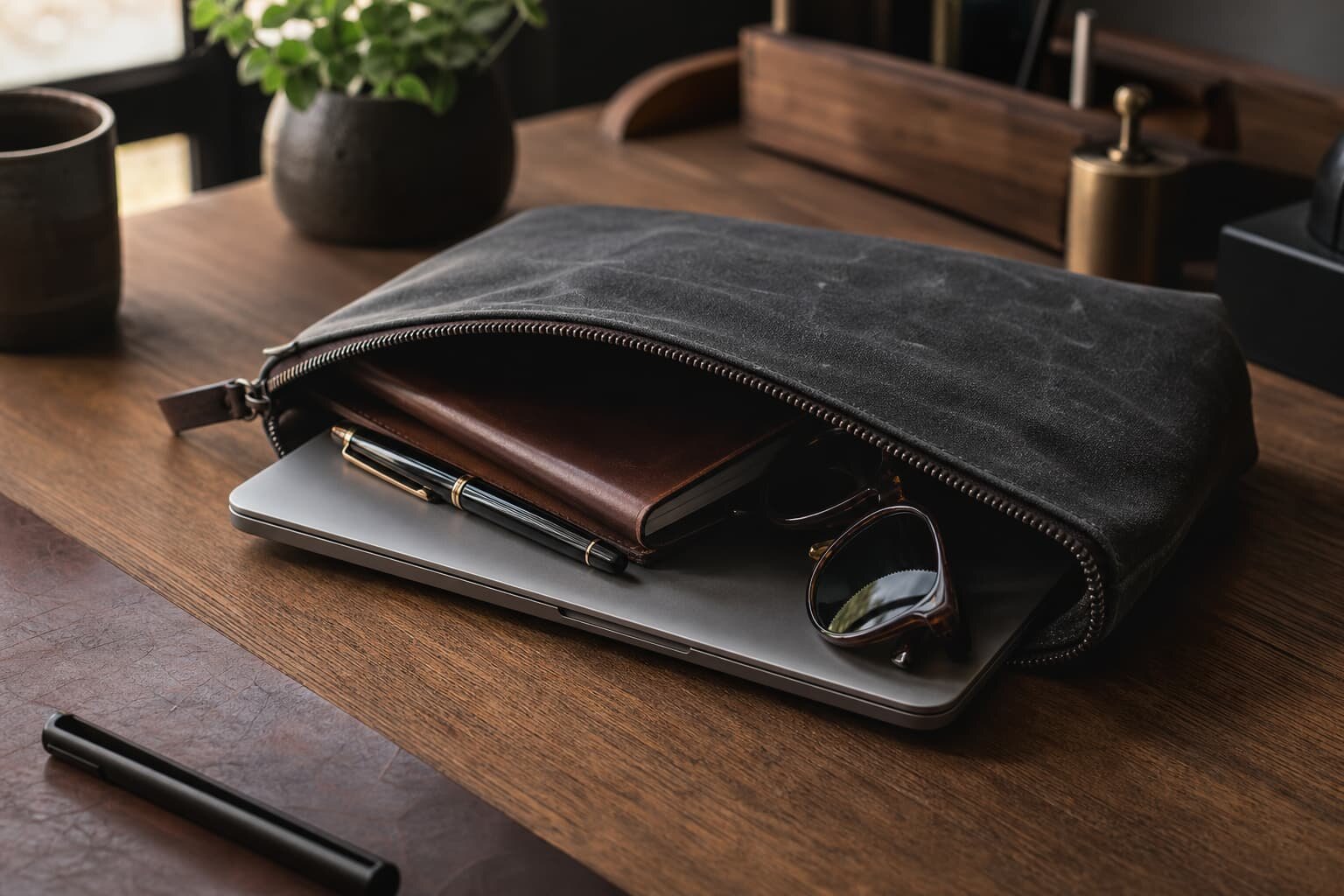
Why the zipper pull deserves formal approval
On a canvas messenger bag, the zipper pull is small but not secondary. It is the part the user touches every time they open the main compartment, front pocket, or laptop section. If it is hard to grip, sharp at the edge, noisy, weakly attached, or visually mismatched, the whole bag feels less reliable even when the canvas body is well sewn.
For B2B buyers, the risk is usually not the pull itself. The risk is an unclear approval path. A supplier may quote a stock woven tab, sample a PU pull, and then bulk-produce with a similar substitute if the approved spec is not written down. The result can be a receiving dispute that is difficult to resolve because both sides thought they were discussing the same trim.
A canvas messenger bag zipper pull approval guide should connect design, cost, usability, and inspection. Approve the pull at the same time as the zipper size, slider type, canvas weight, lining, and packing method. That keeps the quote comparable and gives the factory a controlled reference before bulk materials are purchased.
- Treat the pull as a functional trim with user-contact and QC impact.
- Approve the pull before bulk pricing is finalized, not after the bag body is accepted.
- Lock material, size, attachment, logo method, color, and finish in one written spec.
- Keep one approved physical sample or trim card for comparison during inspection.
Start with bag construction before choosing the pull
The best pull choice depends on the messenger bag build. A light 10oz promotional canvas bag can look awkward with a heavy metal pull. A 16oz work-style bag with reinforced seams may need a stronger webbing, cord, or metal pull to feel proportional. A flap-over messenger bag may have less clearance than a top-zip commuter style, so the pull must not catch under the flap or rub against snaps.
Zipper position matters too. A main top zipper usually needs a pull that is easy to grab with one hand. A hidden internal pocket may only need a simple textile loop. A front pocket zipper may require a shorter pull so it does not swing, knock against buckles, or cover a printed panel. If the bag includes a laptop compartment, check whether the pull can scratch lining fabric or device-facing surfaces.
Procurement teams should send the factory the bag context, not only a pull reference image. Include canvas GSM, zipper size, pocket layout, flap style, lining type, hardware finish, expected load, and channel. A wholesale work bag, school messenger, corporate gift, and retail lifestyle bag can all use canvas, but they do not need the same pull specification.
- Match pull scale to canvas GSM, zipper length, and hardware size.
- Check flap clearance, pocket placement, and contact with straps or buckles.
- Use simpler pulls for hidden pockets and stronger grip pulls for main access zippers.
- Give the supplier the full bag construction so they quote the correct component.
Compare pull options by use, not habit
Factories often have a default zipper pull they use because it is available, inexpensive, and familiar to the sewing line. That can be fine for a simple order, but it should not become the default approval standard. Buyers should choose the pull style based on bag use, branding need, MOQ, and inspection risk.
Woven tape and self-fabric canvas loops are practical when the buyer wants a soft look, lower tooling risk, and easier replacement if a color changes. PU leather can improve retail presentation, but only if edge paint, odor, and flex resistance are controlled. Metal pulls can look premium, yet they may increase noise, weight, and abrasion risk. Molded rubber, TPR, or cord pulls can improve grip, especially for outdoor and utility styles, but they need closer checks for odor, dust pickup, and heat deformation.
The comparison table should be used before quoting, not after sampling. Ask the factory to show which row best describes the option they are quoting. If they propose an alternative, require them to identify what changes: material, size, MOQ, logo process, tooling, or lead time. That prevents a cheaper substitute from being presented as an equal match.
- Choose the pull based on user movement, grip needs, and channel expectations.
- Do not compare a stock textile tab against a custom molded pull without cost breakout.
- Use soft pullers when abrasion and noise are bigger concerns than visual impact.
- Use custom hard or molded pullers only when the branding value justifies setup and QC control.
Write a zipper pull spec the factory can actually follow
A usable spec is short, specific, and measurable. It should name the pull material, finished length, width, thickness or weight if relevant, attachment method, logo method, color reference, finish, and approved tolerance. If the pull is stitched, include stitch color and stitch placement. If it is molded, include hardness or material type if available. If it is metal, include plating finish, edge condition, and whether the back side must be smooth.
Avoid vague wording such as premium pull, leather-look tab, matching color, or strong stitching. Those phrases do not create a production standard. Instead, write the target and the reject condition. For example: pull length 55 mm +/- 3 mm; no raw cut edge visible after folding; logo centered within 1.5 mm; no sharp metal burrs; no strong odor at carton opening.
Artwork also needs limits. A logo that looks clean on a bag label may fail on a narrow pull. Ask for minimum line thickness, smallest text height, acceptable emboss depth, print color limit, and whether the artwork needs to be simplified. If brand control is strict, approve a real pull sample before approving the full bag order.
- Specify material, dimensions, attachment, color, finish, logo method, and tolerance.
- Replace subjective language with measurable pass and fail conditions.
- Confirm artwork limits before finalizing the logo on a small pull surface.
- Include the pull spec in the same document as the bag body and zipper spec.
Build an approval workflow that prevents substitution
A controlled workflow starts with a reference. For a simple stock pull, a close-up photo and trim card may be enough before the full pre-production sample. For a custom pull, ask for the actual pull on the actual canvas messenger bag before signing off. Loose trim samples help with material review, but they do not show slider movement, scale, flap clearance, or packing pressure.
The pre-production sample should be checked by touch and function, not only by appearance. Load the bag with a realistic weight, open and close the zipper from different angles, and check whether the pull twists the slider or catches on seams. Inspect the back side of stitched pulls, the cut ends of woven tape, the edge paint of PU, the burrs on metal, and the logo clarity on molded or printed parts.
After approval, keep a signed sample record. This can be a physical sample, a trim card, and a photo set with measurements. The record should state whether any minor variation is accepted. If the factory later changes a pull because of stock shortage, lead-time pressure, or component availability, the buyer has a clear basis to approve or reject that change before bulk production continues.
- Use loose trim samples for early screening and full bag samples for final approval.
- Test the pull on a loaded bag before signing the pre-production sample.
- Record measurements, photos, and approval notes in one file.
- Require written approval for any pull substitution after sample signoff.
What a clean supplier quote should include
A useful quote separates the zipper pull from other bag costs. Ask the supplier to break out the bag body, zipper tape, slider, puller, branding setup, tooling or mold charges, sewing labor, and packing changes. This does not mean every factory will price every line with the same detail, but the request forces the conversation away from vague upgrades and toward comparable specifications.
The quote should also say whether the pull is stock, semi-custom, or fully custom. A stock woven pull may have no tooling but limited colors. A semi-custom PU pull may use an existing shape with a new deboss plate. A molded rubber pull may need a mold and longer approval time. A metal pull may need plating and edge finishing standards. These differences affect MOQ, lead time, and quality-control workload.
Ask for at least two or three volume points if the order plan is not fixed. A custom pull may look expensive at a small quantity but reasonable at a higher volume. A stock pull may be better for pilot orders, seasonal tests, and promotional programs. The buyer’s job is not to choose the cheapest pull; it is to choose the pull that matches the order volume, brand need, and inspection risk.
- Request price lines for puller, zipper, slider, setup, tooling, labor, and packing.
- Confirm stock, semi-custom, or custom status before comparing supplier quotes.
- Ask for MOQ by color, logo version, and finish, not just total bag quantity.
- Compare suppliers only when canvas, zipper, pull, logo, and packing specs match.
Control MOQ, lead time, and change risk
Zipper pull MOQ is often driven by the component supplier rather than the bag sewing factory. A canvas bag factory may accept a low bag quantity, while the pull supplier requires a higher minimum for custom color, molded logo, metal plating, or woven artwork. If this is not clarified early, the buyer may approve a design that does not fit the actual order size.
Lead time can also shift late if the pull needs artwork revision. Small logos often require simplification. Molded or debossed details may need a new plate if the first sample is not clean. Custom colors may need lab dips or material matching. These steps should be included in the project calendar, especially when the messenger bag is tied to a retail launch, event date, or seasonal assortment.
The highest-risk changes are small changes made after material booking: a longer pull to improve grip, a different slider hole to fit a cord, a new logo method, or a color shift to match canvas. Each can affect price, sampling, and production. Set a cutoff date for zipper pull approval and require written confirmation when changes create a new sample or new quote.
- Confirm MOQ per component, not only MOQ for the finished bag.
- Build artwork, color, and tooling approval time into the schedule.
- Set a change cutoff date before bulk material purchase.
- Treat slider compatibility changes as cost and sample changes, not minor edits.
Inspect function and durability before bulk packing
Visual inspection is necessary, but function decides whether the zipper pull will perform in daily use. During inspection, test the zipper on a filled bag, not just a flat sample. The pull should move the slider smoothly without twisting, binding, or dragging the zipper tape. It should be easy to grip without being so long that it swings into hardware or catches under the messenger flap.
Attachment strength needs attention because pull failure is visible and frustrating for the end user. For stitched textile pulls, check bartacks, stitch density, thread tension, and loose tails. For cord pulls, check knots, crimps, and fray resistance. For PU pulls, flex the material and inspect edges. For metal pulls, run a finger around the edges to check for burrs. For rubber or TPR pulls, check that the surface is not sticky, dusty, cracked, or misshapen.
Logo durability should match the order type. A promotional order may accept a simpler printed label if the buyer approved it. A retail program may require cleaner embossing, sharper woven detail, or better plating consistency. Whatever the standard is, it must be written before inspection so QC is not forced to make subjective decisions carton by carton.
- Test zipper movement on loaded bags from normal user angles.
- Check attachment security by pull type: stitched, corded, molded, riveted, or metal.
- Inspect touch points for burrs, rough edges, tackiness, odor, and sharp corners.
- Define logo and finish standards before final inspection begins.
Do not ignore packing and transit pressure
Many zipper pull defects appear after packing rather than sewing. A PU pull can pick up pressure marks. A metal pull can scratch a canvas face. A rubber pull can deform if it is compressed under straps. A printed label pull can rub against buckles or zipper teeth. If the packing method is not approved, the factory may fold the bag in the fastest way rather than the safest way.
Ask for packing photos during sample approval. The photos should show zipper position, pull position, folding method, tissue or polybag use, strap placement, and carton direction. If the pull is hard, coated, printed, or oversized, request separation between the pull and the bag surface. If the bag is compressed for carton efficiency, check whether the pull springs back after unpacking.
Receiving teams need consistency. If some cartons contain neatly positioned pulls and others contain crushed or twisted pulls, the issue can look like inconsistent production even when sewing was acceptable. A simple packing rule can prevent disputes: slider closed to a fixed position, pull tucked inside the body where possible, tissue between hard pull and canvas, and no strap pressure directly on the pull area.
- Approve packing position for the pull, not only the finished bag appearance.
- Use tissue or separation when hard or coated pulls contact canvas.
- Check whether compressed pullers recover shape after unpacking.
- Make packing photos part of the production approval record.
RFQ packet: what to send before sampling
A strong RFQ gives the factory enough detail to quote the same bag you intend to approve. Include bag dimensions, canvas GSM, lining type, zipper location, zipper size, slider finish, pull style, logo method, color reference, target order quantity, sales channel, packing preference, and required sample stage. If you are open to alternatives, say exactly what can change and what cannot.
For many buyers, the most efficient request is one base option and one upgrade option. The base might use a stock woven or canvas pull with low tooling risk. The upgrade might use PU, molded rubber, cord, or metal branding. Asking for two controlled options gives procurement a real cost and quality comparison without inviting too many random trim proposals.
Also include approval rules. State whether color is approved by physical swatch, whether logo is approved by first article, whether production can start after photo approval, and who signs off changes. Clear approval ownership is especially important when design, procurement, and sales all comment on samples. The supplier should know which decision is final.
- Send bag body, zipper, slider, pull, logo, color, quantity, and packing details together.
- Ask for one base option and one upgrade option if you need a price comparison.
- State which features are fixed and which the supplier may propose changing.
- Name the approval method and decision owner before sampling starts.
Specification comparison for buyers
| Pull option | Best fit | Quote detail to confirm | QC risk to control |
|---|---|---|---|
| Woven tape pull tab | Everyday canvas messenger bags, school programs, commuter styles, and mid-volume orders that need a soft textile feel | Tape width, pull length, weave density, logo method, cut-edge treatment, and whether it is stock or custom woven | Fraying at cut ends, weak logo clarity, shade mismatch against canvas, and loose stitching at the fold |
| Self-fabric canvas loop | Eco-leaning or minimal-brand bags where the pull should blend into the body fabric | Canvas GSM, folded width, bartack or stitch pattern, edge folding, and whether the loop uses body fabric or a substitute canvas | Bulky seams, raw-edge exposure, poor grip when wet, and visible shade difference from the bag body |
| PU leather puller | Retail messenger bags that need a more finished look without using genuine leather | PU thickness, backing material, emboss or deboss depth, edge paint color, stitch color, and odor standard | Cracking after flexing, uneven edge paint, strong smell, logo loss, and color transfer onto light canvas |
| Metal puller | Premium, heritage, or technical-looking bags where a hard component supports the design language | Metal type, plating finish, logo etching or stamping method, pull weight, slider compatibility, and anti-scratch protection | Plating scratches, noisy movement, added slider strain, sharp edges, and rubbing marks on canvas or lining |
| Molded rubber or TPR pull | Outdoor, youth, travel, and casual messenger bags that need grip, color, and moisture resistance | Material grade, mold fee, logo relief height, color tolerance, hardness, and whether the factory controls odor and heat stability | Tacky surface, dust pickup, logo fill defects, color shift, odor, and deformation in hot storage |
| Cord pull with end tab | Sport, utility, and workwear-inspired messenger bags where one-handed opening matters | Cord diameter, core material, knot or crimp method, end tab material, pull length, and colorfastness | Knot slippage, cord fray, snagging on flap hardware, inconsistent length, and weak attachment to the slider |
| Webbing loop with rubber or PVC end | Higher-use commuter and work bags that need a strong grip without a fully custom metal pull | Webbing width, end-dip or molded cap method, logo placement, slider opening size, and abrasion requirement | End cap peeling, webbing fuzzing, oversized look on small bags, and poor alignment with the zipper slider |
| Printed label pull | Promotional or budget-sensitive orders where branding is more important than a premium hand feel | Label material, print method, ink durability, fold construction, artwork size, and MOQ per print version | Print rubbing off, label curling, unreadable small logos, and inconsistent placement across production |
Buyer checklist before sampling
- Define the zipper pull together with the bag body: canvas GSM, lining, zipper size, slider type, pocket position, flap clearance, and intended use.
- Choose the pull material, length, width, thickness, attachment method, logo method, color standard, and finish before accepting the production quote.
- Ask whether the quoted pull is stock, semi-custom, or fully custom; separate tooling, setup, mold, artwork, and component costs from the bag price.
- Approve a physical pre-production sample or first article on the actual messenger bag, not only as a loose trim photo.
- Test the pull on a loaded bag, including one-handed opening, end-stop movement, flap interference, and contact with shoulder strap hardware.
- Check logo readability at real size; confirm minimum line thickness, emboss depth, print durability, or woven detail before freezing artwork.
- Set written acceptance limits for pull length, shade, logo placement, attachment strength, rough edges, odor, plating marks, and packing deformation.
- Require packing photos showing where the zipper pull sits in the folded bag and how it is protected from pressure or abrasion.
- Keep the approved sample, close-up photos, signed trim card, and QC checklist in one approval file for inspection comparison.
Factory quote questions to send
- What exact zipper pull material, size, weight, finish, color, and attachment method are included in this quote?
- Is the pull stock, semi-custom, or fully custom, and what tooling, mold, plate, screen, or setup charges are included or excluded?
- Which zipper size and slider model are you pairing with this pull, and can you confirm the slider hole supports the attachment method?
- What logo process are you using on the puller, and what artwork format, minimum line thickness, color limit, and tolerance do you require?
- What MOQ applies per pull color, logo version, material, and finish, and does mixed-color production change the unit price?
- What bag construction did you quote against, including canvas GSM, lining, zipper location, flap design, and packing method?
- Can you break out the price for bag body, zipper tape, slider, puller, branding setup, labor, and packing so we can compare options clearly?
- What sample stages do you recommend: trim sample, full pre-production sample, first article, or sealed production sample?
- How will you test attachment strength, zipper operation, logo durability, odor, color consistency, and packing deformation before shipment?
- At what date does a change to pull material, artwork, color, or attachment method become a new sample cycle or price revision?
Quality-control points to confirm
- Pull material, color, finish, stiffness, logo method, and attachment method match the approved physical sample and signed trim record.
- Pull length, width, thickness, and loop opening stay within the agreed tolerance and remain practical to grip.
- Attachment stitching, bartack, knot, rivet, crimp, or heat seal is secure, straight, and free from loose threads, sharp tails, exposed wire, or weak closure.
- Logo is centered, correctly spelled, readable at actual size, and free from blur, fill defects, uneven embossing, plating gaps, or print smearing.
- Zipper opens and closes smoothly on a loaded bag, including corner movement and end stops, without puller twist, slider binding, or fabric snagging.
- Puller does not scratch canvas, lining, laptop sleeve fabric, printed panels, flap edges, snaps, buckles, or shoulder strap hardware.
- Color and finish remain consistent across cartons and production lots; any approved batch split is labeled and traceable.
- PU, rubber, printed, or coated pullers pass agreed checks for odor, tackiness, cracking, color transfer, and storage deformation.
- Packing keeps the pull from bending, pressing into the bag face, denting the canvas, or rubbing against metal hardware during carton shipment.